Country Life in the 1830s

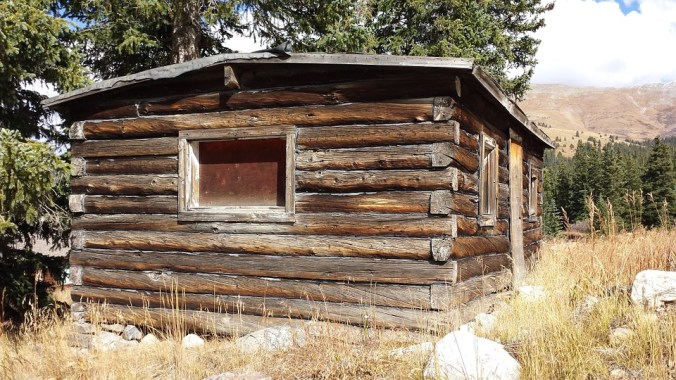
log-house-1045230_960_720Most country homes in the 1830s were log cabins covered with clapboards. The cabins contained two rooms, a garret (loft) used as a sleeping area, and a wide fireplace at one end. Mud and sticks formed the outside chimney.


Families spent most of their time around the family hearth in front of a blazing fire that warmed the cabin. Families read books, drank cider, talked, and told stories around the comforting warmth of this fire. They also entertained company there in the light of a lard lamp.


Log barns and stables were not large. Owners marked the ears of their livestock that ran outdoors year-round. Cows and hogs roamed the woods in the summer. Cows wore bells to help find them easily at milking time.


Women baked and cooked at the fireplace. There were no cooking stoves. An iron pot hung on a crane over the fire to boil dinners. Mush, a thick porridge, was a common meal cooked this way. Children often filled tin cups with mush for an evening meal.


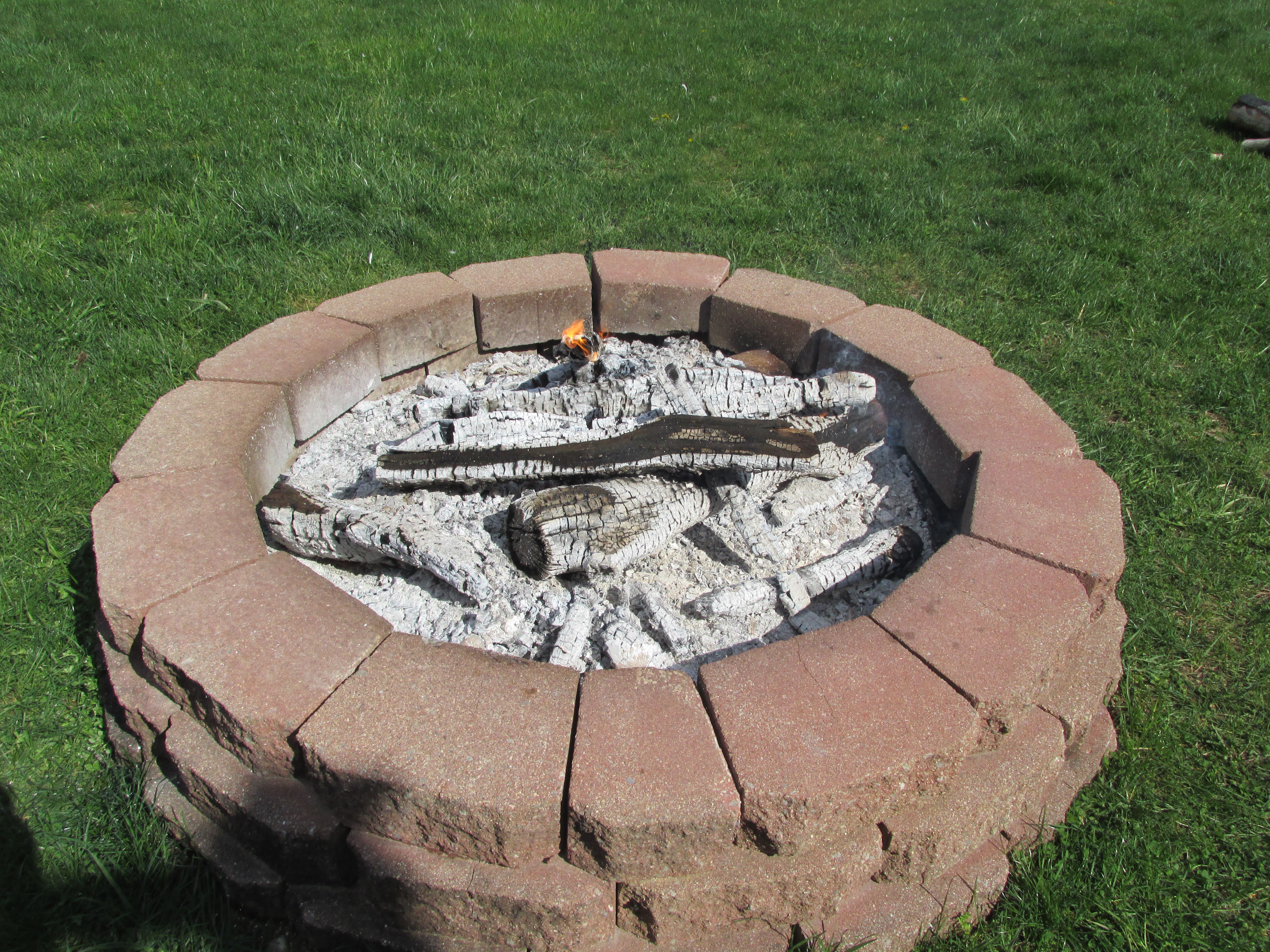
Fire was very important in these homes. They didn’t use coal for heating in those days nor did they use lucifer matches for lighting. When the fire died out, someone walked to the nearest neighbor to “borrow fire” or used steel and flint to start a new one.


-Sandra Merville Hart


Sources


“The History of Matches,” About.com Inventors 2015/06/10  http://inventors.about.com/library/inventors/blmatch.htm.


“Clapboard,” Dictionary.com 2015/06/10 http://dictionary.reference.com/browse/clapboard.


“Lard Lamps,” Old Time Lamp Shop, 2015/06/10  http://collectlamps.com/lard%20lamps.html.


Welker, Martin. 1830’s Farm Life in Central Ohio, Clapper’s Print, 2005.
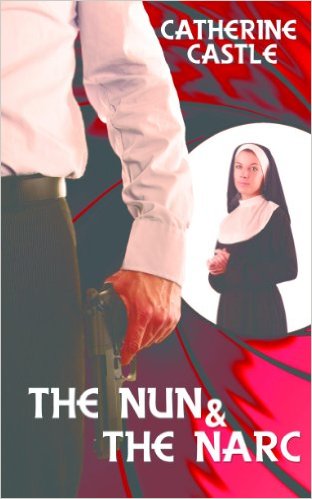
 

The Nun and the Narc by Catherine Castle

41hAYa++51L._SX310_BO1,204,203,200_


This suspenseful novel holds the element of danger, romance, and the comical quirks of an almost-ready-to-take-her-vows nun. The action begins immediately. The man who falls in love with the lovable nun-to-be faces danger with her at every turn. The characters are believable and the story held my attention from beginning to end.

The author does a wonderful job weaving suspense and comedy. I thoroughly enjoyed reading this romantic suspense. Great book!

-Review by Sandra Merville Hart

Link to Amazon

Join me today at Beach Reads Bonanza!

Sandra Merville Hart


I’m participating in a multi-author, multi-day Facebook event that will be fun for all.

There will be prizes and one huge giveaway where attendees can earn entries just by participating. There will be many ways to enter for the event-long giveaway, one of them as simple as following this blog!

I’d love you to join me at Beach Reads Bonanza Facebook event today at 1 pm Central. Since my novella is a Civil War romance, we will talk about fun facts from that time, battlefields we’ve visited, and any old family stories from your history. There’s lots to talk about.

Hope to see you there!

Beach Reads Bonanza Facebook Event


Early American Recipe for Boston Brown Bread

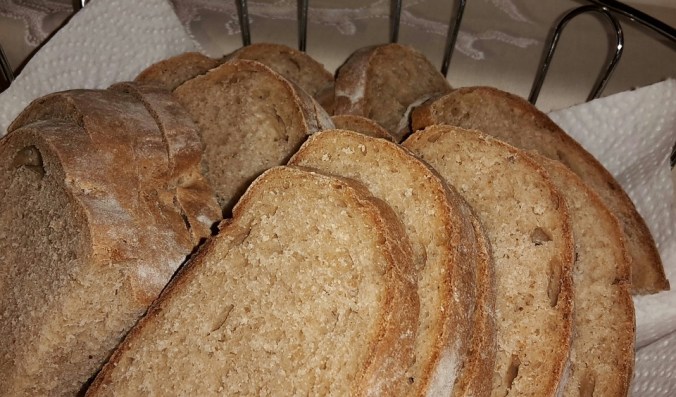
bread-1206636_960_720

The recipe below is an example of measurements in the 1800s.

Notice that a heaping coffee-cup of corn meal isn’t an exact measurement to modern cooks. Civil War soldiers cooked their supper in tin coffee cups, so it had to be much larger than our normal eight-ounce cup. Knowing soldiers used these cups as a cooking pots makes it likely they held over sixteen ounces.

You may also notice that two cups of sweet milk are required, not two coffee-cups of milk, so they used different measurements that cooks of the time understood.

1 heaping coffee-cup of corn meal

1 heaping coffee-cup of rye meal (rye flour may be used)

1 heaping coffee-cup of Graham meal

2 cups molasses

2 cups sweet milk

1 cup sour milk

1 dessert-spoon soda

1 tea-spoon salt

Sift the three types of meal together well. Add the rest of the ingredients and beat thoroughly. The mixture may appear too thin, but it isn’t. Pour the mixture immediately into a tin form that allows room for the bread to swell and place it in a kettle of cold water. Boil for 4 hours. (In the late 1800s, some homes had cook stoves. Others still cooked meals in the fireplace.)

Don’t allow the water to boil over the tin form and make sure to replenish the water as it boils away.

After the bread has boiled, remove the lid and set it in an open oven for a few moments to dry the top.

Serve it warm with Thanksgiving turkey. The bread may also be used as a pudding and served with a sauce made of thick sour cream, sweetened well, and seasoned with nutmeg.

This recipe calls for Graham meal, cornmeal, and rye flour. Graham flour, a coarse whole wheat flour, is available today, but it’s not clear if Graham meal is the same product. 

Modern recipes often call for flour, whole wheat flour, and cornmeal. Other Brown Bread bakers use whole wheat flour, rye flour, and cornmeal.  

I haven’t tried this recipe yet. I’m not sure what to use for a tin form these days. Some village museums may sell this type of pan. Internet searches suggest springform pans.

Recipes from the 1800s and earlier were written in paragraph form, making them much harder for today’s cooks to decipher, but it’s a lot of fun to try. 

Your comments are welcome!

This recipe is from Mrs. H.S. Stevens, Minneapolis, Minnesota in the referenced source.

-Sandra Merville Hart


Source

Compiled from Original Recipes. Buckeye Cookery and Practical Housekeeping, Applewood Books, 2011.


Welcome to Historical Nibbles!

cooking-ingredients-32089_960_720

I’m so glad you stopped in at Historical Nibbles!

Old recipes are an example of what you’ll find on Historical Nibbles. I own several books of recipes from days gone by that I’ve long desired to try, but have you ever looked at an old recipe? A small teacup of flour or a large spoonful of sugar are not accurate measurements to this modern girl. There’s a lot of trial and error in my future that I’ll share with you.


 I’d also love to learn how to cook over an open fire. My current level of expertise in outdoor cooking is roasting hot dogs or wrapping potatoes with aluminum foil and coaxing them under the embers. There’s a lot to learn.

I’m an author of historical romances so research is a big part of my writing. Fun facts learned during novel research will be shared in the In Our Past articles.

American history is my favorite so watch for tidbits from our history in that same section.

ink-316909_960_720As an author, I love to curl up with a good book at the end of the day. I will share reviews of books I’ve enjoyed.

Please join me each week as we take Historical Nibbles together!

-Sandra Merville Hart