
Paying Forfeits in Old-Fashioned Themed Parties

mother-1599653_960_720

When I hosted an old-fashioned theme party for a few friends during the Christmas season, I chose not to use forfeits because there were so many other things to plan and organize. Paying game forfeits apparently added to the evening’s fun in days gone by, especially for young people.

Guests earned forfeits during games. When a player would leave the game for incorrect responses or for not following the rules, they earned forfeits a century ago.

After the games were finished, “Crying the Forfeits” concluded the evening. Paying penalties for mistakes was both anticipated and dreaded because the crowd decided the forfeit for each individual.

The Director doesn’t earn forfeits so he or she usually takes charge of this, but it may also be run by a participant who doesn’t earn any forfeits.

All who must pay forfeits hide their eyes. The Director holds a piece of paper over each person’s head as the crowd decides the penalty without revealing the person’s name. The Director may ask, “Here’s a lovely thing; what’s to be done with this lovely thing?” to reveal that it is a woman receiving this particular penalty. Perhaps the Director asked about a muscular arm to reveal the player was a man.

When everyone’s forfeit had been decided, players open their eyes and learn their penalty. Each takes turns paying their forfeit.

Read next week’s post to learn some of the forfeits paid. For other old-fashioned party ideas, read  Evening Amusements for Old Fashioned Themed Parties – Part 1 for food ideas. Part 2 explains the Game of Concert. Part 3 shows two games that allow guests to show their creativity. Read Part 4 to find how to play a fun game called “Tip It” or “Hands” that moves quickly.

-Sandra Merville Hart

Source

Planche, Frederick D’Arros. Evening amusements for every one; a collection of mirthful games, parlour pastimes, shadow plays, magic, conjuring, card tricks, chemical surprises, fireworks, forfeits, &c., illus. by George Cruikshank and others, Porter and Coates, ca 1880.
Writing Blocks: Shock the Clock by Jeanette Levellie

Are you one of the Fun Ones, Fearless Ones, Friendly Ones, or Feeling Ones? Whether your personality type is predominantly Sanguine, Choleric, Phlegmatic, or Melancholy, the strengths and challenges inherent in each type affects us. It affects the way we write.

“Those who write down their goals are ninety percent more likely to meet them!”

This short book focuses more on the challenges of setting and sticking to your goals. Great time management tools!

-Sandra Merville Hart

Lighthouse Publishing of the Carolinas Use coupon code SandraMHart for a 20% discount!

Sage Dressing Recipe

img_0099

A greatly anticipated part of every Christmas and Thanksgiving meal was my grandmother’s sage dressing. Everyone in my family loved this dressing. We wanted to learn how to make it just like her, but my grandmother was not a patient woman. She’d rather do it herself than teach her daughters or granddaughters how to prepare it.

It’s difficult to pass on the art of measuring the right amount of flour, sugar, or salt in your hand, but I persisted in my efforts to learn from the best cook I’ve ever known. To learn her ways, I measured a teaspoon of salt or other spices and put it in her hand so she could tell me if it “was enough” or “not near enough.” In this way, I learned this recipe from her.

Good dressing starts with good cornbread. My grandmother believed that making cornbread with buttermilk made it taste best. When planning to use cornbread for dressing, her advice was to add extra buttermilk for a moister bread. Make it ahead of time or even the night before because you must wait for the turkey to roast before making the dressing.

An 8×8 pan of cornbread makes enough dressing to feed about 15 in my home with leftovers.

(The recipe for cornbread is on the back of the corn meal package. It’s basically corn meal, vegetable oil, and buttermilk. I buy self-rising white corn meal.)

blog-093Once the turkey is out of the oven and cooled enough for you to work with it, gather all the turkey broth. These juices will go into the dressing.

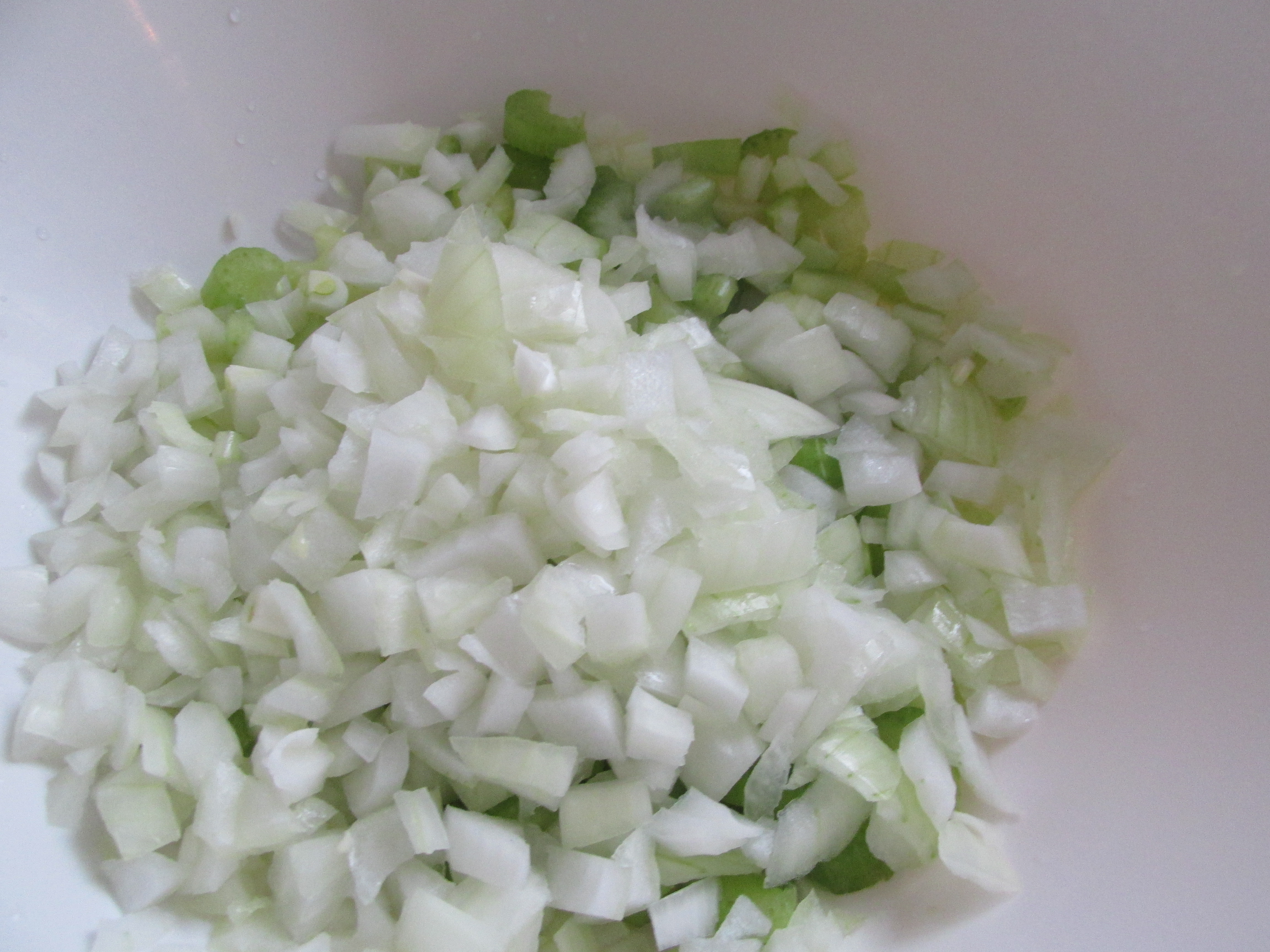
Crumble the baked cornbread into a large mixing bowl. Chop a medium onion and add. Cut four celery stalks into bite-sized pieces and add to the mixture.

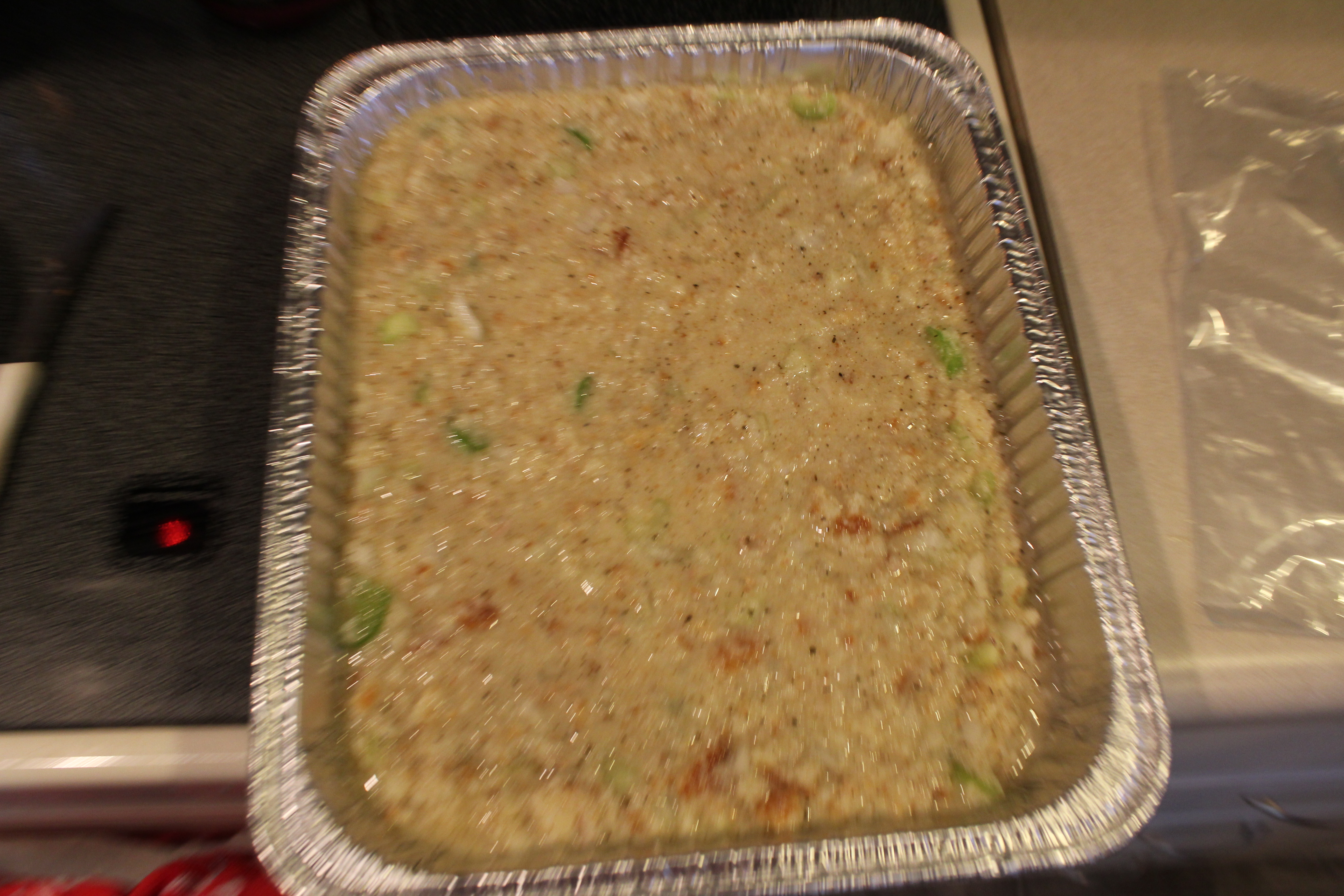
img_0084Here’s the tricky part. I use a turkey bag to roast my turkey. Roasting this way usually gives me about 3 cups of juices. Start with about 3 cups of broth from the turkey—if you have that much—and stir. The best dressing is a little moist so it should look a bit runny. If not, add more broth. If it’s still dry after adding all the broth, you can add canned turkey stock or chicken stock. Turkey juices directly from your turkey give it the best flavor.

After this is mixed, add 2 teaspoons of sage or to taste. I usually taste the mixture a couple of times, adding a little at a time to get the perfect amount of sage.

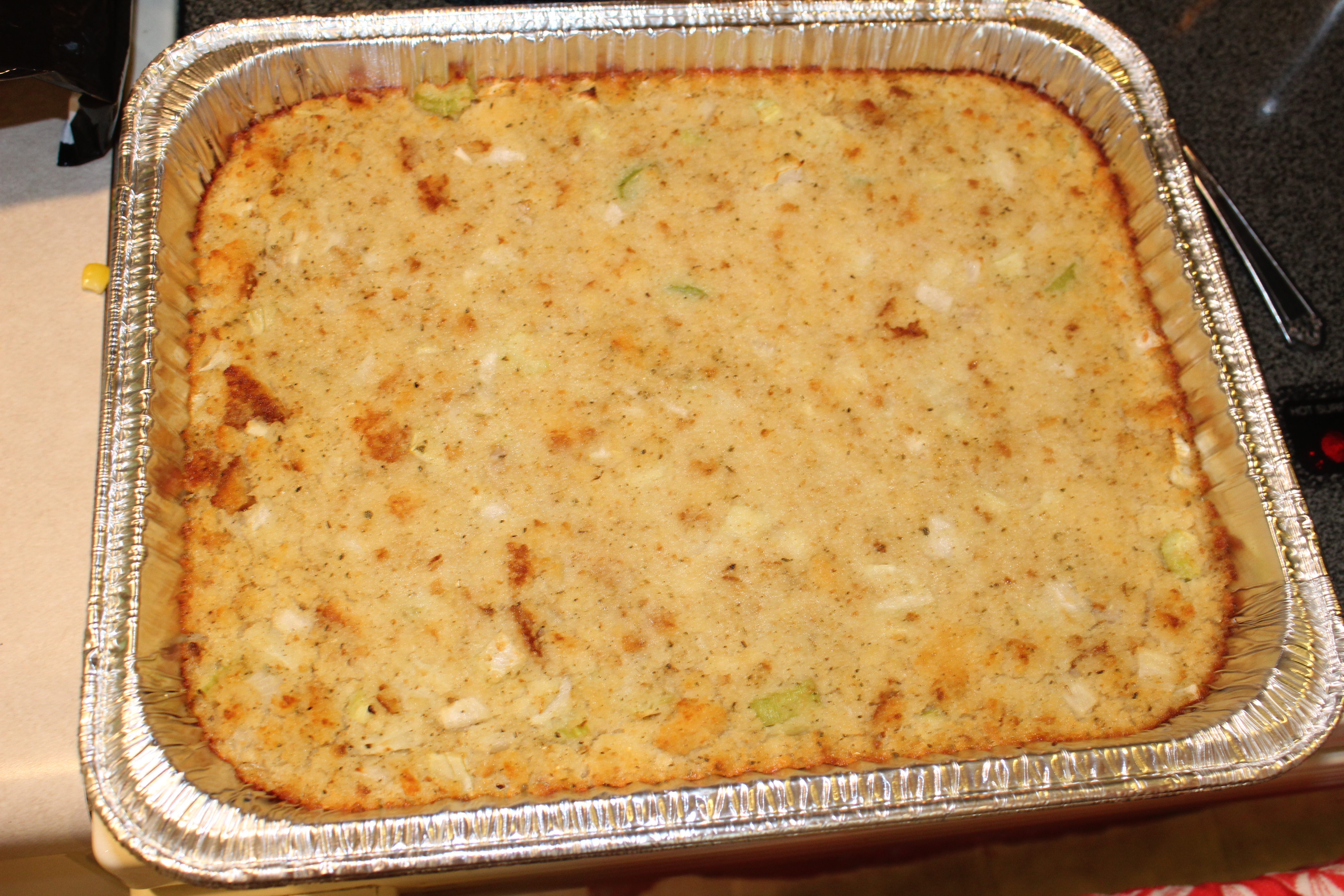
Choose a baking dish larger than the amount of cornbread prepared. For example, if the cornbread fit in a 8×8 pan, bake the dressing in a 13×9 pan. Bake in preheated 425-degree oven for 25-30 minutes or until lightly browned. Serve hot.

Hope your family enjoys this dressing as much as mine does.

-Sandra Merville Hart


Evening Amusements for Old-Fashioned Themed Parties – Part 4

praying-294190_960_720

I wanted to host an old-fashioned theme party for a few friends during the Christmas season. Read  Evening Amusements for Old Fashioned Themed Parties – Part 1 for food ideas. Part 2 explains the Game of Concert. Part 3 shows two games that allow guests to show their creativity.

Today I’m sharing a fun game called “Tip It” or “Hands” that moves quickly.

Tip It or Hands

One person on a team hides a button or a coin in their fisted hand. The object is to fool the opponents and make them lose a team member. If you don’t fool them, the person holding the button is out.

Divide into teams.

One person on each team is designated as the “worker.” The worker chooses whose hand to hide the button in and then calls “hands up.” All members of that team hold up both hands in a fist as if holding the button.

One person from the opposing team sends away all hands he doesn’t think it’s in by touching it and saying “Hands away!” until there are two hands left. Then the player decides which hand holds the button. If he chooses wrong, he’s out of the game. He’s also out of the game if he sends away the hand the holds the button.

Then it is the other team’s turn to hide the button.

The contestants who remain on the winning team earn the prize—or bragging rights.

There was lots of laughter while trying to fool the opposing team.

Next time we will talk about party forfeits. Hope you can join in the fun!

-Sandra Merville Hart

Source

Planche, Frederick D’Arros. Evening amusements for every one; a collection of mirthful games, parlour pastimes, shadow plays, magic, conjuring, card tricks, chemical surprises, fireworks, forfeits, &c., illus. by George Cruikshank and others, Porter and Coates, ca 1880.
Swept Away by Mary Connealy

51k-v1gpgtl-_sx322_bo1204203200_Ruthie MacNeil dreads reaching California, for her adopted parents have decided that’s when she will have to marry their son. She is literally swept down the river when the water level suddenly rises several feet.

Luke Stone rescues her many miles from where she entered the water. Friends await him at his childhood town in Broken Arrow and he can’t just leave Ruthie beside the river. He can’t delay either, because he plans to take back his father’s stolen land.

Ruthie refuses to sit idly while the man she loves faces danger. The spunky woman has a mind of her own.

Connealy has woven a multi-layered historical romance that kept me turning pages—a great read!

-Sandra Merville Hart

Amazon