Marketing You and Your Writing by Rebecca Waters


This book was written specifically to help writers with marketing their book and themselves as an author.

It takes a while for new writers to learn the writing “lingo.” Waters explains such things as headshots and bios early in the book.

On the other hand, even experienced writers benefit from learning how to use social media to build a platform. Waters offers insightful advice about blogs, Facebook, and other social media.

The author also talks about lesser known “media kits” that editors or publishers sometimes require—a very helpful section.

These and many other tools make this marketing book for writers a “must have” on a Kindle. It will be an easy future reference as needs arise.

Practical book written for authors. Recommend!

-Sandra Merville Hart

Amazon

Fever Drink Recipe

This recipe for Fever Drink doesn’t say if it treats a fever or if it soothes patients who are running a temperature. It was found in an 1877 cookbook under “Food for the Sick.”

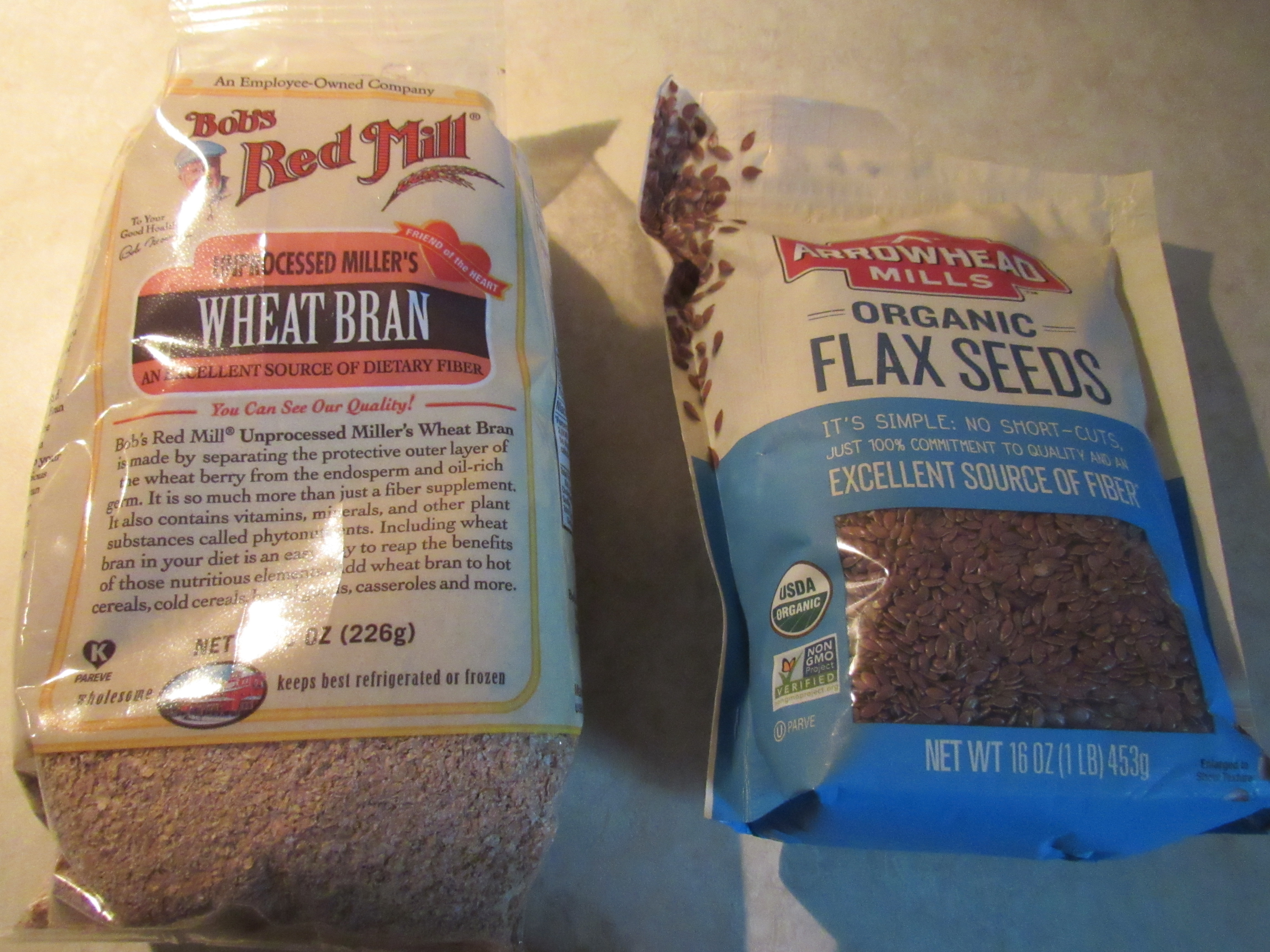
Flax seed is one of the ingredients in this beverage. I don’t know if this was readily available 150 years ago. However, the recipe doesn’t give any ingredient measurements. This makes me believe that cooks knew how to prepare it.

Given the date of the cookbook, I’m guessing Civil War soldiers drank this for fevers whenever it was available. Its use seems to have died out because I couldn’t find anything else about it. I love to bring historical practices to light.

Figuring out the ingredient measurements the first time was a complete guess. The recipe said to add boiling water to flax seeds, so I used ¼ cup of flax seeds with 1 cup of water and set it aside. The seeds were supposed to become “ropy.”

It also said to “pour cold water over wheat bran.” I chose to try ¼ cup of wheat bran and added ¾ cup of cold water to a small saucepan. (Some of you are probably already laughing.)

I brought this to a gentle boil and lowered to a medium heat. It was supposed to boil for 30 minutes. The wheat bran boiled dry in 10 minutes. I added more water, but quickly realized I had used too much wheat bran.

To make matters worse, there was no change in the flax seeds—definitely not ropy.

I started over. This time I tried to figure out the right ratio for only 1 glass of Fever Drink.

I added a cup of boiling water to 1 teaspoon of flax seeds and set aside.

I put 1 tablespoon of wheat bran into a small saucepan with 2 cups of water. I stirred it occasionally and it reduced quite a bit. After 30 minutes, I strained it twice. It made ½ cup of wheat bran broth.

The recipe also called for lemon juice and sugar—lemonade. I added 1 tablespoon of sugar to the juice of 1 lemon. It was the perfect amount.

I stirred the lemonade into the wheat bran broth. Though it was probably traditionally served hot, I decided to drink it cold. I added ice to the glass.

The flax seeds softened but never became ropy. I added these to the drink. The bran flavor was equally as strong as the lemon flavor. Lemonade improved the beverage though I can’t say I liked it.

A friend told me that flax seed powder is available. This might be a good alternative for regular flax seeds in this beverage.

The measurements used in the second try—1 tablespoon wheat bran to 1 teaspoon flax seeds—seemed to work well. I don’t know if this is the correct combination they used to ease a feverish patient. Since the 1877 cook didn’t divulge that secret, it remains a guess.

And I didn’t have a fever when I drank the Fever Drink so I can’t say how well it works.

I’d love to hear if you try this. Enjoy!

-Sandra Merville Hart

Sources

Compiled from Original Recipes. Buckeye Cookery and Practical Housekeeping, Applewood Books, 1877.


Civil War Refreshment Saloons

Barzilai Brown, a grocer at the corner of Washington Avenue and Swanson Street in South Philadelphia, had a heart for weary Union soldiers marching past his store in the spring of 1861. He saw a lot of them from his location near the Navy Yard at the waterfront and also departing for the South on the Philadelphia, Wilmington & Baltimore Railroad.

Brown decided to do something. He gave food to traveling soldiers. His generosity grew and on May 27, 1861, the Union Volunteer Refreshment Saloon was established to distribute drinks, food, paper, and stamps. Seeing a need to not only feed troops, the saloon added a hospital to its services in September, 1861.

Another saloon also established in 1861, Cooper Shop Volunteer Refreshment Saloon, was located at 1009 Otsego Street near the railroad.

These volunteer establishments provided soldiers far from their loved ones with comforts of home: washing facilities, meals, writing materials, sleeping areas, directions, information on places of interest, army contacts, and hospital care. Dining halls contained long tables and dining bars where soldiers stood to eat.

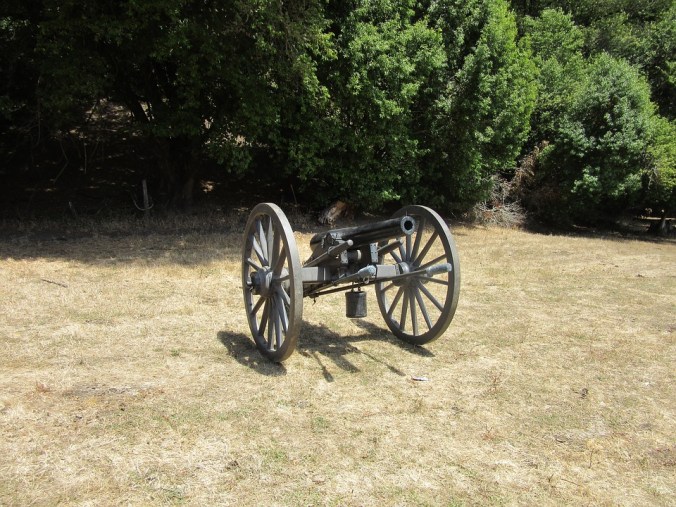
Troops passed through Philadelphia at all hours of the day and night. “Fort Brown,” a cannon outside the Union Volunteer Refreshment Saloon, fired a signal shot to call women volunteers living near the Navy Yard to the saloon when regiments were expected.

Most of these ladies, though responsible for their households, came to the refreshment saloons to cook meals and wash dishes. They worked long hours—often all night—to feed soldiers, sailors, freedmen, and refugees.

The Cooper Shop Refreshment Saloon fed 400,000 men and cared for about 7,500 patients. Union Volunteer Refreshment Saloon served 1,025,000 meals to over 800,000 men with nearly 15,000 hospital patients. All this was paid for with donations—no government funds.

To think that one man started all this by doing what he could to meet the needs of exhausted troops. They were hungry—he had food in his grocery store.

Barzilai Brown sought to feed heroes … and became one himself.

-Sandra Merville Hart

Sources

Brockett, L.P. MD and Vaughan, Mary C. Woman’s Work in the Civil War: A Record of Heroism, Patriotism and Patience, Zeigler, McCurdy & Co., 1867.

“Civil War Volunteer Refreshment Saloons,” The Library Company of Philadelphia, 2017/07/03 http://digital.librarycompany.org/islandora/object/Islandora%3ACVVRS?display=list.

“Samuel B. Fales collection of Union Volunteer Refreshment Saloon papers,” The Historical Society of Pennsylvania, 2017/07/03  http://hsp.org/sites/default/files/legacy_files/migrated/findingaid1580fales.pdf.
 

Land of My Dreams by Norma Gail

The author drew me into this contemporary romance right away.

To escape from painful losses, college professor Bonnie Bryant accepts a position to teach in Scotland. She meets Professor Kieran MacDonnell, a grieving widower and sheep farmer. She soon falls in love with him.

Though Kieran loves Bonnie, he feels guilty for loving her. He still grieves his wife’s passing.

To make matters worse, Bonnie’s former boyfriend keeps trying to contact her. He wants to make amends.

There are plenty of obstacles in Bonnie and Kieran’s way. Just when I thought I knew what would happen next, a twist came. There are many unexpected twists and turns in this novel that kept me guessing until the end.

I also fell in love with a land I’ve never seen—Scotland. The author’s descriptions brought the beautiful land alive in my imagination. I’d love to visit there someday.

-Sandra Merville Hart

Lighthouse Publishing of the Carolinas     Use coupon code SandraMHart for a 20% discount on Lighthouse Publishing books!

Crust Coffee Recipe

Not a drop of coffee in this recipe for Crust Coffee!It was found in an 1877 cookbook under “Food for the Sick.”

The ingredients make this an easy recipe for cooks and nurses to give to patients. It was probably given to wounded soldiers during Civil War.

The first ingredient is toasted bread, which was heartier 150 years ago than white bread readily available on grocery store shelves. I made a loaf of white bread in my bread machine and baked it in the oven. This gave me bread slices with denser consistency.

I toasted sliced bread “very brown” under the oven broiler. It felt more authentic than sliding them into a toaster.

I boiled water and poured a couple of tablespoons of it on the toasted bread. (Sounds very unappetizing—I agree. That’s one reason a denser bread is necessary.) Drain the excess.

Stir 1 teaspoon of sugar into 1 tablespoon of heavy cream. Pour the mixture over the bread.

Sprinkle on some nutmeg and enjoy.

It was actually pretty tasty.

I had followed a historical recipe for Baked Milk.  I wanted to try Crust Coffee with baked milk.

I made the Crust Coffee again, exchanging heavy cream for baked milk. Not bad. I liked the familiar flavor of heavy cream better, but the other is also good.

I’ve often given my daughter toast when she was ill. I can definitely understand why this was given to convalescing patients. It seems like a treat with the sugar and nutmeg.

I’d love to hear from you if you try this dish. Enjoy!

-Sandra Merville Hart

Sources

Compiled from Original Recipes. Buckeye Cookery and Practical Housekeeping, Applewood Books, 1877.


World War II Correspondents

Today’s post is written by fellow historical author, Linda Shenton Matchett. I’m especially excited to read her novel after reading the historical background. Thanks for sharing, Linda!

WWII changed the world, changed America, and changed every person who lived during that time. Cultural and social mores were turned upside down as men went into combat and women filled the void their absences left, taking on roles few had experienced until then.

Most of us have heard of Rosie the Riveter, the USO clubmobiles, and the Red Cross facilities, but were you aware that women were also war correspondents? Even after Nellie Bly’s illustrious history as an investigative journalist, most newspapers relegated their female staff to covering society events and columns aimed at the “fairer sex” such as cooking, sewing, and homemaking.

Then Germany invaded Poland and women demanded an opportunity to cover the war. In order to do that they had to receive accreditation. Once obtained, accreditation served as a contract. The Army or Navy would transport the individual into the war zone, provide shelter and food, and send their dispatches back to the U.S. In return, reporters would follow military law and censorship. The process to get certified was lengthy, and as Life photojournalist Margaret Bourke-White said, “By the time you are accredited, you have no secrets from the War Department and neither do your ancestors.”

Of the 1,600 journalists who received the status to wear the coveted armband with a “C,” only 127 were women. The military refused to take these ladies into combat, but a few still managed to experience it. Sometimes the front shifted. Sometimes female reporters managed to get permission to enter the war zone. Sometimes they defied the rules and went to the front by hook or by crook. Successful in the face of opposition, these women fought red tape, condescension, hostility, and vulgarity to research, write, and submit their stories, paving the way for future generations of female journalists.

-Linda Shenton Matchett


Bio: Linda Shenton Matchett is a journalist, blogger, and author. Born in Baltimore, Maryland, a stone’s throw from Fort McHenry, Linda has lived in historical places most of her life. She is a volunteer docent at the Wright Museum of WWII and as a Trustee for the Wolfeboro Public Library. Active in her church, Linda serves as treasurer, usher, choir member, and Bible study leader.


Under Fire Blurb: Journalist Ruth Brown’s sister Jane is pronounced dead after a boating accident in April 1942. Because Jane’s body is missing, Ruth is convinced her sister is still alive. During her investigation, Ruth becomes suspicious about Jane’s job. Eventually Ruth follows clues to war-torn London. By the time she uncovers the truth about Jane’s disappearance, she has stumbled on black marketers, resistance fighters and the IRA—all of whom may want her dead. Available from www.electiopublishing.com or your local bookstore.


Designing a Business Plan by Rebecca Waters

This book was written specifically to help writers develop a business plan.

The author spends a whole chapter addressing identifying strength and weaknesses and another on establishing goals and objectives.

Find out how to set SMART goals. This is helpful for new and experienced writers to learn and put into practice.

A chapter on crafting your mission statement also helps writers hone in on their brand.

Read the chapter on Budgeting Your Time and Money to discover the secret to a productive life. In fact, the book is filled with inspirational gems throughout.

The former college professor gives assignments designed to help writers practice what they’ve just learned. You will know how to create a business plan by the end of the book.

Insightful book written for authors. Recommend!

-Sandra Merville Hart

Amazon