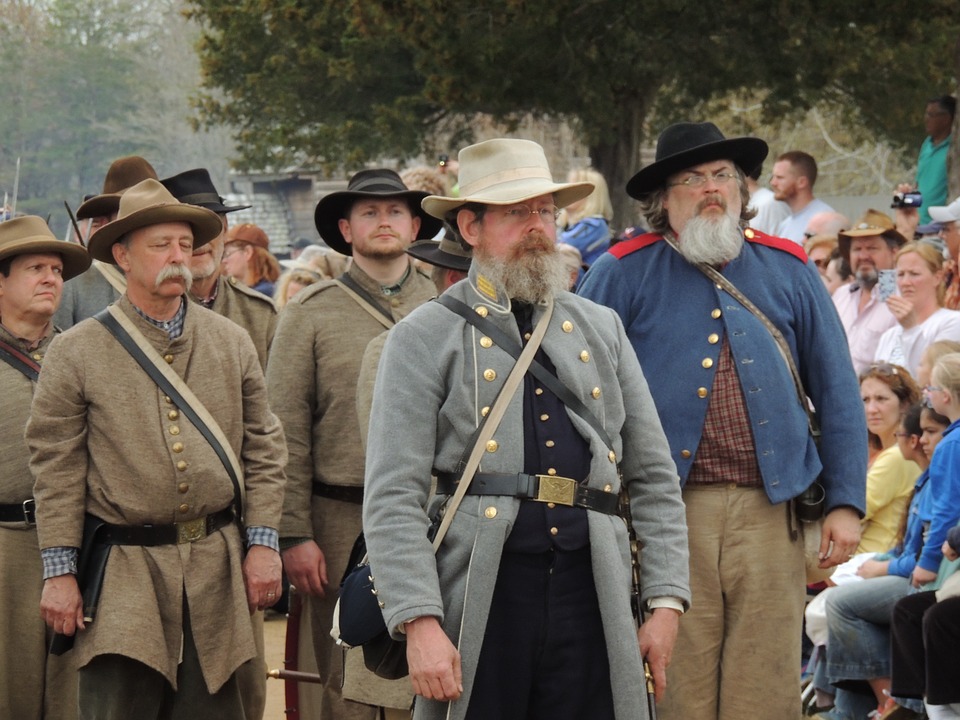
Civil War Confederate Soldiers’ Homes

Soldiers’ Homes were established for Civil War veterans who could no longer care for themselves. A few states provided separate homes for Union and Confederate veterans. The federal government didn’t provide funds for the Confederate soldiers. This obligation fell on the states.

Confederate veteran Jefferson Manly Falkner founded what became known as the Alabama Confederate Soldiers Home in 1901. Falkner wanted to provide a home for veterans and their wives. Widows were allowed to live there after 1915.

Falkner donated 80 acres in the summer resort area of Mountain Creek where between 650 to 800 people found a home. The home’s last veteran died in 1934. Five widows remained until October of 1939 when the home closed.

Atlanta’s Confederate Soldiers’ Home, built in 1890, was also known as the Old Soldiers’ Home. Henry W. Grady raised funds for the home at 410 East Confederate Avenue through subscriptions until it finally opened in 1900. Fire destroyed the building in 1901, but it was rebuilt on the same location a year later. The home’s last veteran died in 1941.

The old Kentucky Confederate Home was the former Villa Ridge Inn just outside the Pewee Valley Confederate Cemetery. There was a hospital, entertainment, and religious services. There was housing for 350 veterans and a total of 700 former Confederate soldiers eventually called it home.

There were a few prerequisites to living at the Kentucky home. Besides being a former Confederate soldier, residents had to be mentally stable, a resident of the state for at least 6 months, and not an alcoholic.

-Sandra Merville Hart

Sources

“Alabama Confederate Soldiers Home,” Wikipedia, 2017/07/04 https://en.wikipedia.org/wiki/Alabama_Confederate_Soldiers_Home.

“Confederate Soldiers’ Home,” Wikipedia, 2017/07/04 https://en.wikipedia.org/wiki/Confederate_Soldiers%27_Home.

“Old Soldiers’ Home,” Wikipedia, 2017/07/04 https://en.wikipedia.org/wiki/Old_soldiers%27_home.

“Peewee Valley Confederate Cemetery,” Wikipedia, 2017/07/04 https://en.wikipedia.org/wiki/Pewee_Valley_Confederate_Cemetery.
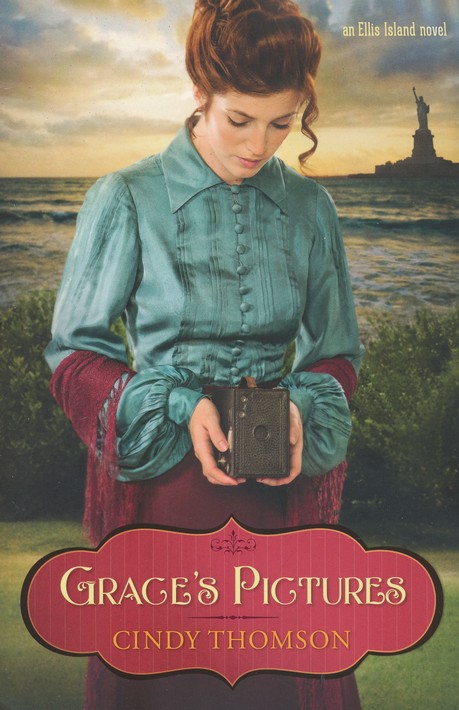
 

Grace’s Pictures by Cindy Thomson

Part of Ellis Island Series

Grace McCaffery emigrates to America in 1900. Her stepfather, a policeman—or peeler as they are called in Ireland, paid for her passage to New York City, but she resents leaving her mother at his mercy. Grace plans to save money to send for her mother—when she is able to get a job.

Owen McNulty has rejected his parents’ desires to follow in his wealthy father’s footsteps. His desire is to serve his city as a policeman. The corruption among some on the police force create problems for him.

Owen meets the lovely Grace soon after her arrival, but she won’t accept his help.

Grace vows not trust any peeler.

This historical fiction novel shows the struggles of Irish immigrants at the turn of the last century. I didn’t know much about this part of American history and learned a great deal. The author did a wonderful job on her research to bring their difficulties and the corruption in the police departments to light.

The characters are multi-layered, believable, and likeable. The well-written story drew me in immediately and I kept turning pages.

Great novel! I will look for more by this author.

-Review by Sandra Merville Hart

Christianbook.com

New Mexican Culture Cuisine

Today’s post is written by fellow author, Norma Gail. Her novel, Land of My Dreams, is set mainly in Scotland, but also in New Mexico—two locations dear to her heart. She lives in New Mexico and shares two yummy recipes with us from her home state. I can’t wait to try these. Welcome back to Historical Nibbles, Norma!

For those who live there, New Mexico is a bit of heaven. Admitted as the 47th state in 1912, it is a high-altitude land of arid, sun-kissed deserts and spectacular, forested mountain peaks under crystalline, azure skies.

Unique in culture, the Navajo, Apache, and Pueblo peoples of Native American origin were its only inhabitants prior to the early 1540’s. Subsequently claimed by Spain, Mexico, and partially by the Republic of Texas, portions became a US territory in 1848 through the Treaty of Guadalupe Hidalgo with the rest acquired by the Gadsden Purchase of 1853.

This conglomeration of cultures created a culture and cuisine unique in the world. Beans and corn are staples, with the locals fiercely defending the state’s largest agricultural crop of red and green chiles as the best in the world. True New Mexicans are notorious chile snobs.

Below, you will find two of my personal favorite recipes, primarily from Native American influence.

-Norma Gail

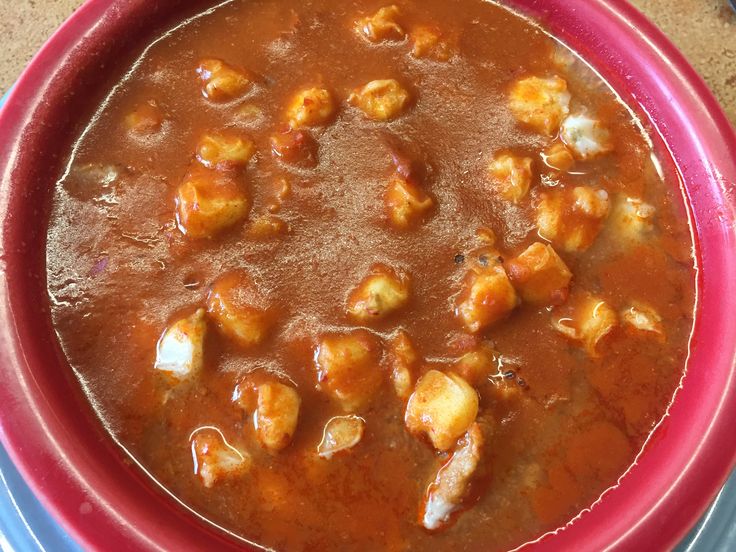
Posolé

(pō-sō-lāy)

(A traditional stew of hominy, meat, and chile)

1-2 lb. pkg posolé (hominy)

4 dried chile peppers (red)

4 cans (12-16 oz.) of green chilies (frozen can be substituted)

Juice of one lime

2 lbs. of lean pork, cut in ¾” cubes

1 lb. lean beef (optional)

1 medium onion, diced

3 cloves of garlic

2 tbsp of salt

1 tsp of black pepper

1-16 oz. can of stewed tomatoes, diced

½ tsp celery salt

2 tsp cumin

Rinse posolé in cold water. Place in a large stockpot and cover with at least 2 quarts of water. Simmer 1-2 hours, until posolé kernels pop.

Brown meat and onions until onions are tender. Place all ingredients in a large crockpot or stockpot on stove, cover with water, and simmer 6-8 hours, covered, adding water as necessary. Flavor is enhanced by cooking a day early, refrigerating overnight, and reheating.

Serves 8-10. This will freeze well, though chili tends to become hotter over time.

Sopapillas

(So-pă-pē-yas)

1 ¼ cup scalded milk

4 cups of flour

1 ½ tsp salt

1 tsp baking powder

1 tbsp sugar

1 tbsp shortening

1 pkg dry yeast

¼ cup warm water

Scald milk and cool to room temperature.

Combine dry ingredients and cut in shortening. Dissolve yeast in warm water and add to the cooled milk.

Make a well in the center of the dry ingredients, add liquids and work into a dough.

Knead dough 15-20 times and set aside approximately 10 minutes.

Roll dough to ¼ inch thickness or thinner. Cut in squares or triangles.

Deep fry in melted shortening at 420° until golden-brown. Fry only a few at a time so oil stays hot. If the oil is hot enough, they will puff almost immediately. Puffing is enhanced by bouncing gently in oil during frying. Turn to brown both sides evenly.


Author bio:

Norma Gail’s contemporary Christian romance, Land of My Dreams, set in Scotland and her home state of New Mexico, won of the 2016 Bookvana Religious Fiction Award.

A Bible study leader for over 21 years, you can connect through her blog, or on Facebook, Twitter, Pinterest, Instagram, Goodreads, or Amazon.