Meet Dr. Margaret Craighill – Trailblazer

Today’s post was written by fellow author, Linda Shenton Matchett. She provides readers with historical background for her novella in a Christmas collection. Welcome, Linda! I am looking forward to reading this story.

Throughout U.S. history, with the exception of the Army Nurse Corps, women had never been used in any uniformed capacity in the armed forces. As WWII dragged on, men continued to enlist or be drafted into combat, leaving vacancies in every corner of the country and overseas. By mid-1943, personnel shortages were at a crisis level. On April 16th, President Roosevelt signed the Sparkman-Johnson bill allowing women to enter the Army and Navy Medical Corps.

Before the ink was dry on the ruling, Dr. Margaret D. Craighill, Dean of the Women’s Medical College of Pennsylvania, requested a leave of absence and became the first female commissioned officer in the Army Medical Corps. A graduate of Johns Hopkins Medical School, Dr. Craighill previously held positions at Johns Hopkins, Bellevue, and Greenwich, and Philadelphia Hospitals.

Her assignment was a perfect fit for her education and experience. Named Women’s Consultant to the Surgeon General of the Army, she commanded the Women’s Health and Welfare Unit and was liaison officer to the Woman’s Army Corps (WAC). She inspected field conditions for all women in the U.S. Army and established the standards for screening WAC applicants and for WACs medical care, including the institution of regular physical exams.

Traveling over 55,000 miles around the globe, Dr. Craighill reported on the condition of 160,000 Army nurses and WAC personnel, squelching the notion that women were unsuited to a military role. She stated that “they were performing remarkably well in extreme climates and challenging work conditions.” As a result of her exemplary service, she was promoted to Lieutenant Colonel and awarded the Legion of Merit.

Not bad for a girl from the tiny village of Southport, NC.

-Linda Shenton Matchett

 

A Doctor in the House (Part of The Hope of Christmas collection): Dr. Emma O’Sullivan is assigned to a British convalescent hospital, and she leaves behind everything that is familiar. When the handsome widower of the requisitioned property claims she’s incompetent and tries to get her transferred, she must prove to her superiors she’s more than capable. But she’s soon drawn to the good-looking, grieving owner. Will she have to choose between her job and her heart?


Buy Link:  Amazon

 

Linda Shenton Matchett is an author, journalist, blogger, and history geek. Born in Baltimore, Maryland, a stone’s throw from Fort McHenry, Linda has lived in historical places most of her life. She is a volunteer docent at the Wright Museum of WWII and a trustee for her local public library.


 

Yuletide Angel by Sandra Ardoin

Violet Madison has a secret. After everyone is tucked inside their cozy beds for the night, Violet delivers food to the needy during the Christmas season. She is dubbed the Yuletide Angel.

No one knows the identity of the Yuletide Angel—except her neighbor, Hugh Barnes. The confirmed bachelor worries for Violet’s safety and follows her to protect her.

Raised to believe herself plain, Violet has little confidence in herself though people do praise her baking. She dreams of owning a bakery yet women don’t own businesses in Meadowmead, despite it being the 1890s.

She also dreams of changing Hugh’s mind about remaining a bachelor.

This book captured my attention from the first page. It’s a gentle story set during the Christmas season. It transported me back in time. I loved it.

This is exactly the kind of story I love to read during the Christmas holidays. I will look for more novels by this author!

-Sandra Merville Hart

Lighthouse Publishing of the Carolinas – Use coupon code SandraMHart for a 20% discount on Lighthouse Publishing books!

A Groom for Mama by Catherine Castle

This contemporary romance is a definite page-turner! I had a hard time putting down this novel.

Given the title, the story seemed like it would be about a son or daughter finding a suitable husband for their mother. It’s the opposite.

Allison had dated Jack in a long relationship a few years ago. She broke off the relationship and moved away. Jack maintained a friendship with Mama, Allison’s mom.

Now Mama is sick, dying from a rare form of cancer. She is determined to see Allison married before she dies and enlists Jack’s dating service to set her up with dates to find “Mr. Right.”

Allison suddenly finds herself on a whirlwind of dates with several “Mr. Wrongs” with the occasional “nice guy, just not for me” men while Mama undergoes further testing.

Those dates torment Jack, who has never stopped loving Allison.

Castle writes with humor. The author excels at building romantic tension and also at touching the hearts of readers with family drama. The characters are likeable and believable.

There are many twists that kept me turning pages when I should have been doing other tasks.

Definitely recommend this novel and this author!

-Sandra Merville Hart


Chili Porcupine Meatballs Recipe

I’ve been craving a dish that my mother used to make when I was a child. My mother passed away a few years ago. My sisters didn’t have the recipe so I despaired of ever tasting this meal as she made it again.

Then I found the recipe in an old family cookbook. I couldn’t wait to try it. Yum! It was as delicious as I remembered so I decided to share it with you around the Christmas holidays.

Ingredients

Meatballs

1 pound lean ground beef

1 pound lean ground pork

1 egg, beaten

½ cup milk

2/3 cup long grain rice (not minute rice)

1 teaspoon chili powder

2 teaspoons salt

Sauce

2 cans diced tomatoes

4 cups water

2 tablespoons chopped onion

1 teaspoon salt

1 teaspoon chili powder

½ cup long grain rice

Mix the meats together. (You might as well use your hands—a method my grandmother taught me. Sometimes spoons just don’t work as well as your fingers.) Beat the egg in a separate bowl and then add egg, milk, 2/3 cup rice, 1 teaspoon chili powder, and 2 teaspoons salt to the meat mixture. Mix well. Form into 1 ½ inch meatballs. (My batch made about 25 meatballs.) Melt about 2 tablespoons of shortening into a skillet. Brown meatballs in batches and drain on a paper towel. Add shortening as needed for browning.

For the sauce, add tomatoes, onions, and water with the remaining rice and seasonings into a large stockpot. Bring the sauce to a boil then gently add meatballs to the pot. Reduce to low heat. Cover. Cook about 1 1/2 hours. Stir occasionally. Add water as needed.

I could barely wait until the meatballs cooled to dish up a serving. A wave of nostalgia struck me as I ate. It was almost as if my mother had cooked for me one last time.

Enjoy this comforting meal on a cold day!

-Sandra Merville Hart


Civil War Home of Confederate President Jefferson Davis

Confederate President Jefferson Davis moved his family to the former  home of Dr. John Brockenbrough in Richmond, Virginia. This home served as the executive mansion from August, 1861, until April 2, 1865.

The capital of Virginia became the Confederate capital. The once quiet city changed into a transportation hub. Military headquarters, hospitals center for wounded soldiers, and a prison for captured Union soldiers increased the city’s population. Richmond also boasted of industries such as the Tredegar Iron Works.

Citizens grew accustomed to changes the war brought to their city though they didn’t enjoy knowing the Union army saw Richmond as a target.

Davis held important meetings with his generals at the executive mansion. Richmond citizens and military leaders often gathered in Davis’s parlor, where Varina, his wife, participated in war discussions.

Meticulous with details, Davis had a difficult time delegating. His family lay tucked in bed long after he still worked. His dignified demeanor coupled with his military and political career made him popular in the beginning. His impatience with folks who didn’t see eye-to-eye with him soon chipped away at his popularity.

His family also suffered personal tragedy while living at the White House of the Confederacy. His five-year-old son, Joseph, fell and died in 1864.

-Sandra Merville Hart

Sources

“Biography: Jefferson Davis,” Civil War Trust, 2017/10/29

https://www.civilwar.org/learn/biographies/jefferson-davis.

“Jefferson Davis,” Wikipedia, 2017/10/29 https://en.wikipedia.org/wiki/Jefferson_Davis.

“The White House and Museum of the Confederacy,” American Civil War Museum, 2017/10/29 https://acwm.org/about-us/our-story/museum-white-house-confederacy.

Anna’s Crossing by Suzanne Woods Fisher

This novel is the first book in the Amish Beginnings Series.

The story is set in 1737. A small group of Amish embark on the ship, Charming Nancy, on their way to the colonies where a member awaits their arrival.

Anna doesn’t want to go to the New World where William Penn has made land available to her church members. She wants freedom to worship God just as her members do, but she’d rather stay with her grandparents.

Bairn, the ship’s carpenter, isn’t pleased when his captain agrees to transport so many passengers. Half the number of passengers would be crowded below deck, but the little boy, Felix, refuses to stay below. Anna comes after him. She’s beautiful but is also one of the ‘Peculiars.’ Bairn fights his growing feelings for her.

There are many layers to this story. Bairn is a man with a past. Readers are given glimpses of it throughout the novel.

There isn’t a lot of dialogue in this novel. The main characters are believable. One is a character readers will love to hate.

There are many surprises in the action-packed drama. I had a hard time putting it down.

Anna’s strong faith in God is her anchor when things go terribly wrong.

Full of twists and turns, this novel is a definite page-turner!

Recommend! Will look for more by this author.

-Sandra Merville Hart

Christianbook.com


Cream Soup Recipe

This recipe for Cream Soup was found in an 1877 cookbook under “Food for the Sick.”

A few common ingredients made this an easy recipe for cooks and nurses to give to patients. It was probably given to wounded soldiers during Civil War.

The main ingredient is toasted bread, which was heartier 150 years ago than white bread readily available on grocery store shelves. I made a loaf of white bread in my bread machine and baked it in the oven. This gave me bread slices with denser consistency.

I toasted sliced bread “very brown” under the oven broiler. It felt more authentic than sliding them into a toaster.

Pour two cups of boiled water into a medium-sized serving bowl. Add ½ cup of heavy cream and ¼ teaspoon of salt and stir.

Break two slices of toast into pie. Pour the cream broth over the pieces in a serving bowl.

Eat immediately.

I tasted this soup. It surprised me how much I like it—possibly because I really like the homemade bread.

For this reason, I feel that any of the hearty breads you love would work well in this soup. Feel free to experiment with your favorite breads. If you buy the bread, this soup can be ready to eat in about 10 minutes.

I’ve often eaten toast when sick as well as serving it to my daughter. Cream and nourishing bread—I understand why this was given to convalescing patients.

I’d love to hear from you if you try this dish. Enjoy!

-Sandra Merville Hart

Sources

Compiled from Original Recipes. Buckeye Cookery and Practical Housekeeping, Applewood Books, 1877.


Civil War Confederate President Jefferson Davis

Confederate President Jefferson Davis and his family lived in the home of Dr. John Brockenbrough in Richmond, Virginia. This home served as the executive mansion from August, 1861, to April 2, 1865.

Davis had suffered from many personal losses before he stepped into the foyer of the impressive Federal style mansion in Richmond.

He fell in love with Zachary Taylor’s daughter, Sarah, while the future President Taylor was still a Colonel. Recognizing the difficulties of frontier army life, Taylor refused to allow Sarah to become a military wife.

His reasons swayed Davis to resign from his post. The couple married on June 17, 1835. Two months later, the newlyweds traveled to his sister’s home in Louisiana. Sadly, they both fell ill with malaria. Sarah died. Davis’s family feared that malaria would also take Jefferson’s life, but he slowly recovered.

He lived on his Mississippi cotton plantation for about eight years before meeting Varina Howell, a guest at his brother’s home. He proposed and married the eighteen-year-old in 1845.

Samuel Emory, their oldest son, was born in 1852 and died a month shy of his second birthday. Margaret Howell was born in 1855—Davis’s only child who married. Jefferson Davis, Jr., was born in 1857. A third son, Joseph,  was two when the Davis family moved to Richmond.

Varina was pregnant with William Howell in August of 1861.

When Davis crossed the threshold into his new home, he didn’t know that his son, Joseph, would fall to his death at age five in 1864. Or that Varina Anne “Winnie” would be born two months after Joseph’s death. Winnie, born during the war, became known as the Daughter of the Confederacy.

In addition to his personal sorrows, Davis suffered from old battle wounds, recurring bouts of malaria, a chronic eye infection, and trigeminal neuralgia, a painful nerve disorder.

Davis was selected as President for a six-year term, a job he didn’t want. With his training at West Point and his army experience, he preferred a military command. As President, he had little patience for folks who disagreed with him.

No, Davis could not know all the difficulties that awaited him as he stepped into the mansion in Richmond. His courage might have failed had he been able to see into the future.

-Sandra Merville Hart

Sources

“Biography: Jefferson Davis,” Civil War Trust, 2017/10/29

https://www.civilwar.org/learn/biographies/jefferson-davis.

“Jefferson Davis,” Wikipedia, 2017/10/29 https://en.wikipedia.org/wiki/Jefferson_Davis.

“The White House and Museum of the Confederacy,” American Civil War Museum, 2017/10/29 https://acwm.org/about-us/our-story/museum-white-house-confederacy.

“White House of the Confederacy,” NPS.gov, 2017/10/29 https://www.nps.gov/nr/travel/richmond/WhiteHouse_of_theConfederacy.html.


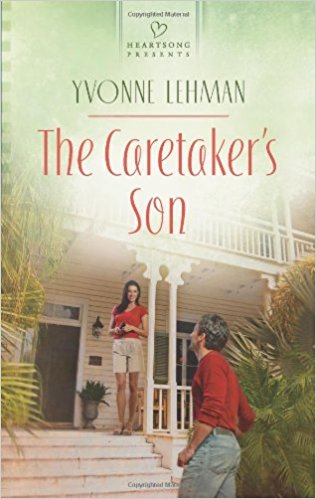
The Caretaker’s Son by Yvonne Lehman

I enjoyed this novel!

Annabelle Yarwood has been in multiple beauty pageants and now teaches young girls what she’s learned, especially how to find their beauty in God’s eyes. Her fiancé, Wes, works long hours building his career in a law firm.

Annabelle is intrigued by the return of Symon Sinclair, the caretaker’s son, to her Aunt B’s home. She remembers him from her childhood. Symon’s an author and she enjoys his company while Wes is working.

Symon longs to reconnect with Aunt B, the woman who had been like a mother to him after his own mom abandoned him.

Aunt B seems to understand pain and suffering all too well.

The contemporary romance is multi-layered. There are many twists that kept me turning pages. I enjoy stories that have depth, and under Lehman’s expertise, this one does.

Realistic characters each have their own goals, making this an interesting read. This story drew me in immediately.

Recommend!

-Sandra Merville Hart

Amazon


Cherry Tarts Worthy of a Love Story

Today’s post is written by fellow author, Sandra Ardoin. I enjoyed reading her Christmas historical romance where the heroine is a baker. Sandra shares a recipe from the time period of her book. Welcome, Sandra!

 Unlike my heroine in The Yuletide Angel, I’m not much of a cook. Oh, I can do it. It simply isn’t something I enjoy. However, I don’t hesitate to collect recipes. Go figure.

When I discovered Violet Madison possessed the joy of baking, it left me with a question. What recipes would she prepare in 1890? So, I went to one of my favorite resources for 19th–century research: Google Books. Did you know the site holds over two centuries-worth of tested and tried recipes (or receipts) printed in old magazines and cookbooks? I found the following in a digitalized version of Warner’s Safe Cook Book: Compiled Especially for Warner’s Safe Yeast Company, 1887.

Here is the recipe Violet might have used, as stated on page 301 of the company’s cookbook (punctuation is mine):

CHERRY TART NO. 2

“Line patty pans or pie plates with puff paste. Stew the desired quantity of cherries with a liberal amount of sugar and a little water. Add a tablespoonful of flour for a pint of the stewed cherries. Fill the shells and bake in a quick oven. When the crust is done remove from the oven. Dust with powdered sugar when serving. Dried cherries make excellent tarts. They require to be soaked for several hours before being heated and must then cook very slowly and for only a short time.”

The term patty-pans threw me. If it did you, too, don’t fret. It’s another term for a miniature tart pan, the kind you’d find in stores today. As for the “puff paste” or pastry, if you’re dieting, you might want to rethink this one, since it contains a heart-stopping amount of butter.

Shy, little Violet certainly knew the way to a man’s heart: sweets. But her cherry tart was only one of the reasons Hugh Barnes fell in love with The Yuletide Angel.

-Sandra Ardoin

BIO:

Sandra Ardoin writes inspirational historical romance. Her Christmas novella, The Yuletide Angel, and the Grace Award-winning novel, A Reluctant Melody are available on Amazon. Visit her at www.sandraardoin.com and on the Seriously Write blog. Connect with her on Facebook, Twitter, Google+, Goodreads, and Pinterest. Sign up for her newsletter.

Available on Amazon

BLURB:

It’s Christmastime 1890 and someone ventures out at night to leave packages at the homes of the needy. Dubbed the Yuletide Angel, no one knows the identity of this mysterious benefactor. No one, except Hugh Barnes, who finds himself drawn to the outwardly shy but inwardly bold Violet Madison.

But a phantom figure lurks in the shadows, prepared to clip the wings of the young woman who risks her safety to help others.