Apple Meringue Pie Recipe from 1877

While searching for a dessert to make for a family gathering, I ran across a recipe for apple meringue pie in my 1877 cookbook. Intrigued by a dessert I’d never heard of, I decided to try it.
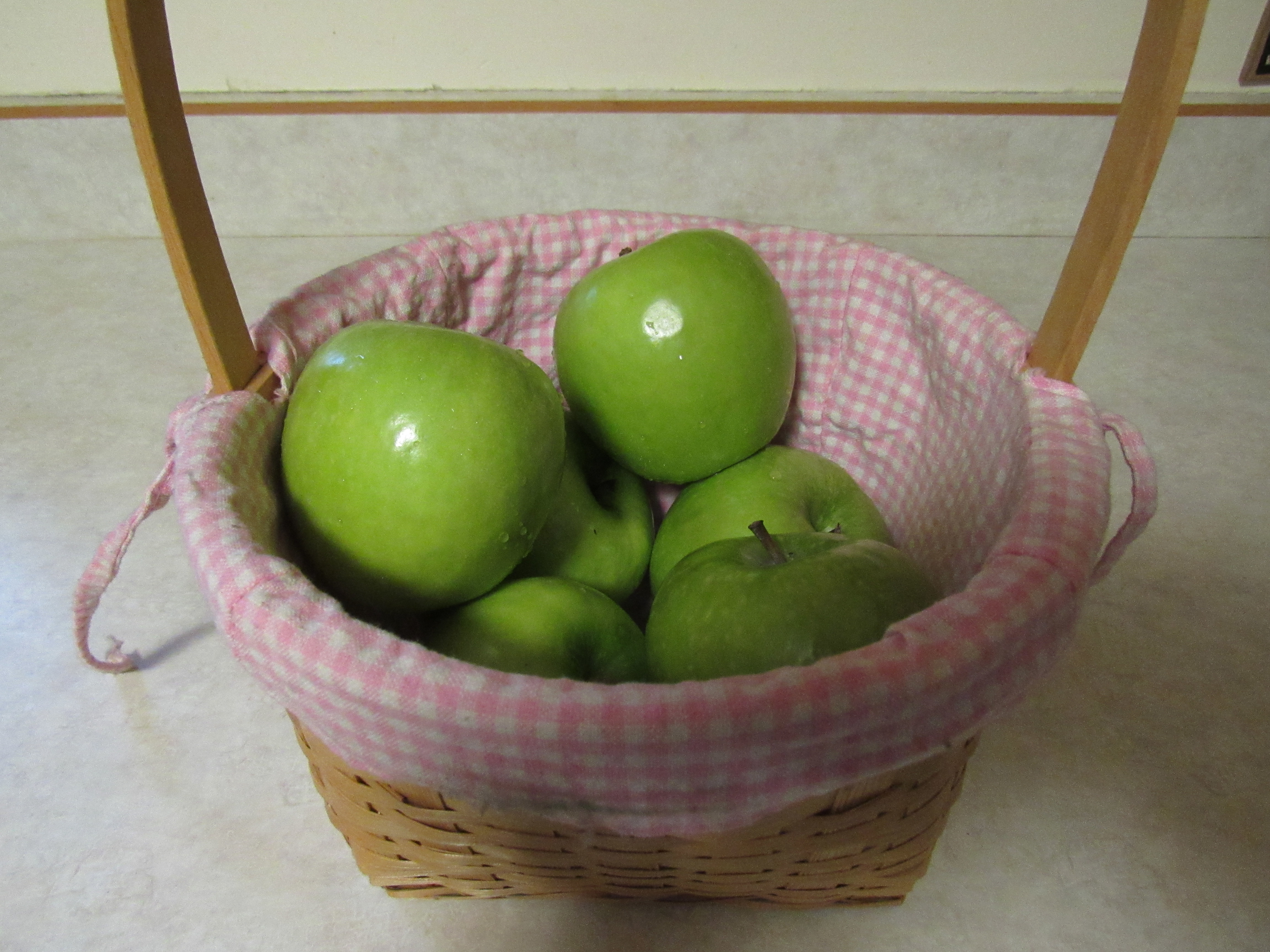
The recipe calls for tart apples so I used Granny Smith. For apple pies that I’ve made in the past, three large apples made one pie. Since these apples would be “stewed” before going into the pie shell, I used twice that amount. This made enough filling for a large 9” pie.

Peel and slice the apples. Place them in a large saucepan and add water but don’t cover the apples. Cook over a medium heat until tender, about 15 to 20 minutes. The aroma took me back to childhood memories of my grandmother’s cooking.
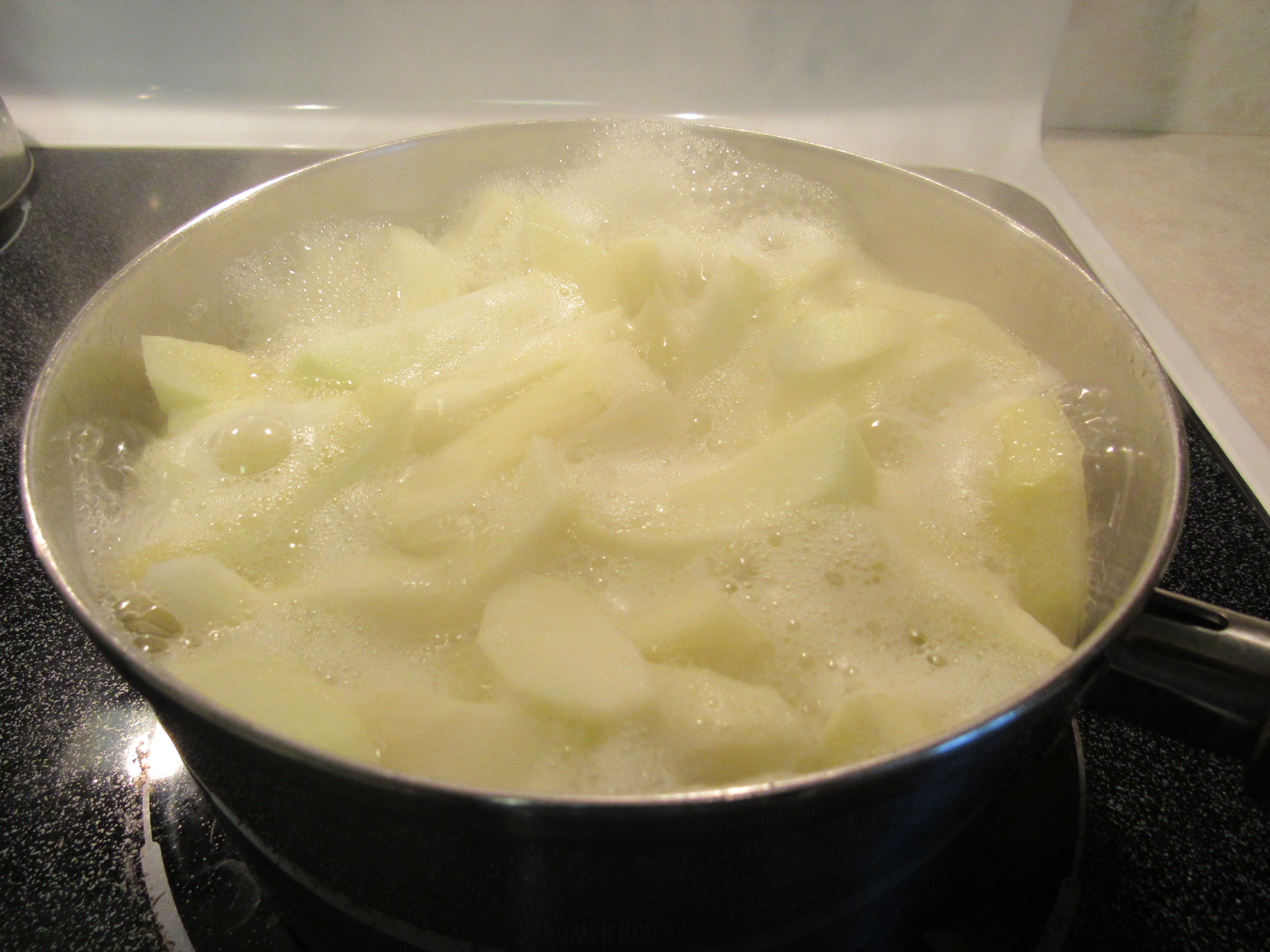
Remove from heat. Drain excess water. Mash the cooked apples. Add a teaspoon of nutmeg. After tasting the mixture with a spoon, I felt it needed a teaspoon of cinnamon so I added that. It gave the apples a nice flavor.

Hint: To prevent fruit juices from soaking into the pie crust, beat an egg and lightly brush a little onto the unbaked shell. 1877 cooks dipped a cloth into the egg mixture, but I used a pastry brush.

Poor the apple mixture into a prepared unbaked pie crust and bake at 375 degrees for about 35 minutes or until the shell is done and the apples are set.

For the meringue: Beat 3 egg whites, 3 tablespoons powdered sugar, and ½ teaspoon vanilla until “it will stand alone.”

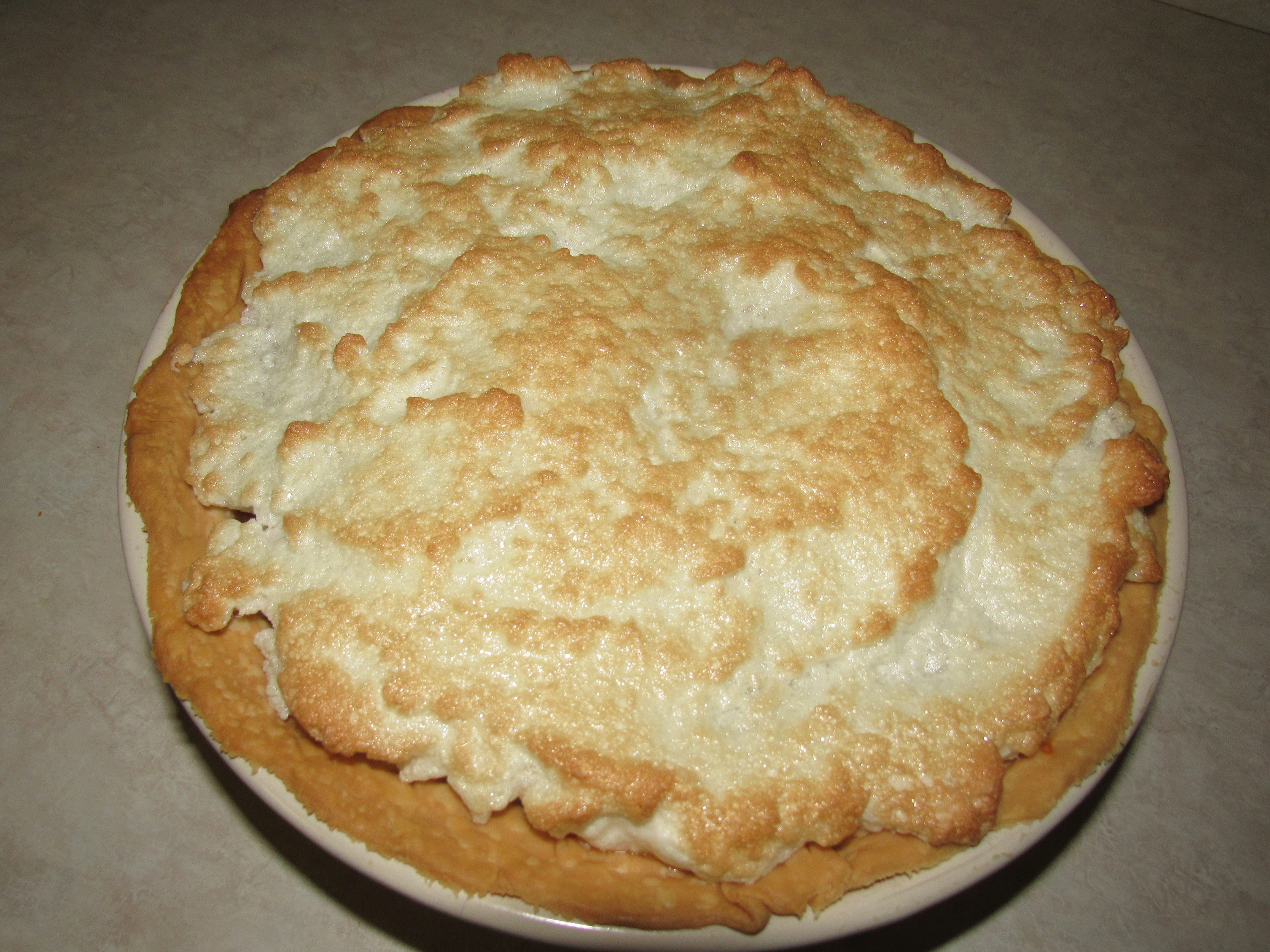
Allow the baked pie to cool about ten minutes then cover the pie with the meringue. Increase the oven temperature to 400 and return the pie to the oven just until the meringue is lightly browned. This may take five minutes but keep watching so as not to burn it.

Refrigerate after the pie cools and serve cold.

None of my guests had heard of an apple meringue pie. The novelty and the taste appealed to everyone. The dessert took me back to my grandmother’s cooking. I liked it. I had always used sugar as opposed to powdered sugar for meringues and was a little nervous about how it would work. The powdered sugar took a little longer to whip but tasted good.

The cook advises that peaches can be substituted for apples when in season. That sounds really delicious so I plan to make it with peaches.

I’d love to hear if you try it.

-Sandra Merville Hart

Sources

Compiled from Original Recipes. Buckeye Cookery and Practical Housekeeping, Applewood Books, 1877.




Brig. Gen. Wofford Surrenders Department of North Georgia

William T. Wofford served as a captain in the Mexican War. After the war, he was in the Georgia state legislature. As a member of the state convention in 1861, he voted against secession. When Georgia seceded, he joined the 18th Georgia Infantry as colonel.

His regiment was later assigned to General John Bell Hood’s Texas Brigade. As part of this brigade, Wofford and his men fought at Yorktown, Second Bull Run, South Mountain, Sharpsburg, and Antietam.

In November of 1862, 18th Georgia was transferred to the Georgia Brigade. Wofford was promoted to brigadier general on January 17, 1863.

He served with the Army of Northern Virginia until Georgia Governor Joseph E. Brown asked him to assume command of the Department of North Georgia around the end of 1864.

Georgia’s citizens needed protection from guerrilla attacks. Wofford strengthened his forces with stragglers, deserters—any available men. He commanded this department until May 12, 1865.

Lee and others had already surrendered when letters between Union Brigadier General Henry M. Judah and Wofford were exchanged. Union Colonel Louis Merrill believed there to be about 10,000 soldiers in Wofford’s command.

About a third of this number surrendered—the rest deserted.

A sign in Kingston, Georgia, located at the intersection of Church Street and West Main Street, marks where the surrender occurred.

-Sandra Merville Hart

Sources

“Conclusion of the American Civil War,” Wikipedia.com, 2018/03/21 https://en.wikipedia.org/wiki/Conclusion_of_the_American_Civil_War.

“Conclusion of the American Civil War,” Wikiwand.com, 2018/03/22 http://www.wikiwand.com/en/Conclusion_of_the_American_Civil_War.

Long, E.B. and Long, Barbara. The Civil War Day by Day: An Almanac 1861-1865, A Da Capo Paperback, 1971.

Plante, Trevor K. “Ending the Bloodshed,” National Archives, 2018/03/21

https://www.archives.gov/publications/prologue/2015/spring/cw-surrenders.html.

“W.T. Wofford (1824-1884),” New Georgia Encyclopedia, 2018/04/21 https://www.georgiaencyclopedia.org/articles/history-archaeology/w-t-wofford-1824-1884.

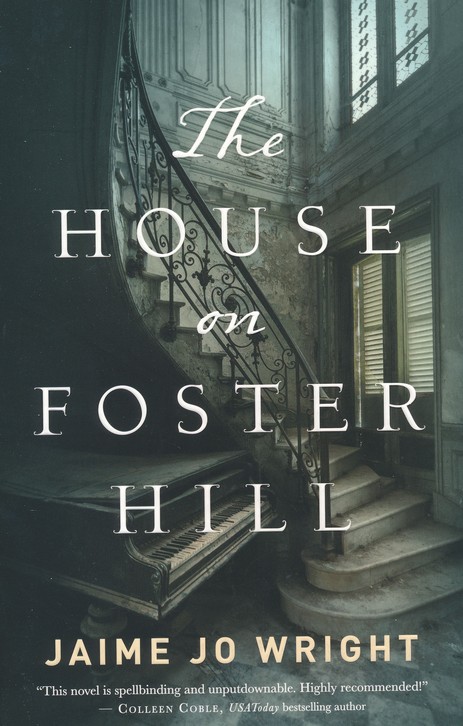
The House on Foster Hill by Jaime Jo Wright

1906—Ivy Thorpe is chilled by the discovery of a dead woman near the home at Foster Hill. Her father, the medical examiner on the case, reports that the woman recently had a baby. The sheriff and Joel Cunningham–the detective Ivy hasn’t seen since her brother died–can’t find the infant. The baby can’t survive long so Ivy decides to search, placing herself in danger.

Current day—Kaine Prescott can’t convince the police that her husband’s death was no accident. Nor can she can convince them that someone is now stalking her. Longing to escape the danger, she buys a historic home, sight unseen, on Foster Hill and moves to Wisconsin to fix it up.

But the house is far more dilapidated than the realtor’s photos showed … and sinister. When the stalker finds her again, she’s terrified. Can she really trust her new neighbor, Grant Jesse?

Riveting!

Both women face danger that involves the house at Foster Hill. Their stories are woven together in a way that escalates with every turn of the page. Suspenseful, dramatic, heart-wrenching. I wasn’t able to put it down!

Spellbound by this well-written story.

Looking forward to reading other books by this author!

-Sandra Merville Hart

Christianbook.com

Ambrosia Recipe from 1877

I leafed through my 1877 cookbook for a dish to take to a family Easter meal and stumbled across this recipe for ambrosia. A little different from the modern version, fruity—it was perfect.

For this dish, you can peel and slice one pineapple. Mrs. Theo Brown, the original cook, advised that the canned pineapple was equally as good, so I used pineapples chunks and then sliced them in half.

Peel six to seven sweet oranges, removing the seeds and core. Slice the larger sections in two.

Combine the oranges and pineapple and mix them well.

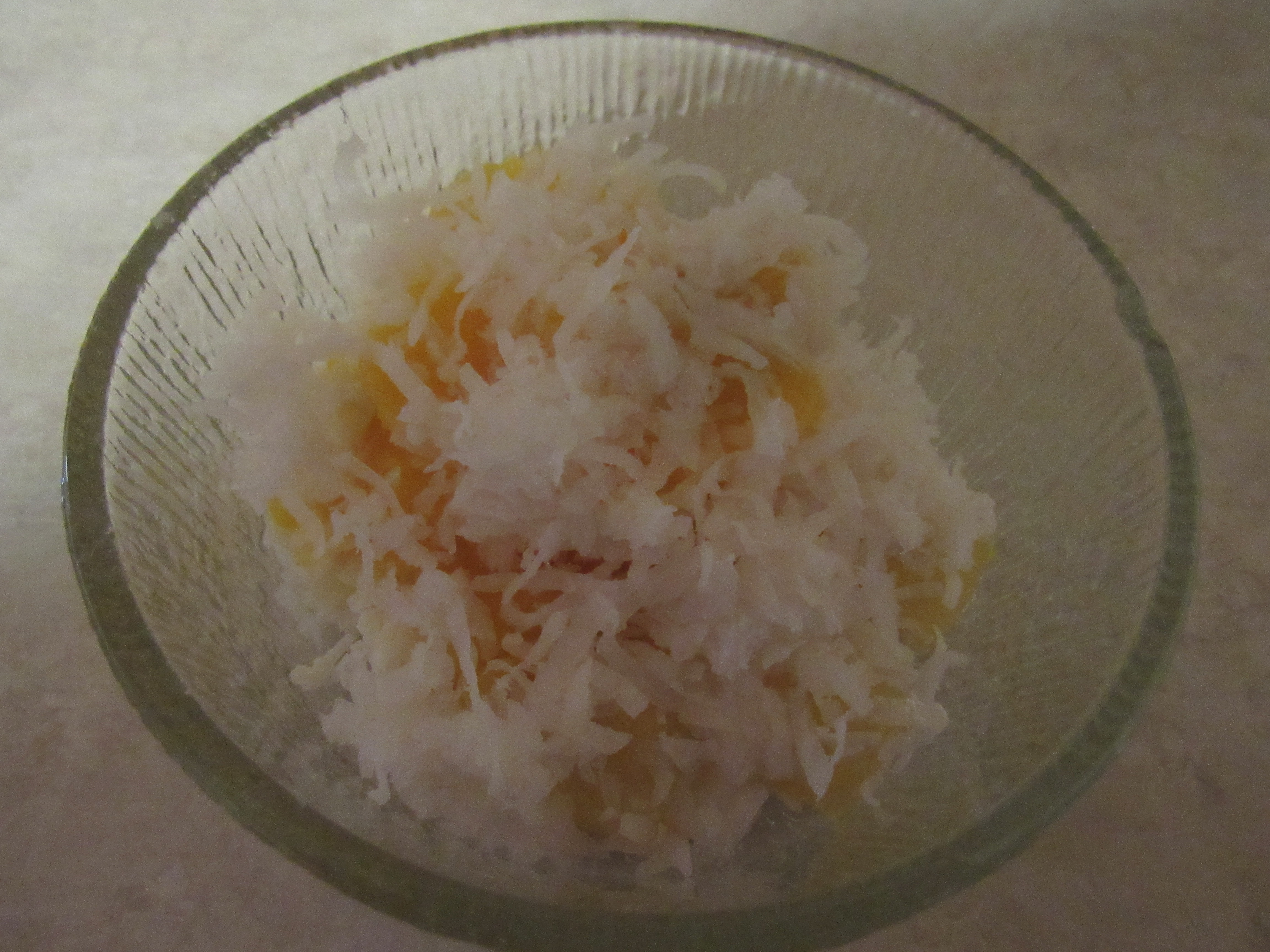
Choose a deep, round serving bowl to allow for 2 or 3 layers. Start with a layer of fruit then top it with grated coconut. (I used packaged sweetened coconut because that was all that was available at the grocery store.) Sprinkle powdered sugar over the coconut. (Mrs. Brown called this “pulverized sugar.”) You don’t need a lot, especially when using sweetened coconut.

Then add another layer of fruit and coconut and top it with a sprinkling of powdered sugar. My serving dish held 2 layers and it was plenty.

Guests found this citrus dish refreshing—much lighter than modern versions that can call for sour cream, heavy cream, and mini marshmallows.

I liked it very much. The powdered sugar gives the dish a sweet flavor. I plan to make it again. An easy dish to take to a picnic or family gathering.

I’d love to hear if you try it.

-Sandra Merville Hart

Sources

Compiled from Original Recipes. Buckeye Cookery and Practical Housekeeping, Applewood Books, 1877.