
An 1876 Christmas Appeal from Orphans

by Sandra Merville Hart

Undoubtedly children orphaned by the Civil War still lived in Cincinnati orphanages in 1876. Though the war ended 11 years earlier, citizens would never forget the horrors of the time.

So, when an ad for the Cincinnati Orphan Asylum asked for a bag filled with “anything you can think of to eat, wear or use”, generous folks must have responded.

Here are a few foods they requested: split peas, raisins, coffee, cake, sugar, tea, hominy, turnips, spices, ham, beets, cheese, poultry, potatoes, apples, beans, and rice.

They needed clothing, woolen cloth, cotton cloth, calico, flannel, shoes, stockings, combs, brushes, pins, sheets, dishes, knives, forks, and spoons.

There was a list of ideas for gifts under “Send to our Christmas Tree”: gloves, hair ribbons, nuts, candy, handkerchiefs, skates, sleds, slates, hoods, scarves, mittens, neckties, baskets, thimbles, lead pencils, drawing paper, Dominoes, evening games, Backgammon, Games of History, Games of Authors, color boxes, work boxes, scissors.

This variety would fit almost any budget.

Many of these items are on Christmas lists today, aren’t they?

We have a time-honored tradition of giving at Christmas. If your budget allows, look for a charity to bless with a gift.

Sources

Berten, Jinny Powers. Cincinnati Christmas, Orange Frazer Press, 2011.
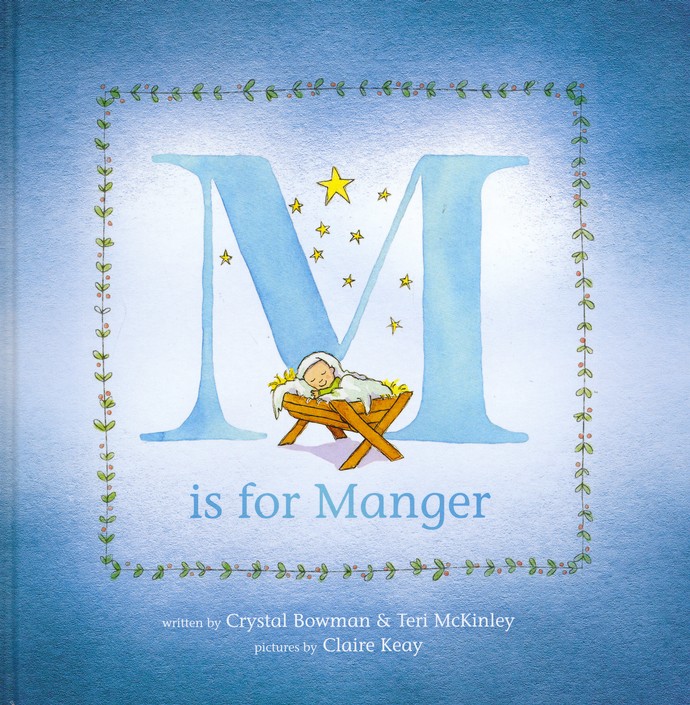


M is for Manger

I love this book!

The authors take a word from each letter of the alphabet that ties into the Christmas story. For example, “C” is for Carpenter. Joseph was a carpenter.

Each letter’s word is written in a poem.

There is a Scripture reference included with each letter.

This is an excellent book for toddlers through the second grade.

The beautifully-illustrated hard cover book makes a wonderful Christmas gift.

-Sandra Merville Hart

Christianbook.com


Boar’s Head Festival

In 1340, according to legend, a student at Queen’s College in Oxford, England, read a metal-bound book of Aristotle as he strolled through the forest to Christmas Mass. Wild boars, a menace to society, roamed the woods and one attacked the young man. With no weapons, he rammed his book into boar’s mouth, choking the animal to death. Roasted boar was often served at medieval banquets. A procession carried in the boar’s garnished head into the dining hall that night while carolers sang. This presentation at Christmas became a symbol of Jesus’s triumph over sin.

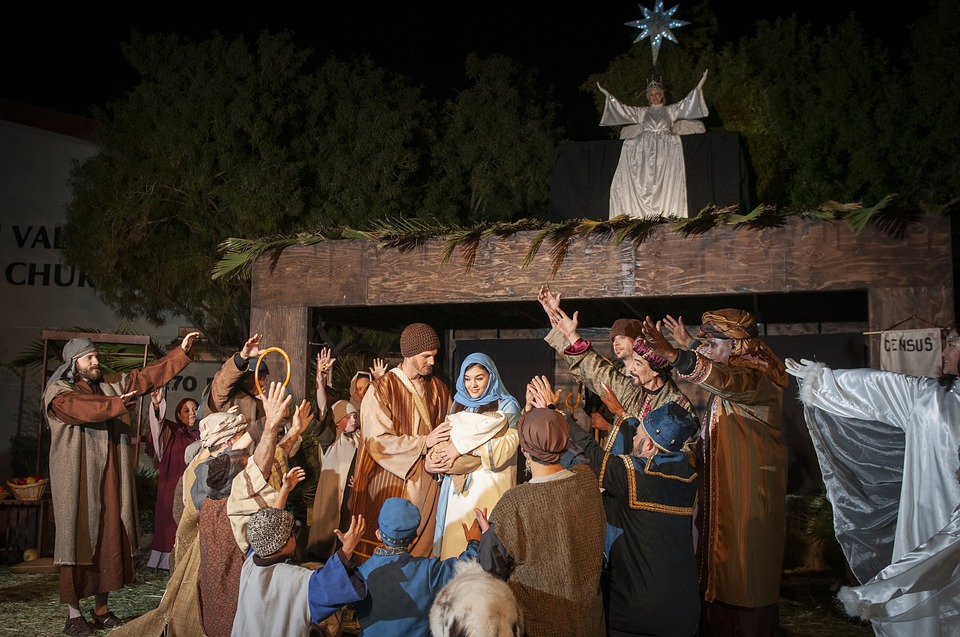
St. John’s College in Cambridge celebrated the Boar’s Head Festival by 1607. An expanded cast of historical characters, lords, ladies, knights, hunters, and others told of the birth of Jesus. Magi and shepherds were added later.

Mince pie and plum pudding were served at the festival and the Yule Log was lit.

The medieval festival is still celebrated in Europe and the United States. The formal program at Christ Church Cathedral in Cincinnati includes: Orchestral Prelude, Procession of the Beefeaters, The Yule Sprite Comes, The Boar’s Head Procession, The Yule Log, The Waits, The Angel, The Shepherds, The Magi, The World joins the Kings and Shepherds, Recessional, Orchestral Postlude and The Yule Sprite Returns.

During the Boar’s Head Procession, a boar’s head is carried in by knights and others.

There is symbolic meaning to the parts of the medieval service that occurs between Christmas and New Year’s Day. The costumes and processions transport guests back in time and is worth experiencing.

-Sandra Merville Hart

Sources

Berten, Jinny Powers. Cincinnati Christmas, Orange Frazer Press, 2011.
“The Boar’s Head and Yule Log Festival Tradition,” Christ Church Cathedral, 2019/07/29 ttps://cincinnaticathedral.com/boars-head-tradition/.