Union troops poured into Washington near the end of April, 1861. Before long, twenty thousand men added to the city’s prewar population of sixty thousand. The city had 33 militia units with armories where they drilled—not nearly enough to accommodate so many additional soldiers. And where were they to sleep?
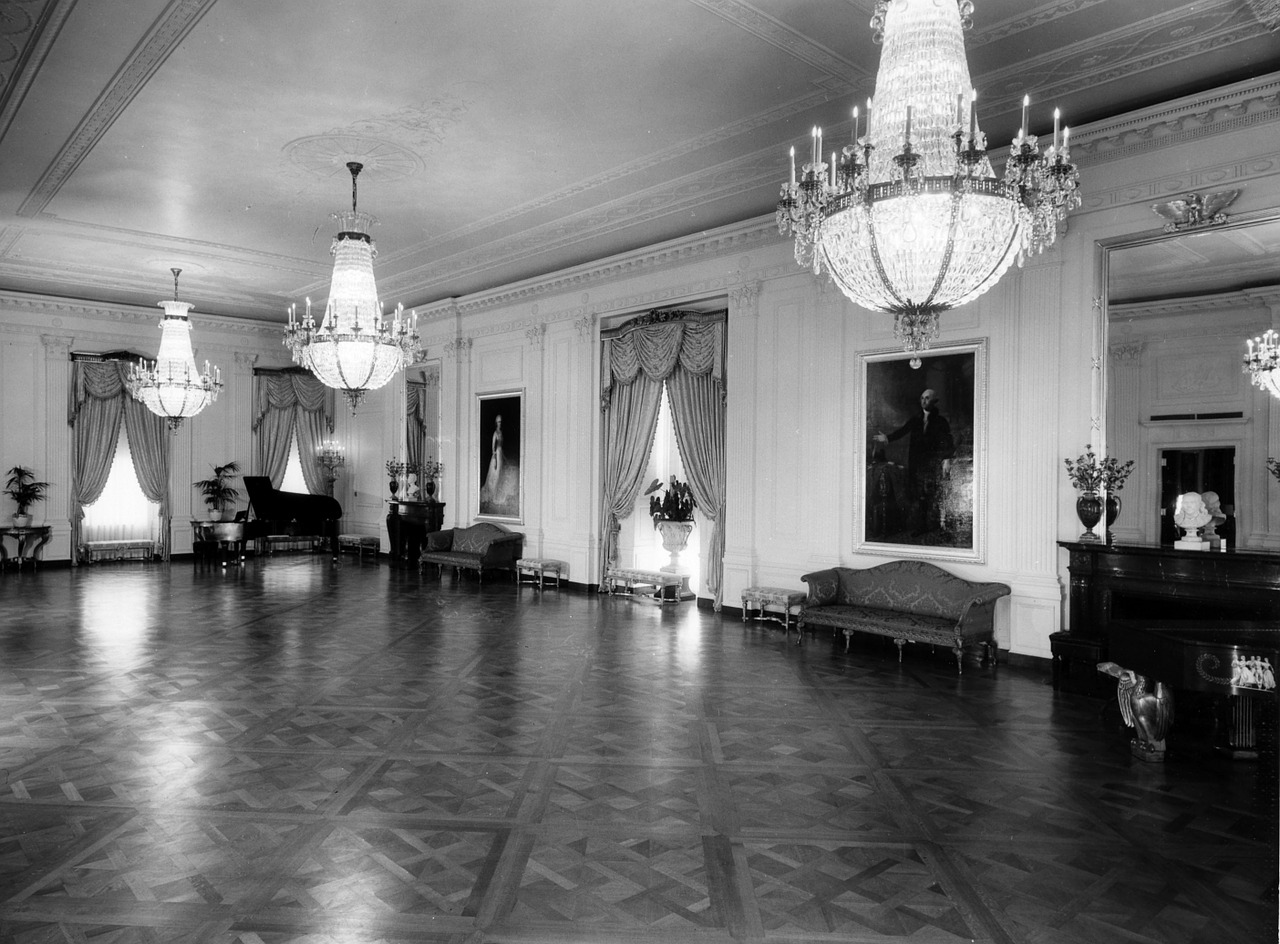
President Abraham Lincoln welcomed the first troops as honored guests. On April 18th, Major Hunter took Jim Lane’s Kansas Warriors into the East Room of the White House and allowed them to stay there.
Soon troops were camped on the White House lawn, at the Capitol, and the Washington Arsenal. Area churches as well as schools like Georgetown College and Columbian College.
The government rented other buildings for the soldiers.
Seven thousand troops were in the Capitol, occupying Senate and House chambers, committee rooms, galleries, and halls. This brought its own problems of cleanliness. Congress was set to convene on July 4th —before this meeting, grease, tobacco, and other filth had to be scrubbed from the areas.
Soldiers’ tents surrounded the Capitol for a radius of three miles. Troops bivouacked and drilled in the inaugural ballroom, which was a temporary building near City Hall.
Many of these troops received training in the city and soon marched off to war. Others remained to defend the nation’s capital. Sixty-eight forts had been built around Washington by 1865, and these housed Union troops. The city was protected by these forts that had a combined ninety-three batteries, seven blockhouses, and twenty miles of rifle pits. There were thirty miles of military roads.
The forts were built to last for the war’s duration and many of them are gone now. Traces remain of a few of them, including Fort Chaplin, Fort Davis, Fort DeRussy, Fort Foote, and Fort Stevens.
– Sandra Merville Hart
Sources
“Civil War Defenses of Washington,” Wikipedia, 2019/12/26 ttps://en.wikipedia.org/wiki/Civil_War_Defenses_of_Washington.
Selected by Dennett, Tyler. Lincoln and the Civil War In the Diaries and Letters of John Hay, Dodd, Mead & Company, 1939.
“The capital can’t be taken!” Civil War Defenses of Washington, National Park Service, 2019/12/26 ttps://www.nps.gov/cwdw/index.htm.
Winkle, Kenneth J. Lincoln’s Citadel: The Civil War in Washington, DC, W.W. Norton & Company, 2013.
 Sandra Merville Hart