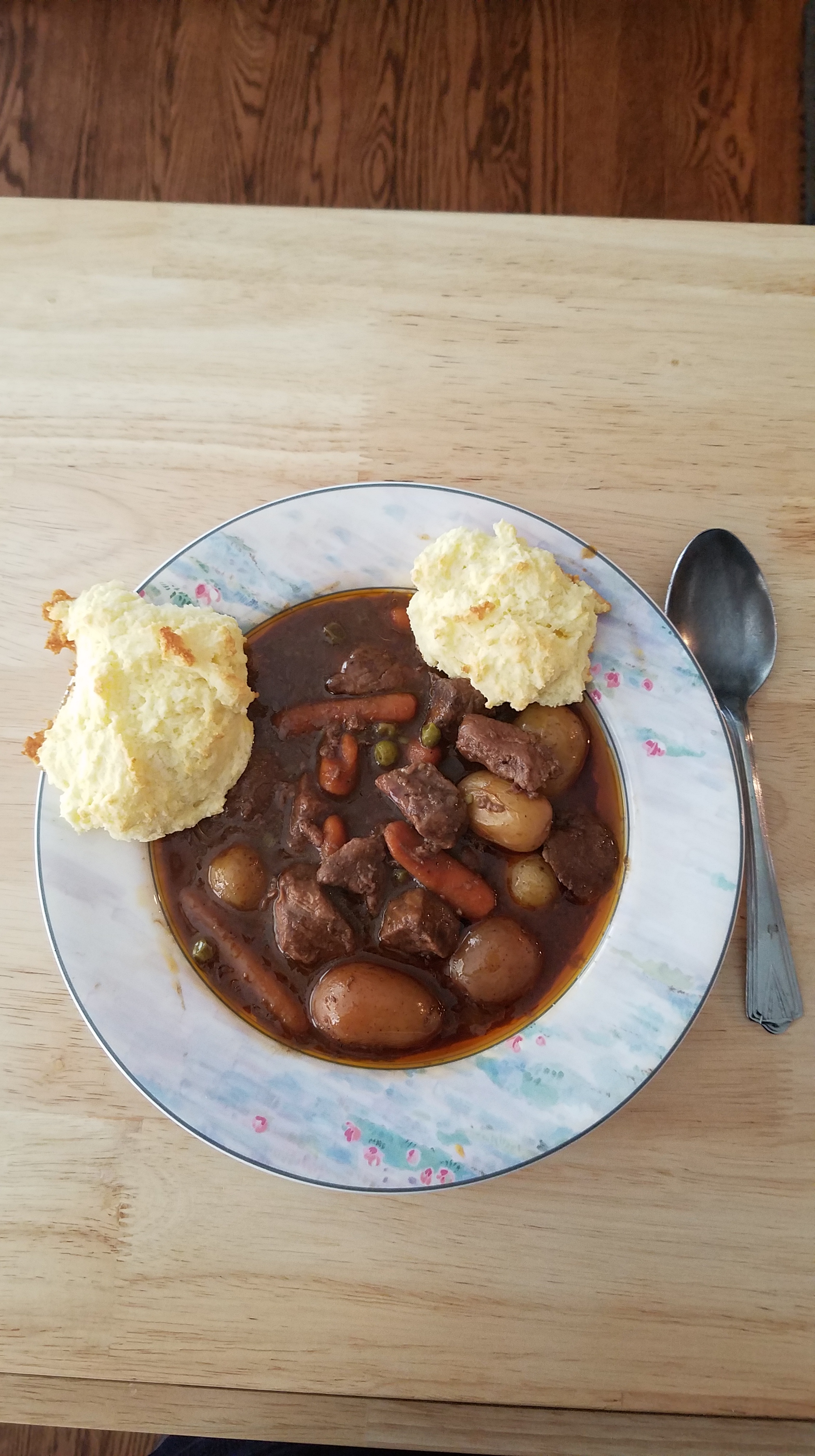
Cindy Ervin Huff, fellow author in “The Cowboys,” shares a recipe from her new historical romance book release. Welcome back to Historical Nibbles, Cindy!
by Cindy Ervin Huff
Stew was a mainstay in the diet of most pioneers and homesteaders. It can be easily stretched to feed a large group of people. And reheated stew has even more flavor than the first day it was served. Because homesteaders had a busy life, it was often easier to set a pot of stew to cook slowly while the womenfolk tended to other chores, such as sewing or doing laundry.
Cooks on cattle drives often made stew. The chuck wagon traveled to the campsite for the day and arrived hours before the drovers. Cooking a large pot of stew over a campfire ensured the crew had a hearty meal at the end of the day.
Stew might consist of a variety of meat such as chicken, beef, lamb, venison and even softened jerky. And any vegetable or herb would be added. Spices might be interchanged due to what was available in the area and the nationality of the homesteader.
Stew was also a mainstay for work crews such as lumber jacks, railroaders, and construction crews. In my newest release, Angelina’s Resolve, the entire community shares a tent kitchen. Buffalo that wasn’t smoked or salted became stew for the week.
Stew has held a prominent place in the culinary history of America even today. Below is a stew recipe that can be modified based on what is on hand.
Drop biscuits were more common than cut ones on a busy day. A drop biscuit is the same recipe as any other biscuit, except the biscuit dough is dropped from a spoon on the baking sheet or cast-iron pot and baked. The shapes are irregular but the flavor is the same. Stew is usually served with some type of bread. Biscuits like stew were the go-to preference for getting a meal out quickly. Especially on the trail.
Meat Stew
Choose any type of meat available, such as chicken, beef, lamb, or wild game. Cut meat into pieces and dredge in flour. Then in a Dutch oven or other large pot, cook the meat in lard until browned on all sides.
Then add water, enough to cover the meat but not to the rim of the pan. Add salt if meat is not already salted. Chop your choice of vegetables into small pieces. Once the water is boiling, add the vegetables, then push the pot to the back of the stove to slowly cook. Stir occasionally to prevent burning to the bottom of the pan. The more people you are serving, the more vegetables you should add to stretch the stew. Add water as needed. Season with any herbs you like. This stew can be cooked in a shorter time by leaving it on the hotter part of the stove or over a campfire. Stew is done when vegetables are soft. Serve with bread, biscuits or cornbread.

About Cindy
Cindy Ervin Huff is an Award-winning author of Historical and Contemporary Romance. She loves infusing hope into her stories of broken people. She’s addicted to reading and chocolate. Her idea of a vacation is visiting historical sites and an ideal date with her hubby of almost fifty years would be a live theater performance. Visit her on her website or on Facebook.

Angelina’s Resolve
Architect Angelina DuBois is determined to prove her worth in a male-dominated profession by building a town run by women, where everyone is equal, and temperance is in the by-laws. Contractor Edward Pritchard must guard his heart as he works with the beautiful, strong-willed yet naïve Angelina. He appreciates her ability as an architect, but she frustrates him at every turn with her leadership style. When the project is completed, will it open doors for more work or make him a laughingstock? Can two strong-will people appreciate their differences and embrace their attraction as they work together on to build their town?
 Sandra Merville Hart