Author Shares Inspiration for A Rebel in My House on 160th Anniversary of the Battle of Gettysburg

by Sandra Merville Hart

As dusk fell on a fall evening, staring out over the fields crossed by Pickett’s Charge from Cemetery Hill tore at my heart. Grassy fields are now calm, serene—yet the land still tells the story. Something significant happened on the farms outside Gettysburg in 1863.

I contemplated the scene before me as the sun sank beyond the horizon. My imagination soared, sparked by park rangers on various battlefield talks as well as my own research about those who fought there.

Once I discovered the significant events that took place within the borough of Gettysburg and how Confederates occupied the town, I knew I wanted to tell their story in A Rebel in My House.

To my delight, I found Tennessee Regiments, including the Seventh Tennessee, that opened the Battle of Gettysburg on July 1st and ended it on July 3rd at Pickett’s Charge. It seemed fitting to place our hero in a regiment that history deemed so important.

Our heroine is a fictitious Gettysburg seamstress. Actual Gettysburg residents, such as Sallie Myers, are used in very minor roles in the story. The battle, setting, and events are as historically accurate as possible. I studied the history and then dropped my characters in the middle of the action.

To write this story, I had to try to go back in time. I strolled the streets of Gettysburg. I walked the battlefields. I read monument inscriptions, soldier accounts, citizen diaries, and many research books until I felt like I experienced those horrible events in some small way.

Writing this novel changed me.

Research proved that heroes sprang up everywhere, both soldiers and citizens. Tragic events demanded more strength than folks believed they possessed, yet somehow courage rose to face the turmoil. The fear before the battle pushed folks to their limits. Learning their stories inspired me.

Firestorm at Gettysburg quotes Gettysburg resident, Sarah Broadhead, as saying after the battle, “We do not know until tried what we are capable of.”

 My gaze riveted on that “no-man’s land” that became Pickett’s Charge as I stood on Cemetery Hill at dusk. A dozen emotions ripped at my heart.

I left, knowing I had a story to write.

Amazon

A Summer at Thousand Island House by Susan G. Mathis

Reviewed by Sandra Merville Hart

Romance at the Gilded Age Resorts, Book 4

Addi Bell has plenty of teaching experience when she arrives for a summer of caring for young children at the Thousand Island House. She plans adventures and learning experiences to enthrall the children because she has no intention of wasting those days.

Liam Donovan, the resort’s manager and her boss, doesn’t know what to make of the Addi’s child-like enthusiasm for life. The last nanny had never planned anything beyond playtime for her charges—Addi insists upon being allowed to teach them. Before long, the Scottish manager finds himself falling in love with her.

Addi’s heart goes out to Jimmy, the only son of the stern widower, Lieutenant Worthington.

The lonely little boy tugged at my heart immediately. I loved Addi’s enthusiasm for the children. Liam’s Scottish sayings made me smile. I was quickly drawn into the story by concern for Addi, who is alone in the world.

The author weaves history of the island into her story, which I appreciate.

A delightful read for lovers of historical romances!

Amazon

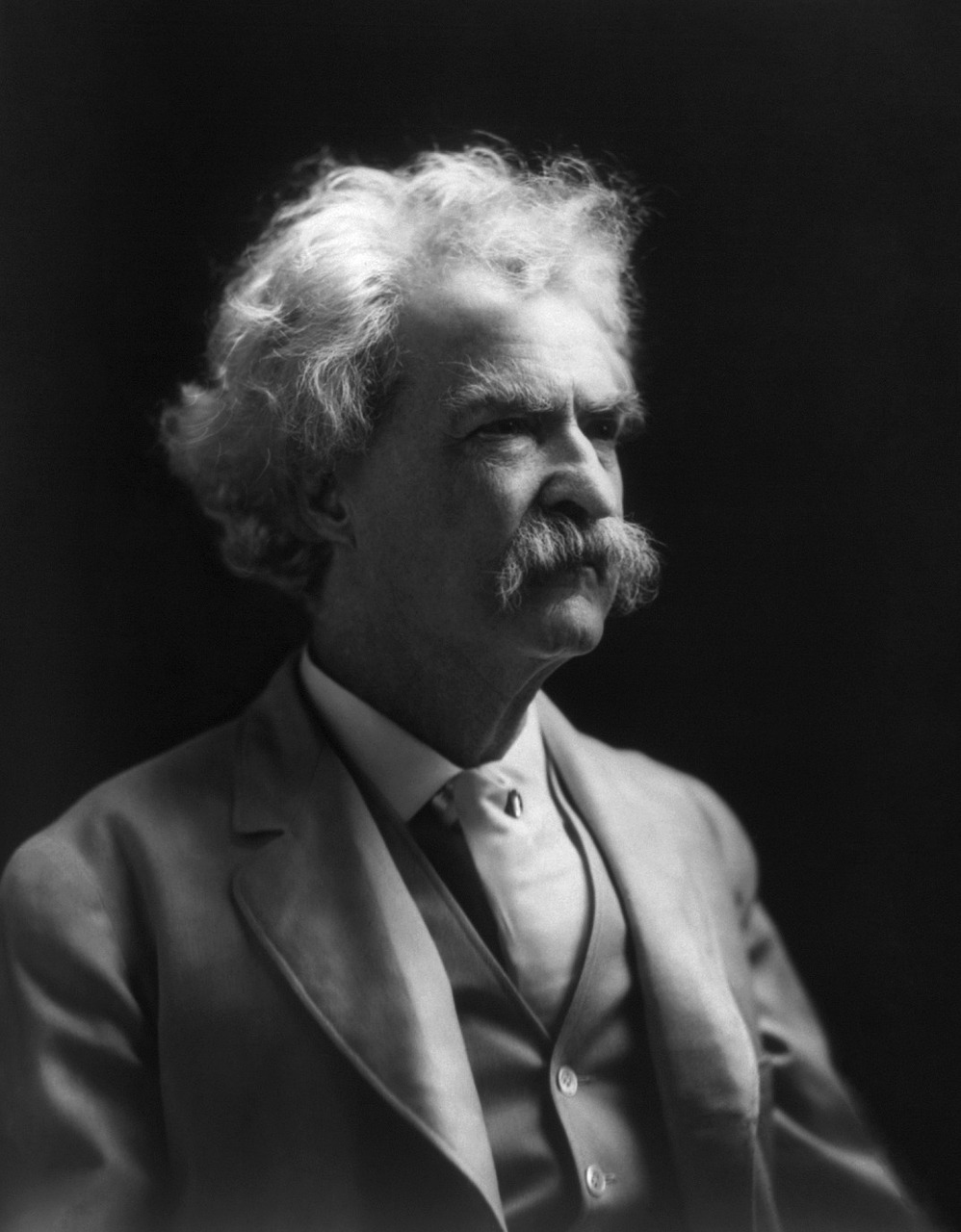
Mark Twain Loses One Million Dollars

by Sandra Merville Hart

Mark Twain’s life was at a pivotal moment in the 1860s.

He was out of the States and in Nevada Territory where fortunes were made and lost mining for silver. He ought to know. His part-ownership in a silver mine had made him a millionaire. Through the worst of misfortunes, Twain lost his interest in the mine in ten days.

What was next for him? He had held a variety of positions: grocery clerk, blacksmithing, bookseller’s clerk, drug store clerk, St. Louis and New Orleans pilot, a printer, private secretary, and silver miner. He felt that he had mastered none of these professions. What does one do after losing a million dollars?

He gave in to misery. He had written letters to Virginia’s Daily Territorial Enterprise, the territory’s main newspaper in earlier days; it always surprised him when the letters were published. It made him question the editors’ judgment. His high opinion of them ebbed because they couldn’t find something better than his literature to print.

As Twain wondered what his future held, a letter came from that same newspaper offering Twain a job as city editor. Though he had so recently been a millionaire, the twenty-five-dollar salary seemed like a fortune. The offer thrilled him.

Then doubts set in. What did he know of editing? He felt unfit for the position. Yet refusing the job meant that he’d soon have to rely on the kindness of others for a meal, and that he had never done.

Necessity forced Twain to accept an editor’s job for which he felt ill-equipped. He arrived in Virginia, Nevada Territory, dressed more as a miner than an editor in a blue woolen shirt, pantaloons stuffed into the top of his boots, slouch hat, and a “universal navy revolver slung to his belt.”

The chief editor, Mr. Goodman, took Twain under his wing and trained him to be a reporter. It wasn’t long before the young man discovered he’d stumbled upon a profession in which he excelled.

What would have happened if Mark Twain hadn’t lost a million dollars? His words may have been lost to us. Such classics as The Adventures of Tom Sawyer, The Adventures of Huckleberry Finn, and The Prince and the Pauper might never have been written.

When we ponder our failures, our rejected works, and lost opportunities, we should remember that situations change. We won’t always feel as we do today. God has the ability to put us in the right place at the right time with the right attitude.

Just like He did with Samuel Clemens, America’s beloved Mark Twain.  

Sources

Twain, Mark. Roughing It, Penguin Books, 1981.

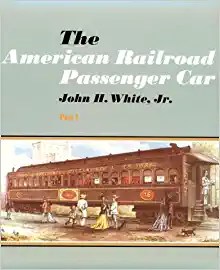
The American Railroad Passenger Car by John H. White, Jr.

Reviewed by Sandra Merville Hart

This book was part of my research for A Not So Peaceful Journey, Book 3 in my “Second Chances” series. My characters take a train journey from Ohio to Oakland, California, in 1884. On the last leg of their journey, they rode in Palace cars.

The passenger cars were less luxurious than Palace cars.

This book has a lot of sketches to explain the design of different passenger cars. Specific cars and the railroad in which they were used make up a large part of this book—useful information if you are looking for specific details.

One thing I love about this book is the many photos, early ads, and sketches of old cars. The descriptions included with them were quite helpful.

Recommended for readers who want to learn more about early train travel.

Amazon

Wired Love by Ella Cheever Thayer

Reviewed by Sandra Merville Hart

A Romance of Dots and Dashes

I found this book while researching the job of telegraph operators for A Not So Peaceful Journey, Book 3 in my “Second Chances” series. My heroine is a telegrapher in Hamilton, Ohio, before embarking on a train journey from Ohio to Oakland, California, in 1884.

Feisty Nattie Rogers is a telegraph operator. She meets the mysterious “C”, a telegraph operation in another station on her wire. He refuses to tell her his full name and they develop a friendship over the wire that soon has her dreaming of love.

Nattie tells her fellow boarders all about “C” and they can’t wait for the two of them to meet. But the course of true love meets some hurdles.

This book is written in the omniscient viewpoint. The reader knows what everyone is thinking all the time. Written in 1880, this story has the long conversations prevalent in writings of that day. I confess that I skimmed over some of those, but still enjoyed the story.

The author gives a thorough overview of a telegrapher’s job in the story, which I appreciated.

Amazon

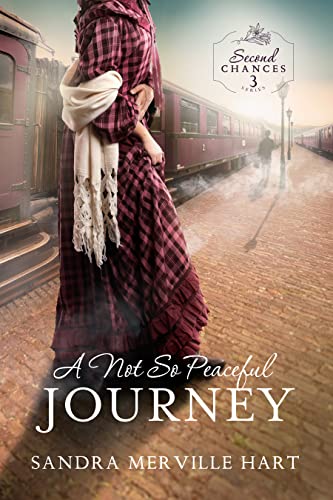
A Not So Peaceful Journey Releases Today!

by Sandra Merville Hart

I’m excited to announce that A Not So Peaceful Journey, Book 3 in my Second Chances series, releases today, June 13th!

Join characters you love on a journey from Ohio to California in 1884! Trains had opened up the West to travelers. The Transcontinental Railroad was completed on May 10, 1869 when the Central Pacific met the Union Pacific in Promontory, Utah. It was important because it linked the East to the West.

Small frontier towns shot up along the railroad tracks, providing water and coal stops for the trains. They also provided meal stops for passengers.

Readers will catch early glimpses of familiar and unfamiliar towns along our journey to San Francisco. Come along for the ride!

Here’s a bit about the book:

Dreams of adventure send him across the country. She prefers to keep her feet firmly planted in Ohio.

Rennie Hill has no illusions about the hardships in life, which is why it’s so important her beau, John Welch, keeps his secure job with the newspaper. Though he hopes to write fiction, the unsteady pay would mean an end to their plans, wouldn’t it?

John Welch dreams of adventure worthy of storybooks, like Mark Twain, and when two of his short stories are published, he sees it as a sign of future success. But while he’s dreaming big with his head in the clouds, his girl has her feet firmly planted, and he can’t help wondering if she really believes in him.

When Rennie must escort a little girl to her parents’ home in San Francisco, John is forced to alter his plans to travel across the country with them. But the journey proves far more adventurous than either of them expect.

Available on AmazonBarnes & Noble, Kobo, Apple Books, and Books 2 Read.  

The Pacific Tourist by Henry Williams

Reviewed by Sandra Merville Hart

This book was part of my research for A Not So Peaceful Journey, Book 3 in my “Second Chances” series. My characters take a train journey from Ohio to Oakland, California, in 1884.

I love this book. I needed to find a source that provided information about the depots, locations, how far apart they were, what was at each station, and the scenery.

This guidebook provided all that information and more. It’s a fount of information!

I read this book and several others to understand how train passengers in the 1880s traveled. There were long lines for the small washing rooms in the morning. Many, especially women, brought their own towels and toiletries. There was a basin with water to wash your face, brush your teeth, or take a quick sponge bath.

The trains stopped at specific depots for meal stops. These were called eating stations. The food might be undercooked or nearly raw. Each place had its specialties. In the 1880s, nearly every station charged a dollar per person.

I loved the early history the author included for towns that the trains passed on those journeys. Very interesting!

This book is fascinating, with wonderful details of situations and sights along the rails. Recommended for those interested in learning the history of the West and also train travel.

Amazon