December 2023 New Releases
More in-depth descriptions of these books can be found on the ACFW Fiction Finder website
Contemporary Romance:
Bidding on a Second Chance by Emily Conrad — His bid for a second chance this Christmas might lead to her most disastrous fall yet. Police officer Graham Lockhart’s life is dangerous enough without accident-prone Piper Wells tripping around in it—at least that’s what she claimed when she declined his marriage proposal two years ago. But he can’t help but wonder if there is more to her refusal. Piper always cared for Graham, but she is incapable of giving him the one thing he wants more than anything—family. All her orphaned self knows about that is how much it hurts to lose. She’s better off focusing on caring for her nephew and running her business. Secondhand furniture doesn’t break hearts. When an injury sidelines Piper leading into the holidays, Graham steps up to help her keep her commitment to a Christmastime auction benefiting a local family. Can they overcome the hurdles between them, or will the past and their warring hopes and fears trip them up for good?? (Contemporary Romance from Hope Anchor LLC)
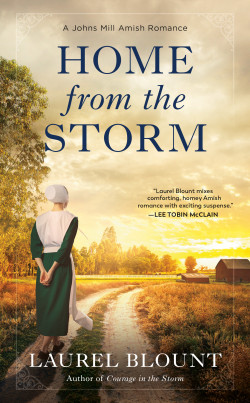
Home from the Storm by Laurel M. Blount — After a senseless loss, hotheaded Caleb Hochstedler left his Amish faith and his young wife to seek justice. Two years later, he tracks his parents’ killer back home to Johns Mill, where he’s astonished to learn he’s the father of twins. Now he’s determined to protect his children and the woman he still loves—if she’ll let him. Her new husband’s abandonment broke Rhoda Lambright’s heart and proved her father, the bishop, right. Such a stubborn man could never be happy among the peaceful Amish. When Caleb unexpectedly returns, Rhoda is caught between her rock of a husband and a very hard place. Her church forbids divorce and requires forgiveness, so Rhoda lets Caleb back into their home. But can she ever let him back into her heart? One thing’s for certain sure. This second chance will take all the faith they can find. (Contemporary Romance from Berkley)
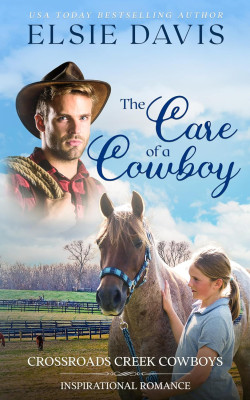
The Care of a Cowboy by Elsie Davis — In the sprawling landscape of Crossroads Creek, where the Texan sun paints golden dreams, Max Turner suddenly finds his dream of reclaiming his family’s lost ranch put on hold. To avoid draining his savings account, Max is desperately searching for a new job and a place to live, except ranch foreman jobs weren’t easy to come by. As the scorching summer unfolds, Max’s path crosses with that of Lucy Carrington, a determined young woman whose dreams clash with the expectations of her traditional rancher father. When her father hires Max to secretly oversee the ranch because he doesn’t trust his daughter to handle a man’s job, Max is caught in a web of deceit. As Max and Lucy navigate the complexities of their new roles, including the surprise news that Max is guardian to Crystal…a twelve-year-old niece he never knew existed, they discover the power of love and resilience, and the true meaning of family. (Contemporary Romance from Sweet Romance Publishing)
General Contemporary: Broken Spirit by Sheridan Lee — The dream of motherhood eludes her. Can she find her way back to hope? Belinda Briggs’ life is shattered by losses and crises, shattering her faith and leading her on a quest for renewed hope, faith, and peace in this series finale contemporary Christian women’s fiction tale. (Contemporary Women’s Fiction from Winged Publications)

Chokecherry Valley Comfort by Jean Rezab — One accident. Two devastated families. Paul Richmond’s life changed in an instant when his wife and seven-year-old daughter die in a car accident. He struggles to move forward with this huge change. As his two-year sobriety anniversary approaches, he knows he’s on the edge of a relapse. He takes a sabbatical from his work as a doctor and heads to his in-law’s farm to get perspective and try to come to terms with his new life. Tyler Garvey is the only survivor of the two-vehicle accident in which his younger brother dies. He feels guilty because he should have been driving. His parents don’t blame him, but he blames himself, and so does Paul. Both families try to put their lives back together. It’s going to take time, a great deal of comfort, and forgiveness on all sides. (General Contemporary, Independently Published)

Chokecherry Valley Joy by Jean Rezab — Abby feels like everything is wrong with her life. She’s never dealt with the grief of losing her twin sister, Samantha, and niece, Amy, in an accident. Her marriage to Mark has fallen into the routine of his long hours of work and her erratic schedule as a nurse in a busy Houston hospital. Their failed attempt to have a child puts further strain on their relationship. Unhappy in her current job, she needs a break. She travels to Chokecherry Valley to spend two weeks with her parents at their farm. Mark plans to join her after he finishes his current work project, and she hopes to reconnect with him and discuss their future. (General Contemporary, Independently Published)
 The Year of Goodbyes and Hellos by Kelly S. Irvin — Determined to save Sherri’s life, Kristen drops everything to guide her sister on the harrowing cancer treatment journey. When she’s unable to balance the strain of caring for her patients, being a wife and mother, and her frantic efforts to save her sister, Kristen’s carefully balanced life crumbles, starting with her marriage. Desperate to regain her footing, she vows to rebuild her broken relationships . . . as soon she’s sure Sherri will beat the odds stacked against her. Unlike her sister, Sherri Reynolds has worked to cultivate balance in her life. Her children, her job as a teacher, and her strong faith keep her grounded—until her diagnosis sends her spiraling into the scary world of what-ifs and unknown outcomes. Sherri faces the agonizing realization that family history may be about to repeat itself. With the clock ticking, she’s determined to use whatever time she has left to heal old wounds and restore relationships. Together, the sisters are forced to reexamine their priorities, address the still tender wounds of their childhood, and delve more deeply to discover what it means to live each day to its fullest.? (General Contemporary from HarperCollins Christian Publishing)
Christmas in Ohio by Bettie Boswell, Tamera Lynn Kraft, Penny Frost McGinnis, and Michelle Levigne — Come join us for a celebration of Christmas in the Buckeye State, with snow and mistletoe, a dash of suspense and danger, mystery and reunions, healing and hope. (General Contemporary from Mt. Zion Ridge Press)
Historical Romance:
When Love Comes by Penny Zeller — A woman with a broken heart. A man struggling with the loss of his brother and the subsequent care of his young niece. And two silly aunts who discover it’s never too late for true love. When Charlotte’s and Tobias’s paths cross in Prune Creek, Wyoming, can they put aside their preconceived disdain for each other? Does God have a plan for them and for a young girl in search of someone to take the place of the parents she lost? (Historical Romance from Maplebrook Publishing)
Cozy Mystery:
Deadly Burden by Janet Sketchley — Obey the police and stay safe, or follow her heart and help unmask a killer? Landon Smith solved the last murder by accident—and nearly became the next victim. When a shocking death strikes her close-knit circle, can this amateur sleuth discover who wanted the town busybody dead? The dead woman knew too much about too many people. Was she silenced to protect a secret? Or because of one she wouldn’t tell? And how can a dyslexic trauma survivor find clues the professionals miss? Landon can’t afford to be sidetracked by a vindictive guest at the inn or by unexpected family drama. Or by falling for the geeky writer next door—now that he’s over her. With a storm closing in and no leads in sight, Landon’s first Christmas at the Green Dory Inn is shaping up to be anything but merry and bright. (Cozy Mystery, Independently Published)
Romantic Suspense: Buried Grave Secrets by Darlene L. Turner — Standing guard…with threats on all sides. When bones are found at an unmarked grave site—and then shots are fired—forensic anthropologist Jordyn Miller knows someone wants old secrets to remain buried. She’ll do anything to uncover the truth about these suspicious deaths, including accepting the protection of her ex-boyfriend, Constable Colt Peters, and his K-9. But with targets on their backs, can Jordyn stay alive long enough to bring a serial killer to justice?? (Romantic Suspense from Love Inspired Suspense/Harlequin)
Plus check out these recent additions to Fiction Finder published within the past month:
A Courageous Betrothal by Denise Weimer – A wounded lieutenant, a woman fierce enough to protect her family, and an American Revolution with everything at stake. (Historical Romance)
Another Outer Banks Christmas by Christina Sinisi – She’s a role model for everything good, and he comes from a rough and broken home. (Contemporary Romance)
Finding Baby Jesus by Lynn Weathington – Will Baby Jesus find his way back into the nativity in time for Christmas? (Contemporary Romance)
Hilltop Christmas by Kathleen D. Bailey – When the integrity of the Festival is threatened, Noah must call on his Lord, and Jane on the God from whom she’s drifted, to find justice and restore Hilltop to what it is. (Romance)
Her Christmas Healing by Mindy Obenhaus – With love, faith, a support dog and some Christmas spirit, maybe it’s not too late after all… (Contemporary Romance)
For Love or Money by Susan Page Davis – When he learns where the money probably came from, will it keep their two families apart? (Western)
Hope’s Hills by Ruth Kyser – Will they remain good friends, or has God got other plans for their futures? (Contemporary Romance)
Snow Globe Secrets by Laura Thomas – Shootings, snow globes, and secrets abound when Alexis James witnesses the shooting of a British author outside the local bookstore. (Romantic Suspense Novella)
The Quilting Circle Box Set by Mary Davis – All four books from the Quilting Circle Series in one box set. (Historical Romance)