Delicious Recipes and Exciting Events From the Past
I love to find books suitable for elementary grade children. This one not only gives some fun facts from U.S. History, it also includes easy recipes for children to make with their parents. I love it!
The first part of the book shows sketches of items used in cooking, such as a pastry blender or a rolling pin, and how they are used.
The next part explains cooking terms with sketches for cutting, measuring, stovetop cooking, and separating eggs. And I love that there’s also a section about safety. The authors put a lot of thought into this cookbook.
After that, each chapter provides historical background, “Fun Food Facts,” and recipes representing the time period.
Included in this book are chapters on Colonial Fare, The First Thanksgiving, A Pioneer Breakfast, and World War II Rations, to name a few.
Very well-done cookbook for children. I love that it also teaches them a bit of history along the way. 😊
Recommend for elementary children and perhaps a year or two into the middle-grade category.
It always thrills me to find recipes for something I never dreamed of making. I thought of baking powder as something to buy from the grocery store. What a surprise it was to find a recipe for baking powder in my 1877 cookbook!
In fact, I knew I had to use it in one of my novels. The hero in Byway to Danger, Book 3 in my “Spies of the Civil War” series, was also a talented baker. Our heroine works as his assistant and she makes baking powder in one of the scenes. 😊
It’s amazingly quick and easy—even with a three-year-old helping. 😊
To make ½ cup of baking powder:
Sift together 4 tablespoons cream of tartar, 2 tablespoons baking soda, and 2 tablespoons corn starch.
I sifted these twice to blend them well. It makes a soft mixture. My granddaughter loved poking it with her finger.
It’s so easy! I stored my baking powder in a plastic container. I’m almost out of my store-bought baking powder and will add my mixture to the tin when it’s empty.
Happy baking!
Sources
Compiled from Original Recipes. Buckeye Cookery and Practical Housekeeping, Applewood Books, 1877.
Although Book 3, Byway to Danger, of my current “Spies of the Civil War” series doesn’t release until July 19, 2022, I wanted to share with you what’s coming next!
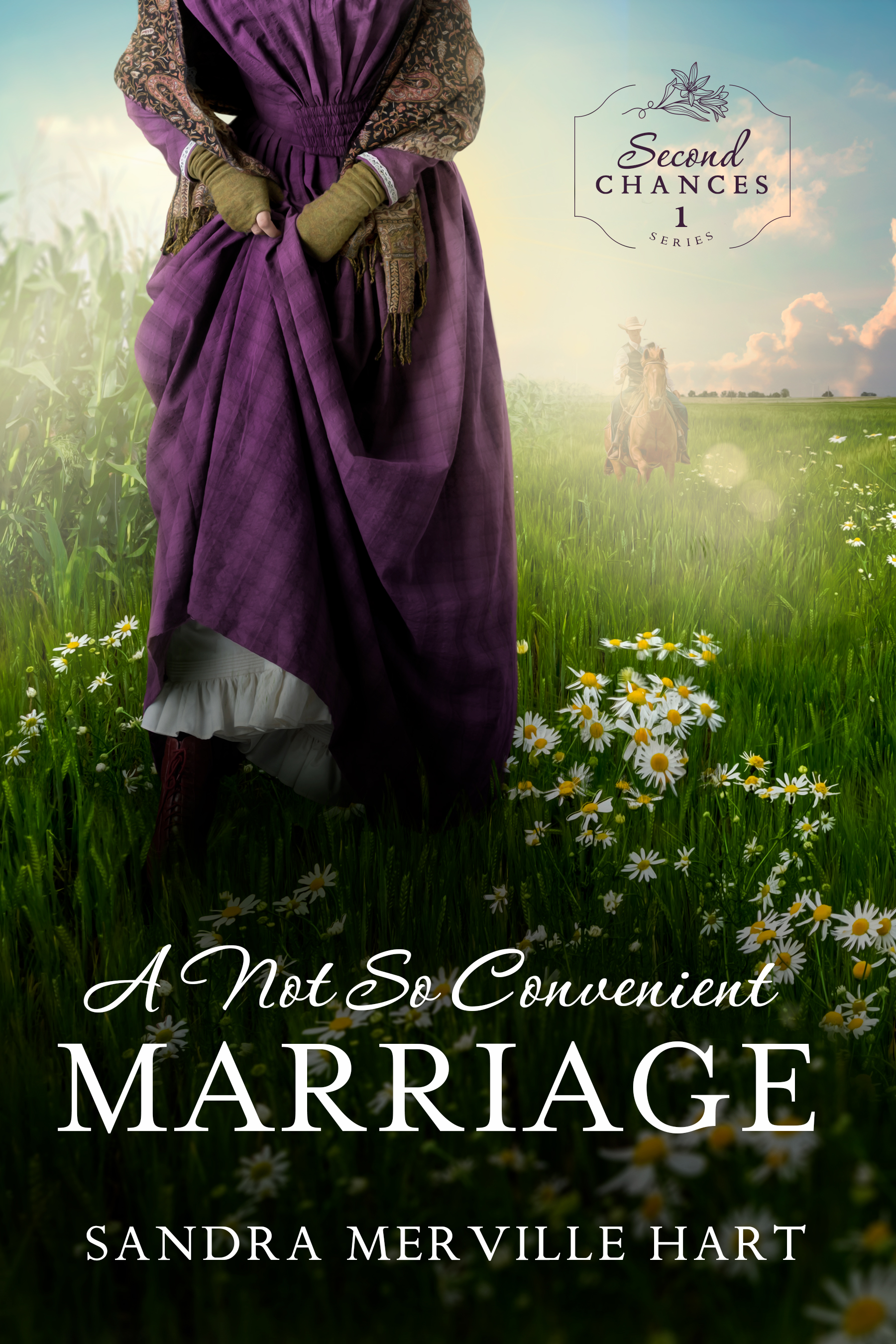
I’ve just learned from my publisher, Wild Heart Books, A Not So Convenient Marriage, Book 1 of “Second Chances” series, will release on November 8, 2022!
That will be my fourth book release for the year and I’ve been excited about every book!
Here’s a bit about the book:
A spinster teacher…a grieving widower…a marriage of convenience and a second chance with the man she’s always loved.
When Samuel Walker proposes a marriage of convenience to Rose Hatfieldso soon after the death of his wife, she knows he doesn’t love her. She’s loved him since their school days. Those long-suppressed feelings spring to life as she marries him. She must sell her childhood home, quit her teaching job, and move to a new city.
Marrying Rose is harder than Samuel expected, especially with the shadow of his deceased wife everywhere in his life. And he has two young children to consider. Peter and Emma need a mother’s love, but they also need to hold close the memories of their real mother as they grieve her loss.
Life as Samuel’s wife is nothing like Rose hoped, and even the townspeople, who loved his first wife, make Rose feel like an outsider. The work of the farm draws the two of them closer, giving hope that they might one day become a happy family. Until the dream shatters, and the life Rose craves tumbles down around them. Only God can put these pieces back together, but the outcome may not look anything like she planned.
Collector’s Edition, 100th anniversary of Twain’s death
The authentic, original version
Mark Twain, pen name for Samuel Clemens, is one of America’s most beloved authors. He dictated his autobiography in the early 1900s. Several of his family members had already died, including his beloved wife.
Pages of memories about his family fill the book, giving readers insights into characters, events, and settings of his famous novels.
He set out to write his autobiography in a different form than others had done. It’s not written in chronological order. Rather it jumps from the past to the present as circumstances bring to mind occurrences from his childhood, early adulthood, or raising his daughters.
Twain believed this format would be a model for future autobiographies. It jumps around a bit too much for me, though I easily understood why he moves from past to present because events tie them together.
I loved learning about the people, everyday moments, and events that Twain writes for his readers.
This glimpse into Twain’s private life is a treasure. One of my favorite authors!
His Experience and What he saw during the War 1861 – 1865
This is a well-written history of the “F” Company, 21st Regiment Virginia Infantry, a company from Richmond. They were part of the Second Brigade, General “Stonewall” Jackson’s Division, Second Corps of the Army of Northern Virginia.
The author, John Worsham, enlisted on April 21, 1861, as a private. He was promoted to adjutant on September 12, 1864. His wounds at the Battle of Winchester a week later left him permanently disabled.
Worsham wrote an account of the battles and marches of his regiment. Many sections are very detailed—perfect for my research! I was researching this regiment for Boulevard of Confusion, Book 2 of my “Spies of the Civil Series” and was able to include some important details in my story from a soldier who lived it.
Worsham was in Richmond when it fell and described his despair.
Included in this book are details of each soldier in Company “F”, wonderful information for folks researching their family history.
Recommended for readers of Civil War history and for lovers of American history.
It’s always nice to find an easy recipe for those days when there’s a desire to bake something but not a lot of time. This breakfast cake recipe from 1877 is one of those recipes.
Miss Emily L. Burnham of South Norwalk, Connecticut, is the 1870s cook who wrote this recipe…or should I say, this list of ingredients. These old recipes tend to be extremely brief. In fact, these first 2 paragraphs are longer than her entire recipe!
Miss Emily’s instructions were to bake this in a quick oven. This usually means about 400 or 425 degrees for the modern baker. Other recipes for similar breakfast cakes baked them at 350, so I preheated my oven to 350 and then turned it up to 375 during the bake. Lesson learned: preheat oven to 375.
Sift together 4 cups of flour and 1 teaspoon baking soda. Stir in 2 teaspoons of cream of tartar, 2 tablespoons sugar and two tablespoons softened butter.
In a separate bowl, beat 2 eggs. Add the beaten eggs to the dry ingredients. Stir in 1 cup of milk.
The dough is thick, like bread. Knead it together like you would a pie crust, until it binds together.
Lightly spray a loaf pan with cooking spray. Bake the cake 25-30 minutes or until lightly browned. This makes 6 – 8 servings.
The texture of the inside is between that of a cake and a muffin. This cake is not sweet at all. I dusted it with powdered sugar. This not only improved the appearance, it also gave the cake just the right amount of sweetness for me.
A quick, easy recipe that is made from items already in the pantry always makes me happy.
The family cook in my latest release, Boulevard of Confusion, Book 2 in my “Spies of the Civil War” series, was also a talented baker. She bakes pies, cakes, and cobblers that no one turns down. Writing these scenes gave me a longing for baking!
Sources
Compiled from Original Recipes. Buckeye Cookery and Practical Housekeeping, Applewood Books, 1877.
Wounded Civil War soldiers often went to temporary hospitals set up in tents, homes, churches, public buildings, and barns during and immediately after battles. Many ended up on trains headed to the capital cities—Washington DC in the North and Richmond, Virginia, in the South.
In Richmond, barracks originally intended to be comfortable winter quarters for up to 10,000 Southern soldiers were converted into Chimborazo Hospital in the fall of 1861. One-story wooden building covered a plateau at the eastern end of Broad Street and overlooked the scenic James River. A deep gulch called Bloody Run separated Chimborazo Hill from the affluent Church Hill neighborhood.
Samuel P. Moore, chief surgeon at Chimborazo Hospital, appointed James B. McCaw as physician. The hospital’s 150 one-story, white washed buildings became patient wards and were arranged in rows. A wide avenue separated each row to provide plenty of fresh air. Each building could care for 40 – 60 patients each. In addition to the one-story buildings, patients were also housed in 100 tents. At Chimborazo, wounded soldiers were housed with others from their state, such as Virginia, Georgia, and North Carolina.
Under McCaw’s management, the hospital was a well-organized one. It owned hundreds of goats and milk cows that grazed nearby. Canal boats brought fresh produce from the country. There was also a large garden on a nearby farm. The hospital had its own kitchens, bake houses, 5 ice houses, guard house, bathhouse, chapel, and a large stable. Blacksmith, carpenter, and apothecary shops were also located on the 40-acre plateau.
During the Civil War, Richmond had 44 hospitals of various sizes. Winder Hospital, located at Richmond’s western border, was almost as large as Chimborazo.
Unfortunately, even all these weren’t always enough to care for the wounded that poured into the city after a battle. So many wounded came into the city in late June/early July of 1862 that Chimborazo erected tents for them. It wasn’t enough space, so the patients were laid around the tents.
Almost 78,000 Confederate soldiers were cared for at Chimborazo Hospital. Of these, between 6,500 – 8,000 died.
In Boulevard of Confusion, Book 2 in my “Spies of the Civil War” series, two cousins volunteer at Chimborazo Hospital. The soldiers they care for are from Tennessee.
A 40-Day Journey of Knowing Christ and Making Him Known
As Psalms 139 so beautifully illustrates, we can’t hide from God. Yet the author quotes Paul where he talks about our lives being “hidden with Christ in God” in Colossians 3:3. This seeming paradox is part of the author’s introduction for the 40-day devotional.
This devotional book is divided into sections including Seek, Doubt, Lost, Identity, Shame, Conform, Secure, Weakness, Found, and Hidden. Some sections struck a deeper chord with me.
Each day’s devotion begins with the scripture reference for the author’s reflections. Most of them end with questions to stimulate thought.
Devotions can be read in less than five minutes so the daily read doesn’t require a lot of time.
There were multiple contributors to this book and the topics were thoughtfully arranged. Well-done devotional.
Tredegar Iron Works in Richmond has been located by the James River since before the Civil War. It had rolling mills, foundries, a cooper shop, and many other buildings that made up the iron works.
Tredegar was vitally important to the Confederacy during the war as it made weapons for the army, such as cannons. Workers discovered early in the war to guard its weapons made in secret. For example, Union spies supplied the North with news of the submarine tests that Tredegar performed and figured out ways to combat them.
The author gives details from Tredegar’s history that included some of the day-to-day operations. This information was especially helpful for my research of Boulevard of Confusion, Book 2 in my “Spies of the Civil War” series. The hero in the story works at Tredegar and this book and couple of others provided wonderful historical information. Both Book 2 and Book 3 (Byway to Danger) are set in Richmond in 1862.
Well-written. Well-researched. This is recommended for anyone interested in learning about the Civil War in Richmond, Civil War weapons, and history lovers.
The family cook in my latest release, Boulevard of Confusion, Book 2 in my “Spies of the Civil War” series, was also a talented baker. She bakes pies, cakes, and cobblers that no one turns down. Writing these scenes made me nostalgic for my grandmother’s cobblers. She was always too impatient to teach her daughters and granddaughters her recipes. Sadly, those cobbler recipe secrets died with her.
The next best thing was searching my 1877 cookbook. I found one for plum cobbler. Miss S. Alice Melching, who wrote the recipe, noted that it worked for any canned fruit.
Preheat the oven to 375 degrees.
For the peach filling:
Stir in ¾ cup sugar (Miss Alice’s recipe calls for a coffee-cup of sugar and I guessed that to be about ¾ cup) into 2 large cans sliced peaches (29 oz. each.) Canned peaches come with light or heavy syrup. I used a little of the syrup with the filling, since Miss Alice left out a lot of details. I didn’t measure it, but it was probably about ½ cup.
For the pie crust and lattice top layer:
Melt 4 tablespoons lard (I used shortening.) Sift together 4 cups of flour, ½ teaspoon salt, and 2 teaspoons of baking powder. Add the melted shortening. Stir in 2/3 cup milk or water. (I chose milk.) After watching my grandmother cook with her hands instead of a spoon all those years, I like to mix the dough with my hands too. Knead it until it holds together.
Sprinkle flour lightly over a table or counter. Divide the dough in half. Roll the dough thinly for the bottom layer. Then arrange it in your baking dish. I used an 8 x 8 pan for mine but a pie pan will work fine.
Hint: To prevent fruit juices from soaking into the pie crust, Miss Alice suggests mixing 3 tablespoons flour with 2 tablespoons sugar and sprinkling it over the bottom crust.
Add the filling onto the pie crust.
Take the other half of dough and roll it. Slice it into ½ inch strips and arrange these strips into a lattice top.
Bake 25 – 30 minutes or until the crust is lightly browned. This makes 10 – 12 servings.
The aroma took me back to childhood memories of my grandmother’s cooking.
I couldn’t wait to try it so I ate a piece warm from the oven. It was a delicious treat after lunch. My husband and I enjoyed it as dessert after supper. He liked it and is looking forward to another serving peach cobbler. (I’m writing this before daylight. I think it might be my breakfast. 😊)
I’d love to hear if you try it.
Sources
Compiled from Original Recipes. Buckeye Cookery and Practical Housekeeping, Applewood Books, 1877.