First Telegraphed Message from a Hot Air Balloon Happened During the Civil War

by Sandra Merville Hart

Aeronaut Thaddeus Lowe’s test flight on April 19, 1861, from Cincinnati didn’t go as planned. Instead of landing in the Chesapeake Bay area, winds took his balloon south to South Carolina. He was arrested as a possible spy. He was released after being recognized by a local citizen. What started out as a catastrophe ended with Lowe and his balloon on a northbound train to Cincinnati.

Lowe was now determined that he and his balloons would serve the Union army. He took his balloon Enterprise to Washington D.C.

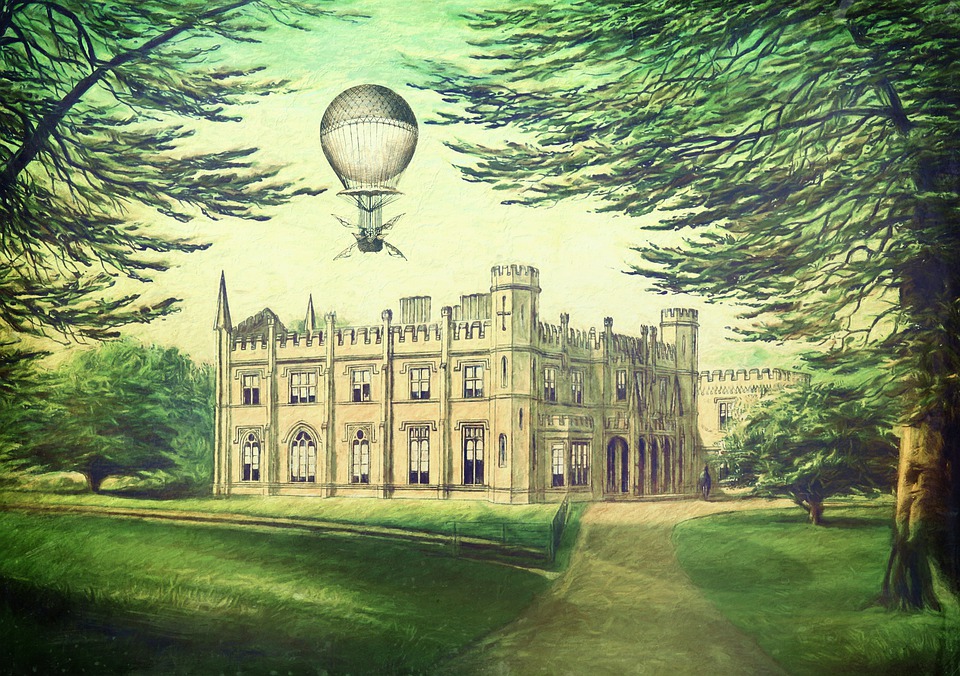
The Columbia Armory occupied the area where the National Air and Space Museum now stand. It was on this spot, in sight of the White House where President Abraham Lincoln lived, that Lowe launched the Enterprise with American Telegraph Company representatives on June 17, 1861.

They ascended to a height of 500 feet. Lowe telegraphed a message to President Lincoln from the air that he could see 50 miles from his position.

President Lincoln met with Lowe that evening in the White House. Though Lowe wasn’t the only aeronaut hoping to serve the army, he had convinced Lincoln that reconnaissance from the balloon would help his generals. Lowe became the chief aeronaut in the U.S. Army Balloon Corps.

Several Federal officers ascended in these balloons, including John Reynolds, Joe Hooker, George McClellan, Fitz John Porter, Baldy Smith, John Sedgwick, and George Custer.

Sources

“Civil War Ballooning,” American Battlefield Trust, 2021/02/05 https://www.battlefields.org/learn/articles/civil-war-ballooning.

“Civil War Ballooning,” Smithsonian National Space & Air Museum, 2021/02/05 https://airandspace.si.edu/learn/highlighted-topics-/flight/civil-war-ballooning.

Clifford, Command Sergeant Major James, USA-Ret. “Balloon Operations in the Peninsula Campaign,” The Army Historical Foundation, 2021/02/05 https://armyhistory.org/balloon-operations-in-the-peninsula-campaign/.

Fanton, Ben. “Gas Balloons: View from Above the Civil War Battlefield,” History.net, 2021/02/05 https://www.historynet.com/gas-balloons-view-from-above-the-civil-war-battlefield.htm.

Gould, Kevin. “Balloon Corps,” Encyclopaedia Britannica, 2021/02/05 https://www.britannica.com/topic/Balloon-Corps.

Mortimer, Gavin. Double Death: The True Story of Pryce Lewis, the Civil War’s Most Daring Spy, Walker & Company, 2010.

“Thaddeus S.C. Lowe,” Wikipedia, 2021/02/05  https://en.wikipedia.org/wiki/Thaddeus_S._C._Lowe.
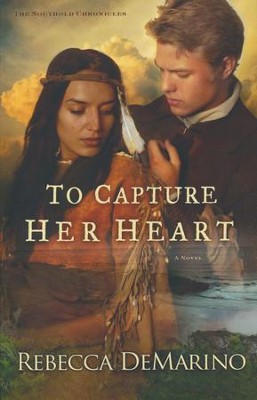
To Capture Her Heart by Rebecca DeMarino

The Southold Chronicles, Book 2

Heather Flower’s captors tied her to a tree. She doesn’t want them to return. They had forced her to watch them kill her husband at their wedding feast and then kidnapped her and several other women.

Lieutenant Dirk Van Buren rescues Heather Flower for her family on Long Island. Aware she survived a terrible tragedy, he fights his attraction for the beautiful, brave woman.

Benjamin Horton is also a good man and an old friend. Heather Flower knows he loves her and wants to marry her.

Two good men care for her. Which should she choose? She can’t stop worrying about the women who were kidnapped with her. Are they alive?

This story, set in 1653, captivated me from the beginning. I fell in love with the characters. I love books where I learn some history as a natural part of reading the story. I enjoyed this book, a page-turner for me, and recommend it for historical romance readers.

-Sandra Merville Hart

Christianbook.com

Rescuing Her Heart by Cindy Ervin Huff

Sequel to Healing Hearts, Cindy Ervin Huff’s novella in “The Cowboys,” a Smitten Historical Romance Collection

Jed Holt recognizes the desperate fear in Delilah James’s eyes. His days as a chaplain during the recent War Between the States taught him to tread lightly when a desperate person held a gun.

Delilah’s house lay in charred ruins. Her husband lay dead among the ashes of the small building that had never been the safe haven. She couldn’t mourn the man who’d treated her so cruelly.

Never would she trust another man … no matter how kindly he treated her. Experience had taught her it didn’t last.

Even as Jed’s compassionate heart grows to love the widow who now works for his sister-in-law, he has ghosts from his own past—remnants of the war he can’t overcome.

This novel, set on an 1870 Kansas ranch, tells a story of abuse and the difficulty of trusting again that will resound with many readers.

Likeable characters tug at the heart in this emotional story filled with plenty of twists and turns. Huff has written a spell-binding tale of budding romance with road blocks at every turn.

I first met some of these courageous characters in Healing Hearts in “The Cowboys” Smitten Collection, and fell in love with them there.

This novel is even more compelling. I couldn’t put it down. A page turner from beginning to end for me!

-Sandra Merville Hart

Lighthouse Publishing of the Carolinas

Fannie Farmer’s Chocolate Bread Pudding

I bought The Fannie Farmer Cookbook, originally published in 1896. I’ve always loved bread pudding AND chocolate desserts. I couldn’t resist trying it.

The recipe calls for homemade bread crumbs. Since I make banana bread often, I wondered how this would taste in this bread pudding. First, I made my banana bread. Using 3 bananas enhances the fruit flavor of the bread.

Preheat oven to 325 degrees.

Chop homemade bread (I used banana bread as an experiment) until you have 2 cups of crumbs.

Melt ¼ cup of butter and set aside.

Heat 4 cups of milk to scalding.

Spray or butter a 1 ½ or 2-quart baking dish and set aside.

Break 2 ounces of unsweetened chocolate into small pieces and melt them in the milk. Stir until the mixture is smooth.

Add the bread crumbs and stir until mixed. Set aside until it cools to lukewarm.

Then add the butter, 1/3 cup sugar, ¼ teaspoon salt, 1 teaspoon vanilla, and 2 slightly beaten eggs. Mix well.

Pour the mixture into the prepared dish and bake at 325 degrees for about 50 minutes or until set.

Serve it chilled with whipped cream. (If you have heavy whipping cream on hand, make you own whipped cream. You can’t beat the fresh, creamy flavor!)

I tried this without whipped cream. It’s a moist pudding. This was enough chocolate for this chocolate lover, but it overpowered the banana flavor. Whipped cream definitely enhanced this delicious dessert.

The banana bread added to the moist quality of the pudding but not to the flavor. I will use homemade white bread next time.

I’d love to hear if you try this recipe.

-Sandra Merville Hart

Sources

Revised by Cunningham, Marion and Laber, Jeri. The Fannie Farmer Cookbook, Alfred A Knopf Inc., 1983.


Civil War Silk Dress Balloon

by Sandra Merville Hart

The U.S. Balloon Corps began in the summer of 1861. Aeronaut Thaddeus Lowe and members of his corps made numerous balloon flights to discover Confederate troop movements from the air.

Confederate General James Longstreet wrote that their army longed for a balloon to use in observations but didn’t have the money.

Captain Langdon Cheves* bought silk in Savannah and Charleston in lengths of 40 feet. This fabric, normally used for women’s dresses, was sewn together and then varnished. Because various colors were used, the balloon made from the silk was beautiful. The balloon’s official name was Gazelle.

The “Silk Dress Balloon,” as it came to be called, was sent to Richmond. Confederates were unable to get pure hydrogen gas. Instead, ordinary illuminating gas from Richmond Gas Works—the same type that lit gas lamps—filled the balloon.

It was moved, full of air, to the battlefield by train. The colorful Silk Dress Balloon was first used by the Confederates at the Battle of Gaines Mill. General Edward Porter Alexander ascended several times to observe the fighting from two miles away. Actual troops were difficult to see yet rising smoke showed him where to direct Slocum’s Division to reinforce Porter’s troops. Night ascensions showed enemy campfires for estimates of troop numbers.

Inability to fill the balloon in the field hampered their efforts. Gas from the Gas Works limited flights to 6-7 hours. They didn’t use Lowe’s three captured portable gas generators.

Confederates were happy enough with the results to take the balloon onto the Teaser, an armed tug boat. When necessary, the balloon was sailed along the James River to Richmond for refilling. On July 3, 1862, the U.S.S. Maratanza captured the Teaser on the James River. The balloon went to Thaddeus Lowe, who cut the fabric for souvenirs.

Another balloon was made in Savannah by Charles Cevor, a balloonist. It was used for the next year in the Charleston and Savannah area until the Second Battle of Charleston Harbor, when it was lost in the summer of 1863.

The Confederates didn’t try again. By then, the U.S. Balloon Corps had dissolved.

A rumor has survived from the war. In 1886, General Longstreet wrote in an article published in Century magazine. He said that a request was made that the ladies donate their silk dresses to make the balloon. It paints a lovely picture of sacrifice that Southern women made throughout the war—and they did sacrifice abundantly—but this particular one doesn’t appear to be factual. Articles that mention Longstreet’s quote also write about the forty-foot lengths of silk purchased by Cheves to make the balloon.

*One source gives the name of Dr. Edward Cheves instead of Langdon Cheves.


Sources

“Civil War Ballooning,” American Battlefield Trust, 2021/02/05 https://www.battlefields.org/learn/articles/civil-war-ballooning.

Clifford, Command Sergeant Major James, USA-Ret. “Balloon Operations in the Peninsula Campaign,” The Army Historical Foundation, 2021/02/05 https://armyhistory.org/balloon-operations-in-the-peninsula-campaign/.


Fanton, Ben. “Gas Balloons: View from Above the Civil War Battlefield,” History.net, 2021/02/05 https://www.historynet.com/gas-balloons-view-from-above-the-civil-war-battlefield.htm.

Paone, Thomas. “The Most Fashionable Balloon of the Civil War,” Smithsonian National Air and Space Museum, 2021/02/08 https://airandspace.si.edu/stories/editorial/most-fashionable-balloon-civil-war.

Carolina Carpenter Brides

Four couples find tools for Building Romance in a Home Improvement Store

I loved that all four of these romances begin with a connection at the Home & Hearth Superstore.

In Janet Benrey’s How to Refurbish an Old Romance, the romance begins when both Brianna and Zach take a course on “How to Repair Bad Decisions Made Years Ago.” Brianna had signed up to learn how to wallpaper. The last thing she expected was to see Zach, the man she’d been engaged to years ago.

When Kaitlyn Ferrer’s boss asks her to write a feature story on the dating scene at a hardware store as her first reporting job, she thinks he’s crazy. Chris Taylor also works for a newspaper with a similar assignment. Things go awry when they both go undercover in Once Upon a Shopping Cart by Ron Benrey.

Valerie Bradford, high school teacher, plans to install cabinets herself but Austin Hodges figures she’ll need help no matter which style she chooses. She reluctantly accepts his help in Can You Help Me? by Lena Nelson Dooley.

Marc Goodson is the head of security at Home & Hearth Superstore and has reason to suspect Laurel Jones, a new employee in the flowers and plants department, of theft. On the other hand, Laurel believes he’s a stalker … not the best way to begin a romance in Caught Red-Handed by Yvonne Lehman.

I enjoyed this collection of light-hearted, easy-to-read romances!

-Sandra Merville Hart

Amazon

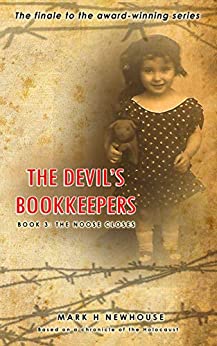
The Devil’s Bookkeepers by Mark H. Newhouse

by Sandra Merville Hart

Book 3: The Noose Closes

I shunned from the title of this book yet it is aptly named.

Newhouse has written a fictional story based on chronicles of events that were written during WWII. Jews in Poland lived through a nightmare. This story begins with Ben Ostrowski’s frantic worry for his wife and two-year-old daughter. German soldiers had come for all the children in Lodz Ghetto. His wife wouldn’t allow her daughter to leave without her and both were taken in September of 1942.

Ostrowski can barely function at his job, but he must. Those who don’t work are in danger of deportation. Where did the trains go? It was rumored that people were taken to farmlands up north. He wanted them to be safe and happy … he wanted to believe it, yet the increasing atrocities dictated by the Germans and their Jewish Chairman say otherwise.

This story chilled me even as it held me in its grips. It was difficult to read and impossible to put down. Well-written. Terrifying. Poignant.

Tragic.

The author’s parents managed to survive the misery and danger of Lodz Ghetto but never talked about their experiences. Many of his relatives did not survive Auschwitz. His parents never talked about their experiences. The haunting shadow of the Holocaust compelled Newhouse to write this trilogy. His message? “Never again to anyone, anywhere.”

Amen.

Amazon

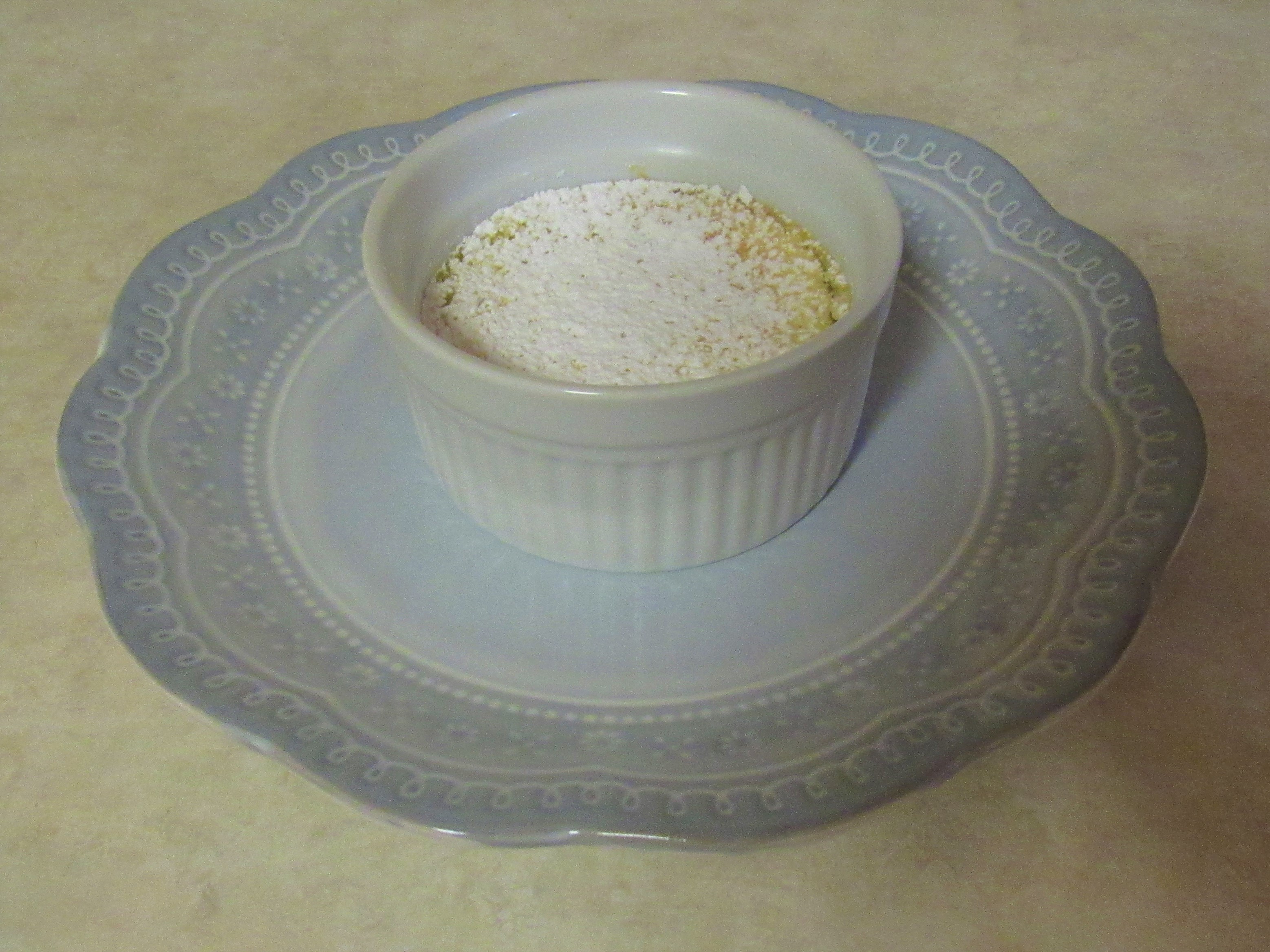
Fannie Farmer’s Lemon Pudding

I bought The Fannie Farmer Cookbook, originally published in 1896. I wanted a lemon dessert and found a recipe for lemon pudding in this book.

What appealed to me about this “old favorite” was its claim of “soft lemony custard on the bottom and sponge cake texture on top.”

Preheat oven to 350 degrees.

Separate 3 eggs and set aside.

Beat 2 tablespoons of butter until soft. Stir in 7/8 cup sugar a bit at a time, until the butter and sugar are blended. Add egg yolks one at a time and stir before adding the next yolk.

Stir in 1 cup of milk and 1 ½ tablespoons of all-purpose flour. Add the zest of 1 lemon and 1/3 cup lemon juice—1 large lemon provided enough juice for this recipe.

Beat the mix. The recipe said that the mixture will look curdled, which mine didn’t. I blended the butter and sugar completely—perhaps that made a difference. Set this mixture aside.

Using a mixer, beat the egg whites until they are at soft peaks. Fold this gently into the batter.

You can use a 1 ½ quart baking dish or ramekins for individual servings as I did. (Mine made 7 servings.) Prepare with cooking spray and spoon into the dish(es). Set in a pan and pour hot water around the dish until it is halfway up the side.

Bake in preheated oven at 350. If using 1 large dish, bake 50-60 minutes or until very lightly browned. Individual dishes take less time, about 30-35 minutes. When it was cool, I sprinkled powdered sugar over the top. Serve cool or cold.

Delicious! Both my husband and I thought that the lemony flavor of the dish was plenty. The two different textures—custard on the bottom and sponge cake on top—made it a unique dessert. We loved it!

I will make this again.

-Sandra Merville Hart

Sources

Revised by Cunningham, Marion and Laber, Jeri. The Fannie Farmer Cookbook, Alfred A Knopf Inc., 1983.


Civil War U.S. Balloon Corps

by Sandra Merville Hart

On June 17, 1861, Aeronaut Thaddeus Lowe’s balloon flight from the Columbia Armory (current location of the National Air and Space Museum) snagged the attention of President Abraham Lincoln when he received a telegraphed message from Lowe—from the balloon in flight at a height of 500 feet!

Lowe’s balloon was tethered to the White House lawn that evening while the two met. Lincoln supported the use of balloons in surveilling Confederate troops from the air.

Lowe became the chief aeronaut in the U.S. Army Balloon Corps. The War Department built military balloons for the corps. The first one was ready in August.

Union and Intrepid could carry 5 people and were the largest balloons used by the Union army. United States and Constitution held 3 people. A couple, Eagle and Excelsior, were manned by one person. The larger balloons had room for telegraphers, an important advantage.

Lowe became a member of Major General George B. McClellan’s staff. In September of 1861, Lowe directed artillery fire from his balloon at Falls Church, Virginia.

The U.S. Balloon Corps had several members: Corporal James Starkweather, Privates William A. Hodges, Albert Trunbull, W.H. Welch, Francis Barrington, Robert Wardell, James F. Case, George W. Fisher, John H. Hall, and Lawrence M. Chickey. Civilians also worked in the corps. Among these were Aeronauts James Allen, John La Mountain, and John Wise, who was considered the “Father of American Aeronautics.” Lowe also hired his father Clovis.

Balloons were used at Washington D.C., Seven Days’ Battle, the Peninsular Campaign, Battle of Seven Pines, and Fort Monroe in Virginia, to name a few.

Also, La Mountain made a tethered balloon ascent on August 3, 1861. It is significant to history because it was launched from the steam-powered gunboat Fanny. There are scholars who believe this first flight to be a precursor of the aircraft carrier.

Confederates shot at the ascended balloons. Fortunately, none were shot down. Their height usually kept them out of range. That didn’t prevent the Southerners from shooting. In fact, Lowe earned the dubious title of “the most shot-at man in the war.”

Several Federal officers ascended in these balloons, including John Reynolds, Joe Hooker, George McClellan, Fitz John Porter, Baldy Smith, John Sedgwick, and George Custer.

Unfortunately, problems with aeronauts receiving pay from the army led to resignations. Conservative generals preferred intelligence from spies, scouts, prisoners, and deserters. Vague reports from aeronauts frustrated field commanders. To top it off, Lowe didn’t get along with his staff supervisor Captain Cyrus B. Comstock and resigned on May 7, 1863.

James and Ezra Allen were then the last members of the U.S. Balloon Corps. They reported Confederate movement from Fredericksburg toward the Blue Ridge Mountains as they marched toward Gettysburg in June. The Balloon Corps ceased to exist in the summer of 1863.

Sources

“Civil War Ballooning,” American Battlefield Trust, 2021/02/05 https://www.battlefields.org/learn/articles/civil-war-ballooning.

“Civil War Ballooning,” Smithsonian National Space & Air Museum, 2021/02/05 https://airandspace.si.edu/learn/highlighted-topics-/flight/civil-war-ballooning.

Clifford, Command Sergeant Major James, USA-Ret. “Balloon Operations in the Peninsula Campaign,” The Army Historical Foundation, 2021/02/05 https://armyhistory.org/balloon-operations-in-the-peninsula-campaign/.

Fanton, Ben. “Gas Balloons: View from Above the Civil War Battlefield,” History.net, 2021/02/05 https://www.historynet.com/gas-balloons-view-from-above-the-civil-war-battlefield.htm.

Gould, Kevin. “Balloon Corps,” Encyclopaedia Britannica, 2021/02/05 https://www.britannica.com/topic/Balloon-Corps.

Mortimer, Gavin. Double Death: The True Story of Pryce Lewis, the Civil War’s Most Daring Spy, Walker & Company, 2010.

“Thaddeus S.C. Lowe,” Wikipedia, 2021/02/05  https://en.wikipedia.org/wiki/Thaddeus_S._C._Lowe.

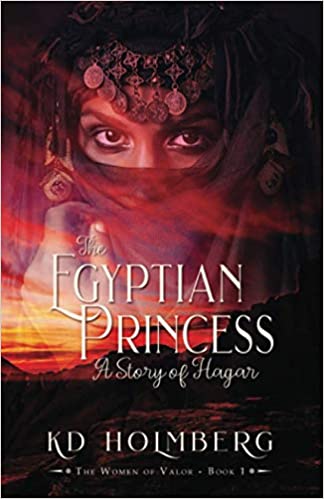
The Egyptian Princess by KD Holmberg

A Story of Hagar

Hagar is a Royal Princess of Egypt in the times of Abram and Sarai (Abraham and Sarah in Genesis.) Hagar is destined to marry her twin brother, Crown Prince Merikare, who views her with jealous hatred. The Pharoah is her father and he is more interested in his sons, a painful rejection she’s dealt with all her life.

She’s been having visions, horrible nightmares, since she’s learned that Sarai was coming. The Pharoah wants Sarai to become his newest wife.

Some are troubled by Hagar’s visions while others, like Merikare, ridicule them.

Then her dreams begin to happen …

I was first caught by all the old Egyptian traditions and beliefs that were new to me. Then I became engrossed in the story and the escalating danger Hagar faced. I lost sleep finishing it!

Realistic characters search for answers about the one God in the midst of a society where such conversations can cost their life. I was drawn into the drama that didn’t let me go.

Readers of Biblical fiction will enjoy this story. It’s also a great read for history lovers.

 -Sandra Merville Hart

https://www.amazon.com/Egyptian-Princess-Story-Hagar/dp/1943959994/