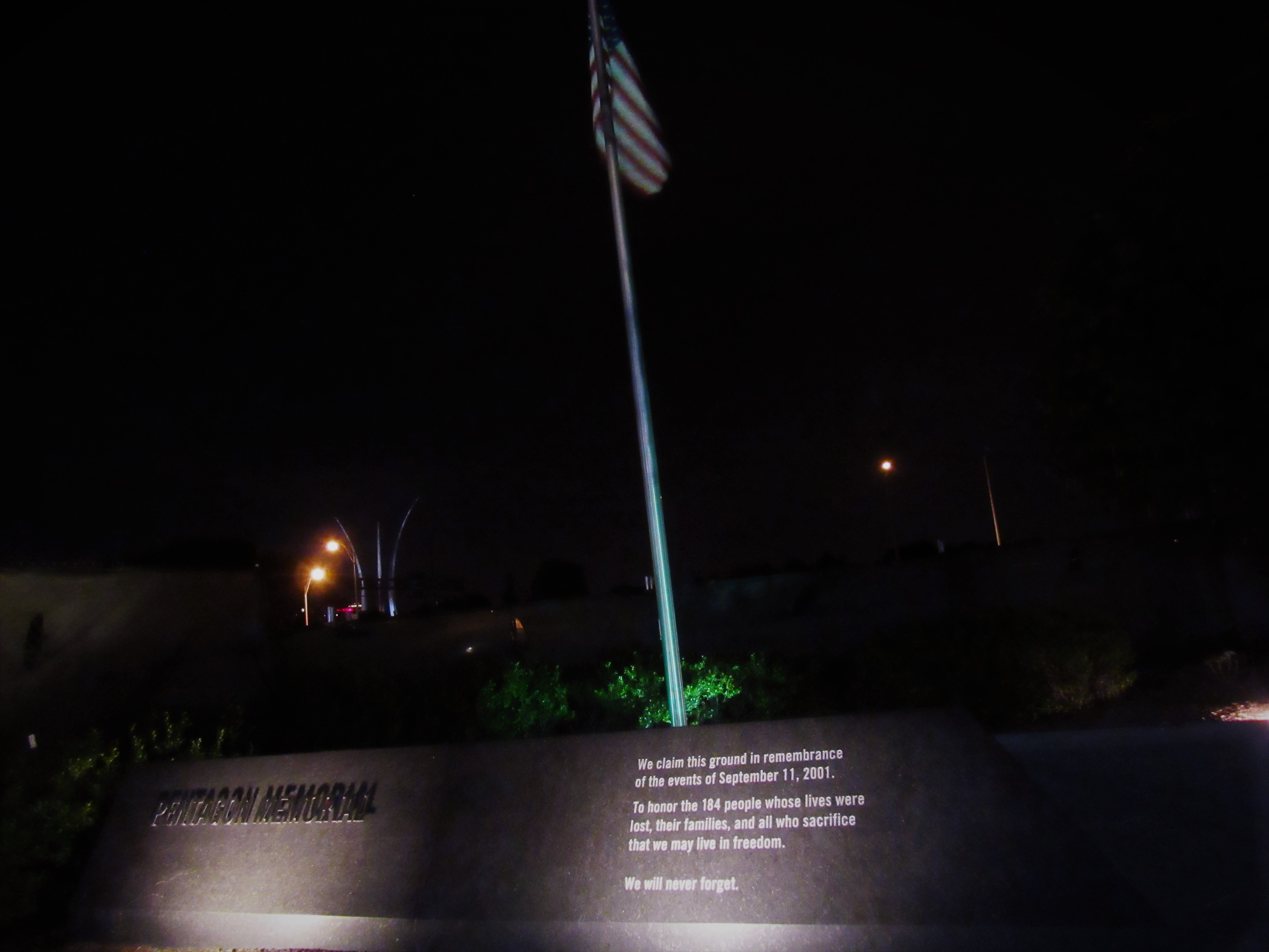
Pentagon Memorial

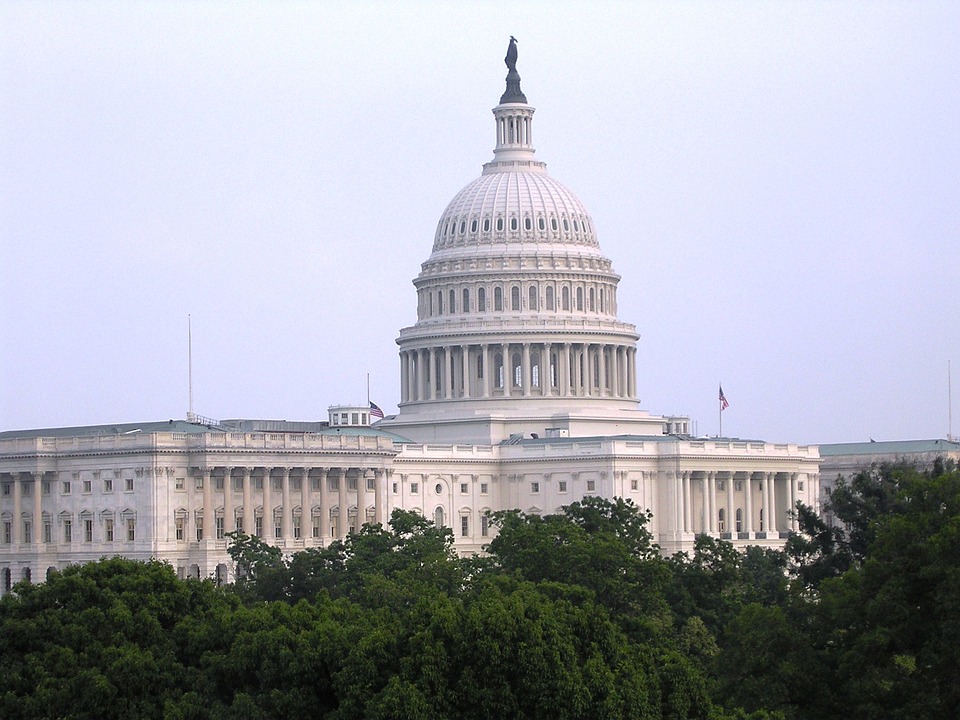
On a recent trip to Washington, DC, I visited the Pentagon Memorial. It was late in the evening and there were only a handful of visitors at the memorial. As I looked at the benches—184 of them—with lighted pools of water flowing underneath, I was struck once again by the tragedy of September 11, 2001.

No American alive that day can forget its horror. Four commercial airplanes were hijacked in coordinated attacks on specific targets and tragic loss of innocent lives resulted.

Five hijackers boarded American Airlines Flight 77 to Los Angeles from Dulles International Airport that sunny morning. The flight, delayed 10 minutes, departed at 8:20 am with 58 passengers and a crew of 6. What the crew didn’t know was that armed hijackers were among the passengers.

While flying over eastern Kentucky, hijackers took control of the plane, possibly between 8:51 and 8:54 am. It’s believed that one of them piloted the plane. None of the radio messages sent to the pilot after that time were answered.

It crashed into the Pentagon at 9:37 am, bringing a tragic end to 184 innocent lives.

The Pentagon Memorial, in remembrance of those who died there, opened on September 11, 2008. Architects Julie Beckman and Keith Kaseman along with engineer Buro Happold designed the memorial in a timeline, from the youngest victim (Dana Falkenberg at 3) to the oldest victim (John D. Yamnicky at 71), both on Flight 77.

Victims’ names have been placed on cantilevered benches with pools of flowing water underneath, which are lit at night. The designers put a lot of thought into the placement of the benches. Visitors read the names of those who perished in the Pentagon with that building behind it. Names face the sky where the plane approached for those from Flight 77.

Beautiful Crepe Myrtles, 85 of them, will eventually grow to height of 30 feet, giving shade to the Memorial in future years.

The Age Wall starts at a height of 3 inches for the youngest victim and builds to 71 inches for the oldest.

It’s a beautiful, well-designed unique memorial.

May we never forget.

-Sandra Merville Hart

Sources

“Pentagon Memorial,” The National 9/11, 2019/09/05 https://pentagonmemorial.org/.

“Pentagon Memorial,” National Geographic, 2019/09/05 https://www.nationalgeographic.org/media/pentagon-memorial/.



Saratoga Potatoes Recipe

The author of 1877 Cookbook Buckeye Cookery and Practical Housekeeping included meal suggestions. A summertime breakfast suggestion is: nutmeg melons; fried fish; Saratoga potatoes; sliced tomatoes; Minnesota rolls; bread; coffee; tea; and chocolate.

The cookbook includes recipes for some of these. Today I’m sharing one for Saratoga Potatoes from Mrs. Jasper Sager.

I quickly scanned the recipe for what I thought were fried potatoes—a breakfast side dish. I was wrong.

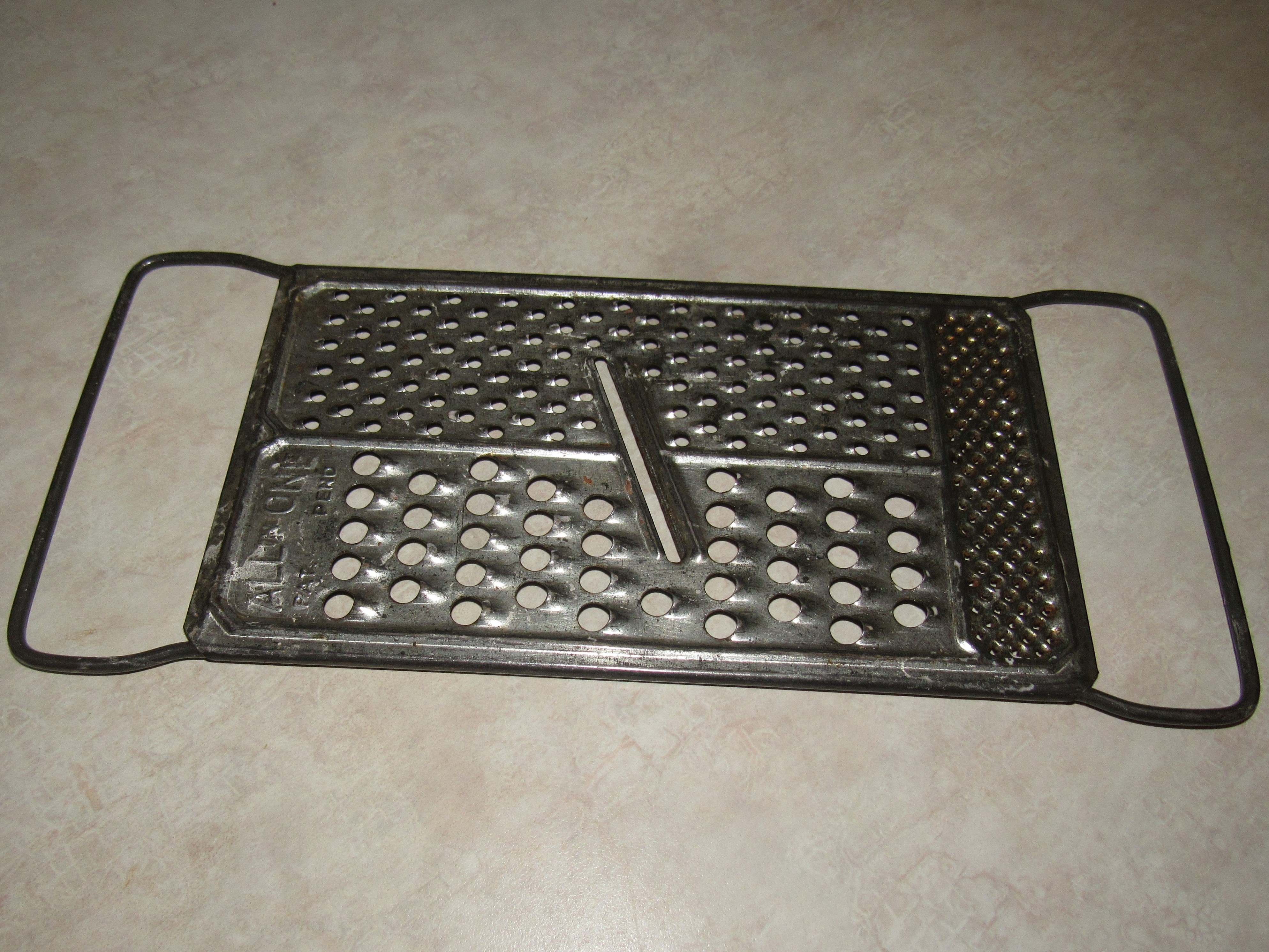
Pare (peel) four large potatoes. Slice them thinly in a slaw cutter. I have my mother’s slaw cutter that we used to shred cabbage, carrots, cheese, etc. It has a slicer in the middle that looked promising for producing thin potato. It worked beautifully.

It wasn’t until I saw the paper-thin slices that I realized I was making potato chips. I’ve eaten Saratoga chips at restaurants but never made them.

Slice the potatoes lengthwise for larger chips.

Place the sliced potatoes in ice water as they can brown quickly when exposed to air.

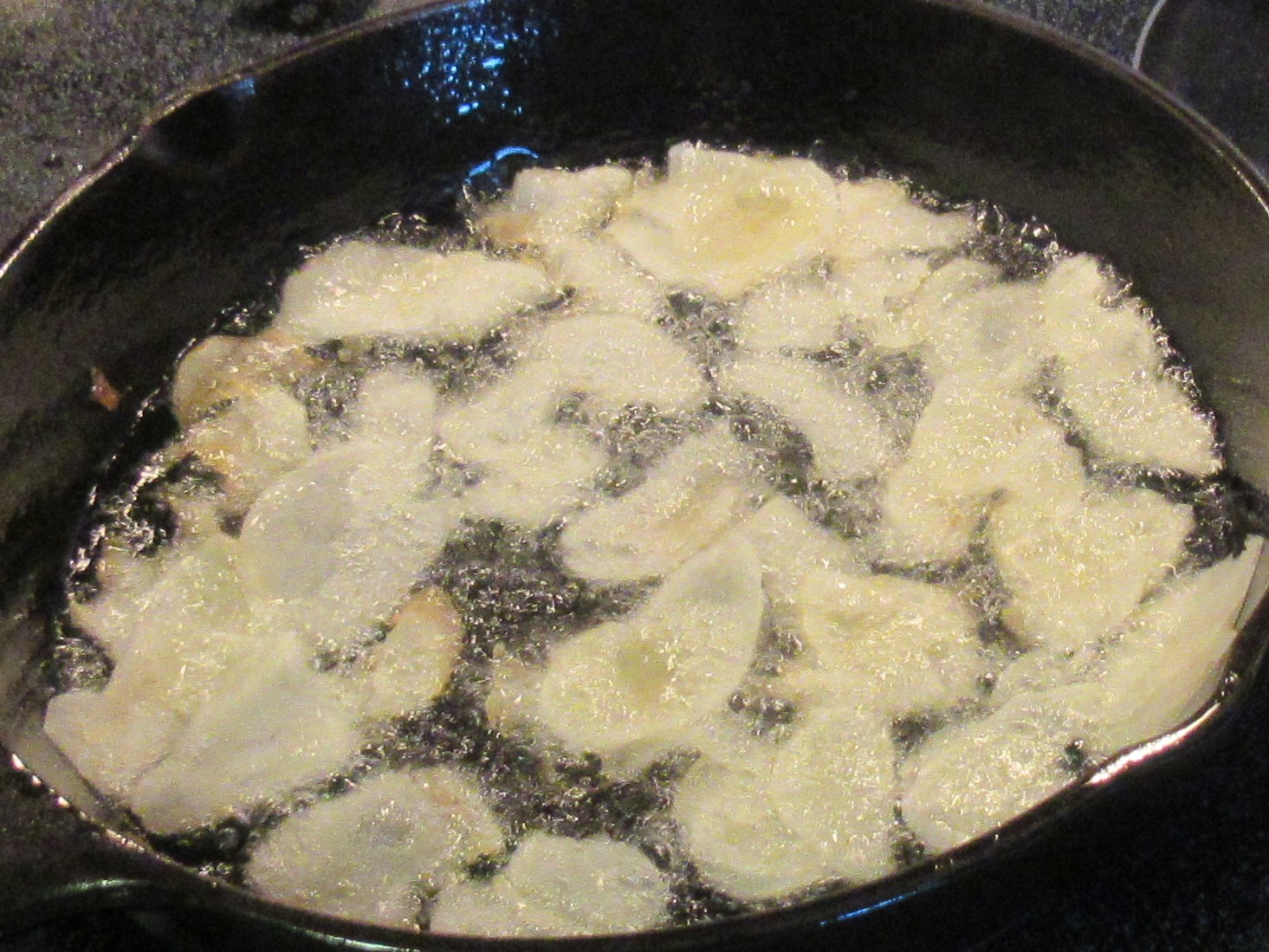
Mrs. Sager used “boiling lard” to fry her potatoes. I don’t own a deep fryer—my cast iron skillet worked fine.

I heated shortening over a medium-high heat. To prevent possible burns, I didn’t allow it to boil.

As the shortening melts, pick up a handful of potatoes and gently squeeze the excess water from them. Then place on a clean towel or paper towel and dry thoroughly. (I went through three towels with this batch.)

When the oil is hot enough, place dried potato slices into the skillet a few at a time. Try not put them on top of each other. Cook carefully on both sides until they are lightly browned. Remove potatoes and drain on paper towels.

I asked my husband to taste the first batch to see if they were overdone, underdone, or just right.

“These are good.” He filled a plate and began munching.

Apparently, they were just right.

Frying them a handful at a time required several batches. As each batch takes a minute or less, these were quickly done.

I took some to my sister’s house a couple of hours later. Her family loved them. They must be eaten soon after frying. I think I’ll make these as a fun novelty dish for an upcoming picnic.

What surprised me most is that potato chips were considered breakfast food in the 1870s! Our teenagers had told us for years that snacks like chips are breakfast food. Did they read this cookbook??? 😊

History is filled with surprises. That’s why I love learning about our past.

-Sandra Merville Hart

Sources

Compiled from Original Recipes. Buckeye Cookery and Practical Housekeeping, Applewood Books, 1877.


Civil War Women: Rose O’Neal Greenhow, Confederate Spy

Rose O’Neal Greenhow lived in Washington D.C. when the Civil War began. When many other Southerners left, the widow remained with her eight-year-old daughter, Rose. Union Colonel Thomas Jordan had decided to resign the U.S. Army and fight for the South. Before he left the city, he asked Rose to be an agent. Spying to uncover troop movements and government communications gave her a significant way to serve the South. She agreed to send messages based on a cipher he provided.

Coded messages were sent on a “Secret Line,” which involved several couriers in a chain that passed on messages in common places such as docks, taverns, and farmhouses.

Rose’s spy network from Boston to New Orleans was the largest in the war—48 women and 2 men. She learned battle plans for Bull Run and passed this vital information to Confederate General Beauregard, leading to a Confederate victory at the First Battle of Bull Run.

Several other messages about Washington’s defenses and troop information were sent from Rose to Beauregard. Thomas A. Scott, Assistant Secretary of War, asked Allan Pinkerton, head of Lincoln’s Intelligence Service, to find Confederate spies and put Greenhow under surveillance.

About a month after the Battle of Bull Run, Pinkerton discovered incriminating evidence. The home was searched. Rose and her daughter were placed under arrest at her home. Because she still managed to get other secret messages out, they were moved to Washington’s Old Capitol prison. The Federals then decided to send her South.

On June 4, 1862, she arrived in Richmond, where she was taken to the best hotel. Confederate President Jefferson Davis called her the next day, saying, “But for you there would have been no battle of Bull Run.” Rose wrote that his words made up for all she’d endured.

The following year President Davis sent her to Europe. She took letters from him to France and England. She received money from them to aid the South.

In October 1, 1864, Rose returned on the Condor, a blockade runner. Unfortunately, the USS Niphon, a Union gunboat, came close to the Condor’s position on Cape Fear River. While Confederate soldiers from nearby Fort Fisher fired on the Union gunboat, Rose asked the captain for a lifeboat for herself and two other Confederate agents. Two hundred yards of rough waters were between the boat and the shore. Despite his initial refusal, she finally convinced the captain to provide a boat.

A powerful wave overturned the lifeboat. They swam for shore. Unfortunately, Rose had a bag of gold sovereigns tied around her waist underneath a heavy silk dress. Though she was a good swimmer, she drowned due to the extra weight while her companions made it to safety.

Her body washed ashore the next day. A Confederate soldier found the bag of gold and took it. A search party later found the body. When the soldier discovered Rose’s identity, he returned the sovereigns.

She was buried in Oakdale Cemetery in Wilmington with full military honors.

-Sandra Merville Hart

Sources

Monson, Marianne. Women of the Blue & Gray, Thorndike Press, 2018.

Winkler, H. Donald. Stealing Secrets, Cumberland House, 2010.

Zeinert, Karen. Those Courageous Women of the Civil War, The Millbrook Press, 1998.


Healing Hearts by Cindy Ervin Huff

From the Smitten Historical Romance Collection: The Cowboys

 Taming the West … one heart at a time.

 After all he’s lost, Lonnie Holt is determined to save his brother’s life and get Jed back to their newly-inherited home. The snowstorm wasn’t helping matters. The welcome sight of his uncle’s ranch quickly turned to dread. No one should be there. So why did smoke billow from the chimney?

 Having been hired through correspondence, Genny Collins took a job as Clyde Holt’s housekeeper months ago and had been waiting for her new boss to arrive. Meeting the Holt brothers brought more surprises than the death of her employer. She has no place to go and every reason to hide.

Lonnie, with his scarred face and scarred soul, knows that Genny will prefer his brother over him. But that doesn’t prevent him from loving the feisty, resourceful woman.

Both characters carry scars from the past. These wounded, believable characters drew me right into the story. Well-written.

This isn’t the first book I’ve read and enjoyed by this author. I will look for more stories by her.

-Sandra Merville Hart

Amazon

Lighthouse Publishing of the Carolinas  Save money and use coupon code SandraMHart for a 20% discount on Lighthouse Publishing books!


Graham Muffins Recipe

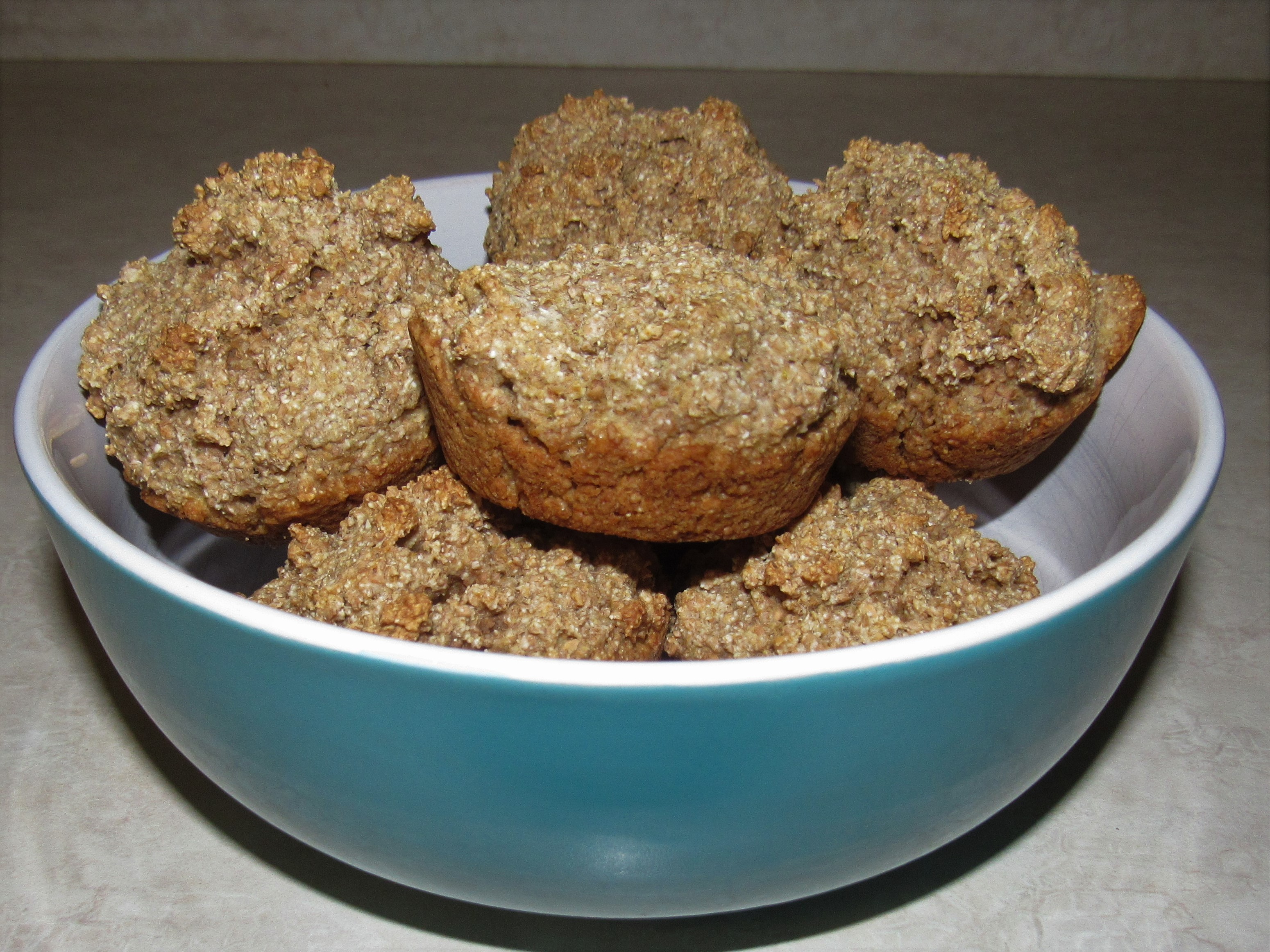
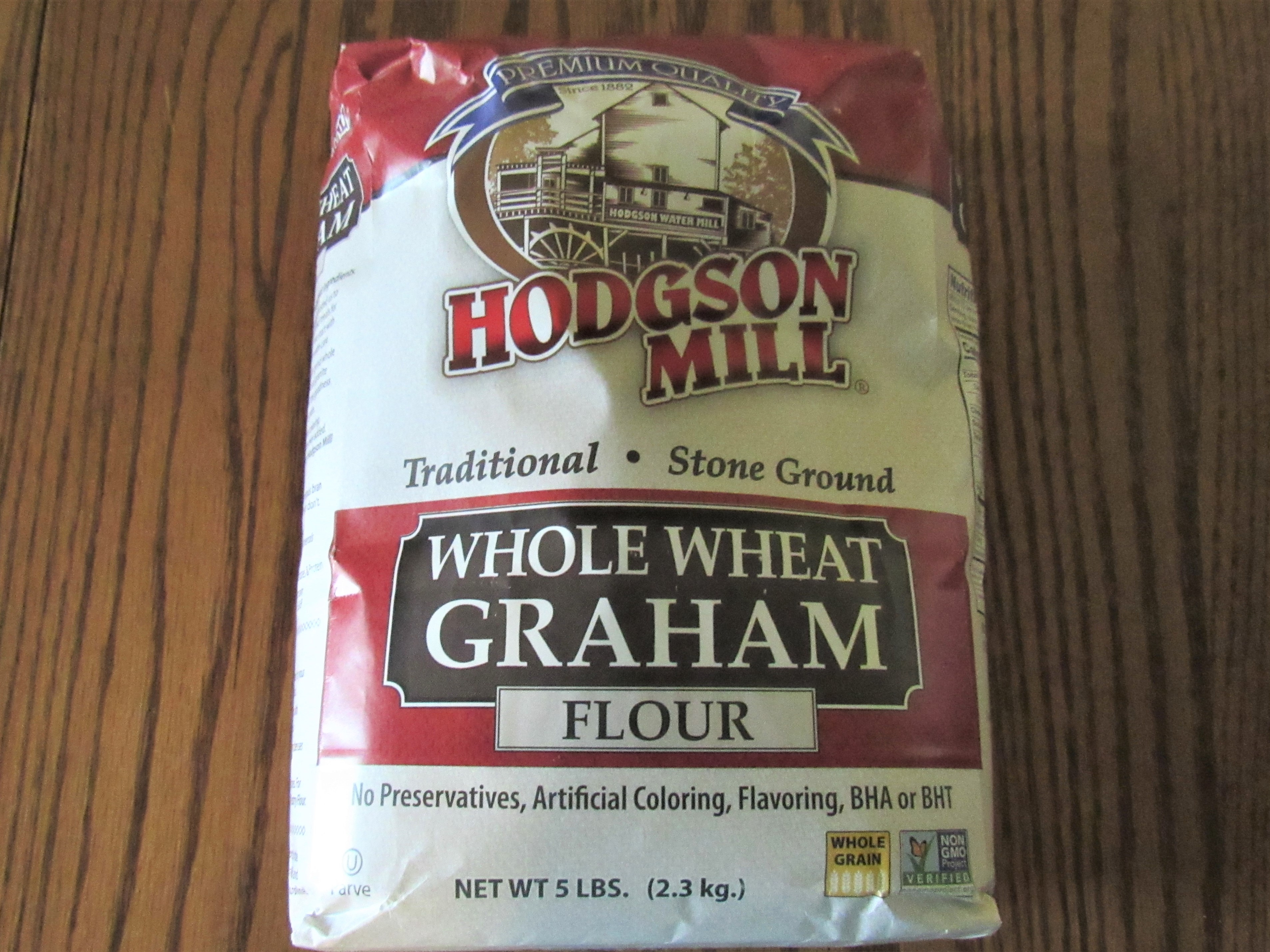
I bought some Whole Wheat Graham Flour for another recipe and had plenty left to try this 1870s recipe for Graham Muffins from Mrs. R. L. Partridge.

Preheat oven to 425 degrees. Spray cooking spray on a muffin pan or use cupcake liners.

The first ingredient is 1 cup of sour milk. To make this, stir 1 tablespoon of vinegar or lemon juice per cup of milk. (If you don’t have either of these, use 1 teaspoon of cream of tartar.) Set it aside to rest for 5 minutes.

In a separate bowl, mix 1 ½ cups Graham flour, ½ teaspoon of baking soda, and ½ teaspoon of salt.

Stir 1 tablespoon of brown sugar into the sour milk.

Add the Graham flour mixture and stir well. Spoon the batter into the prepared muffin pan.

Bake at 425 degrees for 15 minutes.

These hearty gems reminded me of bran muffins. They are dense and rather plain. I put apple butter on it, which tasted delicious.

I recently made Good Graham Gems. The recipe has a few more ingredients but these muffins taste very similar to them.

-Sandra Merville Hart

Sources

Compiled from Original Recipes. Buckeye Cookery and Practical Housekeeping, Applewood Books, 1877.

Civil War Women: Mary Carroll, Missouri Confederate Supporter


Teenager Mary Carroll lived with her mother, sister, and brother, Dennis, in Pilot Grove, Missouri, at the beginning of the Civil War.

Although “Bleeding Missouri” had been a slave state in 1861, it voted to remain in the Union. Despite this, the state’s governor—a Southern supporter—offered guns and cannons to Confederate President Jefferson Davis. Union soldiers then seized the armory and the state’s capital to set up a Union government, creating great turmoil. Union troops arrested Missouri residents without charges. They took their horses and food.

Dennis Carroll was arrested in August of 1862 for trying to join the Confederate army. In March of 1863, he was released from an Alton, Illinois Federal prison.

Learning of Union plans to arrest a group of Missouri men intending to muster into the Confederate army, Mary rode through hard rain to warn them and lead them to safety.

In May of 1863, Dennis and a friend helped Confederate sympathizers raid a Federal militiaman’s home. After the Union man shot one of them, some set the home on fire. Though Dennis didn’t help set the fire, he was arrested, taken to Boonville, and sentenced to be shot to death.

Mary, 17, boarded with a family in Boonville to be near her younger brother. She sneaked a crowbar into him, at his request, with his lunch. His breakout attempt that night was unsuccessful.

Giving up meant her brother would die.  She then set to work on making a key patterned like the jail door key. After several attempts, she made an iron key. It took days.

In the meantime, the Federal government ordered all Cooper county women to take an oath of allegiance. Mary complied, after making sure that nothing she was doing to save her brother violated that oath.

She gave the key to her brother. Unfortunately, it was too short.

A young Union soldier proposed marriage to Mary. She agreed—if he helped her brother break out of prison. He let her see the jail key and she made an impression of it on a book. He took it from her, but didn’t know she’d made another impression. She then created another key.

Meanwhile, the men awaiting execution tied leather around an earlier key out of desperation. The bits of leather made the key fit and they broke out of jail.

Suspicion immediately went to Mary, who was arrested during the search for the fugitives. In a letter to her mother, she asked which key Dennis used to escape. Union soldiers found her letter. She was interrogated by General Dodge and Colonel Catherwood.

The colonel remembered Mary’s question about helping her brother before taking the oath—it saved her.

Released and back at home, her relief didn’t last. Dennis was apprehended and killed by Union soldiers. They forced Mary’s family from their home.

After the war, Mary married a Confederate soldier, Thomas Brooks, and had six children. She wrote of her experiences in The Secret of the Key and Crowbar.

-Sandra Merville Hart

Sources

Cordell, M.R. Courageous Women of the Civil War, Chicago Review Press, 2016.


The Epistles of James, Peter, and Jude by Trina Bresser Matous

Christian Living Bible Study Series

This study takes readers through James, 1st Peter, 2nd Peter, and Jude.

Like  Paul’s Letters to the Early Church, another wonderful Bible Study by Matous, historical and Biblical background begins each new book. Each chapter contains background, overview, insights, and 2-3 discussion questions. I can see Bible Study groups easily doing one or two chapters a week, depending on discussions.

I love the author’s insights from the passages. For instance, the book of James is packed with helpful advice for Christians. Mateous describes it as “one of the most practical books in the New Testament.” She also states that “Wisdom is not the same as information.” She gives the insight that “Finding joy in the midst of trial does not negate the pain.”

Readers will find many gems throughout the book.

This study is appropriate for men’s groups and women’s groups.

This book is also a wonderful supplement for personal study.

-Sandra Merville Hart

Lighthouse Publishing of the Carolinas   Use coupon code SandraMHart for a 20% discount on Lighthouse Publishing books!


Eating Hearty in 1896

Today’s post was written by fellow author and friend, Linda W. Yezak. I loved learning about the Harvey Girls in Linda’s novella, Loving a Harvey Girl, from the Smitten Collection “The Cowboys.” It’s so wonderful for me to be in this Western romance collection with three other talented authors! Welcome to Historical Nibbles, Linda!

Back when the Atchison, Topeka, and the Santa Fe Railroads were the travel mode of choice, restauranteurs learned how to get more than their fair share of the passengers’ coins. As the train engineers replenished the water for their steam engines, hungry passengers would file to the establishments in search of food and refreshment. But often the locals got dollar signs in their eyes and honesty floated out the window. Special tricks included overcharging the out-of-towners, scraping leftovers together and serving them to the next crowd, and accepting pay in advance for food that wouldn’t be served before the train left the station.

That’s where Fred Harvey came in. Around 1870, he approached the president of the ATSF railway, Charlie Morse, about an idea to open Harvey House restaurants and hotels all along the train’s stops to assure great food at a fair price to the passengers. Within fifteen years, he had seventeen Harvey Houses, all staffed by women he picked, generally from “back east,” and trained in Kansas.

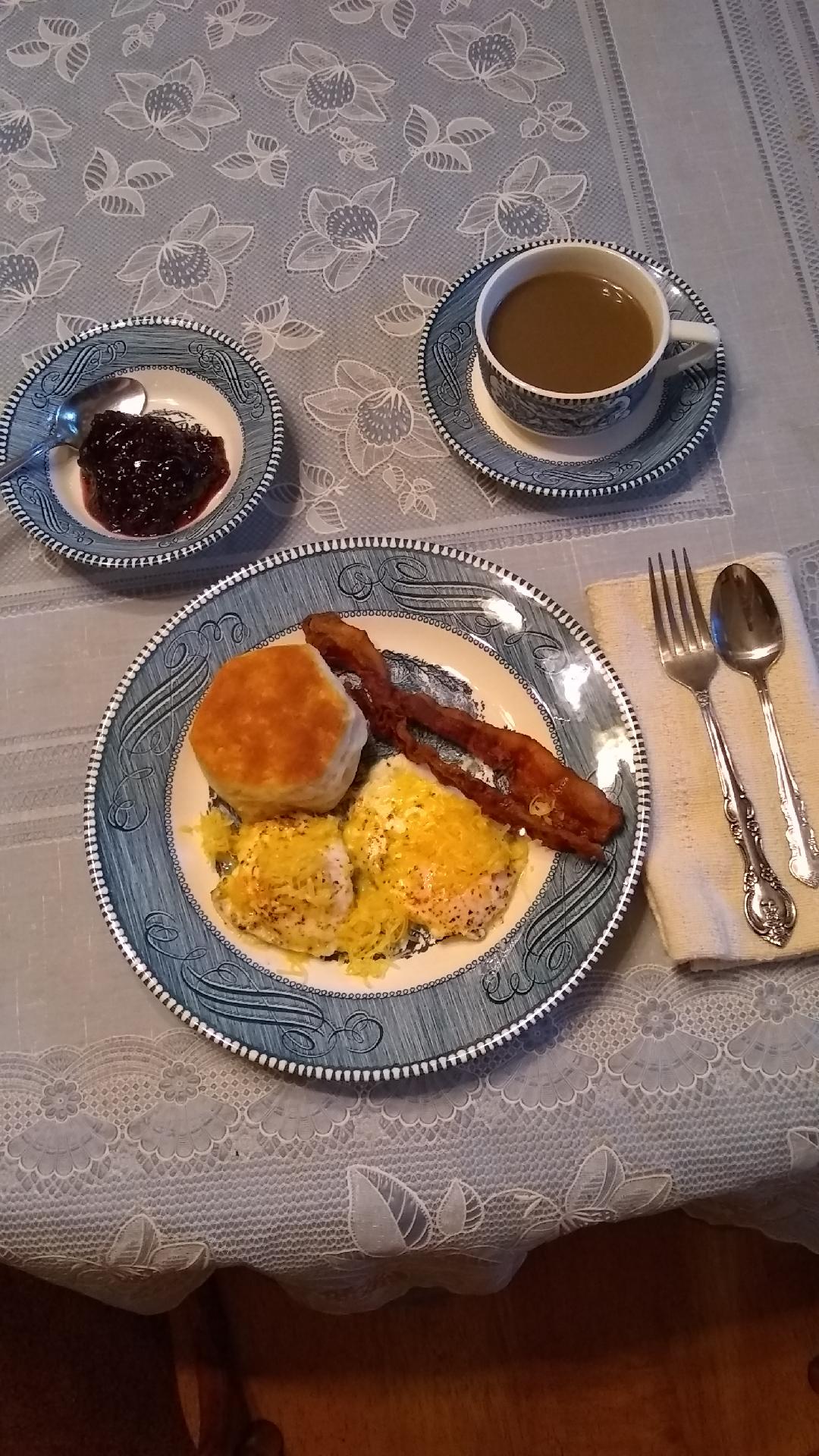
By 1896, Fannie Farmer published her cookbook, The Boston Cooking-School Cookbook, that came complete with actual measurements. Until that point, a pinch of this and a heap of that probably made up the instructions in most recipes. Though the title indicates the cookbook was from Boston, I imagine it became a staple across the nation before long, and it wouldn’t surprise me if ol’ Fred Harvey didn’t use it himself for his restaurants. If he did, I’d be willing to bet “Eggs à la Suisse” would be one of the Harvey Girls’ favorites among the breakfast dishes. Incredibly easy to make, this dish could feed lots of people in no time, but this recipe is just for two—or maybe one, depending on how hungry he is.

4 eggs

½ cup cream

1 tablespoon butter

2 tablespoons shredded cheese

salt

pepper

cayenne

Melt the butter in a small omelet pan, then add the cream. As the cream warms up, slip the eggs in one at a time. Sprinkle with the seasonings. When the whites get firm, top the eggs with cheese and serve hot.

Combine this with bacon and biscuits, and you have a hearty meal.

-Linda Yezak

Linda Yezak

About Linda

Linda W. Yezak lives with her husband and their funky feline, PB, in a forest in deep East Texas, where tall tales abound and exaggeration is an art form. She has a deep and abiding love for her Lord, her family, and salted caramel. And coffee—with a caramel creamer. Author of award-winning books and short stories, she didn’t begin writing professionally until she turned fifty. Taking on a new career every half century is a good thing. Connect with her on her website , Amazon page , and BookBub.

Loving a Harvey Girl by Linda W. Yezak

Eva Knowles can’t imagine why the local preacher doesn’t like Harvey Girls—women who work serving tables instead of finding a husband and falling in love. But if Eva can get the handsome and wayward cowboy Cal Stephens to join her in church, maybe the reverend will accept the girls. Or maybe she’ll forfeit her job for a husband, hearth, and home!

Amazon 

Lighthouse Publishing of the Carolinas  Save money and use coupon code SandraMHart for a 20% discount on Lighthouse Publishing books!

Trail’s End set in Wild Western Town of Abilene, Kansas

Before I ever dreamed I’d pick up a pen again, my family took a vacation to Kansas to visit my brother and his family. We visited Abilene one afternoon. I learned a bit about the history of that wild western town … enough that I wanted to know more.

My sister-in-law has family ties to Abilene—another reason for my fascination. In fact, one of her ancestors was a friend of Wild Bill Hickok, who was marshal of Abilene in 1871, the year after our story. In 1870, Marshal Tom Smith insisted that the cowboys be disarmed. Storekeepers, saloon-keepers, and hotel owners were asked to post a sign and collect the guns of their customers. Marshal Smith knew what he was doing. He made the town a safer place. Sadly, he was killed later that year.

Stuart Henry’s Conquering Our Great American Plains was a great resource for my story. Henry lived in Abilene from 1868-1872 as a boy. I love finding treasures like this author’s book that allow me to take my readers back to 1870 Abilene, Kansas. What a gift.

When my editor approached me about writing a cowboy story set in the West, it did not take long for my imagination to take me back to Abilene. Who’d have guessed that a family vacation that took place before I decided to pursue a writing career would lead to a story?

I hope you enjoy traveling back to the Wild West with me as much as I love taking you there.

Sandra Merville Hart, from the Author’s Note in the book

This book is a collection of four novellas by Jennifer Uhlarik, Linda W. Yezak, Sandra Merville Hart, and Cindy Ervin Huff.

Sandra’s story in the collection is called Trail’s End. Here’s a bit about the story:

Trail’s End Blurb

Wade Chadwick has no money until his boss’s cattle sell, so he takes a kitchen job at Abby’s Home Cooking. The beautiful and prickly owner adds spice to his workday. Abby Cox hires the down-and-out cowboy even though the word cowboy leaves a bad taste in her mouth. Just as she’s ready to trust Wade with her heart, money starts to disappear … and so does her brother.


Available on Amazon 

Lighthouse Publishing of the Carolinas  Save money and use coupon code SandraMHart for a 20% discount on Lighthouse Publishing books!


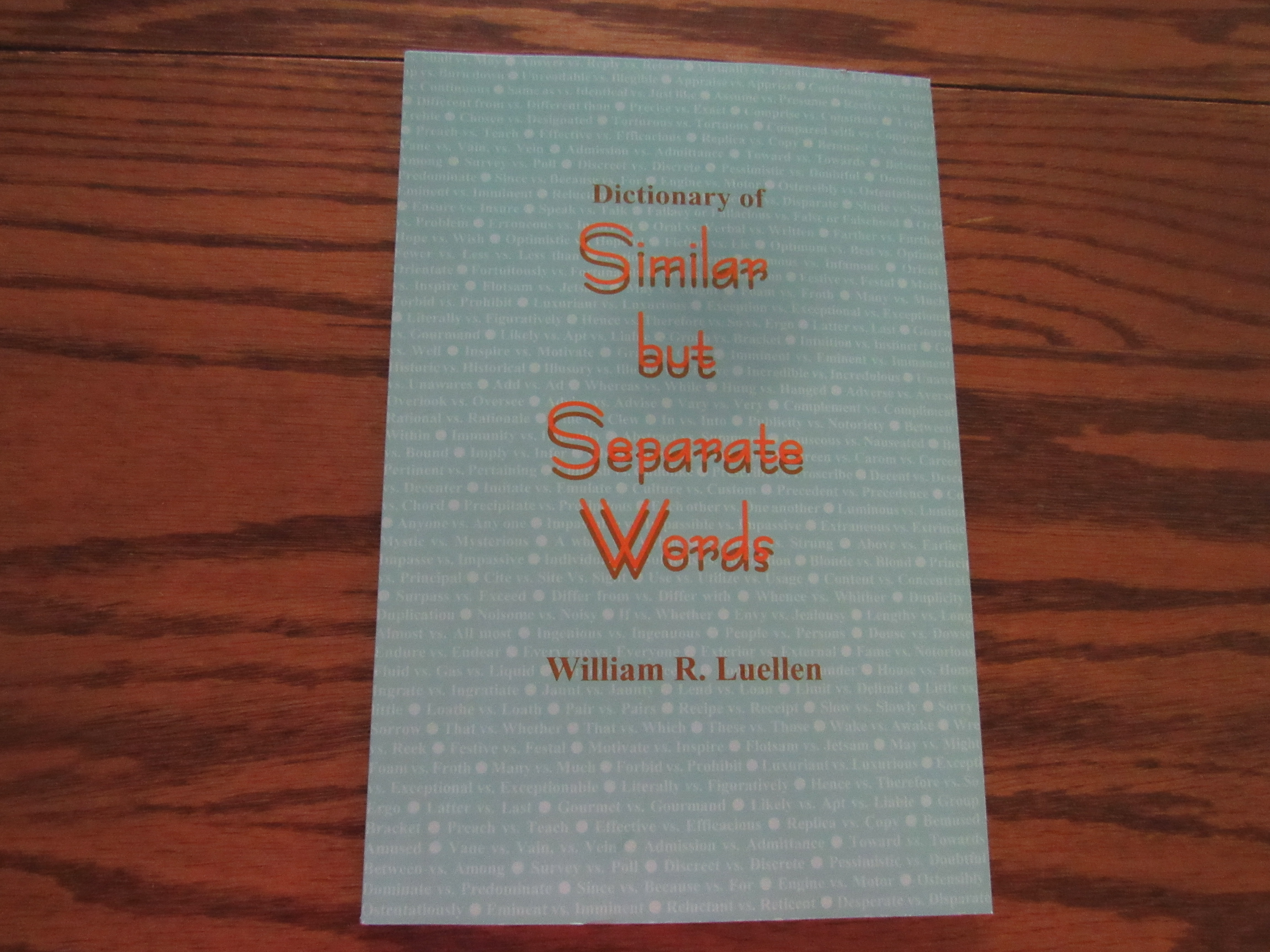
Dictionary of Similar but Separate Words by William R. Luellen

This book is filled with words commonly used in incorrect ways. For example, do you know the difference between complement vs. compliment? How about eminent vs. imminent? Famous vs. infamous?

If any of these made you wonder about true meanings, this book may be for you.

There is also a section in the back for words that share the same spelling but not the same meaning, such as bass or present.

The author of the book is an editor, writer, and professional speaker. He wrote this book, in part, to answer questions from his clients who spoke English as a second or third language.

A nice reference book for writers, educators, and public speakers.

-Sandra Merville Hart