Two Rivers by Deborah Sprinkle

Today’s post has been written by talented author and friend, Deborah Sprinkle. Her debut contemporary romantic suspense is a page turner! Welcome to Historical Nibbles, Deborah!

Together, the Mississippi and the Ohio Rivers create the arteries that feed the heart of our great nation. Both have played a major role in America’s history since its beginning, carrying the first explorers and the first pioneers, loaded with hopes and dreams. Today, barges ply their waters, loaded with coal and other major commercial goods. They’ve served as boundaries and as obstacles, as death traps and as lifelines.

They’ve played a part in every major conflict in our country. During the Civil War, control of the these mighty rivers became paramount. To do this, navies were needed, and in this regard, the industrial North had the advantage. Commander John Rodgers of the Union Navy ordered his ships to Cairo, Illinois, the confluence of the Ohio and the Mississippi. Constant patrolling of both waterways from this strategic location established Northern control to the point that Kentucky and Missouri remained neutral throughout the war.

More ships were built and the Mississippi ran red with the blood of our nation’s men as the North gained control of the river further south, culminating in the fall of Vicksburg in 1863.1 On April 9, 1865, Confederate General Robert E. Lee surrendered to Union General Ulysses S. Grant marking the beginning of the end to the conflict that pitted brother against brother, and took more American lives than any other war.

That’s when one of the most tragic river disasters in the history of our country happened. Two weeks later on April 27, the Sultana, a wooden steamboat, left St. Louis for New Orleans, her objective to pick up released Union soldiers and bring them home. Built to carry 376 passengers, she ended up with 2,137. She fought her way upriver, despite riding low in the water and nursing a patched boiler.  North of Memphis her luck ran out. Three of her four boilers exploded under the pressure of pushing against the current with so much extra weight. Loss of life was estimated at somewhere between 1,200 and 1,500 souls.

On the 150th anniversary of its sinking, a museum opened in Marion, Arkansas, memorializing the Sultana. Artifacts and pieces of the hull displayed were found in a field. The river’s course had changed by two miles since it went down.2

America started as colonies huddled on the east coast with a vast expanse of land to the west. With the help of the great rivers, we became territories and then states. We’ve fought for independence. We’ve fought for our borders. We’ve fought amongst ourselves. Each time, our rivers have been one of our most valuable resources. Ah, the tales they could tell.
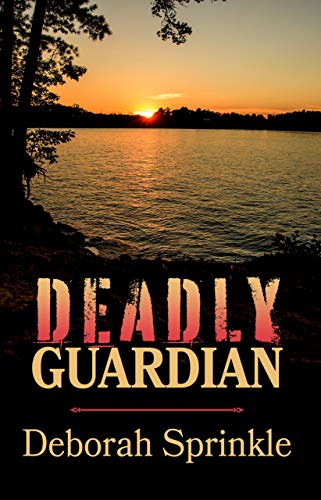
In my debut novel, Deadly Guardian, my heroine knows a lot about rivers. She grew up in St. Louis, Missouri, and currently lives near Cincinnati, Ohio. Both are river towns. One is on the Mississippi and the other graces the shores of the Ohio. While she doesn’t live on the river, she does have a home on a lake nearby. And that body of water gets her into…well, I don’t want to give it away. You’ll just have to read it for yourself.

-Deborah Sprinkle

Sources

  1. Sam Smith. “Winning the West.” Civil War History The River War.  American Battlefield Trust. http://www.battlefields.org/learn/articles/river-war

2. “Sultana (steamboat).” Wikipedia.  en.wikipedia.org/wiki/Sultana_(steamboat)#Museum


About Deborah

Deborah Sprinkle is a retired chemistry teacher among other things. So it should come as no surprise that the protagonist in her debut novel, Deadly Guardian, is one as well. Mrs. Sprinkle is also co-author of a non-fiction book entitled Exploring the Faith of America’s Presidents.  She has won awards for her short stories, articles, and her latest work in progress. Mrs. Sprinkle lives in Memphis with her husband where she continues to be an ordinary woman serving an extraordinary God.

Deadly Guardian Blurb

When the men she dated begin dying, Madison Long must convince the police of her innocence and help them determine who has taken on the role of her guardian before he kills the only man she ever truly loved, Detective Nate Zuberi.

Madison Long, a high school chemistry teacher, looks forward to a relaxing summer break. Instead, she suffers through a nightmare of threats, terror, and death. When she finds a man murdered she once dated, Detective Nate Zuberi is assigned to the case, and in the midst of chaos, attraction blossoms into love. Together, she and Nate search for her deadly guardian before he decides the only way to truly save her from what he considers a hurtful relationship is to kill her—and her policeman boyfriend as well.


Amazon

Through an Autumn Window by Claire Fullerton

A Southern Season: Four Stories from a Front Porch Swing

Cate Barton receives the terrible news about her mother from her brother, Lincoln. Not directly, mind you. No, he told her husband Eric in an early morning phone call that cancer had claimed their mother’s life.

They fly to Memphis where not her brother but an old friend picks them up at the airport.

This story, lovingly-told, probes the grief and heartache and Southern traditions that surround a funeral—with some surprises along the way.

Great images take readers on a journey, allowing them to see and experience events along with the characters.

I loved how the author took me to a Southern funeral with Southern expressions of grief. The emotional adventure transported me back to times when I was overwhelmed by my own grief.

Well-written! I will look for more stories by this author.

-Sandra Merville Hart

Amazon


Cheese and Bacon Quiche Recipe

This recipe is from The Fannie Farmer Cookbook, which was originally published in 1896.

I needed to take a dish to a writers meeting. Since this quiche can be served hot or cold, I decided to try it.

Prepare a tart pastry.

Preheat oven to 425 degrees.

Fry 10 slices of bacon until crisp. Crumble the bacon into pieces. When cool, arrange these over the bottom of the partially-baked tart pastry shell. Then layer 1 ¼ cups of shredded Swiss cheese over the bacon.

Combine together 4 eggs, 2 cups of light cream (I had heavy cream on hand so I used that), ½ teaspoon salt, 1/8 teaspoon nutmeg, and a pinch of cayenne. (I didn’t have any cayenne so I omitted it.) Stir the custard.

Ladle the custard over the bacon and cheese.

Bake at 425 for 15 minutes. Then reduce heat to 350 and bake another 30 minutes or until a knife inserted in the middle is clean.

Serve in wedges, hot or cold.

I thought this quiche was good cold and even better hot. Delicious breakfast/brunch dish. For me, the amount of bacon could be reduced about 25%, but it was really good as written.

I’d love to hear if you try it.

-Sandra Merville Hart

Sources

Revised by Cunningham, Marion and Laber, Jeri. The Fannie Farmer Cookbook, Alfred A Knopf Inc., 1983.

Civil War Women: Kate Cumming, Confederate Nurse and Diarist

In the 1840s, Kate Cumming’s family emigrated from Scotland when she was a child, eventually settling in Mobile, Alabama.

Her mother and two sisters went to England when the Civil War started. Kate stayed in Mobile with her father. Her younger brother enlisted in the 21st Alabama Infantry as part of Ketchum’s Battery. Kate gathered hospital supplies to support wounded soldiers.

In 1862, Reverend Benjamin M. Miller’s speech encouraging women to serve in the hospitals stirred Kate. Inspired by this speech and Florence Nightingale’s example, Kate joined forty other women in Corinth, Mississippi, to nurse Battle of Shiloh wounded—despite her family’s objections.

She briefly returned home that summer yet yearned to continue nursing the soldiers. She traveled to Chattanooga with two other women to volunteer at Newsome Hospital. Her nursing help was eventually accepted.

In September of 1862, the Confederate government began allowing nurses to be paid. Kate enlisted in the Confederate Army Medical Department. Despite her personal sadness at watching soldiers die and battling poor hospital conditions, she worked as matron with Dr. Samuel Stout, medical director for Army of Tennessee, in various locations in Alabama, Tennessee, and Georgia.

As a matron, Kate managed hospital departments, nursed soldiers, foraged for supplies, cooked, sewed, wrote letters, and supervised other workers.

She also maintained a detailed diary. This honest account of day-to-day nursing tasks and the men she served also shows tragedies Southerners faced in increasing measure as the war progressed.

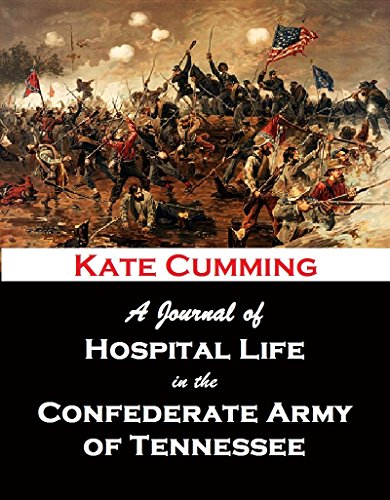
After the war, Kate published her diary, A Journal of Hospital Life in the Confederate Army of Tennessee from the Battle of Shiloh to the End of the War: With Sketches of Life and Character, and Brief Notices of Current Events During that Period.

The author’s introduction was written in 1865—before publication. Kate is bitter about treatment from the North after the war’s end and urges all to unite. Her hope in publishing her diaries is to show Northerners how all have suffered. She wants reconciliation.

-Sandra Merville Hart

Sources

Cumming, Kate. Edited by Harwell, Richard Barksdale. Kate: The Journal of a Confederate Nurse, Louisiana State University Press, 1959.

Hilde, Libra. “Kate Cumming,” Encyclopedia of Alabama, 2019/04/11 http://www.encyclopediaofalabama.org/article/h-1101.

“Kate Cumming,” National Park Service, 2019/04/11 ttps://www.nps.gov/people/kate-cumming.htm.

“Kate Cumming,” Wikipedia, 2019/04/11 ttps://en.wikipedia.org/wiki/Kate_Cumming.

Rohrer, Katherine E. “Kate Cumming (ca. 1830-1909).” New Georgia Encyclopedia. 08 June 2017. Web. 11 April 2019.


The Contessa’s Necklace by Linda Siebold

The action with this book begins in the Prologue and doesn’t let up!

A migraine keeps Marguerite Collins from a celebration dinner for her best friend and her fiancé. It also saves her from tragedy that goes terribly wrong.

Selena Simmons can’t believe that anyone would intentionally kill her sweet grandmother. While she reels from the news of her grandmother’s death, she learns that she’s the killer’s next target.

Where can she hide?

Private Detective Sam Russell’s latest case leads him directly to Selena, who is running for her life. Why does the killer want her dead?

This book is a page turner. It kept my interest throughout the story. I had to know what happened next.

If you like romantic suspense, this book is a good short read.

-Sandra Merville Hart

Amazon

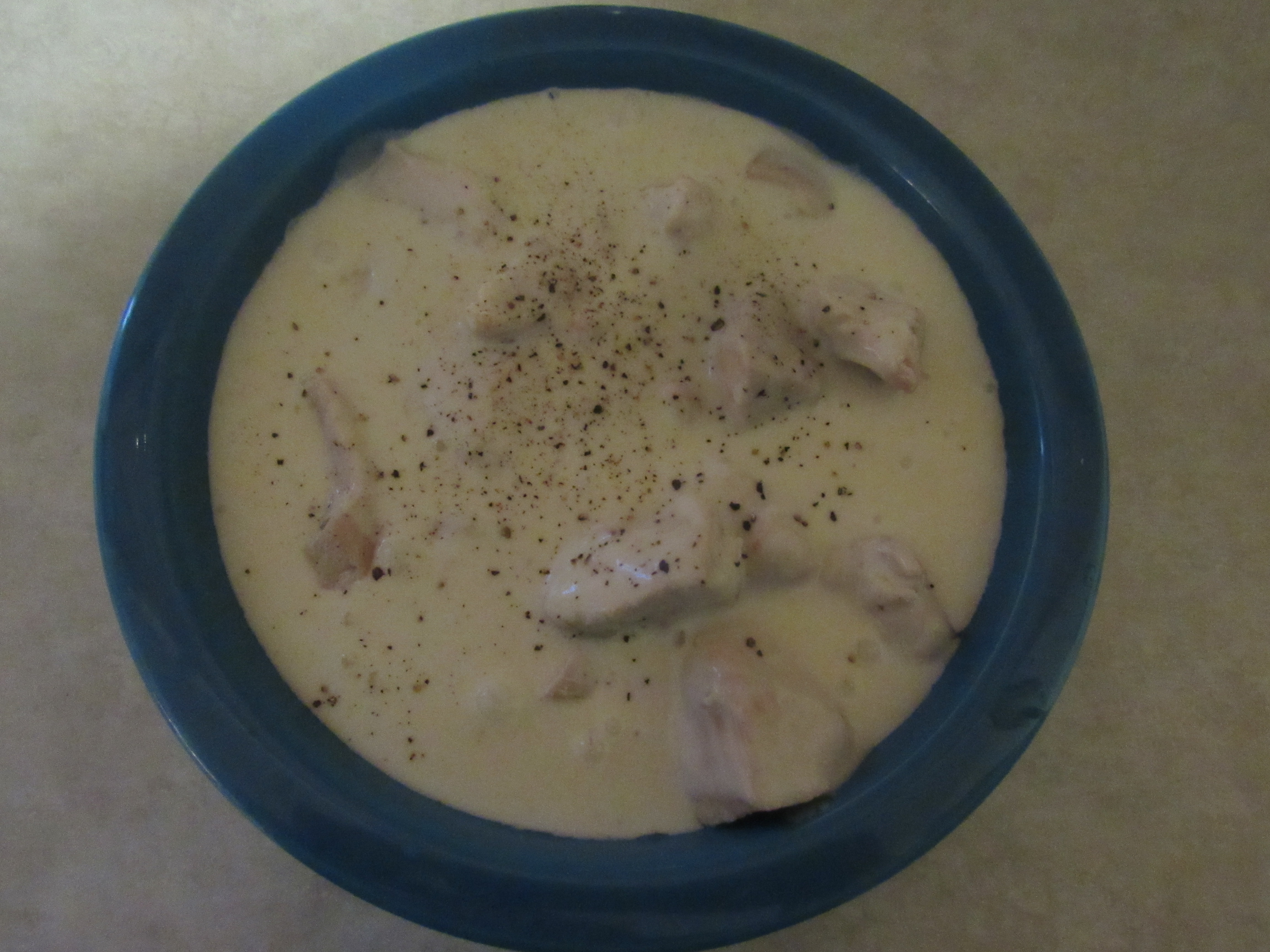
Chicken Fricassee Recipe

This recipe is from The Fannie Farmer Cookbook, which was originally published in 1896.

To my knowledge, I’ve never eaten chicken fricassee so I decided to try it.

The original recipe serves 6. I halved the portions but am giving you the ingredients for 6.

Slice 1 onion and set aside. Cut 2 celery ribs into large piece and set aside. Slice 1 carrot and set aside. You will need 2 tablespoons of lemon juice later. If using fresh lemon, prepare the juice now.

Boil a few cups of water, enough to cover the chicken.

Rinse and pat dry 5 pounds of chicken. Cut into large pieces. (I cut the chicken in smaller pieces.)

Melt 4 tablespoons of butter with 2 tablespoons of oil in a Dutch oven. Brown the chicken on all sides.

Reduce heat to low. Pour enough boiling water over the chicken to cover it. Then add the onion, carrot, celery and 1 bay leaf. Cover and simmer 40-45 minutes.

Remove chicken and keep warm. Strain the broth.

The fricassee sauce requires the broth to reduce to 1 ½ cups. I had way more chicken stock than this (great to freeze for future recipes!), I placed 2 cups of the broth back in the Dutch oven to boil and then reduce to 1 ½ cups.

Melt 4 tablespoons of butter in a medium saucepan over medium high heat. Stir in 4 tablespoons of flour. Slowly add the broth and 1 cup of heavy cream to the saucepan. Reduce heat to simmer 4-5 minutes, until the sauce is thick and smooth.

Remove from heat. Add 2 tablespoons of lemon juice, salt to taste (I used ½ teaspoon), and freshly ground pepper. Spoon over the chicken and serve.

Delicious! I gobbled this down. I loved this chicken dish—so happy to find a new chicken meal for my family. The creamy sauce melted in my mouth, perfectly enhancing the flavor of the chicken.

I will make this again. I’d love to hear if you try it.

-Sandra Merville Hart

Sources

Revised by Cunningham, Marion and Laber, Jeri. The Fannie Farmer Cookbook, Alfred A Knopf Inc., 1983.


Powhatan Beaty, Civil War Medal of Honor

Born into slavery in Richmond, Virginia, on October 8, 1837, Powhatan Beaty achieved his freedom in 1849, and he moved with his family to Cincinnati. While in school, Powhatan developed an interest in acting. Though he made his living as a cabinetmaker, he continued to study acting with several coaches after leaving school.

Southern troops marched toward Cincinnati in late August, 1862, sending the city into panic. Its soldiers were off fighting the war around the country. Men left in Cincinnati either served as home guard soldiers or dug fortifications.

African American men were initially forced to serve. William Dickson was soon appointed to command the black troops and immediately improved their circumstances. He treated them fairly. Beaty served in Company 1, 3rd Regiment of this Black Brigade. Working near Kentucky’s Licking River, they dug trenches and built forts for 15 days. The Confederates left without attacking the city. The brigade disbanded on September 20, 1862.

The following June, Powhatan enlisted with a group of other black men who had been recruited for a Massachusetts regiment. Within two days, Private Beaty had been promoted to Sergeant Beaty. Expecting to be sent to Boston upon arriving in Columbus, Ohio, they learned that the Massachusetts regiment was full.

Ohio Governor David Tod requested and received permission from the Department of War to form an Ohio regiment of African Americans. The 127th Ohio Volunteer Infantry—later renamed the 5th United States Colored Troops (USCT)—had its first members when Beaty and his men joined on June 17, 1863. They trained at Camp Delaware.

On September 29, 1864, Beaty’s Company G black troops were ordered to charge Confederates at New Marker Heights in the Battle of Chaffin’s Farm. Intense fighting sent them in retreat and their color bearer fell. Facing Confederate bullets, Beaty ran back 600 yards to retrieve their flag.

Company G’s eight officers had all been killed or wounded. Beaty took command and led a second charge. This one succeeded in driving the Confederates from their position.

General Benjamin Butler commended Beaty’s heroic actions. On April 6, 1865, First Sergeant Powhatan Beaty was awarded the Medal of Honor “for extraordinary heroism on 29 September 1864.” He “took command of his company, all the officers having been killed or wounded, and gallantly led it.”

Beaty returned to Cincinnati as a cabinetmaker after the war. While raising a family, he became a well-known actor locally by the early 1870s. In 1884, a successful musical festival in Cincinnati’s Melodeon Hall led to Beaty touring with Henrietta Vinton Davis, the premier black Shakespearean actress of the time.

-Sandra Merville Hart

Sources

Geaslen, Chester F. Our Moment of Glory in the Civil War, The City of Fort Wright, Kentucky, 2007.

Momodu, Samuel. “Powhatan Beaty (1837-1916),” BlackPast, 2019/03/30 https://www.blackpast.org/african-american-history/beaty-powhatan-1837-1916/.

“Powhatan Beaty,” Ohio History Connection, 2019/03/29 http://www.remarkableohio.org/index.php?/category/542.

“Powhatan Beaty,” Military Times Hall of Valor, 2019/03/29 https://valor.militarytimes.com/hero/2609.

“Powhatan Beaty,” Wikipedia, 2019/03/29 https://en.wikipedia.org/wiki/Powhatan_Beaty.


A Vast and Gracious Tide by Lisa Carter

Sergeant First Class Caden Wallis loses more than his foot in Afghanistan—he loses his leader and friend, Joe, and Friday, his bomb-sniffing dog. While he struggles to recover, his girlfriend dumps him. There’s only one thing left to do—return a quilt that brought him such comfort during his recovery to its rightful owner and then end it all.

McKenna Dockery can’t get over the loss of her fiancé three years ago. If not for his death, they’d be married by now. She gave up her dream of dancing when he died to help out in her family’s restaurant in the Outer Banks. She’s been a Banker all her life and never wants to leave.

When McKenna meets Caden on the beach, she recognizes his despair and quickly grasps his suicidal intentions. She offers him a chance to do something positive again.

Then a dead body washes ashore and suspicion falls on Caden, the stranger in town. And that’s only the beginning.

This multi-layered story captured my interest—and my heart—from the Prologue and never let go. Suspenseful. Lovable, broken characters that tugged at my emotions. Add a skillfully-woven romance to the mix and you’ve got a great story.

I highly recommend this book to readers of contemporary romance and romantic suspense.

-Sandra Merville Hart

Christianbook.com

Chicken Gumbo Soup Recipe

This recipe is from The Fannie Farmer Cookbook, which was originally published in 1896.

I love chicken gumbo soup and am always on the lookout for recipes. This makes 4 servings.

Chop half of an onion and set aside.

Chop 1 sweet red pepper. You will need ½ cup for this soup.

You will need either 1 can of diced tomatoes or 1 1/2 cups of fresh chopped tomatoes.

Prepare 1 cup of cooked rice.

Boil 3 cups of water.

Rinse and pat dry 3 pounds of chicken. Cut into 8 pieces. (I prefer smaller pieces, so I cut them in about 2-inch cubes.)

Melt 3 tablespoons of bacon fat in a Dutch oven and brown chicken on all sides. (The recipe called for a large skillet but my largest skillet didn’t hold all the ingredients.) Remove the chicken and set aside.

Add onion, 4 cups of okra, and red pepper to the Dutch oven. Over medium heat, cook for about 5 minutes, stirring constantly. Add tomatoes, 2 teaspoons of basil, and 3 cups of boiling water. Add chicken and 1 teaspoon of salt.

Reducing heat to low, cover and simmer 30-40 minutes. Mix in the rice and cook an additional 5 minutes.

Serve in soup bowls.

Delicious! I really like this soup. My mom made it differently when I was a child, but this was very good, too. It’s a spicy, comforting soup.

I will make this again. I’d love to hear if you try it.

-Sandra Merville Hart

Sources

Revised by Cunningham, Marion and Laber, Jeri. The Fannie Farmer Cookbook, Alfred A Knopf Inc., 1983.


The Aftermath of the Battle of Gettysburg

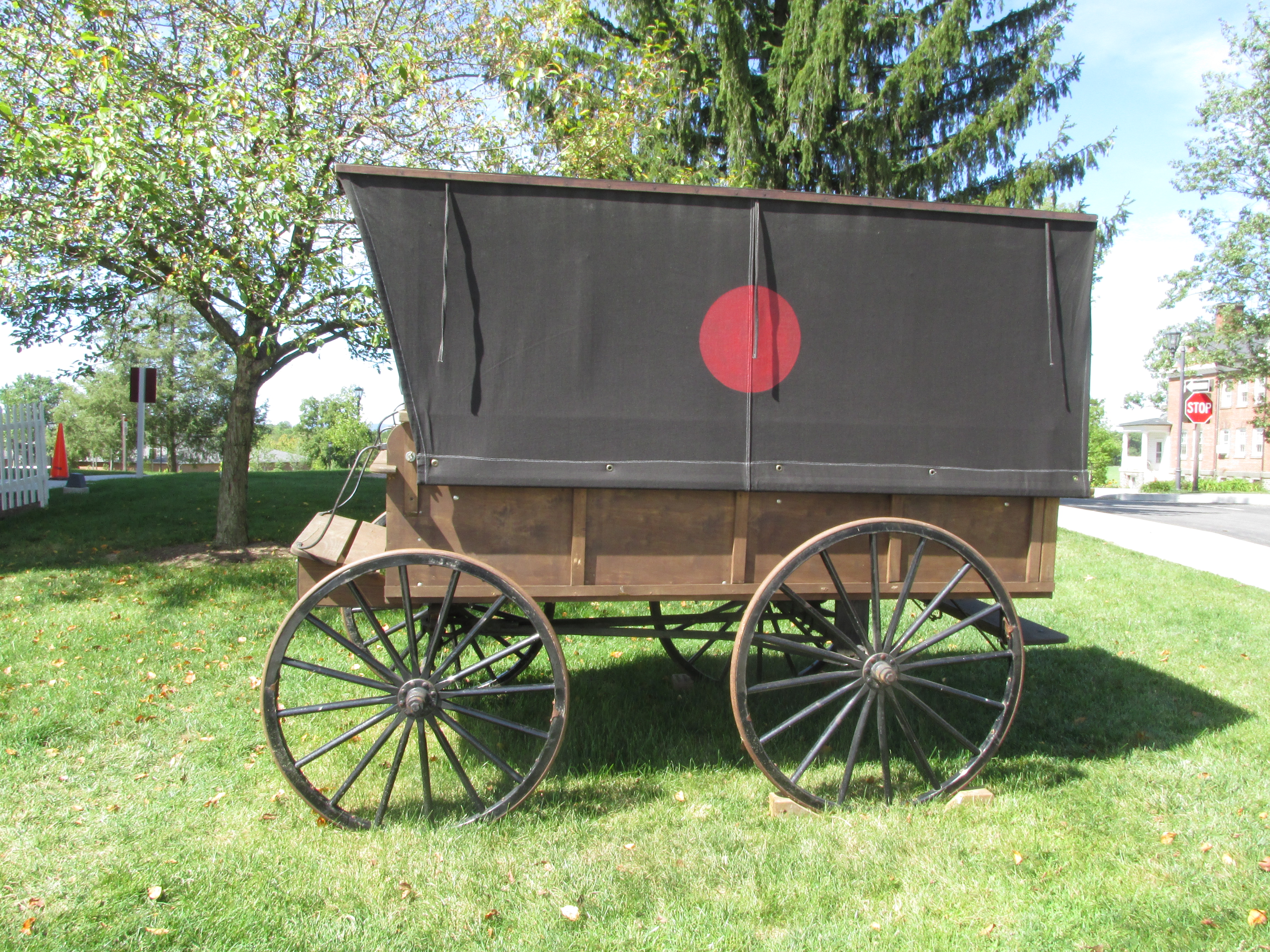
Ambulance outside Lutheran Seminary, Gettysburg.

On July 4, 1863, Confederate General Robert E. Lee began his retreat after the Battle of Gettysburg with an ambulance and wagon train that was about seventeen miles long. Nine Gettysburg men accused of spying or other suspicious activities went with them. Captured African Americans headed south along with thousands of military prisoners. Confederate sharpshooters continued to shoot at Union soldiers in town.

Confederates no longer controlled Gettysburg. The townspeople, who endured a nightmare during the battle, ventured outside their homes to a new ordeal. Their town didn’t look the same nor would it ever be the same.

Homes had been damaged by bullet holes and cannon balls. Soldiers’ discarded knapsacks, blankets, cartridge boxes, bayonets, ramrods, broken guns, food, and letters littered the streets and fields. Broken wagons, wheels, and unexploded shells remained after the battle.

Groans and shrieks from the wounded in churches, the courthouse, homes, and barns tugged at citizens’ hearts. Injured soldiers lay in tents in the fields and under blankets hung over cross-sticks.

Wounded from both sides lay on the battlefields, awaiting rescue. Some had waited since the first day of the battle.

Dead horses lay in the streets. Soldiers killed in battle needed to be buried. (Some 7,000-8,000 soldiers died—sources vary on exact numbers. See my article on Gettysburg’s numbers.) People, even in the stifling heat, closed their windows to block out the terrible odor. They treated the streets with chloride of lime. They cremated bodies of mules and horses with kerosene, adding to the smell.

The town mourned the loss of Jennie Wade, who was buried with dried dough on her hands. She’d been kneading dough when a Confederate bullet aimed at Union soldiers claimed her life.

General Lee left almost 7,000 men too wounded to travel. These soldiers ended up in area hospitals, and were transported to prisoner-of-war camps like Fort McHenry once they recovered.

Damaged rail lines were repaired about a week after the battle ended. About 800 men were then moved daily by train to larger city hospitals.

The Sanitary Commission gave food to several hospitals—10,000 loaves of bread, 11,000 pounds of poultry and mutton, 7,100 shirts, 8,500 dozen eggs, and more than 6,000 pounds of butter. The Christian Commission also gave out supplies.

Drinking water was in short supply.

The demand for food for so many extra people had local farmers charging steep prices. For example, a loaf of bread cost ten cents before the battle and seventy-five cents after it.

On July 7, 1863, Gettysburg resident Sarah Broadhead wrote, “I am becoming more used to sights of misery. We do not know until tried what we are capable of.”

-Sandra Merville Hart

Sources

Creighton, Margaret S. The Colors of Courage: Gettysburg’s Forgotten History, Basic Books, 2005.

McGaugh, Scott. Surgeon in Blue: Jonathan Letterman, the Civil War Doctor who Pioneered Battlefield Care, Arcade Publishing, 2013.

Sheldon, George. When the Smoke Cleared at Gettysburg: The Tragic Aftermath of the Bloodiest Battle of the Civil War, Cumberland House, 2003.

Slade, Jim & Alexander, John. Firestorm at Gettysburg, Schiffler Military/Aviation History, 1998.

Thomas, Sarah Sites. The Ties of the Past: The Gettysburg Diaries of Salome Myers Stewart 1854-1922, Thomas Publications, 1996.