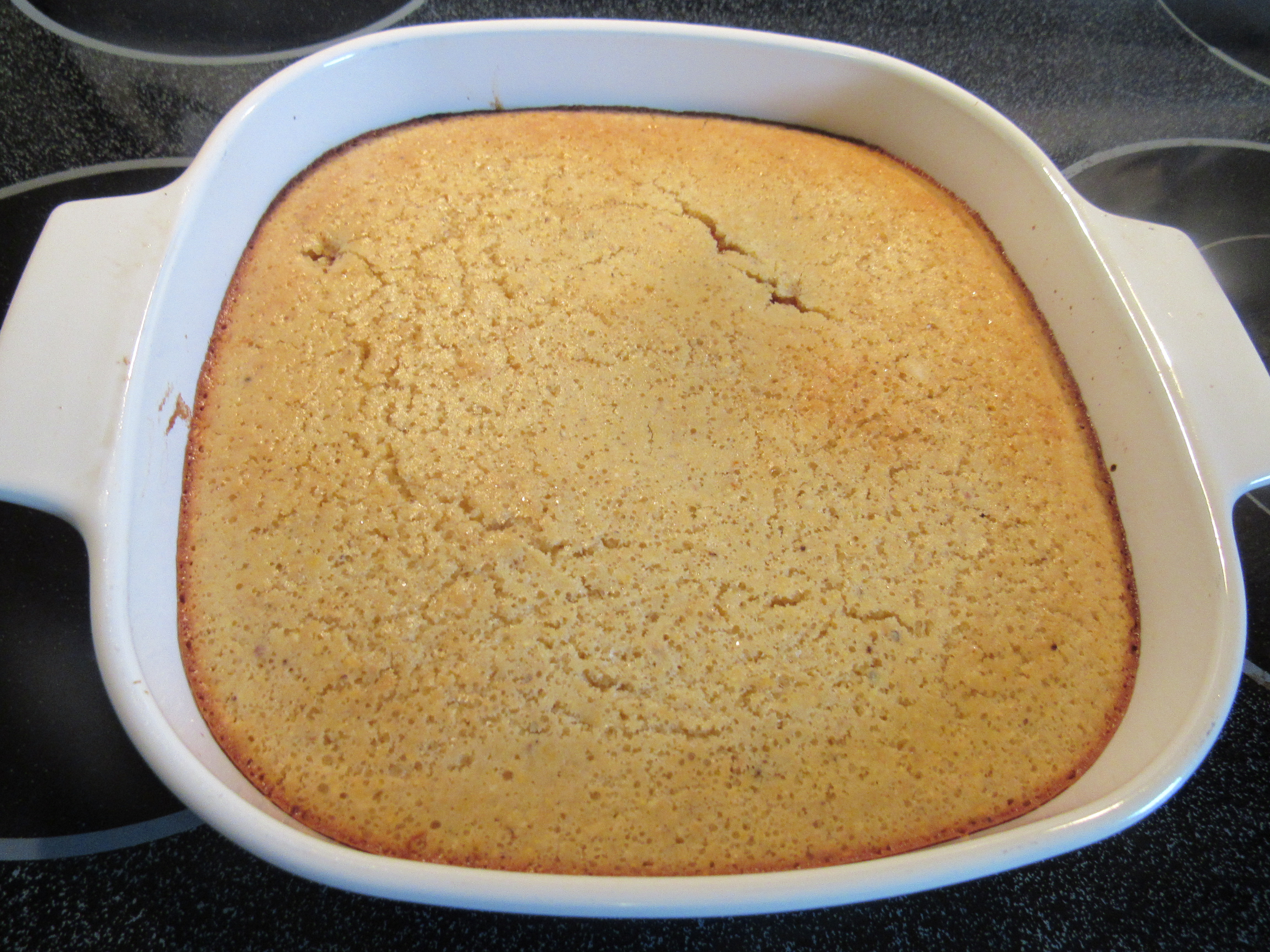
Corn Pone Pie Recipe

This cornbread recipe is from The Fannie Farmer Cookbook, which was originally published in 1896.

I remember my dad talking about eating corn pone pie so when I found this recipe, I was intrigued.

Chop 1 onion and set aside. Chop 1 garlic clove and set aside. (I used ½ teaspoon of chopped garlic.)

Melt 3 tablespoons bacon fat in a large skillet over medium heat. (Cast iron skillets work well for this.) Saute the onion until soft. Add 1 pound of lean ground beef, breaking it into small pieces. Cook meat in the onion until no longer pink.

Drain and return to the skillet.

To the beef mixture, add 1 can chili beans, the chopped garlic, 1 can (or 2 cups) diced or stewed tomatoes, and 1 tablespoon chili powder. Salt to taste. (I used ½ teaspoon salt.)

Reduce heat to low and simmer for 45 minutes.

Preheat oven to 400 degrees.

While the beef mixture simmers, prepare a topping of cornbread batter  and set aside.

Select a shallow 2 ½ quart baking dish and prepare it with cooking spray.

After simmering, pour chili mixture into the prepared baking dish. Spoon cornbread batter over the top and bake at 400 for 20-25 minutes.

This was delicious. It was similar to eating a bowl of chili with a serving of cornbread. I was surprised what a “comfort food” dish this turned out to be.

I will plan on making this for a family gathering soon.

I’d love to hear if you try it.

-Sandra Merville Hart

Sources

Revised by Cunningham, Marion and Laber, Jeri. The Fannie Farmer Cookbook, Alfred A Knopf Inc., 1983.


Cincinnati Reds’ Palace of the Fans

When fire destroyed League Park’s main grandstand and pavilion in 1900, Red’s owner John T. Brush wanted a new and different ballpark to lure more fans to the games. Architect John G. Thurtle gave it to him.

Inspired by the Chicago’s World’s Columbian Exposition of 1893, Thurtle designed the Palace of the Fans. It served as the Reds’ ballpark from 1902-1911.

The Palace’s hand-carved Corinthian columns—22 of them!—had intricate details on the top.

At the center of the covered grandstand was a triangular top containing the word “Cincinnati” and flanked by the American flag on either side. Nineteen opera-style “Fashion Boxes” lined the front, 3 rows deep, where wealthier fans sat. The boxes accommodated about 15 in each box.

Underneath the grandstand were carriage stalls, enabling the wealthy to leave their carriages only a short walk from their seats.

All this was quite fancy for ballparks of that day, unlike any before or after it.

Unfortunately, the detailed attention to the Greco-Roman ballpark didn’t extend to the players. There were no dugouts, no clubhouses, and no dressing rooms. Players sat on benches underneath the Fashion Boxes during the game.

Standing room for fans was also located below the Fashion Boxes. Those in “Rooter’s Row” stood near enough to players to hear and respond to their conversations. Waiters served beer to those in this section.

A weakness of League Park, the former baseball park, was that it faced the afternoon sun, so home plate had been moved to correct this problem.

The new ballpark was built on the same site as the old one that had burned, League Park, a former brickyard. It bordered 4 streets: Western Avenue (northeast), York Street (north), McLean Avenue (west) and Findlay Street (south).

Right-field seats were part of the League Park that had not been destroyed by fire. The stands held about 6,000 fans. Thousands more could stand in the outfield to observe the game.

Thursday, April 17, 1902, was Opening Day for the Season and for the Palace. About 10,000 fans attended the game between the Cincinnati Reds and the Chicago Colts (later known as Chicago Cubs) that Chicago won, 6-1.

The grandstand required major repairs after a few short seasons. Damage from a fire sealed its fate. Palace of the Fans lasted only 10 years.

Interestingly enough, the last game the Reds played at the Palace was against the Chicago Cubs on October 12, 1911.

-Sandra Merville Hart

Sources

“Crosley Field,” The Online Book of Baseball, 2019/03/23 http://www.thisgreatgame.com/ballparks-crosley-field.html.

“Palace of the Fans,” Ballparks.com, 2019/03/22 https://ballparks.com/baseball/national/palace.htm.

“Palace of the Fans,” Baseball-reference.com, 2019/03/22 https://www.baseball-reference.com/bullpen/Palace of the Fans.

“Palace of the Fans,” Digitalballparks.com, 2019/03/22 https://digitalballparks.com/National/Palace7.html.

“Palace of the Fans,” Wikipedia, 2019/03/23 https://en.wikipedia.org/wiki/Palace of the Fans.

“Reds Ballparks,” Reds.com, 2019/03/23 http://mlb.mlb.com/cin/history/ballparks.jsp.

Suess, Jeff. “Red’s legendary Palace of the Fans symbol of baseball’s growth,” Cincinnati.com, 2019/3/22 https://www.cincinnati.com/story/news/2017/04/05/reds-legendary-palace-fans-symbol-baseballs-growth/100063096/.
 

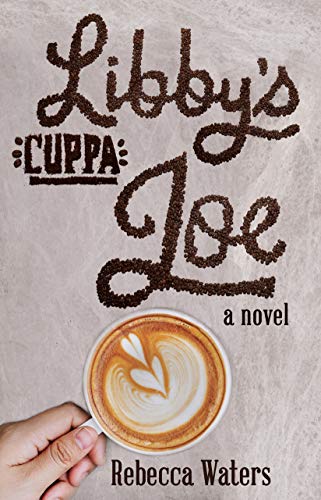
Libby’s Cuppa Joe by Rebecca Waters

Sonja Parker’s dreams are about to come true. She’s purchased a vacant coffee shop in a small Wisconsin town. There’s a lot about the coffee business she’ll need to learn before the shop reopens. Libby, the first owner, has passed away and her husband, Joe, lives nearby.

Libby’s Cuppa Joe, which has a great reputation in the community with yearly summer visitors, requires a lot of repairs. Since her new business requires so much of her time, she doesn’t find a church home in the area. God hasn’t had a big place in her life for some time.

She takes a job out of state in a friend’s coffee shop and becomes an experienced barista. She also meets Damon Evans, a ski instructor, and falls in love with him.

With lovable, believable characters—and at least one that readers will love to hate—a sweet coffee shop, and a lovable community, this book is an enjoyable read. I got caught up in the story early on.

There are several twists and turns in the story that I didn’t see coming. Each one added another layer. There are a few threads and they captured my interest.

I will look for other books by this author. Recommend!

-Sandra Merville Hart

Libby’s Cuppa Joe by Rebecca Waters

Cornbread Recipe

This cornbread recipe is from The Fannie Farmer Cookbook, which was originally published in 1896.

I was making a corn pone pie recipe and it called for a cornbread batter topping.

Preheat oven to 425 degrees. Prepare an 8×8 square baking pan with cooking spray.

Mix together ¾ cup yellow cornmeal, 1 cup flour, 1/3 cup sugar, 3 teaspoons baking powder, and ½ teaspoon of salt in a large mixing bowl.

Add 1 cup milk, 1 beaten egg, and 2 tablespoons of melted shortening or bacon fat. Mix well.

Pour batter into the prepared baking pan and bake about 20 minutes.

Since I was using this batter for another recipe, I didn’t bake it. I set it aside until needed. It made a delicious topping for the corn pone pie.

-Sandra Merville Hart

Sources

Revised by Cunningham, Marion and Laber, Jeri. The Fannie Farmer Cookbook, Alfred A Knopf Inc., 1983.


Civil War Women: Sarah Morgan Dawson, Confederate Diarist

Sarah Morgan Dawson was twenty when she began writing in her diary on March 9, 1862. The Civil War raged near her family’s home in Baton Rouge, Louisiana. Her family had already known hard times. In 1861, illness claimed her father’s life and a duel claimed a brother’s life.

War threatened to divide her family. Three brothers fought for the Confederacy and another, though he sided with the Union, refused to fight against his brothers.

Baton Rouge fell into Union hands. Most citizens ran for their lives, including Sarah’s family. She returned a few times to gather possessions from her home, but found that the Union soldiers who occupied the city had ransacked it. The home was unrecognizable on her last trip—the soldiers had plundered valuables and destroyed what they left behind. Sarah didn’t return to her childhood home until after the war.

Made homeless by the war, her family wandered from Baton Rouge, staying with friends and strangers.

Food supplies dwindled. Sarah had money to purchase food yet some places had none for sale.

They stayed near the Confederate army, making friends with many soldiers. Sarah did all she could to help them. Her family had escaped with few clothes … and everyone else was in the same predicament.

A serious buggy accident injured Sarah’s back. The injury prevented her from walking more than a few steps. She clung to her faith throughout the difficulties that mounted almost daily.

Her Union-sympathizer brother urged them to stay with him in New Orleans, which was now under Union control. They had little choice. A hard train ride and then a schooner took them to New Orleans.

Upon their arrival, they had to take an oath of allegiance to the Union. A Southerner at heart, taking the oath broke Sarah’s spirit. Even worse, Sarah’s mother complained so passionately to the Union soldiers of all she’d suffered at their hands that she was almost arrested. Sarah’s brother smoothed things over and took them into his home.

At the beginning of 1864, Sarah’s heart broke to discover that two of her brothers died. They’d lost so much to the war that she hated the Union.

General Lee surrendered on April 9, 1865. Sarah’s diary entries stopped on June 15, 1865.

It was published and inscribed: “To those who endured and forgave”.

Sarah read her diary many years later and wanted people to know that through it all, God never failed her. “Whatever the anguish, whatever the extremity, in His own good time He ever delivered me. So that I bless Him to-day for all of life’s joys and sorrows—for all He gave—for all He has taken—and I bear witness that it was all Very Good.” –Sarah Morgan Dawson, July 23rd, 1896, Charleston, South Carolina.

-Sandra Merville Hart

Sources

Dawson, Sarah Morgan. A Confederate Girl’s Diary: Civil War Centennial Series, Indiana University Press, 1960.


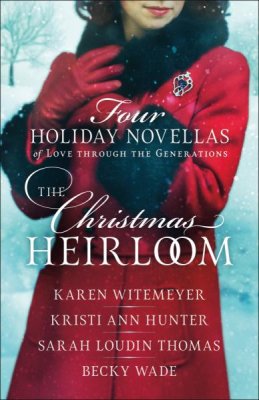
Gift of the Heart by Karen Witemeyer

From The Christmas Heirloom: Four Holiday Novellas of Love Through the Generations

Hope Springs, Texas October 1890

Ruth Fulbright and seven-year-old daughter, Naomi, are coming to Hope Springs to accept a job as cook at a café. The widow must make this new job work. She sold her wedding ring to pay for travel expenses.

Bo Azlin shuns the company of others because of a childhood injury. He owns most of the town’s businesses including the resort, yet the folks don’t know him. Hoping to hide his useless right arm, he avoids the townspeople … until Ruth insists on meeting him directly.

Her plight raises his compassion. Dare he dream the pretty widow and her daughter can learn to love him?

A heart-warming story that snatched my attention immediately. Before long, I was pulling for their relationship to blossom.

Lovable, strong characters add to the charm of this story. Recommend!

-Sandra Merville Hart

Christianbook.com

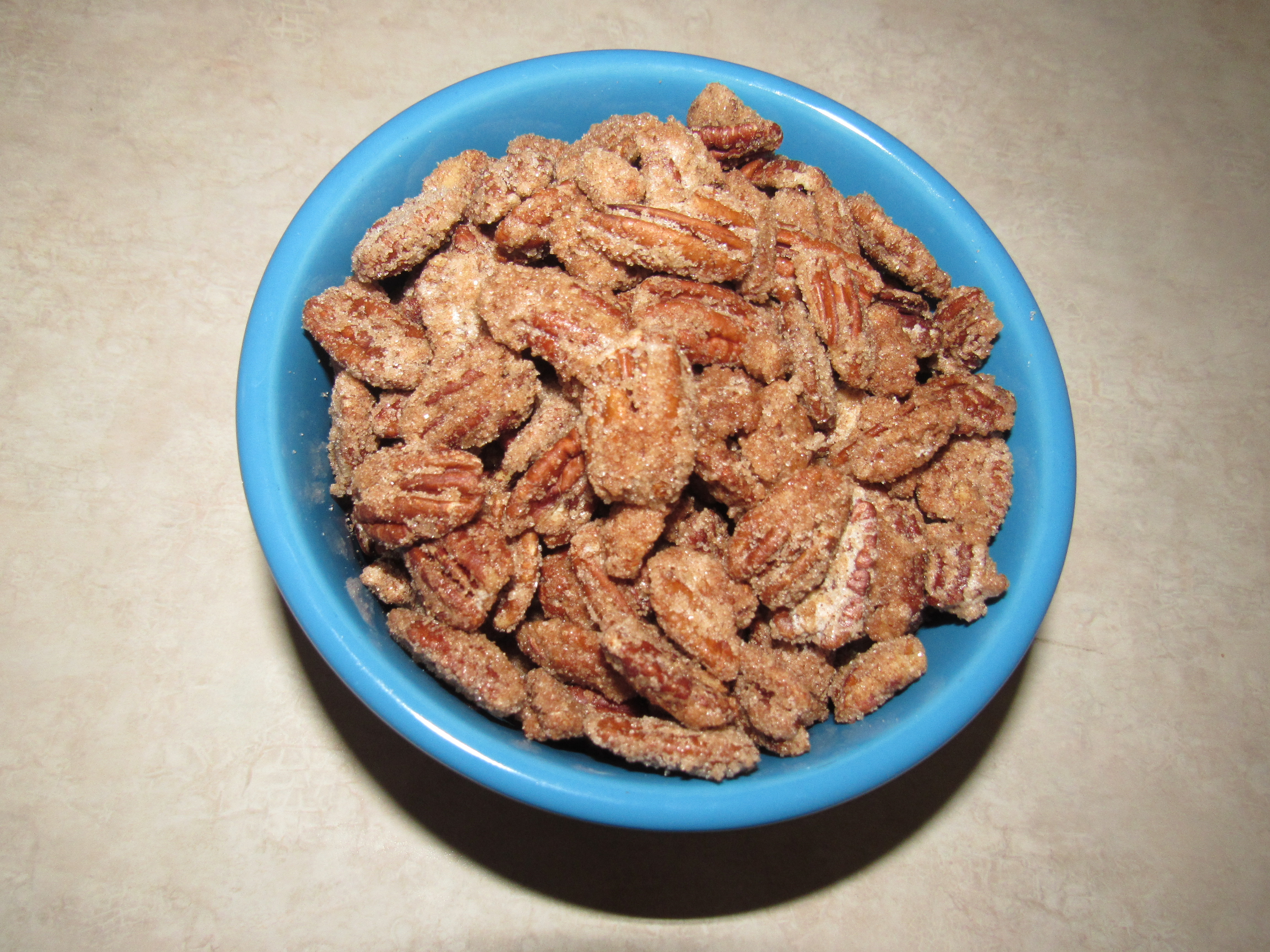
Sugared Pecans Recipe

This Sugared Nuts recipe is from The Fannie Farmer Cookbook, which was originally published in 1896.

I needed to take something to share at a recent writers’ meeting. Because it travels easily, this recipe caught my eye. You can use either pecan halves or walnut halves. I chose pecans.

Preheat oven to 225 degrees. Prepare a cookie sheet with cooking spray.

I used a pound of pecans since I was taking these to a meeting. You may need less depending on the size of the crowd.

Mix together ½ cup sugar, ½ teaspoon salt, and ½ teaspoon of cinnamon in a flat bowl and set aside.

Take 1 egg white (room temperature works best for beating) and add 1 tablespoon of water. The recipe did not say how long to beat the egg white mixture, so I beat it until stiff, frothy white peaks formed.

It worked best for me to set up an assembly line: beaten egg whites next to the sugar mixture and then the cookie sheet.

Dip the pecans into the egg whites. Roll it in sugar and then place it on the cookie sheet. One by one grew tedious quickly. I put a handful of pecans into the egg whites and then placed them on a separate plate. I added pecans to the plate until the excess egg whites were absorbed. Then I rolled them by small bunches into the sugar.

I had to make a second batch of cinnamon sugar to finish a pound of pecans.

Bake the sugared pecans for 1 hour at 225 degrees, stirring them every 15 minutes. They smell heavenly!

Delicious! Baking made the pecans a crunchy dessert that later softened. The aroma made me hungry. I like cinnamon so I will double it the next time I make these.

A pound of pecans filled the whole cookie sheet, so let that guide you in guessing how many you will need to serve. These make a delicious appetizer for a party.

-Sandra Merville Hart

Sources

Revised by Cunningham, Marion and Laber, Jeri. The Fannie Farmer Cookbook, Alfred A Knopf Inc., 1983.


Cover Reveal for Upcoming “The Cowboys Collection” Release!


Revealing the book cover for the “Smitten Historical Romance Collection: The Cowboys” that releases in August!

All the authors in collection—Jennifer Uhlarik, Linda W. Yezak, Sandra Merville Hart, and Cindy Ervin Huff—have written stories with cowboy heroes and feisty heroines. Prepare to head to the Wild West!

I hope you love the book cover as much as we do!

Trail’s End, my novella in the collection, is set in the wild cowtown of Abilene, Kansas.

Back cover blurb:

Wade Chadwick has no money until his boss’s cattle sell, so he takes a kitchen job at Abby’s Home Cooking. The beautiful and prickly owner adds spice to his workday. Abby Cox hires the down-and-out cowboy even though the word cowboy leaves a bad taste in her mouth. Just as she’s ready to trust Wade with her heart, money starts to disappear…and so does her brother.

Future President Abraham Lincoln Visits Cincinnati

September 17, 1859 was a warm, sultry Saturday night in Cincinnati. Drummers played. Rockets glared reddish-yellow above Fifth Street residences. A Union flag waved above the Fifth Street Market House. Youngsters fed several bonfires to light the night for a crowd of over 4,000 who gazed at a man speaking from a 2nd floor balcony.

Abraham Lincoln of Illinois spoke from a building on the north side of the street where the Federal Courthouse stands. Earnest and, at time, humorous, Lincoln spoke against the expansion of slavery.

Reverend Moncure Conway was used to political gatherings. This one was a campaign specifically for Cincinnati attorney William Dennison who was running for Governor. Yet there was something compelling about Lincoln. He said that slavery was wrong. In that border city where slavery was legal across the Ohio River into Kentucky, a few folks in the crowd hissed their disapproval.

Lincoln waited for outbursts to subside a little. Then he replied that everyone was born with two hands and a mouth to be fed and he inferred it was the job of those two hands to feed that mouth.

The Republicans didn’t ask Lincoln to be their nominee until six months later on May 23, 1860. When someone in the Cincinnati crowd asked who Lincoln recommended they vote for, he didn’t have a choice for candidate. His advice was to vote for a man who’d fight slavery’s expansion.

Front-Porch Campaigns of the era preferred that presidential candidates allow the Republican Party to give their message to citizens.

Seventeen months later on February 18, 1861, President-elect Abraham Lincoln, on his way to Washington, was back in Cincinnati. City buildings were decorated in red, white, and blue bunting. Wearing black with a gray shawl over his shoulders, Lincoln smiled at the train station’s enthusiastic crowd. Cannons boomed in welcome on his procession to center of the city. Young girls sang “The Star-Spangled Banner” and “Hail Columbia.” Officials made patriotic speeches. He went to Cincinnati’s Burnet House while there but it’s not clear where these speeches were made.

-Sandra Merville Hart

Sources

Tucker, Louis Leonard. Cincinnati during the Civil War, Ohio State University Press, 1962.

Wimberg, Robert J. Cincinnati and the Civil War: Off to Battle, Ohio Book Store, 1992.

“With Malice Toward None: The Abraham Lincoln Bicentennial Exhibition,” Library of Congress Exhibitions, 2019/04/01 https://www.loc.gov/exhibits/lincoln/the-run-for-president.html.


When Love Returns by Beth Wiseman

An Amish Homecoming: Four Amish Stories

 Sarah and her five-year-old daughter, Miriam, lose everything they own in a hurricane. Now they have no choice but to return to Sarah’s parents’ Lancaster County home. She hasn’t seen them since leaving at seventeen.

Sarah’s father welcomes her with open arms. No hug from her mother—typical. They had trouble getting along in her teenaged years.

But there’s someone else she needs to see—Abram, her ex-fiancé.  She’d left him without a word, too.

This is a multi-layered story. Each character inspired varying levels of sympathy as a I read it. Each character is believable and so are the emotions they battle.

A great read. Recommend!

-Sandra Merville Hart

Amazon