Corn Crisps Recipe

I bought The Fannie Farmer Cookbook, which was originally published in 1896.

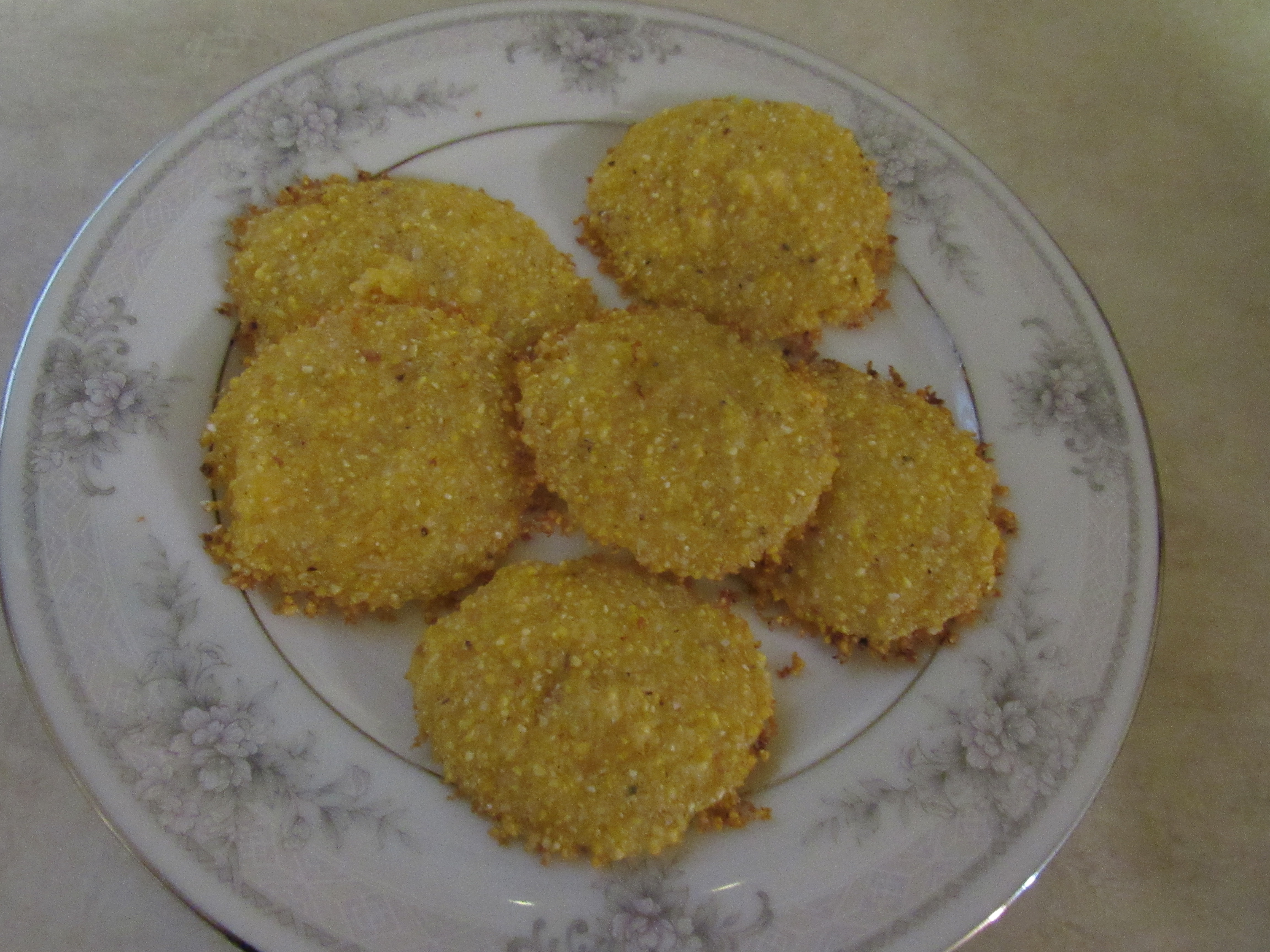
A recipe for corn crisps caught my eye. I’d never eaten them. The recipe is quick and easy so I decided to try it with two different corn meals.

The first batch was made using a coarse grind corn meal.

Preheat oven to 425 degrees and prepare a cookie sheet with cooking spray. (The original recipe says to use butter on the baking pan. That probably enhances the buttery flavor of the crisp.)

Set aside a ½ cup of yellow cornmeal and ¼–½ teaspoon of salt.

Add 2 tablespoons of butter and ¾ cup of water to a small saucepan. Bring this to boil and then immediately stir in the dry ingredients. Mix well.

Drop by rounded teaspoons onto prepared baking sheet. Bake 10 to 15 minutes.

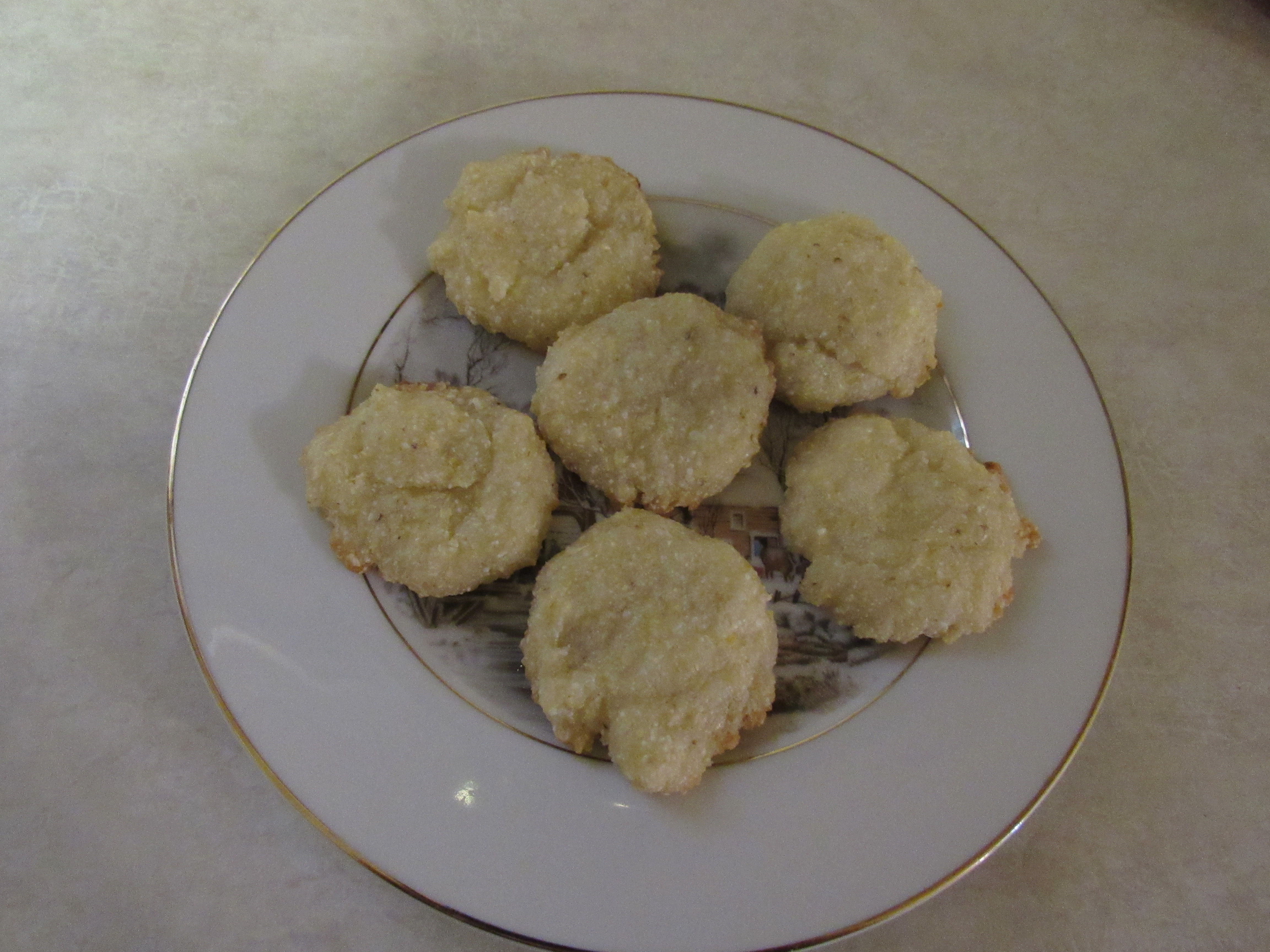
The batch with the coarse grind corn meal lightly browned in 12 minutes. They tasted good but very salty.

I then made the recipe using some cornmeal milled in the Great Smoky Mountains National Park. These took longer to bake. I took them out at 16 minutes. The bottom was lightly browned but the top was still pale. These retained their shape. They still tasted salty, so I think reducing salt by half may be better.

Leave them in the oven longer for a crispy consistency.

All in all, an easy salty snack that can be cooked and served within a half hour.

I halved this recipe and it made 6 crisps each time.

-Sandra Merville Hart

Sources

Revised by Cunningham, Marion and Laber, Jeri. The Fannie Farmer Cookbook, Alfred A Knopf Inc., 1983.


Civil War Women: Sister Anthony, Angel of the Battlefield

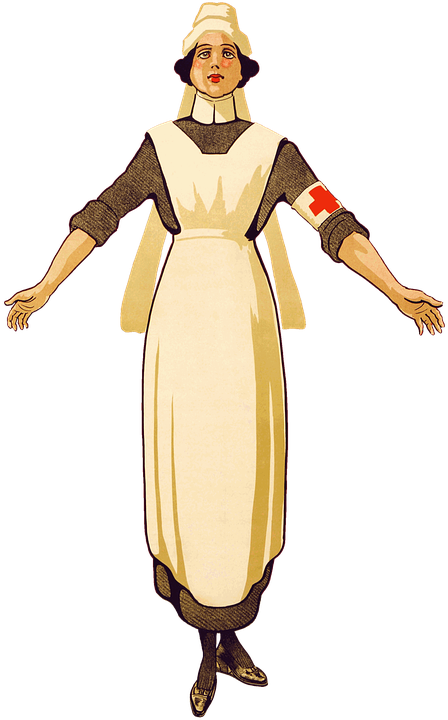
Mary O’Connell’s family emigrated to Boston from Ireland in 1821 when she was about seven-years-old. After joining the Sisters of Charity, she became known as Sister Anthony.

In 1837, she began working at St. Peter’s Orphan Asylum and School for girls in Cincinnati. Later she was given charge of a new hospital, St. John’s Hotel for Invalids.

Camp Dennison, a Civil War training camp about fifteen miles from Cincinnati, required nurses for sick soldiers after the war began. Sister Anthony and five other nuns rode the train and then walked two to three miles to visit the regimental hospitals every day. To save this daily expense, the sisters stayed at a small wooden church near camp.

Requests for nurses prompted Sister Anthony and others to care for wounded on a hospital ship with Dr. George Curtis Blackman at the Battle of Shiloh. Dead and dying soldiers filled the decks. One overcrowded ship had seven hundred patients.

Because the sisters didn’t give preferential treatment, they were asked to care for wounded prisoners.

Sister Anthony helped bring wounded soldiers from the battlefield. She is credited with developing Battlefield Triage, earning President Lincoln’s praise.

After caring for wounded at Shiloh, she became known as the “Angel of the Battlefield.” Sister Anthony served at several battlefields, including Nashville, Cumberland Gap, Richmond, Lynchburg, and Culpeper Court House.

She didn’t distinguish between Union and Confederate soldiers. She knew generals on both sides and was acquainted with Confederate President Jefferson Davis.

Joseph C. Butler and Louis Worthington gave a large Cincinnati building at Sixth and Lock Street to Sister Anthony in 1866. The hospital, meant to honor her and the other sisters’ war service, had two stipulations: exclude no one because of religion or color and they were to name it “The Hospital of the Good Samaritan.”

St. Joseph Foundling and Maternity Hospital opened later that year. It’s not clear why the name changed.

-Sandra Merville Hart

Sources

“Battle Nurses,” Newspapers.com, 2019/03/30 https://www.newspapers.com/clip/18267260/civil_war_nurses_catholic_sisters_in/.

Graves, Dan, MSL. “Sister Anthony, Battlefield Heroine,” Christianity.com, 2019/03/30 https://www.christianity.com/church/church-history/timeline/1801-1900/sister-anthony-battlefield-heroine-11630652.html.

“Mary O’Connell,” Wikipedia, 2019/03/30 https://en.wikipedia.org/wiki/Mary_O%27Connell.

Wimberg, Robert J. Cincinnati and the Civil War: Off to Battle, Ohio Book Store, 1992.


Ice Melts in Spring by Linda Yezak

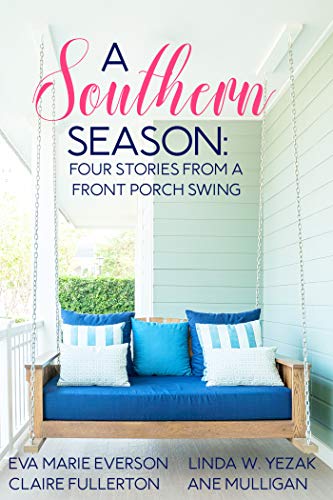
A Southern Season: Four Stories from a Front Porch Swing

 Kerry Graham has avoided the beach since her husband died in boating accident. If she didn’t need her job cataloging items for an author’s museum donations, she wouldn’t be here now.

Quinn Russell, her handsome yet nosy beach neighbor, seems nice but Kerry holds everyone at an arm’s length these days, including God. Especially God.

Compassionate, believable characters in this novella drew me right into the story.  The setting made me long for an extended beach vacation.

Well-written. Recommend.

I can’t wait to read the rest of the stories in the collection!

-Sandra Merville Hart

Amazon

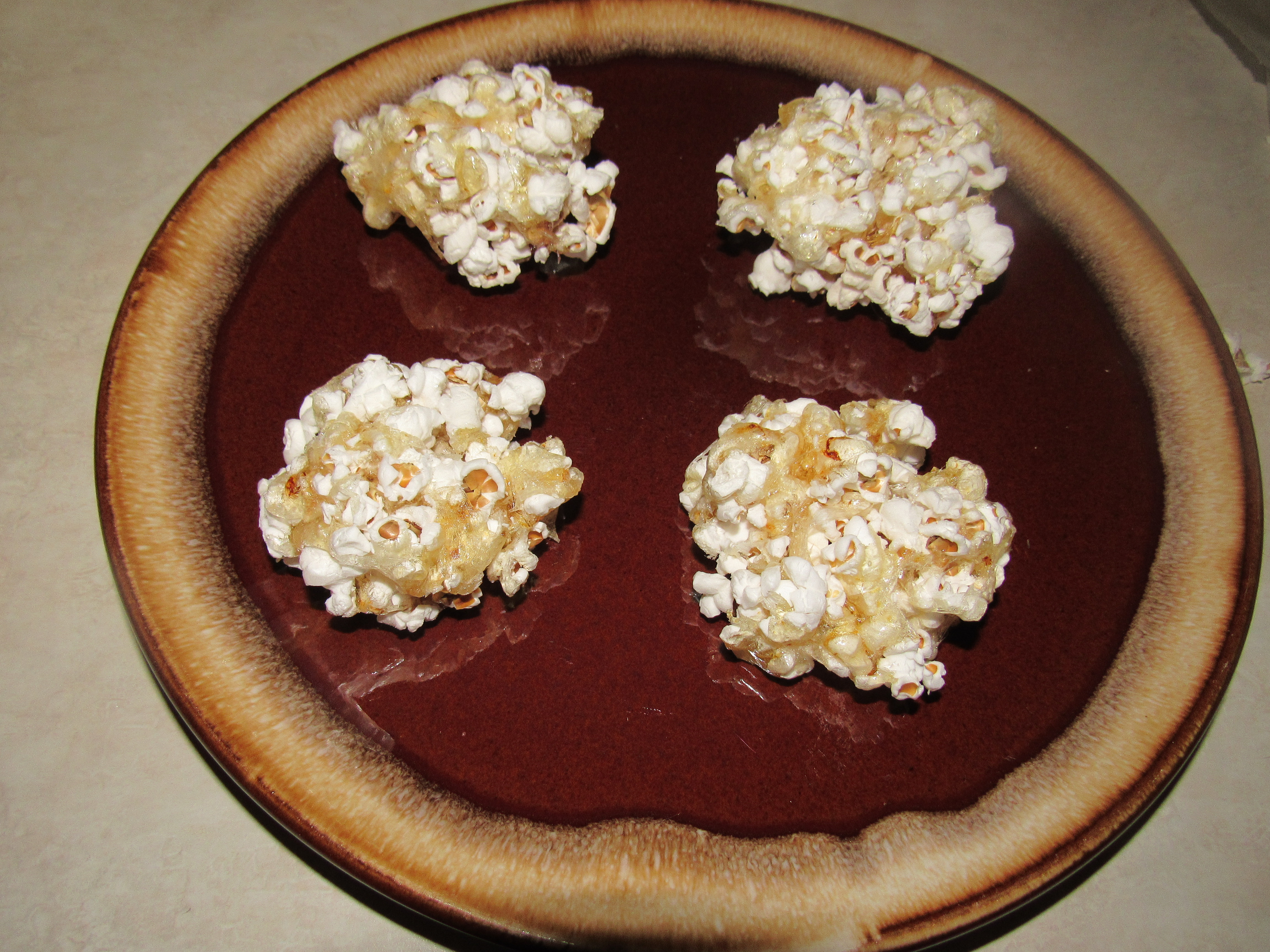
Popcorn Balls

The Fannie Farmer Cookbook was originally published in 1896. Fannie Farmer’s name is still well-known today.

A recipe for Popcorn Balls stated that it was “an authentic old-fashioned version.” Intrigued by a recipe considered “old-fashioned” in 1896, I decided to make it.

Preheat oven to 250. (All temperatures are Fahrenheit.)

Pop 3 quarts of unbuttered, unsalted popcorn. To do this frugally, add 1/3 cup of popcorn to a lunch-sized paper bag. Important—tape the bag shut. Microwave it on the popcorn setting until popping slows. This makes at least 10 cups of popcorn, which was plenty.

Coat a large, oven-safe bowl with shortening. Pour the popcorn in the bowl and keep warm in a 250 oven.

You’ll need 2 to 4 tablespoons of butter later. For now, butter a large spoon or fork and set it aside. You’ll need some wax paper for the hot popcorn balls as well.

In a 3-quart heavy pot, combine 2 cups light corn syrup, 1 tablespoon cider vinegar, and ½ teaspoon of salt. Stir to mix together.

Cook over medium heat. Use a candy thermometer to monitor the temperature of the syrup until it reaches the hard-ball stage of 250 degrees.

There was a strong vinegar smell when the syrup began to cook that dissipated after a few minutes.

The recipe says you can stir occasionally, but I had to make this twice because I forgot to add vanilla at the end the first time. The final caramel-type mixture worked better without stirring.

When the temperature reaches 200, watch carefully as it begins to shoot up quickly.

Remove from heat when it reaches 250. Add 2 teaspoons of vanilla. I was surprised that the vanilla sizzled. Stir to mix it in.

Remove the warm popcorn from the oven. Moving quickly, use the buttered spoon to toss the popcorn as you pour it slowly from the kettle. The caramel is very thick and pours in a thin ribbon while you move the popcorn around to cover it.

Butter your fingers. Since the popcorn sets quickly, as soon as the popcorn mixture cools enough to handle, begin shaping it into 3-inch balls. Start from the outside parts that have cooled a bit. Keep buttering your fingers to enable you to work with the sticky popcorn.

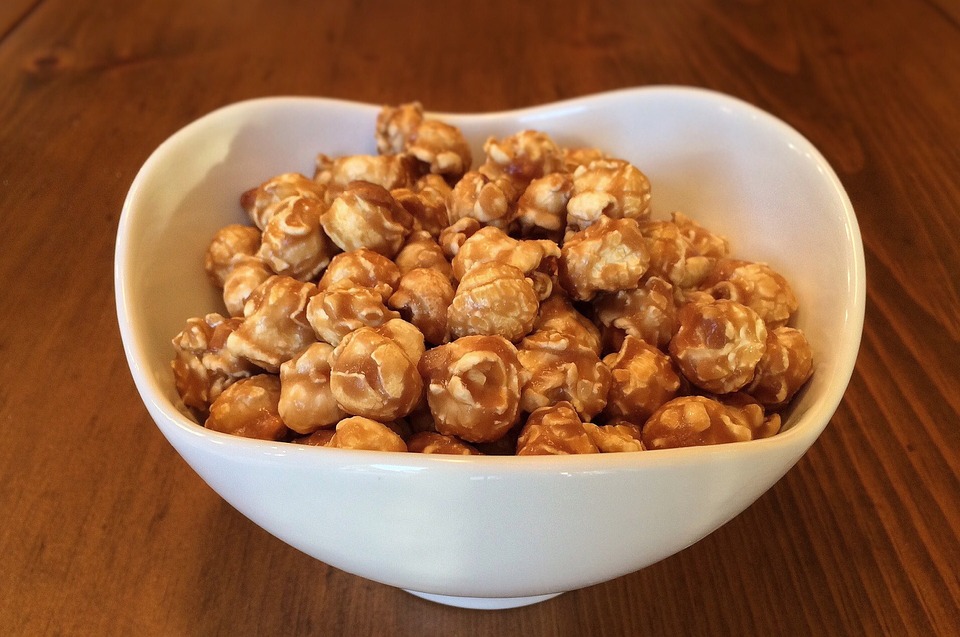
My husband and I both thought these popcorn balls tasted like Cracker Jacks. Delicious! But, if you cook it until 250, the caramel is little hard. I’d remove it at about 240—or even a little less. Experiment for the caramel consistency you enjoy.

I had fun learning how to make this, but the makers of Cracker Jacks have perfected it long ago. I think I’d buy a box next time. I bought Cracker Jacks a few months ago for a baseball party so they are still around.

Enjoy!

-Sandra Merville Hart

Sources

Revised by Cunningham, Marion and Laber, Jeri. The Fannie Farmer Cookbook, Alfred A Knopf Inc., 1983.


Civil War Women: Susie King Taylor, Union Nurse and Teacher

Born into slavery in Georgia in 1848, Susie Baker lived with her grandmother in Savannah after turning seven. She and her younger sister and brother secretly attended school taught by black women.

In April of 1862, the Civil War had been going on for a year when Susie accompanied her uncle to Saint Catherine Island, seeking protection from the Union fleet there. They were taken, two weeks later, to Saint Simons Island. About 600 black men, women, and children lived there.

Susie received two large boxes of books and Bibles from the North. She used these to teach about 40 children on the island, making her the first black teacher in Georgia for free African American students. Several adults came to her in the evenings to learn how to read.

She married Edward King, a black noncommissioned Union officer, while on St. Simons Island.

Cases of varioloid (a form of smallpox) broke out among the soldiers. One soldier had to be quarantined in his tent with only his doctor allowed to see him. Having been vaccinated, Susie nursed him daily. She also faithfully drank sassafras tea, believing this kept her blood clean.

After the island was evacuated in October of 1862, Susie traveled with her husband and brothers’ regiment. She nursed the wounded, laundered clothes, and taught many black soldiers to read.

Shrapnel, bullets, and cannon balls wreak havoc on the human body. Susie’s compassionate heart allowed her to look past the gruesome wounds as she sought to relieve the men’s suffering. She bound wounds and gave water to the parched men, alleviating pain as much as she was able.

After the war, she and her husband returned to Savannah. She started a school for freed children. In 1866, Edward died before their first child was born. Susie had started two more schools by 1868.

A job as a domestic servant took her to Boston, where she met and married Russell Taylor.

Susie didn’t forget the soldiers. She helped organize Corps 67, a chapter of the Women’s Relief Corps, and served as President, Secretary, Treasurer, and Guard of this corps.

-Sandra Merville Hart

Sources

Butchart, Ronald E. “Susie King Taylor (1848-1912),” Georgia Encyclopedia, 2019/03/30 https://www.georgiaencyclopedia.org/articles/history-archaeology/susie-king-taylor-1848-1912.


Lardas, Mark. African American Soldier in the Civil War: USCT 1862-66, Osprey Publishing Ltd., 2006.


Taylor, Susie King. Edited by Malone, Margaret Gay. In My Own Words: The Diary of Susie King Taylor, Civil War Nurse, Benchmark Books, 2004.


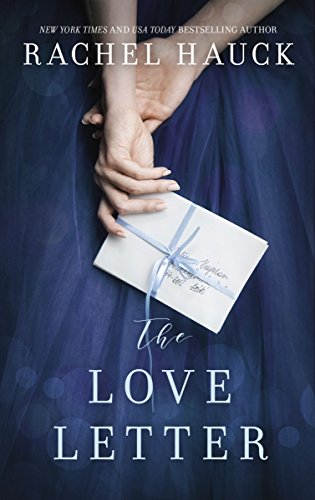
The Love Letter by Rachel Hauck

The story begins with a wounded soldier, Hamilton. He seems near death yet he must retrieve a letter that is very important to him.

Hamilton is a Revolutionary War soldier, fighting for independence from England. Though Esther loves Hamilton, she and her father are Loyalists. Their story is interwoven with that of a modern couple.

Actress Chloe Daschle is desperate to play a part where her character doesn’t die. Playing the part of Esther in a movie by a new scriptwriter, Jesse Gates, will rescue her from that typecasted role.

Jesse Gates’ play, based on an ancestor’s letter, has more to do with a tragedy from his own life than he cares to admit. Though Chloe tugs at his heart, he’ll never heal from his past enough to love again.

Despite failures in past relationships, Chloe still believes in love. In marriage. Jesse captivates her yet he has put up walls between them.

The author has woven an intricate story, binding the past and the present in a way that kept me turning pages.

Believable, likeable characters all face their own internal battles in a dual story that will stay with readers.

Recommend!

-Sandra Merville Hart

Amazon

Early Baseball Snacks

Doscher Brothers, a Cincinnati confectioner, made a type of flat popcorn ball and named it Popcorn Fritters. The snack, resembling a rice cake, was sold to the Cincinnati Red Stockings, probably beginning in the mid-1870s. Their home ballpark from 1876-1879 was Avenue Grounds, located about four miles from the center of Cincinnati. Fans traveled in trains and horse-drawn streetcars to games.

Two brothers, Frederick and Louis Rueckheim, experimented with adding molasses and peanuts into popcorn and introduced the treat when the World’s Fair came to Chicago in 1893. They perfected the product and began selling it as “Cracker Jacks” in 1896.

“Buy me some peanuts and Cracker Jacks” is a line from the popular 7th inning stretch baseball tune “Take Me Out to the Ballgame.” This song, written by Albert Von Tilzer and Jack Norworth in 1908, immortalized both baseball snacks.

Sometime from 1896 to 1908, Cracker Jacks had become a popular snack at ballgames.

The song also mentions peanuts. That salty snack got its start in 1895. Harry Stevens, a ballpark concessioner, sold advertising on scorecards. A peanut company paid for their advertisement with peanuts—a very wise decision because Stevens sold them to fans at the ballparks.
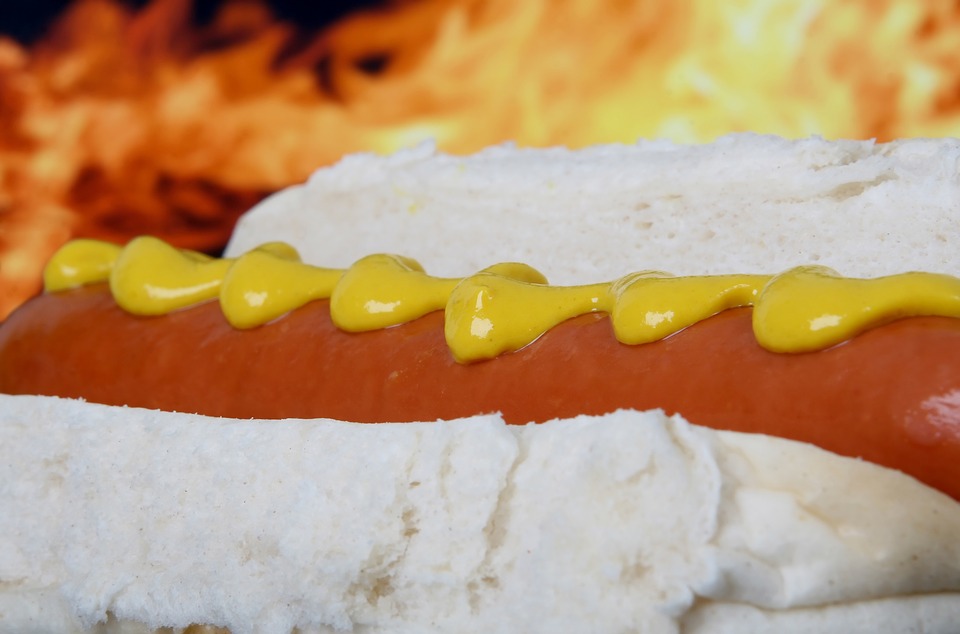
It seems we can also thank Harry Stevens for bringing hot dogs to ballparks.

Ice cream—another early ballpark food!—wasn’t selling well on a cool Spring day in 1905. Stevens sent his employees to buy sausages and Vienna rolls. The sausages were served on the rolls to fans and called “red hots.” They sold so well that he kept them on the menu. In 1910, a cartoonist shortened the name to “hot dog.”

What about drinks?

Brooklyn’s first enclosed ballpark included a saloon on an outfield corner where they sold beer.

The Cincinnati Reds ballpark from 1902-1911 was the Palace of the Fans, a grandstand designed after the Chicago’s World’s Columbian Exposition of 1893. This park either had a bar on the grounds or one nearby because waiters served beer to standing-room crowds on “Rooter’s Row,” an area underneath opera-style boxes that jutted out three rows from the grandstand.

Since families attended baseball games, it seems likely those early ballparks also sold lemonade, tea, or coffee.

-Sandra Merville Hart

Sources

“Reds Ballparks,” Reds.com, 2019/03/23 http://mlb.mlb.com/cin/history/ballparks.jsp.

Suess, Jeff. “Red’s legendary Palace of the Fans symbol of baseball’s growth,” Cincinnati.com, 2019/3/22 https://www.cincinnati.com/story/news/2017/04/05/reds-legendary-palace-fans-symbol-baseballs-growth/100063096/.

“The History of Ballpark Food,” History.com, 2019/03/23 https://www.history.com/news/the-history-of-ballpark-food.

“The Story Behind Peanuts and Baseball,” National Peanut Board, 2019/03/25  https://www.nationalpeanutboard.org/news/whats-story-behind-peanuts-and-baseball.htm.

Weber, Roger. “A History of Food at the Ballpark,” SportsLibrary.net, 2019/03/25 http://baseballjudgments.tripod.com/id45.html.

Wilson, Laurnie. “Candy History: Cracker Jacks,” Candyfavorites.com, 2019/03/25 https://www.candyfavorites.com/blog/history-of-cracker-jacks-retro/.

Woellert, Dann. Cincinnati Candy—A Sweet History, American Palate, 2017.
 

Civil War Women: Harriet Tubman, Union Spy

Born into slavery on a Maryland plantation, Araminta Ross’s parents nicknamed her “Minty.” Minty later took her mother’s name, Harriet, to honor her.

At age twelve, she stepped between an overseer throwing a heavy object at a fugitive slave. It struck Harriet instead, breaking her skull. The injury caused headaches and narcolepsy that lasted all her life. She fell deeply asleep at random.

She married a free black man, John Tubman, around 1844.

Learning that she and two of her brothers were about to be sold, they escaped on September 17, 1849. Her brothers returned to the plantation, but Harriet pushed on, following safe houses on the Underground Railroad. She walked about 90 miles to freedom in Pennsylvania. Over the next few years, she rescued about 70 people, including her parents and other family members. Her husband had remarried and chose to stay in Maryland.

When the Civil War began, Harriet worked as cook, nurse, and laundress at Fort Monroe, Virginia. She assisted fugitive slaves there.

In May of 1862, soldiers and fugitives were dying of diseases when she arrived in Port Royal, South Carolina. Her knowledge of local roots helped significantly in treating their illnesses.

In 1863, Harriet, reporting directly to General David Hunter and General Rufus Saxton, commanded a team of espionage scouts searching for escape routes for slaves.

She found warehouses and ammunition and reported the locations to Colonel James Montgomery.

Late on June 2, 1863, Harriet led 150 black men, soldiers of 2nd South Carolina Battalion, on the Combahee River Raid. The surprise attack freed over 750 slaves.

After the war ended, Harriet and her family settled in Auburn, New York, and she continued to help folks in need.

-Sandra Merville Hart

Sources

Biography.com Editors. “Harriet Tubman,” A&E Television Networks, 2019/03/30 https://www.biography.com/people/harriet-tubman-9511430.

“Harriet Tubman,” History.com, 2019/03/30 https://www.history.com/topics/black-history/harriet-tubman.

“Role in the Civil War,” Harriet Tubman Historical Society, 2019/03/30 http://www.harriet-tubman.org/role-in-the-civil-war/.

The Editors of Encyclopaedia Britannica. “Harriet Tubman: American Abolitionist,” Encyclopaedia Britannica, 2019/03/30 https://www.britannica.com/biography/Harriet-Tubman.


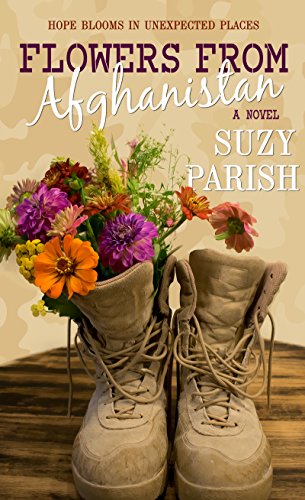
Flowers from Afghanistan by Suzy Parish

A tragedy leaves a hole in Mac’s heart and a mountain of debt. He can’t stand the raw grief in Sophie’s eyes so he does the only thing he can do for his wife—sign up as a contractor in Afghanistan. The dangerous work pays well.

Guilt fights with grief as he travels across the world. The miles apart don’t heal his relationship with his wife. They both mourn Little Mac’s death in their own ways.

This story is told entirely from Mac’s point of view as he faces danger in Afghanistan and the turmoil of his heart. He meets other men battling their own issues in the Afghanistan heat.

Believable story. Believable, flawed characters that touched my heart.

An adventure and a page-turner. Recommend.

-Sandra Merville Hart

Amazon


Soda Fountains Still Inspire Nostalgia

An 1895 photo of the soda fountain and candy store at Mullane’s on Fourth Street in Cincinnati, Ohio, shows men and women ready to serve customers. A long marble-topped counter appears to have spindle-backed chairs (not stools) for at least twenty customers.

Mullane’s made their own syrups—over 30 of them—for ice cream sodas. Some of the store’s interesting flavors were Catawba syrup, Ives Seedling syrup, beef tea syrup, and Nesselrode, which was a Victorian drink with candied pineapple, Maraschino cherries, hazelnuts, and rum flavoring.

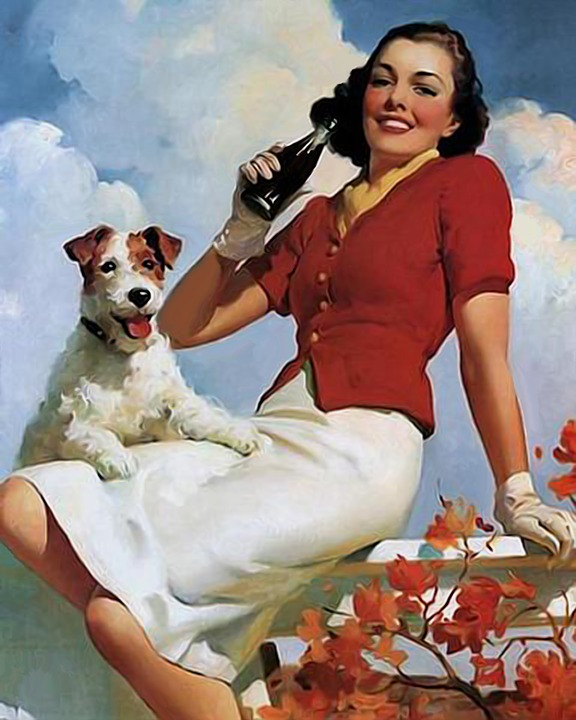
Other flavors available in the late 1800s were Cherry Smash, Orange Julep, Orange Crush, and Green River. Root beer and Coca-Cola flavors have thrived to this day.

Just how long have soda fountains been around? Samuel Fahnestock received the first patent for his soda fountain in 1819, and other inventors continued making improvements.

A soda jerk squirted the highly-concentrated soda fountain syrup into a glass and then added carbonated water and phosphate. Watching their tasty drinks being prepared must have been part of the customers’ anticipation.

Drugstores often had soda fountains, first appearing around the 1830s and growing in popularity. In 1888, Jacob Baur started manufacturing carbon dioxide in tanks. This made it easier to establish soda fountain shops, which were in demand through the 1950s.

Our tastes may have changed over the years but the sight of an old-fashioned soda fountain and ice cream parlor can still inspire nostalgia—even for those of us who never experienced its heyday.

When you see one of these shops, stop a few minutes. Relax and enjoy an experience readily available to our grandparents and great-grandparents—who probably walked to the soda shop after a movie date.

-Sandra Merville Hart

Sources

Bellis, Mary. “The History of the Soda Fountain,” Theinventors.org, 2019/3/22 http://theinventors.org/library/inventors/blsodafountain.htm.

“History of the Soda Fountain,” Soderlund Drugstore Museum, 2019/03/22 http://drugstoremuseum.org/index.php/soda-fountain/soda-fountain-history.

“Invention and History of Soda Fountain,” History of Soft Drinks, 2019/03/22 http://www.historyofsoftdrinks.com/soft-drink-history/history-of-soda-fountain/.

“Syrup Dispensers and the Drugstore,” Soderlund Drugstore Museum, 2019/03/22 http://drugstoremuseum.org/soda-fountain/syrup-dispensers/.

“The Drugstore Soda Fountain,” Soderlund Drugstore Museum, 2019/03/22 https://www.drugstoremuseum.com/soda-fountain/.

Woellert, Dann. Cincinnati Candy—A Sweet History, American Palate, 2017.