Civil War Women: Mollie Bean, Confederate Soldier

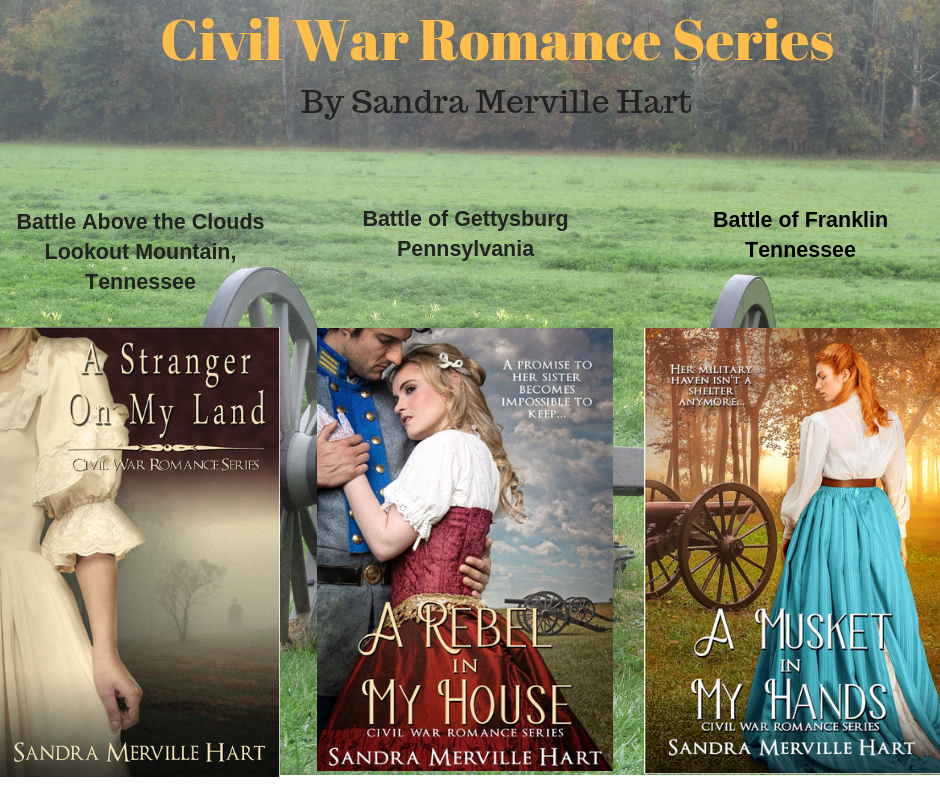
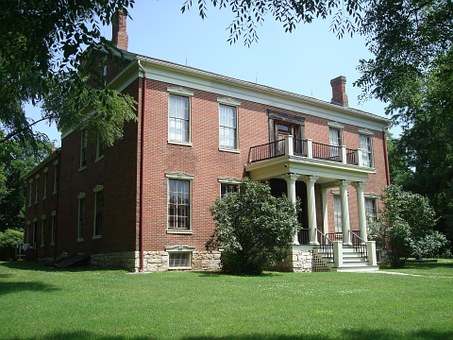
Confederate Army of Northern Virginia cannons at Gettysburg Battlefield

On February 17, 1865, the train guard on the railroad cars between Danville and Richmond demanded to see the papers of a soldier dressed in light-colored corduroy pants, Yankee great coat, and fatigue hat dipped at a jaunty angle, almost touching the wearer’s right ear. The delicate soldier didn’t have any papers signed by the Provost Marshal nor did he seem concerned about the lack of documentation allowing him to ride the cars.

The soldier was arrested and taken to the chief of police. Rigorous questioning revealed an astonishing fact—the soldier was a young woman.

Mollie Bean claimed to be a soldier with the 47th North Carolina State troops. She’d served with them for two years and been wounded twice. Her wounds didn’t give away her disguise so they probably were minor wounds to the head, arms, or legs.

Mollie was taken as prisoner to Castle Thunder.

The reporter of the Richmond Whig didn’t believe her story of being with the 47th North Carolina for two years.

The Charlotte Daily Bulletin called her Mollie Bear, but the other papers noted referred to her as Mollie Bean.

Mollie’s regiment was in winter quarters near Hatcher’s Run when she was arrested.

Her regiment was part of Pickett’s Charge under Brigadier General James Pettigrew at the Battle of Gettysburg. They were at Cold Harbor. They took part in the long Petersburg siege, so Mollie surely experienced difficulties in her two years with the Confederate army.

There’s no record of how long she was held at Castle Thunder or what happened to her when she was released. Who she was and what happened to her remains a mystery.

-Sandra Merville Hart
Sources

“47th Regiment, North Carolina Infantry,” National Park Service, 2019/03/18 https://www.nps.gov/civilwar/search-battle-units-detail.htm?battleUnitCode=CNC0047RI.

“Historical Sketch and Roster of the North Carolina 47th Infantry Regiment,” Amazon, 2019/03/18 https://www.amazon.com/Historical-Carolina-Infantry-Regiment-Regimental/dp/1517383056.

“Mollie Bean,” American Civil War Forum, 2019/03/18 https://www.americancivilwarforum.com/mollie-bean-2248424.html.

“Mollie Bean,” Soldier-Women of the America Civil War, 2019/03/18 http://civilwarsoldierwomen.blogspot.com/2011/01/mollie-bean.html.

“Mollie Bean,” Wikipedia, 2019/03/18 https://en.wikipedia.org/wiki/Mollie_Bean
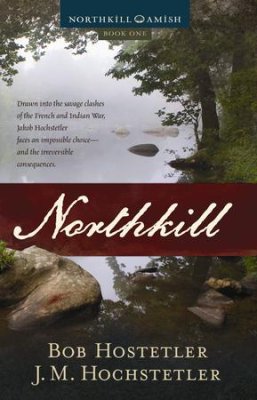
Northkill by Bob Hostetler & J.M. Hochstetler

Book One of Northkill Amish Series

Jakob Hochstetler and his wife Anna have fled persecution of the Amish in the Alsace region to live in the Pennsylvania wilderness. The novel begins in 1752. Readers experience the danger immediately. The warriors threatening the Hochstetlers were not from the Delaware tribe that the Amish families in the community had befriended.

Though the family survives that first hostile encounter, the event foreshadows the looming French and Indian War.

The story is told from several perspectives though nearly all of them are the Hochstetler men. Differing points of view build sympathy and compassion for each character. The story shows the escalating tension that leads to increasing violence in the midst of an Amish family called to peace.

A word of caution: the story contains violence. At that point, I was too engrossed in the drama to stop reading—I had to know what happened.

This is book one in a series.

This action-packed adventure will appeal to male readers and fans of American history.

An adventurous page-turner that kept me up too late!

-Sandra Merville Hart

Christianbook.com

Baseball Cards First Sold with Gum?

Did you know that baseball cards celebrated a 150-year anniversary in 2018? In 1868, the first baseball cards were produced by Peck & Snyder, a sporting goods store in New York.

Tobacco companies began including baseball cards with their products in the 1880s. This practice eventually died out because they learned that children were the main audience for the cards—most states prohibited children from purchasing tobacco by the end of World War I.

So, when were baseball cards first included with gum?

H.D. Smith & Company, a Cincinnati company that began in 1856, may have been the first to include a baseball card packaged with gum. An ad that mentions HD Smith & Co.’s products in Leslie’s is dated October 27, 1888. A partial ad reads:

“A novel production of theirs this season is the St. Louis and Detroit Champion Baseball Gum—a piece of gum with a perfect lithograph picture of one of the champion nine of the National League or American Association on each piece. The pictures were made to order in Germany, and are wonders in their way.”

When an auction house came across two baseball cards from 1888, they researched the origin. The players were Sam Thompson and Ned Hanlon. “H.D.S. & Co.” was printed on one of the tabs. Further digging led to the H.D. Smith & Company. If these were printed early in 1888, they believed they might have found baseball cards from the first chewing gum company to include them.

This company manufactured and sold a variety of chewing gums. The “Big Long Chewing Gum” was advertised as “the best paraffine gum made.” They sold a patented medicinal gum called “Cough.” “Red Riding Hood” gum was advertised on ceiling fan pulls.

-Sandra Merville Hart

Sources

Blitz, Matt. “How Gum and Baseball Cards Became Intertwined,” Food & Wine, 2019/03/18 https://www.foodandwine.com/news/how-gum-and-baseball-cards-became-intertwined.

“Spectactular 1888 Scrapps Uncut Pair of HOFers – Sam Thompson/Ned Hanlon – SGC Fair 20,” Love of the Game Auctions, 2019/03/18 http://loveofthegameauctions.com/spectacular-1888-scrapps-uncut-pair-of-hofers—sa-lot3962.aspx.

“Pictorial history of baseball cards covers 150 years of diamond dandies on cardboard,” Starr Cards, 2019/03/18 http://starrcards.com/history-of-baseball-cards/.

Woellert, Dann. Cincinnati Candy—A Sweet History, American Palate, 2017.

Civil War Women: Major Pauline Cushman, Actress to Spy

Harriet Wood became an actress a few years before the Civil War began and changed her name to Pauline Cushman, touring the country for various plays.

While Civil War battles raged early in 1863, a role led her to Wood’s Theater in Union-controlled Louisville, Kentucky. There were paroled Confederate officers in the area. Pauline’s beauty captured their attention and one asked her to toast Confederate President Jefferson Davis from the stage.

Her adventurous spirit aroused, Pauline met with Union Colonel Moore, Louisville’s provost marshal. The colonel, seizing the opportunity for her to gain the Southerners’ trust, advised her to accept the challenge.

While on stage the next evening, Pauline raised her glass in a toast. “Here’s to Jeff Davis and the Southern Confederacy. May the South always maintain her honor and her rights.”

Her impromptu toast appalled Union supporters in the crowd and thrilled Southern sympathizers. Pauline was fired and sent to the South.

Pauline traveled to Nashville where she met with Union Colonel William Truesdail, the Chief of Army Police. Truesdail asked to her to learn what she could about the Confederates, though he warned that, if caught spying, she’d be hanged.

She soon gained the trust of the Southerners. While at Confederate General Braxton Bragg’s army camp, she found his battle plans. The Southerners became suspicious of her. Pauline’s quick thinking and acting skills nearly saved her—until the battle plans were discovered in her shoe.

At a trial, she was found guilty and sentenced to death. Pauline then became seriously ill—or employed her acting skills to seem so—delaying her hanging. Then, at the end of June, she heard a loud commotion outside. The Confederates abandoned the camp, leaving Pauline behind. To her great joy, the sound of Union bugles blared in the camp and she was rescued.

Both President Abraham Lincoln and General James A. Garfield (future President) praised Pauline. General Garfield gave her the rank of major as thanks for her suffering while in secret service.

Before the Civil War ended, Pauline began touring as Miss Major Cushman, speaking about her adventures and performing one-woman plays about them.

-Sandra Merville Hart

Sources

Biography.com Editors. “Pauline Cushman Biography,” Biography.com, 2019/03/17 https://www.biography.com/people/pauline-cushman.

Moore, Frank. Women of the War: True Stories of Brave Women in the Civil War, Blue Gray Books, 1997.

“Pauline Cushman,” NPS.gov, 2019/03/17 https://www.nps.gov/people/pauline-cushman.htm.


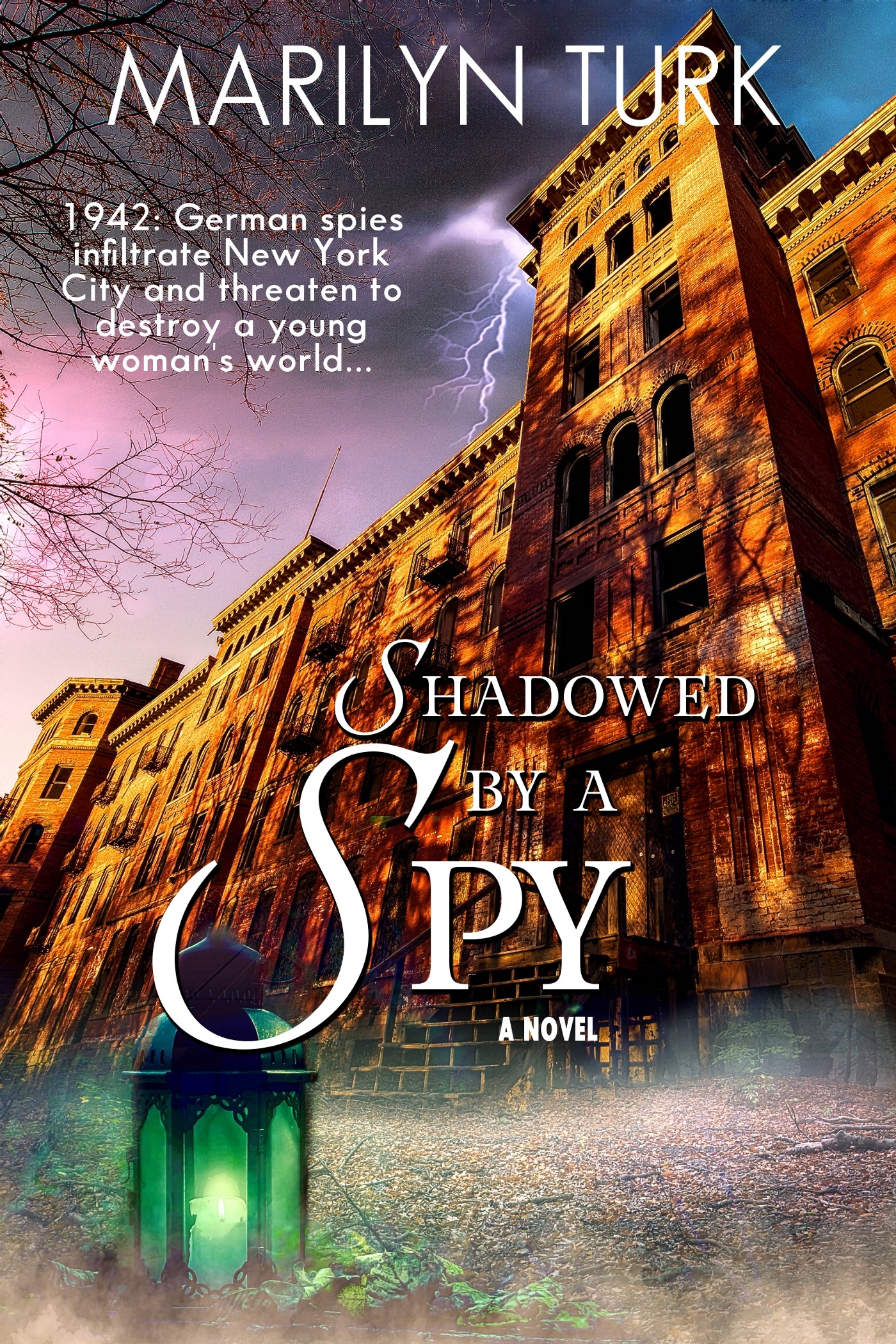
Shadowed by a Spy by Marilyn Turk

Lexie Smithfield, a nursing student in Long Island, longs to ease the suffering of her country’s soldiers in this second World War. Four men on a train catch her attention when they seem to be going everywhere she’s going. Are they following her? Later she sees them again near Bellevue Hospital where she takes her training. One of them, Cal, becomes very friendly.

Russell Thompson, Lexie’s fiancé, works at a hotel near the hospital so he can be close to her. Four men check into the hotel but Russell is too busy to pay much notice. If not for his foot injury, he’d be serving his country as a soldier across the sea. As part of her training, some of Lexie’s patients are soldiers. She’s doing more for their country’s cause than he is able to do.

Then Russell receives the opportunity to join an army USO group that will take him far from Lexie when she needs him most.

Likeable characters in an intriguing and dangerous situation grabbed my attention early in this novel. Tension builds as the reader recognizes the danger before the characters do. The book was also an eye opener for the danger U.S. citizens at home were in during the war.

I read the first novel by this author and enjoyed spending time with the same characters again.

-Sandra Merville Hart

Lighthouse Publishing of the Carolinas – Use coupon code SandraMHart for a 20% discount on Lighthouse Publishing books!


Confectioner of the West

Johann Meyer immigrated with his family from Württemberg to the United States in 1804. Unfortunately, sickness claimed the lives of his father, brother, and two sisters during the ocean voyage. Even worse, the family’s belongings were stolen when they disembarked in Baltimore. Then about eleven, Johann indentured himself for eight years to pay his family’s passage. Yet the skills he learned while indentured served him well later in life.

He met his wife while working for a baker in Philadelphia and, in 1817, the young couple moved to Cincinnati where Johann started the city’s first confectionery.

A few years later, Revolutionary War General Lafayette received an invitation from President James Monroe to tour all twenty-four states as the nation’s 50th anniversary approached. Lafayette accepted and his Grand Tour lasted from August of 1824 through September of 1825.

A tour stop in Cincinnati gave Johann the opportunity to create a dessert display for a grand ball held at Cincinnati Hotel, located at the northwest corner of Front and Broadway Streets on the Public Landing

Lafayette arrived by barge in Cincinnati on May 19, 1825. Though the city’s population was then only about 12,000, some 50,000 gathered at the Public Landing on the Ohio River to honor the Revolutionary War hero. Speeches by General William Henry Harrison and Ohio Governor Jeremiah Morrow remarked on the many war patriots that had settled in Cincinnati.

At the grand ball, marzipan figures recreated events from Lafayette’s Continental Army experiences on Johann’s elaborate six-foot sugar pyramid. His amazing dessert earned him the nickname of “Confectioner of the West.”

-Sandra Merville Hart

Sources

Engelking, Tama Lea. “The Story Behind CSU’s Lafayette Collection,” Cleveland State University Library Special Collections, 2019/03/18 http://www.clevelandmemory.org/lafayette/engelking.shtml.

Icher, Julien. “The Lafayette Trail: Mapping General Lafayette’s Farewell Tour in the United States (1824-1825), American Battlefield Trust, 2019/03/18 https://www.battlefields.org/learn/articles/lafayette-trail-mapping-general-lafayettes-farewell-tour-united-states-1824-1825.

Jones, William. “Lafayette’s Visit to the United States, 1824-1825,” The American Patriot, 2019/03/18 https://larouchepub.com/eiw/public/2007/eirv34n46-20071123/54-63_46.pdf.

Suess, Jeff. “Our history: Hunting for Lafayette almost 200 years later,” Cincinnati Enquirer, 2019/03/18 https://www.cincinnati.com/story/news/2018/10/11/project-maps-lafayettes-u-s-tour/1600338002/.

Suess, Jeff. “Our history: Thousands welcomed war hero Lafayette in 1825,” Cincinnati Enquirer, 2019/03/18 https://www.cincinnati.com/story/news/2018/06/20/thousands-welcomed-lafayettes-visit-1825/717476002/.

Woellert, Dann. Cincinnati Candy—A Sweet History, American Palate, 2017.

Civil War Women: Antonia Ford, Confederate Spy

Union officers often gathered at Antonia Ford’s family home in Fairfax Court House, Virginia. Like her father, the beautiful young woman was a secessionist. She learned of Union plans for the First Battle of Manassas and rode to warn the Confederate army. Southern officers held her under guard until her information was confirmed by other spies.

After this success, Antonia might have provided information to Brigadier General J.E.B. Stuart, who declared her an honorary aide-de-camp in October of 1861.

At 2 am on March 9, 1863, Cavalry Colonel John S. Mosby, along with 29 of his Confederate rangers, sneaked into Fairfax Court House and captured Union General Stoughton, several of his men, and horses.

Suspicions immediately shifted to Antonia, who had hosted Stoughton’s mother and sister in her home. The Secret Service sent a female undercover agent to the home, who spent hours talking with Antonia.

On March 15, Antonia was awoken by Secret Service agents. When she refused to pledge loyalty to the Union, they searched her house and found Confederate money and papers, letters from Federal officers, and J.E.B. Stuart’s order for her aide-de-camp. Charged with aiding and abetting Mosby’s capture of General Stoughton, she was arrested and held at Old Capitol Prison in Washington D.C.

While there, she met Union Major Joseph Willard, who worked to get her released. Willard was part owner of the Willard Hotel in Washington. They fell in love.

Antonia learned in May that she would be exchanged for Northern prisoners. She was arrested again with her father for not swearing allegiance to the Union. They were released on September 18, 1863 after both took the oath of loyalty to the Union.

Antonia married Major Willard on March 10, 1864, and moved to Washington.

-Sandra Merville Hart

Sources

“Antonia Ford Willard,” National Park Service, 2019/01/07 https://www.nps.gov/people/antonia-ford-willard.htm.

DiSilvestro, Roger. “Mosby’s Female Super Spy: Antonia Ford,” History.net, 2019/01/07 http://www.historynet.com/mosbys-female-super-spy-antonia-ford.htm.

Whitehead, A.M. “Antonia Ford (1838-1871).” Encyclopedia Virginia. Virginia Foundation for the Humanities, 27 May. 2014. Web. 7 Jan. 2019.


Love’s Undoing by Gabrielle Meyer

Part of The Backcountry Brides Collection – Eight 18th Century Women Seek Love on Colonial America’s Frontier

 This novella is set at Fort McCrea, along the Upper Mississippi River in 1792.

Abi McCrea longs to leave her father’s fur post for her sister’s Montreal home, located in the wilderness within stockade walls, but he will not allow it.

Henry Kingsley works for Abi’s uncle in Montreal. He travels a long way to deliver a letter to Abi’s father. The news of an inheritance may take her father from his family. What will become of Abi and her Chippewa mother?

The author did a great job showing the prejudice that some felt for the Native Americans in the new country of the United States. I enjoyed the story.

A good read! I will look for more books by this author.

-Sandra Merville Hart

Christianbook.com


Breakfast Cookies from Libby’s Cuppa Joe

Today’s post is written by friend and fellow author, Rebecca Waters, who is sharing a yummy recipe from her latest release. Welcome back, Rebecca!

 Sonja, the young entrepreneur in my new release, Libby’s Cuppa Joe, is excited to introduce fancy West Coast lattes and biscotti to the people of Door County, Wisconsin. She soon learns her customers simply want a good cup of coffee and a delicious homemade cookie. Sonja’s mother shares the recipe for Breakfast Cookies with her daughter. This soon becomes the signature cookie for the coffee shop.

But Libby’s Cuppa Joe is more than the story of a young entrepreneur. It is the story of forgiveness, love, and second chances.

Breakfast Cookies :Yield: 8 dozen

Cream together

2 C brown sugar

1 C. white sugar

1 ½ C. cooking oil

2 t. vanilla


Add 4 eggs

4 C. flour

2 t. baking soda

1 t. salt

1 ½ C oatmeal

4 C. cornflakes


Mix together well and drop by teaspoonful on a greased cookie sheet

Bake at 350° for twelve minutes or until brown.

-Rebecca Waters

Libby’s Cuppa Joe 

Coffee barista and shop owner Sonja Parker is a single mom on her last leg financially and emotionally when Melissa, a college student comes to work at the Door County store. Melissa, with the help of Kevin Hanson, the young and energetic minister in the area, finally bring the message of God’s love and favor to Sonja. But is it too late? Libby’s Cuppa Joe is about second chances.  It’s about forgiveness and about a grown woman making faith in God her own.


You can use this link to both buy and review the book:  Amazon

Meet Rebecca Waters

Libby’s Cuppa Joe is Rebecca Waters’ second novel, following Breathing on Her Own (2014). She has published three books for writers, Designing a Business Plan for Your Writing, Marketing You 101, and Writing with E’s. Rebecca has published five stories in the popular Chicken Soup for the Soul books. To learn more about Rebecca or to read her blog, visit her blog.


Civil War Women: Dorothea Dix, Superintendent of Female Nurses

Dorothea Dix traveled to Washington shortly after the Civil War began. Her federal appointment as Superintendent of Female Nurses bestowed on her the honor of being the first female in this high position.

Dorothea convinced Union military to allow women to serve as nurses. Once they agreed, she began recruiting her nurses.

She set high standards. Fearing that young, unmarried women might use the position to find a husband, she sought plain, older women and insisted on plain clothing.

The oversight of both the large nursing staff across many locations and administration of medical supplies such as bandages fell on Dorothea’s shoulders.

Many army surgeons were against having female nurses. Dorothea pushed for formal training for them.

About 3,000 females served in Union hospitals during the war. They did an admirable job and were a crucial part of caring for sick and wounded soldiers.

Louisa May Alcott, the beloved author of Little Women, was one of the Civil War nurses who served under Dorothea Dix. Though respected, it was Louisa’s opinion that the strict superintendent wasn’t well-liked. Most nurses avoided her.

Beyond Dorothea’s administrative skills, another reason people respected her is that she treated both Union and Confederate soldiers in military hospitals.

Her efforts to place female nurses in Union hospitals began paving the way for women to serve in the medical field.

-Sandra Merville Hart

Sources

“Dorothea Dix,” United States History, 2019/01/07 https://www.u-s-history.com/pages/h1092.html.

“Dorothea Lynde Dix,” History, 2019/01/07 https://www.history.com/topics/womens-history/dorothea-lynde-dix.

Norwood, Arlisha. “Dorothea Dix.” National Women’s History Museum. National Women’s History Museum, 2017. 2019/01/07.