Ten Christmas Songs that Mention Bells

by Sandra Merville Hart

Traditionally, most churches had bells that rang to let folks nearby know of an important event. On Christmas, bells were rung to remember the birth of Jesus.

Here’s a list of ten traditional Christmas songs that mention bells:

  • “Silver Bells”
  • “Jingle Bells”
  • “Jingle Bell Rock”
  • “Carol of the Bells”
  • “I Heard the Bells on Christmas Day”
  • “Sleigh Ride” – Just hear those sleigh bells jingle-ing
  • “Ding Dong Merrily on High” – In heav’n the bells are ringing
  • “Caroling, Caroling” – Christmas bells are ringing
  • “Here Comes Santa Claus” – Bells are ringing
  • “White Christmas” – To hear sleigh bells in the snow

Can you think of others?

Merry Christmas!

Sources

“Christmas Bells,” The Merry Syndicate,  18/11/02 http://www.noelnoelnoel.com/trad/bells.html.


https://www.amazon.com/Sandra-Merville-Hart/e/B00OBSJ3PU/

A Wreath of Snow by Liz Curtis Higgs

This historical romance is set in Stirling, Scotland, during Christmas of 1894.

Meg Campbell should never have come home for Christmas. She missed her parents, but her brother, Alan, always managed to poison her visits with his bitter remarks. On Christmas Eve, she couldn’t leave Stirling quickly enough.

Gordon Shaw’s business in Stirling had been accomplished without anyone recognizing him as the one who’d caused an accident a dozen years ago that crippled a boy, Alan Campbell. Gordon couldn’t leave Stirling quickly enough.

A chance meeting on a train might have ended there—except for the falling snow that created its own problems.

I loved this multi-layered story with relatable, wounded characters. Higgs reaches deeply to touch their hearts and, in doing so, touches the hearts of readers.

Well-written. Moving. This one will stay with you.

Recommend!

-Sandra Merville Hart

Christianbook.com


Gingerbread Loaf Recipe

Today’s post was written by fellow author and dear friend, Carole Brown. Her gingerbread recipe sounds delicious! Welcome back to Historical Nibbles, Carole!

During WWII most people’s food was rationed. Luxuries such as nuts, milk, sugar and eggs were sometimes hard to come by making delights like gingerbread non-available throughout the war. Everyone was touched by the rationing and all encouraged to participate in “giving up” for the soldiers and the war.

In Christmas Angels, elderly Mr. Albert, Abigail’s boarding house neighbor shares his loaf of gingerbread that another resident (Dana) had given him. Though reluctant to eat any of his treat, knowing how hard the ingredients were to come by, Abigail can’t resist. Both Mr. Albert and Abigail enjoy a special blessing through Neighbor Dana’s generosity.

 May you be blessed as you feast on this moist, delightfully spiced dessert.

 Gingerbread Loaf

Ingredients for the loaf:
1 stick real butter, at room temperature
1 cup sugar
1/2 tsp vanilla extract
1 large egg
1 cup of applesauce
1 1/2 cups all-purpose flour
1 tsp baking soda
1 tsp salt
2 tsp ground ginger
2 tsp ground cinnamon
1 tsp ground cloves
1/2 tsp nutmeg
chopped walnuts, for topping (optional)

for the frosting:
1/2 block (4 oz.) cream cheese, room temperature
1 tsp vanilla extract
1 1/2 – 2 cups powdered sugar

Preheat oven to 350F degrees. Spray a 9×5 loaf pan lightly with nonstick cooking spray (or shortening and flour). Using a stand mixer or an electric mixer, cream together the butter and the sugar until fluffy.

Beat in the vanilla and the egg. Blend in the apple butter (or applesauce.)

Slowly add the flour, baking soda, salt, and spices (ginger, cinnamon, cloves and nutmeg.)

When everything is mixed, pour the batter into your loaf pan. Bake for about 55 minutes until it is risen and a toothpick comes out clean. Let cool completely on a rack before frosting.

To make the frosting, beat the cream cheese with the vanilla and then add 2 cups of the powdered sugar and beat until smooth and creamy. Add a little more sugar if it’s not as thick as you like.

-Carole Brown

Christmas Angels Blurb

Her mother called her a failure, and maybe she was. Her husband was gone—in the service, yes, but if he loved her—really loved her, why didn’t he write? Or call? Or send the money she needed?

She was scared too, afraid of being alone, and though she loved this sweet little bundle of joy—her baby—well, was she smart enough and strong enough to raise her? She didn’t mind doing without all the nice things she’d love to have, but not being able to provide luxuries like Christmas trees, ornaments and presents for her baby girl was beyond enduring.

What she needed was a miracle…and that wasn’t going to happen.

Amazon link

Carole’s Bio:

Besides being a member and active participant of many writing groups, Carole Brown enjoys mentoring beginning writers. An author of ten books, she loves to weave suspense and tough topics into her books, along with a touch of romance and whimsy, and is always on the lookout for outstanding titles and catchy ideas. She and her husband reside in SE Ohio but have ministered and counseled nationally and internationally. Together, they enjoy their grandsons, traveling, gardening, good food, the simple life, and did she mention their grandsons?

Find her on her blog!


WWII Gave Job Opportunities to Women

Today’s post was written by fellow author, Linda Shenton Matchett. Welcome to Historical Nibbles, Linda!

When I was growing up, my folks didn’t believe in “girl jobs” and “boy jobs.” Hence, my brothers learned how to cook, wash dishes, and do laundry, and my sister and I learned how to mow the yard and shovel the driveway among other chores. That philosophy is decidedly different from the cultural norms prior to WWII.

Then war came, and men began to leave the workforce in droves. Support for women to seek volunteer and employment opportunities began at the highest level. In one of his fireside chats, President Roosevelt said, “There need no longer be any debate as to the place of women in the business life of this nation. The enlarging war effort calls for the services of every qualified and able-bodied person, man or woman.”

Unfortunately, for the first eighteen months of the war, organizations and employers struggled to go against deep-seated traditions and concepts making them reluctant to hire women. As a result, there were “boy jobs” and “girl jobs.” One of the organizations where a young lady could work or volunteer without recrimination was the United Service Organization (USO). Founded in 1941 by combining the Salvation Army, YMCA, YWCA, National Catholic Community Services, National Travelers Aid Association, and the National Jewish Welfare Board, the USO had over 3,000 clubs worldwide at its height (there are only 160 day).

Despite ties to the military, the USO is not part of the government, but rather a private nonprofit organization. Therefore, fundraising was necessary to finance its operation. Thomas Dewey (FDR’s opponent in the 1944 election) and Prescott Bush (Grandfather of former President George W. Bush) spearheaded the campaign, and more than thirty-three million dollars was raised. Activities were countless: from billiards and boxing to dancing and darts. Services ranged from sewing on insignias to writing letters on behalf of the men. Candy, gum, newspapers, and other items were available for purchase.

Strict rules ensured the clubs were safe places for the junior hostesses-unmarried women typically in their mid-twenties. Senior hostesses acted as chaperones, and the younger hostesses couldn’t dance with the same man more than twice. Soldiers, sailors, and airmen could smoke at the club, but no was liquor served. In addition, formal attire was required of the girls, and the wearing of slacks was forbidden.

For more information about this worthwhile organization, visit http://www.uso.org.

-Linda Shenton Matchett


Blurb: Murder of Convenience

May 1942: Geneva Alexander flees Philadelphia and joins the USO to escape the engagement her parents have arranged for her, only to wind up as the number one suspect in her betrothed’s murder investigation. Diagnosed with Retinitis Pigmentosa, she must find the real killer before she loses her sight…or is convicted for a crime she didn’t commit.

Set in the early days of America’s entry into WWII and featuring cameo appearances from Hollywood stars, Murder of Convenience is a tribute to the individuals who served on the home front, especially those who did so in spite of personal difficulties, reminding us that service always comes as a result of sacrifice. Betrayal, blackmail, and a barrage of unanswered questions… Murder of Convenience is the first in the exciting new “Women of Courage” series.


Linda’s Bio:

Linda Shenton Matchett is an author, speaker, and history geek. Born in Baltimore, Maryland a stone’s throw from Fort McHenry, Linda has lived in historical places most of her life. A member of ACFW, RWA, and Sisters in Crime, she is also a volunteer docent at the Wright Museum of WWII and a Trustee for the Wolfeboro Public Library. Connect with Linda on her blog. 

Sign up for her newsletter newsletter and receive a free short story, Love’s Bloom!

Amazon


Rye Coffee

As the Civil War continued, food became scarce for folks in the South. Southerners also had a hard time obtaining coffee. They seemed to be just addicted to the beverage—especially soldiers—as people are today so they searched for substitutes. Rye was one of the substitutes.

In an early scene in my Civil War romance, A Musket in My Hands, the protagonist, Callie, does not have coffee beans to make her pa a cup of coffee. Instead she offers to fix him a cup from rye that she’d boiled and dried.

Though I am not a coffee drinker, I wanted to prepare rye for coffee. There is a recipe in Confederate Home Cooking.

Finding rye berries was the greatest challenge. A specialty food store near me sells them.

I’ve never seen or tasted rye coffee so this was a learning process. The recipe mentioned “parching” after drying, so I reached out to Southern cooks for help with this term. Parching means roasting, which makes sense. (Thanks, Charlotte and Debra!)

I boiled ¼ cup of rye on a medium high heat for 10 minutes. By experimenting, I discovered that longer than 10 minutes begins to split the grain, which the recipe advises against.

Boiling softened the grain, expanding it over double the original size. The water was a clear, brown broth.

The rye was drained and then set aside while I lined a cookie sheet with parchment paper. The oven was preheated to 275 degrees to dry the rye.

After spreading a thin layer of rye over the parchment paper, I set the cookie sheet into the oven, stirring the rye every five minutes. After 10 minutes, most of the grain was dry. After 15 minutes, it was removed from the oven.

While the oven preheated to 450 degrees, the rye was transferred onto a fresh piece of parchment paper on the cookie sheet.

Because the oven was so hot, I kept a close eye on the roasting process, checking the rye every 2 minutes. After 10 minutes, I removed them from the oven.

Many homes in the Civil War era had coffee grinders. I don’t own one so I ground the roasted rye with a rolling pin. Worked pretty well.

Then I experimented with how soldiers in camp might have made the coffee. Using 1 teaspoon of ground rye in each case, I tried the following:

1) Poured boiling water into a cup with the rye and let it steep about 5 minutes.  (left side of main photo)

2) Boiled water with rye—strongest coffee flavor. (middle)

3) NOT the way soldiers made coffee but applicable for folks today—a single-serving coffee maker. (right side of main photo)

All of these tasted like coffee to me. Granted, I am not a coffee drinker, but I agree that this probably worked well as a coffee substitute for soldiers. Though #2 made the strongest coffee, the others tasted almost as strong.

Tasting the beverage made me wonder if roasting it 2 minutes less would enhance the flavor. I will try roasting for only 8 minutes next time.

This was a fun experiment! I’d love to hear if you try it.

-Sandra Merville Hart

Sources

Mitchell, Patricia B. Confederate Home Cooking, 2014.

Attitudes Toward Women Civil War Soldiers

Approximately four hundred known cases of women serving as Civil War soldiers on either side–and an unknown number of ladies who slipped away or died without detection– subjected themselves to possible criticism from the general public and their comrades.

Society and the military were critical of women soldiers who didn’t accompany a male relative such as a husband or brother. The general public was not ready for unmarried women on the front lines.

A Southern journalist categorized women in Confederate military camps in three ways: families of officers, laundresses and cooks, and prostitutes. So how did he classify female soldiers, scouts, and nurses?

The wives of officers living in army camps generally maintained the military’s respect. Union General Ulysses S. Grant sometimes had his family in camp.

The motivation of other women’s presence in army camps puzzled the public. There was a tendency to doubt the female soldier’s conduct. Some endured unjust accusations of misbehavior.

There were also female visitors in camp who came to see loved ones. Most parents refused to allow their young, unmarried daughters to visit army camps. They sometimes sneaked in anyway.

Many women simply wanted to be near their men.

Prostitutes followed the camps. Government records show that camp followers numbered in the thousands around army camps. Some bootlegged liquor and acted as spies.

Hundreds of women, including female soldiers, became pregnant in army camps.

The military and the public knew all this. Unfortunately, those experiences affected how men viewed women soldiers.

The women who served as Civil War soldiers endured many obstacles. Public opinion during and after the war was one of them.

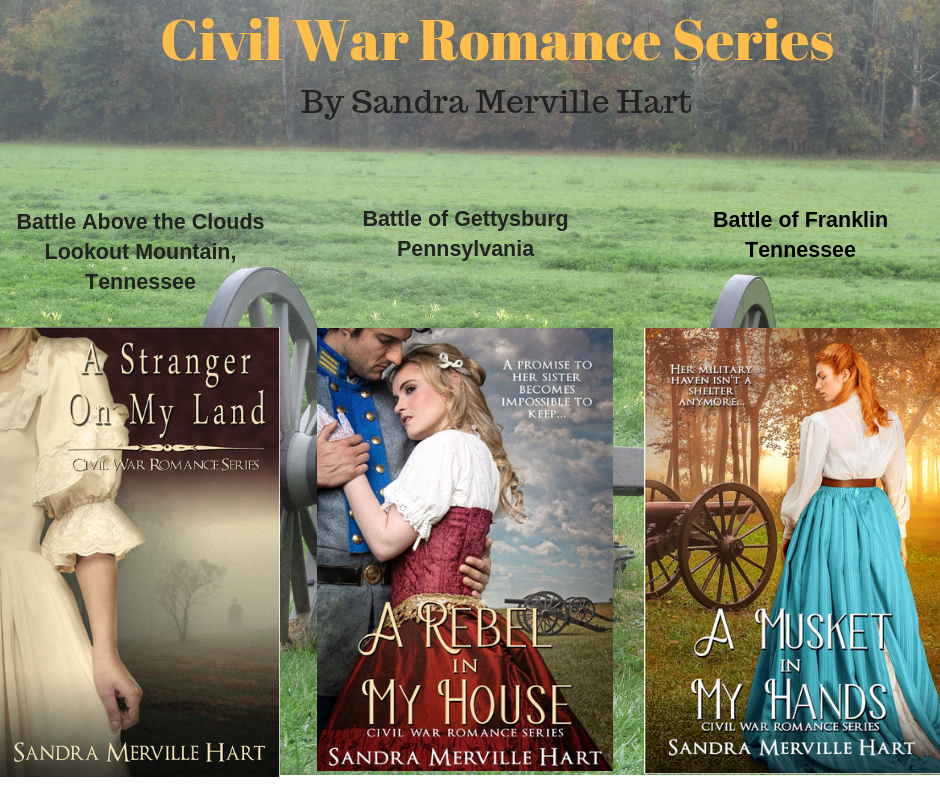
In my Civil War novel, A Musket in My Hands, two sisters have no choice but to disguise themselves as men to muster into the Confederate army in the fall of 1864—just in time for events and long marches to lead them to the tragic Battle of Franklin.

-Sandra Merville Hart


Sources

Abbott, Karen. Liar, Temptress, Soldier, Spy: Four Women Undercover in the Civil War, Harper, 2014.

Blanton, DeAnne and Cook, Lauren M. They Fought Like Demons, Louisiana State University Press, 2002.

Massey, Mary Elizabeth. Women in the Civil War, University of Nebraska Press, 1966.

Silvey, Anita. I’ll Pass for Your Comrade: Women Soldiers in the Civil War, Clarion Books, 2008.

Velazquez, Loreta Janeta. The Woman in Battle: The Civil War Narrative of Loreta Velazquez, Cuban Woman & Confederate Soldier, The University of Wisconsin Press, 2003. (Previously published 1876)


Liar’s Winter by Cindy K. Sproles

Lochiel Ogle has a mark on her face. Her family hides her away in their mountain home so others won’t see the “mark of the Devil.” Her own mother is afraid of her. Her father is the only one who acts as if he cares for her. Then her brother, Gerald, tries to kill her.

When he finds out she did not die, he is determined to finish what he started.

Lochiel runs for her life and learns some secrets that Gerald had been keeping from her. Life-changing secrets.

This story snagged my interest from the beginning. I have a hard time reading stories with such a cruel character, but I stuck with it because the story compelled me to keep reading. I stayed up late to finish the book because I had to know what happened.

Sproles has crafted a book about so much more than events. Lochiel’s journey of fear is also a journey of discovery—about life, prejudice, superstition, and God’s love.

Well-written. Moving. This one will stay with you.

Recommend!

-Sandra Merville Hart

Christianbook.com


Sweet Potato Biscuits

Sweet potatoes were a staple food during the Civil War. They grow in humid warm areas. Many large plantations had root cellars to store them.

When the leaves begin yellowing in fall, farmers harvest the roots. After brushing the sweet potatoes clean, the curing process begins. Potatoes are stacked in the field and covered with sand. Farmers leave them alone for weeks. Once the curing process is done, they may be stored several months.

Sweet potatoes may be baked, boiled, stewed, mashed, or fried. They were often used in pies, cakes, and puddings. As in the case of Civil War soldiers in my historical romance,  A Musket in My Hands, many Southerners liked sweet potato biscuits. I had to try them.

For my sweet potato biscuits, I followed the recipe of a well-known modern Southern cook—Paula Deen. Here’s the link to her recipe.

My dad preferred large home-made biscuits so I tend to follow his wishes even now that he’s not here to eat them. This recipe, meant to make 15-18 biscuits, made 5 large biscuits for me.

This was my first time eating this type of biscuit. They are delicious! The sweet potato flavor is light and pleasant, enhancing the biscuit without overpowering it.

I am already thinking ahead to holiday gatherings where I can bring them. Thanksgiving?

I’d love to hear if you try it.

-Sandra Merville Hart

Sources

Deen, Paula. “Sweet Potato Biscuits,” Paula Deen, 2018/09/27 https://www.pauladeen.com/recipe/sweet-potato-biscuits/.

“Food,” History Central, 2018/09/27 https://www.historycentral.com/CivilWar/AMERICA/food.html.

“Sweet Potato,” Encyclopedia.com, 2018/09/27 https://www.encyclopedia.com/plants-and-animals/plants/plants/sweet-potato.

Consequences of Discovery for Women Civil War Soldiers

There are about four hundred known cases of women serving as Civil War soldiers on either side. They enlisted for varying reasons. They faced challenges  at every turn. They were discovered in a variety of ways.

The consequences for the women varied. They could be dismissed or imprisoned, depending on the officer’s decision.

Newspaper reporters wrote of Southern women who were arrested while in uniform. Federals captured two female soldiers and imprisoned them.

A female Union soldier was captured after being wounded in battle. She was sent back to Union lines with a note, “As Confederates do not use women in war, this woman, wounded in battle, is returned to you.”

After being imprisoned on Johnson Island, a Confederate officer delivered a baby boy in December of 1864.

A Union major ordered her men in battle. They later discovered her identity and imprisoned her for violating the “regulations of war.”

Loreta Janeta Velazquez disguised herself as Confederate soldier Lieutenant Harry T. Buford. She was arrested when the apparatus of her disguise slipped. She was charged with acting as a spy and then released, but she returned to her soldier disguise. She was later arrested when comrades suspected her of being a woman. Loreta confessed. The mayor fined her $10 and ordered ten days imprisonment. After her release, she reenlisted in a different company, this one in the 21st Louisiana.

Confederate women who were imprisoned as POWs usually were kept there even after their identity became known.

Female soldiers facing a provost marshal received varying degrees of punishment.

Women were sometimes sent to civilian authorities who could order them to serve time in the city jail or the Guard House. Some women were sent to the workhouse while others were released.

One woman was court-martialed.

In my Civil War novel, A Musket in My Hands, two sisters have no choice but to disguise themselves as men to muster into the Confederate army in the fall of 1864—just in time for events and long marches to lead them to the tragic Battle of Franklin.

-Sandra Merville Hart

Sources

Abbott, Karen. Liar, Temptress, Soldier, Spy: Four Women Undercover in the Civil War, Harper, 2014.

Blanton, DeAnne and Cook, Lauren M. They Fought Like Demons, Louisiana State University Press, 2002.

Massey, Mary Elizabeth. Women in the Civil War, University of Nebraska Press, 1966.

Silvey, Anita. I’ll Pass for Your Comrade: Women Soldiers in the Civil War, Clarion Books, 2008.

Velazquez, Loreta Janeta. The Woman in Battle: The Civil War Narrative of Loreta Velazquez, Cuban Woman & Confederate Soldier, The University of Wisconsin Press, 2003. (Previously published 1876)