Liar, Temptress, Soldier, Spy by Karen Abbott

Four Women Undercover in the Civil War

This book is classified as a biography.

Belle Boyd was a rebel who shot a Union soldier. She became a spy for the Confederate army.

Emma Edmondson enlisted as “Frank Thompson” to become a Union soldier. She fell in love with Jerome Robbins while acting as a soldier. He knew her secret and returned her love, though she seemed a bit too fond of her tentmate, James Reid.

Widow Rose O’Neal Greenhow was a Confederate spy living in Washington D.C. She passed on information she learned from political connections and eventually was arrested.

Elizabeth Van Lew lived in Richmond but was an abolitionist. She acted as a Union spy.

The book is written more as a novel and is an easy read. Filled with surprises from the Civil War, this book is a page turner.

-Sandra Merville Hart

Amazon

Lemon Cake Recipe from 1877

Wanting to make a dessert for the gathering of a few friends, I found a recipe for lemon cake in my 1877 cookbook. I love lemon desserts and decided to try this recipe originally submitted by Miss M. B. Fullington.

I have to confess that I had to make this dessert twice. Miss Fullington didn’t give a lot of details with her instructions. Since the recipe calls for 7 eggs, I went through a lot of eggs to get this right. The batter consistency for this first batch was all wrong—not at all the creamy texture I expected. When I noticed that the cook hadn’t even mentioned baking the cake, I realized that a few important details were missing.

I tasted the batter—buttery with nice hint of lemon. I decided to remake with a couple of changes that I will note along the way.

Set aside 2 cups of flour in a bowl. If using all-purpose flour as I do, add 1 teaspoon of baking powder and 1 teaspoon of salt.

Separate 7 eggs with the yolks in one bowl and reserve the whites in another. Beat the egg whites until light and fluffy. Set aside.

In a mixing bowl, add 2 cups sugar, the zest of 2 lemons, the juice of 1 lemon, the egg yolks, and ¾ pound butter (3 sticks—I know! It’s a lot of butter. They ate more butter than we do now. I followed Miss Fullington’s recipe but believe it would still work with less.) The recipe does not call for lemon extract, but I added 1 teaspoon of the extract to enhance the flavor—good call!

Beat these ingredients together, adding a little flour at a time. Then fold in the beaten egg whites. My mixer has a FOLD button that works wonderfully for this.

This time the batter was light and creamy with the perfect amount of lemon flavor. Yum!

Preheat oven to 350 degrees. Prepare a cake pan with cooking spray. If using a 13 x 9 pan, bake about 35 – 40 minutes until toothpick inserted in center comes out clean. If using an 8 x 8 pan, bake about 50 – 60 minutes.

I made white icing following Betty Crocker’s Vanilla Buttercream Frosting recipe.

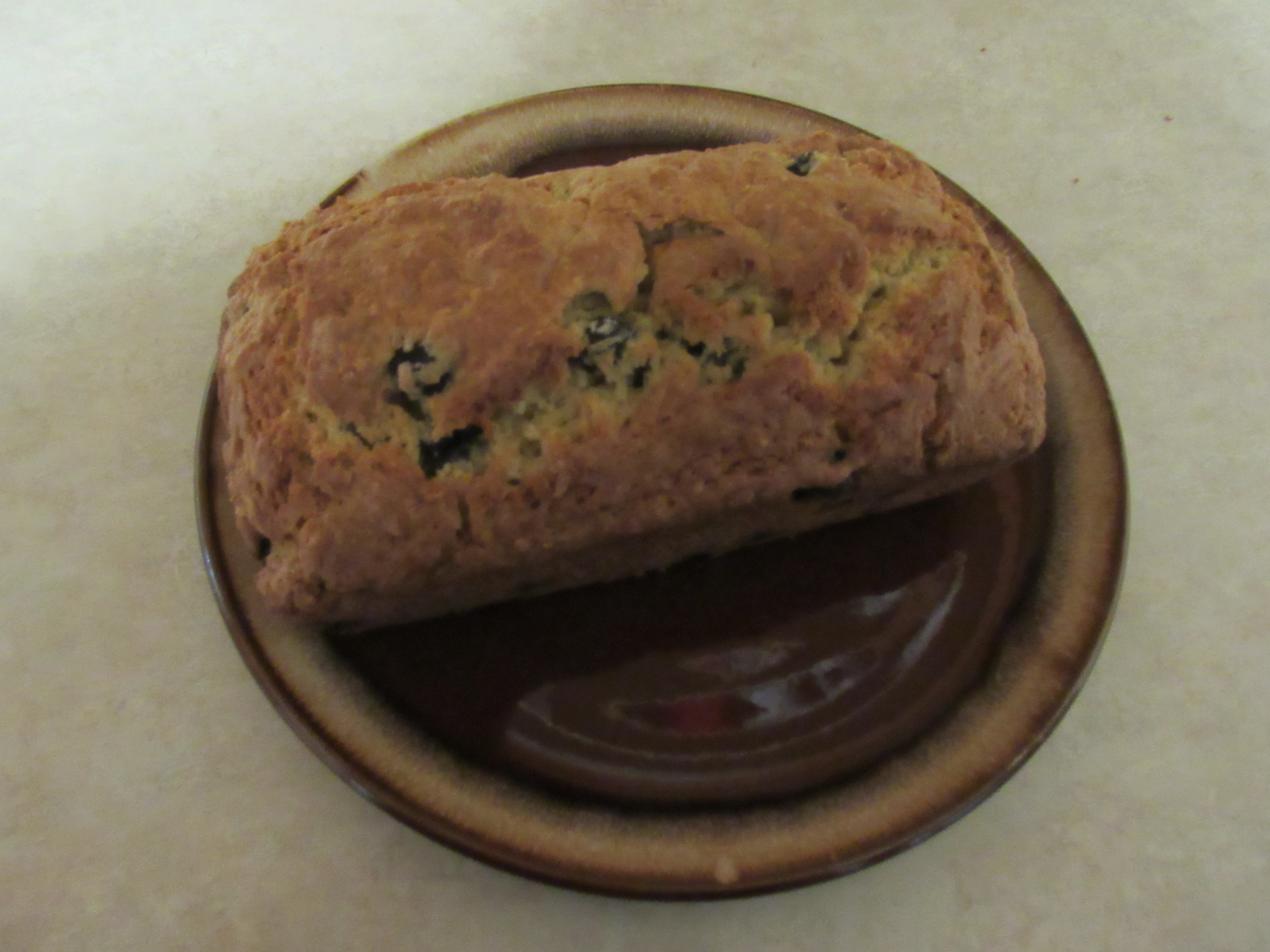
The whole cake tasted delicious. It has a wonderful buttery lemon flavor. Loving the lemony dessert, my guests ate every last crumb on their plates.

One person mentioned that he tasted an eggy flavor. I agreed. In my opinion, the number of eggs can be reduced to four or five. Also, the amount of butter can be reduced–perhaps to about ½ cup.

I’d love to hear if you try it.

-Sandra Merville Hart

Sources

Compiled from Original Recipes. Buckeye Cookery and Practical Housekeeping, Applewood Books, 1877.



Cherokee General Watie Surrenders First Indian Brigade

Degataga, Cherokee for “stand firm,” was the name given to Stand Watie at his birth. He was baptized as Isaac Watie so Stand Watie is a blend of his Cherokee and English names.

Watie supported the relocation of the Cherokee Nation to Indian Territory (modern-day Oklahoma.) Even though Chief John Ross and the majority of the Cherokee opposed the removal, Watie and a few other tribal members negotiated and signed the Treaty of New Echota. The treaty with the United States forced the Cherokee to leave their lands, traveling what was later called the Trail of Tears.

The treaty signers weren’t popular. A friend’s timely warning allowed Watie to escape being killed with other signers in 1839.

He joined the Southern cause in 1861. As colonel, he raised a Cherokee regiment, the Cherokee Regiment of Mounted Rifles. He and his troops helped drive pro-Union Native Americans from Indian Territory to Kansas.

Watie and his men excelled as scouts and skirmishers. His courage was noticed and he became Brigadier General Watie on May 6, 1864—the only Native American to receive this rank in the Civil War. He commanded the First Indian Brigade, made up of Cherokee, Seminole, Osage, and Creek soldiers.

After General Kirby Smith surrendered the Army of the Trans-Mississippi, Watie knew his turn was coming.

On June 23, he surrendered at Doaksville in Indian Territory.

The last Confederate general to surrender was Cherokee chief Stand Watie.

-Sandra Merville Hart

Sources

“Conclusion of the American Civil War,” Wikipedia.com, 2018/03/21 https://en.wikipedia.org/wiki/Conclusion_of_the_American_Civil_War.

“Conclusion of the American Civil War,” Wikiwand.com, 2018/03/22 http://www.wikiwand.com/en/Conclusion_of_the_American_Civil_War.

Long, E.B. and Long, Barbara. The Civil War Day by Day: An Almanac 1861-1865, A Da Capo Paperback, 1971.

Plante, Trevor K. “Ending the Bloodshed,” National Archives, 2018/03/21

https://www.archives.gov/publications/prologue/2015/spring/cw-surrenders.html.

“Stand Watie,” Civil War Home, 2018/04/22 http://www.civilwarhome.com/watiebio.html.

“Stand Watie,” Civil War Trust, 2018/04/22 https://www.civilwar.org/learn/biographies/stand-watie.

God Made You Just Right by Jill Roman Lord

I recently purchased a child’s book to share with my toddler grandson that I have to share with you.


God Made You Just Right is a sweet, fun book that captivates little ones!

The rhyming verses have been written with the perfect cadence to capture a listener’s ear.

Written from a Christian perspective, this book explains to little ones that God took special care to make them just right. They don’t have to be like anyone else.

I love the illustrations by Amy Wummer. Such a fun book!

This book will delight toddlers, preschoolers, and kindergartners. What a precious book.

I’ll look for more by this author!

-Sandra Merville Hart

Christianbook.com

Bina’s Stewed Corn Recipe from 1877

While searching for a vegetable to make for a family gathering, I found a recipe for stewed corn in my 1877 cookbook. It uses fresh corn. It was delicious! You might want to make extra for a large crowd because many folks will come back for seconds.

This recipe is based off 3 pints of corn and I had no idea how many ears of corn made that much. I purchased 8 ears of corn and, to my surprise, that made 3 pints!

Shuck the corn and remove the corn silks. Rinse the corn.

Shave the corn off the ears with a sharp knife. Always work toward the bowl. I start about halfway down the ear and then turn it over and do the other side. Don’t shave the vegetable so closely that you cut the cob.

Hint: A large deep bowl or pot works best for shaving the corn off the cob as it splatters.

Pour the kernels into a cast iron skillet. Add just enough water to cover the corn. Add 3 tablespoons of butter, 1 teaspoon of salt, and pepper to taste. (My husband isn’t big on pepper so I used 1/8 teaspoon.)

Cover and cook over a medium low heat about 45 minutes. Stir occasionally. Add more water if necessary because the corn shouldn’t brown. The aroma as it cooks will make you hungry!

Meanwhile, stir 1 teaspoon of flour into ½ cup of cream. Add this cream mixture to the corn in the last 3 to 5 minutes of cooking. Stir and replace the lid.

Bina, the original cook, served this with roast beef, escalloped tomatoes, and mashed potatoes.

Delicious! Everyone complimented the corn dish and went back for second and third helpings. It was so good that I warmed it up and ate some for breakfast the next day. Yummy!

It’s so hard to find ways to make vegetables like corn into a special side dish. This recipe earned compliments at my house and chances are good it will earn them at yours.

I’d love to hear if you try it.

-Sandra Merville Hart

Sources

Compiled from Original Recipes. Buckeye Cookery and Practical Housekeeping, Applewood Books, 1877.


Hazelelponah Wood: A Noteworthy Puritan Woman

Today’s post is written by fellow author, Donna B. Gawell. Her debut historical novel, In the Shadow of Salem, releases this month. Congratulations on the new release, Donna!

Hazelelponah, Haselelponah or Haselepony?  How did Hazelelponah really spell her name or did she even care? This remarkable woman is the bearer of a unique name but has an equally amazing life story from the early years of New England.

Hazelelponah’s unique name is shared by a woman in the Old Testament in the genealogies of Judah. You can find it in 1 Chronicles 4:”These were the sons of Etam: Jezreel, Ishma, and Idbash. Their sister was named Hazzelelponi.” Feel free to use her name to quiz your pastor or rabbi.

In the Shadow of Salem features Hazelelponah as a proprietor of an ordinary tavern. This real Puritan woman was born in 1636 in Exeter, NH and was the oldest daughter of Balthazar and Hannah Willix. In 1648, her mother was attacked, robbed, murdered on the road leading from Dover to Exeter,  and her body was thrown into the river. Balthazar became despondent and moved the family to Salisbury.

Soon after, Hazelelponah was sent into service, a typical practice in Puritan times for many young women and men.  She met and married John Gee, fisherman, but he was lost at sea on December 27, 1669.

The widow Hazelelponah moved with her five children to Boston for several years.  There Hazelelponah met Obadiah Wood, a widower with ten children who lived on East Street in Ipswich and was a “biskett baker.” Obadiah and Hazelelponah married and were proprietors of an ordinary tavern in Ipswich. The couple added another ten children during their years of marriage.

Hazelelponah experienced so much tragedy in her early life, and we can only hope she was revered by her twenty-five children and stepchildren! This impressive woman survived her second husband and died in Ipswich in 1714 at the age of 79.  Her grave is located in the Old North Burying Ground in Ipswich, MA.

-Donna B. Gawell

About the author:

Donna is a writer and genealogist who enjoys writing novels about her infamous and more humble ancestors. She lives in Columbus, Ohio with her husband Mark. Her website  features history and travel articles.

 Back Cover Blurb

In the Shadow of Salem is a historical novel about the life of Mehitabel Braybrooke, a Puritan woman born in 1652 in Ipswich, Massachusetts. Mehitabel is accused of crimes−the first for arson and the second for witchcraft. History has not been kind to Mehitabel, but what was the real story behind her scurrilous reputation? Would she ever be redeemed from her lifelong curse? Or was Mehitabel as wicked as her numerous Essex Court Records imply?

Amazon

Her Lonely Heart by Cynthia Hickey

The Pony Express Romance Collection

Widow Sadie Mathewson raises her two children at a Pony Express Station that had been her husband’s dream. She fears for the safety of her twelve-year-old son who longs to become a rider. There has also been danger to riders from the Native Americans in the area. Sadie has a good relationship with local Kickapoo and hopes for the best.

Dr. Luke Stetson chases after his young brother after receiving a note that he’d joined the Pony Express. He finds his injured brother at Sadie’s station. Though the courageous mother captures his interest, his father has drilled into him not to marry beneath him.

I love reading historical romances where I feel as if I’ve gone back in time. The romance and adventure of the Pony Express in this story escalates to show the danger of those lonely Pony Express stations—and the courage of the young riders.

I enjoyed this story and others in this collection.

-Sandra Merville Hart

Christianbook.com

Apple Meringue Pie Recipe from 1877

While searching for a dessert to make for a family gathering, I ran across a recipe for apple meringue pie in my 1877 cookbook. Intrigued by a dessert I’d never heard of, I decided to try it.

The recipe calls for tart apples so I used Granny Smith. For apple pies that I’ve made in the past, three large apples made one pie. Since these apples would be “stewed” before going into the pie shell, I used twice that amount. This made enough filling for a large 9” pie.

Peel and slice the apples. Place them in a large saucepan and add water but don’t cover the apples. Cook over a medium heat until tender, about 15 to 20 minutes. The aroma took me back to childhood memories of my grandmother’s cooking.

Remove from heat. Drain excess water. Mash the cooked apples. Add a teaspoon of nutmeg. After tasting the mixture with a spoon, I felt it needed a teaspoon of cinnamon so I added that. It gave the apples a nice flavor.

Hint: To prevent fruit juices from soaking into the pie crust, beat an egg and lightly brush a little onto the unbaked shell. 1877 cooks dipped a cloth into the egg mixture, but I used a pastry brush.

Poor the apple mixture into a prepared unbaked pie crust and bake at 375 degrees for about 35 minutes or until the shell is done and the apples are set.

For the meringue: Beat 3 egg whites, 3 tablespoons powdered sugar, and ½ teaspoon vanilla until “it will stand alone.”

Allow the baked pie to cool about ten minutes then cover the pie with the meringue. Increase the oven temperature to 400 and return the pie to the oven just until the meringue is lightly browned. This may take five minutes but keep watching so as not to burn it.

Refrigerate after the pie cools and serve cold.

None of my guests had heard of an apple meringue pie. The novelty and the taste appealed to everyone. The dessert took me back to my grandmother’s cooking. I liked it. I had always used sugar as opposed to powdered sugar for meringues and was a little nervous about how it would work. The powdered sugar took a little longer to whip but tasted good.

The cook advises that peaches can be substituted for apples when in season. That sounds really delicious so I plan to make it with peaches.

I’d love to hear if you try it.

-Sandra Merville Hart

Sources

Compiled from Original Recipes. Buckeye Cookery and Practical Housekeeping, Applewood Books, 1877.



Brig. Gen. Wofford Surrenders Department of North Georgia

William T. Wofford served as a captain in the Mexican War. After the war, he was in the Georgia state legislature. As a member of the state convention in 1861, he voted against secession. When Georgia seceded, he joined the 18th Georgia Infantry as colonel.

His regiment was later assigned to General John Bell Hood’s Texas Brigade. As part of this brigade, Wofford and his men fought at Yorktown, Second Bull Run, South Mountain, Sharpsburg, and Antietam.

In November of 1862, 18th Georgia was transferred to the Georgia Brigade. Wofford was promoted to brigadier general on January 17, 1863.

He served with the Army of Northern Virginia until Georgia Governor Joseph E. Brown asked him to assume command of the Department of North Georgia around the end of 1864.

Georgia’s citizens needed protection from guerrilla attacks. Wofford strengthened his forces with stragglers, deserters—any available men. He commanded this department until May 12, 1865.

Lee and others had already surrendered when letters between Union Brigadier General Henry M. Judah and Wofford were exchanged. Union Colonel Louis Merrill believed there to be about 10,000 soldiers in Wofford’s command.

About a third of this number surrendered—the rest deserted.

A sign in Kingston, Georgia, located at the intersection of Church Street and West Main Street, marks where the surrender occurred.

-Sandra Merville Hart

Sources

“Conclusion of the American Civil War,” Wikipedia.com, 2018/03/21 https://en.wikipedia.org/wiki/Conclusion_of_the_American_Civil_War.

“Conclusion of the American Civil War,” Wikiwand.com, 2018/03/22 http://www.wikiwand.com/en/Conclusion_of_the_American_Civil_War.

Long, E.B. and Long, Barbara. The Civil War Day by Day: An Almanac 1861-1865, A Da Capo Paperback, 1971.

Plante, Trevor K. “Ending the Bloodshed,” National Archives, 2018/03/21

https://www.archives.gov/publications/prologue/2015/spring/cw-surrenders.html.

“W.T. Wofford (1824-1884),” New Georgia Encyclopedia, 2018/04/21 https://www.georgiaencyclopedia.org/articles/history-archaeology/w-t-wofford-1824-1884.

The House on Foster Hill by Jaime Jo Wright

1906—Ivy Thorpe is chilled by the discovery of a dead woman near the home at Foster Hill. Her father, the medical examiner on the case, reports that the woman recently had a baby. The sheriff and Joel Cunningham–the detective Ivy hasn’t seen since her brother died–can’t find the infant. The baby can’t survive long so Ivy decides to search, placing herself in danger.

Current day—Kaine Prescott can’t convince the police that her husband’s death was no accident. Nor can she can convince them that someone is now stalking her. Longing to escape the danger, she buys a historic home, sight unseen, on Foster Hill and moves to Wisconsin to fix it up.

But the house is far more dilapidated than the realtor’s photos showed … and sinister. When the stalker finds her again, she’s terrified. Can she really trust her new neighbor, Grant Jesse?

Riveting!

Both women face danger that involves the house at Foster Hill. Their stories are woven together in a way that escalates with every turn of the page. Suspenseful, dramatic, heart-wrenching. I wasn’t able to put it down!

Spellbound by this well-written story.

Looking forward to reading other books by this author!

-Sandra Merville Hart

Christianbook.com