Author’s Inspiration for Boulevard of Confusion

by Sandra Merville Hart

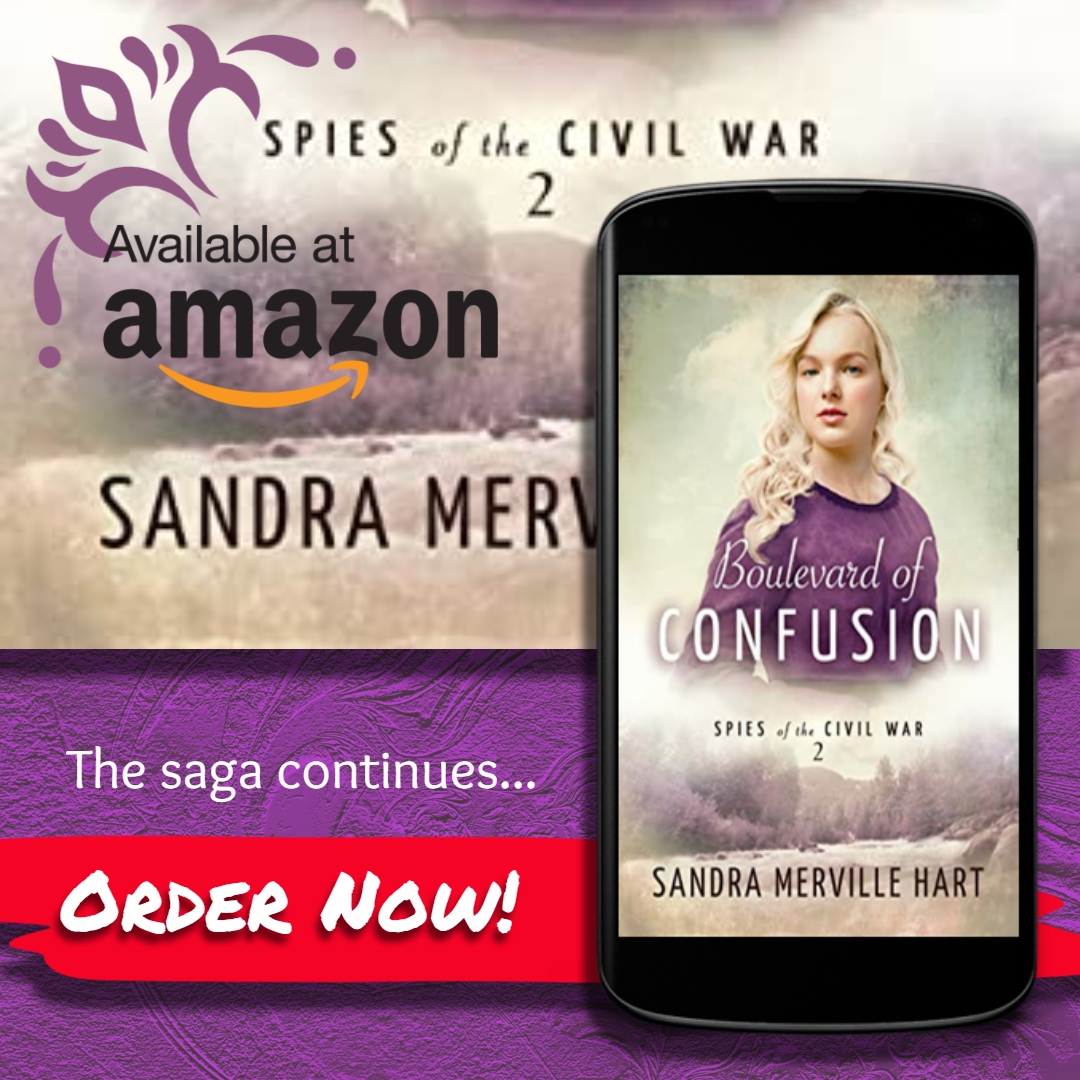
In Boulevard of Confusion, Book 2 in my “Spies of the Civil War” series, two people in love—one supporting the North, one supporting the South—struggle to rise above their differing loyalties.

In my book, the hero is a Virginian loyal to the South. Though Jay hates slavery, he cannot turn against his state. His job at Tredegar Ironworks supplies the Confederate army with artillery. They develop new weapons and technology, such as submarines, that must be kept secret even from Richmond residents.

Our heroine is from the North. Bea has Southern ties and her brother, a Confederate officer, was recently released from a prison camp. Bea’s understanding of both sides of the conflict tosses her into confusion, especially in light of her growing feelings for Jay.

Part of my research for this novel involved a trip to Richmond museums. One display in particular at the American Civil War Museum at Historic Tredegar made me want to do a little dance. (If you followed me around on my museum visits, you’d witness my enthusiasm for historical people and events and how they impact my stories. Perhaps you share my love of history. 😊)

Anyway, this particular display was a painting of Julia Ann Mitchell, who lived in Richmond at the start of the Civil War. She was from a well-to-do family that traveled often. On one of these trips, she met and fell in love with Frederick Coggill, a New York City resident. Though they loved one another, the couple was divided in their loyalties. 

Sadly, Julia’s brother, who fought for the Confederacy, was killed in battle. This probably added to the conflict between Julia and Frederick.

I’m happy to say that the couple seemed to enjoy a happy ending, for they were married in 1863.

I didn’t yet know my characters when I read this display, for the stories ferment in my imagination as research reveals the history. I tucked it away in my mind and it later inspired me.

Boulevard of Confusion isn’t Julia’s and Frederick’s love story. Not at all. It’s simply that history’s record of them overcoming their differing loyalties to marry proves that it happened. That’s all I needed to know.

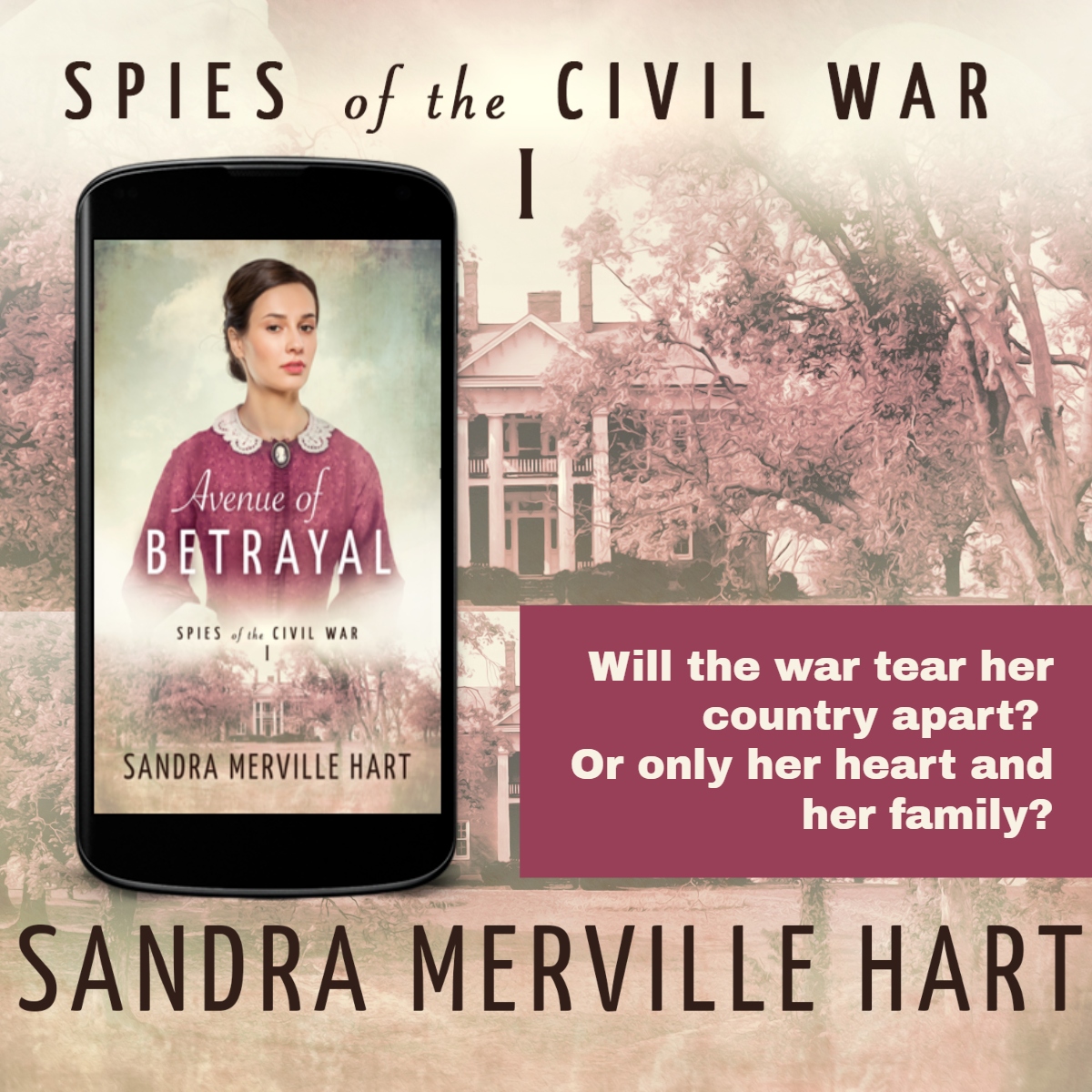
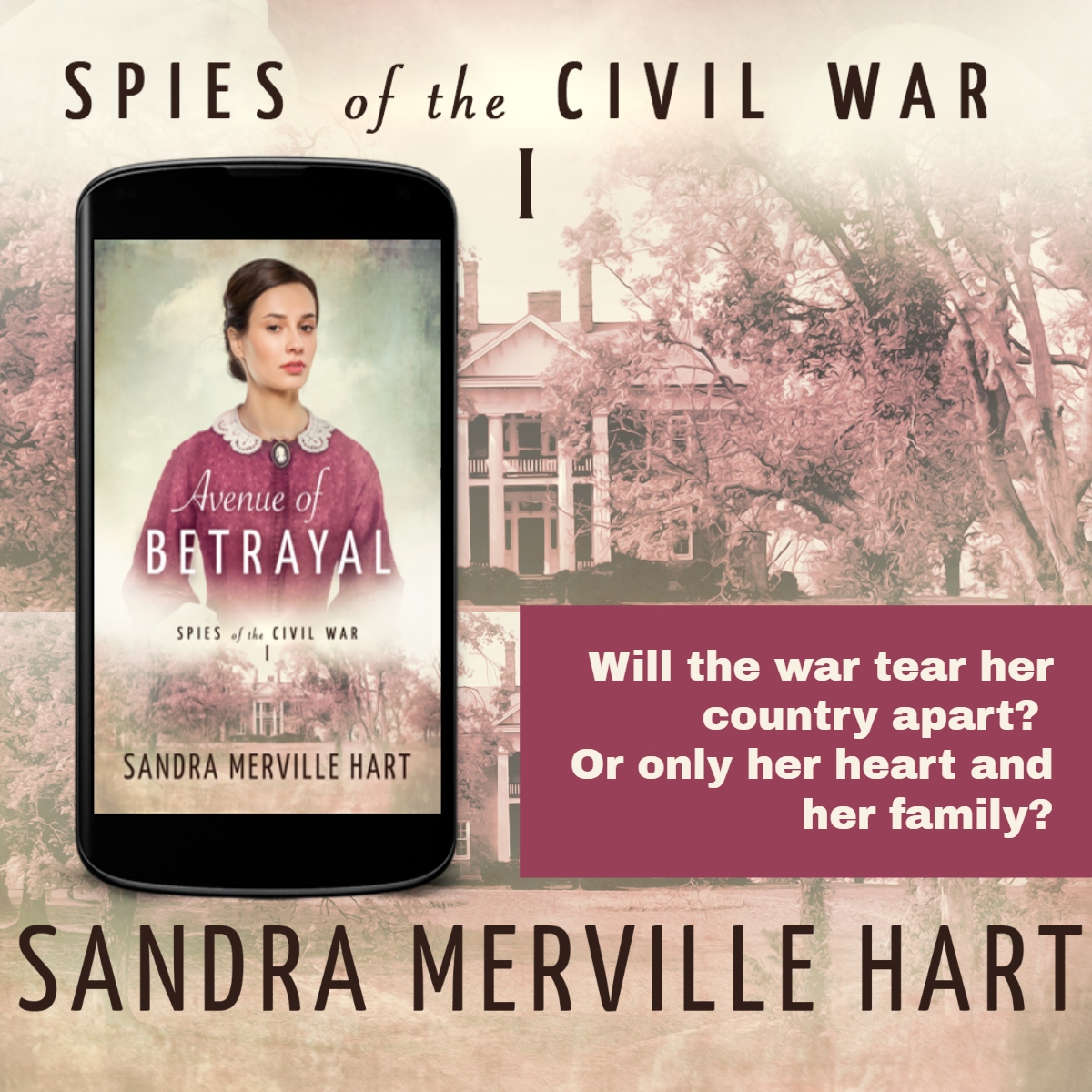
Avenue of Betrayal, Book 1,is set in the Union capital of Washington City (Washington DC) in 1861, where a surprising number of Confederate sympathizers and spies lived. Boulevard of Confusion is set in Richmond, the Confederate capital in 1862. Actual historical spies touch the lives of our fictional family.

Through both real and fictional characters, this series highlights activities spies were involved in and some of the motives behind their decisions.

I invite you to read both Avenue of Betrayal and Boulevard of Confusion. And please watch for Book 3, Byway to Danger, which will soon follow!

Back Cover Blurb for Boulevard of Confusion

In times of war, is anything as it seems?

Her aunt’s invitation to Richmond is just the change Beatrice Swanson needs after her brother’s release from a Union prison. Bea’s father agrees to the trip with a condition—one that tosses her emotions into swirling confusion.

Though Jay Nickson wants to serve his country as a Confederate soldier, his work is too important to the government. Bea’s interest in his job, which includes secrets that would benefit the Union, arouses his suspicions. Is she spying for the North? His growing feelings for her are hard to squelch.

Though she participates in activities to benefit Confederate soldiers, Bea struggles with her own loyalties and her father’s demands. Where does her cousin, Meg, go on her solitary errands? Bea’s own growing love for Jay, a Southerner, only adds to her confusion. Tensions escalate in Richmond as the Union army approaches, drawing her into more secrecy. Where does her allegiance lie? And how will she be forced to prove it?

Nothing in war is simple…especially when the heart becomes entangled.

Available on Amazon, Barnes & Noble, Apple Books, and Kobo.

Spies of the Civil War Series Book 2 Releases Today!

by Sandra Merville Hart

I’m thrilled to announce that Boulevard of Confusion, Book 2 of my new “Spies of the Civil War” releases today, May 10, 2022!

Though the series is about a fictional family, there are actual historical spies who touch the stories.

Boulevard of Confusion is set in the Confederate capital of Richmond, Virginia, in 1862. Citizens establish new hospitals to care for wounded Confederate soldiers and new prisons to house Union prisoners. The city’s population swells and Southern citizens don’t know who to trust—and rightly so, for many Union spies now roam the streets and sleep in Richmond hotels.

Here’s a bit about the book:

In times of war, is anything as it seems?

Her aunt’s invitation to Richmond is just the change Beatrice Swanson needs after her brother’s release from a Union prison. Bea’s father agrees to the trip with a condition—one that tosses her emotions into swirling confusion.

Though Jay Nickson wants to serve his country as a Confederate soldier, his work is too important to the government. Bea’s interest in his job, which includes secrets that would benefit the Union, arouses his suspicions. Is she spying for the North? His growing feelings for her are hard to squelch.

Though she participates in activities to benefit Confederate soldiers, Bea struggles with her own loyalties and her father’s demands. Where does her cousin, Meg, go on her solitary errands? Bea’s own growing love for Jay, a Southerner, only adds to her confusion. Tensions escalate in Richmond as the Union army approaches, drawing her into more secrecy. Where does her allegiance lie? And how will she be forced to prove it?

Nothing in war is simple…especially when the heart becomes entangled.

Order your copy today on Amazon, Apple Books, Kobo, or Barnes and Noble!

Confederate Spy Rose Greenhow in Boulevard of Confusion

by Sandra Merville Hart

Boulevard of Confusion, Book 2 of my new “Spies of the Civil War” series releases on May 10, 2022. Here’s a bit of the historical background for the story leading up to its release.

Though the series is about a fictional family, there are actual historical spies who touch the stories.

Boulevard of Confusion is set in Richmond, Virginia, the capital of the Confederacy in 1862. With its Southern setting, one might imagine all the citizens supported the Confederates. Surprisingly, a number of Union spies and Union supporters—called Unionists—lived in Richmond.

Just as the historical Confederate spy Rose O’Neal Greenhow played a part in Avenue of Betrayal Book 1, her story also touches the characters in Boulevard of Confusion Book 2.

Rose O’Neal Greenhow was perhaps the most famous female Confederate spy who lived in Washington DC when the Civil War began. She agreed to send messages based on a cipher. She built up a spy network of fifty people, the largest of the war.

Rose learned battle plans for Bull Run and passed this vital information to Confederate General Beauregard. The First Battle of Bull Run was a Confederate victory.

She was caught and imprisoned at Washington’s Old Capitol prison. The Federals decided to send her South.

On June 4, 1862, she arrived in Richmond, where she was taken to the best hotel. Confederate President Jefferson Davis called on her the next day, saying, “But for you there would have been no battle of Bull Run.” Rose wrote that his words made up for all she’d endured.

The following year President Davis sent her to Europe. She took letters from him to France and England. She received money from them to aid the South.

In October 1, 1864, Rose returned on the Condor, a blockade runner. Unfortunately, the USS Niphon, a Union gunboat, came close to their position on Cape Fear River. While Confederate soldiers from nearby Fort Fisher fired on the Union gunboat, Rose asked the captain for a lifeboat for herself and two other Confederate agents. Two hundred yards of rough waters were between the boat and the shore. Despite his initial refusal, she convinced the captain to provide a boat.

A powerful wave overturned the lifeboat. They swam for shore. Unfortunately, Rose had a bag of gold sovereigns tied around her waist underneath a heavy silk dress. Though she was a good swimmer, she drowned due to the extra weight while her companions made it to safety.

Her body washed ashore the next day. A Confederate soldier found the bag of gold and took it. A search party later found the body. When the soldier discovered Rose’s identity, he returned the sovereigns.

She was buried in Oakdale Cemetery in Wilmington with full military honors.

Rose’s story touches our fictional family again when she arrives in Richmond in June of 1862.

-Sandra Merville Hart

Sources

Monson, Marianne. Women of the Blue & Gray, Thorndike Press, 2018.

Winkler, H. Donald. Stealing Secrets, Cumberland House, 2010.

Zeinert, Karen. Those Courageous Women of the Civil War, The Millbrook Press, 1998.

Author’s Inspiration for Avenue of Betrayal

by Sandra Merville Hart

I’m often asked where ideas for my stories originate. That answer varies because inspiration comes from unexpected sources. Searching for inspiration seems to make it more elusive. Story ideas usually happen when I’m doing something unrelated to my books, like visiting a museum or historical home while on vacation.

Ideas for this series stemmed from research for a “Civil War Women” series of articles I wrote for my blog. There are many women from the North and South featured in that series—and many more that deserve recognition. What surprised me was the number of known female spies from both sides. It’s likely that many others either didn’t seek praise after the war or feared retribution and never revealed their activities.

Rose Greenhow, a Confederate spy living in Washington DC (Washington City, as it was called at that time) in 1861, created an impressive spy network. Coded messages were sent on a “Secret Line.” Several couriers in a chain passed on messages in common places such as docks, taverns, and farmhouses.

Rose’s spy network from Boston to New Orleans was the largest in the war—48 women and 2 men.

Allan Pinkerton, head of Lincoln’s Intelligence Service, was tasked with finding Confederate spies and he placed Greenhow under surveillance.

She was arrested in August of 1861.

Though the series is about a fictional family, there are actual historical spies who touch the stories. Rose is one of them.

Avenue of Betrayal is set in Washington City (Washington DC) in 1861, where a surprising number of Confederate sympathizers and spies lived.

Through both real and fictional characters, this series will highlight activities spies were involved in and some of the motives behind their decisions.

I invite you to read Avenue of Betrayal and the rest of the series that will soon follow. I’d love to know what you think!

Back Cover Blurb for Avenue of Betrayal

Betrayed by her brother and the man she loves …

whom can she trust when tragedy strikes?

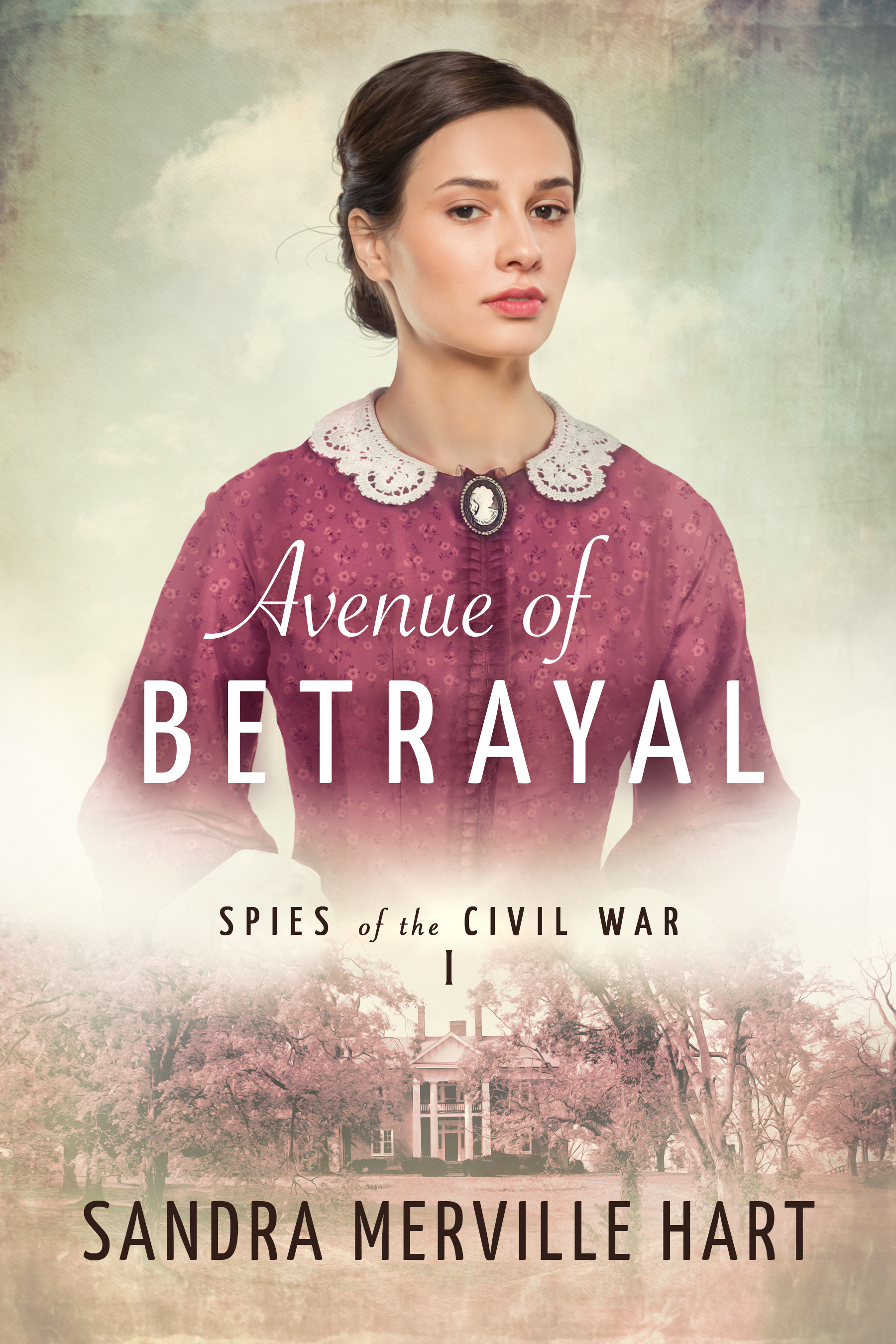
Soldiers are pouring into Washington City every day and have begun drilling in preparation for a battle with the Confederacy. Annie Swanson worries for her brother, whom she’s just discovered is a Confederate officer in his new home state of North Carolina. Even as Annie battles feelings of betrayal toward the big brother she’s always adored, her wealthy banker father swears her and her sister to secrecy about her brother’s actions. How could he forsake their mother’s abolitionist teachings?

Sergeant-Major John Finn camps within a mile of the Swansons’ mansion where his West Point pal once lived. Sweet Annie captured his heart at Will’s wedding last year and he looks forward to reestablishing their relationship—until he’s asked to spy on her father.

To prove her father’s loyalty to the Union, John agrees to spy on the Swanson family, though Annie must never know. Then the war strikes a blow that threatens to destroy them all—including the love that’s grown between them against all odds.

Available on Amazon and other retailers.

Transcontinental Railroad

by Sandra Merville Hart

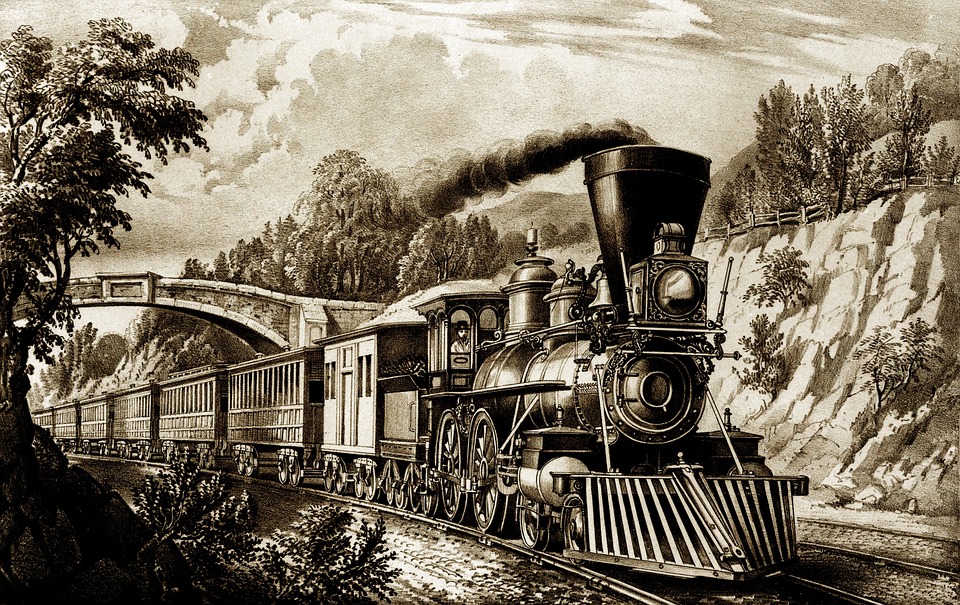
Asa Whitney, a New York merchant, planted the idea of a transcontinental railroad when he petitioned Congress for federal funding of a sixty-mile strip in 1845, but it wasn’t until Theodore D. Judah caught the vision that things began to happen. Judah believed the Donner Pass was the perfect area for the railroad to pass through the Sierra Nevada mountains, and, as the engineer of the Sacramento Valley Railroad, he wanted to build it.

He brought Leland Stanford, Charles Crocker, Collis P. Huntington, and Mark Hopkins in on the project, leading to the establishment of Central Pacific Railroad Company of California.

Congress passed the first Pacific Railway Act on July 1, 1862. It stated the Union Pacific was to start in Omaha, Nebraska, and build toward the west. The Central Pacific started in Sacramento, California, and built toward the east to meet them roughly halfway.

The second Pacific Railway Act (July 2, 1864) doubled the land grants to 12,800 acres for every mile of track built. They also received $48,000 in government bonds for each mile. This increased the competition between the two companies.

The Civil War hampered Union Pacific’s efforts to build. Though they began in December of 1863, little was accomplished for the remaining two years of the war.

The western team began about a month before. Sadly, the man who had laid so much groundwork for the project didn’t see it to completion. Judah died of yellow fever in November of 1863, shortly after Central Pacific pounded the first spikes.  

The Sierra Nevada mountains slowed Central Pacific’s progress. They hired Chinese workers for this grueling task. Nine tunnels were blasted the mountains in order for the track to be laid.

Once the war ended, the Union Pacific made progress westward across the prairie. Civil War veterans and Irish immigrants had to cope with attacks from Native Americans. Cheyenne, Sioux, and Arapahoe were among the attacking tribes.

Union Pacific workers had their own difficulties to contend with—the Rockies. Even with these obstacles, the group from the east was in Wyoming in the summer of 1867, and had laid almost four times the miles of track as the western team.

Once Central Pacific made it to the other side of the Sierra Mountains in June, they made significant progress.

The competition was on now. Unfortunately, the workmanship suffered and some the sections were later rebuilt.

In March of 1869, President Ulysses S. Grant told the two companies to agree on a meeting point. They chose Promontory, Utah. A symbolic gold spike was driven in a special “Golden Spike Ceremony” on May 10, 1869. It linked both railroads, marking the completion of the Transcontinental Railroad.

The hero in my novel, Avenue of Betrayal, Book 1 of my “Spies of the Civil War” series, dreams of participating in building the Transcontinental Railroad. The fictional Union officer hopes that the war doesn’t last so long that he misses his opportunity. As you read in this article, Civil War veterans were used to build the railroad after the war ended. I was thrilled to use such an important part of our history in the story.


Sources

“Central Pacific Railroad,” Encyclopaedia Britannica, 2022/02/22 https://www.britannica.com/topic/Central-Pacific-Railroad.

History.com Editors. “Transcontinental Railroad,” History.com, 2022/02/22 https://www.history.com/topics/inventions/transcontinental-railroad.

“Pacific Railway Acts,” Encyclopaedia Britannica, 2022/02/22 https://www.britannica.com/event/Pacific-Railway-Acts.

“The Transcontinental Railroad,” Library of Congress, 2022/02/26 https://www.loc.gov/collections/railroad-maps-1828-to-1900/articles-and-essays/history-of-railroads-and-maps/the-transcontinental-railroad/.

“Transcontinental Railroad,” History.net, 2020/06/19 https://www.historynet.com/transcontinental-railroad.

“Union Pacific Railroad Company, Encyclopaedia Britannica, 2022/02/22 https://www.britannica.com/topic/Central-Pacific-Railroad.

Laying the Groundwork for the Transcontinental Railroad

by Sandra Merville Hart

Asa Whitney, a New York merchant, wanted a railroad that stretched from the Atlantic to the Pacific. His goal was to make trade with China easier after returning from a trip to China in 1844.

In 1845, Whitney petitioned Congress for federal funding of a sixty-mile strip and proposed that land be granted as wages for workers. He didn’t give up when his request was denied. In 1849 he published Project for a Railroad, which outlined possible routes. Congress didn’t accept his ideas, but their interest was growing.

Whitney continued to talk about his dream and the public noticed. A transcontinental railroad brought many benefits. Train travel for passengers was faster and safer than stagecoaches and wagon trains. Mail delivery would be accomplished more quickly. Goods from the east could reach western customers in a timely manner. There were many merits to building it.

Others made proposals but Congressmen didn’t agree on the eastern terminus. Secretary of War Jefferson Davis sent four men to lead the exploration of potential routes for the transcontinental railroad. They learned that any of them worked. The least expensive was the route along the 32nd parallel.

Because routes along the South didn’t please Northern Congressmen and vice versa, debates continued.

Whitney stopped lobbying for the railroad in 1851, but a new champion came along in 1860. Theodore D. Judah believed the Donner Pass was the perfect area for the railroad to navigate through the Sierra Nevada mountains. As the engineer of the Sacramento Valley Railroad, he wanted to build the new railroad.

He brought Leland Stanford, Charles Crocker, Collis P. Huntington, and Mark Hopkins in on the project, leading to the establishment of Central Pacific Railroad Company of California.

Judah traveled to Washington City (as Washington DC was then called) where he talked with Congress. President Abraham Lincoln backed the idea and the first Pacific Railway Act went into effect on July 1, 1862. It stated the Union Pacific was to start in Omaha, Nebraska, and build toward the west. The Central Pacific started in Sacramento, California, and built toward the east to meet them roughly halfway.

It was a long journey of many years and several key people to make the decisions laying the groundwork for the Transcontinental Railroad, not the least of whom were Asa Whitney and Theodore Judah.

The hero in my novel, Avenue of Betrayal, Book 1 of my “Spies of the Civil War” series, dreams of participating in building the Transcontinental Railroad. The fictional Union officer hopes that the war doesn’t last so long that he misses his opportunity. I was thrilled to use such an important part of our history in the story.  

Sources

“Asa Whitney,” Wikipedia, 2022/02/26 https://en.wikipedia.org/wiki/Asa_Whitney.

History.com Editors. “Transcontinental Railroad,” History.com, 2022/02/22 https://www.history.com/topics/inventions/transcontinental-railroad.

“Pacific Railway Acts,” Encyclopaedia Britannica, 2022/02/22 https://www.britannica.com/event/Pacific-Railway-Acts.

“The Beginnings of American Railroads and Mapping,” Library of Congress, 2022/02/26 https://www.loc.gov/collections/railroad-maps-1828-to-1900/articles-and-essays/history-of-railroads-and-maps/the-beginnings-of-american-railroads-and-mapping/.

“The Transcontinental Railroad,” Library of Congress, 2022/02/26 https://www.loc.gov/collections/railroad-maps-1828-to-1900/articles-and-essays/history-of-railroads-and-maps/the-transcontinental-railroad/.

“Transcontinental Railroad,” History.net, 2020/06/19 https://www.historynet.com/transcontinental-railroad.

Civil War in Washington DC: The Willard Hotel

by Sandra Merville Hart

City Hotel, located at 1401 Pennsylvania NW in Washington DC, was expanded after Henry Willard leased it in 1847. He soon brought his brother, Joseph, into to the business and changed the name to Willard Hotel. They built a six-floor hotel on the southwest corner of 14th and F Streets. The brothers purchased a Presbyterian Church on F Street and converted it to a meeting hall with an auditorium called Willard Hall.

Henry went the extra mile to make his hotel successful. He greeted hotel guests as they stepped out of the stage. He was at the Central Market before dawn to select the highest quality of products available to serve for in his hotel’s dining rooms. Henry donned a white apron to carve meats at the dining table.

By the Civil War, the hotel was a center of activity for the bustling capital then known as Washington City. Luxurious gentlemen’s and ladies’ dining rooms could accommodate 2,500 diners daily. Elegant parlors invited guests to linger after a meal before retiring to their rooms.

The hotel also boasted of a 150-foot ballroom, where it hosted lavish events like the Napier Ball, given as a farewell on February 17, 1859, to the British Ambassador Lord Francis Napier and Lady Anne Napier. Eighteen hundred guests paid an expensive price of $10 each to attend. The ball’s success boosted the hotel’s prestige.

Willard’s boasted another honor—both Franklin Pierce and Abraham Lincoln stayed at their hotel before their presidential inaugurations.  

After the war began, Union regiments poured into the city for further training and the hotel lobby became a common meeting place for Union officers to make their reports.

One of these regiments, the 11th New York Infantry, was made up of firemen under Colonel Elmer F. Ellsworth. The entire regiment wore red shirts, gray breeches, gray jackets, and red caps, so they stood out in a crowd.

On May 9, 1861, the Willard brothers had cause to be grateful for Ellsworth’s Zouves when fire engulfed Samuel Owen’s tailor shop, which adjoined their hotel. With equipment borrowed from local firehouses, Ellsworth’s men helped the Washington Fire Department extinguish the blaze. His entire regiment was eventually called to fight the fire and Ellsworth, using the fire chief’s trumpet, took command until the crisis ended.

Henry Willard was so pleased with the results that he invited them all to breakfast. Undoubtedly, the situation would have been much worse without so many capable firefighters.

Union soldiers training for the Civil War battlefields faced a familiar battle that day.  

There is a scene at the Willard Hotel when characters in my novel, Avenue of Betrayal, Book 1 of my “Spies of the Civil War” series, dine there. I was thrilled to use such an important location in the story.  

Sources

“11th New York Infantry Regiment,” Wikipedia, 2022/02/25 https://en.wikipedia.org/wiki/11th_New_York_Infantry_Regiment.

“A Ball at Willard’s,” White House Historical Association, 2022/02/25 https://www.whitehousehistory.org/photos/a-ball-at-willards.

Epstein, Daniel Mark. Lincoln and Whitman: Parallel Lives in Civil War Washington, Ballantine Books, 2004.

Selected by Dennett, Tyler. Lincoln and the Civil War In the Diaries and Letters of John Hay, Dodd, Mead & Company, 1939.

“The Willard Hotel,” White House History, 2020/06/11 https://www.whitehousehistory.org/the-willard-hotel.

“The Willard Hotel in the 19th Century,” Streets of Washington, 2020/06/11 http://www.streetsofwashington.com/2012/07/the-willard-hotel-in-19th-century.html.

Waller, Douglas. Lincoln’s Spies, Simon & Schuster, 2019.

“Willard Hotel,” National Park Service, 2020/06/11 https://www.nps.gov/nr/travel/wash/dc36.htm.

“Willard InterContinental Washington,” Wikipedia, 2020/06/11 https://en.wikipedia.org/wiki/Willard_InterContinental_Washington.

Civil War in Washington DC: The Willard Hotel and President Lincoln’s Inauguration

by Sandra Merville Hart

By 1860, the Willard Hotel, located at 1401 Pennsylvania NW, was a center of activity in the bustling capital then known as Washington City.

The South began seceding after Abraham Lincoln won the presidential election. He had to travel from Illinois to Washington City for his inauguration.

Allan Pinkerton, head of Pinkerton National Detective Agency, learned of assassination plots for president-elect Lincoln’s life in Baltimore. He feared that he would be killed. Though Lincoln was reluctant to believe his life was in danger, he agreed to Pinkerton’s alternate travel plans. It meant that his family would come later. Ward Hill Lamon was Lincoln’s bodyguard.

Unfortunately, secrecy was required to ensure Lincoln’s safety. That meant he arrived at dawn in Washington City without the fanfare that normally accompanies such an event.

The president-elect was ushered into the less-crowded ladies’ entrance to Willard Hotel on 14th Street where one of the Willard brothers met him on February 23, 1861.

Many people ridiculed Lincoln for sneaking into the city and he soon regretted his decision.

Mary and the boys arrived and the family stayed in a comfortable second-floor suite.

Henry Willard learned that Lincoln had forgotten to pack his bedroom slippers and talked to his wife. She offered him a colorful pair that she recently knitted for her grandfather. Lincoln borrowed them for the remainder of his stay.

Mary Todd Lincoln didn’t receive the same warm welcome from the Washington society ladies at the hotel. They seemed to dislike her from the beginning.

Abraham Lincoln stayed at Willard Hotel for ten days. Then his Inauguration Day arrived. On March 4, 1861, over 25,000 people gathered at the Capitol to witness the swearing in of the sixteenth president.

No one could have foreseen the turmoil of the next four years on that cloudy, blustery day.

The Willard Hotel is steeped in history. There is a scene at this hotel in my novel, Avenue of Betrayal, Book 1 of my “Spies of the Civil War” series, where the characters dine there. I was thrilled to use such an important location as part of the story.  

Sources

Epstein, Daniel Mark. Lincoln and Whitman: Parallel Lives in Civil War Washington, Ballantine Books, 2004.

Selected by Dennett, Tyler. Lincoln and the Civil War In the Diaries and Letters of John Hay, Dodd, Mead & Company, 1939.

“The Willard Hotel,” White House History, 2020/06/11 https://www.whitehousehistory.org/the-willard-hotel.

“The Willard Hotel in the 19th Century,” Streets of Washington, 2020/06/11 http://www.streetsofwashington.com/2012/07/the-willard-hotel-in-19th-century.html.

Waller, Douglas. Lincoln’s Spies, Simon & Schuster, 2019.

Civil War Songs Stirred Patriotic Feelings

by Sandra Merville Hart

The American Civil War (1861—1865) inspired many songs. In fact, “The First Gun is Fired! May God Protect the Right!” was published three days after the firing on Fort Sumter, the official beginning of the war. George F. Root composed that song and over thirty others about the war.

Not all the songs popular during the war were written in that turbulent period. Also, different words were often written for the same tune. For example, the tune for “Maryland, My Maryland!” was the same as the Christmas song “O Tannenbaum.”

War songs often dealt with topics on the minds of soldiers, such as home, sweethearts, family, battles, battlefield deaths, faith, survival, and heroes. “The Drummer Boy of Shiloh,” “Just Before the Battle, Mother,” “The Girl I Left Behind Me,” and “Comrades, I Am Dying!” are examples of these.

Songs that particularly struck a chord with citizens dealt with patriotic themes, missing a family member, and grief for those who weren’t coming home, of which “Battle Hymn of the Republic” and “The Vacant Chair (or We Shall Meet but We Shall Miss Him)” are poignant examples.

“God Save the South,” “Dixie,” “The Bonnie Blue Flag,” “All Quiet Along the Potomac Tonight,” and “Maryland, My Maryland!” were sung in the South.

“Battle Cry of Freedom,” “Battle Hymn of the Republic,” “The Grant Pill,” and “The Children of the Battle Field” were among those sung in the North.

Union and Confederate armies heard each other’s bands playing on the eve of the Battle of Stones River. A musical rivalry ensued where Union and Confederate bands took turns playing songs that supported their own side. When bands played “Home! Sweet Home!”, both sides sang together. One can only imagine how mutual yearning for their families swelled their voices into the night sky.  

This song bound both sides together for an unforgettable moment.

Some of these tunes are examples of what the characters in my novel, Avenue of Betrayal, Book 1 of my “Spies of the Civil War” series, enjoyed at regimental band concerts in the story. My hope is that these scenes transport readers back when such concerts were an oasis during those turbulent war days, as well as show that not everyone in the city was loyal to the Union.  

Sources

(Introduction by) Crawford, Richard. The Civil War Songbook, Dover Publications, Inc., 1977.

“Music of the American Civil War,” Wikipedia, 2022/02/01 ttps://en.wikipedia.org/wiki/Music_of_the_American_Civil_War.

Civil War Novel Releases Today!

by Sandra Merville Hart

I’m thrilled to announce that Avenue of Betrayal, Book 1 of my new “Spies of the Civil War” releases today, February 8, 2022!

Though the series is about a fictional family, there are actual historical spies who touch the stories.

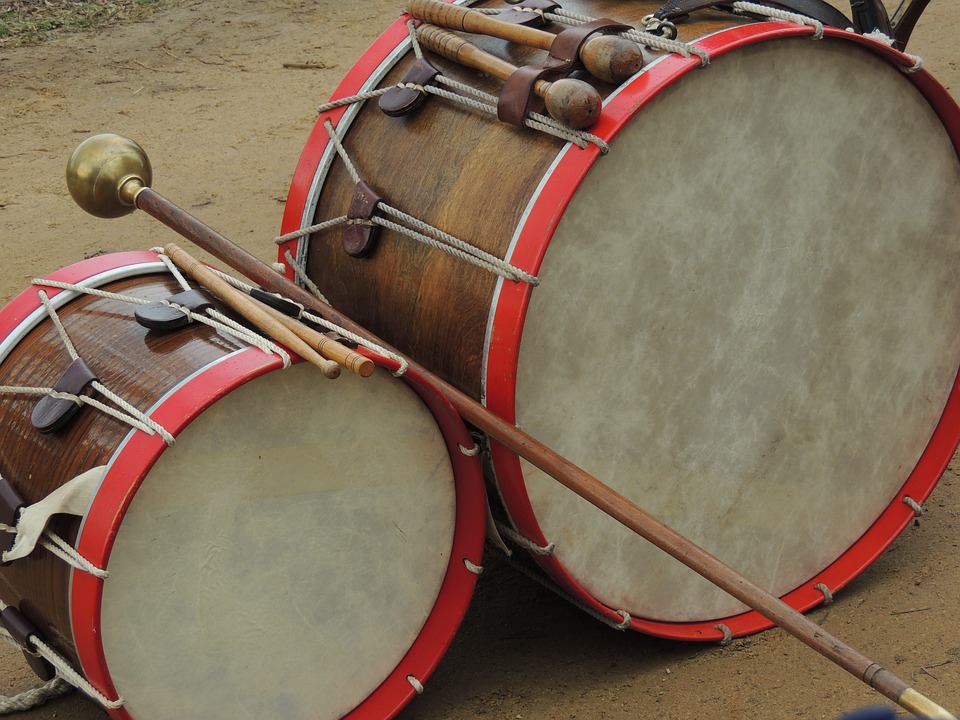
Avenue of Betrayal is set in Washington City (Washington DC) in 1861. Union soldiers came to the capital to train. There were so many regiments camped in and around the city that citizens saw a sea of tents in every available field. Soldiers drilled daily so the sounds of marching feet, bugles, drums, and musketry permeated the atmosphere.

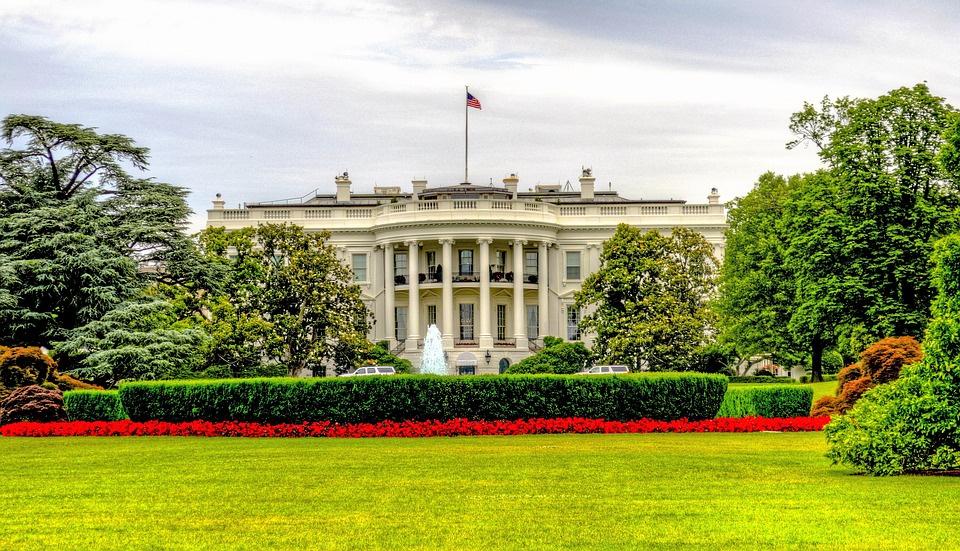
And there was a lot of spying for the Confederacy that happened within blocks of the White House.

Here’s a bit about the book:

Betrayed by her brother and the man she loves …

whom can she trust when tragedy strikes?

Soldiers are pouring into Washington City every day and have begun drilling in preparation for a battle with the Confederacy. Annie Swanson worries for her brother, whom she’s just discovered is a Confederate officer in his new home state of North Carolina. Even as Annie battles feelings of betrayal toward the big brother she’s always adored, her wealthy banker father swears her and her sister to secrecy about her brother’s actions. How could he forsake their mother’s abolitionist teachings?

Sergeant-Major John Finn camps within a mile of the Swansons’ mansion where his West Point pal once lived. Sweet Annie captured his heart at Will’s wedding last year and he looks forward to reestablishing their relationship—until he’s asked to spy on her father.

To prove her father’s loyalty to the Union, John agrees to spy on the Swanson family, though Annie must never know. Then the war strikes a blow that threatens to destroy them all—including the love that’s grown between them against all odds.

Order your copy today on Amazon and other retailers!