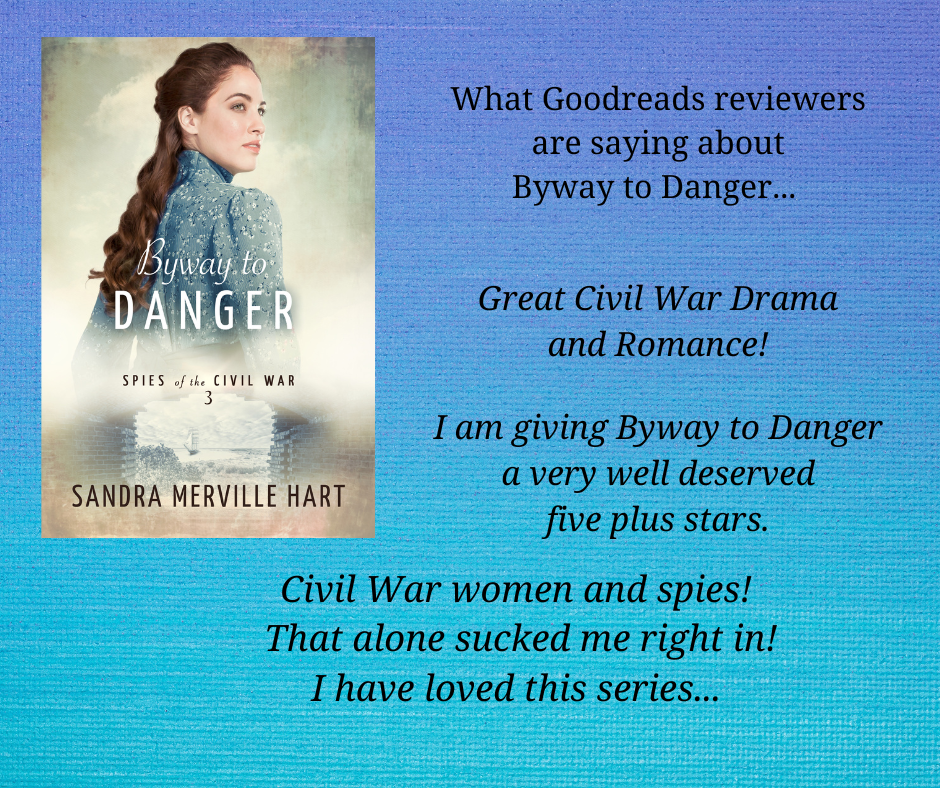
I’m thrilled to announce the release of Byway to Danger, Book 3 of my new “Spies of the Civil War” today, July 19, 2022!
Though the series is about a fictional family, there are actual historical spies who touch the stories.
Byway to Dangeris set in the Confederate capital of Richmond, Virginia, in 1862. Because Richmond was the capital of the Confederacy, the Union army was often threatening the city. One might suppose that all of Richmond’s citizens supported the Confederacy, yet there were a lot of Union supporters and Union spies in the capital.
Here’s a bit about the book:
Everyone in Richmond has secrets. Especially the spies.
Meg Brooks, widow, didn’t stop spying for the Union when her job at the Pinkerton National Detective Agency ended, especially now that she lives in the Confederate capital. Her job at the Yancey bakery provides many opportunities to discover vital information about the Confederacy to pass on to her Union contact. She prefers to work alone, yet the strong, silent baker earns her respect and tugs at her heart.
Cade Yancey knows the beautiful widow is a spy when he hires her only because his fellow Unionist spies know of her activities. Meg sure didn’t tell him. He’s glad she knows how to keep her mouth shut, for he has hidden his dangerous activities from even his closest friends. The more his feelings for the courageous woman grow, the greater his determination to protect her by guarding his secrets. Her own investigations place her in enough peril.
As danger escalates, Meg realizes her choice to work alone isn’t a wise one. Can she trust Cade with details from her past not even her family knows?
Today’s post is by an author friend, Bettie Boswell. She shares some historical background for her new release. I’m looking forward to reading it. Welcome back, Bettie!
Canals played an important role in United States history, bringing goods to parts of the land where large ships could not pass. The completion of the Ohio Miami Canal took place right before trains began to compete with commercial trade. Before trains took over the majority of that business, people enjoyed pleasant trips on passenger canal boats or shared a smelly ride with livestock, freight, and mail on packet boats traveling the waterway, spanning from the Cincinnati area to Toledo, Ohio.
Though the popularity of doing business on the canal faded in the 1840s, the route provided a physical map for those seeking freedom from slavery. The towpath became a popular guidepost for those following the Underground Railroad. Once escapees made it to the Toledo area, there were people who provided transportation to Detroit, Michigan, where the span between Canada and the United States narrowed enough for a short journey to a safe country. Toledo Metroparks still maintains a short stretch of the canal at lock 44 in Grand Rapids, Ohio. I had the privilege to ride on the Volunteer canal boat recently and was entertained with storytelling re-enactors.
In my latest book, Free to Love, I included several scenes that involve riding a canal boat and using it as a trail for the Underground Railroad. Ohio was a free state but it was not always a safe state so the journey north continued to be hazardous even after people reached states that supported freedom. Slave catchers lived as far north as Maumee, Ohio and would sometimes send people into slavery even if they had papers saying they were not bound in slavery. Helping someone on their way to freedom might mean imprisonment for a good-hearted Ohioan of any race.
About Bettie
Bettie Boswell has always loved to read and write. That interest helped her create musicals for both church and school and eventually she decided to write and illustrate stories to share with the world. Her writing interests extend from children’s to adult and from fiction to nonfiction. Free to Love is a prequel to her first novel, On Cue.
Pitch-As Ginny writes her musical, inspiration comes from journals about Missy and her maid, bound together by slavery and blood, journeying toward freedom and love. Early and her mistress have always been together. When Missy’s family forces Early into an arranged marriage with George, also held in slavery, their relationship will be forever changed. Will Early and George find a love that can survive the trials of a forced marriage and perilous journey?
I’m thrilled to announce a project that I’ve been working on with several others this spring. Mark Prasek of PJNET.tv is currently creating a collection of audio stories and I’m so happy my story “Someone on the Inside” is now in his library.
My eleven-minute story is based on my book Avenue of Betrayal, Book 1 in the “Spies of the Civil War” series. The first scene gives background to the story not found in the book. The second scene comes from the book yet is told from another character’s perspective, providing fresh insights.
Here’s a bit about story:
When Lieutenant Christopher Farmer enlists the help of a loyal Irish officer to spy on the wealthy Hiram Swanson at his weekly parties where secrets are passed to Confederate spies, he has no idea the dilemma the Irish man faces.
Mark Prasek is the narrator and the story’s producer. He told me he hasn’t had a day off in years and I believe him! Here’s the goal of PJNET.tv: Our mission is to provide a platform for everyday Christians to share their walk with Christ.
I selected Kevin E. Spencer, Eddie Jones, and Tim Jones (no relation) for my other voice parts.
Kevin Spencer is the author of North Carolina Expatriates, an enlightening and insightful daily look at North Carolina’s history, found here. He’s also a huge Civil War buff. We met at a writers conference where our love for Civil War history made us instant friends. He and his lovely wife, Charlotte, and grandson, Caleb, took my husband and me on a tour of Franklin, Tennessee, and the surroundings, as part of my research of the Battle of Franklin for my novel, A Musket in My Hands. I thought of Kevin immediately for the part of General Winfield Scott. He graciously consented. Thanks, Kevin, for adding your Southern voice to this story!
Eddie Jones was another natural choice for this reading. This publisher at Lighthouse Publishing of the Carolinas (currently Iron Stream Media) accepted my first Civil War book, A Stranger on My Land. He’s interested in this era of American history, but it hasn’t captured his imagination like the pirates he writes of in his teen novels. He also writes mysteries specifically geared for middle grade/teen boys. Check them out! Thanks for portraying Sergeant-Major John Finn, Eddie!
I’ve been friends with Tim Jones for years. He’s a gifted actor locally in Ohio. I’ve been privileged to participate in church dramas with him, and I’ve marveled that he can redo a scene several times in succession and still put the same emotion and facial expressions to bring the words to life. Thank you, Tim, for sharing your talent with us!
Although Book 3, Byway to Danger, of my current “Spies of the Civil War” series doesn’t release until July 19, 2022, I wanted to share with you what’s coming next!
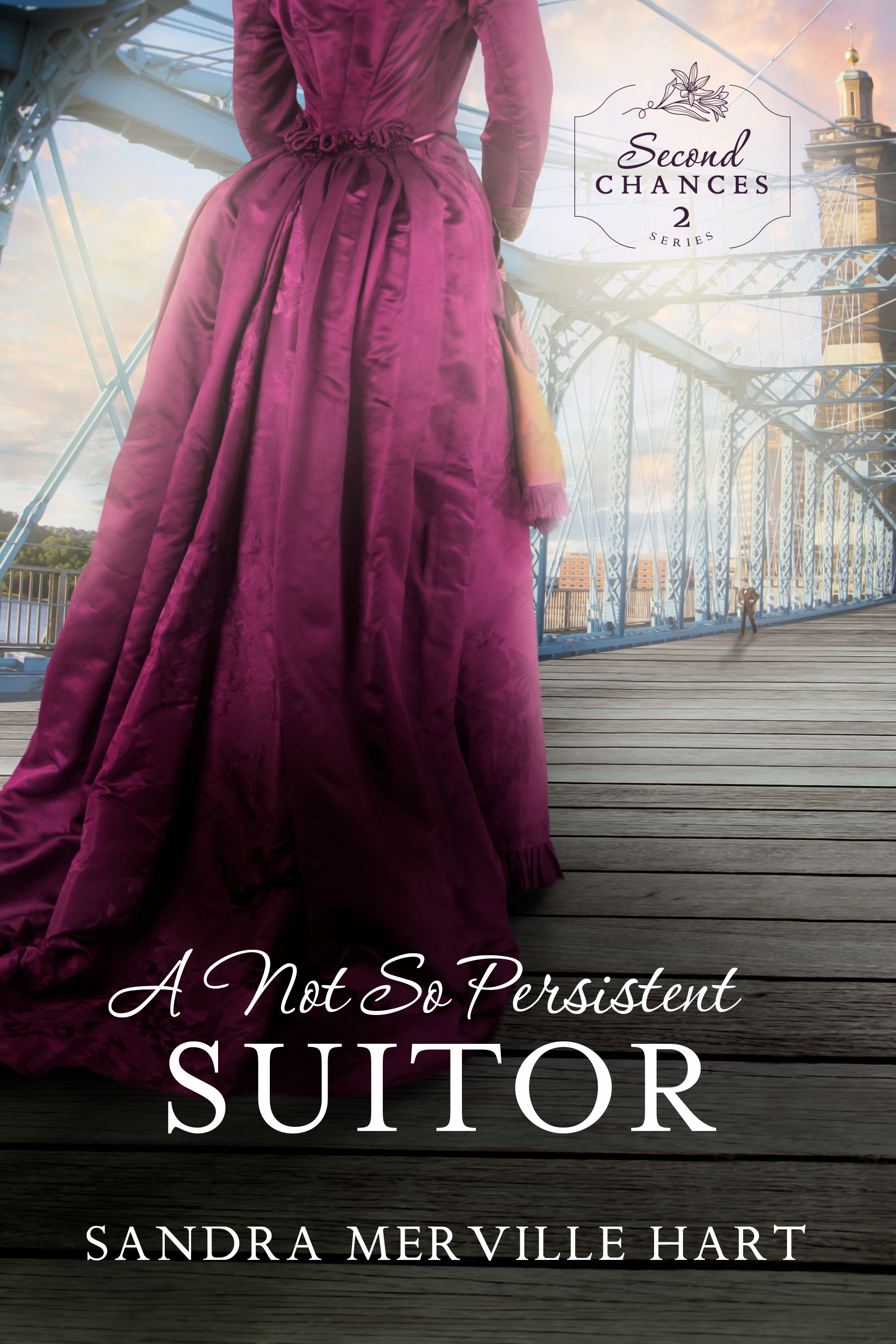
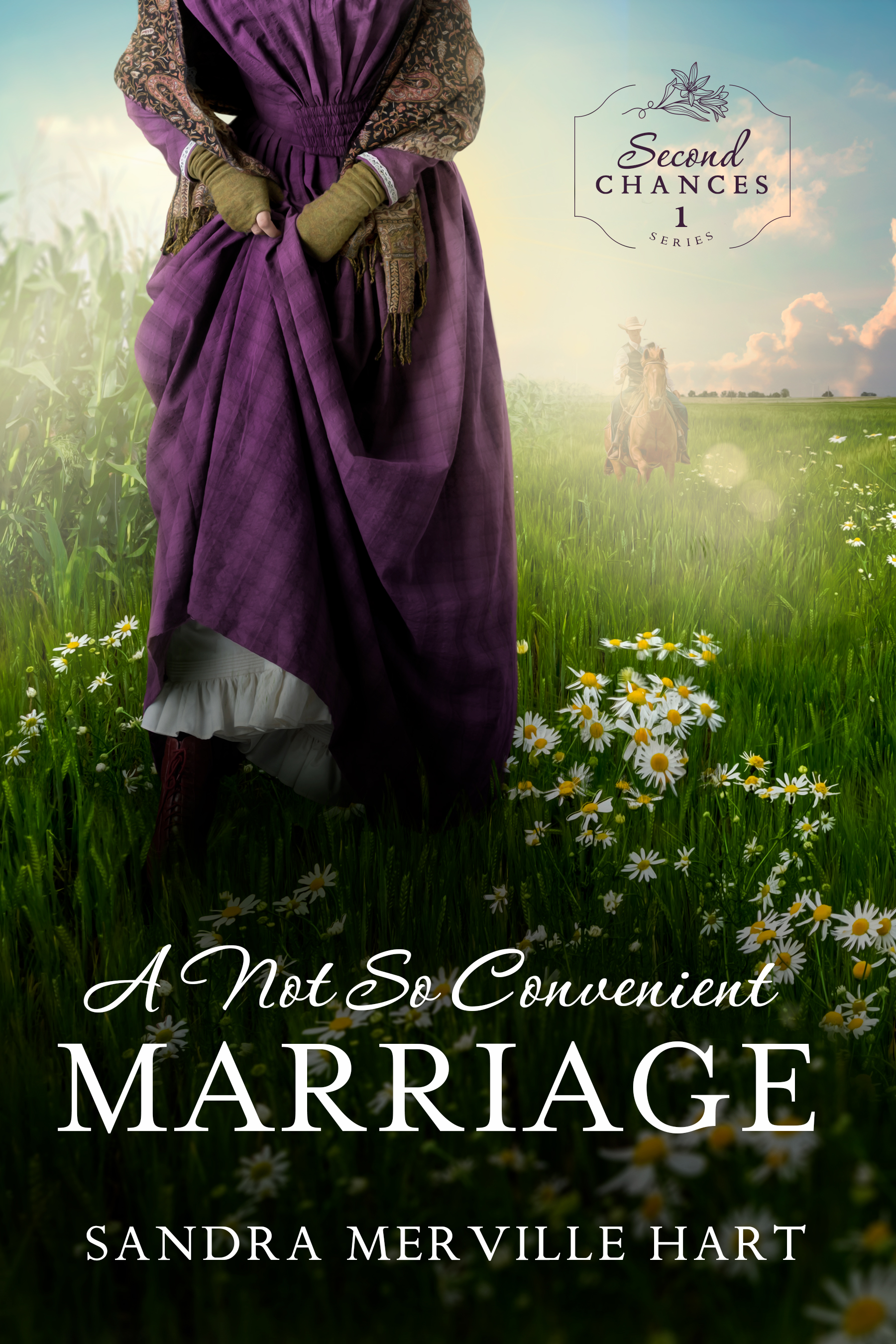
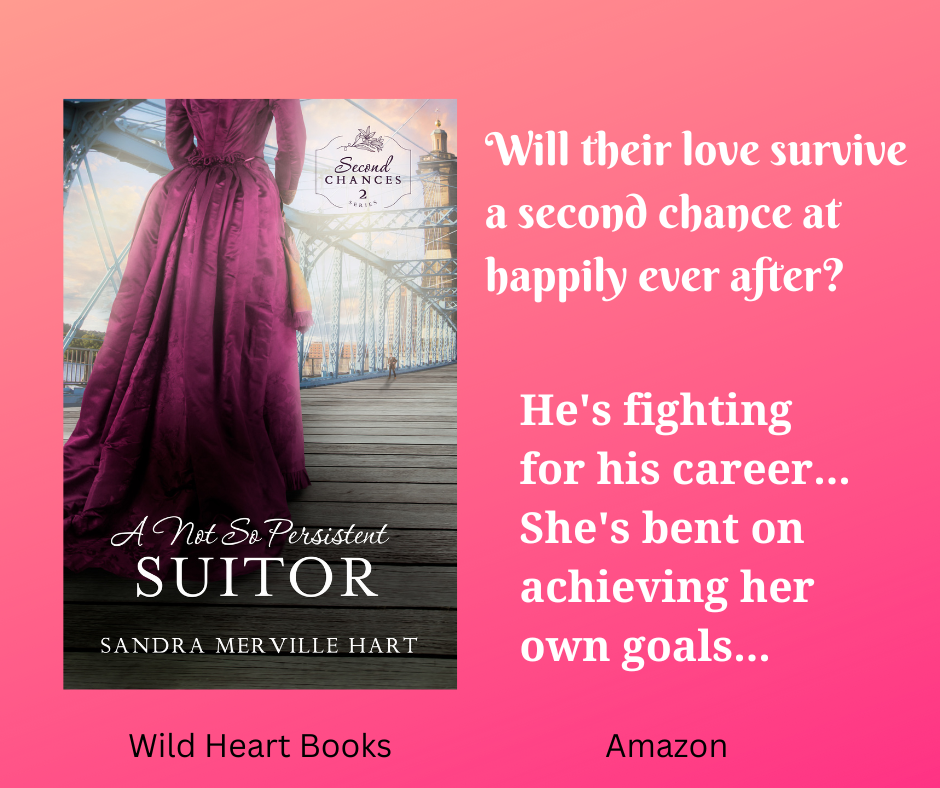
I’ve just learned from my publisher, Wild Heart Books, A Not So Convenient Marriage, Book 1 of “Second Chances” series, will release on November 8, 2022!
That will be my fourth book release for the year and I’ve been excited about every book!
Here’s a bit about the book:
A spinster teacher…a grieving widower…a marriage of convenience and a second chance with the man she’s always loved.
When Samuel Walker proposes a marriage of convenience to Rose Hatfieldso soon after the death of his wife, she knows he doesn’t love her. She’s loved him since their school days. Those long-suppressed feelings spring to life as she marries him. She must sell her childhood home, quit her teaching job, and move to a new city.
Marrying Rose is harder than Samuel expected, especially with the shadow of his deceased wife everywhere in his life. And he has two young children to consider. Peter and Emma need a mother’s love, but they also need to hold close the memories of their real mother as they grieve her loss.
Life as Samuel’s wife is nothing like Rose hoped, and even the townspeople, who loved his first wife, make Rose feel like an outsider. The work of the farm draws the two of them closer, giving hope that they might one day become a happy family. Until the dream shatters, and the life Rose craves tumbles down around them. Only God can put these pieces back together, but the outcome may not look anything like she planned.
Wounded Civil War soldiers often went to temporary hospitals set up in tents, homes, churches, public buildings, and barns during and immediately after battles. Many ended up on trains headed to the capital cities—Washington DC in the North and Richmond, Virginia, in the South.
In Richmond, barracks originally intended to be comfortable winter quarters for up to 10,000 Southern soldiers were converted into Chimborazo Hospital in the fall of 1861. One-story wooden building covered a plateau at the eastern end of Broad Street and overlooked the scenic James River. A deep gulch called Bloody Run separated Chimborazo Hill from the affluent Church Hill neighborhood.
Samuel P. Moore, chief surgeon at Chimborazo Hospital, appointed James B. McCaw as physician. The hospital’s 150 one-story, white washed buildings became patient wards and were arranged in rows. A wide avenue separated each row to provide plenty of fresh air. Each building could care for 40 – 60 patients each. In addition to the one-story buildings, patients were also housed in 100 tents. At Chimborazo, wounded soldiers were housed with others from their state, such as Virginia, Georgia, and North Carolina.
Under McCaw’s management, the hospital was a well-organized one. It owned hundreds of goats and milk cows that grazed nearby. Canal boats brought fresh produce from the country. There was also a large garden on a nearby farm. The hospital had its own kitchens, bake houses, 5 ice houses, guard house, bathhouse, chapel, and a large stable. Blacksmith, carpenter, and apothecary shops were also located on the 40-acre plateau.
During the Civil War, Richmond had 44 hospitals of various sizes. Winder Hospital, located at Richmond’s western border, was almost as large as Chimborazo.
Unfortunately, even all these weren’t always enough to care for the wounded that poured into the city after a battle. So many wounded came into the city in late June/early July of 1862 that Chimborazo erected tents for them. It wasn’t enough space, so the patients were laid around the tents.
Almost 78,000 Confederate soldiers were cared for at Chimborazo Hospital. Of these, between 6,500 – 8,000 died.
In Boulevard of Confusion, Book 2 in my “Spies of the Civil War” series, two cousins volunteer at Chimborazo Hospital. The soldiers they care for are from Tennessee.
In Boulevard of Confusion, Book 2 in my “Spies of the Civil War” series, two people in love—one supporting the North, one supporting the South—struggle to rise above their differing loyalties.
In my book, the hero is a Virginian loyal to the South. Though Jay hates slavery, he cannot turn against his state. His job at Tredegar Ironworks supplies the Confederate army with artillery. They develop new weapons and technology, such as submarines, that must be kept secret even from Richmond residents.
Our heroine is from the North. Bea has Southern ties and her brother, a Confederate officer, was recently released from a prison camp. Bea’s understanding of both sides of the conflict tosses her into confusion, especially in light of her growing feelings for Jay.
Part of my research for this novel involved a trip to Richmond museums. One display in particular at the American Civil War Museum at Historic Tredegar made me want to do a little dance. (If you followed me around on my museum visits, you’d witness my enthusiasm for historical people and events and how they impact my stories. Perhaps you share my love of history. 😊)
Anyway, this particular display was a painting of Julia Ann Mitchell, who lived in Richmond at the start of the Civil War. She was from a well-to-do family that traveled often. On one of these trips, she met and fell in love with Frederick Coggill, a New York City resident. Though they loved one another, the couple was divided in their loyalties.
Sadly, Julia’s brother, who fought for the Confederacy, was killed in battle. This probably added to the conflict between Julia and Frederick.
I’m happy to say that the couple seemed to enjoy a happy ending, for they were married in 1863.
I didn’t yet know my characters when I read this display, for the stories ferment in my imagination as research reveals the history. I tucked it away in my mind and it later inspired me.
Boulevard of Confusion isn’t Julia’s and Frederick’s love story. Not at all. It’s simply that history’s record of them overcoming their differing loyalties to marry proves that it happened. That’s all I needed to know.
Avenue of Betrayal, Book 1,is set in the Union capital of Washington City (Washington DC) in 1861, where a surprising number of Confederate sympathizers and spies lived. Boulevard of Confusionis set in Richmond, the Confederate capital in 1862. Actual historical spies touch the lives of our fictional family.
Through both real and fictional characters, this series highlights activities spies were involved in and some of the motives behind their decisions.
I invite you to read both Avenue of Betrayal and Boulevard of Confusion. And please watch for Book 3, Byway to Danger, which will soon follow!
Back Cover Blurb for Boulevard of Confusion
In times of war, is anything as it seems?
Her aunt’s invitation to Richmond is just the change Beatrice Swanson needs after her brother’s release from a Union prison. Bea’s father agrees to the trip with a condition—one that tosses her emotions into swirling confusion.
Though Jay Nickson wants to serve his country as a Confederate soldier, his work is too important to the government. Bea’s interest in his job, which includes secrets that would benefit the Union, arouses his suspicions. Is she spying for the North? His growing feelings for her are hard to squelch.
Though she participates in activities to benefit Confederate soldiers, Bea struggles with her own loyalties and her father’s demands. Where does her cousin, Meg, go on her solitary errands? Bea’s own growing love for Jay, a Southerner, only adds to her confusion. Tensions escalate in Richmond as the Union army approaches, drawing her into more secrecy. Where does her allegiance lie? And how will she be forced to prove it?
Nothing in war is simple…especially when the heart becomes entangled.
I’m thrilled to announce that Boulevard of Confusion, Book 2 of my new “Spies of the Civil War” releases today, May 10, 2022!
Though the series is about a fictional family, there are actual historical spies who touch the stories.
Boulevard of Confusionis set in the Confederate capital of Richmond, Virginia, in 1862. Citizens establish new hospitals to care for wounded Confederate soldiers and new prisons to house Union prisoners. The city’s population swells and Southern citizens don’t know who to trust—and rightly so, for many Union spies now roam the streets and sleep in Richmond hotels.
Here’s a bit about the book:
In times of war, is anything as it seems?
Her aunt’s invitation to Richmond is just the change Beatrice Swanson needs after her brother’s release from a Union prison. Bea’s father agrees to the trip with a condition—one that tosses her emotions into swirling confusion.
Though Jay Nickson wants to serve his country as a Confederate soldier, his work is too important to the government. Bea’s interest in his job, which includes secrets that would benefit the Union, arouses his suspicions. Is she spying for the North? His growing feelings for her are hard to squelch.
Though she participates in activities to benefit Confederate soldiers, Bea struggles with her own loyalties and her father’s demands. Where does her cousin, Meg, go on her solitary errands? Bea’s own growing love for Jay, a Southerner, only adds to her confusion. Tensions escalate in Richmond as the Union army approaches, drawing her into more secrecy. Where does her allegiance lie? And how will she be forced to prove it?
Nothing in war is simple…especially when the heart becomes entangled.
Boulevard of Confusion, Book 2 of my new “Spies of the Civil War” series releases on May 10, 2022. Here’s a bit of the historical background for the story leading up to its release.
Though the series is about a fictional family, there are actual historical spies who touch the stories.
Boulevard of Confusion is set in Richmond, Virginia, the capital of the Confederacy in 1862. With its Southern setting, one might imagine all the citizens supported the Confederates. Surprisingly, a number of Union spies and Union supporters—called Unionists—lived in Richmond.
Just as the historical Confederate spy Rose O’Neal Greenhow played a part in Avenue of Betrayal Book 1, her story also touches the characters in Boulevard of Confusion Book 2.
Rose O’Neal Greenhow was perhaps the most famous female Confederate spy who lived in Washington DC when the Civil War began. She agreed to send messages based on a cipher. She built up a spy network of fifty people, the largest of the war.
Rose learned battle plans for Bull Run and passed this vital information to Confederate General Beauregard. The First Battle of Bull Run was a Confederate victory.
She was caught and imprisoned at Washington’s Old Capitol prison. The Federals decided to send her South.
On June 4, 1862, she arrived in Richmond, where she was taken to the best hotel. Confederate President Jefferson Davis called on her the next day, saying, “But for you there would have been no battle of Bull Run.” Rose wrote that his words made up for all she’d endured.
The following year President Davis sent her to Europe. She took letters from him to France and England. She received money from them to aid the South.
In October 1, 1864, Rose returned on the Condor, a blockade runner. Unfortunately, the USS Niphon, a Union gunboat, came close to their position on Cape Fear River. While Confederate soldiers from nearby Fort Fisher fired on the Union gunboat, Rose asked the captain for a lifeboat for herself and two other Confederate agents. Two hundred yards of rough waters were between the boat and the shore. Despite his initial refusal, she convinced the captain to provide a boat.
A powerful wave overturned the lifeboat. They swam for shore. Unfortunately, Rose had a bag of gold sovereigns tied around her waist underneath a heavy silk dress. Though she was a good swimmer, she drowned due to the extra weight while her companions made it to safety.
Her body washed ashore the next day. A Confederate soldier found the bag of gold and took it. A search party later found the body. When the soldier discovered Rose’s identity, he returned the sovereigns.
She was buried in Oakdale Cemetery in Wilmington with full military honors.
Rose’s story touches our fictional family again when she arrives in Richmond in June of 1862.
I’m often asked where ideas for my stories originate. That answer varies because inspiration comes from unexpected sources. Searching for inspiration seems to make it more elusive. Story ideas usually happen when I’m doing something unrelated to my books, like visiting a museum or historical home while on vacation.
Ideas for this series stemmed from research for a “Civil War Women” series of articles I wrote for my blog. There are many women from the North and South featured in that series—and many more that deserve recognition. What surprised me was the number of known female spies from both sides. It’s likely that many others either didn’t seek praise after the war or feared retribution and never revealed their activities.
Rose Greenhow, a Confederate spy living in Washington DC (Washington City, as it was called at that time) in 1861, created an impressive spy network. Coded messages were sent on a “Secret Line.” Several couriers in a chain passed on messages in common places such as docks, taverns, and farmhouses.
Rose’s spy network from Boston to New Orleans was the largest in the war—48 women and 2 men.
Allan Pinkerton, head of Lincoln’s Intelligence Service, was tasked with finding Confederate spies and he placed Greenhow under surveillance.
She was arrested in August of 1861.
Though the series is about a fictional family, there are actual historical spies who touch the stories. Rose is one of them.
Avenue of Betrayal is set in Washington City (Washington DC) in 1861, where a surprising number of Confederate sympathizers and spies lived.
Through both real and fictional characters, this series will highlight activities spies were involved in and some of the motives behind their decisions.
I invite you to read Avenue of Betrayal and the rest of the series that will soon follow. I’d love to know what you think!
Back Cover Blurb for Avenue of Betrayal
Betrayed by her brother and the man she loves …
whom can she trust when tragedy strikes?
Soldiers are pouring into Washington City every day and have begun drilling in preparation for a battle with the Confederacy. Annie Swanson worries for her brother, whom she’s just discovered is a Confederate officer in his new home state of North Carolina. Even as Annie battles feelings of betrayal toward the big brother she’s always adored, her wealthy banker father swears her and her sister to secrecy about her brother’s actions. How could he forsake their mother’s abolitionist teachings?
Sergeant-Major John Finn camps within a mile of the Swansons’ mansion where his West Point pal once lived. Sweet Annie captured his heart at Will’s wedding last year and he looks forward to reestablishing their relationship—until he’s asked to spy on her father.
To prove her father’s loyalty to the Union, John agrees to spy on the Swanson family, though Annie must never know. Then the war strikes a blow that threatens to destroy them all—including the love that’s grown between them against all odds.
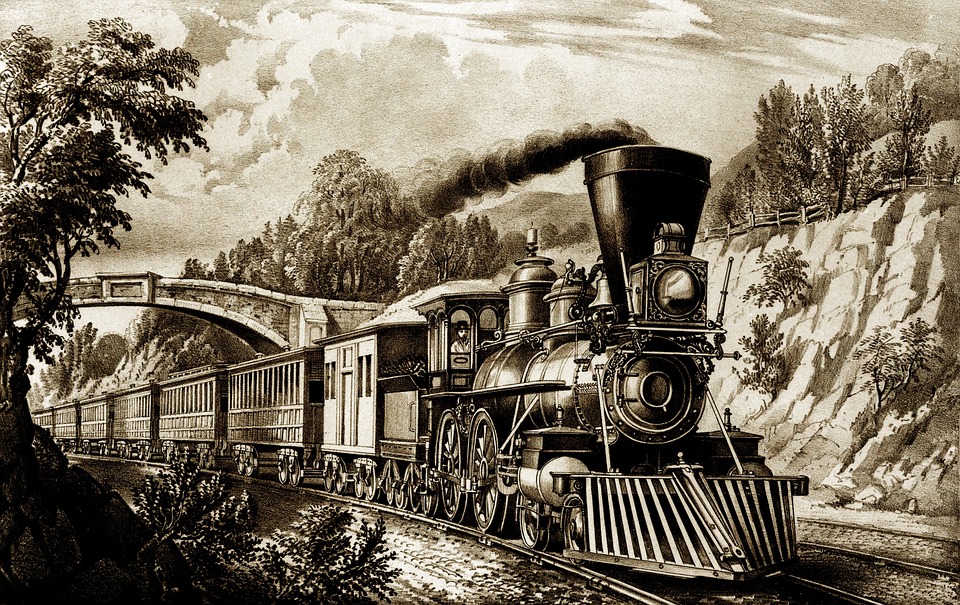
Asa Whitney, a New York merchant, planted the idea of a transcontinental railroad when he petitioned Congress for federal funding of a sixty-mile strip in 1845, but it wasn’t until Theodore D. Judah caught the vision that things began to happen. Judah believed the Donner Pass was the perfect area for the railroad to pass through the Sierra Nevada mountains, and, as the engineer of the Sacramento Valley Railroad, he wanted to build it.
He brought Leland Stanford, Charles Crocker, Collis P. Huntington, and Mark Hopkins in on the project, leading to the establishment of Central Pacific Railroad Company of California.
Congress passed the first Pacific Railway Act on July 1, 1862. It stated the Union Pacific was to start in Omaha, Nebraska, and build toward the west. The Central Pacific started in Sacramento, California, and built toward the east to meet them roughly halfway.
The second Pacific Railway Act (July 2, 1864) doubled the land grants to 12,800 acres for every mile of track built. They also received $48,000 in government bonds for each mile. This increased the competition between the two companies.
The Civil War hampered Union Pacific’s efforts to build. Though they began in December of 1863, little was accomplished for the remaining two years of the war.
The western team began about a month before. Sadly, the man who had laid so much groundwork for the project didn’t see it to completion. Judah died of yellow fever in November of 1863, shortly after Central Pacific pounded the first spikes.
The Sierra Nevada mountains slowed Central Pacific’s progress. They hired Chinese workers for this grueling task. Nine tunnels were blasted the mountains in order for the track to be laid.
Once the war ended, the Union Pacific made progress westward across the prairie. Civil War veterans and Irish immigrants had to cope with attacks from Native Americans. Cheyenne, Sioux, and Arapahoe were among the attacking tribes.
Union Pacific workers had their own difficulties to contend with—the Rockies. Even with these obstacles, the group from the east was in Wyoming in the summer of 1867, and had laid almost four times the miles of track as the western team.
Once Central Pacific made it to the other side of the Sierra Mountains in June, they made significant progress.
The competition was on now. Unfortunately, the workmanship suffered and some the sections were later rebuilt.
In March of 1869, President Ulysses S. Grant told the two companies to agree on a meeting point. They chose Promontory, Utah. A symbolic gold spike was driven in a special “Golden Spike Ceremony” on May 10, 1869. It linked both railroads, marking the completion of the Transcontinental Railroad.
The hero in my novel, Avenue of Betrayal, Book 1 of my “Spies of the Civil War” series, dreams of participating in building the Transcontinental Railroad. The fictional Union officer hopes that the war doesn’t last so long that he misses his opportunity. As you read in this article, Civil War veterans were used to build the railroad after the war ended. I was thrilled to use such an important part of our history in the story.