Iwo Jima Memorial

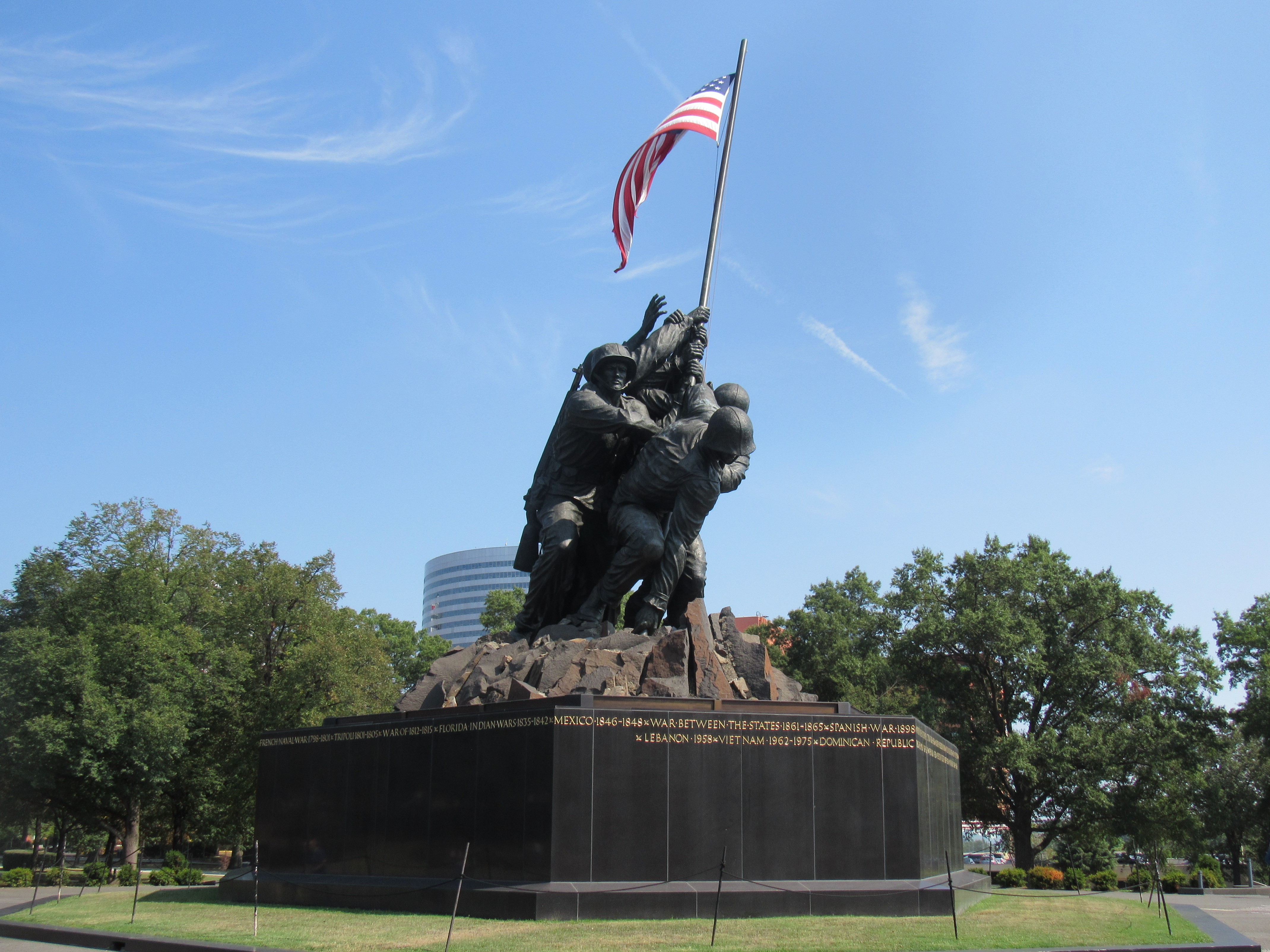
The World War II Battle of Iwo Jima between the U.S. Marines and the Imperial Army of Japan lasted five weeks, beginning in February of 1945. The Japanese under General Tadamichi Kuribayashi had camouflaged their artillery and at first caused significant casualties for the Marines under the command of Holland M. “Howlin’ Mad” Smith.

Over the next few days, about 70,000 U.S. Marines soon outnumbered the 21,000 Japanese forces. The battle eventually claimed the lives of nearly 7,000 Marines. The losses for the Japanese were far greater—only about 200 survived the battle.

Marines of the 28th Regiment, 5th Division, were ordered to capture Iwo Jima’s Mount Suribachi. About 10:30 am, a U.S. flag was raised on February 23, 1945—four days after the battle began. A larger flag was raised that afternoon. The afternoon flag raising was the image taken for the iconic photograph by Joseph Rosenthal, Associated Press.

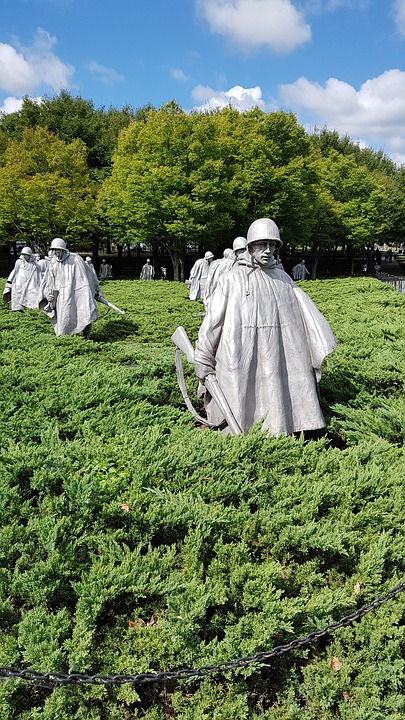
The photo inspired Sculptor Felix W. de Weldon to make a life size image that three of the six flag raisers—Ira Hayes, Rene Gagnon, and John Bradley—posed for. Sadly, the others were killed.

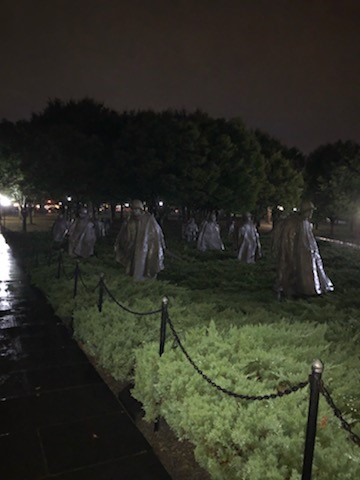
The Marine Corps War Memorial, also called Iwo Jima Memorial, was dedicated by President Dwight D. Eisenhower on November 10, 1954.

Because there were two actual historic flag raisings that day, doubt arose regarding the identity of one man in the photo. The Marines conducted an investigation. They discovered that though John Bradley had been one of the six men who raised the first flag, Private First Class Harold Schultz actually replaced him in the second flag raising.

The six flag raisers in the iconic photo are: Corporal Harlon Block, Private First Class Rene Gagnon, Private First Class Ira Hayes, Private First Class Harold Schultz, Private First Class Franklin Sousley, and Sergeant Michael Strank.

-Sandra Merville Hart

Sources

“History of the Marine Corps War Memorial,” NPS.gov, 2019/09/05 https://www.nps.gov/gwmp/learn/historyculture/usmcwarmemorial.htm.

History.com editors. “Iwo Jima,” History, 2019/09/05 https://www.history.com/topics/world-war-ii/battle-of-iwo-jima.

“USMC Statement on Iwo Jima Flag Raisers,” Marines, 2019/09/05 https://www.marines.mil/News/News-Display/Article/810457/usmc-statement-on-iwo-jima-flagraisers.


Pentagon Memorial

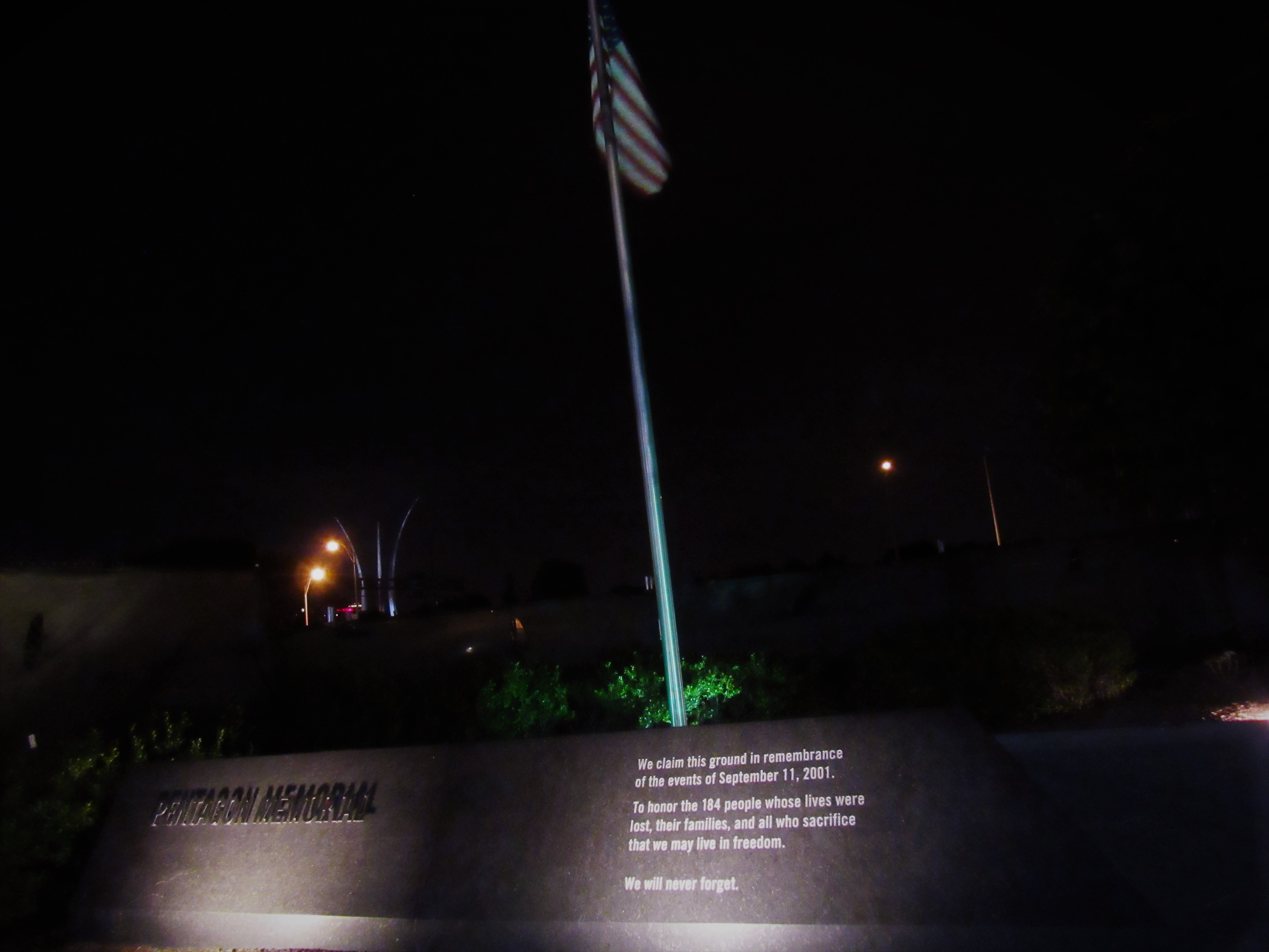
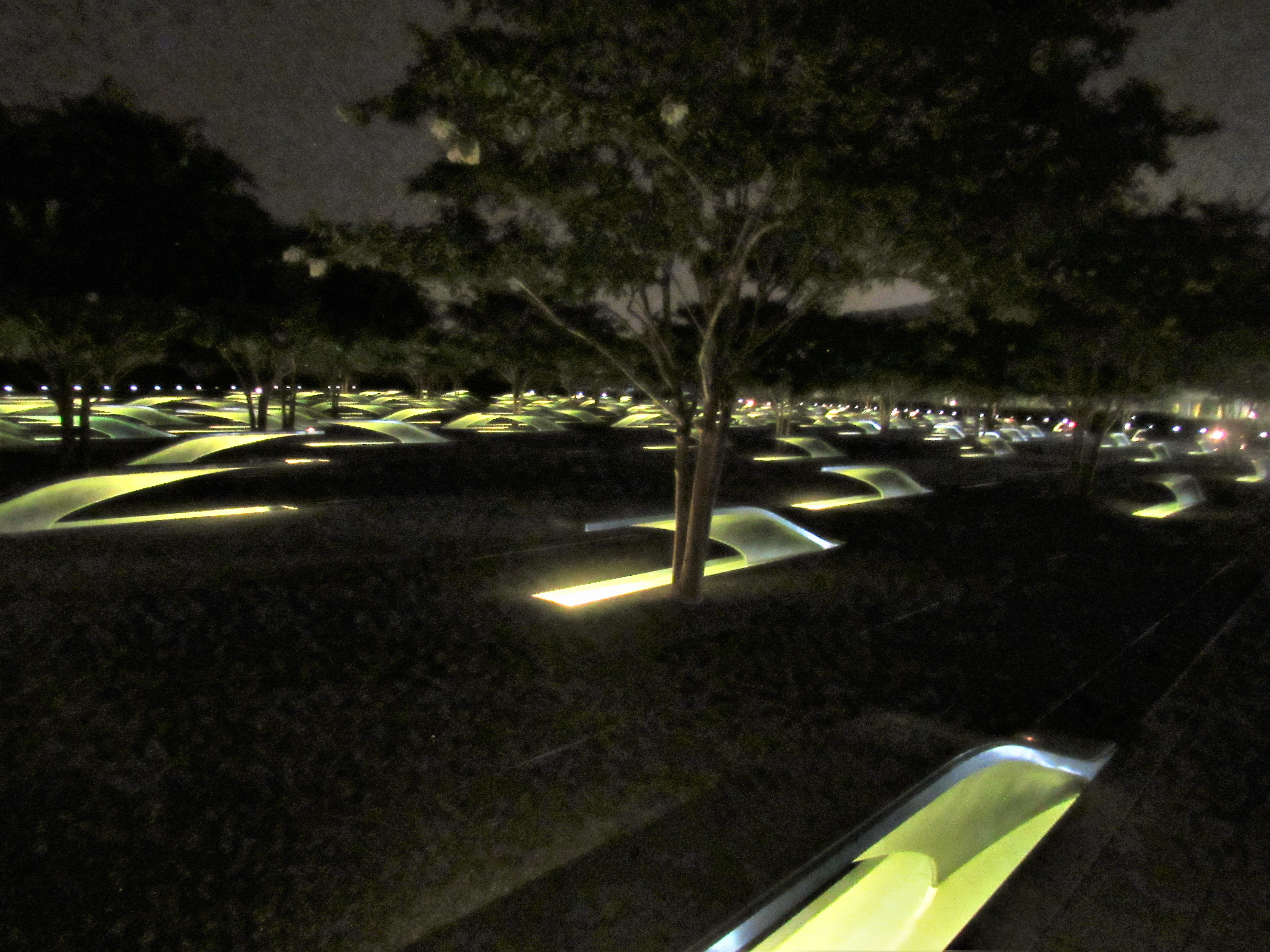
On a recent trip to Washington, DC, I visited the Pentagon Memorial. It was late in the evening and there were only a handful of visitors at the memorial. As I looked at the benches—184 of them—with lighted pools of water flowing underneath, I was struck once again by the tragedy of September 11, 2001.

No American alive that day can forget its horror. Four commercial airplanes were hijacked in coordinated attacks on specific targets and tragic loss of innocent lives resulted.

Five hijackers boarded American Airlines Flight 77 to Los Angeles from Dulles International Airport that sunny morning. The flight, delayed 10 minutes, departed at 8:20 am with 58 passengers and a crew of 6. What the crew didn’t know was that armed hijackers were among the passengers.

While flying over eastern Kentucky, hijackers took control of the plane, possibly between 8:51 and 8:54 am. It’s believed that one of them piloted the plane. None of the radio messages sent to the pilot after that time were answered.

It crashed into the Pentagon at 9:37 am, bringing a tragic end to 184 innocent lives.

The Pentagon Memorial, in remembrance of those who died there, opened on September 11, 2008. Architects Julie Beckman and Keith Kaseman along with engineer Buro Happold designed the memorial in a timeline, from the youngest victim (Dana Falkenberg at 3) to the oldest victim (John D. Yamnicky at 71), both on Flight 77.

Victims’ names have been placed on cantilevered benches with pools of flowing water underneath, which are lit at night. The designers put a lot of thought into the placement of the benches. Visitors read the names of those who perished in the Pentagon with that building behind it. Names face the sky where the plane approached for those from Flight 77.

Beautiful Crepe Myrtles, 85 of them, will eventually grow to height of 30 feet, giving shade to the Memorial in future years.

The Age Wall starts at a height of 3 inches for the youngest victim and builds to 71 inches for the oldest.

It’s a beautiful, well-designed unique memorial.

May we never forget.

-Sandra Merville Hart

Sources

“Pentagon Memorial,” The National 9/11, 2019/09/05 https://pentagonmemorial.org/.

“Pentagon Memorial,” National Geographic, 2019/09/05 https://www.nationalgeographic.org/media/pentagon-memorial/.


Civil War Women: Rose O’Neal Greenhow, Confederate Spy

Rose O’Neal Greenhow lived in Washington D.C. when the Civil War began. When many other Southerners left, the widow remained with her eight-year-old daughter, Rose. Union Colonel Thomas Jordan had decided to resign the U.S. Army and fight for the South. Before he left the city, he asked Rose to be an agent. Spying to uncover troop movements and government communications gave her a significant way to serve the South. She agreed to send messages based on a cipher he provided.

Coded messages were sent on a “Secret Line,” which involved several couriers in a chain that passed on messages in common places such as docks, taverns, and farmhouses.

Rose’s spy network from Boston to New Orleans was the largest in the war—48 women and 2 men. She learned battle plans for Bull Run and passed this vital information to Confederate General Beauregard, leading to a Confederate victory at the First Battle of Bull Run.

Several other messages about Washington’s defenses and troop information were sent from Rose to Beauregard. Thomas A. Scott, Assistant Secretary of War, asked Allan Pinkerton, head of Lincoln’s Intelligence Service, to find Confederate spies and put Greenhow under surveillance.

About a month after the Battle of Bull Run, Pinkerton discovered incriminating evidence. The home was searched. Rose and her daughter were placed under arrest at her home. Because she still managed to get other secret messages out, they were moved to Washington’s Old Capitol prison. The Federals then decided to send her South.

On June 4, 1862, she arrived in Richmond, where she was taken to the best hotel. Confederate President Jefferson Davis called her the next day, saying, “But for you there would have been no battle of Bull Run.” Rose wrote that his words made up for all she’d endured.

The following year President Davis sent her to Europe. She took letters from him to France and England. She received money from them to aid the South.

In October 1, 1864, Rose returned on the Condor, a blockade runner. Unfortunately, the USS Niphon, a Union gunboat, came close to the Condor’s position on Cape Fear River. While Confederate soldiers from nearby Fort Fisher fired on the Union gunboat, Rose asked the captain for a lifeboat for herself and two other Confederate agents. Two hundred yards of rough waters were between the boat and the shore. Despite his initial refusal, she finally convinced the captain to provide a boat.

A powerful wave overturned the lifeboat. They swam for shore. Unfortunately, Rose had a bag of gold sovereigns tied around her waist underneath a heavy silk dress. Though she was a good swimmer, she drowned due to the extra weight while her companions made it to safety.

Her body washed ashore the next day. A Confederate soldier found the bag of gold and took it. A search party later found the body. When the soldier discovered Rose’s identity, he returned the sovereigns.

She was buried in Oakdale Cemetery in Wilmington with full military honors.

-Sandra Merville Hart

Sources

Monson, Marianne. Women of the Blue & Gray, Thorndike Press, 2018.

Winkler, H. Donald. Stealing Secrets, Cumberland House, 2010.

Zeinert, Karen. Those Courageous Women of the Civil War, The Millbrook Press, 1998.


Civil War Women: Mary Carroll, Missouri Confederate Supporter


Teenager Mary Carroll lived with her mother, sister, and brother, Dennis, in Pilot Grove, Missouri, at the beginning of the Civil War.

Although “Bleeding Missouri” had been a slave state in 1861, it voted to remain in the Union. Despite this, the state’s governor—a Southern supporter—offered guns and cannons to Confederate President Jefferson Davis. Union soldiers then seized the armory and the state’s capital to set up a Union government, creating great turmoil. Union troops arrested Missouri residents without charges. They took their horses and food.

Dennis Carroll was arrested in August of 1862 for trying to join the Confederate army. In March of 1863, he was released from an Alton, Illinois Federal prison.

Learning of Union plans to arrest a group of Missouri men intending to muster into the Confederate army, Mary rode through hard rain to warn them and lead them to safety.

In May of 1863, Dennis and a friend helped Confederate sympathizers raid a Federal militiaman’s home. After the Union man shot one of them, some set the home on fire. Though Dennis didn’t help set the fire, he was arrested, taken to Boonville, and sentenced to be shot to death.

Mary, 17, boarded with a family in Boonville to be near her younger brother. She sneaked a crowbar into him, at his request, with his lunch. His breakout attempt that night was unsuccessful.

Giving up meant her brother would die.  She then set to work on making a key patterned like the jail door key. After several attempts, she made an iron key. It took days.

In the meantime, the Federal government ordered all Cooper county women to take an oath of allegiance. Mary complied, after making sure that nothing she was doing to save her brother violated that oath.

She gave the key to her brother. Unfortunately, it was too short.

A young Union soldier proposed marriage to Mary. She agreed—if he helped her brother break out of prison. He let her see the jail key and she made an impression of it on a book. He took it from her, but didn’t know she’d made another impression. She then created another key.

Meanwhile, the men awaiting execution tied leather around an earlier key out of desperation. The bits of leather made the key fit and they broke out of jail.

Suspicion immediately went to Mary, who was arrested during the search for the fugitives. In a letter to her mother, she asked which key Dennis used to escape. Union soldiers found her letter. She was interrogated by General Dodge and Colonel Catherwood.

The colonel remembered Mary’s question about helping her brother before taking the oath—it saved her.

Released and back at home, her relief didn’t last. Dennis was apprehended and killed by Union soldiers. They forced Mary’s family from their home.

After the war, Mary married a Confederate soldier, Thomas Brooks, and had six children. She wrote of her experiences in The Secret of the Key and Crowbar.

-Sandra Merville Hart

Sources

Cordell, M.R. Courageous Women of the Civil War, Chicago Review Press, 2016.


Trail’s End set in Wild Western Town of Abilene, Kansas

Before I ever dreamed I’d pick up a pen again, my family took a vacation to Kansas to visit my brother and his family. We visited Abilene one afternoon. I learned a bit about the history of that wild western town … enough that I wanted to know more.

My sister-in-law has family ties to Abilene—another reason for my fascination. In fact, one of her ancestors was a friend of Wild Bill Hickok, who was marshal of Abilene in 1871, the year after our story. In 1870, Marshal Tom Smith insisted that the cowboys be disarmed. Storekeepers, saloon-keepers, and hotel owners were asked to post a sign and collect the guns of their customers. Marshal Smith knew what he was doing. He made the town a safer place. Sadly, he was killed later that year.

Stuart Henry’s Conquering Our Great American Plains was a great resource for my story. Henry lived in Abilene from 1868-1872 as a boy. I love finding treasures like this author’s book that allow me to take my readers back to 1870 Abilene, Kansas. What a gift.

When my editor approached me about writing a cowboy story set in the West, it did not take long for my imagination to take me back to Abilene. Who’d have guessed that a family vacation that took place before I decided to pursue a writing career would lead to a story?

I hope you enjoy traveling back to the Wild West with me as much as I love taking you there.

Sandra Merville Hart, from the Author’s Note in the book

This book is a collection of four novellas by Jennifer Uhlarik, Linda W. Yezak, Sandra Merville Hart, and Cindy Ervin Huff.

Sandra’s story in the collection is called Trail’s End. Here’s a bit about the story:

Trail’s End Blurb

Wade Chadwick has no money until his boss’s cattle sell, so he takes a kitchen job at Abby’s Home Cooking. The beautiful and prickly owner adds spice to his workday. Abby Cox hires the down-and-out cowboy even though the word cowboy leaves a bad taste in her mouth. Just as she’s ready to trust Wade with her heart, money starts to disappear … and so does her brother.


Available on Amazon 

Lighthouse Publishing of the Carolinas  Save money and use coupon code SandraMHart for a 20% discount on Lighthouse Publishing books!


The Cowboys Releases Today!!!


I’m thrilled to announce my latest release!

This is my first western book. I’m in Smitten Historical Romance Collection “The Cowboys” with three other talented authors—Jennifer Uhlarik, Linda W. Yezak, and Cindy Ervin Huff. How exciting!


Here’s a bit about our stories:

Healing Hearts by Cindy Ervin Huff

Lonnie Holt’s external scars remind him of his failures, his internal scars torment him. Genny Collins seeks safety at the ranch once owned by Lonnie’s uncle. When Lonnie and his brother arrive, sparks fly and distrust abounds. While Lonnie and Genny fight the love growing between them, his past haunts him, and her past pays them a visit.

Becoming Brave by Jennifer Uhlarik

When Coy Whittaker stumbles upon a grisly scene littered with bodies, he wants nothing more than to get his boss’s cattle out of Indian Territory. But when a bloodstained Aimee Kaplan draws down on him, his plans—his heart—screech to a halt.

Trail’s End by Sandra Merville Hart

Wade Chadwick has no money until his boss’s cattle sell, so he takes a kitchen job at Abby’s Home Cooking. The beautiful and prickly owner adds spice to his workday. Abby Cox hires the down-and-out cowboy even though the word cowboy leaves a bad taste in her mouth. Just as she’s ready to trust Wade with her heart, money starts to disappear … and so does her brother.

Loving a Harvey Girl by Linda W. Yezak

Eva Knowles can’t imagine why the local preacher doesn’t like Harvey Girls—women who work serving tables instead of finding a husband and falling in love. But if Eva can get the handsome and wayward cowboy Cal Stephens to join her in church, maybe the reverend will accept the girls. Or maybe she’ll forfeit her job for a husband, hearth, and home!

Pick up your copy today!

***For my newsletter recipients, the town of Abilene hired Tom Smith as marshal in 1870. Good luck in the drawing!

Reviews are always welcome!


Civil War Women: Maria Lewis, Former Slave and Union Soldier

Born around 1846, Maria Lewis lived with her family as slaves in Albemarle County, Virginia. When the 8th New York Cavalry came to the area during the Civil War in October of 1863, she disguised herself as a darkly-tanned white man and joined Company C of that regiment.

Maria mustered in as George Harris, who was a hero in Uncle Tom’s Cabin. In Harriet Beecher Stowe’s novel, Harris escaped slavery by posing as a Spanish gentleman.

Her first intentions were to remain a soldier long enough to travel North to freedom. Perhaps to her surprise, she discovered that she enjoyed army life. She skirmished, scouted, and fought with General Sheridan’s cavalry for the next eighteen months.

They burned houses and mills. They destroyed railroads and bridges.

On March 2, 1865, Maria rode with the cavalry at Waynesboro, Virginia, where five hundred of Confederate General Jubal Early’s soldiers were captured. The 8th New York seized seventeen battle flags before burning a section of the Shenandoah Valley.

Maria was part of the honor guard who presented the captured flags to Secretary of War Edwin Stanton. The soldiers were granted a month’s furlough.

From there Maria went to the family of 2nd Lieutenant Lewis V. Griffin, a comrade from her regiment. She introduced herself as George Harris to his sister, Julia Wilbur, and then confessed her true identity. She wanted to return to “womanly ways & occupations.”

Though surprised to meet a black woman who served as a Union cavalry soldier, Julia wrote in her diary that she helped Maria as she had helped many other freed slaves. Making plans to find her a job, Julia gave her a chemise, petticoat, and hoops.

Julia first wrote of meeting Maria on April 4, 1865. The last time she mentions her is an entry on Sunday, April 23rd. Her sister was giving Maria a lesson, possibly teaching her to read and write.

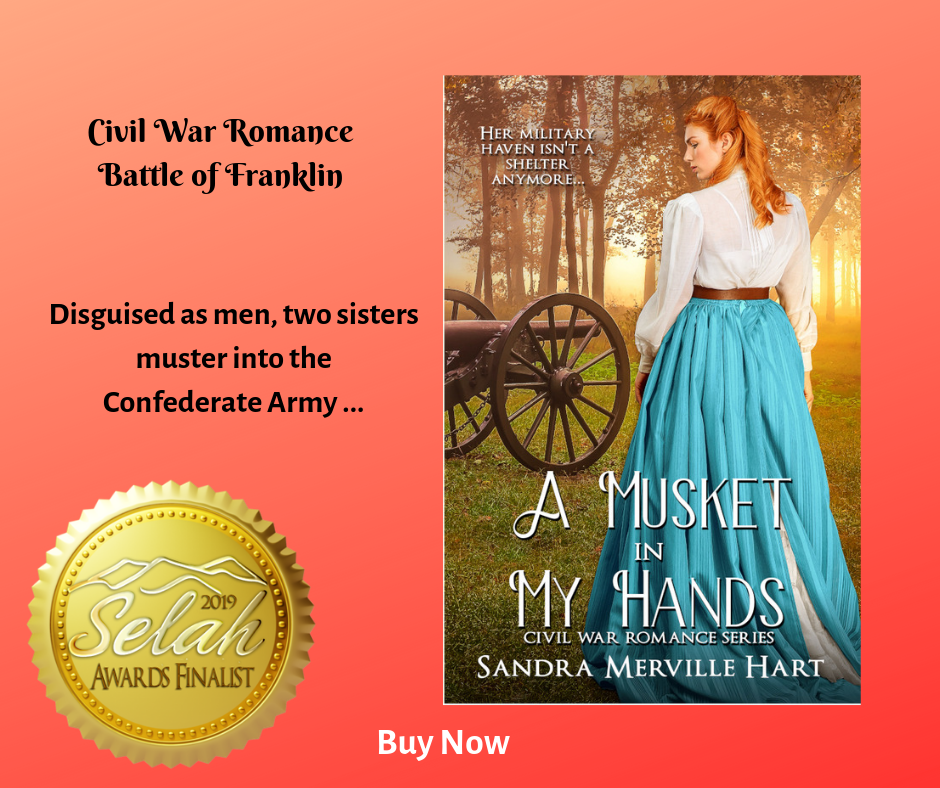
In my Civil War novel, A Musket in My Hands, two sister have no choice but to disguise themselves as men to muster into the Confederate army in the fall of 1864—just in time for events and long marches to lead them to the tragic Battle of Franklin.

-Sandra Merville Hart


Sources

Cordell, M.R. Courageous Women of the Civil War, Chicago Review Press, 2016.

“Maria Lewis (soldier),” Wikipedia, 2019/04/26 https://en.wikipedia.org/wiki/Maria_Lewis_(soldier).

Monson, Marianne. Women of the Blue & Gray, Thorndike Press, 2018.

Zeinert, Karen. Those Courageous Women of the Civil War, The Millbrook Press, 1998.


Civil War Women: Bettie Duvall, Confederate Spy

Washington D.C. resident Rose O’Neal Greenhow had been asked to discover troop movements and battle plans. She had information that Union troops had been ordered to attack Manassas. As a Confederate spy, she had a network of folks to deliver the coded message to Confederate General Beauregard. She gave the information to sixteen-year-old Bettie Duvall. (One source spelled her name “Betty.”)

On July 9, 1861, Bettie, a beautiful Southerner, disguised herself by selling buttermilk and sweet cream at the city market. She left the city, alone, on a farm cart. She rode past the 1st Massachusetts Infantry headquarters. A dirt lane led her to a friend’s plantation near Langley where she stayed for the night.

The next morning, she relinquished the farm cart. Dressed in a stylish riding habit, Bettie rode horseback to her intended destination—the village of Fairfax Court House. Manassas was ten miles from the village.

She met Confederate soldiers at an outpost near Vienna. At her request to speak with Brig. Gen. Milledge Bonham, they took her to his headquarters in Fairfax Court House. Beauregard had just taken over command, but Bonham was his top aide.

At first, Bonham refused to meet her. Upon learning that the beautiful woman was prepared to take the message to General Beauregard herself, he agreed to talk with her.

He recognized her “sparkling blue eyes, perfect features, glossy black hair” as a Southern lady from the spectator gallery at Congress. He agreed to forward on her message.

To his astonishment, she removed the combs from her hair knot. Shaking her beautiful hair loose, she untied a small silk package about the size of a silver dollar from the long strands and gave it to him.

Beauregard learned from the message that an attack was ordered within a week.

The advance warning led to a Confederate victory at the First Battle of Bull Run.

-Sandra Merville Hart

Sources

Monson, Marianne. Women of the Blue & Gray, Thorndike Press, 2018.

Winkler, H. Donald. Stealing Secrets, Cumberland House, 2010.

Zeinert, Karen. Those Courageous Women of the Civil War, The Millbrook Press, 1998.


Two Rivers by Deborah Sprinkle

Today’s post has been written by talented author and friend, Deborah Sprinkle. Her debut contemporary romantic suspense is a page turner! Welcome to Historical Nibbles, Deborah!

Together, the Mississippi and the Ohio Rivers create the arteries that feed the heart of our great nation. Both have played a major role in America’s history since its beginning, carrying the first explorers and the first pioneers, loaded with hopes and dreams. Today, barges ply their waters, loaded with coal and other major commercial goods. They’ve served as boundaries and as obstacles, as death traps and as lifelines.

They’ve played a part in every major conflict in our country. During the Civil War, control of the these mighty rivers became paramount. To do this, navies were needed, and in this regard, the industrial North had the advantage. Commander John Rodgers of the Union Navy ordered his ships to Cairo, Illinois, the confluence of the Ohio and the Mississippi. Constant patrolling of both waterways from this strategic location established Northern control to the point that Kentucky and Missouri remained neutral throughout the war.

More ships were built and the Mississippi ran red with the blood of our nation’s men as the North gained control of the river further south, culminating in the fall of Vicksburg in 1863.1 On April 9, 1865, Confederate General Robert E. Lee surrendered to Union General Ulysses S. Grant marking the beginning of the end to the conflict that pitted brother against brother, and took more American lives than any other war.

That’s when one of the most tragic river disasters in the history of our country happened. Two weeks later on April 27, the Sultana, a wooden steamboat, left St. Louis for New Orleans, her objective to pick up released Union soldiers and bring them home. Built to carry 376 passengers, she ended up with 2,137. She fought her way upriver, despite riding low in the water and nursing a patched boiler.  North of Memphis her luck ran out. Three of her four boilers exploded under the pressure of pushing against the current with so much extra weight. Loss of life was estimated at somewhere between 1,200 and 1,500 souls.

On the 150th anniversary of its sinking, a museum opened in Marion, Arkansas, memorializing the Sultana. Artifacts and pieces of the hull displayed were found in a field. The river’s course had changed by two miles since it went down.2

America started as colonies huddled on the east coast with a vast expanse of land to the west. With the help of the great rivers, we became territories and then states. We’ve fought for independence. We’ve fought for our borders. We’ve fought amongst ourselves. Each time, our rivers have been one of our most valuable resources. Ah, the tales they could tell.

In my debut novel, Deadly Guardian, my heroine knows a lot about rivers. She grew up in St. Louis, Missouri, and currently lives near Cincinnati, Ohio. Both are river towns. One is on the Mississippi and the other graces the shores of the Ohio. While she doesn’t live on the river, she does have a home on a lake nearby. And that body of water gets her into…well, I don’t want to give it away. You’ll just have to read it for yourself.

-Deborah Sprinkle

Sources

  1. Sam Smith. “Winning the West.” Civil War History The River War.  American Battlefield Trust. http://www.battlefields.org/learn/articles/river-war

2. “Sultana (steamboat).” Wikipedia.  en.wikipedia.org/wiki/Sultana_(steamboat)#Museum


About Deborah

Deborah Sprinkle is a retired chemistry teacher among other things. So it should come as no surprise that the protagonist in her debut novel, Deadly Guardian, is one as well. Mrs. Sprinkle is also co-author of a non-fiction book entitled Exploring the Faith of America’s Presidents.  She has won awards for her short stories, articles, and her latest work in progress. Mrs. Sprinkle lives in Memphis with her husband where she continues to be an ordinary woman serving an extraordinary God.

Deadly Guardian Blurb

When the men she dated begin dying, Madison Long must convince the police of her innocence and help them determine who has taken on the role of her guardian before he kills the only man she ever truly loved, Detective Nate Zuberi.

Madison Long, a high school chemistry teacher, looks forward to a relaxing summer break. Instead, she suffers through a nightmare of threats, terror, and death. When she finds a man murdered she once dated, Detective Nate Zuberi is assigned to the case, and in the midst of chaos, attraction blossoms into love. Together, she and Nate search for her deadly guardian before he decides the only way to truly save her from what he considers a hurtful relationship is to kill her—and her policeman boyfriend as well.

Amazon

Civil War Women: Kate Cumming, Confederate Nurse and Diarist

In the 1840s, Kate Cumming’s family emigrated from Scotland when she was a child, eventually settling in Mobile, Alabama.

Her mother and two sisters went to England when the Civil War started. Kate stayed in Mobile with her father. Her younger brother enlisted in the 21st Alabama Infantry as part of Ketchum’s Battery. Kate gathered hospital supplies to support wounded soldiers.

In 1862, Reverend Benjamin M. Miller’s speech encouraging women to serve in the hospitals stirred Kate. Inspired by this speech and Florence Nightingale’s example, Kate joined forty other women in Corinth, Mississippi, to nurse Battle of Shiloh wounded—despite her family’s objections.

She briefly returned home that summer yet yearned to continue nursing the soldiers. She traveled to Chattanooga with two other women to volunteer at Newsome Hospital. Her nursing help was eventually accepted.

In September of 1862, the Confederate government began allowing nurses to be paid. Kate enlisted in the Confederate Army Medical Department. Despite her personal sadness at watching soldiers die and battling poor hospital conditions, she worked as matron with Dr. Samuel Stout, medical director for Army of Tennessee, in various locations in Alabama, Tennessee, and Georgia.

As a matron, Kate managed hospital departments, nursed soldiers, foraged for supplies, cooked, sewed, wrote letters, and supervised other workers.

She also maintained a detailed diary. This honest account of day-to-day nursing tasks and the men she served also shows tragedies Southerners faced in increasing measure as the war progressed.

After the war, Kate published her diary, A Journal of Hospital Life in the Confederate Army of Tennessee from the Battle of Shiloh to the End of the War: With Sketches of Life and Character, and Brief Notices of Current Events During that Period.

The author’s introduction was written in 1865—before publication. Kate is bitter about treatment from the North after the war’s end and urges all to unite. Her hope in publishing her diaries is to show Northerners how all have suffered. She wants reconciliation.

-Sandra Merville Hart

Sources

Cumming, Kate. Edited by Harwell, Richard Barksdale. Kate: The Journal of a Confederate Nurse, Louisiana State University Press, 1959.

Hilde, Libra. “Kate Cumming,” Encyclopedia of Alabama, 2019/04/11 http://www.encyclopediaofalabama.org/article/h-1101.

“Kate Cumming,” National Park Service, 2019/04/11 ttps://www.nps.gov/people/kate-cumming.htm.

“Kate Cumming,” Wikipedia, 2019/04/11 ttps://en.wikipedia.org/wiki/Kate_Cumming.

Rohrer, Katherine E. “Kate Cumming (ca. 1830-1909).” New Georgia Encyclopedia. 08 June 2017. Web. 11 April 2019.