Civil War Women: Dorothea Dix, Superintendent of Female Nurses

Dorothea Dix traveled to Washington shortly after the Civil War began. Her federal appointment as Superintendent of Female Nurses bestowed on her the honor of being the first female in this high position.

Dorothea convinced Union military to allow women to serve as nurses. Once they agreed, she began recruiting her nurses.

She set high standards. Fearing that young, unmarried women might use the position to find a husband, she sought plain, older women and insisted on plain clothing.

The oversight of both the large nursing staff across many locations and administration of medical supplies such as bandages fell on Dorothea’s shoulders.

Many army surgeons were against having female nurses. Dorothea pushed for formal training for them.

About 3,000 females served in Union hospitals during the war. They did an admirable job and were a crucial part of caring for sick and wounded soldiers.

Louisa May Alcott, the beloved author of Little Women, was one of the Civil War nurses who served under Dorothea Dix. Though respected, it was Louisa’s opinion that the strict superintendent wasn’t well-liked. Most nurses avoided her.

Beyond Dorothea’s administrative skills, another reason people respected her is that she treated both Union and Confederate soldiers in military hospitals.

Her efforts to place female nurses in Union hospitals began paving the way for women to serve in the medical field.

-Sandra Merville Hart

Sources

“Dorothea Dix,” United States History, 2019/01/07 https://www.u-s-history.com/pages/h1092.html.

“Dorothea Lynde Dix,” History, 2019/01/07 https://www.history.com/topics/womens-history/dorothea-lynde-dix.

Norwood, Arlisha. “Dorothea Dix.” National Women’s History Museum. National Women’s History Museum, 2017. 2019/01/07.

Civil War Women: Rebecca R. Usher, Nurse

The Maine Camp and Hospital Association was established in 1862 to ensure that soldiers from Maine received the supplies donated for them from folks back home. Its members were ready to serve as nurses whenever needed.

In October of 1862, Almira Quinby invited Miss Rebecca Usher to work at U.S. General Hospital in Chester, Pennsylvania. Rebecca was to wear plain, sensible dresses. The only other qualification was “a common experience in nursing.”

The large hospital building used by surgeons and nurses had been a normal school. Nine hundred patients were cared for in barracks, which were divided into wards holding 60—70 patients each. Rebecca, in charge of one ward, felt as if she was in her element.

She wrote to her sister, Ellen Usher Bacon who worked with the Maine Camp Hospital Association, requesting tobacco and flannel shirts for the soldiers.

While working in Pennsylvania, Rebecca traveled to Washington with other nurses. Though she met Mrs. Lincoln, she wrote of her disappointment at not meeting President Lincoln.

The Chester hospital closed in April, 1863, and Rebecca returned to her home in Hollis, Maine. She didn’t return to nursing work until the winter of 1864. At City Point, Virginia, she and two other women lived in a log hut that Union soldiers built for them. The stockade, as Rebecca called the hut, contained three rooms: a reading room for soldiers; a cookhouse; and the nurses’ bedroom, which was also used for supply storage.

Twenty-eight barrels of potatoes were shipped from Baltimore the first week of February. Eight barrels of vegetables, frozen during shipping, had to be thrown away as inedible. Soldiers requested potatoes as if the vegetable was a treat. They roasted them in the reading room’s ashes.

After watching the men savor the luxury of roasted potatoes, Rebecca wrote home that it was worth sending the vegetables—even if a quarter of them were lost.

She remained at City Point until the war ended.

-Sandra Merville Hart

Sources

Moore, Frank. Women of the War, Blue Gray Books, 1997.

“Rebecca Usher, Civil War Nurse,” Maine History Online, 2018/01/06, https://www.mainememory.net/sitebuilder/site/2443/slideshow/1482/display?format=list&prev_object_id=3926&prev_object=page&slide_num=1.


Civil War Women: Elizabeth Mendenhall

Early in the Civil War, Cincinnati resident Mrs. Elizabeth Mendenhall began to visit sick and wounded soldiers in the hospitals. Cincinnati hospitals cared for wounded soldiers from the summer of 1861 through the end of the war and the important Ohio border city became a hospital center for the Union army under General Grant early in 1862.

Elizabeth worked as a nurse. She also actively sought donations from citizens for military patients, especially around Independence Day and Thanksgiving. The United States Sanitary Commission (USSC) appreciated her work as a nurse and allowed her access to their supplies to serve her patients.

Members of the Cincinnati chapter of the USSC helped in the creations of 8 hospitals as well as a soldiers’ home in the area. They also converted 33 steamboats into hospital ships.

Elizabeth also inspired Cincinnati residents to raise money for the USSC by hosting a Sanitary Fair patterned after one held in Chicago. She led a group of ladies in planning the Great Western Sanitary Fair.

She wrote to communities in the Northwest, appealing to all professions for donations to the fair. Money raised was to benefit sick and wounded soldiers.

The Great Western Sanitary Fair opened at the Mozart Hall in Cincinnati on December 21, 1863. General William S. Rosecrans attended. The event lasted through the holidays. A Grand Soiree and Promenade in the Ladies’ Bazaar ended the fair on January 4, 1864. Railroad and steamboat companies sold tickets at half fare, according to an advertisement.

The event was an outstanding success, earning $235,406 for the USSC.

After the fair ended, Elizabeth worked at the hospitals through the end of the war when Cincinnati military hospitals were disorganized.

-Sandra Merville Hart

Sources

Cincinnati Branch, U.S. Sanitary Commission, “Great Western Sanitary Fair,” in Ohio Civil War 150 | Collections Y Exhibits, Item #1749, http://www.ohiocivilwar150.org/omeka/items/show/1749 (accessed January 4, 2019).

“The Great Western Sanitary Fair opens in Cincinnati, Ohio,” House Divided: The Civil War Research Engine at Dickinson College, http://hd.housedivided.dickinson.edu/node/41528.

Moore, Frank. Women of the War, Blue Gray Books, 1997.


Civil War Women: Mary E. Shelton

Iowa president of the Ladies’ Aid Society, Annie Turner Wittenmyer, had grown so busy establishing new local aid societies, providing hospital supplies, and visiting wounded soldiers in Union soldiers that she needed a secretary by the summer of 1863. Miss Mary E. Shelton quickly proved her worth as Annie’s secretary.

On August 10, 1863, Mary left Keokuk to accompany her new boss to St. Louis. Along the way Mary answered many heartbreaking letters for Annie. One father, grieving one son who died, asked Mrs. Wittenmyer to check on his other son who was ill with consumption.

The wife of a soldier had written to Mrs. Wittenmyer on behalf of her husband, who was dying from consumption. She requested he be sent home to die surrounded by his young family.

A frantic mother requested that Mrs. Wittenmyer find out news of her sick son.

These requests—and so many more—were the tip of the iceberg for what the compassionate secretary would experience.

After arranging the delivery of future supplies to the Western Sanitary Commission, the ladies traveled to Helena, Arkansas. A division had moved through Helena on the way to Little Rock and left their sick in the streets. The medical director told Annie that 13 soldiers died the first night. They needed nurses and medical supplies.

Annie left immediately and got the supplies from St. Louis. Then Annie and Mary visited the soldiers. They found dirty rooms. Unbathed men still wore their battlefield clothes. By the time they left at twilight, the hospital steward had assured them he’d clean every room. He had orders to change the patients’ clothing.

The two ladies then wrote letters until midnight. But their day’s work bore fruit—the next day, they found patients wearing clean clothes in clean rooms.

They walked to a convalescent camp about a mile outside Helena where a bedridden soldier called Mary to his side. He told her that they had only eaten bean soup for many days. He was so tired of it that he had wept when offered the soup a last time. Through his tears, he prayed. As soon as the prayer was uttered, his nurse announced, “Mrs. Wittenmyer is coming with two loads of sanitary goods!” Hearing the wagon wheels, the men cried for joy. Then Mrs. Wittenmyer brought them chicken and fruit. The soldier believed the food and other sanitary supplies had saved their lives.

Annie and Mary traveled to Vicksburg from Helena. The hospitals there were well-run. They returned to Iowa that fall. Mary, having seen so much need, wrote letters and spoke with her fellow citizens on behalf of the wounded. She urged greater generosity for the suffering solders.

Mary was constantly in the field, visiting hospitals and running hospital Diet Kitchens. Her work often took her to Nashville and Wilmington and lasted beyond the end of the war.

She wrote many of her experiences in a journal.

-Sandra Merville Hart

Sources

Moore, Frank. Women of the War, Blue Gray Books, 1997.


Civil War Women: Annie Turner Wittenmyer, Diet Kitchen

Annie Turner Wittenmyer, a wealthy widow by the time the Civil War began, threw her efforts into providing hospital supplies needed by Union soldiers. The Iowa resident visited soldiers in army camps.

She established local aid societies throughout Iowa to collect hospital supplies. Her efforts were recognized. She was appointed the leadership of the Iowa State Sanitary Commission in September of 1862.

Annie continued to bring food and blankets to soldiers in army camps, field hospitals, riverboats, and on the battlefields. While there, she saw the food given to soldiers, such as hardtack and greasy bacon, and it distressed her. The men suffered from scurvy and typhoid.

Her brother, David Turner, was in an army hospital in Sedalia, Missouri. While she was with him, David was given fried bacon, bread, and strong coffee. Though she nursed him back to health, the problem of the food given to wounded and sick men remained on her mind.

An idea for a Diet Kitchen at army hospitals came to her in December of 1863. She proposed her idea to Edwin Stanton, Secretary of War, and President Abraham Lincoln.

Receiving charge of kitchens in all Union army hospitals, Annie started in Nashville, Tennessee. She trained female workers to prepare light meals with individual attention to each patient’s needs. By working with each patient’s doctor, the ladies gave nourishing meals.

Over 100 Diet Kitchens, staffed by two trained women, had been established by the end of the Civil War. By then the army’s medical department had generally adopted the Diet Kitchen.

These kitchens offered another way for women to serve.

-Sandra Merville Hart

Sources

“Annie Turner Wittenmyer,” Brittanica.com, 2018/12/28 https://www.britannica.com/biography/Annie-Turner-Wittenmyer.

Longden, Tom. “Annie Wittenmyer,” Des Moines Register, 2018/12/28 https://data.desmoinesregister.com/famous-iowans/annie-wittenmyer.

Williams, Rachel. “The United States Sanitary and Christian Commissions and the Union War Effort,” National Museum of Civil War Medicine, 2018/12/27 http://www.civilwarmed.org/commissions/.


Civil War Women: Mrs. A.H. Hoge

Mrs. Abraham Holmes Hoge became a well-known name for her volunteer work with wounded soldiers during the Civil War. Born Jane Currie Blaikie, Mrs. Hoge may be better known for her efforts to fund the United States Sanitary Commission.

Like so many others, Mrs. Hoge believed the war would not last long. When the conflict was still going on in January of 1862, she and her friend, Mary Livermore, began to raise money for the Chicago branch of the United States Sanitary Commission. Their goal was to keep the Commission’s supply shelves filled through these donations.

Mrs. Hoge went to battlefield hospitals, taking supplies she collected and often distributing them directly to wounded or sick soldiers. Her trips to the front lasted from days to weeks.

Mrs. Hoge and Mrs. Livermore traveled to towns throughout the Chicago area. Mrs. Hoge shared her experiences at the front at each community’s ladies’ group. Mrs. Hoge raised money for bandages, sheets, and linens. If the town didn’t have a Soldiers’ Aid Society, she helped them establish one.

Mrs. Hoge originated the first Sanitary Fair in Chicago. The Northwestern Soldiers’ Fair was held from October 27, 1863 to November 7, 1863. A six-mile parade of bands, political leaders, militia, and farmers were part of the fair. A “Curiosity Shop” of war souvenirs was another enticement to attend the fair.

Mrs. Hoge had hoped to raise $25,000 for the U.S. Sanitary Commission. The fair surpassed her hopes and raised $80,000.

After the fair ended, she continued to visit hospitals and speak at other cities.

-Sandra Merville Hart

Sources

“Hoge, Mrs. A.H.,” The Free Dictionary, 2018/12/27 https://encyclopedia2.thefreedictionary.com/Hoge%2C+Mrs.+A.+H.

Moore, Frank. Women of the War, Blue/Gray Books, 1997. (originally published 1866).

“Mrs. A.H. Hoge in Women of the War,” Accessible Archives, 2018/12/27  https://www.accessible-archives.com/2011/03/many-daughters-have-done-virtuously/.

“United States Sanitary Commission,” Wikipedia, 2018/12/27, https://en.wikipedia.org/wiki/United_States_Sanitary_Commission.

United States Christian Commission


On November 14, 1861, a meeting of the Young Men’s Christian Association (YMCA) established the United States Christian Commission (USCC.) They were concerned with soldiers’ and sailors’ spiritual welfare and wanted to bring them to Christ.

Philadelphia merchant George Hay Stuart was the chairman. John A. Cole was general field agent.

Delegates of USCC helped regimental chaplains in caring for the soldiers. They gave religious tracts, hymnals, Bibles, and pocket testaments to soldiers. They held worship services, prayer meetings, and Bible Studies.

According to Chaplain William R. Eastman, 72nd New York, USCC provided a tent canvas for log chapels in the winter of 1863-64 near Brandy Station, each seating over 100 soldiers. Two daily services were held at City Point, Virginia—a 2:00 prayer meeting and 7:00 preaching service.

USCC also provided for physical needs. They carried no weapons yet went to battlefields, army camps, and hospitals. They worked as nurses. From the winter of 1863 on, they had about 100 Diet Kitchens to provide light meals. They gave stamps and stationery to soldiers for writing those important letters to loved ones back home.

They also provided coffee, a beverage dearly loved by soldiers. Their coffee wagons became popular. These wagons, traveling 8 miles per hour down rows of soldiers, supplied coffee for 1,200 men each hour. Hot coffee must have been quite a treat on a cold winter’s day.

Over 5,000 USCC volunteers traveled with the Union army throughout the South. Dwight Lyman Moody served as a volunteer. He held revival meetings at Confederate prisoner-of-war camps in Chicago, handing out pocket-sized Bibles.

-Sandra Merville Hart

Sources

Frey, Rebecca J. “U.S. Christian Commission,” Encyclopedia.com, 2018/12/28 https://www.encyclopedia.com/history/applied-and-social-sciences-magazines/us-christian-commission.

“United States Christian Commission,” Ohio History Central, 2018/12/28 http://www.ohiohistorycentral.org/w/United_States_Christian_Commission.

“United States Christian Commission,” Wikipedia, 2018/12/28 https://en.wikipedia.org/wiki/United_States_Christian_Commission.

Williams, Rachel. “The United States Sanitary and Christian Commissions and the Union War Effort,” National Museum of Civil War Medicine, 2018/12/27 http://www.civilwarmed.org/commissions/.

United States Sanitary Commission

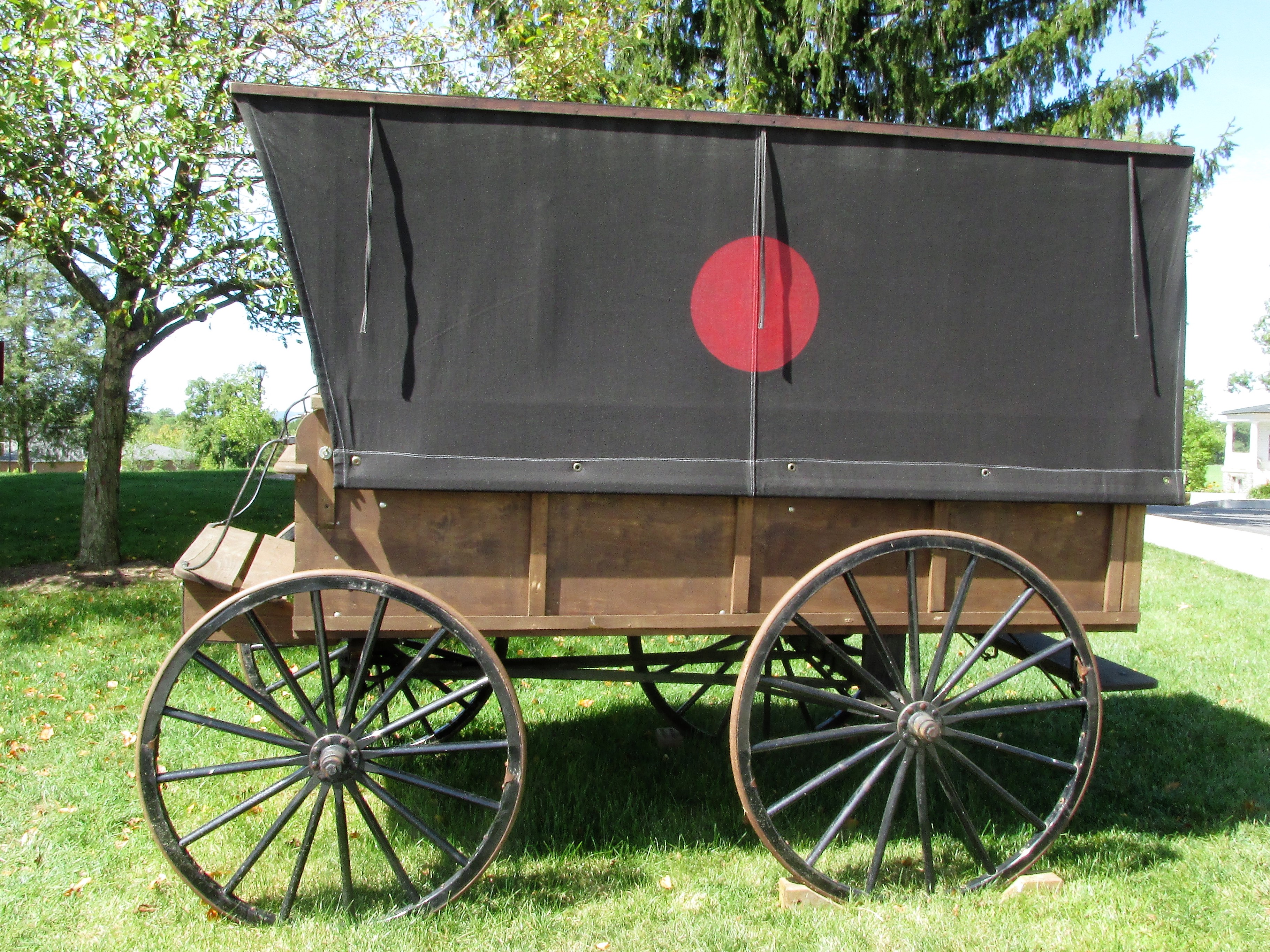
Ambulance outside Lutheran Seminary, Gettysburg.


Authorized by the War Department in June of 1861 to aid Union military, the United States Sanitary Commission supported sick and wounded soldiers. The organization was patterned after the British Sanitary Commission used during the Crimean War.

The Sanitary Commission’s central office was located on Pennsylvania Avenue and 15th Street inside the United States Treasury Building, just east of the Executive Mansion (White House.)

Massachusetts clergyman Henry Whitney Bellows served as the United States Sanitary Commission’s (USSC) only president. Landscape architect Frederick Law Olmsted—the designer of New York City’s Central Park—was the first executive secretary. New York lawyer George Templeton Strong served as treasurer. Their goals included coordinating citizen relief work and advising politicians about recruiting and training medical workers, which included female nurses. USSC was divided into three departments.

The Preventive Service Department improved living conditions for soldiers by inspecting military hospitals and army camps. Concerned with preventing and treating diseases, they also published medical tracts for doctors.

The Department of General Relief relied on citizens’ donations to buy food, clothing, blankets, and medical supplies for wounded soldiers.

The Department of Special Relief aided soldiers returning to civilian life. Families of disabled soldiers also received help.

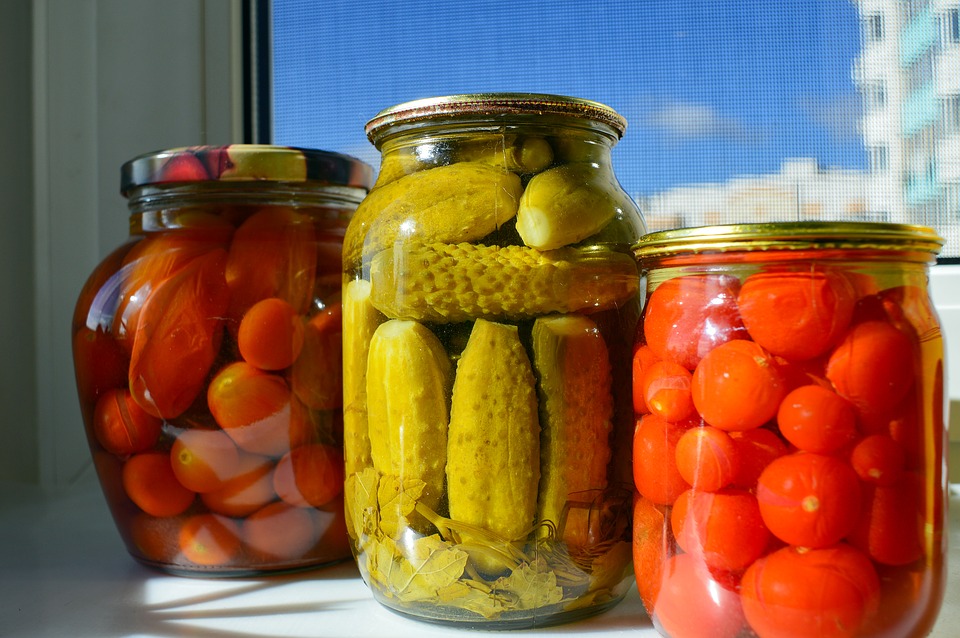
To fight scurvy among the soldiers, USSC encouraged donations of vegetables, including fresh and pickled vegetables.

USSC set up hospitals and staffed them. With the help of local chapters, steamboats were converted to hospital ships. They established soldiers’ homes.

Large cities and local communities held Sanitary Fairs to raise money to aid soldiers through USSC. Through thousands of volunteers, the Commission raised about $25 million (equivalent of over $400 million in 2018.) This impressive amount aided Union soldiers and the Northern cause.

-Sandra Merville Hart

Sources

Moore, Frank. Women of the War, Blue/Gray Books, 1997. (originally published 1866).

Williams, Rachel. “The United States Sanitary and Christian Commissions and the Union War Effort,” National Museum of Civil War Medicine, 2018/12/27 http://www.civilwarmed.org/commissions/.

“United States Sanitary Commission,” Ohio History Central, 2018/12/27, http://www.ohiohistorycentral.org/w/United_States_Sanitary_Commission.

“United States Sanitary Commission,” Wikipedia, 2018/12/27 https://en.wikipedia.org/wiki/United_States_Sanitary_Commission.

Civil War Women: Kady Brownell, Daughter of the Regiment

Kady Brownell, whose father was Colonel George Southwell, was born in a South African British army camp. After her mother died, the couple who raised Kady brought her to Providence, Rhode Island.

She fell in love with Robert Brownell while working as a weaver at a Providence mill. They married in April of 1861, the month the Civil War began. Robert mustered into the 1st Rhode Island Infantry.

Kady expressed her desire to fight alongside her husband to Governor William Sprague IV, the Governor of Rhode Island. Sprague, who did not believe the war would last longer than two days, intended to accompany the Rhode Island brigade into battle under the leadership of Colonel Ambrose Burnside. Sprague took Kady with him to Washington where she met up with her husband.

Colonel Burnside appointed Kady a Daughter of the Regiment and a color bearer. Robert was orderly sergeant in the 1st Rhode Island Infantry.

She actively participated with her husband in the First Battle of Bull Run, a Confederate victory, and then enlisted into the 5th Rhode Island Infantry along with her husband.

As color bearer, Kady carried the regiment’s flag into battle. The excellent markswoman also fought with Robert in several battles.

At the Battle of New Bern on March 14, 1862, their regiment fell under friendly fire in a dense forest. Kady waved their flag and ran ahead to show the Union soldiers firing on them that they were Rhode Island troops.

She stopped them but it was too late to save her husband from serious injury. Robert’s leg was shattered.

He recovered but the war was over for him. Kady didn’t want to remain a soldier without him. When they were both discharged, she became the only woman given discharge papers by the Union army.

-Sandra Merville Hart

Sources

“Brownell, Kady (b. 1842).”  Women in World History: A Biographical EncyclopediaEncyclopedia.com. 14 Dec. 2018<https://www.encyclopedia.com.

“Kady Brownell,” Wikipedia, 2018/12/14 https://en.wikipedia.org/wiki/Kady_Brownell.

Moore, Frank. Women of the War, Blue/Gray Books, 1997. (originally published 1866).

“William Sprague IV,” Wikipedia, 2018/12/14 https://en.wikipedia.org/wiki/William_Sprague_IV.

Civil War Women: Anna Maria Ross, Cooper Shop

Not long after the Civil War started, Philadelphia citizens realized Union troops passing through their city needed to be fed. Two refreshment saloons were established there in 1861—Union Volunteer Refreshment Saloon of Philadelphia and Cooper Shop Refreshment Saloon.

Wounded soldiers also arrived in Philadelphia, prompting local women to open a hospital. Anna Maria Ross worked there as Lady Principal. The 12-bed Cooper Shop Hospital received the first patients on October 29, 1861. The Cooper Shop was located at 1009 Otsego Street below Washington Street.

Day and night, Anna dressed soldiers’ wounds. She also made certain that discharged soldiers received a donation to tide them over until receiving their army pay.

Union troops passed through Philadelphia at all hours. A signal gun fired when regiments came. Women living near the Navy Yard—many responsible for their own families—responded to the signal. They walked to the refreshment saloons, day or night, to cook for the soldiers.

The Cooper Shop alternated days with the Union Volunteer Shop. The 24-hour daily period ended at 6 pm. Even if it wasn’t their day to serve, shop leaders could divide the soldiers and send them to the other shop if more than 200 men needed meals.

Wounded from Gettysburg arrived in July and August of 1863, crowding the saloon hospitals. Hospital trains passing through Philadelphia also benefited from supplies at the saloon hospitals. Shop volunteers, like Mrs. Eliza G. Plummer, gave the wounded toast and tea.

Anna was one who saw a need for a Soldiers’ Home to care for Civil War veterans. Along with others, she planned a fundraising fair in June of 1863, which provided enough money to obtain a building. Then they needed to furnish it.

Anna traveled in Pennsylvania and New Jersey to gain support, raising around $2,000. The Soldiers’ Home was dedicated December 22, 1863. Unfortunately, Anna caught a chill and died before the dedication.

She can be proud of her efforts. Throughout the war, the Cooper Shop Refreshment Saloon fed about 400,000 soldiers. Its hospital treated about 7,500 wounded. Most patients were temporary though not all. For instance, their annual statement for the year ending May 25, 1864, reported that 85 patients remained from 1 week to 1 year.

The Grand Army of the Republic gave her a posthumous honor–Post 94 in Philadelphia.

-Sandra Merville Hart

Sources

Brockett, L.P. MD and Vaughan, Mary C. Woman’s Work in the Civil War: A Record of Heroism, Patriotism and Patience, Zeigler, McCurdy & Co., 1867.

Edited by O’Brien, Kevin E. My Life in The Irish Brigade: The Civil War Memoirs of Private William McCarter, 116th Pennsylvania Infantry, Savas Publishing Company, 1996.

Moore, Frank. Women of the War, Blue/Gray Books, 1997. (originally published 1866).

Ross, Anna M.,” House Divided: The Civil War Research Engine at Dickinson College, http://hd.housedivided.dickinson.edu/node/33456.

Union Volunteer Refreshment Saloon, foot of Washington St., Philadelphia, by Union Volunteer Refreshment Saloon, 1861.