Civil War Women: Sister Anthony, Angel of the Battlefield

Mary O’Connell’s family emigrated to Boston from Ireland in 1821 when she was about seven-years-old. After joining the Sisters of Charity, she became known as Sister Anthony.

In 1837, she began working at St. Peter’s Orphan Asylum and School for girls in Cincinnati. Later she was given charge of a new hospital, St. John’s Hotel for Invalids.

Camp Dennison, a Civil War training camp about fifteen miles from Cincinnati, required nurses for sick soldiers after the war began. Sister Anthony and five other nuns rode the train and then walked two to three miles to visit the regimental hospitals every day. To save this daily expense, the sisters stayed at a small wooden church near camp.

Requests for nurses prompted Sister Anthony and others to care for wounded on a hospital ship with Dr. George Curtis Blackman at the Battle of Shiloh. Dead and dying soldiers filled the decks. One overcrowded ship had seven hundred patients.

Because the sisters didn’t give preferential treatment, they were asked to care for wounded prisoners.

Sister Anthony helped bring wounded soldiers from the battlefield. She is credited with developing Battlefield Triage, earning President Lincoln’s praise.

After caring for wounded at Shiloh, she became known as the “Angel of the Battlefield.” Sister Anthony served at several battlefields, including Nashville, Cumberland Gap, Richmond, Lynchburg, and Culpeper Court House.

She didn’t distinguish between Union and Confederate soldiers. She knew generals on both sides and was acquainted with Confederate President Jefferson Davis.

Joseph C. Butler and Louis Worthington gave a large Cincinnati building at Sixth and Lock Street to Sister Anthony in 1866. The hospital, meant to honor her and the other sisters’ war service, had two stipulations: exclude no one because of religion or color and they were to name it “The Hospital of the Good Samaritan.”

St. Joseph Foundling and Maternity Hospital opened later that year. It’s not clear why the name changed.

-Sandra Merville Hart

Sources

“Battle Nurses,” Newspapers.com, 2019/03/30 https://www.newspapers.com/clip/18267260/civil_war_nurses_catholic_sisters_in/.

Graves, Dan, MSL. “Sister Anthony, Battlefield Heroine,” Christianity.com, 2019/03/30 https://www.christianity.com/church/church-history/timeline/1801-1900/sister-anthony-battlefield-heroine-11630652.html.

“Mary O’Connell,” Wikipedia, 2019/03/30 https://en.wikipedia.org/wiki/Mary_O%27Connell.

Wimberg, Robert J. Cincinnati and the Civil War: Off to Battle, Ohio Book Store, 1992.


Civil War Women: Susie King Taylor, Union Nurse and Teacher

Born into slavery in Georgia in 1848, Susie Baker lived with her grandmother in Savannah after turning seven. She and her younger sister and brother secretly attended school taught by black women.

In April of 1862, the Civil War had been going on for a year when Susie accompanied her uncle to Saint Catherine Island, seeking protection from the Union fleet there. They were taken, two weeks later, to Saint Simons Island. About 600 black men, women, and children lived there.

Susie received two large boxes of books and Bibles from the North. She used these to teach about 40 children on the island, making her the first black teacher in Georgia for free African American students. Several adults came to her in the evenings to learn how to read.

She married Edward King, a black noncommissioned Union officer, while on St. Simons Island.

Cases of varioloid (a form of smallpox) broke out among the soldiers. One soldier had to be quarantined in his tent with only his doctor allowed to see him. Having been vaccinated, Susie nursed him daily. She also faithfully drank sassafras tea, believing this kept her blood clean.

After the island was evacuated in October of 1862, Susie traveled with her husband and brothers’ regiment. She nursed the wounded, laundered clothes, and taught many black soldiers to read.

Shrapnel, bullets, and cannon balls wreak havoc on the human body. Susie’s compassionate heart allowed her to look past the gruesome wounds as she sought to relieve the men’s suffering. She bound wounds and gave water to the parched men, alleviating pain as much as she was able.

After the war, she and her husband returned to Savannah. She started a school for freed children. In 1866, Edward died before their first child was born. Susie had started two more schools by 1868.

A job as a domestic servant took her to Boston, where she met and married Russell Taylor.

Susie didn’t forget the soldiers. She helped organize Corps 67, a chapter of the Women’s Relief Corps, and served as President, Secretary, Treasurer, and Guard of this corps.

-Sandra Merville Hart

Sources

Butchart, Ronald E. “Susie King Taylor (1848-1912),” Georgia Encyclopedia, 2019/03/30 https://www.georgiaencyclopedia.org/articles/history-archaeology/susie-king-taylor-1848-1912.


Lardas, Mark. African American Soldier in the Civil War: USCT 1862-66, Osprey Publishing Ltd., 2006.


Taylor, Susie King. Edited by Malone, Margaret Gay. In My Own Words: The Diary of Susie King Taylor, Civil War Nurse, Benchmark Books, 2004.


Civil War Women: Harriet Tubman, Union Spy

Born into slavery on a Maryland plantation, Araminta Ross’s parents nicknamed her “Minty.” Minty later took her mother’s name, Harriet, to honor her.

At age twelve, she stepped between an overseer throwing a heavy object at a fugitive slave. It struck Harriet instead, breaking her skull. The injury caused headaches and narcolepsy that lasted all her life. She fell deeply asleep at random.

She married a free black man, John Tubman, around 1844.

Learning that she and two of her brothers were about to be sold, they escaped on September 17, 1849. Her brothers returned to the plantation, but Harriet pushed on, following safe houses on the Underground Railroad. She walked about 90 miles to freedom in Pennsylvania. Over the next few years, she rescued about 70 people, including her parents and other family members. Her husband had remarried and chose to stay in Maryland.

When the Civil War began, Harriet worked as cook, nurse, and laundress at Fort Monroe, Virginia. She assisted fugitive slaves there.

In May of 1862, soldiers and fugitives were dying of diseases when she arrived in Port Royal, South Carolina. Her knowledge of local roots helped significantly in treating their illnesses.

In 1863, Harriet, reporting directly to General David Hunter and General Rufus Saxton, commanded a team of espionage scouts searching for escape routes for slaves.

She found warehouses and ammunition and reported the locations to Colonel James Montgomery.

Late on June 2, 1863, Harriet led 150 black men, soldiers of 2nd South Carolina Battalion, on the Combahee River Raid. The surprise attack freed over 750 slaves.

After the war ended, Harriet and her family settled in Auburn, New York, and she continued to help folks in need.

-Sandra Merville Hart

Sources

Biography.com Editors. “Harriet Tubman,” A&E Television Networks, 2019/03/30 https://www.biography.com/people/harriet-tubman-9511430.

“Harriet Tubman,” History.com, 2019/03/30 https://www.history.com/topics/black-history/harriet-tubman.

“Role in the Civil War,” Harriet Tubman Historical Society, 2019/03/30 http://www.harriet-tubman.org/role-in-the-civil-war/.

The Editors of Encyclopaedia Britannica. “Harriet Tubman: American Abolitionist,” Encyclopaedia Britannica, 2019/03/30 https://www.britannica.com/biography/Harriet-Tubman.


Civil War Women: Mollie Bean, Confederate Soldier

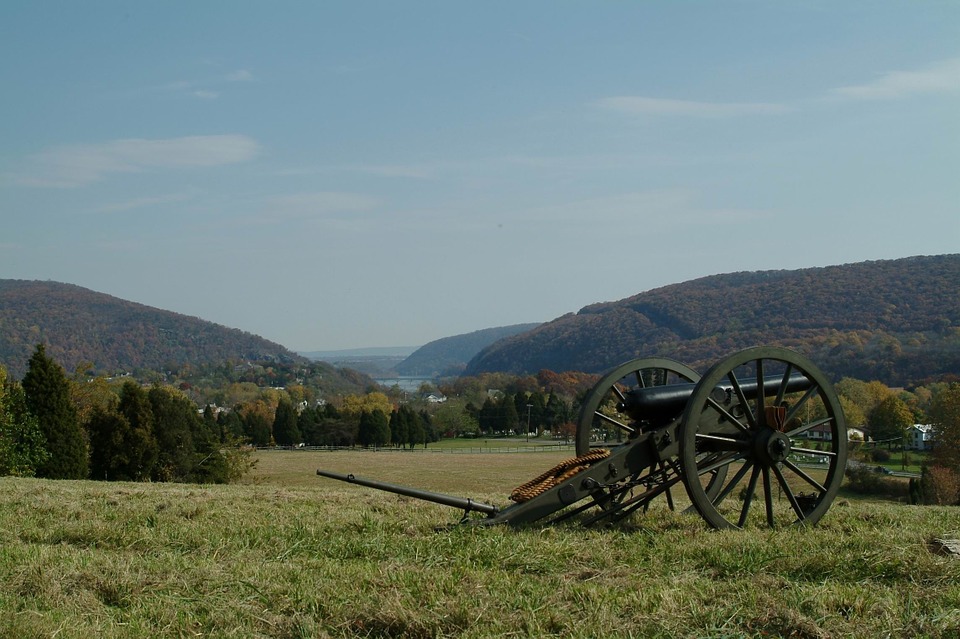
Confederate Army of Northern Virginia cannons at Gettysburg Battlefield

On February 17, 1865, the train guard on the railroad cars between Danville and Richmond demanded to see the papers of a soldier dressed in light-colored corduroy pants, Yankee great coat, and fatigue hat dipped at a jaunty angle, almost touching the wearer’s right ear. The delicate soldier didn’t have any papers signed by the Provost Marshal nor did he seem concerned about the lack of documentation allowing him to ride the cars.

The soldier was arrested and taken to the chief of police. Rigorous questioning revealed an astonishing fact—the soldier was a young woman.

Mollie Bean claimed to be a soldier with the 47th North Carolina State troops. She’d served with them for two years and been wounded twice. Her wounds didn’t give away her disguise so they probably were minor wounds to the head, arms, or legs.

Mollie was taken as prisoner to Castle Thunder.

The reporter of the Richmond Whig didn’t believe her story of being with the 47th North Carolina for two years.

The Charlotte Daily Bulletin called her Mollie Bear, but the other papers noted referred to her as Mollie Bean.

Mollie’s regiment was in winter quarters near Hatcher’s Run when she was arrested.

Her regiment was part of Pickett’s Charge under Brigadier General James Pettigrew at the Battle of Gettysburg. They were at Cold Harbor. They took part in the long Petersburg siege, so Mollie surely experienced difficulties in her two years with the Confederate army.

There’s no record of how long she was held at Castle Thunder or what happened to her when she was released. Who she was and what happened to her remains a mystery.

-Sandra Merville Hart

Sources

“47th Regiment, North Carolina Infantry,” National Park Service, 2019/03/18 https://www.nps.gov/civilwar/search-battle-units-detail.htm?battleUnitCode=CNC0047RI.

“Historical Sketch and Roster of the North Carolina 47th Infantry Regiment,” Amazon, 2019/03/18 https://www.amazon.com/Historical-Carolina-Infantry-Regiment-Regimental/dp/1517383056.

“Mollie Bean,” American Civil War Forum, 2019/03/18 https://www.americancivilwarforum.com/mollie-bean-2248424.html.

“Mollie Bean,” Soldier-Women of the America Civil War, 2019/03/18 http://civilwarsoldierwomen.blogspot.com/2011/01/mollie-bean.html.

“Mollie Bean,” Wikipedia, 2019/03/18 https://en.wikipedia.org/wiki/Mollie_Bean

Civil War Women: Major Pauline Cushman, Actress to Spy

Harriet Wood became an actress a few years before the Civil War began and changed her name to Pauline Cushman, touring the country for various plays.

While Civil War battles raged early in 1863, a role led her to Wood’s Theater in Union-controlled Louisville, Kentucky. There were paroled Confederate officers in the area. Pauline’s beauty captured their attention and one asked her to toast Confederate President Jefferson Davis from the stage.

Her adventurous spirit aroused, Pauline met with Union Colonel Moore, Louisville’s provost marshal. The colonel, seizing the opportunity for her to gain the Southerners’ trust, advised her to accept the challenge.

While on stage the next evening, Pauline raised her glass in a toast. “Here’s to Jeff Davis and the Southern Confederacy. May the South always maintain her honor and her rights.”

Her impromptu toast appalled Union supporters in the crowd and thrilled Southern sympathizers. Pauline was fired and sent to the South.

Pauline traveled to Nashville where she met with Union Colonel William Truesdail, the Chief of Army Police. Truesdail asked to her to learn what she could about the Confederates, though he warned that, if caught spying, she’d be hanged.

She soon gained the trust of the Southerners. While at Confederate General Braxton Bragg’s army camp, she found his battle plans. The Southerners became suspicious of her. Pauline’s quick thinking and acting skills nearly saved her—until the battle plans were discovered in her shoe.

At a trial, she was found guilty and sentenced to death. Pauline then became seriously ill—or employed her acting skills to seem so—delaying her hanging. Then, at the end of June, she heard a loud commotion outside. The Confederates abandoned the camp, leaving Pauline behind. To her great joy, the sound of Union bugles blared in the camp and she was rescued.

Both President Abraham Lincoln and General James A. Garfield (future President) praised Pauline. General Garfield gave her the rank of major as thanks for her suffering while in secret service.

Before the Civil War ended, Pauline began touring as Miss Major Cushman, speaking about her adventures and performing one-woman plays about them.

-Sandra Merville Hart

Sources

Biography.com Editors. “Pauline Cushman Biography,” Biography.com, 2019/03/17 https://www.biography.com/people/pauline-cushman.

Moore, Frank. Women of the War: True Stories of Brave Women in the Civil War, Blue Gray Books, 1997.

“Pauline Cushman,” NPS.gov, 2019/03/17 https://www.nps.gov/people/pauline-cushman.htm.


Civil War Women: Antonia Ford, Confederate Spy

Union officers often gathered at Antonia Ford’s family home in Fairfax Court House, Virginia. Like her father, the beautiful young woman was a secessionist. She learned of Union plans for the First Battle of Manassas and rode to warn the Confederate army. Southern officers held her under guard until her information was confirmed by other spies.

After this success, Antonia might have provided information to Brigadier General J.E.B. Stuart, who declared her an honorary aide-de-camp in October of 1861.

At 2 am on March 9, 1863, Cavalry Colonel John S. Mosby, along with 29 of his Confederate rangers, sneaked into Fairfax Court House and captured Union General Stoughton, several of his men, and horses.

Suspicions immediately shifted to Antonia, who had hosted Stoughton’s mother and sister in her home. The Secret Service sent a female undercover agent to the home, who spent hours talking with Antonia.

On March 15, Antonia was awoken by Secret Service agents. When she refused to pledge loyalty to the Union, they searched her house and found Confederate money and papers, letters from Federal officers, and J.E.B. Stuart’s order for her aide-de-camp. Charged with aiding and abetting Mosby’s capture of General Stoughton, she was arrested and held at Old Capitol Prison in Washington D.C.

While there, she met Union Major Joseph Willard, who worked to get her released. Willard was part owner of the Willard Hotel in Washington. They fell in love.

Antonia learned in May that she would be exchanged for Northern prisoners. She was arrested again with her father for not swearing allegiance to the Union. They were released on September 18, 1863 after both took the oath of loyalty to the Union.

Antonia married Major Willard on March 10, 1864, and moved to Washington.

-Sandra Merville Hart

Sources

“Antonia Ford Willard,” National Park Service, 2019/01/07 https://www.nps.gov/people/antonia-ford-willard.htm.

DiSilvestro, Roger. “Mosby’s Female Super Spy: Antonia Ford,” History.net, 2019/01/07 http://www.historynet.com/mosbys-female-super-spy-antonia-ford.htm.

Whitehead, A.M. “Antonia Ford (1838-1871).” Encyclopedia Virginia. Virginia Foundation for the Humanities, 27 May. 2014. Web. 7 Jan. 2019.


Civil War Women: Dorothea Dix, Superintendent of Female Nurses

Dorothea Dix traveled to Washington shortly after the Civil War began. Her federal appointment as Superintendent of Female Nurses bestowed on her the honor of being the first female in this high position.

Dorothea convinced Union military to allow women to serve as nurses. Once they agreed, she began recruiting her nurses.

She set high standards. Fearing that young, unmarried women might use the position to find a husband, she sought plain, older women and insisted on plain clothing.

The oversight of both the large nursing staff across many locations and administration of medical supplies such as bandages fell on Dorothea’s shoulders.

Many army surgeons were against having female nurses. Dorothea pushed for formal training for them.

About 3,000 females served in Union hospitals during the war. They did an admirable job and were a crucial part of caring for sick and wounded soldiers.

Louisa May Alcott, the beloved author of Little Women, was one of the Civil War nurses who served under Dorothea Dix. Though respected, it was Louisa’s opinion that the strict superintendent wasn’t well-liked. Most nurses avoided her.

Beyond Dorothea’s administrative skills, another reason people respected her is that she treated both Union and Confederate soldiers in military hospitals.

Her efforts to place female nurses in Union hospitals began paving the way for women to serve in the medical field.

-Sandra Merville Hart

Sources

“Dorothea Dix,” United States History, 2019/01/07 https://www.u-s-history.com/pages/h1092.html.

“Dorothea Lynde Dix,” History, 2019/01/07 https://www.history.com/topics/womens-history/dorothea-lynde-dix.

Norwood, Arlisha. “Dorothea Dix.” National Women’s History Museum. National Women’s History Museum, 2017. 2019/01/07.

Civil War Women: Rebecca R. Usher, Nurse

The Maine Camp and Hospital Association was established in 1862 to ensure that soldiers from Maine received the supplies donated for them from folks back home. Its members were ready to serve as nurses whenever needed.

In October of 1862, Almira Quinby invited Miss Rebecca Usher to work at U.S. General Hospital in Chester, Pennsylvania. Rebecca was to wear plain, sensible dresses. The only other qualification was “a common experience in nursing.”

The large hospital building used by surgeons and nurses had been a normal school. Nine hundred patients were cared for in barracks, which were divided into wards holding 60—70 patients each. Rebecca, in charge of one ward, felt as if she was in her element.

She wrote to her sister, Ellen Usher Bacon who worked with the Maine Camp Hospital Association, requesting tobacco and flannel shirts for the soldiers.

While working in Pennsylvania, Rebecca traveled to Washington with other nurses. Though she met Mrs. Lincoln, she wrote of her disappointment at not meeting President Lincoln.

The Chester hospital closed in April, 1863, and Rebecca returned to her home in Hollis, Maine. She didn’t return to nursing work until the winter of 1864. At City Point, Virginia, she and two other women lived in a log hut that Union soldiers built for them. The stockade, as Rebecca called the hut, contained three rooms: a reading room for soldiers; a cookhouse; and the nurses’ bedroom, which was also used for supply storage.

Twenty-eight barrels of potatoes were shipped from Baltimore the first week of February. Eight barrels of vegetables, frozen during shipping, had to be thrown away as inedible. Soldiers requested potatoes as if the vegetable was a treat. They roasted them in the reading room’s ashes.

After watching the men savor the luxury of roasted potatoes, Rebecca wrote home that it was worth sending the vegetables—even if a quarter of them were lost.

She remained at City Point until the war ended.

-Sandra Merville Hart

Sources

Moore, Frank. Women of the War, Blue Gray Books, 1997.

“Rebecca Usher, Civil War Nurse,” Maine History Online, 2018/01/06, https://www.mainememory.net/sitebuilder/site/2443/slideshow/1482/display?format=list&prev_object_id=3926&prev_object=page&slide_num=1.


Civil War Women: Elizabeth Mendenhall

Early in the Civil War, Cincinnati resident Mrs. Elizabeth Mendenhall began to visit sick and wounded soldiers in the hospitals. Cincinnati hospitals cared for wounded soldiers from the summer of 1861 through the end of the war and the important Ohio border city became a hospital center for the Union army under General Grant early in 1862.

Elizabeth worked as a nurse. She also actively sought donations from citizens for military patients, especially around Independence Day and Thanksgiving. The United States Sanitary Commission (USSC) appreciated her work as a nurse and allowed her access to their supplies to serve her patients.

Members of the Cincinnati chapter of the USSC helped in the creations of 8 hospitals as well as a soldiers’ home in the area. They also converted 33 steamboats into hospital ships.

Elizabeth also inspired Cincinnati residents to raise money for the USSC by hosting a Sanitary Fair patterned after one held in Chicago. She led a group of ladies in planning the Great Western Sanitary Fair.

She wrote to communities in the Northwest, appealing to all professions for donations to the fair. Money raised was to benefit sick and wounded soldiers.

The Great Western Sanitary Fair opened at the Mozart Hall in Cincinnati on December 21, 1863. General William S. Rosecrans attended. The event lasted through the holidays. A Grand Soiree and Promenade in the Ladies’ Bazaar ended the fair on January 4, 1864. Railroad and steamboat companies sold tickets at half fare, according to an advertisement.

The event was an outstanding success, earning $235,406 for the USSC.

After the fair ended, Elizabeth worked at the hospitals through the end of the war when Cincinnati military hospitals were disorganized.

-Sandra Merville Hart

Sources

Cincinnati Branch, U.S. Sanitary Commission, “Great Western Sanitary Fair,” in Ohio Civil War 150 | Collections Y Exhibits, Item #1749, http://www.ohiocivilwar150.org/omeka/items/show/1749 (accessed January 4, 2019).

“The Great Western Sanitary Fair opens in Cincinnati, Ohio,” House Divided: The Civil War Research Engine at Dickinson College, http://hd.housedivided.dickinson.edu/node/41528.

Moore, Frank. Women of the War, Blue Gray Books, 1997.


Civil War Women: Mary E. Shelton

Iowa president of the Ladies’ Aid Society, Annie Turner Wittenmyer, had grown so busy establishing new local aid societies, providing hospital supplies, and visiting wounded soldiers in Union soldiers that she needed a secretary by the summer of 1863. Miss Mary E. Shelton quickly proved her worth as Annie’s secretary.

On August 10, 1863, Mary left Keokuk to accompany her new boss to St. Louis. Along the way Mary answered many heartbreaking letters for Annie. One father, grieving one son who died, asked Mrs. Wittenmyer to check on his other son who was ill with consumption.

The wife of a soldier had written to Mrs. Wittenmyer on behalf of her husband, who was dying from consumption. She requested he be sent home to die surrounded by his young family.

A frantic mother requested that Mrs. Wittenmyer find out news of her sick son.

These requests—and so many more—were the tip of the iceberg for what the compassionate secretary would experience.

After arranging the delivery of future supplies to the Western Sanitary Commission, the ladies traveled to Helena, Arkansas. A division had moved through Helena on the way to Little Rock and left their sick in the streets. The medical director told Annie that 13 soldiers died the first night. They needed nurses and medical supplies.

Annie left immediately and got the supplies from St. Louis. Then Annie and Mary visited the soldiers. They found dirty rooms. Unbathed men still wore their battlefield clothes. By the time they left at twilight, the hospital steward had assured them he’d clean every room. He had orders to change the patients’ clothing.

The two ladies then wrote letters until midnight. But their day’s work bore fruit—the next day, they found patients wearing clean clothes in clean rooms.

They walked to a convalescent camp about a mile outside Helena where a bedridden soldier called Mary to his side. He told her that they had only eaten bean soup for many days. He was so tired of it that he had wept when offered the soup a last time. Through his tears, he prayed. As soon as the prayer was uttered, his nurse announced, “Mrs. Wittenmyer is coming with two loads of sanitary goods!” Hearing the wagon wheels, the men cried for joy. Then Mrs. Wittenmyer brought them chicken and fruit. The soldier believed the food and other sanitary supplies had saved their lives.

Annie and Mary traveled to Vicksburg from Helena. The hospitals there were well-run. They returned to Iowa that fall. Mary, having seen so much need, wrote letters and spoke with her fellow citizens on behalf of the wounded. She urged greater generosity for the suffering solders.

Mary was constantly in the field, visiting hospitals and running hospital Diet Kitchens. Her work often took her to Nashville and Wilmington and lasted beyond the end of the war.

She wrote many of her experiences in a journal.

-Sandra Merville Hart

Sources

Moore, Frank. Women of the War, Blue Gray Books, 1997.