Happy Easter!

Matthew 28:1-10 (New International Version)

After the Sabbath, at dawn on the first day of the week, Mary Magdalene and the other Mary went to look at the tomb.

There was a violent earthquake, for an angel of the Lord came down from heaven and, going to the tomb, rolled back the stone and sat on it. His appearance was like lightning, and his clothes were white as snow. The guards were so afraid of him that they shook and became like dead men.

The angel said to the women, “Do not be afraid, for I know that you are looking for Jesus, who was crucified. He is not here; he has risen, just as he said. Come and see the place where he lay. Then go quickly and tell his disciples: ‘He has risen from the dead and is going ahead of you into Galilee. There you will see him.’ Now I have told you.”

So the women hurried away from the tomb, afraid yet filled with joy, and ran to tell his disciples. Suddenly Jesus met them. “Greetings,” he said. They came to him, clasped his feet and worshiped him. Then Jesus said to them, “Do not be afraid. Go and tell my brothers to go to Galilee; there they will see me.


Civil War Bugle Calls

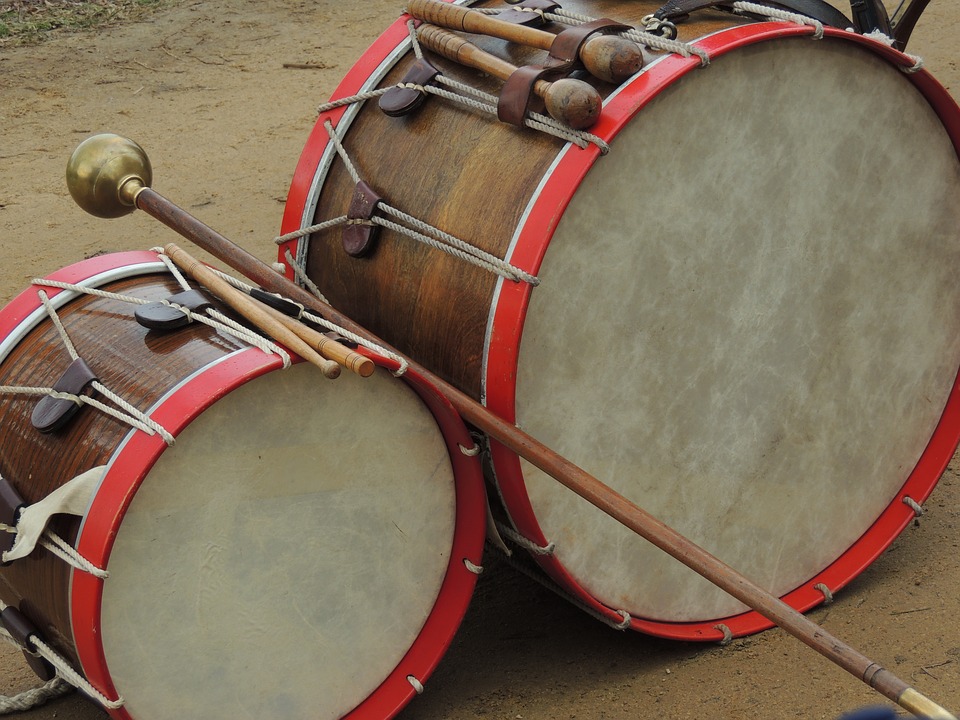
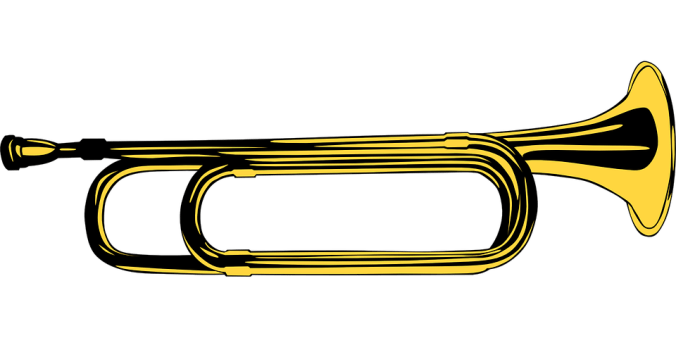
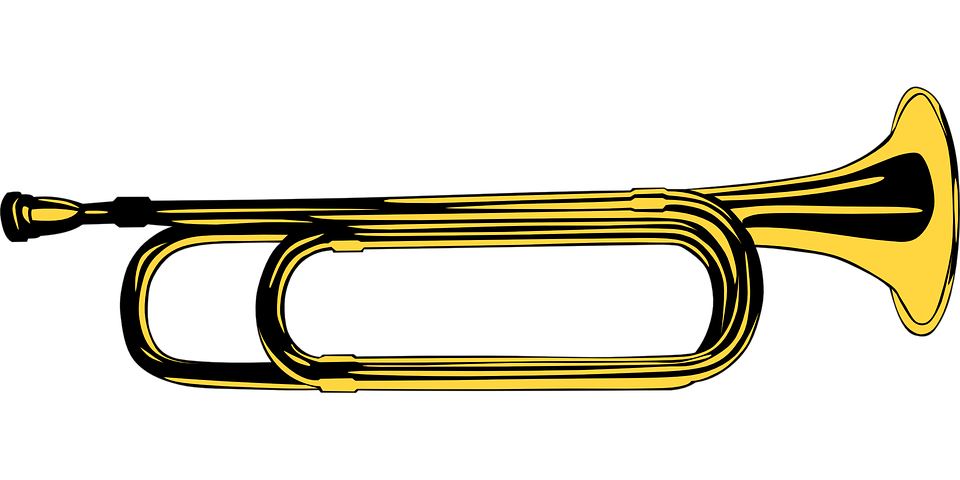
Commands were often given musically during the Civil War. That is to say, by bugle or drum. A general’s voice only carried so far—especially over the din of battle. Soldiers soon learned specific bugle tunes signified that it was time to get up in the morning, for example.

John D. Billings, Union soldier, wrote about a typical day in camp in Hardtack & Coffee.

The first bugle call of the day was “Assembly of Buglers.” It came around 5 am in the summer and 6 am in the winter. Men knew it was time to roll out of their blankets. This unwelcome song always brought grumbling.

“Assembly” came fifteen minutes later. Unless ill or on guard duty, every enlisted man had to be present for his company’s roll call.

When everyone finally stood in line, the bugler played “Reveille.” Soldiers made up words to this song:

       I can’t get ’em up, I can’t get ’em up,

       I can’t get ’em up this morning;

       I can’t get ’em up, I can’t get ’em up,

       I can’t get ’em up today.

After this, “Stable Call” was played. Company drivers went to the picket ropes where they fed and groomed their horses.

“Breakfast Call” came next. Soldiers prepared and ate their breakfast or ate rations provided at the company cookhouse.

“Sick Call” sounded at 8 am. Men who were sick and required medicine proceeded to the surgeon’s tent. Quinine was given for many ailments including headache, stomachache, toothache, coughing, lameness, fever, and ague.

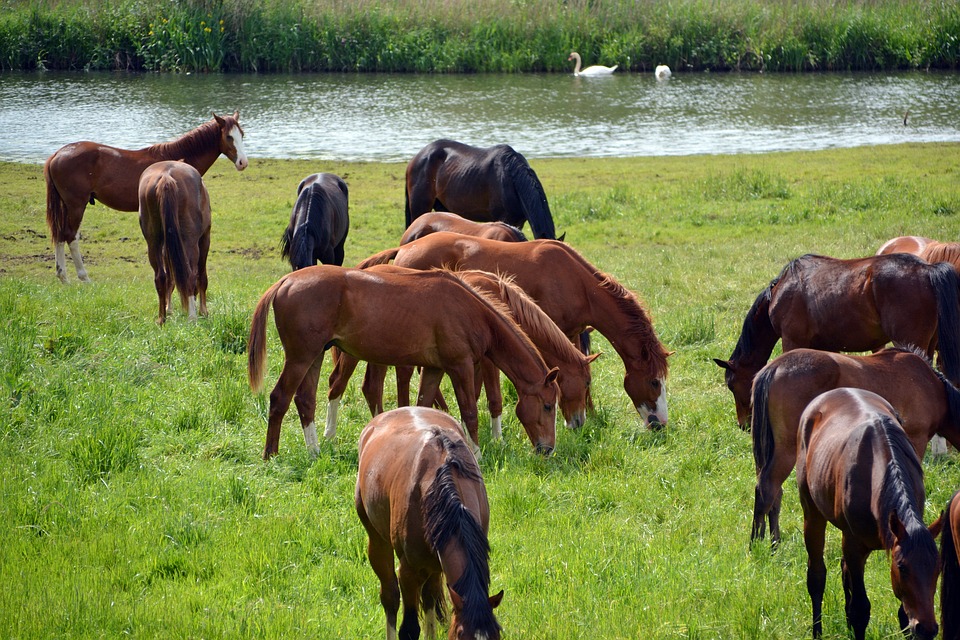
Next came the “Watering Call,” where cavalry and drivers watered their horses and mules. To learn more about the difficulties of watering thousands of animals, click here.

Soldiers cleaned camp, gathered wood and water, built stables, buried horses, and washed gun carriages for “Fatigue Call.”
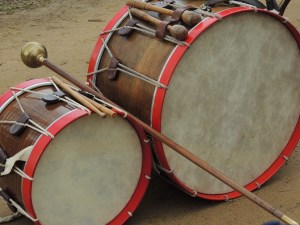
Next, drum or bugle brought the “Drill Call” where men practiced artillery and other skills. This was practiced much more earlier in the war.

Cannoneers and drivers responded to “Boots and Saddles” as a battery drill.

“Dinner Call” sounded at noon.

Buglers played “Water Call” around 4 pm.

“Stable Call” was blown as a reminder to return horses to the stable.

“Attention” was blown at 5:45 pm, followed by “Assembly” where the soldiers fell in for “Retreat” roll call.

“Assembly of Guard” called soldiers to guard duty. A brass band or fife-and-drum-corps usually followed.

The bugler played “Attention” at 8:30 pm and then “Assembly.” Companies formed lines for the day’s final roll call, “Tattoo.”

Men then had thirty minutes to get ready for bed at 9 pm when “Taps” was played. A drummer then played to end the day.

Follow this link if you’d like to listen to a few of these.

-Sandra Merville Hart

Sources

Billings, John D. Hardtack & Coffee, University of Nebraska Press, 1993.

Villanueva, Jari. “Civil War Bugles Calls,” www/tapsbuglar.com, 2017/03/15 https://archive.org/details/CivilWarBugleCalls/20+Dan+Butterfield.mp3.

Villanueva, Jari. “Twenty Bugles Calls,” United States Air Force Band, 2017/03/14   http://www.usafband.af.mil/shared/media/document/AFD-150220-028.pdf.

 

Watering Thousands of Horses During the Civil War

According to John D. Billings, author of Hardtack & Coffee, one of the typical daily bugle calls was a Watering Call. Upon hearing this call, artillery drivers and all cavalry rank and file went to the picket rope to water their horses.

This was a simple task when the army camped near a river, which was often the case. When it wasn’t, thirsty horses were ridden a mile or two—sometimes longer—to find a pond or stream.

Finding a sufficient amount of water for thousands of animals was no small task.

General McClellan had about 38,800 horses and mules after the Battle of Antietam in September of 1862. 56,499 horses and mules were in the army’s care when they crossed the Rapidan River in 1864.

All animals weren’t taken to the same stream for watering because troops spread out for miles.

A drought in the summer of 1864 brought serious problems. No rain fell for several weeks. Soldiers were hard-pressed to find enough water for themselves. They’d find an old stream where only mud remained. Scooping out holes in the mud, soldiers patiently waited for “warm, milky-colored fluid to ooze from the clay.” The water came a drop at a time until it filled a dipper for the thirsty soldier.

Hundreds of men carried empty canteens through forests and valleys in search of water.

When the drought continued, Union soldiers dug wells. To their relief, they found an abundance of water 10-12 feet below ground. These wells met the needs of soldiers and their animals.

-Sandra Merville Hart

Sources

Billings, John D. Hardtack & Coffee, University of Nebraska Press, 1993.

Villanueva, Jari. “Twenty Bugles Calls,” The United States Air Force Band, 2017/03/14   http://www.usafband.af.mil/shared/media/document/AFD-150220-028.pdf.
Civil War – Union Shelters

cannon-144552_960_720

Barracks were often built to house Union soldiers in training camps, such as the one at Camp Cameron. These were long buildings similar to bowling alleys of the day. Barracks held a double row of stacked bunk beds separated by a center aisle. They were designed to hold a company, which was one hundred soldiers.

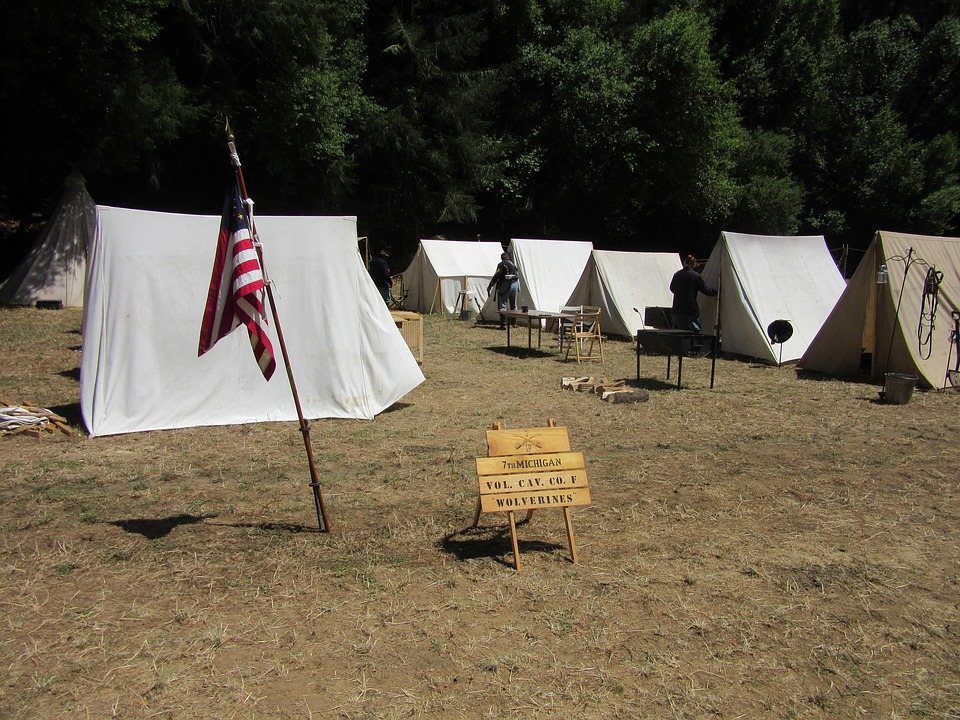
Most camps, though, sheltered their soldiers in tents. One of the popular designs was the Sibley tent, also known as the Bell Tent due to its resemblance to a bell. Supported by a single pole, these tents were twelve feet high and eighteen feet in diameter.

Sibley tents were large enough to house a dozen men. A cone-shaped stove warmed them in cold weather from the center. A small circular opening allowed for the stove pipe and for ventilation. This type of tent became too cumbersome for field camps and was used mainly in instruction camps.

camp-1786750_960_720The A tent (also called Wedge tent) was a canvas tent stretched over a six-foot horizontal bar, supported by two upright posts. This tent resembles the letter “A.” The area inside is about 7 square feet. It was intended to sleep four. The number sometimes grew to five or six men, which made for tight sleeping quarters.

Another type was the Hospital or Wall tent. These had four upright sides and came in different sizes. Those used in field hospitals held 6 to 20 patients. These tents were often joined together to increase space by ripping the center seams.

All of these shelters were widely used by troops in training before they left their state.

Shelter tents were invented early in the war for the rank and file (privates) who carried half the tent on the march. These halves were about five feet by four and a half feet with a single row of buttons and buttonholes. These were made into a whole tent by buttoning the half shelter to a comrade’s half shelter to make a roof.

Armies on marches didn’t take the trouble to put up tents in good weather. If cold or rainy, comrades placed two muskets with bayonets in an upright position the distance of the half shelter apart. They stretched a rope between the trigger guards to make a tent ridge pole.

The infantry got so much practice that it didn’t take long to put up the tent—even after a long day of marching.

-Sandra Merville Hart

Sources

Billings, John D. Hardtack & Coffee, University of Nebraska Press, 1993.


Civil War – Enlisting

pen-1035081_960_720

President Abraham Lincoln saw early in the war that the three months originally asked of Union soldiers wasn’t long enough and put out a call for three-year volunteers on May 3, 1861. Thousands responded.

The War Department assigned a quota for additional troops to each state in 1862. The states then informed cities and towns how many men each must furnish to meet the quota.

Towns held outdoor war meetings where orators encouraged men to enlist. Musicians performed. Choirs sang “Red, White, and Blue” and “Rallied ’Round the Flag.” Veteran soldiers who fought in 1812 fired up the crowds by saying they’d enlist again if not so old. A woman, waving a handkerchief, said she’d fight if she was a man.

Some man usually offered to enlist if a certain (higher than expected) number of others signed up. John Billings, Union soldier, witnessed one man issuing such a challenge who, when the number was met, crept away without signing as townspeople jeered.

american-flag-1911633_960_720Flags waved. Choirs continued to sing. The patriotic fever-pitch prompted many to sign. Once the first hero signed his name and was led to a platform in front of a cheering crowd, a second man stepped forward. Soon there was a line in front of the enlistment roll.

After signing the roll, recruits submitted to a medical examination to determine fitness to serve. The men, naked, were examined with thumps to the chest and back. They jumped, bent over, and kicked to determine soundness. Teeth and eyesight were checked. A certificate was given when passing the test.

Then he went to the recruiting station to sign the company or regimental roll that he was entering. With his signature, the recruit included his height, complexion, and occupation.

After this, a guard accompanied him to an examining surgeon to determine his soundness to serve.

These soldiers trained in camps for several weeks for new regiments. If they joined an existing regiment, they were usually fighting much sooner.

Before leaving the state, soldiers were mustered into service. Here is the oath of muster:

“I, (name), do solemnly swear that I will bear true allegiance to the United States of America, and that I will serve them honestly and faithfully against all their enemies and opposers whatsoever, and observe and obey the orders of the President of the United States, and the orders of the officers appointed over me according to the rules and articles for the government of the armies of the United States.”

-Sandra Merville Hart

Sources

Billings, John D. Hardtack & Coffee, University of Nebraska Press, 1993.


Mail-order Brides

bride-614918_960_720

Today’s guest post is written by fellow author, Cindy Ervin Huff. I think you will enjoy learning a bit about mail-order brides.


Mail-order brides were a booming business in the 1800s. The Matrimonial News, a San Francisco paper, was sold throughout America during the mid to late 19th century. The paper was chock full of ads from lonely men or hopeful women looking for a chance at love, financial security, or a step-parent. Many a single woman and widow traveled west to marry strangers.

Some advertisers misrepresented themselves, causing lawsuits and broken promises. There were rocky relationships and joyously happy ones. It was common for the prospective groom to write the bride for a few months before paying for her passage. A few women came with dark secrets, fears or—surprise—children not mentioned in her correspondence.

One woman, a con artist, was quite surprised when her intended mark had misrepresented himself and was poor as a church mouse. The ads were often filled with exaggerations regarding wealth and physical appearance.

Many young men had gone west in pursuit of gold, land, and other opportunities. Missing the comforts of home, they were anxious to find wives. The Matrimonial News presented many willing men to the single female population back east.

After the Civil War, many newspapers carried columns dedicated to these paid announcements. The shrinking pool of eligible men in the east was the number one reason why women were so willing to immigrate west. Even the homely woman had no problem finding a husband.

Most women placed ads focusing on their finer qualities. Some included pictures. One woman, however, advertised herself as fat and 45. This successful businesswoman wanted a man over forty.

cindy-2016Bio:

Cindy Ervin Huff is a multi-published writer and winner of the Editor’s Choice Award from Lighthouse Publishing of the Carolinas at the 2014 Write-To-Publish Conference. Secrets and Charades released March 15, 2017.She has been featured in numerous periodicals over the last thirty years. Cindy is a past member of the Christian Writer’s Guild and President of the Aurora, Illinois, chapter of Word Weavers. Visit Cindy on Facebook at www.facebook.com/cindyehuff, follow her on twitter @CindyErvinHuff, or check out her blog at www.jubileewriter.wordpress.com.

Her Brand New Release!!!

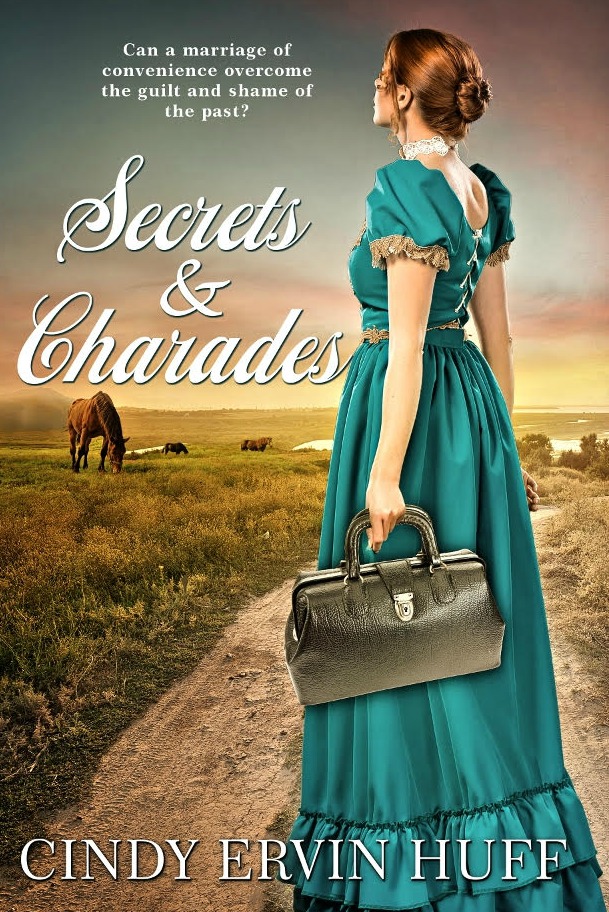
secret-charades-front-coverSecrets and Charades : Dr. Evangeline Olson is desperate to put her past behind her. Civil War veteran and rancher, Jake Marcum gets more than he expects in his mail-order bride. Will the secrets in their hearts get in the way of a happily-ever-after?

Amazon

Soldier’s Letter – Civil War

american-civil-war-316987_960_720

Civil War soldiers loved to receive letters from home. Wives, mothers, and sweethearts also sent care packages to their soldiers. Even if a pie didn’t survive postal delivery intact, men still devoured every edible crumb with a thankful heart.

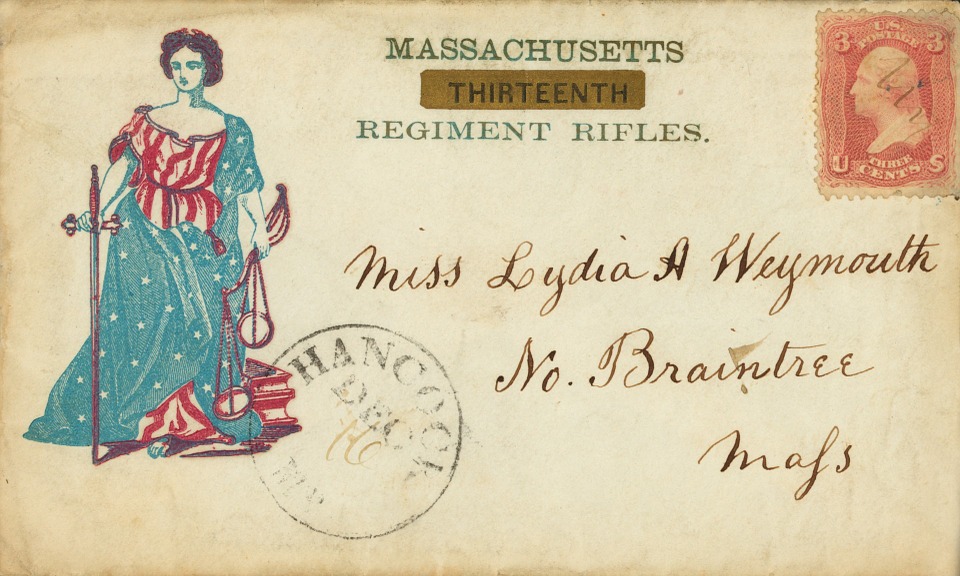
Soldiers purchased envelopes to send their replies back home. One of the fun traditions of the time was that these envelopes were decorated by those who manufactured them.

Flags, patriotic scenes, portraits of Union generals, and army camp scenes were printed on the envelopes, or “covers” as they were also called.

John D. Billings, Union soldier and author of Hardtack and Coffee, wrote of a young man who collected over 7,000 decorated envelopes from the war—each with a unique design.

Some featured specific regiments, listing battles where they fought.

Billings kept a few envelopes from his days in the war. One contained a 34-star border, a star for every state in the Union at the time. An eagle held a shield and a streamer which read, “Love one another.”

Another from his collection showed a drawing of the earth with “United States” printed on it and an American eagle above it. The inscription was “What God has joined, let no man put asunder.”

A third was a sketch of a man with moneybags riding horseback at breakneck speed. The inscription: “Floyd off for the South. All the Seceding States ask is to be let alone.”

One showed President Washington’s portrait with the inscription of “A Southern Man with Union Principles.”

images-1194186_960_720Billings wrote that the designs expressed the feelings of Northerners.

Union soldiers received envelopes from the U.S. Christian Commission with their organization’s stamp and the words “Soldier’s Letter.”

The Postmaster General allowed soldiers to send letters without stamps, representing prepayment, beginning in 1864. They had to write “Soldier’s Letter” on the envelope.

One soldier wrote the following verse for the Postmaster General:

Soldier’s letter, nary red,

       Hardtack and no soft bread,

       Postmaster, please put it through,

       I’ve nary cent, but six months due.”

-Sandra Merville Hart

Sources

“American Civil War Soldier Letters Home,” Americancivilwar.com, 2017/02/08 http://americancivilwar.com/kids_zone/soldiers_letters_civil_war.html.

Billings, John D. Hardtack & Coffee, University of Nebraska Press, 1993.


Civil War: Union Army Rations

camp-1786750_960_720

John D. Billings was a Union Army soldier. Billings served as a private in the Tenth Massachusetts Battery for three years. He wrote Hardtack & Coffee, a wonderful book originally published in 1887.

These are the normal rations he received as a private:

Salt pork, fresh beef, salt beef

Ham or bacon were rarely issued

Hard bread, soft bread, flour

Potatoes, occasionally an onion

Beans, rice, split pease (peas)

Dried apples, dried peaches

Desiccated vegetables

Sugar, molasses

Coffee, tea

Vinegar

Salt, pepper

Candles, soap

Soldiers didn’t receive all these rations at the same time. Only one meat was issued at a time and that was usually pork. Soldiers received either hard bread, soft bread, or flour. They drew beans or rice or peas.

Soldiers were entitled to the following as a single day’s rations:

12 oz. pork (or bacon) or 20 oz. salt beef or fresh beef;

22 oz. soft bread (or flour) or 16 oz. hard bread or 20 oz. corn meal

For every hundred rations (soldiers received a share of these):

One peck of pease (peas) or beans;

10 pounds of rice or hominy;

10 pounds of green coffee or 8 pounds of roasted ground coffee or 1 ½ pounds of tea

15 pounds of sugar

20 oz. of candles

4 pounds of soap

2 quarts of salt

4 quarts of vinegar

4 oz. of pepper

Half bushel of potatoes when practicable

1 quart of molasses

In addition, desicatted vegetables were also issued. These were large round cakes of compressed vegetables, about two inches thick. They had to be soaked to be edible and even then, there was some doubt about the wisdom of eating it. Soldiers dubbed them “desecrated vegetables.”

According to Abner Small, 16th Maine, none of his comrades could figure out what was in it. Charles E. Davis, 13th Massachusetts, thought it tasted, when cooked, like herb tea.

Pickled cabbage, dried fruits, vegetables, and pickles were sometimes included in rations to prevent scurvy.

According to Billings, these were the rations given to the rank and file soldiers, as privates were sometimes called.

-Sandra Merville Hart

Sources

Billings, John D. Hardtack & Coffee, University of Nebraska Press, 1993.

“Hungry? How about worm castles and desecrated vegetables?” CivilWar.org, 2017/02/08 http://www.civilwar.org/education/pdfs/civil-war-curriculum-food.pdf.


Civil War: Hardtack and Salt Horse

camp-1569046_960_720

John D. Billings, a Union Army soldier, served as a private in the Tenth Massachusetts Battery for three years. He taught school after the war. He also wrote Hardtack & Coffee, a book originally published in 1887.

Billings talks about food rations. As a soldier in the Army of the Potomac, he did not remember being without rations more than a day or so. Wagon trains were often several hours behind when on the march or in battle. Soldiers generally had advance notice of a delay in receiving their rations and ate sparingly of food they still had in their haversack.

The quality of the food left something to be desired. Armies served quantities of stale beef or salted beef (soldiers referred to salted meat as “salt horse”) or unwholesome pork.

Hardtack, a plain flour-and-water biscuit, was often so hard that soldiers couldn’t bite it. A strong fist blow could break them. According to Billings, soaking hardtack didn’t soften it. Instead the soaked cracker eventually turned elastic like gutta-percha, a tough plastic material resembling rubber. Yuck!

Another problem with hardtack is that they were sometimes moldy and wet when privates received them. Billings believed the crackers had been packaged too soon, perhaps still warm from the oven. Hardtack also got damp in wet weather when stacked at railroad depots awaiting trains to take them to army camps. Billings blamed inspectors’ negligence for food, ruined by rain or sleet, reaching the army camps.

It gets worse. You may want to skip the next paragraph.

Hardtack sometimes became infested with weevils and maggots in storage. This problem wasn’t usually enough to keep them from being distributed. Soldiers still drew the infested crackers as rations.

Nine pieces of hardtack were a single ration for some regiments while ten pieces were given in others. It was usually not a problem either way; there was enough for those who wanted a larger number because some soldiers refused to accept them at all.

-Sandra Merville Hart

Sources

Billings, John D. Hardtack & Coffee, University of Nebraska Press, 1993.

“Gutta-Percha,” Merriam-Webster, Incorporated, 2017/02/08 https://www.merriam-webster.com/dictionary/gutta%E2%80%93percha.

“Salt Horse,” Merriam-Webster, Incorporated, 2017/02/08 https://www.merriam-webster.com/dictionary/salt%20horse.


Examples of Forfeits Paid in Old-Fashioned Themed Parties

fairy-1229009_960_720

If you missed my last post about earning forfeits during parties over a century ago, click here. Paying game forfeits was a fun ending to an evening’s entertainment. To give an idea of the types of forfeits, here are a few of the penalties that players suffered.

  1. Laugh in one corner, cry in another, sing in another, and dance in another.
  2. Place one hand where the other hand can’t touch it. (Hint: This will take some thought on the player’s part, but it is accomplished by placing the right hand on the left elbow.)
  3. Bow to the wittiest, kneel to the prettiest, and kiss the one you love best.
  4. Lay a newspaper sheet on the floor. Without leaving it, place two people on it in a way that they can’t touch each other with their hands. (Hint: This one also requires thought. The answer is to put the newspaper half on one side of a door and half on the other. Have two people stand one on either side and they can’t touch each other.)
  5. Make a wallflower of yourself. If the one paying a forfeit is a lady, she must stand with her back against the wall and remain there until she has been kissed twice, once each by two different gentlemen. (She has to invite them to kiss her.) If a man is the wallflower, he stands against the wall until a woman takes compassion on him and releases him from his punishment by kissing him.
  6. Say “Quizzical Quiz, kiss me quick” six times without taking a breath.
  7. Smile without laughing in each corner of the room.
  8. Kiss a book inside and outside without opening it. (Hint: This is another forfeit that requires a bit of thought. The solution is to kiss the book inside the room and outside the room.)
  9. Place a candle somewhere that everyone in the room can see it but you. (Hint: Place the candle on your head.)
  10. Push your friend’s head through a ring. (Hint: Place a ring on your finger and push a friend’s head with the fingertip.)

These are just a sampling of the type of forfeits given for making mistakes in games, intended to spark good-natured laughter and fun.

For other old-fashioned party ideas, read  Evening Amusements for Old Fashioned Themed Parties – Part 1 for food ideas. Part 2  explains the Game of Concert. Part 3  shows two games that allow guests to show their creativity. Read part 4  to find how to play a fun game called “Tip It” or “Hands” that moves quickly.

-Sandra Merville Hart

Source

Planche, Frederick D’Arros. Evening amusements for every one; a collection of mirthful games, parlour pastimes, shadow plays, magic, conjuring, card tricks, chemical surprises, fireworks, forfeits, &c., illus. by George Cruikshank and others, Porter and Coates, ca 1880.