This Week in History: Civil War Battle of Brandy Station, Virginia

Tuesday, June 9, 1863

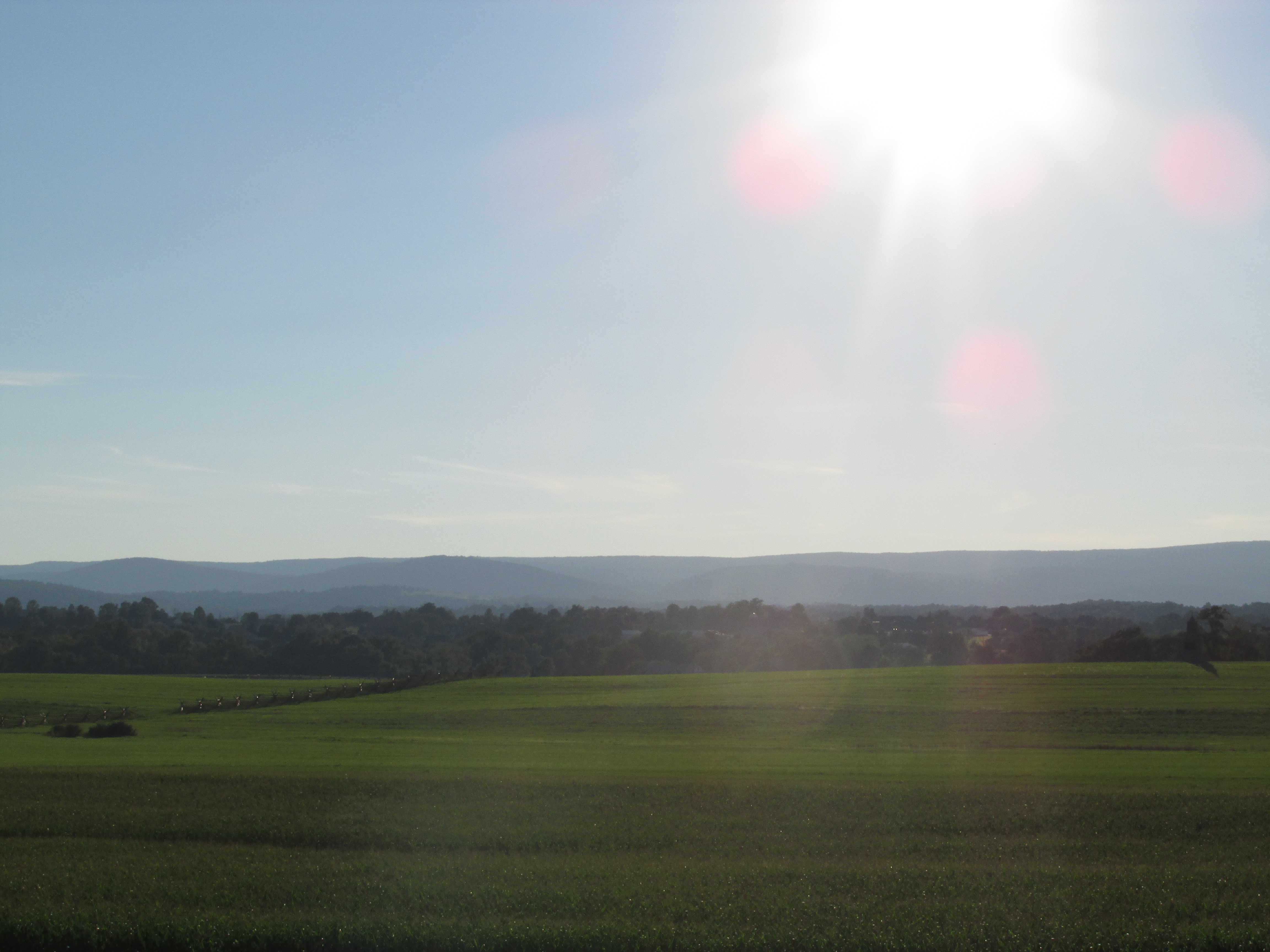
Confederate General Robert E. Lee decided to fight the battle above the Mason-Dixon. He began marching his army west from Fredericksburg toward Culpeper Court House. Lee wanted the protection of the Shenandoah Valley and asked General J.E.B. Stuart to mask the army’s movements with his cavalry.

Stuart had about 9,500 cavalry troops at Brandy Station—a small crossroads between the Rappahannock River and Culpeper—on June 8, 1863. Lee ordered Stuart to lead a raid across the river on June 9th to create a diversion.

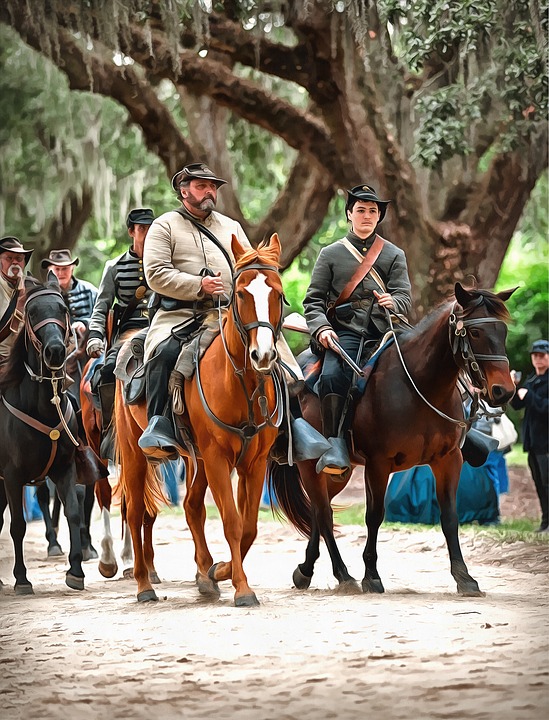
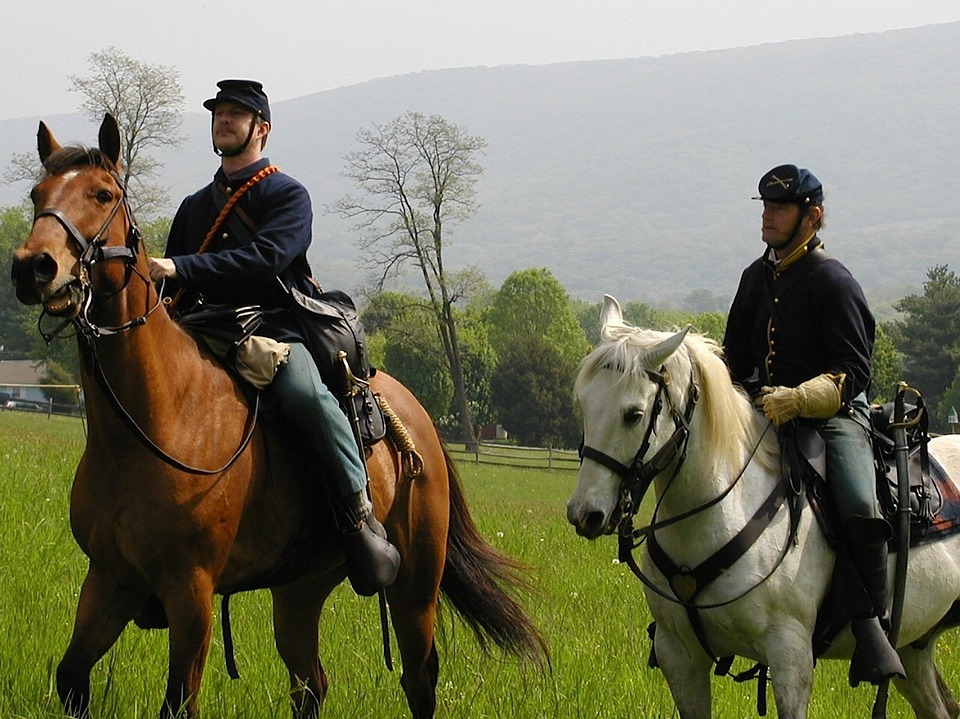
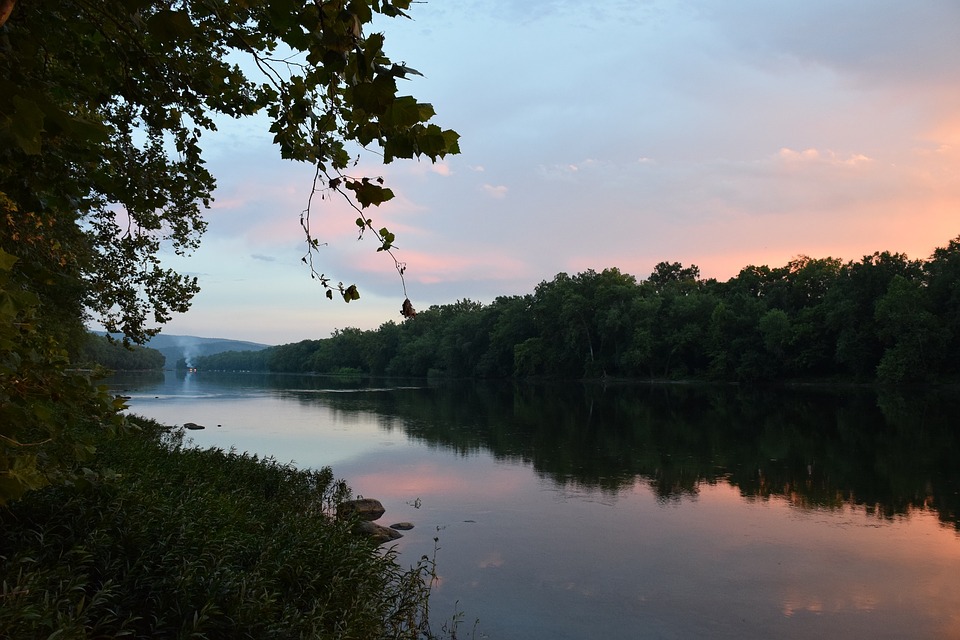
Federal General Joseph Hooker, having guessed Stuart’s plan, deployed his cavalry under General Alfred Pleasonton to attack on June 9th. His men surprised Confederate pickets at Beverly’s Ford at 4:30 am and chased them back to their camp near St. James Church on the road to Brandy Station.

Confederates suffered until their artillery was ready to fire on Union troops at the church. Union General Buford ordered his troops to charge. They were repulsed.

In the meantime, Union General David Gregg brought his cavalry behind Stuart’s men with Fleetwood Hill blocking them. Union artillery fired on Fleetwood Hill, startling Stuart but he rallied in time to fight the Union’s charge.

After almost five hours of hard fighting, Pleasonton received reports of Confederate reinforcements and withdrew at 5 pm. Union casualties totaled 866 with 81 killed. Confederate casualties were 523.

The infantry used to joke, “Whoever saw a dead cavalryman?”

The fierce battle at Brandy Station ended that.

The Union cavalry was respected after the battle.

And the battle hid the Confederate march northward.

-Sandra Merville Hart


Sources

“Brandy Station,” Civil War Trust, 2017/05/01, http://www.civilwar.org/battlefields/brandy-station.html?tab=facts.

Long, E.B with Long, Barbara. The Civil War Day by Day: An Almanac 1861-1865, A Da Capo Paperback, 1971.


Searight’s Tollhouse on the National Road

The National Road, a federal road, stretched from Cumberland, Maryland, into Ohio by 1831. The heavily trafficked road required maintenance that the federal government wanted to turn over to the states.

Pennsylvania adopted an act to build six toll gates along the National Road—also known as the Cumberland Road—in the Commonwealth.

Built in 1835, Searight’s Tollhouse is one of Pennsylvania’s two remaining toll houses on the National Road. It is five miles northwest of Uniontown.

William Searight was one of the wealthiest men in the area at the time. Searight’s Tavern stood at the junction of Searight’s Crossroads. He owned a general store, wagon shop, blacksmith shop, and a livery stable in addition to running the post office.

Political connections helped Searight to become the Commonwealth’s Commissioner of the Cumberland Road in 1842. Searight bore the responsibility for all operations and received $730 per year.

Pennsylvania’s other toll house still standing is the Petersburg Toll House. Located in Addison, it was the first toll gate after crossing into the Commonwealth. The toll keeper’s annual salary was $200 with free housing.

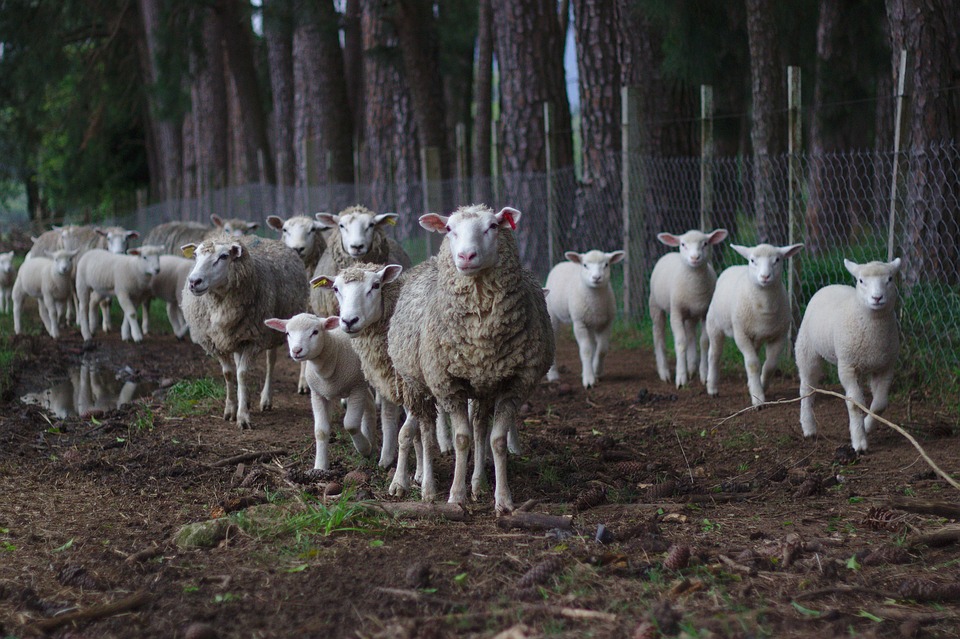
Toll rates in Pennsylvania were collected for all types of vehicles—chariots, stages, phaetons, chaises, coaches, coachees, carts, wagons, and carriages. Drovers of sheep paid a rate of 6 cents for every score (20).

Anyone who refused or neglected to pay their toll received a fine of $3.

Pennsylvania collected tolls to maintain the road from 1835 to 1905.

-Sandra Merville Hart

Sources

Day, Reed B. The Cumberland Road: A History of the National Road, Closson Press, 1996.

Edited by Raitz, Karl. A Guide to The National Road, The Johns Hopkins University Press, 1996.

“National Road Sculpture Tour,” National Road PA, 2017/04/22 http://nationalroadpa.org/touch-of-history/.

Schneider, Norris F. The National Road: Main Street of America, The Ohio Historical Society, 1975.

“Searight’s Tollhouse Historical Marker,” Exporepahistory.com, 2017/04/22 http://explorepahistory.com/hmarker.php?markerId=1-A-F2.

“Searights Tollhouse, National Road,” Wikipedia, 2017/04/24  https://en.wikipedia.org/wiki/Searights_Tollhouse,_National_Road.


The La Vale Toll House on the National Road

Work on a National Road near the Potomac River in Cumberland, Maryland, to the Ohio River in Wheeling, Virginia (later became part of the newly created state of West Virginia during the Civil War) in 1811. This section of road was completed in 1818 though the road continued into Ohio after that.

High traffic caused lots of wear and tear on the road, making it difficult to maintain. The federal government turned over the maintenance of the road to the states in the early 1830s. To cover the cost, the states built toll houses to collect tolls.

Maryland built its first toll house, the La Vale Toll House, about six miles from Cumberland around 1833. This toll house is the state’s only one still standing on the National Road (also called Cumberland Road.)

Tollkeepers collected tolls there until the early 1900s. Included in their $200 annual salary were free living quarters.

It’s fun to read the toll rates. For example, horse and riders paid 4 cents for ten miles or 14 cents for thirty-five miles. Travelers paid 8 cents for ten miles or 28 cents for thirty-five miles for every sleigh, sled, chaise, or Dearborn “drawn by one horse or pair of oxen.”

Dearborn wagons contained four wheels generally drawn by a single horse. The vehicle usually had one seat, with top curtains and sometimes side curtains. From 1819 to 1850, truck farmers and peddlers used the affordable Dearborn.

Gateposts are all that remain of a second Maryland toll house outside of Frostburg. This one was located thirteen miles from Cumberland. There’s a nice photo of the toll house on the Baltimore & Ohio Railroad Museum site.

-Sandra Merville Hart

Sources

Day, Reed B. The Cumberland Road: A History of the National Road, Closson Press, 1996.

Dearborn Wagon.” Dictionary of American History.. Encyclopedia.com. 23 Apr. 2017<http://www.encyclopedia.com>.

Edited by Raitz, Karl. A Guide to The National Road, The Johns Hopkins University Press, 1996.

“First Toll Gate House,” The Historical Marker Database, 2017/04/22  http://www.hmdb.org/Marker.asp?Marker=442.

Schneider, Norris F. The National Road: Main Street of America, The Ohio Historical Society, 1975.

“The La Vale Toll House,” The Historical Marker Database, 2017/04/22 http://www.hmdb.org/marker.asp?marker=443.

“The National Road & Toll House near Frostburg, MD,” Baltimore & Ohio Railroad Museum, 2017/04/22 http://www.eduborail.org/nps-1/image-1-nps-1.aspx.


Colonial Travel with Pack Horses

Magnificent forests lined the hillsides and valleys in Colonial America. Their beauty didn’t make them easier to navigate. Pioneers blazed trails to the west by foot and then by horseback.

Settlers heading westward during this time traveled before roads had been cut. Skinny paths left no room for wagons. They hauled their worldly possessions on pack horses.

By tying each horse to the tail of the one immediately in front, one driver led a line of pack horses. Drivers controlled up to a dozen horses in one line.

Each animal could carry up to two hundred pounds on primitive pack saddles. Pioneers created their own saddles using sturdy, forked limbs, trimmed to fit a particular load. Some frontiersmen made a living by selling their pack saddles in the back woods.

Once these courageous souls settled in Western Pennsylvania or the Ohio country, they made yearly trips back east to sell their produce and replenish supplies. Traveling in caravans, they took ginseng, rye, bear’s grease, snakeroot, and hides back east. They returned with such goods as gunpowder, salt, nails, and iron.

Early U.S. military operations utilized pack horse trains in traveling to confront Native Americans. Captain Robert Benham served as Conductor General of pack horses in the late 1700s, taking part in expeditions with Wayne, Harmar, St. Clair, and Wilkinson.

While at Fort Harmar (near present-day Marietta, Ohio) in June of 1787, Colonel Harmar wrote that the cheapest cost of hiring pack horses was fifty cents a day.

-Sandra Merville Hart

Sources

“Fort Harmar,” Ohio History Central, 2017/04/22  http://www.ohiohistorycentral.org/w/Fort_Harmar.

Schneider, Norris F. The National Road: Main Street of America, The Ohio Historical Society, 1975.

Venable, W.H., LL. D. Westward by Hoof, Wheel, and Keel. Extracted from Footprints of the Pioneers in the Ohio Valley, originally published in 1888.


Macadamized Roads

John Loudoun McAdam, a Scottish inventor, traveled almost 19,000 miles from 1798—1814 to form a method of making roads less susceptible to water.

Stagecoaches and wagons got stuck on muddy roads, adding to the difficulty of traveling. As surveyor general, McAdam devised a way to greatly improve roads and wrote of it in his Remarks on the Present System of Road-Making (1816).

To aid in water drainage, McAdam first recommended that roads be higher than the ground beside it. A layer of large broken stones then covered the road. Smaller stones were then laid over them. A fine layer of gravel was the last component.

This design reduced wear and tear on the road. Water drained to ditches on the side.

His recommendation was a great improvement over traveling on muddy roads. His idea spread to the United States.

Construction started in 1811 on the National Road, which began in Cumberland, Maryland, and wound through Pennsylvania and Virginia into Ohio. McAdam’s principles weren’t yet known.

His methods grew in popularity so that road makers used it on a new section of the National Road between Canton and Zanesville, Ohio, in 1825-1830. They broke stones small enough “to pass through a two-inch ring.”

At a width of twenty feet, the road contained the three layers of stone suggested by McAdam. Each layer was compacted with a cast-iron roller. This created the Macadamized road, making travel easier and safer for the pioneers settling in Ohio and farther west.

-Sandra Merville Hart

Sources

Bellis, Mary. “John Loudon McAdam – The History of Roads and Asphalt,” About.com, 2017/04/20 http://theinventors.org/library/inventors/blJohnMcAdam.htm.

Edited by Raitz, Karl. A Guide to The National Road, The Johns Hopkins University Press, 1996.

“John Loudon McAdam”. Encyclopædia Britannica. Encyclopædia Britannica Online. Encyclopædia Britannica Inc., 2017. Web. 20 Apr. 2017.

McAdam, John Loudoun.” The Oxford Companion to British History. . Encyclopedia.com. 19 Apr. 2017<http://www.encyclopedia.com>.

“Macadam”. Encyclopædia Britannica. Encyclopædia Britannica Online. Encyclopædia Britannica Inc., 2017. Web. 20 Apr. 2017.


Conestoga Wagons

The first major highway built by the United States federal government was the National Road. Construction began in 1811 on the road also known as the Cumberland Road because it began in Cumberland, Maryland. By August 1, 1818, the road reached to Wheeling at the Ohio River. (Wheeling was then in Virginia but is now part of West Virginia.)

Settlers moving westward quickly utilized the road through Pennsylvania and Virginia to the new state of Ohio. Their wagons toted all their worldly goods to a new land.

Conestoga wagons were first built by Mennonite Germans near the Conestoga River area of Lancaster County, Pennsylvania, in the early to mid-eighteenth century. Skilled craftsman created a unique curved bed, designed to prevent freight from shifting while climbing steep hills. Chains held the back gate in place while traveling.

Early wagon covers were hempen homespun. Canvas was used later. They soaked the canvas in linseed oil to waterproof the fabric. This covering was stretched over several wooden hoops.

The builders took great pride in their work. They painted the wagons blue, trimmed with red.

Built with broad wheels, four to six horses pulled five-ton loads over dangerous Pennsylvania roads. Conestoga wagons hauled products from the eastern states to settlers in Western Pennsylvania and the Ohio Valley and returned with frontier goods like flour, tobacco, coal, and whiskey.

Strong Conestoga horses bred in the Conestoga area of Pennsylvania could pull these loads about twelve miles per day.

Wagoners made their living by hauling freight from the east to the western frontier and back again. These colorful characters made a journey of 250 miles in about three weeks.

Drivers of Conestoga wagons didn’t sit on a bench and hold the horses’ reins. Wagoners rode the left rear horse or walked alongside the horses. When the wagoner tired of walking, he pulled out a lazy board—a wooden board attached to the side of the wagon—and sat on it.

Railroads had slowed the heavy traffic on the National Road by the 1850s. Conestoga wagons were no longer in demand. Wagoners found new ways to make a living.

But what stories they had to tell to their children and grandchildren.

-Sandra Merville Hart

Sources

“Conestoga Wagon,” History.com, 2017/04/19 http://www.history.com/topics/conestoga-wagon.

“Conestoga Wagon,” Smithsonian National Museum of American History, 2017/04/19 http://americanhistory.si.edu/collections/search/object/nmah_842999.

“Conestoga wagon.” The Columbia Encyclopedia, 6th ed.. . Encyclopedia.com. (April 18, 2017). http://www.encyclopedia.com/reference/encyclopedias-almanacs-transcripts-and-maps/conestoga-wagon.

Edited by Raitz, Karl. A Guide to The National Road, The Johns Hopkins University Press, 1996.

“National Road,” Wikipedia, 2017/04/20 https://en.wikipedia.org/wiki/National_Road.

White, Roger B. “Covered Wagons and the American Frontier,” Smithsonian National Museum of American History, 2017/04/19 http://americanhistory.si.edu/blog/2012/10/conestoga-wagons-and-the-american-frontier.html.

Happy Easter!

Matthew 28:1-10 (New International Version)

After the Sabbath, at dawn on the first day of the week, Mary Magdalene and the other Mary went to look at the tomb.

There was a violent earthquake, for an angel of the Lord came down from heaven and, going to the tomb, rolled back the stone and sat on it. His appearance was like lightning, and his clothes were white as snow. The guards were so afraid of him that they shook and became like dead men.

The angel said to the women, “Do not be afraid, for I know that you are looking for Jesus, who was crucified. He is not here; he has risen, just as he said. Come and see the place where he lay. Then go quickly and tell his disciples: ‘He has risen from the dead and is going ahead of you into Galilee. There you will see him.’ Now I have told you.”

So the women hurried away from the tomb, afraid yet filled with joy, and ran to tell his disciples. Suddenly Jesus met them. “Greetings,” he said. They came to him, clasped his feet and worshiped him. Then Jesus said to them, “Do not be afraid. Go and tell my brothers to go to Galilee; there they will see me.


Civil War Bugle Calls

Commands were often given musically during the Civil War. That is to say, by bugle or drum. A general’s voice only carried so far—especially over the din of battle. Soldiers soon learned specific bugle tunes signified that it was time to get up in the morning, for example.

John D. Billings, Union soldier, wrote about a typical day in camp in Hardtack & Coffee.

The first bugle call of the day was “Assembly of Buglers.” It came around 5 am in the summer and 6 am in the winter. Men knew it was time to roll out of their blankets. This unwelcome song always brought grumbling.

“Assembly” came fifteen minutes later. Unless ill or on guard duty, every enlisted man had to be present for his company’s roll call.

When everyone finally stood in line, the bugler played “Reveille.” Soldiers made up words to this song:

       I can’t get ’em up, I can’t get ’em up,

       I can’t get ’em up this morning;

       I can’t get ’em up, I can’t get ’em up,

       I can’t get ’em up today.

After this, “Stable Call” was played. Company drivers went to the picket ropes where they fed and groomed their horses.

“Breakfast Call” came next. Soldiers prepared and ate their breakfast or ate rations provided at the company cookhouse.

“Sick Call” sounded at 8 am. Men who were sick and required medicine proceeded to the surgeon’s tent. Quinine was given for many ailments including headache, stomachache, toothache, coughing, lameness, fever, and ague.

Next came the “Watering Call,” where cavalry and drivers watered their horses and mules. To learn more about the difficulties of watering thousands of animals, click here.

Soldiers cleaned camp, gathered wood and water, built stables, buried horses, and washed gun carriages for “Fatigue Call.”

Next, drum or bugle brought the “Drill Call” where men practiced artillery and other skills. This was practiced much more earlier in the war.

Cannoneers and drivers responded to “Boots and Saddles” as a battery drill.

“Dinner Call” sounded at noon.

Buglers played “Water Call” around 4 pm.

“Stable Call” was blown as a reminder to return horses to the stable.

“Attention” was blown at 5:45 pm, followed by “Assembly” where the soldiers fell in for “Retreat” roll call.

“Assembly of Guard” called soldiers to guard duty. A brass band or fife-and-drum-corps usually followed.

The bugler played “Attention” at 8:30 pm and then “Assembly.” Companies formed lines for the day’s final roll call, “Tattoo.”

Men then had thirty minutes to get ready for bed at 9 pm when “Taps” was played. A drummer then played to end the day.

Follow this link if you’d like to listen to a few of these.

-Sandra Merville Hart

Sources

Billings, John D. Hardtack & Coffee, University of Nebraska Press, 1993.

Villanueva, Jari. “Civil War Bugles Calls,” www/tapsbuglar.com, 2017/03/15 https://archive.org/details/CivilWarBugleCalls/20+Dan+Butterfield.mp3.

Villanueva, Jari. “Twenty Bugles Calls,” United States Air Force Band, 2017/03/14   http://www.usafband.af.mil/shared/media/document/AFD-150220-028.pdf.


Watering Thousands of Horses During the Civil War

According to John D. Billings, author of Hardtack & Coffee, one of the typical daily bugle calls was a Watering Call. Upon hearing this call, artillery drivers and all cavalry rank and file went to the picket rope to water their horses.

This was a simple task when the army camped near a river, which was often the case. When it wasn’t, thirsty horses were ridden a mile or two—sometimes longer—to find a pond or stream.

Finding a sufficient amount of water for thousands of animals was no small task.

General McClellan had about 38,800 horses and mules after the Battle of Antietam in September of 1862. 56,499 horses and mules were in the army’s care when they crossed the Rapidan River in 1864.

All animals weren’t taken to the same stream for watering because troops spread out for miles.

A drought in the summer of 1864 brought serious problems. No rain fell for several weeks. Soldiers were hard-pressed to find enough water for themselves. They’d find an old stream where only mud remained. Scooping out holes in the mud, soldiers patiently waited for “warm, milky-colored fluid to ooze from the clay.” The water came a drop at a time until it filled a dipper for the thirsty soldier.

Hundreds of men carried empty canteens through forests and valleys in search of water.

When the drought continued, Union soldiers dug wells. To their relief, they found an abundance of water 10-12 feet below ground. These wells met the needs of soldiers and their animals.

-Sandra Merville Hart

Sources

Billings, John D. Hardtack & Coffee, University of Nebraska Press, 1993.

Villanueva, Jari. “Twenty Bugles Calls,” The United States Air Force Band, 2017/03/14   http://www.usafband.af.mil/shared/media/document/AFD-150220-028.pdf.

Civil War – Union Shelters

cannon-144552_960_720

Barracks were often built to house Union soldiers in training camps, such as the one at Camp Cameron. These were long buildings similar to bowling alleys of the day. Barracks held a double row of stacked bunk beds separated by a center aisle. They were designed to hold a company, which was one hundred soldiers.

Most camps, though, sheltered their soldiers in tents. One of the popular designs was the Sibley tent, also known as the Bell Tent due to its resemblance to a bell. Supported by a single pole, these tents were twelve feet high and eighteen feet in diameter.

Sibley tents were large enough to house a dozen men. A cone-shaped stove warmed them in cold weather from the center. A small circular opening allowed for the stove pipe and for ventilation. This type of tent became too cumbersome for field camps and was used mainly in instruction camps.

camp-1786750_960_720The A tent (also called Wedge tent) was a canvas tent stretched over a six-foot horizontal bar, supported by two upright posts. This tent resembles the letter “A.” The area inside is about 7 square feet. It was intended to sleep four. The number sometimes grew to five or six men, which made for tight sleeping quarters.

Another type was the Hospital or Wall tent. These had four upright sides and came in different sizes. Those used in field hospitals held 6 to 20 patients. These tents were often joined together to increase space by ripping the center seams.

All of these shelters were widely used by troops in training before they left their state.

Shelter tents were invented early in the war for the rank and file (privates) who carried half the tent on the march. These halves were about five feet by four and a half feet with a single row of buttons and buttonholes. These were made into a whole tent by buttoning the half shelter to a comrade’s half shelter to make a roof.

Armies on marches didn’t take the trouble to put up tents in good weather. If cold or rainy, comrades placed two muskets with bayonets in an upright position the distance of the half shelter apart. They stretched a rope between the trigger guards to make a tent ridge pole.

The infantry got so much practice that it didn’t take long to put up the tent—even after a long day of marching.

-Sandra Merville Hart

Sources

Billings, John D. Hardtack & Coffee, University of Nebraska Press, 1993.