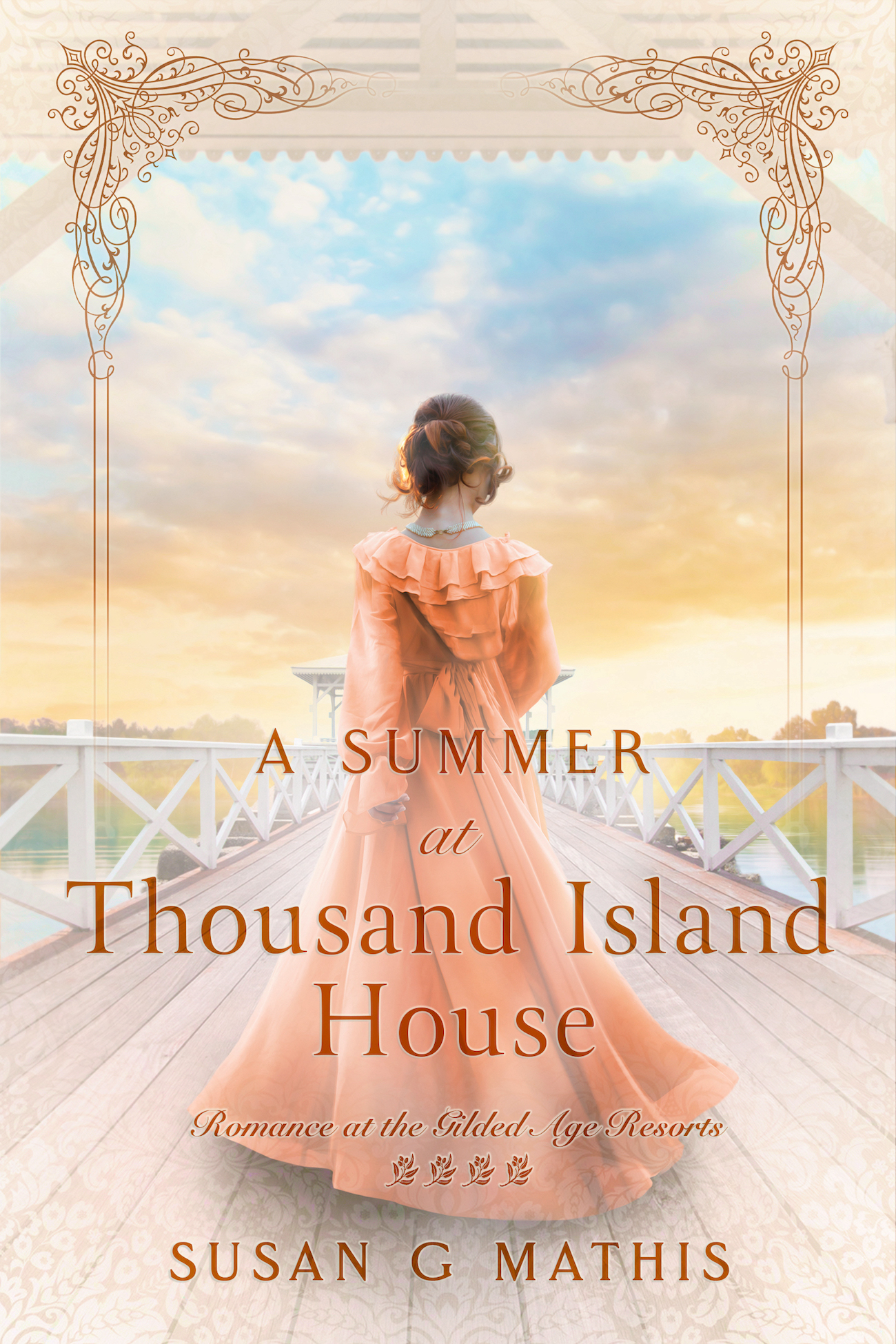
Welcome Susan G. Mathis, fellow author at Wild Heart Books, back to Historical Nibbles! Susan shares some historical background for her latest release, A Summer at Thousand Island House. Welcome back, Susan!
More than 1800 islands, known as The Thousand Islands, lay between New York state and Ontario, Canada, where Lake Ontario narrows and becomes the St. Lawrence River. Here the Great Lakes and the St. Lawrence River intersect to become the world’s largest inland navigation system. Huge freighters pass by tiny islands along the main channel and share the waterway with all kinds of boats including kayaks and canoes!
In 1872, George M. Pullman invited President Ulysses S. Grant to visit his small island during the reelection campaign, as well as several Civil War heroes including General Sheridan. When President Grant and his entourage came, the Thousand Islands became a national event. The press touted the Thousand Islands as THE place to summer for the rich and famous and common man alike.
In so doing—and thanks to excited journalists—he launched The Thousand Islands Gilded Age season of the rich and famous buying islands and lots along the mainland and building castles, mansions, and magnificent summer homes. Those islands, those homes have delightful, intriguing, and often poignant stories to tell. And I aim to tell a lot of those stories, including Katelyn’s Choice that tells the Pullman Island story and now, ten other stories including my latest, A Summer at Thousand Island House.
From 1872 until 1914 the Thousand Islands Gilded Age brought tens of thousands of visitors to the enchanting summer resort. Grand hotels popped up. The rich scooped up islands and built fancy mansions and castles they called cottages and hunting lodges. The middle class bought small parcels of land along the mainland and built simple cottages.
And tourism took off.
The railroad expanded to bring in tourists and landowners. Large side-paddle steamboats toured passengers around the islands, and distinguished visitors made it the summer resort to visit. They came from New York City, Chicago, Cleveland, Pittsburgh, and many other places.
Several of the amazing castles and beautiful summer homes you can still tour today including Boldt Castle and “The Towers” on Dark Island (now called Singer Castle) which is the setting for Devyn’s Dilemma, and many others.
About A Summer at Thousand Island House
By Susan G Mathis
She came to work with the children, not fall in love.
Part-nanny, part entertainer, Addison Bell has always had an enduring love for children. So what better way to spend her creative energy than to spend the summer nannying at the renowned Thousand Island House on Staple’s Island? As Addi thrives in her work, she attracts the attention of the recreation pavilion’s manager, Liam Donovan, as well as the handsome Navy Officer Lt. Worthington, a lighthouse inspector, hotel patron, and single father of mischievous little Jimmy.
But when Jimmy goes missing, Addi finds both her job and her reputation in danger. How can she calm the churning waters of Liam, Lt. Worthington, and the President, clear her name, and avoid becoming the scorn of the Thousand Islands community?
ABOUT SUSAN:
Susan G Mathis is an international award-winning, multi-published author of stories set in the beautiful Thousand Islands, her childhood stomping ground in upstate NY. Susan has been published more than twenty-five times in full-length novels, novellas, and non-fiction books. She has ten in her fiction line including, The Fabric of Hope, Christmas Charity, Katelyn’s Choice, Devyn’s Dilemma, Peyton’s Promise, Sara’s Surprise, Reagan’s Reward, Colleen’s Confession, Rachel’s Reunion,Mary’s Moment andA Summer at Thousand Island House.Her book awards include two Illumination Book Awards, three American Fiction Awards, two Indie Excellence Book Awards, and four Literary Titan Book Awards. Reagan’s Reward is a Selah Awards finalist. Susan is also a published author of two premarital books, two children’s picture books, stories in a dozen compilations, and hundreds of published articles. Susan makes her home in Colorado Springs and enjoys traveling around the world but returns each summer to enjoy the Thousand Islands. Visit www.SusanGMathis.com/fiction for more.
It was fun to invite readers on this book’s journey with an aspiring writer and a female telegraph operator!
To those who lived in the 1880s, venturing into the newly-settled and largely-unsettled West had become much safer—though not without danger—with the system of railroads already in place. I enjoyed taking readers to Chicago, Omaha, Oakland, Ogden, and Sacramento, as well as frontier towns along the journey such as Cheyenne.
Our heroine is a telegraph operator. She temporarily leaves her job to escort a little girl to her ailing mother in San Francisco.
My research about telegraph jobs taught me quite a bit of terminology.
For example, a clatter arises when another operator “calls.” The call begins with something like “B m—X n”, which means the B m is the station receiving the call and X n is the caller.
B m must signal a reply that she’s ready to receive the call.
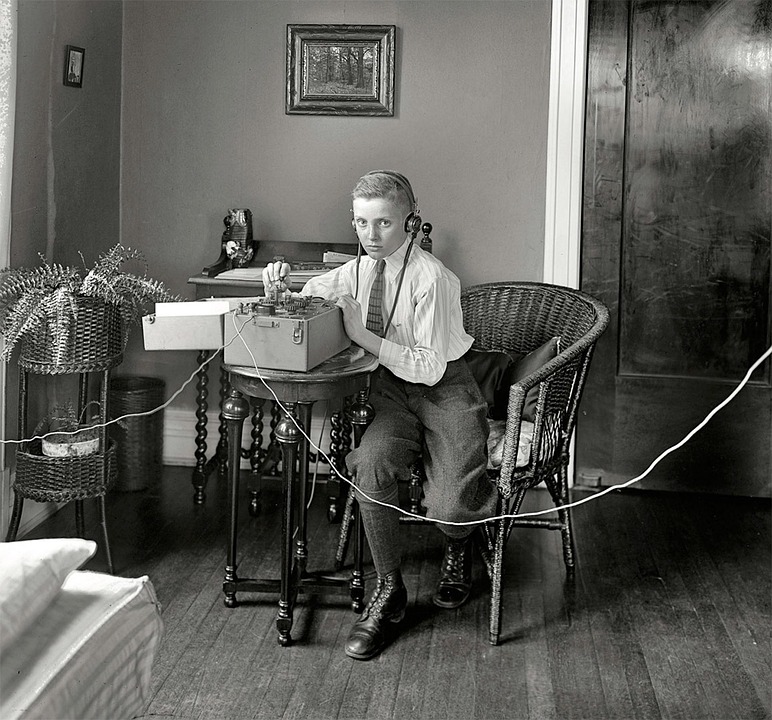
The Sounder receives sounds of the alphabet in dots and dashes. Some operators sent messages too rapidly to understand. When this occurs, the receiving operating asks for it again with a Break (she opens her “key” to break the circuit) and interrupts with “Please repeat.”
“G.A. the—” means “Go ahead” and “the” was the last word she understood.
Operators end every message with his/her own private “call” as well as the office’s call and “O.K.” at the end of each message.
Wired Love, which was written by telegraph operator Ella Cheever Thayer in 1879, provided many insights about the job’s daily tasks.
One of them was the lack of privacy on the lines. She can hear the messages sent to other wires but only offices on the same wire. In Wired Love, operators heard messages sent to and from twenty offices.
By the way, the public grew so fascinated with the role of women in telegraphy that it became the topic of romance novels and short stories, creating a new genre called “telegraphic romance” in the latter 1800s. That’s a little-known fun fact for you!
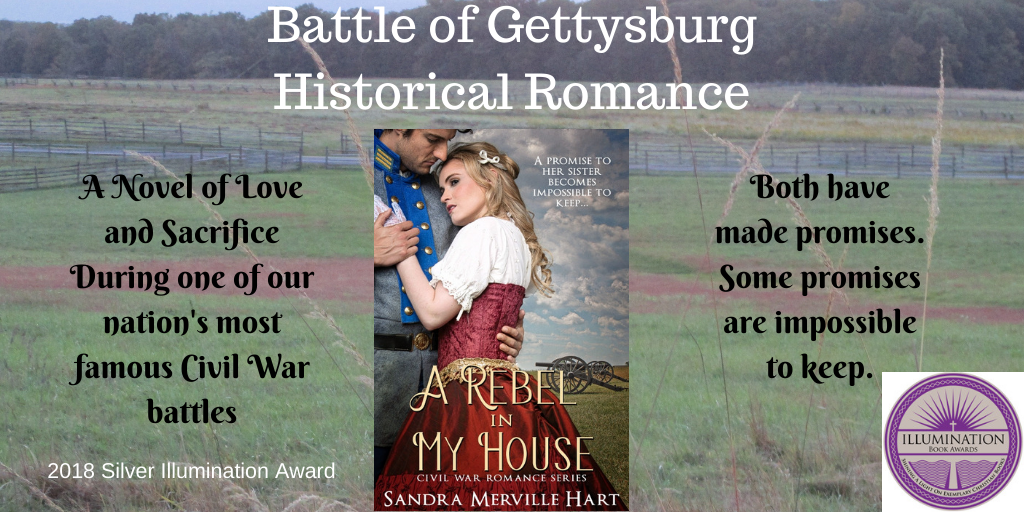
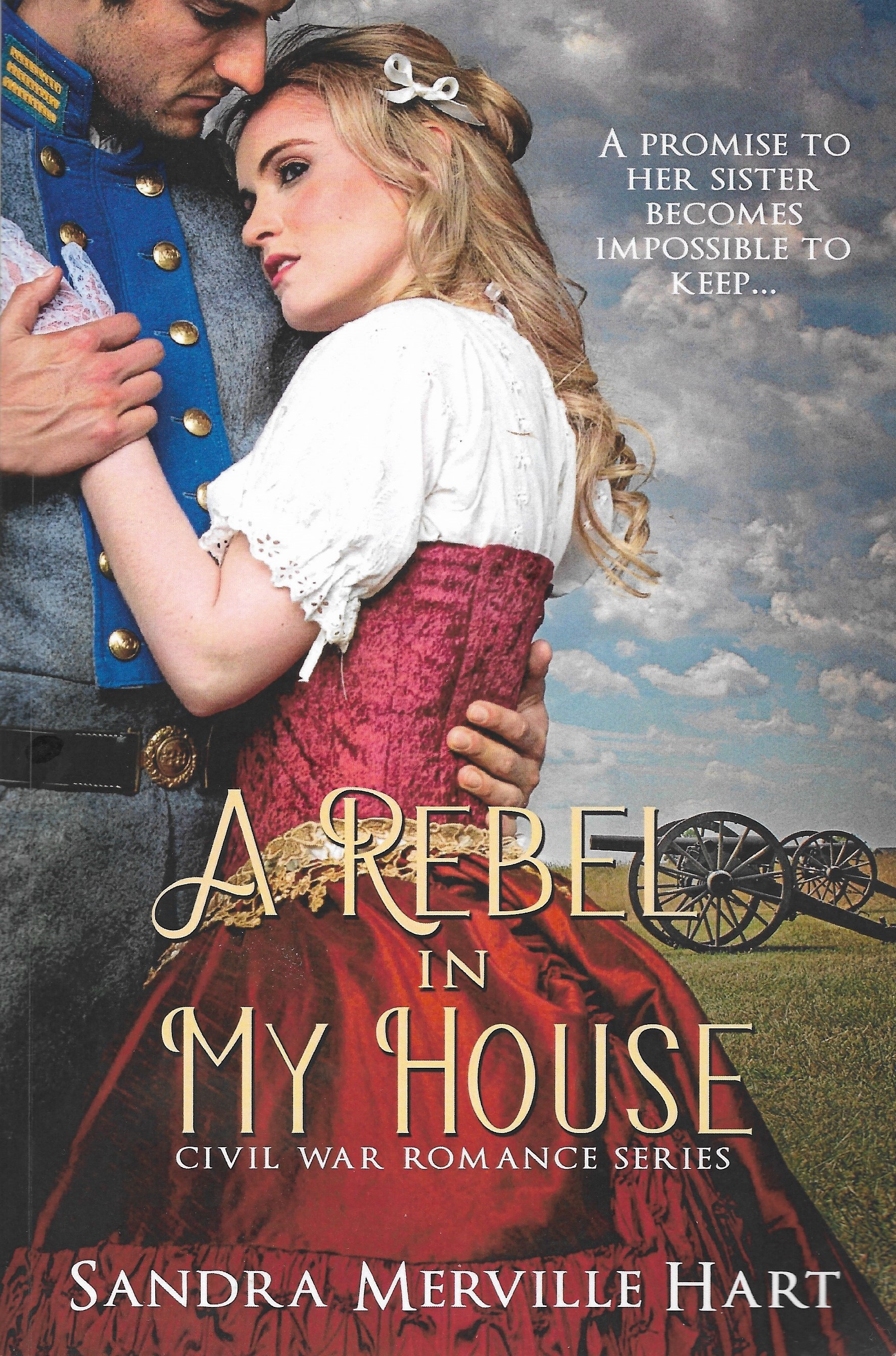
As dusk fell on a fall evening, staring out over the fields crossed by Pickett’s Charge from Cemetery Hill tore at my heart. Grassy fields are now calm, serene—yet the land still tells the story. Something significant happened on the farms outside Gettysburg in 1863.
I contemplated the scene before me as the sun sank beyond the horizon. My imagination soared, sparked by park rangers on various battlefield talks as well as my own research about those who fought there.
Once I discovered the significant events that took place within the borough of Gettysburg and how Confederates occupied the town, I knew I wanted to tell their story in A Rebel in My House.
To my delight, I found Tennessee Regiments, including the Seventh Tennessee, that opened the Battle of Gettysburg on July 1st and ended it on July 3rd at Pickett’s Charge. It seemed fitting to place our hero in a regiment that history deemed so important.
Our heroine is a fictitious Gettysburg seamstress. Actual Gettysburg residents, such as Sallie Myers, are used in very minor roles in the story. The battle, setting, and events are as historically accurate as possible. I studied the history and then dropped my characters in the middle of the action.
To write this story, I had to try to go back in time. I strolled the streets of Gettysburg. I walked the battlefields. I read monument inscriptions, soldier accounts, citizen diaries, and many research books until I felt like I experienced those horrible events in some small way.
Writing this novel changed me.
Research proved that heroes sprang up everywhere, both soldiers and citizens. Tragic events demanded more strength than folks believed they possessed, yet somehow courage rose to face the turmoil. The fear before the battle pushed folks to their limits. Learning their stories inspired me.
Firestorm at Gettysburg quotes Gettysburg resident, Sarah Broadhead, as saying after the battle, “We do not know until tried what we are capable of.”
My gaze riveted on that “no-man’s land” that became Pickett’s Charge as I stood on Cemetery Hill at dusk. A dozen emotions ripped at my heart.
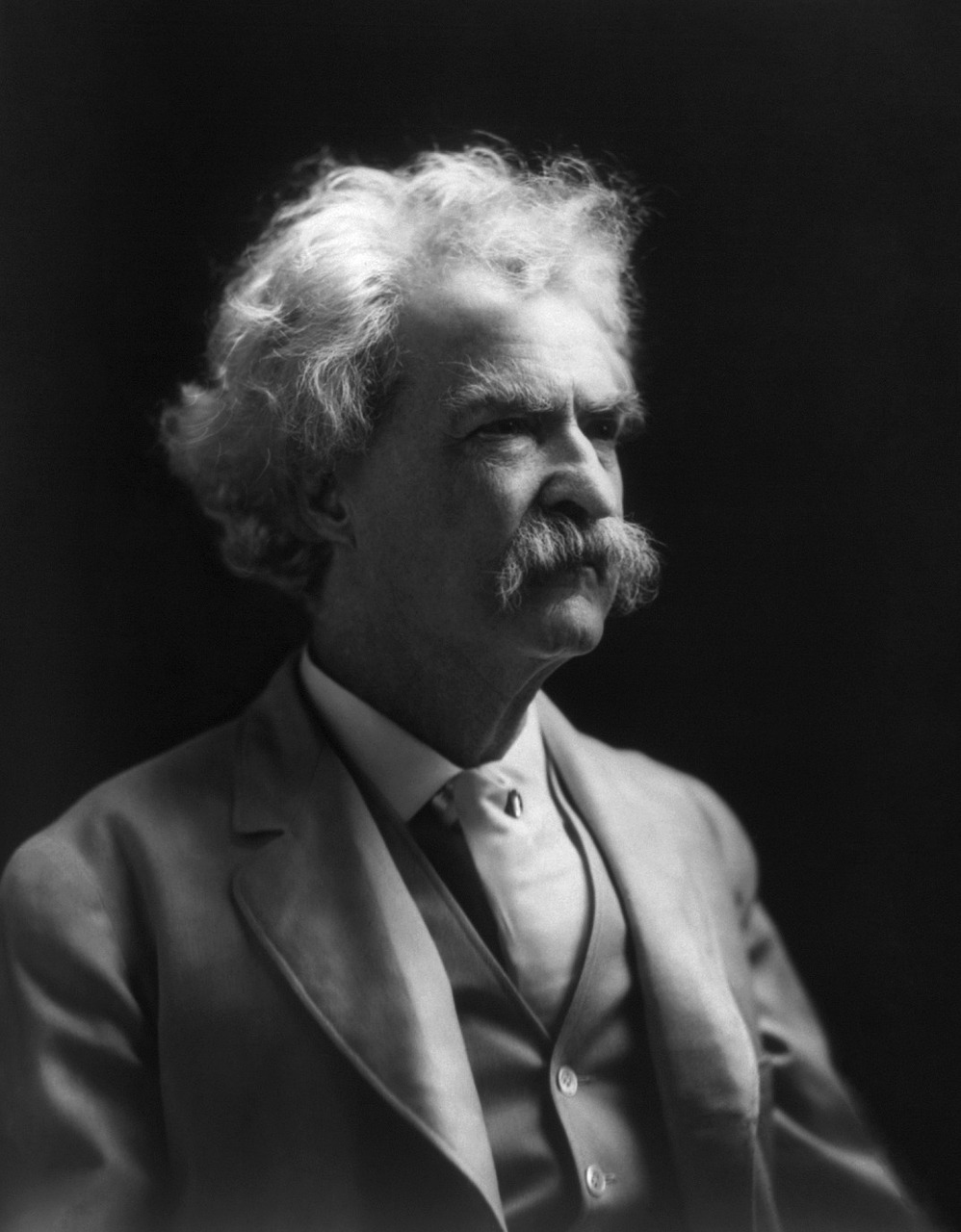
Mark Twain’s life was at a pivotal moment in the 1860s.
He was out of the States and in Nevada Territory where fortunes were made and lost mining for silver. He ought to know. His part-ownership in a silver mine had made him a millionaire. Through the worst of misfortunes, Twain lost his interest in the mine in ten days.
What was next for him? He had held a variety of positions: grocery clerk, blacksmithing, bookseller’s clerk, drug store clerk, St. Louis and New Orleans pilot, a printer, private secretary, and silver miner. He felt that he had mastered none of these professions. What does one do after losing a million dollars?
He gave in to misery. He had written letters to Virginia’s Daily Territorial Enterprise, the territory’s main newspaper in earlier days; it always surprised him when the letters were published. It made him question the editors’ judgment. His high opinion of them ebbed because they couldn’t find something better than his literature to print.
As Twain wondered what his future held, a letter came from that same newspaper offering Twain a job as city editor. Though he had so recently been a millionaire, the twenty-five-dollar salary seemed like a fortune. The offer thrilled him.
Then doubts set in. What did he know of editing? He felt unfit for the position. Yet refusing the job meant that he’d soon have to rely on the kindness of others for a meal, and that he had never done.
Necessity forced Twain to accept an editor’s job for which he felt ill-equipped. He arrived in Virginia, Nevada Territory, dressed more as a miner than an editor in a blue woolen shirt, pantaloons stuffed into the top of his boots, slouch hat, and a “universal navy revolver slung to his belt.”
The chief editor, Mr. Goodman, took Twain under his wing and trained him to be a reporter. It wasn’t long before the young man discovered he’d stumbled upon a profession in which he excelled.
What would have happened if Mark Twain hadn’t lost a million dollars? His words may have been lost to us. Such classics as The Adventures of Tom Sawyer, The Adventures of Huckleberry Finn, and The Prince and the Pauper might never have been written.
When we ponder our failures, our rejected works, and lost opportunities, we should remember that situations change. We won’t always feel as we do today. God has the ability to put us in the right place at the right time with the right attitude.
Just like He did with Samuel Clemens, America’s beloved Mark Twain.
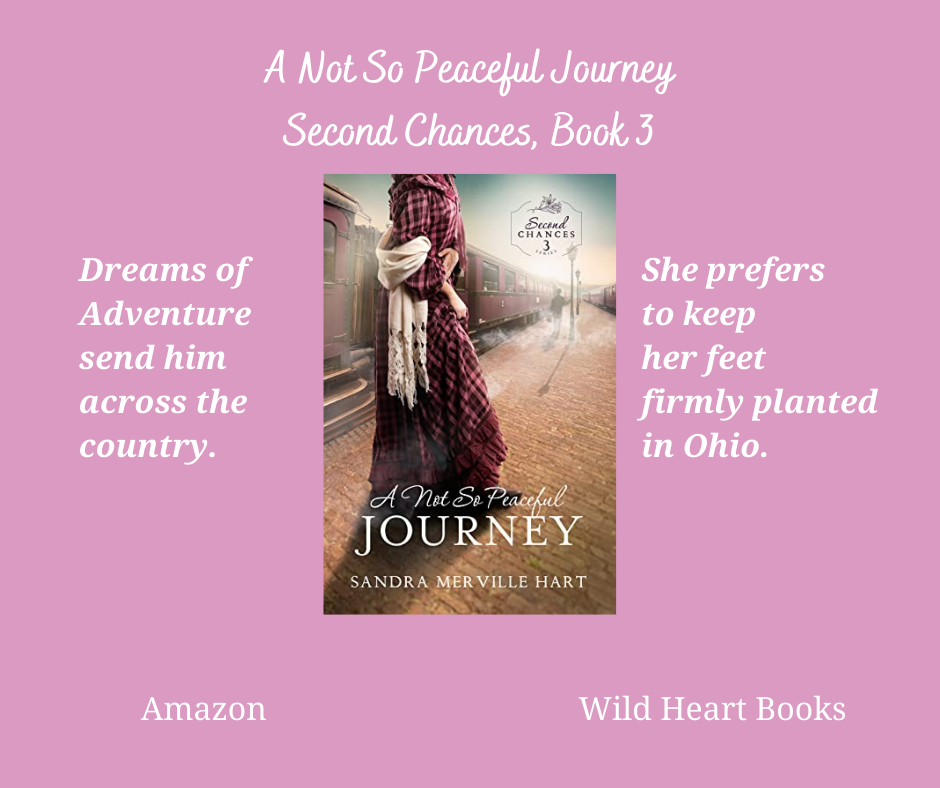
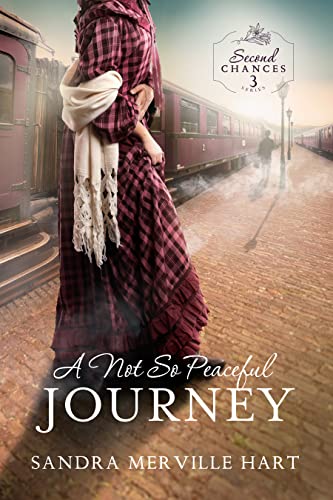
I’m excited to announce that A Not So Peaceful Journey, Book 3 in my Second Chances series, releases today, June 13th!
Join characters you love on a journey from Ohio to California in 1884! Trains had opened up the West to travelers. The Transcontinental Railroad was completed on May 10, 1869 when the Central Pacific met the Union Pacific in Promontory, Utah. It was important because it linked the East to the West.
Small frontier towns shot up along the railroad tracks, providing water and coal stops for the trains. They also provided meal stops for passengers.
Readers will catch early glimpses of familiar and unfamiliar towns along our journey to San Francisco. Come along for the ride!
Here’s a bit about the book:
Dreams of adventure send him across the country. She prefers to keep her feet firmly planted in Ohio.
Rennie Hill has no illusions about the hardships in life, which is why it’s so important her beau, John Welch, keeps his secure job with the newspaper. Though he hopes to write fiction, the unsteady pay would mean an end to their plans, wouldn’t it?
John Welch dreams of adventure worthy of storybooks, like Mark Twain, and when two of his short stories are published, he sees it as a sign of future success. But while he’s dreaming big with his head in the clouds, his girl has her feet firmly planted, and he can’t help wondering if she really believes in him.
When Rennie must escort a little girl to her parents’ home in San Francisco, John is forced to alter his plans to travel across the country with them. But the journey proves far more adventurous than either of them expect.
I learned a few weeks ago Byway to Danger, Book 3 in my Spies of the Civil War series, won the Gold Illumination Award for Romance Fiction. What fun it was to open the package containing the award, a gold medal, and seals for the book!
When we think of winning medals, our thoughts most likely go to the Olympics where we celebrate our gifted athletes. It’s such an honor to win this award.
I love the hero and heroine in this book as I hope you have grown to love this fictional family in the whole series who live in the turbulent times of the Civil War where the way isn’t always clear. Though this series is about a fictional family, there are actual historical spies who touch the stories.
I’m happy to announce that this series will be extending! Book 4, where we move to another section of the country, will soon be submitted to my publisher.
More about that later…
Byway to Dangeris set in the Confederate capital of Richmond, Virginia, in 1862. Because Richmond was the capital of the Confederacy, the Union army was often threatening the city. One might suppose that all of Richmond’s citizens supported the Confederacy, yet there were a lot of Union supporters and Union spies in the capital.
Here’s a bit about the book:
Everyone in Richmond has secrets. Especially the spies.
Meg Brooks, widow, didn’t stop spying for the Union when her job at the Pinkerton National Detective Agency ended, especially now that she lives in the Confederate capital. Her job at the Yancey bakery provides many opportunities to discover vital information about the Confederacy to pass on to her Union contact. She prefers to work alone, yet the strong, silent baker earns her respect and tugs at her heart.
Cade Yancey knows the beautiful widow is a spy when he hires her only because his fellow Unionist spies know of her activities. Meg sure didn’t tell him. He’s glad she knows how to keep her mouth shut, for he has hidden his dangerous activities from even his closest friends. The more his feelings for the courageous woman grow, the greater his determination to protect her by guarding his secrets. Her own investigations place her in enough peril.
As danger escalates, Meg realizes her choice to work alone isn’t a wise one. Can she trust Cade with details from her past not even her family knows?
The heroine in my recent release, A Not So Peaceful Journey, Book 3 in my “Second Chances” series is a telegrapher in Hamilton, Ohio. I researched to find out about the daily activities required by the job in 1884.
Female telegraph operators had been hired for the job as early as the 1840s. In 1846, Sarah Bagley performed that job in Lowell, Massachusetts. Three years later, Phoebe Wood accepted the position in Albion, Michigan.
During the Civil War, the need for telegraphers heightened when the men enlisted in the military for both sides, putting more women in the industry. Training for female telegraphers became more available when Western Union opened a school for them in 1869. A year later, 4% of the telegraphers were female and that number continued to rise.
One fun thing I learned in my research was that the increased number of women in the profession sparked public interest. This led to novels and stories being written about them.
A new literary genre, telegraphic romance, was born. In these stories, young women found romance with operators they “met” in the course of their job.
Desiring to learn more about the day-to-day job of the telegraphers, I read Wired Love: A Romance of Dots and Dashes by Ella Cheever Thayer. It was published in 1880 and it provided all those daily details—and more—that I needed for my story.
In the novel, Feisty Nattie Rogers is a telegraph operator. She meets the mysterious “C”, a telegraph operation in another station on her wire. He refuses to tell her his full name and they develop a friendship over the wire that soon has her dreaming of love.
Nattie tells her fellow boarders all about “C” and they can’t wait for the two of them to meet. But the course of true love meets some hurdles.
This book is written in the omniscient viewpoint. The reader knows what everyone is thinking all the time. Written in 1880, this story has the long conversations prevalent in writings of that day. I confess that I skimmed over some of those, but still enjoyed the story.
What was important to me wat that the author gives a thorough overview of a telegrapher’s job in the story.
What fun that this occupation inspired a new genre in the late 1800s!
I have wanted to write a story set in Cincinnati, Ohio, in the 1880s for several years. It seems to me that it was on my heart to write while I was still working as a Programmer Analyst and writing was but a dream.
Twins Cora and John had been living on their family’s farm before moving to Cincinnati to attend college. John went rogue on me (he does that in Book 3 too 😊) and got a job at a newspaper working with Ben, and decided against college. Meanwhile, Ben begins to court Cora.
When our story begins, Cora is in her second and final year at the Cincinnati Kindergarten Training School. Kindergarten is still in its infancy in 1883. In fact, the demand for kindergartens grew in the 1870s. There were about four hundred kindergartens by 1880, and the need to train teachers for them was a natural part of that growth.
A training school in Cincinnati was organized in March of 1880. At first, kindergarten students (aged four – six) learned the 3 R’s –reading, writing, and arithmetic. Before long, principals in higher grades complained that kindergartners also needed a basic knowledge of music, drawing, and manual training.
This led to greater training for kindergartener teachers, who learned teaching tools that included games, songs, and handwork.
I imagine that incorporating games, songs, and activities engaged the children’s interest in a new and fun way for them.
Part of my research included The Songs and Music of Friedrich Froebel’s Mother Play by Fro. Bel. Friedrich. Early training schools used Friedrich Froebel’s writing extensively in their training so I mentioned his Mother Play book within the story.
Though demand for kindergartens was growing, most schools didn’t address the needs of these four to six-year-old children by providing a kindergarten class. Cora has to fight for a local school to start a new class to open the fall after she graduates.
Another fun thing about this novel is the places I’ve included that the modern reader familiar with Cincinnati will recognize: Fountain Square, the Suspension Bridge, St. Peter’s Cathedral, and the Zoological Gardens to name a few.
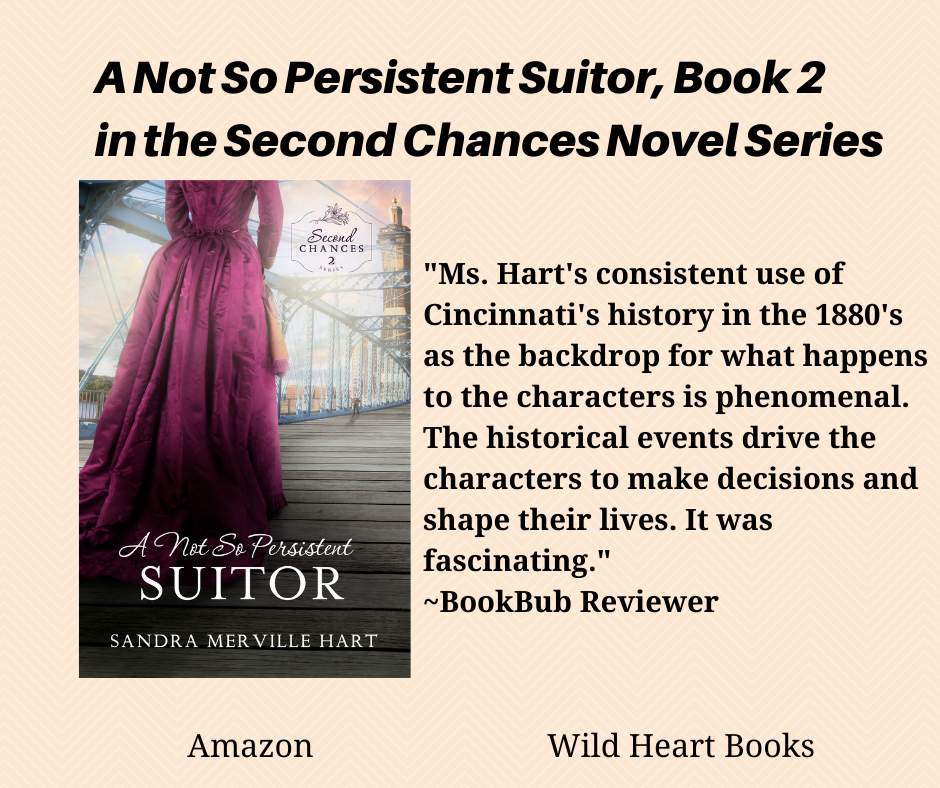
Follow characters you’ve grown to love in A Not So Convenient Marriage, Book 1 in the “Second Chances” series into A Not So Persistent Suitor, Book 2!
There are some stories that must be told. A Not So Convenient Marriage is one of them for me.
I don’t know what it is about this story, but once I began writing it over a dozen years ago, the characters wouldn’t leave me alone.
I wrote the first draft of this book a few years before my first book—another book, A Stranger on My Land—released, so I was still learning about the writing journey. I’m certain that my first draft of A Not So Convenient Marriage wasn’t ready for publication—it was rejected.
But the characters in my imagination wouldn’t allow me to let this one go. I edited and reedited, using skills I learned at writing conferences. Then I tried again with another editor. Another rejection.
Discouraged, I worked on other writing projects and met with a little success. When my first Civil War romance published, I decided to follow my heart and continue writing about that turbulent time period.
This book was set aside.
Still, every morning I woke up thinking about the characters in A Not So Convenient Marriage. In my mind, I’d rewrite a scene from the book as I lay, trying to sleep, in the middle of the night. Or the story would haunt me before falling asleep at night, keeping me awake an hour or two.
This happened almost daily for years.
Finally, I pulled up the manuscript again. It had been written in my early days so it required a lot of modification. I asked my agent to begin showing my updated proposal for the book. She was happy to do this because she’d always believed in this book. In fact, she decided to represent me after reading for proposal for it.
By the way, the story was still keeping me awake as I waited to sign a book contract.
Last year, I was thrilled when Misty Beller at Wild Heart Books, offered me a contract for a three-book series for this novel. Not only that, she also gave me a three-book contract for my “Spies of the Civil War” series, that published in 2022. (I invite you to read that series beginning with Book 1 Avenue of Betrayal, Book 2 Boulevard of Confusion, and Book 3 Byway to Danger. I’m writing Book 4 in the series now!)
Misty told me that she cried when reading my manuscript for A Not So Convenient Marriage—the first time that had ever happened for a submission. That touched my heart.
I’m happy to say that scenes from the book no longer keeps me awake at night…for now the story will be told.




 Sandra Merville Hart