
Ever wonder how New Jersey got its nickname? Click on the link to learn a bit about this state’s history.

by Sandra Merville Hart
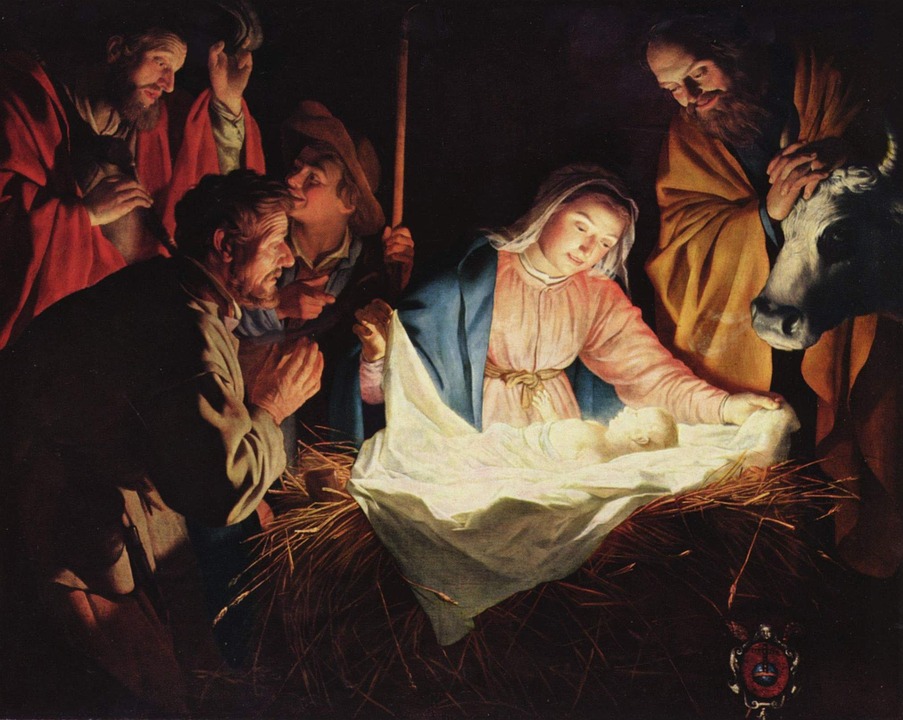
Joseph Mohr, a young priest at St. Nicholas Church in Oberndorf, Austria, was asked to plan the music for that all-important service, Christmas Eve Mass.
1818 was an especially cold winter. Mohr strolled over snow-covered lanes to the village church hours before the service was to begin. The choir had practiced the songs. They were ready, even though snowy weather had prevented some from attending practices.
The church organ didn’t work. What could he do?
 He hurried to the home of Franz Gruber, a schoolteacher and musician friend. Whether he went there to talk about a poem he wrote or remembered while there is unclear. At some point in their conversation, Mohr showed a poem that he had written two years previously while he served at a church in Mariapfarr. He asked Gruber to compose music and guitar accompaniment for the Christmas poem.
That evening, Mohr and Gruber sang the song for the first time as the guitar played “Stille Nacht.” Singing four-part harmony, the choir repeated the last two lines of each stanza.
 Karl Mauracher, an organ repairman, came to St. Nicholas the following month. While Mauracher worked on the organ, Mohr told him of the new song sung on Christmas Eve, accompanied by guitar. Mohr sang “Stille Nacht” for Mauracher, who loved it so much that he taught the song to other churches.
Mohr died before his song became well-known throughout Europe. The problem was that folks assumed one of the famous composers, such as Mozart or Beethoven wrote the melody. Gruber’s claims that he wrote the tune didn’t dispel lingering doubts. It wasn’t until an original document by Mohr was found in 1995 that folks widely accepted Gruber’s claim. The manuscript showed that Mohr penned the poem in 1816 and the Gruber composed the music in 1818.
“Stille Nacht” has been translated into English as “Silent Night.” Two centuries later, the carol is still sung every Christmas season. The talents of these two men live on in this song.
 Sources
Collins, Ace. Stories Behind the Greatest Hits of Christmas, Zondervan, 2010.
Egan, Bill. “Silent Night: The Song Heard ‘Round the World,” Silentnight.web.za, 2016/10/27 http://www.silentnight.web.za/history/index.htm.
“Silent Night,” Wikipedia, 2016/10/27 https://en.wikipedia.org/wiki/Silent_Night.

by Sandra Merville Hart
It’s that time of year again. Shoppers hear Christmas tunes in malls and stores while selecting the perfect sweater for Grandpa. Radio stations play familiar carols as commuters rush from one store to the next searching for the video game that tops their teenager’s wish list.
 We hum the tunes and suddenly remember that lunch was hours ago. It’s funny to think that several of our favorites mention food.
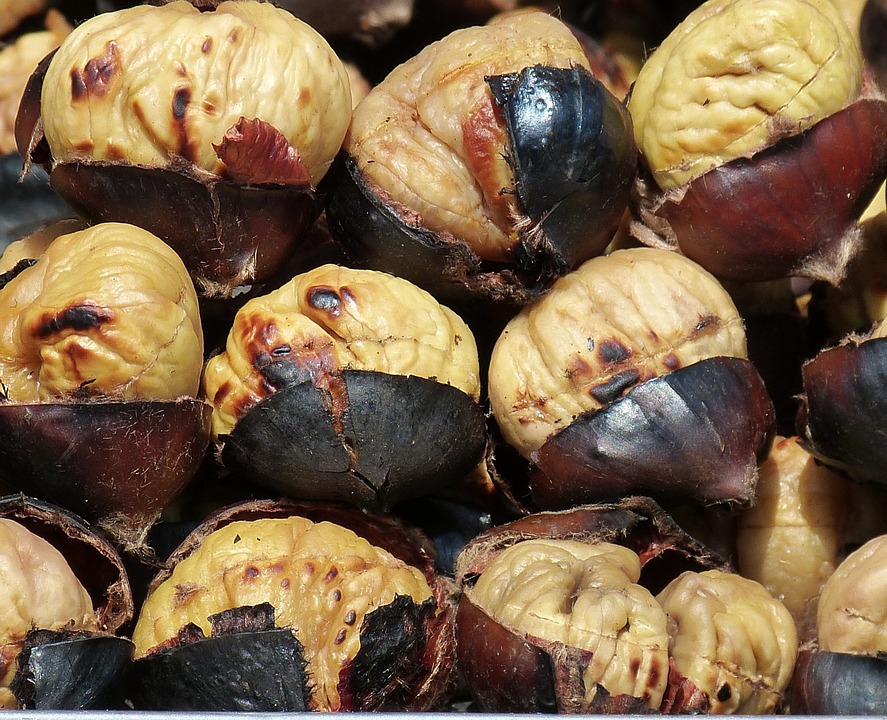
Here’s a list of ten traditional Christmas songs that mention food or drink:
 So if you find yourself a bit hungry while Christmas shopping, it may be the songs you are humming along to from the sound system!
Merry Christmas!

Sources
“Christmas Lyrics,” Mikeleal.com, 2016/10/19 http://www.mikeleal.com/christmas/songs.html.”
Wednesday, November 30, 1864
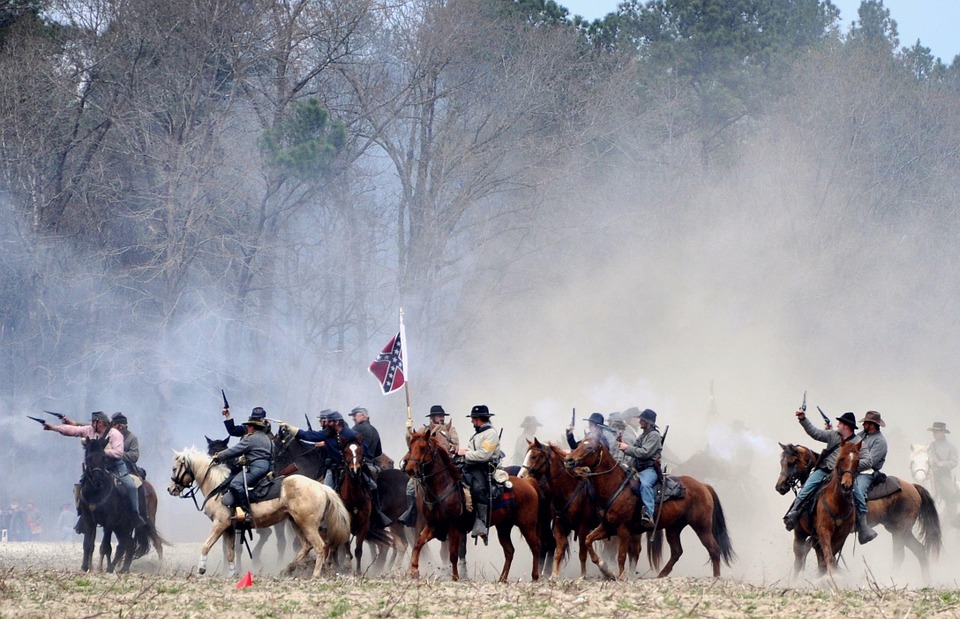
Jacob Cox led Union soldiers under General Schofield south of Franklin, Tennessee, around dawn where they set up a line of defense as well as along the Harpeth River. Federals wanted to hold the city long enough to repair bridges for crossing.
Confederate General John Bell Hood resolved not to allow the Federals to reach Nashville. He arrived with 30,000 troops around 4 pm and launched an assault on the Union front. Though they almost broke through, the Southerners took heavy losses.
Some of the whole war’s bloodiest fighting happened at the Carter House. Tragically, Confederate soldier Tod Carter was fatally wounded in the frontal assault and died in his childhood home.
The battle that raged well past nightfall claimed the lives of 6 Confederate generals, including Pat Cleburne, tragic losses for the Southerners.
-Sandra Merville Hart
Sources
Long, E.B with Long, Barbara. The Civil War Day by Day: An Almanac 1861-1865, A Da Capo Paperback, 1971.
“Franklin,” Civil War Trust, 2016/08/04 http://www.civilwar.org/battlefields/franklin.html.

A master storyteller, Lehman has woven three completely different stories in a surprising way.
Each story has its own poignant message. These stories tugged at my heart and prepared me for the upcoming season.
Highly recommended reading for the Christmas season!
I’ve read several novels by this author and loved them all.
-Review by Sandra Merville Hart
Lighthouse Publishing of the Carolinas – Use coupon code SandraMHart for a 20% discount on Lighthouse Publishing books!

by Sandra Merville Hart
In the spirit of traditional cooking and baking for Christmas, I searched for long-ago recipes made for the holiday feast. Plum pudding was often served at the meal. Though there were several recipes in an 1877 cookbook and one in an 1841 cookbook, they all had one thing in common—none of them used plums! No fresh plums, dried plums, or prunes were called for in any plum pudding. That surprised me.
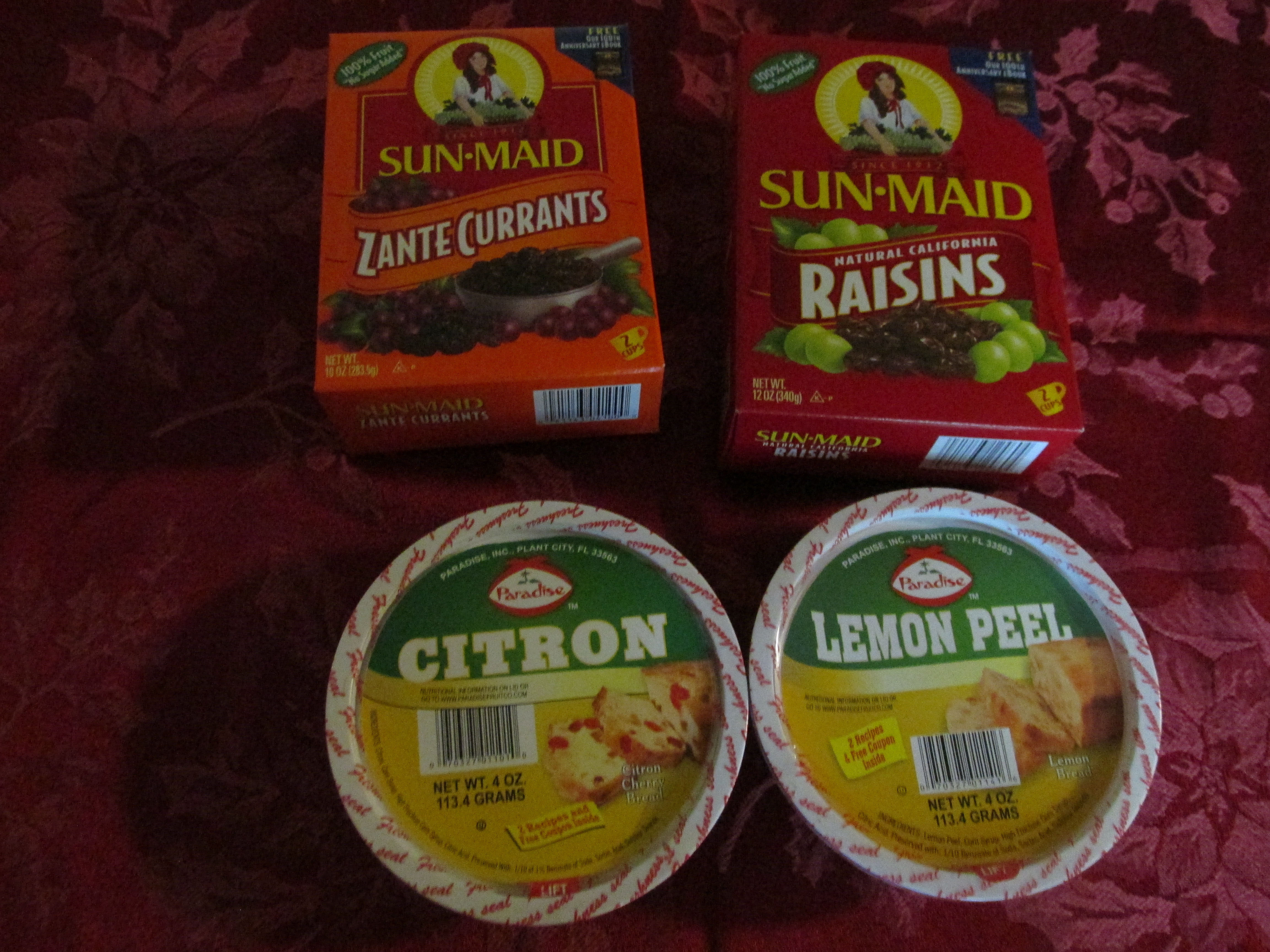 I decided to try an 1840s recipe for plum pudding. Shopping for a few of the ingredients was challenging: currants, candied lemon, and candied citron were harder to find than raisins.
The pudding was to be boiled in a “fine, close linen cloth.” I intended to use cheesecloth, which advertised steaming as one of its culinary uses. The paper-thin weave on the cloth gave me second thoughts. Since I had baked One-two-three-four Pudding in the oven and then steamed it, I decided to do that instead with this plum pudding.
 In a large bowl, cream together ½ pound of butter (2 sticks) and ½ cup of sugar. (The 1841 recipe called for a half-pound of chopped suet—the hard white fat found on kidneys and loins of sheep or cattle—but this can be substituted for butter.) Beat 4 eggs separately and add to creamed mixture. Then add one teaspoon each of nutmeg, cinnamon, and ground mace. Mix well.
Combine ½ cup flour, ½ cup bread crumbs, and 1 teaspoon of salt in a separate bowl. Add 1 cup of raisins to the dry mixture and coat them. (I used my hands instead of a spoon for this part.) Then add 1 cup of currants (these look like tiny raisins) and coat these as well.
Add a heaping tablespoon of candied lemon and a heaping tablespoon of candied citron to the dry mixture and stir to coat. (I forgot to add these until after baking, so I scattered them over the top before steaming. This worked fine, too.)
Use cooking spray on an 8×8 pan to bake the pudding at 375 degrees for 30 minutes. Then I steamed the plum pudding over a kettle of boiling water for two hours. (I will use a glass baking dish next time and steam it in the oven. My goal is to learn how our early bakers prepared recipes.)
 For pudding sauce, cream together 4 tablespoons of butter and ½ cup of sugar. Then stir in a teaspoon of vanilla extract or use a ½ teaspoon of nutmeg if you prefer. Cook in a saucepan over medium heat until gently bubbling. Pour over individual servings.
With the candied fruit, it looked—and tasted!—a whole lot like those fruit cakes my dad used to purchase at Christmas. If you like fruit cakes, you will probably enjoy this plum pudding.
The sauce tasted delicious but those who don’t love vanilla as much as I do may prefer to use only a ½ teaspoon.
I’d love to hear if you try this recipe!
Sources
Hale, Sarah Josepha. Early American Cookery, Dover Publications, Applewood Books, 1996.

View of Confederate cannons by a rocky cliff with Tennessee River and Chattanooga in the background
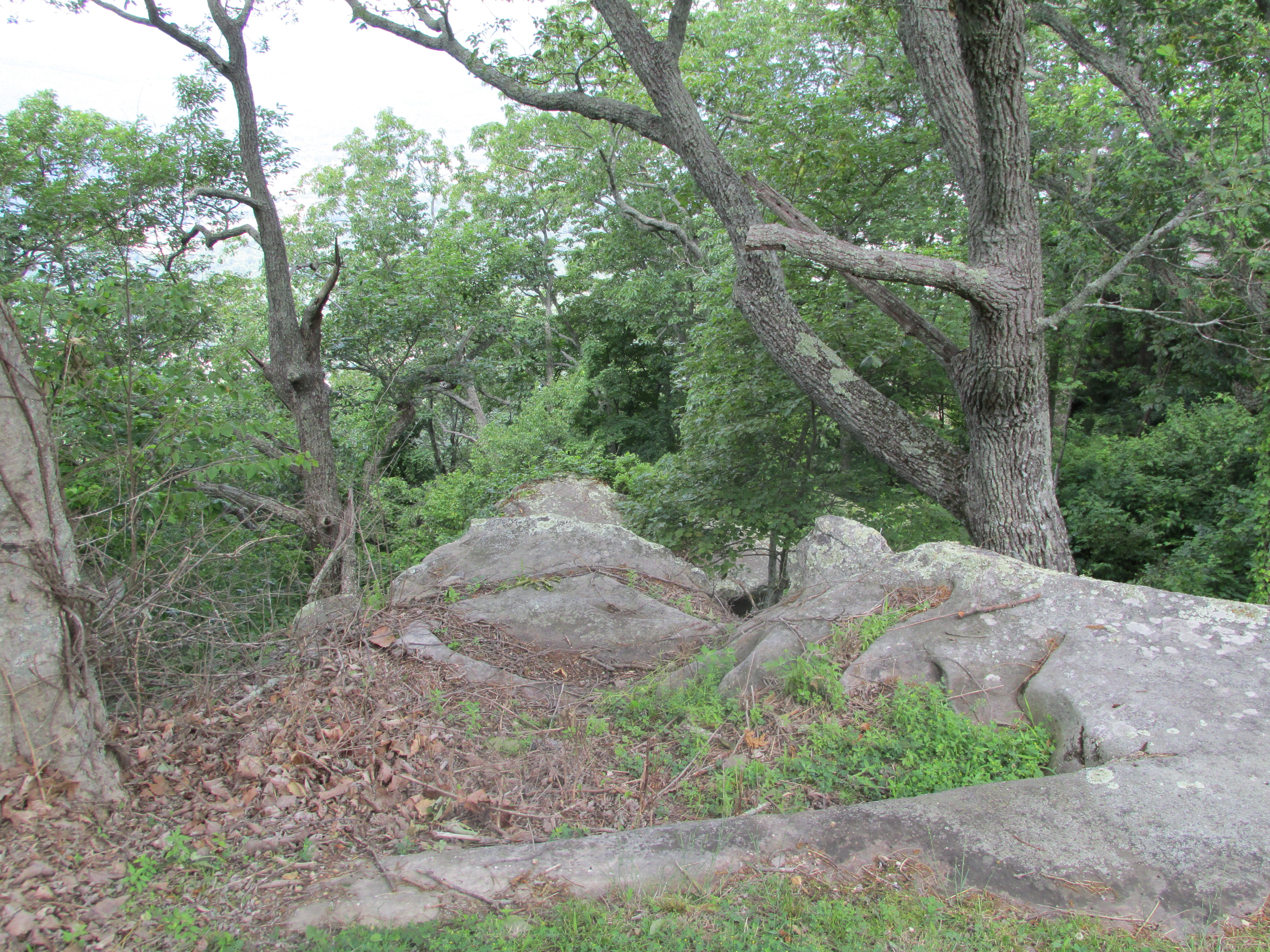
Rugged terrain at Point Park on Lookout Mountain
Rain fell in the predawn hours of November 24th. Union General Hooker sent Geary’s Division and Whitaker’s brigade of the 4th Corps to climb Lookout Mountain and attack Confederate soldiers there.
They climbed over and around boulders, loose stones, bushes, vines, and thickets of dense timber, going northward along the base of the almost vertical cliff in a dense fog to meet up with Osterhaus’s division.
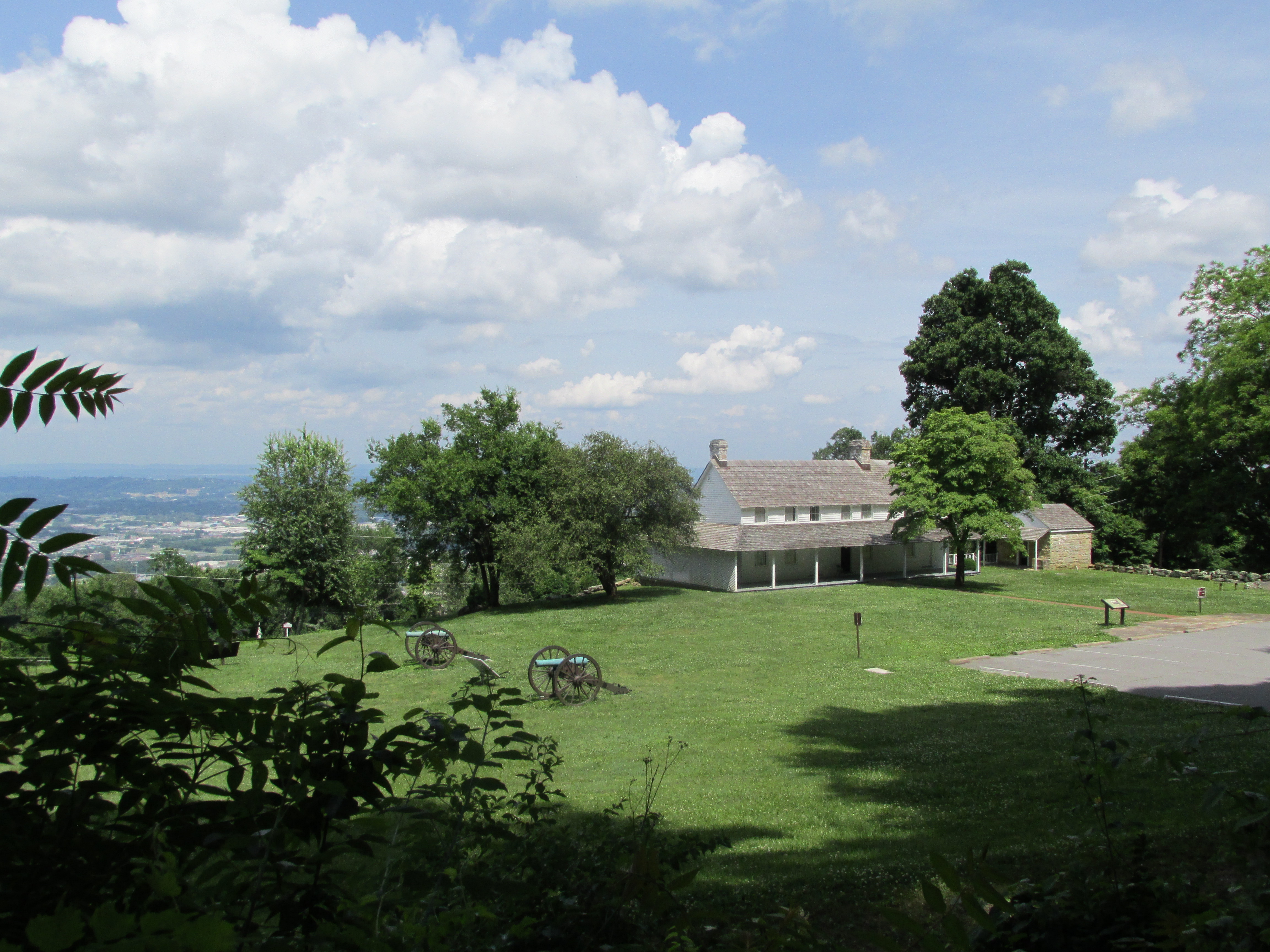
View of Cravens House with Chattanooga in the background
About 10 a.m., Union troops met Confederate troops at Cravens farm where sharp fighting took place. After 3 hours of fighting, Confederates were driven about 400 yards east of Cravens farm. Southern reinforcements arrived about 1 p.m. with additional troops coming thirty minutes later.
 Persistent fog hastened the darkness. At dusk, the clouds blew away. It revealed, in the words of Lieutenant Colonel Joseph S. Fullerton, General Gordon Granger’s chief of staff, “parallel fires of the two armies, extending from the summit of the mountain to its base, looking like streams of burning lava, while in between, the flashes from the skirmishers’ muskets glowed like giant fireflies.”
The battle on Lookout Mountain is also known as The Battle Above the Clouds for the heavy fog that partially covered the mountain.

After the war ended, this photo shows the Reconstruction in Chattanooga.
The rain that fell in the afternoon turned partially to sleet in the higher elevations. An Ohio sergeant wrote the sleet “felt sharp as needles to our faces.”
During the cold night, the sky cleared. Shadows crossed the moon in an eclipse, sending chills down the spine of many watching that had nothing to do with the weather. It was viewed as a bad omen. Private Ralph J. Neal of the Confederate 20th Tennessee and his friends were stricken with a sense of “impending disaster.” The eclipse also gave many of Hooker’s soldiers an eerie feeling.
I’ve written an inspirational Civil War romance, A Stranger On My Land, set on Lookout Mountain, Tennessee. Please read the Prologue to learn Adam’s story and how the wounded Union soldier ends up on Carrie’s property, whose father fights with General Robert E. Lee’s army in Virginia.
Chapter one begins on Lookout Mountain the day after the Battle Above the Clouds.
-Sandra Merville Hart
Sources
Korn, Jerry. The Fight for Chattanooga: Chickamauga to Missionary Ridge, Time-Life Books, 1985.
Sword, Wiley. Mountains Touched with Fire: Chattanooga Besieged, 1863, St. Martin’s Press, 1995.
Woodworth, Steven E. Six Armies in Tennessee: The Chickamauga and Chattanooga Campaigns, University of Nebraska Press, 1998.
Part of the Sisters & Brides Series
Clare Randall understands the grief of losing a spouse all too well, so she can relate to Dr. Adam Wright’s pain.
What no one knows is that Clare is almost penniless after the death of her successful husband. When a stipulation in her aunt’s will requires her to work for free as nanny for Adam’s daughter, she knows financial difficulties await. What she doesn’t realize is the danger to her heart.
Lovable, believable characters in a tough situation touched my heart. I’ve read this novel numerous times. A great read!
-Review by Sandra Merville Hart

Mark Twain’s life was at a pivotal moment. What does one do after losing a million dollars?
He was out of the States and in Nevada Territory where fortunes were made and lost while mining for silver in the 1860s. He ought to know; his part-ownership in a silver mine had made him a millionaire. Through the worst of misfortunes, Twain lost his interest in the mine after ten days. His loss ended up being the world’s gain.

Roasted turkey appears to be as popular for Thanksgiving dinner in the 1840s as it is today, though hard-working cooks prepared their meat a bit differently back then.
 Hale suggested making the stuffing using two cups of bread crumbs and one cup of butter. (Minced suet—the hard white fat found on kidneys and loins of sheep or cattle—could be substituted for the butter. Modern cooks will likely choose butter.) Beat three egg yolks well and then add about a teaspoon of finely chopped parsley, a fourth of a grated nutmeg, and one teaspoon of powdered lemon peel. Add teaspoon of allspice and salt. This mixture is then added to the bread and butter until thoroughly combined.
 She gave an alternate suggestion for stuffing: beat two egg yolks then combine with cup of sausage and a cup of bread crumbs.
Use either of these bread mixtures to stuff the turkey.
Dredge the turkey all over with flour then lay it in front of the fire with the stuffing side closest to the flame. The recipe does not mention a roasting pan though it seems likely they used something to protect the meat from scorching, possibly a cold gridiron as is used for broiling chicken in another recipe.
Hale mentioned that placing a strip of paper over the breast bone prevents scorching.
Until the turkey begins to produce drippings, baste with either butter or water with salt. Then use turkey drippings to baste the meat.
 When the meat is almost done, dredge it with flour once more and then baste it with butter.
Hale advises that large turkeys require three hours of roasting, though no mention was made of actual number of pounds.
Roasted turkey was often consumed with ham or tongue. Stewed cranberries were served as a side dish then as now.
-Sandra Merville Hart
Sources
Hale, Sarah Josepha. Early American Cookery, Dover Publications, 1996.

