Transcontinental Railroad

by Sandra Merville Hart

Asa Whitney, a New York merchant, planted the idea of a transcontinental railroad when he petitioned Congress for federal funding of a sixty-mile strip in 1845, but it wasn’t until Theodore D. Judah caught the vision that things began to happen. Judah believed the Donner Pass was the perfect area for the railroad to pass through the Sierra Nevada mountains, and, as the engineer of the Sacramento Valley Railroad, he wanted to build it.

He brought Leland Stanford, Charles Crocker, Collis P. Huntington, and Mark Hopkins in on the project, leading to the establishment of Central Pacific Railroad Company of California.

Congress passed the first Pacific Railway Act on July 1, 1862. It stated the Union Pacific was to start in Omaha, Nebraska, and build toward the west. The Central Pacific started in Sacramento, California, and built toward the east to meet them roughly halfway.

The second Pacific Railway Act (July 2, 1864) doubled the land grants to 12,800 acres for every mile of track built. They also received $48,000 in government bonds for each mile. This increased the competition between the two companies.

The Civil War hampered Union Pacific’s efforts to build. Though they began in December of 1863, little was accomplished for the remaining two years of the war.

The western team began about a month before. Sadly, the man who had laid so much groundwork for the project didn’t see it to completion. Judah died of yellow fever in November of 1863, shortly after Central Pacific pounded the first spikes.  

The Sierra Nevada mountains slowed Central Pacific’s progress. They hired Chinese workers for this grueling task. Nine tunnels were blasted the mountains in order for the track to be laid.

Once the war ended, the Union Pacific made progress westward across the prairie. Civil War veterans and Irish immigrants had to cope with attacks from Native Americans. Cheyenne, Sioux, and Arapahoe were among the attacking tribes.

Union Pacific workers had their own difficulties to contend with—the Rockies. Even with these obstacles, the group from the east was in Wyoming in the summer of 1867, and had laid almost four times the miles of track as the western team.

Once Central Pacific made it to the other side of the Sierra Mountains in June, they made significant progress.

The competition was on now. Unfortunately, the workmanship suffered and some the sections were later rebuilt.

In March of 1869, President Ulysses S. Grant told the two companies to agree on a meeting point. They chose Promontory, Utah. A symbolic gold spike was driven in a special “Golden Spike Ceremony” on May 10, 1869. It linked both railroads, marking the completion of the Transcontinental Railroad.

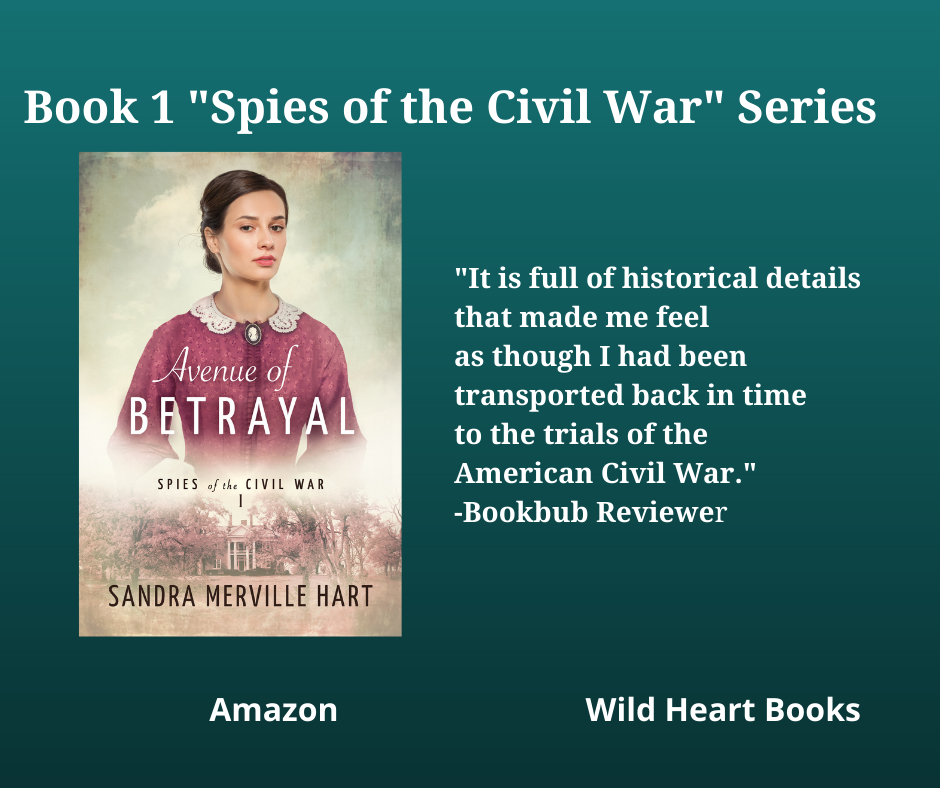
The hero in my novel, Avenue of Betrayal, Book 1 of my “Spies of the Civil War” series, dreams of participating in building the Transcontinental Railroad. The fictional Union officer hopes that the war doesn’t last so long that he misses his opportunity. As you read in this article, Civil War veterans were used to build the railroad after the war ended. I was thrilled to use such an important part of our history in the story.
 

Sources

“Central Pacific Railroad,” Encyclopaedia Britannica, 2022/02/22 https://www.britannica.com/topic/Central-Pacific-Railroad.

History.com Editors. “Transcontinental Railroad,” History.com, 2022/02/22 https://www.history.com/topics/inventions/transcontinental-railroad.

“Pacific Railway Acts,” Encyclopaedia Britannica, 2022/02/22 https://www.britannica.com/event/Pacific-Railway-Acts.

“The Transcontinental Railroad,” Library of Congress, 2022/02/26 https://www.loc.gov/collections/railroad-maps-1828-to-1900/articles-and-essays/history-of-railroads-and-maps/the-transcontinental-railroad/.

“Transcontinental Railroad,” History.net, 2020/06/19 https://www.historynet.com/transcontinental-railroad.

“Union Pacific Railroad Company, Encyclopaedia Britannica, 2022/02/22 https://www.britannica.com/topic/Central-Pacific-Railroad.

Medium Well Done by Eddie Jones

by Sandra Merville Hart

The Caden Chronicles

Book 6

I’ve read other books in this series so I settled in to try solve the mystery along with fifteen-year-old Nick.

The story begins with Nick witnessing a séance in a cemetery. He can hear the words used to “awaken” a spirit but I don’t know the meaning of those words.

Nick doesn’t believe in ghosts and figures his friend brought him here to see a staged performance. Then his friend disappears right afterward and it appears she died in a hit and run but no one can find her body.

This isn’t the first time Nick has found himself in the middle of a murder investigation and readers of the series hope it isn’t the last.

Jones has written the book to appeal to middle-grade and teen readers, both boys and girls. There is plenty of mystery, adventure, and danger to hold their interest. I like that the seeming supernatural portions of the story are explained at the end. If parents are worried about that aspect, I’d suggest reading it first.

I enjoy stories that invite me to try to figure out “whodunit” and this one did.

Amazon

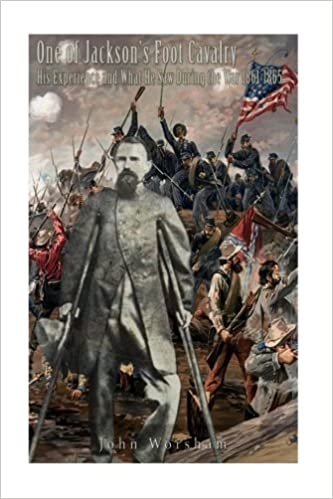
One of Jackson’s Foot Cavalry by John H. Worsham

by Sandra Merville Hart

His Experience and What he saw

During the War 1861-1865

I discovered this book while researching to write my “Spies of the Civil War” series. The second and third book in the series are set in Richmond, Virginia, in 1862. I was searching for a Virginia regiment with a large number of Confederate soldiers from Richmond that stayed in that state for battles fought in the first half of 1862.

I was thrilled to find this book written by a Confederate soldier in Company F of the Twenty-first Virginia Infantry. Worsham gives detailed accounts of battles and where they camped. He provides names of the men who were elected as officers.

The author was proud to be a soldier in General “Stonewall” Jackson’s division of the Second Corps.

This is a well-written, detailed account of what the Confederate soldiers endured during the war. It was published in 1912. I’m grateful for soldier accounts such as these and used some of the details provided–such as camp locations and how the soldiers felt–in Boulevard of Confusion, Book 2.

A great book for readers who enjoy American history, soldier autobiographies, and the Civil War.

19th Century Advice for Organizing Closet Space

by Sandra Merville Hart

Arranging closet space seems to have been as challenging in the post-Civil War as it is for many people today. This 19th century advisor didn’t feel that lack of time excused a cluttered closet. Instead, the author felt that organization was the answer. Putting a system in place and then maintaining it actually lessens the amount of time it takes to clean. Also, you won’t spend hours looking for items if everything is in its place.

It’s important to note that many homes in the 1800s didn’t have closets. Folks stored their clothing in armoires, chests, and hung them on hooks. I’ve visited many old houses where there were no closets in the bedrooms, even in wealthier homes. Having this storage space built into bedrooms is a definite convenience.

Our 19th century had plenty of advise about organizing a closet that also applies to armoires.

If shelves aren’t already installed in closets, install them. (This seems to be something that our homebuilders agree on because most modern closets already have them.)

Put in plenty of hooks to hang clothing. (This has largely been replaced by closet rods and hangers.) The author suggested arranging clothes by type to make them easier to find.

Hanging too many items close together makes them difficult to find. It can also wrinkle the clothing. Allow ample room for clothes so they don’t lose their shape in the closet.

Don’t toss clothing in the closet floor. Hang the items to keep them nice.

Don’t place boots and shoes on the closet floor. Make shoe pockets out of calico fabric to store shoes.

Never keep anything on the closet floor to prevent stepping on them.

Never toss items into the closet to keep them out of sight because “hiding dirtiness does not cure it.”

There is timely advice in these tips from the 1870s. Now, I have some closets that need my attention. 😊

Sources

Compiled from Original Recipes. Buckeye Cookery and Practical Housekeeping, Applewood Books, 1877.

Laying the Groundwork for the Transcontinental Railroad

by Sandra Merville Hart

Asa Whitney, a New York merchant, wanted a railroad that stretched from the Atlantic to the Pacific. His goal was to make trade with China easier after returning from a trip to China in 1844.

In 1845, Whitney petitioned Congress for federal funding of a sixty-mile strip and proposed that land be granted as wages for workers. He didn’t give up when his request was denied. In 1849 he published Project for a Railroad, which outlined possible routes. Congress didn’t accept his ideas, but their interest was growing.

Whitney continued to talk about his dream and the public noticed. A transcontinental railroad brought many benefits. Train travel for passengers was faster and safer than stagecoaches and wagon trains. Mail delivery would be accomplished more quickly. Goods from the east could reach western customers in a timely manner. There were many merits to building it.

Others made proposals but Congressmen didn’t agree on the eastern terminus. Secretary of War Jefferson Davis sent four men to lead the exploration of potential routes for the transcontinental railroad. They learned that any of them worked. The least expensive was the route along the 32nd parallel.

Because routes along the South didn’t please Northern Congressmen and vice versa, debates continued.

Whitney stopped lobbying for the railroad in 1851, but a new champion came along in 1860. Theodore D. Judah believed the Donner Pass was the perfect area for the railroad to navigate through the Sierra Nevada mountains. As the engineer of the Sacramento Valley Railroad, he wanted to build the new railroad.

He brought Leland Stanford, Charles Crocker, Collis P. Huntington, and Mark Hopkins in on the project, leading to the establishment of Central Pacific Railroad Company of California.

Judah traveled to Washington City (as Washington DC was then called) where he talked with Congress. President Abraham Lincoln backed the idea and the first Pacific Railway Act went into effect on July 1, 1862. It stated the Union Pacific was to start in Omaha, Nebraska, and build toward the west. The Central Pacific started in Sacramento, California, and built toward the east to meet them roughly halfway.

It was a long journey of many years and several key people to make the decisions laying the groundwork for the Transcontinental Railroad, not the least of whom were Asa Whitney and Theodore Judah.

The hero in my novel, Avenue of Betrayal, Book 1 of my “Spies of the Civil War” series, dreams of participating in building the Transcontinental Railroad. The fictional Union officer hopes that the war doesn’t last so long that he misses his opportunity. I was thrilled to use such an important part of our history in the story.  

Sources

“Asa Whitney,” Wikipedia, 2022/02/26 https://en.wikipedia.org/wiki/Asa_Whitney.

History.com Editors. “Transcontinental Railroad,” History.com, 2022/02/22 https://www.history.com/topics/inventions/transcontinental-railroad.

“Pacific Railway Acts,” Encyclopaedia Britannica, 2022/02/22 https://www.britannica.com/event/Pacific-Railway-Acts.

“The Beginnings of American Railroads and Mapping,” Library of Congress, 2022/02/26 https://www.loc.gov/collections/railroad-maps-1828-to-1900/articles-and-essays/history-of-railroads-and-maps/the-beginnings-of-american-railroads-and-mapping/.

“The Transcontinental Railroad,” Library of Congress, 2022/02/26 https://www.loc.gov/collections/railroad-maps-1828-to-1900/articles-and-essays/history-of-railroads-and-maps/the-transcontinental-railroad/.

“Transcontinental Railroad,” History.net, 2020/06/19 https://www.historynet.com/transcontinental-railroad.

Abigail’s Peace by Pegg Thomas

by Sandra Merville Hart

Forts of Refuge Series

Book Three

This third book in the series was a page turner for me!

Abigail Aldridge steals away from her brother’s Boston home and catches a schooner to Fort Niagara where her uncle is stationed. Though Uncle Cornelius loves her, he’s not happy to see her because he fears for her safety. It’s 1763, and Pontiac has gathered tribes together to attack other British forts. Abigail feels the bare chests of the fort’s Seneca scouts is scandalous. She fears them.

Koyen finds the wide, brightly-colored dresses the British women wear ridiculous. However, when Abigail befriends his sisters, she captures his attention. Koyen, a Seneca warrior, is torn by his job as a scout for soldiers at Fort Niagara. Part of him wants to join Pontiac’s fight and drive the British forts from Seneca land. The other part doesn’t want to do anything to place Abigail in jeopardy.

Courageous characters touched me with their bravery. Thomas has woven a multi-layered story amidst actual historical events. Real-life people enhance the authenticity of the story. I love learning history as a natural part of a fictional novel.

Thomas has delivered another well-written story with a swoon-worthy hero. I couldn’t put it down!

I will look for more books by this author!

Amazon

The Unwelcome Wagon by Michelle Levigne

Reviewed by Sandra Merville Hart

Book & Mug Mysteries

Book One

This first book in the series snagged my attention from the beginning! I love when a small-town cast of believable—mostly lovable—characters collide in a cozy mystery. Of course, I tried to figure out the mystery along with characters. 😊

Saundra Bailey, the new children’s librarian in Cadburn, Ohio, loves her new apartment and job, but doesn’t feel safe. A stranger attempts to get into her apartment and later tries to snatch her purse. The danger escalates from there. Who can she trust?

Kai Shane, owner of the Book & Mug, has been in town a few years and still isn’t welcomed by the “royal” family. He and his cousins, Eden and Troy, are on their own mission to find their family who put them with a foster family and never came back.

Saundra captures Kai’s attention right away. He’s concerned about her safety—and the break-in’s at his own building.  

The author does a wonderful job of building a cast of believable characters. I was so pulled into the story that I wanted to study the documents myself!  

This is not the first book I’ve read by this talented author. Levigne has delivered a well-written cozy mystery that captivated me and kept me turning pages. It’s filled with twists and I couldn’t put it down!

I can’t wait to read the next book in the series!

Amazon

19th Century Advice for Table Manners

by Sandra Merville Hart

Good table manners are perhaps not as important to some these days as they were a century ago, but they still matter. As the 19th century advisor points out, good manners are a “kind consideration” of the feelings of others and all began for sound reasons. Most of this advice is still followed today.

Remove gloves after sitting at the table. Lay them in your lap beneath the napkin.

Food goes to the mouth—not the other way around.

Chew quietly with closed lips.

Cut food with a knife but eat with a fork.

If a fork can’t hold the food, use a spoon.

Don’t lean your arms on the table or sit too far back.

It’s good for your health to eat slowly—and it’s considered good manners.

Bread should be broken, not cut. Don’t crumble it into soup or gravy.

It’s considered bad manners to mix food on the plate.

Eat fish with a fork.

Cut game or chicken, but don’t hold it with the bones in your fingers.

Hold oranges with a fork and peel them without breaking the inner skin.

Don’t cut pastry with a knife. Break it apart and eat with a fork.

Bread and butter is a dish for dessert. (Surprising!)

Never help yourself to anything on the table using your own utensils.

Never pick your teeth at the table.

When eating a cherry-stone or other substances removed from the mouth, pass them into a napkin held to your lips and then return it to the plate.

Try to ignore accidental spills.

When done with your meal, place your fork and knife side by side on the plate with the handles to the right.

Most of these tips from the 1870s have stood the test of time. As an author of historical novels, tips like these enhance my understanding of the time period.

Sources

Compiled from Original Recipes. Buckeye Cookery and Practical Housekeeping, Applewood Books, 1877.

Civil War in Washington DC: The Willard Hotel

by Sandra Merville Hart

City Hotel, located at 1401 Pennsylvania NW in Washington DC, was expanded after Henry Willard leased it in 1847. He soon brought his brother, Joseph, into to the business and changed the name to Willard Hotel. They built a six-floor hotel on the southwest corner of 14th and F Streets. The brothers purchased a Presbyterian Church on F Street and converted it to a meeting hall with an auditorium called Willard Hall.

Henry went the extra mile to make his hotel successful. He greeted hotel guests as they stepped out of the stage. He was at the Central Market before dawn to select the highest quality of products available to serve for in his hotel’s dining rooms. Henry donned a white apron to carve meats at the dining table.

By the Civil War, the hotel was a center of activity for the bustling capital then known as Washington City. Luxurious gentlemen’s and ladies’ dining rooms could accommodate 2,500 diners daily. Elegant parlors invited guests to linger after a meal before retiring to their rooms.

The hotel also boasted of a 150-foot ballroom, where it hosted lavish events like the Napier Ball, given as a farewell on February 17, 1859, to the British Ambassador Lord Francis Napier and Lady Anne Napier. Eighteen hundred guests paid an expensive price of $10 each to attend. The ball’s success boosted the hotel’s prestige.

Willard’s boasted another honor—both Franklin Pierce and Abraham Lincoln stayed at their hotel before their presidential inaugurations.  

After the war began, Union regiments poured into the city for further training and the hotel lobby became a common meeting place for Union officers to make their reports.

One of these regiments, the 11th New York Infantry, was made up of firemen under Colonel Elmer F. Ellsworth. The entire regiment wore red shirts, gray breeches, gray jackets, and red caps, so they stood out in a crowd.

On May 9, 1861, the Willard brothers had cause to be grateful for Ellsworth’s Zouves when fire engulfed Samuel Owen’s tailor shop, which adjoined their hotel. With equipment borrowed from local firehouses, Ellsworth’s men helped the Washington Fire Department extinguish the blaze. His entire regiment was eventually called to fight the fire and Ellsworth, using the fire chief’s trumpet, took command until the crisis ended.

Henry Willard was so pleased with the results that he invited them all to breakfast. Undoubtedly, the situation would have been much worse without so many capable firefighters.

Union soldiers training for the Civil War battlefields faced a familiar battle that day.  

There is a scene at the Willard Hotel when characters in my novel, Avenue of Betrayal, Book 1 of my “Spies of the Civil War” series, dine there. I was thrilled to use such an important location in the story.  

Sources

“11th New York Infantry Regiment,” Wikipedia, 2022/02/25 https://en.wikipedia.org/wiki/11th_New_York_Infantry_Regiment.

“A Ball at Willard’s,” White House Historical Association, 2022/02/25 https://www.whitehousehistory.org/photos/a-ball-at-willards.

Epstein, Daniel Mark. Lincoln and Whitman: Parallel Lives in Civil War Washington, Ballantine Books, 2004.

Selected by Dennett, Tyler. Lincoln and the Civil War In the Diaries and Letters of John Hay, Dodd, Mead & Company, 1939.

“The Willard Hotel,” White House History, 2020/06/11 https://www.whitehousehistory.org/the-willard-hotel.

“The Willard Hotel in the 19th Century,” Streets of Washington, 2020/06/11 http://www.streetsofwashington.com/2012/07/the-willard-hotel-in-19th-century.html.

Waller, Douglas. Lincoln’s Spies, Simon & Schuster, 2019.

“Willard Hotel,” National Park Service, 2020/06/11 https://www.nps.gov/nr/travel/wash/dc36.htm.

“Willard InterContinental Washington,” Wikipedia, 2020/06/11 https://en.wikipedia.org/wiki/Willard_InterContinental_Washington.

Maggie’s Strength by Pegg Thomas

Review by Sandra Merville Hart

This second book in the series snagged my attention from the first page!

At age eleven, Maggie Kerr is captured in an attack on Fort McCord by warriors of the Huron tribe while screaming for her family. Her mother promises that someone will rescue her. As the years pass, resentment builds that her father never comes for her. She learns to trust no one. Seven years later, her owner promises to give her in marriage to Tree Sleeper, a cruel warrior. She escapes and heads to Fort Detroit.   

Baptiste Geroux, a French farmer living near Fort Detroit, is friends with the Ottawa who leave him in peace because he gives them a portion of his crop. He knows there is trouble brewing between tribes under the leadership of Pontiac and the British, but figures he’ll be safe enough. He discovers the British woman dressed in Huron clothing on his land and takes her to the safety of the fort.

At least, both he and Maggie figure she will be safe at the fort. But Baptiste doesn’t understand the ruthlessness of Tree Sleeper.  

Believable characters touched my heart with their hardships. Maggie struggles with resentment that her father never rescued her and near hatred for harsh treatment from some of her captors. I loved so many of these characters by learning their struggles.  

Thomas has delivered another well-written, heart-wrenching story that is steeped in historical details. Action-packed and filled with twists, I couldn’t put it down!

I can’t wait to read the next book in the series!

Amazon