Fresh Peach Pie Recipe

This recipe is from The Fannie Farmer Cookbook, which was originally published in 1896.

Prepare a double-pie crust dough for a 9-inch pie. I used my mom’s pie crust recipe.

Preheat the oven to 425 degrees.

The recipe calls for 4 cups of fresh peaches, peeled and sliced. I used 5 large peaches, which provided more than 4 cups. Fruit cooks down while baking so I tend to be generous with the amounts.

The cookbook gave a hint on peeling the peaches that I remember using years ago. Submerge the peaches into boiling water for 1-2 minutes. Immediately place the fruit into cold water. This softens the skin for easier peeling.

You will need 1 tablespoon of lemon juice. If using fresh lemon, prepare the juice now.

Stir together 1 cup of sugar with 4 tablespoons of flour in a large mixing bowl and mix well. Add the peaches and lemon juice. Toss these together until the sugar mixture coats the peaches completely.

Arrange the fruit in the bottom pie crust and then cover it with a top crust. Crimp sides together and cut several vents.

Bake for 10 minutes on 425 and then reduce to 350 for 30-40 minutes, until browned.

This pie is delicious! Though it is a little sweet, I loved it. Fresh peach pie is a delicious dessert on a hot summer day.

Abby Cox, the main character in my Trail’s End novella in “The Cowboys” collection, runs a restaurant in Abilene, Kansas, in 1870. Wade Chadwick, a Texas cowboy, takes a temporary job in her kitchen, freeing Abby to cook for her guests. One dessert served in her diner is peach pie. Writing those scenes made me hungry for the delicious dessert!

-Sandra Merville Hart

Sources

Revised by Cunningham, Marion and Laber, Jeri. The Fannie Farmer Cookbook, Alfred A Knopf Inc., 1983.

Trail’s End by Sandra Merville Hart

Wade Chadwick has no money until his boss’s cattle sell, so he takes a kitchen job at Abby’s Home Cooking. The beautiful and prickly owner adds spice to his workday. Abby Cox hires the down-and-out cowboy even though the word cowboy leaves a bad taste in her mouth. Just as she’s ready to trust Wade with her heart, money starts to disappear … and so does her brother.

Amazon

Civil War Women: Maria Lewis, Former Slave and Union Soldier

Born around 1846, Maria Lewis lived with her family as slaves in Albemarle County, Virginia. When the 8th New York Cavalry came to the area during the Civil War in October of 1863, she disguised herself as a darkly-tanned white man and joined Company C of that regiment.

Maria mustered in as George Harris, who was a hero in Uncle Tom’s Cabin. In Harriet Beecher Stowe’s novel, Harris escaped slavery by posing as a Spanish gentleman.

Her first intentions were to remain a soldier long enough to travel North to freedom. Perhaps to her surprise, she discovered that she enjoyed army life. She skirmished, scouted, and fought with General Sheridan’s cavalry for the next eighteen months.

They burned houses and mills. They destroyed railroads and bridges.

On March 2, 1865, Maria rode with the cavalry at Waynesboro, Virginia, where five hundred of Confederate General Jubal Early’s soldiers were captured. The 8th New York seized seventeen battle flags before burning a section of the Shenandoah Valley.

Maria was part of the honor guard who presented the captured flags to Secretary of War Edwin Stanton. The soldiers were granted a month’s furlough.

From there Maria went to the family of 2nd Lieutenant Lewis V. Griffin, a comrade from her regiment. She introduced herself as George Harris to his sister, Julia Wilbur, and then confessed her true identity. She wanted to return to “womanly ways & occupations.”

Though surprised to meet a black woman who served as a Union cavalry soldier, Julia wrote in her diary that she helped Maria as she had helped many other freed slaves. Making plans to find her a job, Julia gave her a chemise, petticoat, and hoops.

Julia first wrote of meeting Maria on April 4, 1865. The last time she mentions her is an entry on Sunday, April 23rd. Her sister was giving Maria a lesson, possibly teaching her to read and write.

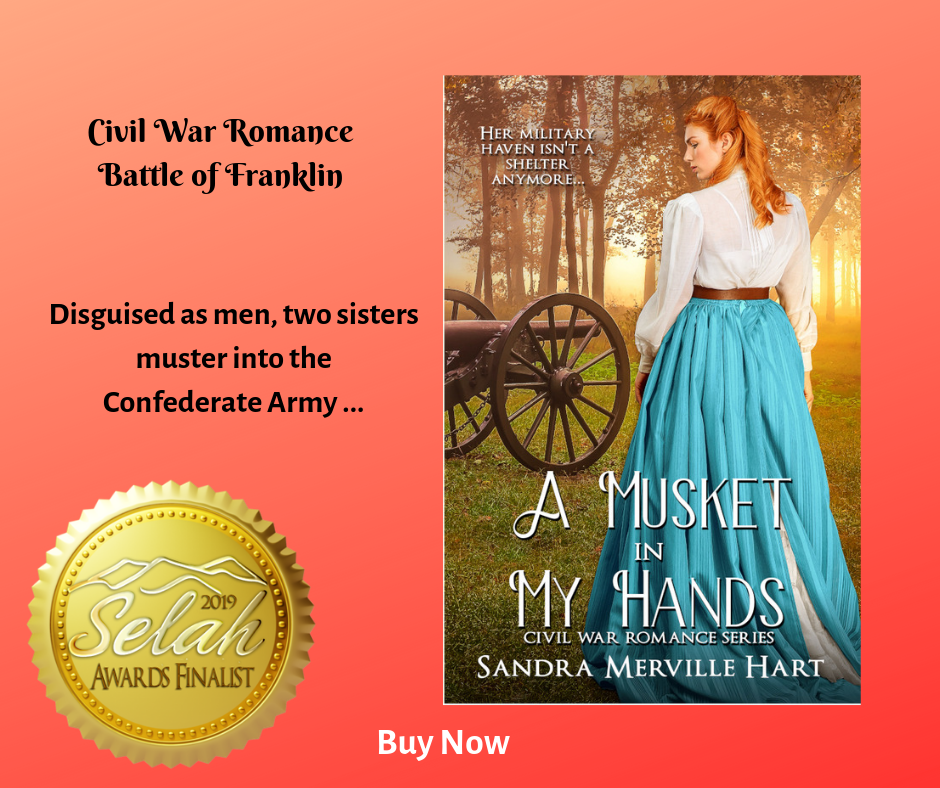
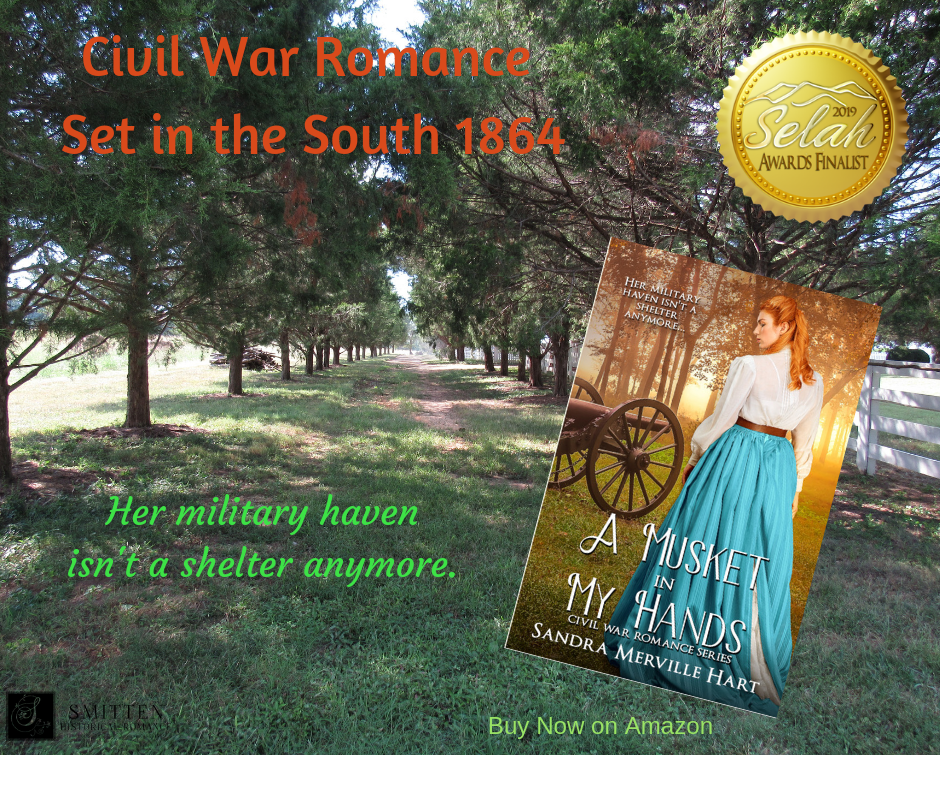
In my Civil War novel, A Musket in My Hands, two sister have no choice but to disguise themselves as men to muster into the Confederate army in the fall of 1864—just in time for events and long marches to lead them to the tragic Battle of Franklin.

-Sandra Merville Hart


Sources

Cordell, M.R. Courageous Women of the Civil War, Chicago Review Press, 2016.

“Maria Lewis (soldier),” Wikipedia, 2019/04/26 https://en.wikipedia.org/wiki/Maria_Lewis_(soldier).

Monson, Marianne. Women of the Blue & Gray, Thorndike Press, 2018.

Zeinert, Karen. Those Courageous Women of the Civil War, The Millbrook Press, 1998.


A Magnolia Blooms in Winter by Ane Mulligan

A Southern Season: Four Stories from a Front Porch Swing

A call from her mother sends Morgan James back home to her small Georgia town. She’s needed to direct the Christmas play that she wrote. She can wait there to hear from her agent about a part in an Off-Broadway play.

Andy Wayfield, the man she left behind to pursue an acting career, is now worship pastor at Morgan’s old church. He adopted his niece after her parents’ deaths and seems to still have feelings for Morgan.

Yet Morgan left dreams of marrying Andy behind her years ago. Or did she?

Lovable characters invited me into the story and had me pulling for them the whole way. I enjoyed this novella.

I love this author’s sense of humor that often ends up as part of her stories. I’ll look for more by this author.

I’ve loved this whole collection. Recommend!

-Sandra Merville Hart

Amazon


The Western Chuckwagon

By Jennifer Uhlarik

Today’s article is from talented author and friend, Jennifer Uhlarik. Jennifer and I have both written a novella in the Smitten collection “The Cowboys.” I’m currently reading Jennifer’s story, Becoming Brave, and it’s a page turner! Welcome to Historical Nibbles, Jennifer!

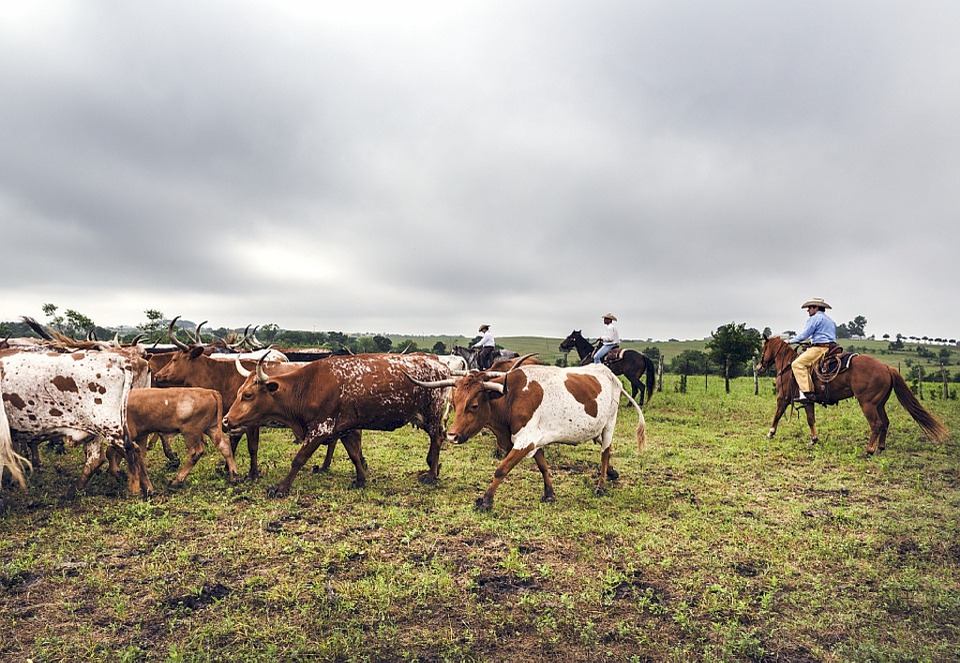
One of the iconic images of the Old West was the cattle drive—cowhands driving a herd of cattle across a thousand miles to the railroad. The work was hot, dirty, and exhausting. The cattle owner wanted to keep his crew healthy and happy on the trail in order to protect the herd, so he promised good pay once the herd was sold, and even better, good food along the way!

In order to feed the crew of ten to twenty men, the outfit’s cook drove a chuckwagon—a mobile kitchen—along with the herd. The chuckwagon was a fairly simple covered wagon with several upgrades. The “chuck box” was a wooden cabinet bolted to the back of the wagon. It had drawers and shelves to hold ingredients, spices, small utensils, and its flat cover folded down to create a workspace for the cook. Beneath the chuck box, a “boot” held the larger items like the cast iron dutch oven and other pieces. A canvas tarpaulin slung under the wagon was called the “possum belly” and held their fuel, typically wood or cow chips, collected along the trail.

The interior of the chuckwagon carried all the staples—bags of flour, salt, sugar, baking powder, baking soda, beans, rice, cornmeal, sourdough, coffee, and syrup. The main meat for meals was beef, though the cowboys would hunt and fish to add variety to their stores. And, of course, sowbelly—a type of salt pork. This was of utmost importance, since everything the cook made was fried in bacon grease.

Most every meal would involve a steak—quickly seared in the fire to seal in the juices, then cooked through more slowly. Add to that beans cooked in a variety of ways, biscuits, stewed fruit or a fruit pie, and coffee to wash it all down. While the meals might not be fancy, they were hearty and filling, and after long hours in the saddle eating trail dust, the men were thankful for the simple yet tasty meals.

The chuckwagon played a very important role in my latest release—Becoming Brave, one of the novellas in The Cowboys. In the story, a young cowhand, Coy Whittaker, stumbles upon the lone survivor of a terrible attack, Aimee Kaplan, and takes her in. He must find a way to transport the poor girl through Indian Territory to safety, all while he and his friends get his boss’s herd to market. Since riding horseback among the cattle was so hot, dusty, and dangerous, Aimee ends up riding in the chuckwagon with the cook much of the way. It was a lot of fun to incorporate a bit about this important part of every cattle drive into the story!


About Jennifer:

After Jennifer Uhlarik raided her big brother’s bookshelf and swiped the only “horse” book she found—a novel by Louis L’Amour, she fell madly in love with the Old West. Soon, she began penning her own stories of daring pioneers who tamed the land. Despite living in the flatlands of West-Central Florida, she continues to write her award-winning, best-selling western fiction with the support of her husband and kids (both the two- and four-legged varieties).

Cover Blurb:

The Cowboys

Taming the west—one heart at a time.

A 4-in-1 novella collection of western romances, including stories from award-winning authors Sandra Merville Hart, Cindy Ervin Huff, Jennifer Uhlarik, and Linda Yezak.

Becoming Brave by Jennifer Uhlarik
When Coy Whittaker stumbles upon a grisly scene littered with bodies, he wants nothing more than to get his boss’s cattle out of Indian Territory. But when a bloodstained Aimee Kaplan draws down on him, his plans—and his heart—screech to a halt.

Amazon


Civil War Women: Bettie Duvall, Confederate Spy

Washington D.C. resident Rose O’Neal Greenhow had been asked to discover troop movements and battle plans. She had information that Union troops had been ordered to attack Manassas. As a Confederate spy, she had a network of folks to deliver the coded message to Confederate General Beauregard. She gave the information to sixteen-year-old Bettie Duvall. (One source spelled her name “Betty.”)

On July 9, 1861, Bettie, a beautiful Southerner, disguised herself by selling buttermilk and sweet cream at the city market. She left the city, alone, on a farm cart. She rode past the 1st Massachusetts Infantry headquarters. A dirt lane led her to a friend’s plantation near Langley where she stayed for the night.

The next morning, she relinquished the farm cart. Dressed in a stylish riding habit, Bettie rode horseback to her intended destination—the village of Fairfax Court House. Manassas was ten miles from the village.

She met Confederate soldiers at an outpost near Vienna. At her request to speak with Brig. Gen. Milledge Bonham, they took her to his headquarters in Fairfax Court House. Beauregard had just taken over command, but Bonham was his top aide.

At first, Bonham refused to meet her. Upon learning that the beautiful woman was prepared to take the message to General Beauregard herself, he agreed to talk with her.

He recognized her “sparkling blue eyes, perfect features, glossy black hair” as a Southern lady from the spectator gallery at Congress. He agreed to forward on her message.

To his astonishment, she removed the combs from her hair knot. Shaking her beautiful hair loose, she untied a small silk package about the size of a silver dollar from the long strands and gave it to him.

Beauregard learned from the message that an attack was ordered within a week.

The advance warning led to a Confederate victory at the First Battle of Bull Run.

-Sandra Merville Hart

Sources

Monson, Marianne. Women of the Blue & Gray, Thorndike Press, 2018.

Winkler, H. Donald. Stealing Secrets, Cumberland House, 2010.

Zeinert, Karen. Those Courageous Women of the Civil War, The Millbrook Press, 1998.


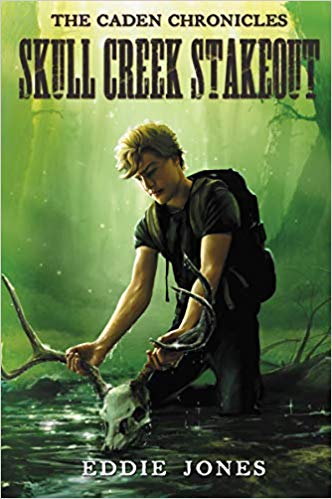
Skull Creek Stakeout by Eddie Jones

Book 2 of The Caden Chronicles Series

Solving a murder while on a family vacation gave teenager Nick Caden some publicity. His new job as reporter for The Cool Ghoul Gazette has him traveling to investigate a murder in Transylvania, North Carolina. A dead body with fangs and a wooden stake driven through the heart seems like something from a horror movie.

Were vampires real?

This story is filled with twists and turns—and danger at every one. I know the novel is written especially with tween and teen boys in mind, but I was on the edge of my seat the whole adventure.

A page turner!

This novel also comes with a writing opportunity:

The Cool Ghoul Gazette coolghoulgazette.com has several openings for teen reporters. No experience required. We will teach you how to write a lead, build upon the “who, what, when, where, how” reporting style, and help you improve your writing skills. Think of this like your high school newspaper, only way more fun.

The man who helps me write the Caden Chronicle series (Mr. Jones) graduated with a journalism degree back when reporters published the facts, not their opinions, and sought to present both sides of a story fairly.

In the case of The Cool Ghoul Gazette we need reporters who can write scary stories that may or may not have happened. For more information contact me, Nick Caden, at: editor@coolghoulgazette.com 

-Sandra Merville Hart

Amazon

.


Good Graham Gems Recipe

The author of 1877 Cookbook Buckeye Cookery and Practical Housekeeping included meal suggestions. A summertime breakfast meal suggestion is: fried fish; milk toast; boiled eggs; fruit; frizzled beef; Graham gems; tea; and chocolate. What a big breakfast!

The cookbook includes recipes for some of these. Today I’m sharing one for Good Graham Gems from cook Mrs. J.H.S.

If you happen to own a gem pan, bake these in it. Otherwise, a muffin pan works fine.

Preheat oven to 425 degrees. Spray cooking spray on a muffin pan or use cupcake liners.

The first ingredient is 1 cup of sour milk. To make this, stir 1 tablespoon of vinegar or lemon juice per cup of milk. Set it aside to rest for 5 minutes.

Beat 1 egg and set aside.

Melt 1 teaspoon of lard (I used shortening) and set aside.

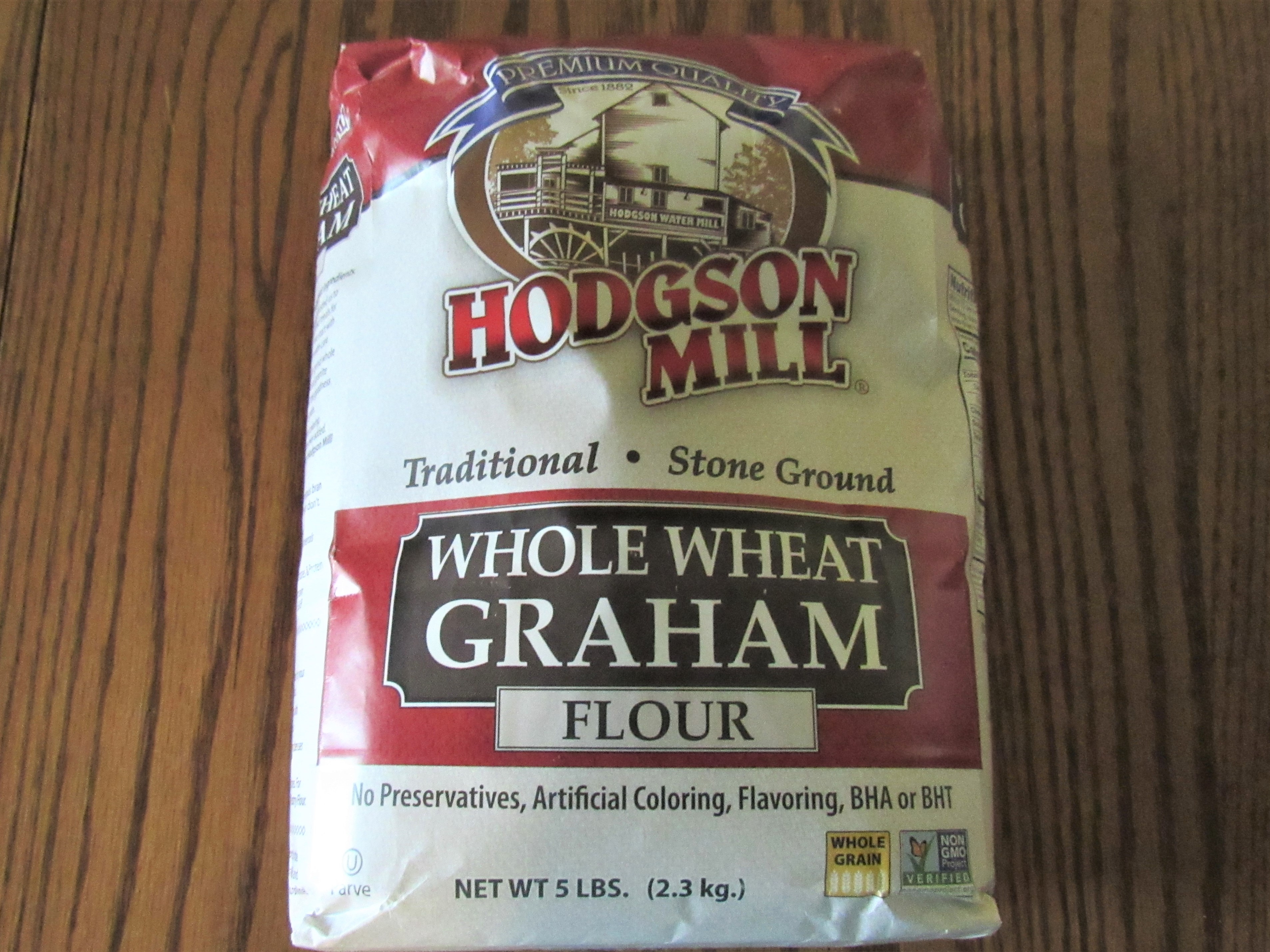
In a separate bowl, mix 1 ½ cups Graham flour, ½ teaspoon of baking soda, and ½ teaspoon of salt.

Stir 1 teaspoon of brown sugar into the sour milk. Add the melted shortening and beaten egg. Stir.

Add the Graham flour mixture and stir well. It should make a stiff enough batter to drop from a spoon into the prepared muffin pan.

Bake at 425 degrees for 15 minutes.

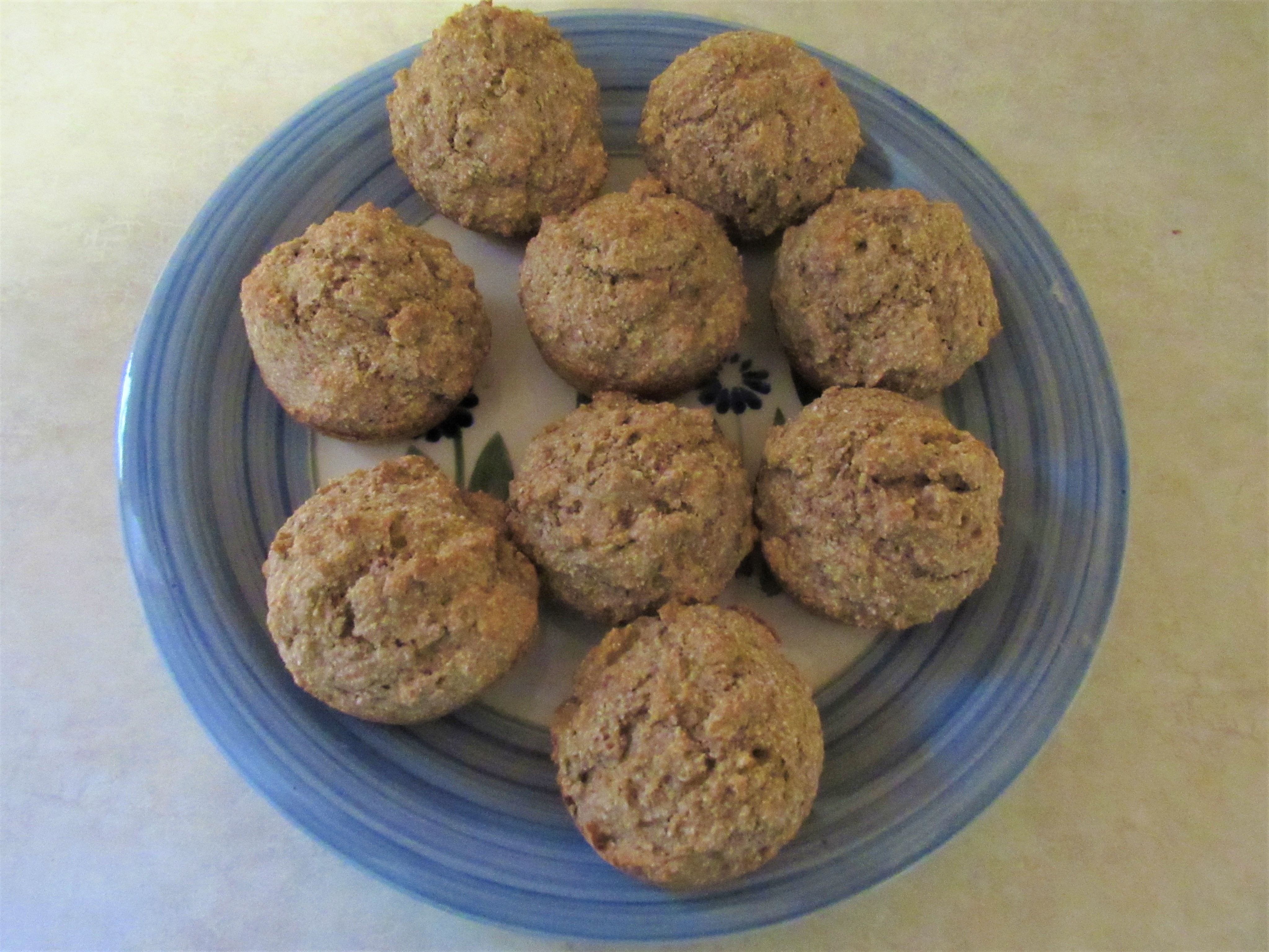
These hearty gems reminded me of bran muffins. They are dense and rather plain. I put apple butter on it, which tasted delicious.

-Sandra Merville Hart

Sources

Compiled from Original Recipes. Buckeye Cookery and Practical Housekeeping, Applewood Books, 1877.

Two Rivers by Deborah Sprinkle

Today’s post has been written by talented author and friend, Deborah Sprinkle. Her debut contemporary romantic suspense is a page turner! Welcome to Historical Nibbles, Deborah!

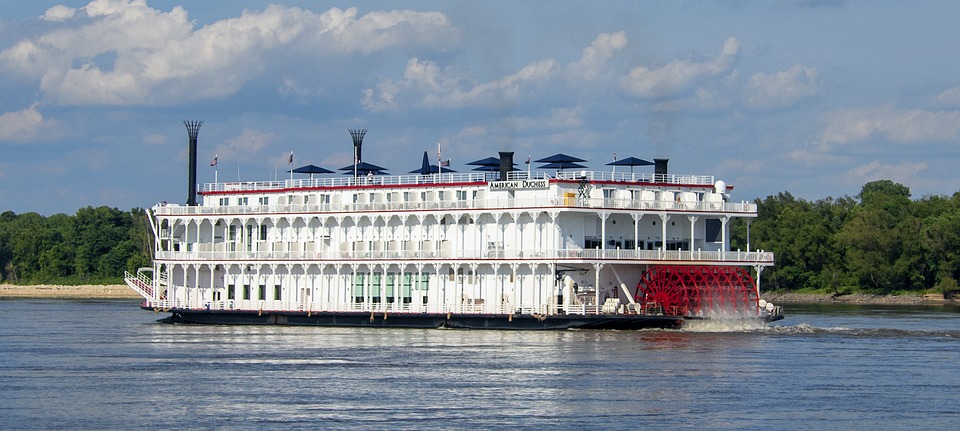
Together, the Mississippi and the Ohio Rivers create the arteries that feed the heart of our great nation. Both have played a major role in America’s history since its beginning, carrying the first explorers and the first pioneers, loaded with hopes and dreams. Today, barges ply their waters, loaded with coal and other major commercial goods. They’ve served as boundaries and as obstacles, as death traps and as lifelines.

They’ve played a part in every major conflict in our country. During the Civil War, control of the these mighty rivers became paramount. To do this, navies were needed, and in this regard, the industrial North had the advantage. Commander John Rodgers of the Union Navy ordered his ships to Cairo, Illinois, the confluence of the Ohio and the Mississippi. Constant patrolling of both waterways from this strategic location established Northern control to the point that Kentucky and Missouri remained neutral throughout the war.

More ships were built and the Mississippi ran red with the blood of our nation’s men as the North gained control of the river further south, culminating in the fall of Vicksburg in 1863.1 On April 9, 1865, Confederate General Robert E. Lee surrendered to Union General Ulysses S. Grant marking the beginning of the end to the conflict that pitted brother against brother, and took more American lives than any other war.

That’s when one of the most tragic river disasters in the history of our country happened. Two weeks later on April 27, the Sultana, a wooden steamboat, left St. Louis for New Orleans, her objective to pick up released Union soldiers and bring them home. Built to carry 376 passengers, she ended up with 2,137. She fought her way upriver, despite riding low in the water and nursing a patched boiler.  North of Memphis her luck ran out. Three of her four boilers exploded under the pressure of pushing against the current with so much extra weight. Loss of life was estimated at somewhere between 1,200 and 1,500 souls.

On the 150th anniversary of its sinking, a museum opened in Marion, Arkansas, memorializing the Sultana. Artifacts and pieces of the hull displayed were found in a field. The river’s course had changed by two miles since it went down.2

America started as colonies huddled on the east coast with a vast expanse of land to the west. With the help of the great rivers, we became territories and then states. We’ve fought for independence. We’ve fought for our borders. We’ve fought amongst ourselves. Each time, our rivers have been one of our most valuable resources. Ah, the tales they could tell.
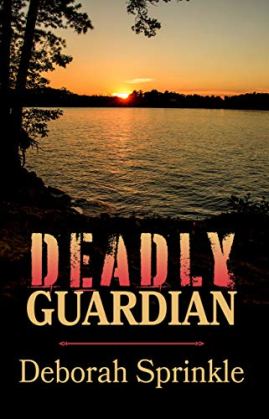
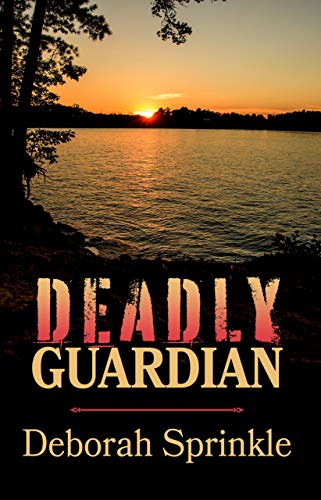
In my debut novel, Deadly Guardian, my heroine knows a lot about rivers. She grew up in St. Louis, Missouri, and currently lives near Cincinnati, Ohio. Both are river towns. One is on the Mississippi and the other graces the shores of the Ohio. While she doesn’t live on the river, she does have a home on a lake nearby. And that body of water gets her into…well, I don’t want to give it away. You’ll just have to read it for yourself.

-Deborah Sprinkle

Sources

  1. Sam Smith. “Winning the West.” Civil War History The River War.  American Battlefield Trust. http://www.battlefields.org/learn/articles/river-war

2. “Sultana (steamboat).” Wikipedia.  en.wikipedia.org/wiki/Sultana_(steamboat)#Museum
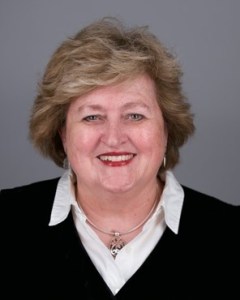
 

About Deborah

Deborah Sprinkle is a retired chemistry teacher among other things. So it should come as no surprise that the protagonist in her debut novel, Deadly Guardian, is one as well. Mrs. Sprinkle is also co-author of a non-fiction book entitled Exploring the Faith of America’s Presidents.  She has won awards for her short stories, articles, and her latest work in progress. Mrs. Sprinkle lives in Memphis with her husband where she continues to be an ordinary woman serving an extraordinary God.

Deadly Guardian Blurb

When the men she dated begin dying, Madison Long must convince the police of her innocence and help them determine who has taken on the role of her guardian before he kills the only man she ever truly loved, Detective Nate Zuberi.

Madison Long, a high school chemistry teacher, looks forward to a relaxing summer break. Instead, she suffers through a nightmare of threats, terror, and death. When she finds a man murdered she once dated, Detective Nate Zuberi is assigned to the case, and in the midst of chaos, attraction blossoms into love. Together, she and Nate search for her deadly guardian before he decides the only way to truly save her from what he considers a hurtful relationship is to kill her—and her policeman boyfriend as well.

Amazon
Through an Autumn Window by Claire Fullerton

A Southern Season: Four Stories from a Front Porch Swing

Cate Barton receives the terrible news about her mother from her brother, Lincoln. Not directly, mind you. No, he told her husband Eric in an early morning phone call that cancer had claimed their mother’s life.

They fly to Memphis where not her brother but an old friend picks them up at the airport.

This story, lovingly-told, probes the grief and heartache and Southern traditions that surround a funeral—with some surprises along the way.

Great images take readers on a journey, allowing them to see and experience events along with the characters.

I loved how the author took me to a Southern funeral with Southern expressions of grief. The emotional adventure transported me back to times when I was overwhelmed by my own grief.

Well-written! I will look for more stories by this author.

-Sandra Merville Hart

Amazon


Cheese and Bacon Quiche Recipe

This recipe is from The Fannie Farmer Cookbook, which was originally published in 1896.

I needed to take a dish to a writers meeting. Since this quiche can be served hot or cold, I decided to try it.

Prepare a tart pastry.

Preheat oven to 425 degrees.

Fry 10 slices of bacon until crisp. Crumble the bacon into pieces. When cool, arrange these over the bottom of the partially-baked tart pastry shell. Then layer 1 ¼ cups of shredded Swiss cheese over the bacon.

Combine together 4 eggs, 2 cups of light cream (I had heavy cream on hand so I used that), ½ teaspoon salt, 1/8 teaspoon nutmeg, and a pinch of cayenne. (I didn’t have any cayenne so I omitted it.) Stir the custard.

Ladle the custard over the bacon and cheese.

Bake at 425 for 15 minutes. Then reduce heat to 350 and bake another 30 minutes or until a knife inserted in the middle is clean.

Serve in wedges, hot or cold.

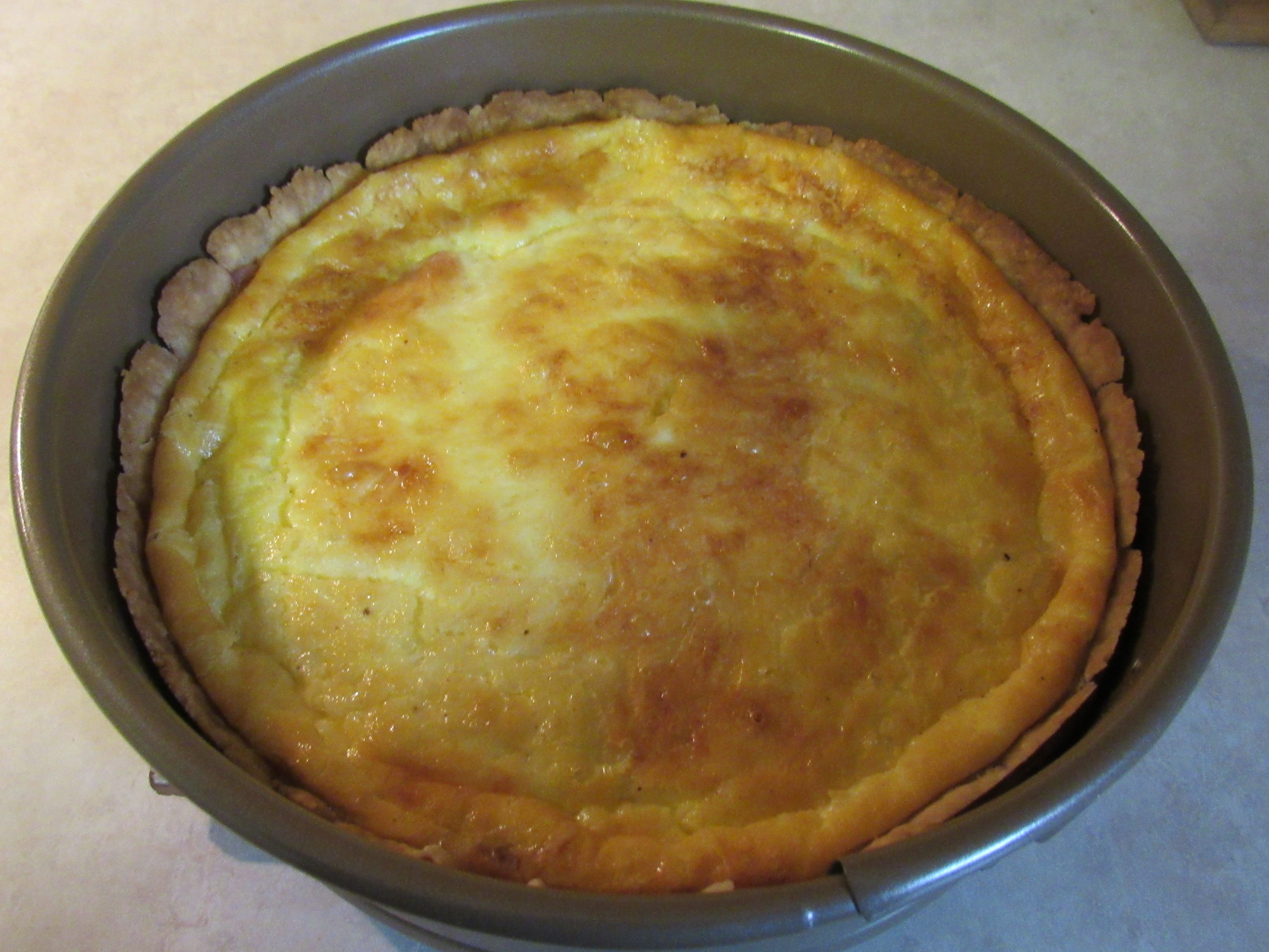
I thought this quiche was good cold and even better hot. Delicious breakfast/brunch dish. For me, the amount of bacon could be reduced about 25%, but it was really good as written.

I’d love to hear if you try it.

-Sandra Merville Hart

Sources

Revised by Cunningham, Marion and Laber, Jeri. The Fannie Farmer Cookbook, Alfred A Knopf Inc., 1983.