1870s Recipe for Magic Furniture Polish

Ever wonder what folks used to polish their furniture a century or two ago? I found a recipe for Magic Furniture Polish in an 1877 book, Buckeye Cookery and Practical Housekeeping.

Start with a cup of alcohol, which is the only ingredient on this list that I keep at my home.

Add one half ounce of resin. (The gum or sap of some trees, such as pine, produces a yellow or brown substance called resin. It is used in medicine and varnishes.)

Next, a half-ounce of gum-shellac is added. (Shellac is purified lac used in varnishes, inks, and paints. Old phonograph records—78 rpm—contained shellac.)

A few drops of aniline brown are then added to the mixture. I’d never heard of this. According to Merriam Webster Dictionary, aniline is a poisonous oily liquid obtained by reducing nitrobenzene.

Let this mixture stand overnight.

The next day, add the final 2 ingredients—12 ounces of raw linseed oil and 1 cup spirits of turpentine. Linseed oil is yellowish drying oil obtained from flaxseed. It’s used in ink, paint, and varnish. Used as a solvent, spirits of turpentine—also called turpentine and oil of turpentine—is distilled resin from trees.

Shake the mixture well before applying with cotton flannel. Rub dry with a different cloth.

My furniture polish doesn’t list ingredients so I don’t know if these have changed over the years. Kind of fun to find out how folks lived a century or two ago.

-Sandra Merville Hart

Sources

American Heritage® Dictionary of the English Language, Fifth Edition. Copyright © 2016 by Houghton Mifflin Harcourt Publishing Company. Published by Houghton Mifflin Harcourt Publishing Company. All rights reserved.

“Aniline,” Merriam Webster, 2018/12/26 https://www.merriam-webster.com/dictionary/aniline.

Compiled from Original Recipes. Buckeye Cookery and Practical Housekeeping, Applewood Books, 1877.

“Linseed Oil,” Merriam Webster, 2018/12/26 https://www.merriam-webster.com/dictionary/linseed%20oil.

“Resin,” Merriam Webster, 2018/12/26 https://www.merriam-webster.com/dictionary/resin.

“Turpentine,” Wikipedia, 2018/12/26 https://en.wikipedia.org/wiki/Turpentine.

United States Christian Commission


On November 14, 1861, a meeting of the Young Men’s Christian Association (YMCA) established the United States Christian Commission (USCC.) They were concerned with soldiers’ and sailors’ spiritual welfare and wanted to bring them to Christ.

Philadelphia merchant George Hay Stuart was the chairman. John A. Cole was general field agent.

Delegates of USCC helped regimental chaplains in caring for the soldiers. They gave religious tracts, hymnals, Bibles, and pocket testaments to soldiers. They held worship services, prayer meetings, and Bible Studies.

According to Chaplain William R. Eastman, 72nd New York, USCC provided a tent canvas for log chapels in the winter of 1863-64 near Brandy Station, each seating over 100 soldiers. Two daily services were held at City Point, Virginia—a 2:00 prayer meeting and 7:00 preaching service.

USCC also provided for physical needs. They carried no weapons yet went to battlefields, army camps, and hospitals. They worked as nurses. From the winter of 1863 on, they had about 100 Diet Kitchens to provide light meals. They gave stamps and stationery to soldiers for writing those important letters to loved ones back home.

They also provided coffee, a beverage dearly loved by soldiers. Their coffee wagons became popular. These wagons, traveling 8 miles per hour down rows of soldiers, supplied coffee for 1,200 men each hour. Hot coffee must have been quite a treat on a cold winter’s day.

Over 5,000 USCC volunteers traveled with the Union army throughout the South. Dwight Lyman Moody served as a volunteer. He held revival meetings at Confederate prisoner-of-war camps in Chicago, handing out pocket-sized Bibles.

-Sandra Merville Hart

Sources

Frey, Rebecca J. “U.S. Christian Commission,” Encyclopedia.com, 2018/12/28 https://www.encyclopedia.com/history/applied-and-social-sciences-magazines/us-christian-commission.

“United States Christian Commission,” Ohio History Central, 2018/12/28 http://www.ohiohistorycentral.org/w/United_States_Christian_Commission.

“United States Christian Commission,” Wikipedia, 2018/12/28 https://en.wikipedia.org/wiki/United_States_Christian_Commission.

Williams, Rachel. “The United States Sanitary and Christian Commissions and the Union War Effort,” National Museum of Civil War Medicine, 2018/12/27 http://www.civilwarmed.org/commissions/.

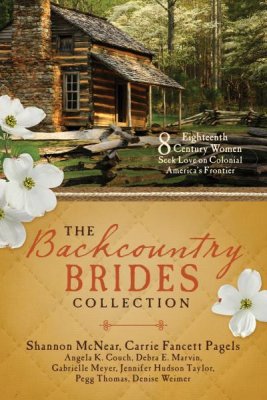
Shenandoah Hearts by Carrie Fancett Pagels

Part of The Backcountry Brides Collection – Eight 18th Century Women Seek Love on Colonial America’s Frontier

 This novel captured my interest immediately.

The Prologue opens with Magdalene Sehler working for silversmith Jacob Owens. Magda is a silversmith in 1753. They have a great friendship yet she longs for more. She waits in vain for him to propose as her family plans a move from Philadelphia to Shenandoah Valley.

Jacob loves Magda and longs to marry her. According to her younger brother, Magda does not care for him. He silently watches as she moves to Virginia yet soon lives in a settlement near her.

Native Americans in the area are upset with some of the pioneers.

Magda learns that the wilderness is a dangerous place to live.

The characters in this novella faced both internal and external struggles. As a history lover, the setting kept me turning pages as much as the story.

I’m looking forward to reading more books by this author.

-Sandra Merville Hart

Christianbook.com

Lemon Snaps Recipe from 1877

When my sister asked me to bring lots of cookies to her Super Bowl party, I took that as an invitation to try a few old-fashioned recipes. Mrs. E. L. C. of Springfield is the 1877 baker who shared this cookie recipe.

Though the original baker left out a few important details, I’m happy to say that I only had to make this recipe once—and the cookies were a hit! Or since this was for a Super Bowl party, maybe I should say they were a touchdown. 😊

Dissolve ½ teaspoon of baking soda into 2 teaspoons of hot water. Set aside.

Cream together 1 cup of sugar and 10 tablespoons of butter. Stir in the prepared baking soda.

Mrs. C. simply said to flavor with lemon. I added the zest of 2 lemons, the juice of 1 lemon, and ½ teaspoon of lemon extract to the batter.

Since this was for a Super Bowl party where one of the teams wore yellow, I added yellow food coloring to the batter.

Mrs. C. was another one who advised adding “flour enough to roll thin.” I used 1 ½ cups of flour, blending into the wet ingredients a little at a time.

Lightly flour the counter and rolling pin and then roll out the batter. Cut into desired shapes.

Spray a baking sheet with cooking spray or line with parchment paper. The cookies flatten while baking so allow room between them. Bake cookies at 350 degrees about 9 – 11 minutes.

Delicious! Wonderful lemony flavor really came through. Guests loved the texture and flavor. If you like lemony desserts, this is the cookie for you.

I’d definitely make these again.

I’d love to hear if you try it.

-Sandra Merville Hart

Sources

Compiled from Original Recipes. Buckeye Cookery and Practical Housekeeping, Applewood Books, 1877.


United States Sanitary Commission

Ambulance outside Lutheran Seminary, Gettysburg.


Authorized by the War Department in June of 1861 to aid Union military, the United States Sanitary Commission supported sick and wounded soldiers. The organization was patterned after the British Sanitary Commission used during the Crimean War.

The Sanitary Commission’s central office was located on Pennsylvania Avenue and 15th Street inside the United States Treasury Building, just east of the Executive Mansion (White House.)

Massachusetts clergyman Henry Whitney Bellows served as the United States Sanitary Commission’s (USSC) only president. Landscape architect Frederick Law Olmsted—the designer of New York City’s Central Park—was the first executive secretary. New York lawyer George Templeton Strong served as treasurer. Their goals included coordinating citizen relief work and advising politicians about recruiting and training medical workers, which included female nurses. USSC was divided into three departments.

The Preventive Service Department improved living conditions for soldiers by inspecting military hospitals and army camps. Concerned with preventing and treating diseases, they also published medical tracts for doctors.

The Department of General Relief relied on citizens’ donations to buy food, clothing, blankets, and medical supplies for wounded soldiers.

The Department of Special Relief aided soldiers returning to civilian life. Families of disabled soldiers also received help.

To fight scurvy among the soldiers, USSC encouraged donations of vegetables, including fresh and pickled vegetables.

USSC set up hospitals and staffed them. With the help of local chapters, steamboats were converted to hospital ships. They established soldiers’ homes.

Large cities and local communities held Sanitary Fairs to raise money to aid soldiers through USSC. Through thousands of volunteers, the Commission raised about $25 million (equivalent of over $400 million in 2018.) This impressive amount aided Union soldiers and the Northern cause.

-Sandra Merville Hart

Sources

Moore, Frank. Women of the War, Blue/Gray Books, 1997. (originally published 1866).

Williams, Rachel. “The United States Sanitary and Christian Commissions and the Union War Effort,” National Museum of Civil War Medicine, 2018/12/27 http://www.civilwarmed.org/commissions/.

“United States Sanitary Commission,” Ohio History Central, 2018/12/27, http://www.ohiohistorycentral.org/w/United_States_Sanitary_Commission.

“United States Sanitary Commission,” Wikipedia, 2018/12/27 https://en.wikipedia.org/wiki/United_States_Sanitary_Commission.

Skirting Tradition by Kay Moser


Book 1 of the Aspiring Hearts Series

This novel captured my interest immediately.

Sixteen-year-old Sarah Novak dreams of becoming a teacher yet that seems impossible. Her pa sends her to town to work because the family and farm needs her pay. He searches for a man for her to marry and figures one of the sons on the adjoining property is a good fit.

A chance meeting with Mrs. Victoria Hodges, an artist and newcomer to Riverford, begins to turn things around for Sarah though not without turmoil for both ladies.

Sarah doesn’t want to admit that Lee Logan, a banker from Fort Worth, has caught her eye because marriage is not in her future. She plans to teach.

I found myself pulling for both Sarah and Victoria through the numerous obstacles that threaten to thwart their goal of winning a scholarship to college.

This first book in the series is not really a romance. The story is told from two perspectives—Sarah and Victoria—and exposes readers to the difficulties that strong women faced in pursuing careers in the late 19th century. Characters deal with heartaches and struggles in an honest way.

I look forward to reading the next book in the series.

Recommend!

-Sandra Merville Hart

Lighthouse Publishing of the Carolinas   – Use coupon code SandraMHart for a 20% discount on Lighthouse Publishing books!


Molasses Cookies Recipe from 1877

When my sister asked me to bring lots of cookies to her Super Bowl party, I took that as an invitation to try a few old-fashioned recipes. The 1877 baker who shared this cookie recipe is Miss J. O. DeForest of Norwalk.

Miss DeForest advised bakers to add “flour enough to roll out.” No measurements. One of the problems with following older recipes is that they leave out important details. In trying to figure out how much flour was needed, I had to make the batter twice. Perhaps I grumbled a little, as I dumped the first batch in the garbage, that the reason Miss DeForest left out the measurement is that she couldn’t figure it out either. But, since I was alone in my kitchen, only my stand mixer and I know that for sure. It’s more likely that this baker was like my grandmother—an excellent cook!—who never measured anything.

Add 1 teaspoon of baking soda to 3 cups of flour. Mix or sift together and set aside.

Mix 1 ¼ cups of sugar and ½ cup butter until blended. (I used a mixer.) Stir in ¼ cup of molasses.

Whisk 1 egg and then mix it into the batter.

Add the flour mixture, a little at a time, to the wet ingredients.

Lightly flour the counter and rolling pin and then roll out the batter. Cut into desired shapes.

Spray a cookie sheet with cooking spray or line with parchment paper. Bake cookies at 350 degrees until lightly browned, about 11 – 14 minutes.

The cookies had a great texture. Even with only ¼ cup of molasses, that sweet tangy flavor really came through. If you don’t like molasses, you won’t like these cookies. This is not a common flavor these days, and most guests at the party flocked toward the other types. My husband liked them a lot.

Honey, molasses, and sugar were all used to sweeten foods in earlier centuries. As a little girl, I remember that my grandfather considered molasses a big treat.

I’d make these again—just not for another Super Bowl party.

I’d love to hear if you try it.

-Sandra Merville Hart

Sources

Compiled from Original Recipes. Buckeye Cookery and Practical Housekeeping, Applewood Books, 1877.


Civil War Women: Kady Brownell, Daughter of the Regiment

Kady Brownell, whose father was Colonel George Southwell, was born in a South African British army camp. After her mother died, the couple who raised Kady brought her to Providence, Rhode Island.

She fell in love with Robert Brownell while working as a weaver at a Providence mill. They married in April of 1861, the month the Civil War began. Robert mustered into the 1st Rhode Island Infantry.

Kady expressed her desire to fight alongside her husband to Governor William Sprague IV, the Governor of Rhode Island. Sprague, who did not believe the war would last longer than two days, intended to accompany the Rhode Island brigade into battle under the leadership of Colonel Ambrose Burnside. Sprague took Kady with him to Washington where she met up with her husband.

Colonel Burnside appointed Kady a Daughter of the Regiment and a color bearer. Robert was orderly sergeant in the 1st Rhode Island Infantry.

She actively participated with her husband in the First Battle of Bull Run, a Confederate victory, and then enlisted into the 5th Rhode Island Infantry along with her husband.

As color bearer, Kady carried the regiment’s flag into battle. The excellent markswoman also fought with Robert in several battles.

At the Battle of New Bern on March 14, 1862, their regiment fell under friendly fire in a dense forest. Kady waved their flag and ran ahead to show the Union soldiers firing on them that they were Rhode Island troops.

She stopped them but it was too late to save her husband from serious injury. Robert’s leg was shattered.

He recovered but the war was over for him. Kady didn’t want to remain a soldier without him. When they were both discharged, she became the only woman given discharge papers by the Union army.

-Sandra Merville Hart

Sources

“Brownell, Kady (b. 1842).”  Women in World History: A Biographical EncyclopediaEncyclopedia.com. 14 Dec. 2018<https://www.encyclopedia.com.

“Kady Brownell,” Wikipedia, 2018/12/14 https://en.wikipedia.org/wiki/Kady_Brownell.

Moore, Frank. Women of the War, Blue/Gray Books, 1997. (originally published 1866).

“William Sprague IV,” Wikipedia, 2018/12/14 https://en.wikipedia.org/wiki/William_Sprague_IV.

Restored Heart by Jennifer A. Davids

I enjoyed reading this historical romance!

The main story is set on The Ohio State University in 1884.

Anne Kirby has a broken heart. Her terrible secret has already scared off one man. She realizes that she will never be able to marry.

Peter McCord’s head reels at the news—his grandfather did not leave the family’s thriving business to him. Forced to flee, Peter ends up taking a job on a college campus.

Anne arranges to live with her uncle, a professor at The Ohio State University while she works at the school’s library. Yet her reasons for moving to Columbus have something to do with the secret she keeps locked inside. She can’t afford to fall in love with Peter.

There are several layers to this story. Likable characters and the exact details of Anne’s secret that remain a mystery until late in the story held my interest.

Fans and alumni of The Ohio State University should enjoy this nostalgic historical setting.

-Sandra Merville Hart

Christianbook.com


Sand Tarts Recipe from 1877

“Bring cookies to my Super Bowl party,” my sister told me. “Make a lot of them.”

She left it wide open for me to try old-fashioned recipes. I found this sand tarts recipe in an 1877 cookbook. I’d never eaten—or even heard of—this type of cookie so I compared it to a few recipes online. Modern recipes used confectioner’s sugar, with a few other changes as well. My purpose is to follow Miss Clara G. Phellis’s recipe as closely as possible.

Nothing ventured, nothing gained, right?

I made this recipe once using confectioner’s sugar, but the mixture was too dry to roll out. I tried again with sugar and it worked fine.

Add 1 ½ teaspoons of cinnamon to ½ cup of sugar. Mix together and set aside.

I used a stand mixer to cream ½ cup of butter into 1 cup of sugar in a mixing bowl until blended well. Whisk 1 egg and add it to the mixture. Then add 1 1/2 cups of flour a little at a time, mixing until all the flour is incorporated into the mixture.

(My dough was too dry so I had to add another egg, which made it slightly wet. If this happens for you, add flour, a little at time, for a final mixing.)

Roll out the dough in a thin layer and then cut the cookies into squares.

Bake on a cookie sheet at 325 degrees for 9 minutes.

While the cookies bake, use your mixer to whip two egg whites until creamy—but not stiff.

Remove the cookies from the oven after about 9 minutes. Put a dollop of meringue on each cookie or pipe it on. Then sprinkle with the cinnamon sugar. Add slivered almonds on top and return to the oven for a couple of minutes to lightly brown the meringue. (Bake longer for a crisper cookie.)

I liked it very much. The cinnamon sugar was a nice touch. Guests liked the soft texture of the cookie and the light cinnamon flavor.

Modern cookie recipes don’t use the meringue. Instead they are rolled in confectioner’s sugar and dropped onto the cookie sheet.

I’d love to hear if you try it.

-Sandra Merville Hart

Sources

Compiled from Original Recipes. Buckeye Cookery and Practical Housekeeping, Applewood Books, 1877.