1870s Advice on Setting Up the Bedroom

The author of Buckeye Cookery and Practical Housekeeping advised homemakers to set up the family bedroom on the first floor if it’s not damp.

Use matting as a thin floor covering as it holds less dust than carpet. Wash matting twice a season. To wash, mix a pint of salt into a half-pail of warm water. It’s not clear if the solution was sponged onto the fabric or if the matting was dipped into the water. Dry immediately with soft cloth.

This was the room where the medicine cabinet was kept, though still out of the reach of children. Items such as camphor, mustard, strips of linen, and hot drops (?) were stored in the cabinet, tucked away in case of illness or accident.

A large closet should have low hooks for children to hang their clothes. Provide a box for them to store their stockings. Shoes should be kept in a bag. Teaching children to care for their belongings at an early age should help them to be organized in adulthood.

Blankets should be of soft wool. Cotton comforters require frequent exposure to sun and air, so these should be used cautiously. In the author’s opinion, delaine fabric made the best comforters. Delaine is a high-grade of wool fabric made of fine combing wool.

The author strongly recommended allowing the bedding to lie open for several hours each morning to air it out. Even though many housekeepers want to tidy the bed soon after rising, this was not recommended. Pillows should be aired in the wind, but kept away from sun.

This is probably good news for those who prefer not to make their beds!

-Sandra Merville Hart

Sources

Compiled from Original Recipes. Buckeye Cookery and Practical Housekeeping, Applewood Books, 1877.

“Delaine,” Enclyclopedia Brittanica, 2018/12/17 https://www.britannica.com/topic/delaine.

1870s Advice on Exterminating Bedbugs

The problem of bedbugs is not a new one. My dad used to say to us, “Sleep tight and don’t let the bedbugs bite.” We never had bedbugs but that sure didn’t sound pleasant. It must have been a Southern way to say “good night.”

The author of Buckeye Cookery and Practical Housekeeping, an 1877 book, gives a few remedies to exterminate bedbugs.

Inspect beds for vermin in July and August. Proper steps should take care of the problem.

  • Scald every crack with hot water, taking care not to damage bed furniture. If the hot water harms the varnish, wet a cloth with oil or turpentine and rub the spot immediately.
  • Another method of extermination is to fill crevices with salt. Wash the bed furniture with either a strong brine (salty water) or kerosene. (Kerosene seems like it would injure the furniture to me.)
  • A third method is to mix 1 part quicksilver to twenty parts egg whites. Using a feather, apply this mixture in every crevice on bed and throughout the room. This will kill bedbugs.

The original author advises that, if any of the above recipes are followed faithfully, the pests will be removed.

I (Sandra Merville Hart) cannot vouch for any of the recipes since I’ve not tried them. I share them because it’s an interesting part of our history. As a writer of historical novels, I’m always on the lookout for fascinating facts to include in my stories. You never know–this fit into one of them someday.

-Sandra Merville Hart

Sources

Compiled from Original Recipes. Buckeye Cookery and Practical Housekeeping, Applewood Books, 1877.

1870s Advice on Maintaining the Sitting Room

As the sitting room in the nineteenth century was the most used, the author of Buckeye Cookery and Practical Housekeeping advised homemakers to make it the most pleasant one in the home. This compares to the family rooms of today.

If mats were kept at the door, the room could get by with one cleaning a week.

Don’t lay Brussels carpet (a heavy wool rug with a strong linen backing) in the family’s room because they hold a lot of dust and are difficult to clean.

Moths often get under the carpet. To prevent this, mix coarse black pepper with camphor-gum. Spread in thick proportions all around the carpet edges.

When cleaning with oil-cloth, use warm water (no soap.) Mixing milk into the water improves the cleaning.

Have a soiled carpet in the winter? Sprinkle snow onto the stains and sweep before it melts.

Attach a scrap bag to the sewing machine for bits of cloth and thread to keep them off the floor.

“Wire doors and mosquito-nettings” allow fresh air inside the home while keeping out the flies.

Wash windows weekly. Wipe doors after sweeping.

Interesting advice!

-Sandra Merville Hart

Sources

Compiled from Original Recipes. Buckeye Cookery and Practical Housekeeping, Applewood Books, 1877.

1870s Advice on Sweeping Rugs

My parents’ home had hardwood floors so I did not learn how to vacuum until in my late teens. All of the old historic homes I’ve toured have rugs in most rooms. As a writer of historical novels, I’m always fascinated with old traditions. How fun to find advice of an 1870s author about cleaning her parlor.

Thoroughly clean the parlor once or twice a week.

Cover books, statues, and other tough-to-dust articles with cloth covers called “dusters.” Open blinds to allow sunlight inside the room. If it’s not windy or stormy, open the windows.

Check the ceiling for cobwebs.

Sprinkle “moistened bran, salt, damp coffee-grounds, or tea-leaves” on the carpet. There are no suggestions on how long to leave this on the rug. Whether these products improve odors or help in cleaning is not clear.

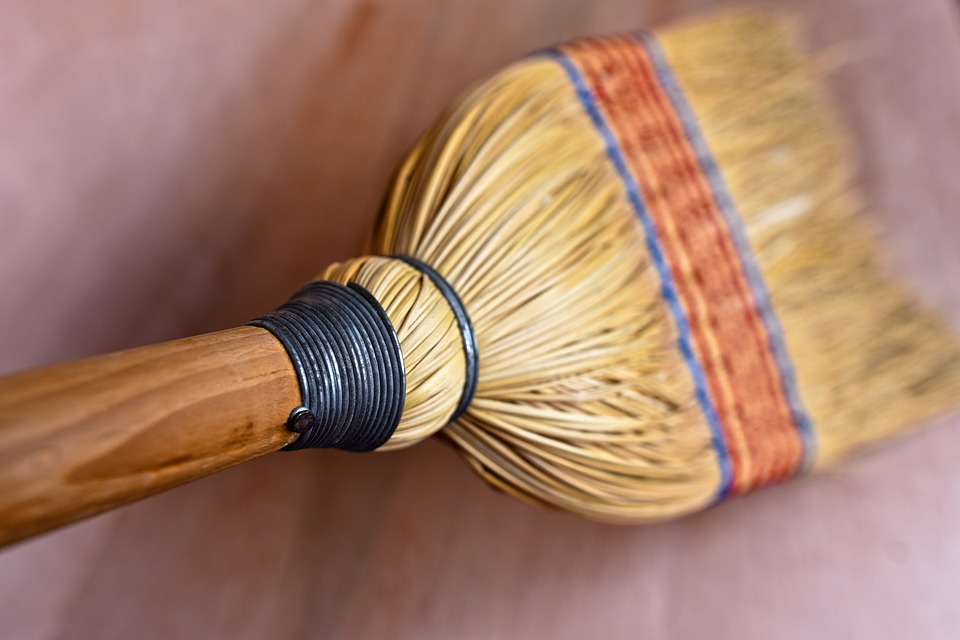
While one of these products stays on the carpet, clean edges and corners of the room with a stiff whisk-broom and a sharp, pointed stick. Using a feather duster, remove cobwebs. Brush curtains and frames.

Move furniture from one section of the room. Sweep with short, light strokes toward the center of the room by drawing the broom. Then go back and sweep a second time with longer, forceful strokes. Sweep the area a third time using long “vigorous” strokes.

The author calculated it would take 20 minutes to sweep a large room this way, but clean rugs are worth the effort. Cleaning this way extends the life of the carpet. It also freshens and brightens the fabric.

Interesting advice!

-Sandra Merville Hart

Sources

Compiled from Original Recipes. Buckeye Cookery and Practical Housekeeping, Applewood Books, 1877.