Civil War Women: Sarah Morgan Dawson, Confederate Diarist

Sarah Morgan Dawson was twenty when she began writing in her diary on March 9, 1862. The Civil War raged near her family’s home in Baton Rouge, Louisiana. Her family had already known hard times. In 1861, illness claimed her father’s life and a duel claimed a brother’s life.

War threatened to divide her family. Three brothers fought for the Confederacy and another, though he sided with the Union, refused to fight against his brothers.

Baton Rouge fell into Union hands. Most citizens ran for their lives, including Sarah’s family. She returned a few times to gather possessions from her home, but found that the Union soldiers who occupied the city had ransacked it. The home was unrecognizable on her last trip—the soldiers had plundered valuables and destroyed what they left behind. Sarah didn’t return to her childhood home until after the war.

Made homeless by the war, her family wandered from Baton Rouge, staying with friends and strangers.

Food supplies dwindled. Sarah had money to purchase food yet some places had none for sale.

They stayed near the Confederate army, making friends with many soldiers. Sarah did all she could to help them. Her family had escaped with few clothes … and everyone else was in the same predicament.

A serious buggy accident injured Sarah’s back. The injury prevented her from walking more than a few steps. She clung to her faith throughout the difficulties that mounted almost daily.

Her Union-sympathizer brother urged them to stay with him in New Orleans, which was now under Union control. They had little choice. A hard train ride and then a schooner took them to New Orleans.

Upon their arrival, they had to take an oath of allegiance to the Union. A Southerner at heart, taking the oath broke Sarah’s spirit. Even worse, Sarah’s mother complained so passionately to the Union soldiers of all she’d suffered at their hands that she was almost arrested. Sarah’s brother smoothed things over and took them into his home.

At the beginning of 1864, Sarah’s heart broke to discover that two of her brothers died. They’d lost so much to the war that she hated the Union.

General Lee surrendered on April 9, 1865. Sarah’s diary entries stopped on June 15, 1865.

It was published and inscribed: “To those who endured and forgave”.

Sarah read her diary many years later and wanted people to know that through it all, God never failed her. “Whatever the anguish, whatever the extremity, in His own good time He ever delivered me. So that I bless Him to-day for all of life’s joys and sorrows—for all He gave—for all He has taken—and I bear witness that it was all Very Good.” –Sarah Morgan Dawson, July 23rd, 1896, Charleston, South Carolina.

-Sandra Merville Hart

Sources

Dawson, Sarah Morgan. A Confederate Girl’s Diary: Civil War Centennial Series, Indiana University Press, 1960.


 

Civil War Women: Susie King Taylor, Union Nurse and Teacher

Born into slavery in Georgia in 1848, Susie Baker lived with her grandmother in Savannah after turning seven. She and her younger sister and brother secretly attended school taught by black women.

In April of 1862, the Civil War had been going on for a year when Susie accompanied her uncle to Saint Catherine Island, seeking protection from the Union fleet there. They were taken, two weeks later, to Saint Simons Island. About 600 black men, women, and children lived there.

Susie received two large boxes of books and Bibles from the North. She used these to teach about 40 children on the island, making her the first black teacher in Georgia for free African American students. Several adults came to her in the evenings to learn how to read.

She married Edward King, a black noncommissioned Union officer, while on St. Simons Island.

Cases of varioloid (a form of smallpox) broke out among the soldiers. One soldier had to be quarantined in his tent with only his doctor allowed to see him. Having been vaccinated, Susie nursed him daily. She also faithfully drank sassafras tea, believing this kept her blood clean.

After the island was evacuated in October of 1862, Susie traveled with her husband and brothers’ regiment. She nursed the wounded, laundered clothes, and taught many black soldiers to read.

Shrapnel, bullets, and cannon balls wreak havoc on the human body. Susie’s compassionate heart allowed her to look past the gruesome wounds as she sought to relieve the men’s suffering. She bound wounds and gave water to the parched men, alleviating pain as much as she was able.

After the war, she and her husband returned to Savannah. She started a school for freed children. In 1866, Edward died before their first child was born. Susie had started two more schools by 1868.

A job as a domestic servant took her to Boston, where she met and married Russell Taylor.

Susie didn’t forget the soldiers. She helped organize Corps 67, a chapter of the Women’s Relief Corps, and served as President, Secretary, Treasurer, and Guard of this corps.

-Sandra Merville Hart

Sources

Butchart, Ronald E. “Susie King Taylor (1848-1912),” Georgia Encyclopedia, 2019/03/30 https://www.georgiaencyclopedia.org/articles/history-archaeology/susie-king-taylor-1848-1912.


Lardas, Mark. African American Soldier in the Civil War: USCT 1862-66, Osprey Publishing Ltd., 2006.


Taylor, Susie King. Edited by Malone, Margaret Gay. In My Own Words: The Diary of Susie King Taylor, Civil War Nurse, Benchmark Books, 2004.


Civil War Women: Harriet Tubman, Union Spy

Born into slavery on a Maryland plantation, Araminta Ross’s parents nicknamed her “Minty.” Minty later took her mother’s name, Harriet, to honor her.

At age twelve, she stepped between an overseer throwing a heavy object at a fugitive slave. It struck Harriet instead, breaking her skull. The injury caused headaches and narcolepsy that lasted all her life. She fell deeply asleep at random.

She married a free black man, John Tubman, around 1844.

Learning that she and two of her brothers were about to be sold, they escaped on September 17, 1849. Her brothers returned to the plantation, but Harriet pushed on, following safe houses on the Underground Railroad. She walked about 90 miles to freedom in Pennsylvania. Over the next few years, she rescued about 70 people, including her parents and other family members. Her husband had remarried and chose to stay in Maryland.

When the Civil War began, Harriet worked as cook, nurse, and laundress at Fort Monroe, Virginia. She assisted fugitive slaves there.

In May of 1862, soldiers and fugitives were dying of diseases when she arrived in Port Royal, South Carolina. Her knowledge of local roots helped significantly in treating their illnesses.

In 1863, Harriet, reporting directly to General David Hunter and General Rufus Saxton, commanded a team of espionage scouts searching for escape routes for slaves.

She found warehouses and ammunition and reported the locations to Colonel James Montgomery.

Late on June 2, 1863, Harriet led 150 black men, soldiers of 2nd South Carolina Battalion, on the Combahee River Raid. The surprise attack freed over 750 slaves.

After the war ended, Harriet and her family settled in Auburn, New York, and she continued to help folks in need.

-Sandra Merville Hart

Sources

Biography.com Editors. “Harriet Tubman,” A&E Television Networks, 2019/03/30 https://www.biography.com/people/harriet-tubman-9511430.

“Harriet Tubman,” History.com, 2019/03/30 https://www.history.com/topics/black-history/harriet-tubman.

“Role in the Civil War,” Harriet Tubman Historical Society, 2019/03/30 http://www.harriet-tubman.org/role-in-the-civil-war/.

The Editors of Encyclopaedia Britannica. “Harriet Tubman: American Abolitionist,” Encyclopaedia Britannica, 2019/03/30 https://www.britannica.com/biography/Harriet-Tubman.


Civil War Women: Jennie Hodgers as Albert Cashier

Born in Ireland, Jennie Hodgers emigrated to United States as a girl. At her stepfather’s prompting, she dressed as a boy to find a job. Jennie moved to Illinois after her mother died.

Jennie enlisted in the Union army in August of 1862 under the name Albert D. Cashier. Small in stature. Quiet. Sought privacy when bathing. Kept her coat buttoned to the chin to hide a missing Adam’s apple. Still, other soldiers didn’t notice anything unusual about Private Cashier.

Jennie fought courageously in forty battles, narrowly escaping capture at Vicksburg.

She mustered out with her comrades in the 95th Illinois Infantry on August 17, 1865. Jennie then faced a dilemma. She couldn’t read or write and the jobs available to her as a woman would keep her at poverty. Living as a man, she’d work as a laborer. She later began receiving a military pension.

So she lived as Albert Cashier and eventually began working for Illinois State Senator Ira Lish. In 1911, Senator Lish ran over her with his car. With a badly broken leg, she was taken to a doctor … who discovered her long-held secret.

Jennie implored the doctor for his silence. Unwilling to see the veteran lose her pension, he agreed.

Things might have progressed as normal after that—if Jennie’s leg had healed. When it didn’t, Senator Lish placed her to the Soldiers and Sailors Home, a home in Quincy for male veterans. Staff members there kept Jennie’s secret.

Unfortunately, her mental health declined along with her physical health. In 1914, she entered Watertown State Hospital for the Insane. They discovered her sex and forced her to wear dresses again.

Newspapers printed her secret. A charge of defrauding the government by collecting a pension was investigated. Her comrades came to her defense, testifying to her bravery as a soldier. She kept her pension.

Jennie was buried in her soldier’s uniform with the name “Albert D. J. Cashier, Co. G, 95 Ill. Inf.” on her tombstone.

The executor of her estate, W.J. Singleton, spent nine years after her death tracking down her real name.

In my Civil War novel, A Musket in My Hands, an ultimatum from their father forces two sisters to disguise themselves as men and muster into the Confederate army in the fall of 1864—just in time for events and long marches to lead them to the tragic Battle of Franklin.

-Sandra Merville Hart


Sources

“Albert Cashier,” Wikipedia, 2018/12/10 https://en.wikipedia.org/wiki/Albert_Cashier.

Freedman, Jean R. “Albert Cashier’s Secret,” New York Times, 2018/12/10  https://opinionator.blogs.nytimes.com/2014/01/28/albert-cashiers-secret/.

Massey, Mary Elizabeth. Women in the Civil War, University of Nebraska Press, 1966.


“Jennie Hodgers aka Private Albert Cashier,” National Park Service, 2018/12/10 https://www.nps.gov/articles/jennie-hodgers-aka-private-albert-cashier.htm.


Rye Coffee

As the Civil War continued, food became scarce for folks in the South. Southerners also had a hard time obtaining coffee. They seemed to be just addicted to the beverage—especially soldiers—as people are today so they searched for substitutes. Rye was one of the substitutes.

In an early scene in my Civil War romance, A Musket in My Hands, the protagonist, Callie, does not have coffee beans to make her pa a cup of coffee. Instead she offers to fix him a cup from rye that she’d boiled and dried.

Though I am not a coffee drinker, I wanted to prepare rye for coffee. There is a recipe in Confederate Home Cooking.

Finding rye berries was the greatest challenge. A specialty food store near me sells them.

I’ve never seen or tasted rye coffee so this was a learning process. The recipe mentioned “parching” after drying, so I reached out to Southern cooks for help with this term. Parching means roasting, which makes sense. (Thanks, Charlotte and Debra!)

I boiled ¼ cup of rye on a medium high heat for 10 minutes. By experimenting, I discovered that longer than 10 minutes begins to split the grain, which the recipe advises against.

Boiling softened the grain, expanding it over double the original size. The water was a clear, brown broth.

The rye was drained and then set aside while I lined a cookie sheet with parchment paper. The oven was preheated to 275 degrees to dry the rye.

After spreading a thin layer of rye over the parchment paper, I set the cookie sheet into the oven, stirring the rye every five minutes. After 10 minutes, most of the grain was dry. After 15 minutes, it was removed from the oven.

While the oven preheated to 450 degrees, the rye was transferred onto a fresh piece of parchment paper on the cookie sheet.

Because the oven was so hot, I kept a close eye on the roasting process, checking the rye every 2 minutes. After 10 minutes, I removed them from the oven.

Many homes in the Civil War era had coffee grinders. I don’t own one so I ground the roasted rye with a rolling pin. Worked pretty well.

Then I experimented with how soldiers in camp might have made the coffee. Using 1 teaspoon of ground rye in each case, I tried the following:

1) Poured boiling water into a cup with the rye and let it steep about 5 minutes.  (left side of main photo)

2) Boiled water with rye—strongest coffee flavor. (middle)

3) NOT the way soldiers made coffee but applicable for folks today—a single-serving coffee maker. (right side of main photo)

All of these tasted like coffee to me. Granted, I am not a coffee drinker, but I agree that this probably worked well as a coffee substitute for soldiers. Though #2 made the strongest coffee, the others tasted almost as strong.

Tasting the beverage made me wonder if roasting it 2 minutes less would enhance the flavor. I will try roasting for only 8 minutes next time.

This was a fun experiment! I’d love to hear if you try it.

-Sandra Merville Hart

Sources

Mitchell, Patricia B. Confederate Home Cooking, 2014.

Attitudes Toward Women Civil War Soldiers

Approximately four hundred known cases of women serving as Civil War soldiers on either side–and an unknown number of ladies who slipped away or died without detection– subjected themselves to possible criticism from the general public and their comrades.

Society and the military were critical of women soldiers who didn’t accompany a male relative such as a husband or brother. The general public was not ready for unmarried women on the front lines.

A Southern journalist categorized women in Confederate military camps in three ways: families of officers, laundresses and cooks, and prostitutes. So how did he classify female soldiers, scouts, and nurses?

The wives of officers living in army camps generally maintained the military’s respect. Union General Ulysses S. Grant sometimes had his family in camp.

The motivation of other women’s presence in army camps puzzled the public. There was a tendency to doubt the female soldier’s conduct. Some endured unjust accusations of misbehavior.

There were also female visitors in camp who came to see loved ones. Most parents refused to allow their young, unmarried daughters to visit army camps. They sometimes sneaked in anyway.

Many women simply wanted to be near their men.

Prostitutes followed the camps. Government records show that camp followers numbered in the thousands around army camps. Some bootlegged liquor and acted as spies.

Hundreds of women, including female soldiers, became pregnant in army camps.

The military and the public knew all this. Unfortunately, those experiences affected how men viewed women soldiers.

The women who served as Civil War soldiers endured many obstacles. Public opinion during and after the war was one of them.

In my Civil War novel, A Musket in My Hands, two sisters have no choice but to disguise themselves as men to muster into the Confederate army in the fall of 1864—just in time for events and long marches to lead them to the tragic Battle of Franklin.

-Sandra Merville Hart


Sources

Abbott, Karen. Liar, Temptress, Soldier, Spy: Four Women Undercover in the Civil War, Harper, 2014.

Blanton, DeAnne and Cook, Lauren M. They Fought Like Demons, Louisiana State University Press, 2002.

Massey, Mary Elizabeth. Women in the Civil War, University of Nebraska Press, 1966.

Silvey, Anita. I’ll Pass for Your Comrade: Women Soldiers in the Civil War, Clarion Books, 2008.

Velazquez, Loreta Janeta. The Woman in Battle: The Civil War Narrative of Loreta Velazquez, Cuban Woman & Confederate Soldier, The University of Wisconsin Press, 2003. (Previously published 1876)


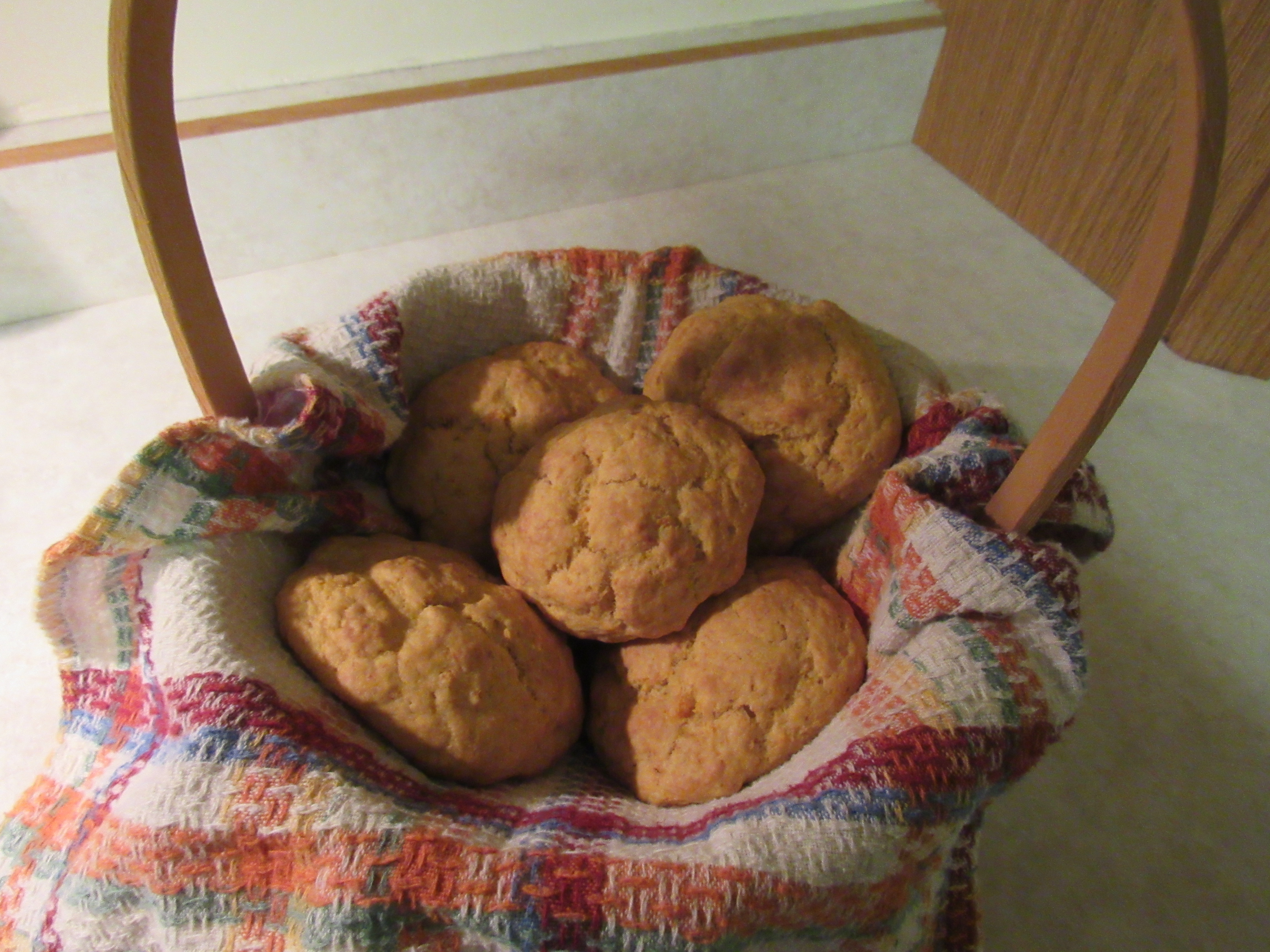
Sweet Potato Biscuits

Sweet potatoes were a staple food during the Civil War. They grow in humid warm areas. Many large plantations had root cellars to store them.

When the leaves begin yellowing in fall, farmers harvest the roots. After brushing the sweet potatoes clean, the curing process begins. Potatoes are stacked in the field and covered with sand. Farmers leave them alone for weeks. Once the curing process is done, they may be stored several months.

Sweet potatoes may be baked, boiled, stewed, mashed, or fried. They were often used in pies, cakes, and puddings. As in the case of Civil War soldiers in my historical romance,  A Musket in My Hands, many Southerners liked sweet potato biscuits. I had to try them.

For my sweet potato biscuits, I followed the recipe of a well-known modern Southern cook—Paula Deen. Here’s the link to her recipe.

My dad preferred large home-made biscuits so I tend to follow his wishes even now that he’s not here to eat them. This recipe, meant to make 15-18 biscuits, made 5 large biscuits for me.

This was my first time eating this type of biscuit. They are delicious! The sweet potato flavor is light and pleasant, enhancing the biscuit without overpowering it.

I am already thinking ahead to holiday gatherings where I can bring them. Thanksgiving?

I’d love to hear if you try it.

-Sandra Merville Hart

Sources

Deen, Paula. “Sweet Potato Biscuits,” Paula Deen, 2018/09/27 https://www.pauladeen.com/recipe/sweet-potato-biscuits/.

“Food,” History Central, 2018/09/27 https://www.historycentral.com/CivilWar/AMERICA/food.html.

“Sweet Potato,” Encyclopedia.com, 2018/09/27 https://www.encyclopedia.com/plants-and-animals/plants/plants/sweet-potato.

Consequences of Discovery for Women Civil War Soldiers

There are about four hundred known cases of women serving as Civil War soldiers on either side. They enlisted for varying reasons. They faced challenges  at every turn. They were discovered in a variety of ways.

The consequences for the women varied. They could be dismissed or imprisoned, depending on the officer’s decision.

Newspaper reporters wrote of Southern women who were arrested while in uniform. Federals captured two female soldiers and imprisoned them.

A female Union soldier was captured after being wounded in battle. She was sent back to Union lines with a note, “As Confederates do not use women in war, this woman, wounded in battle, is returned to you.”

After being imprisoned on Johnson Island, a Confederate officer delivered a baby boy in December of 1864.

A Union major ordered her men in battle. They later discovered her identity and imprisoned her for violating the “regulations of war.”

Loreta Janeta Velazquez disguised herself as Confederate soldier Lieutenant Harry T. Buford. She was arrested when the apparatus of her disguise slipped. She was charged with acting as a spy and then released, but she returned to her soldier disguise. She was later arrested when comrades suspected her of being a woman. Loreta confessed. The mayor fined her $10 and ordered ten days imprisonment. After her release, she reenlisted in a different company, this one in the 21st Louisiana.

Confederate women who were imprisoned as POWs usually were kept there even after their identity became known.

Female soldiers facing a provost marshal received varying degrees of punishment.

Women were sometimes sent to civilian authorities who could order them to serve time in the city jail or the Guard House. Some women were sent to the workhouse while others were released.

One woman was court-martialed.

In my Civil War novel, A Musket in My Hands, two sisters have no choice but to disguise themselves as men to muster into the Confederate army in the fall of 1864—just in time for events and long marches to lead them to the tragic Battle of Franklin.

-Sandra Merville Hart

Sources

Abbott, Karen. Liar, Temptress, Soldier, Spy: Four Women Undercover in the Civil War, Harper, 2014.

Blanton, DeAnne and Cook, Lauren M. They Fought Like Demons, Louisiana State University Press, 2002.

Massey, Mary Elizabeth. Women in the Civil War, University of Nebraska Press, 1966.

Silvey, Anita. I’ll Pass for Your Comrade: Women Soldiers in the Civil War, Clarion Books, 2008.

Velazquez, Loreta Janeta. The Woman in Battle: The Civil War Narrative of Loreta Velazquez, Cuban Woman & Confederate Soldier, The University of Wisconsin Press, 2003. (Previously published 1876)


Ways that Women Civil War Soldiers were Discovered

Women fighting as Civil War soldiers—whatever their reasons—kept their guard up constantly. There are about four hundred known cases of female soldiers fighting on either side. Many others likely joined for a short time and then donned a dress to quit without detection. Still, it was challenging for the women to remember their pretense twenty-four hours a day. Some were discovered.

A Wisconsin woman, Sarah Collins, donned her stockings and shoes the way a woman did and, before her regiment left town, was sent home.

It’s unclear what Mary Burns did, but she was probably recognized even wearing a uniform. She was arrested in Detroit—her company hadn’t left town yet.

“Charles Norton,” a female private in the 141st Pennsylvania Infantry, stole an officer’s boots. When her identity was discovered, she was quickly mustered out.

Two women soldiers got drunk on apple jack while on a foraging expedition. In their drunken state, they fell into a river. Comrades saved them from drowning. Their rescuers were shocked to discover they were women.

Comrades tossed apples to two female soldiers in the 95th Illinois. The women reached for their nonexistent aprons to catch the apples and were immediately discharged.

A female soldier from Rochester, New York, tried to don pants by pulling them over her head.

A pregnant corporal in a New Jersey regiment was promoted to sergeant for her bravery at the Battle of Fredericksburg in December of 1862. She hid her pregnancy by wearing an over-sized coat. On January 19, 1863, she went into labor on picket duty and complained of feeling unwell. Her complaints were ignored until her pain increased. Comrades carried her to a farmhouse where her healthy baby was born. Everyone learned the news but protected her by not mentioning her real name or her alias. Her name is still unknown today.

The most common way of discovery happened when women were wounded.

A girl from Brooklyn wanted to be the second Joan of Arc. Her family, desiring to save her, sent “Emily” to an aunt in Michigan. She ran away and joined the Army of the Cumberland as a drummer. Her identity was discovered when she was mortally wounded on Lookout Mountain.

Mary Owens enlisted with a man she secretly wed during their eighteen months in the army. She was wounded in the battle that took his life.

Malinda Pritchard Blalock, an excellent shooter, enlisted when her husband, Keith, was forced to muster into the 26th North Carolina Infantry. She pretended to be Keith’s brother, Sam. Her identity was discovered when she was wounded.

In my Civil War novel, A Musket in My Hands, two sisters have no choice but to disguise themselves as men to muster into the Confederate army in the fall of 1864—just in time for events and long marches to lead them to the tragic Battle of Franklin.

-Sandra Merville Hart

Sources

Abbott, Karen. Liar, Temptress, Soldier, Spy: Four Women Undercover in the Civil War, Harper, 2014.

Blanton, DeAnne and Cook, Lauren M. They Fought Like Demons, Louisiana State University Press, 2002.

Massey, Mary Elizabeth. Women in the Civil War, University of Nebraska Press, 1966.

Silvey, Anita. I’ll Pass for Your Comrade: Women Soldiers in the Civil War, Clarion Books, 2008.


The Army of Tennessee by Stanley F. Horn

A Military History

This nonfiction resource book traces the history of the Confederate Army of Tennessee from the beginning of the Civil War in 1861 to its ending in 1865.

When Tennessee voted to secede from the Union on June 1, 1861, volunteer military organizations were already in training. Drums and fifes played in the streets. Bands played Dixie and Bonnie Blue Flag.

This excellent book, published in 1941, provided many fascinating details not easily found in later publications.

For instance, I loved learning more about Sherman’s takeover of Atlanta. When he expelled the citizens from the city, the Army of Tennessee assisted the exiles as much as possible.

Excellent book for Civil War research and history lovers.

-Sandra Merville Hart