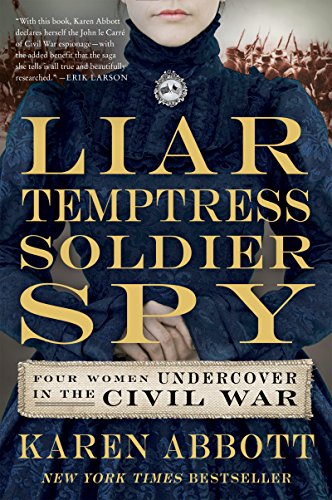
Liar, Temptress, Soldier, Spy by Karen Abbott

Four Women Undercover in the Civil War

This book is classified as a biography.

Belle Boyd was a rebel who shot a Union soldier. She became a spy for the Confederate army.

Emma Edmondson enlisted as “Frank Thompson” to become a Union soldier. She fell in love with Jerome Robbins while acting as a soldier. He knew her secret and returned her love, though she seemed a bit too fond of her tentmate, James Reid.

Widow Rose O’Neal Greenhow was a Confederate spy living in Washington D.C. She passed on information she learned from political connections and eventually was arrested.

Elizabeth Van Lew lived in Richmond but was an abolitionist. She acted as a Union spy.

The book is written more as a novel and is an easy read. Filled with surprises from the Civil War, this book is a page turner.

-Sandra Merville Hart

Amazon

Cherokee General Watie Surrenders First Indian Brigade

Degataga, Cherokee for “stand firm,” was the name given to Stand Watie at his birth. He was baptized as Isaac Watie so Stand Watie is a blend of his Cherokee and English names.

Watie supported the relocation of the Cherokee Nation to Indian Territory (modern-day Oklahoma.) Even though Chief John Ross and the majority of the Cherokee opposed the removal, Watie and a few other tribal members negotiated and signed the Treaty of New Echota. The treaty with the United States forced the Cherokee to leave their lands, traveling what was later called the Trail of Tears.

The treaty signers weren’t popular. A friend’s timely warning allowed Watie to escape being killed with other signers in 1839.

He joined the Southern cause in 1861. As colonel, he raised a Cherokee regiment, the Cherokee Regiment of Mounted Rifles. He and his troops helped drive pro-Union Native Americans from Indian Territory to Kansas.

Watie and his men excelled as scouts and skirmishers. His courage was noticed and he became Brigadier General Watie on May 6, 1864—the only Native American to receive this rank in the Civil War. He commanded the First Indian Brigade, made up of Cherokee, Seminole, Osage, and Creek soldiers.

After General Kirby Smith surrendered the Army of the Trans-Mississippi, Watie knew his turn was coming.

On June 23, he surrendered at Doaksville in Indian Territory.

The last Confederate general to surrender was Cherokee chief Stand Watie.

-Sandra Merville Hart

Sources

“Conclusion of the American Civil War,” Wikipedia.com, 2018/03/21 https://en.wikipedia.org/wiki/Conclusion_of_the_American_Civil_War.

“Conclusion of the American Civil War,” Wikiwand.com, 2018/03/22 http://www.wikiwand.com/en/Conclusion_of_the_American_Civil_War.

Long, E.B. and Long, Barbara. The Civil War Day by Day: An Almanac 1861-1865, A Da Capo Paperback, 1971.

Plante, Trevor K. “Ending the Bloodshed,” National Archives, 2018/03/21

https://www.archives.gov/publications/prologue/2015/spring/cw-surrenders.html.

“Stand Watie,” Civil War Home, 2018/04/22 http://www.civilwarhome.com/watiebio.html.

“Stand Watie,” Civil War Trust, 2018/04/22 https://www.civilwar.org/learn/biographies/stand-watie.

Brig. Gen. Wofford Surrenders Department of North Georgia

William T. Wofford served as a captain in the Mexican War. After the war, he was in the Georgia state legislature. As a member of the state convention in 1861, he voted against secession. When Georgia seceded, he joined the 18th Georgia Infantry as colonel.

His regiment was later assigned to General John Bell Hood’s Texas Brigade. As part of this brigade, Wofford and his men fought at Yorktown, Second Bull Run, South Mountain, Sharpsburg, and Antietam.

In November of 1862, 18th Georgia was transferred to the Georgia Brigade. Wofford was promoted to brigadier general on January 17, 1863.

He served with the Army of Northern Virginia until Georgia Governor Joseph E. Brown asked him to assume command of the Department of North Georgia around the end of 1864.

Georgia’s citizens needed protection from guerrilla attacks. Wofford strengthened his forces with stragglers, deserters—any available men. He commanded this department until May 12, 1865.

Lee and others had already surrendered when letters between Union Brigadier General Henry M. Judah and Wofford were exchanged. Union Colonel Louis Merrill believed there to be about 10,000 soldiers in Wofford’s command.

About a third of this number surrendered—the rest deserted.

A sign in Kingston, Georgia, located at the intersection of Church Street and West Main Street, marks where the surrender occurred.

-Sandra Merville Hart

Sources

“Conclusion of the American Civil War,” Wikipedia.com, 2018/03/21 https://en.wikipedia.org/wiki/Conclusion_of_the_American_Civil_War.

“Conclusion of the American Civil War,” Wikiwand.com, 2018/03/22 http://www.wikiwand.com/en/Conclusion_of_the_American_Civil_War.

Long, E.B. and Long, Barbara. The Civil War Day by Day: An Almanac 1861-1865, A Da Capo Paperback, 1971.

Plante, Trevor K. “Ending the Bloodshed,” National Archives, 2018/03/21

https://www.archives.gov/publications/prologue/2015/spring/cw-surrenders.html.

“W.T. Wofford (1824-1884),” New Georgia Encyclopedia, 2018/04/21 https://www.georgiaencyclopedia.org/articles/history-archaeology/w-t-wofford-1824-1884.

“Swamp Fox of the Confederacy” Surrenders at Chalk Bluff, Arkansas

In 1857, M. Jeff Thompson was elected mayor of St. Joseph, Missouri. He gave a speech about the importance of the Pony Express in a ceremony on April 3, 1860, before the first rider left St. Joseph.

Thompson supported secession in writings and speeches while mayor. After the war began, he commanded the First Division of the Missouri State as brigadier general. Located in the “boot heel” of Missouri, he and his troops caused trouble for the Union forces and won their admiration. Then Colonel Ulysses S. Grant called him “Swamp Fox.” He soon became known as the “Swamp Fox of the Confederacy.”

After suffering some defeats, Thompson was assigned to the Confederate riverine navy defending Memphis. This navy was destroyed and Thompson was sent back to Arkansas where he and his men raided into Missouri for the next few months.

Thompson was captured at Pocahontas on August 24, 1863. He spent the next year as a prisoner first at the St. Louis Gratiot Street Prison, then Johnson’s Island, Ohio, and then Fort Delaware. He was paroled in August of 1864.

He rejoined the fighting in Missouri. He had command of the Iron Brigade in Brigadier General Jo Shelby’s division and commanded the Sub-District of Northwest Arkansas beginning in March, 1865.

Union Lieutenant Colonel Charles W. Davis, 51st Illinois Infantry, requested a conference with Thompson. They discussed surrender terms on May 9th at Chalk Bluff, Arkansas. Thompson asked for two days to consult with his officers.

Thompson surrendered on May 11, 1865. The paroles took place at two Arkansas locations, Wittsburg and Jacksonport. Though some of Thompson’s men had already deserted, about 7,500 officers and enlisted men surrendered and were paroled.

-Sandra Merville Hart
Sources

“Conclusion of the American Civil War,” Wikipedia.com, 2018/03/21 https://en.wikipedia.org/wiki/Conclusion_of_the_American_Civil_War.

“Conclusion of the American Civil War,” Wikiwand.com, 2018/03/22 http://www.wikiwand.com/en/Conclusion_of_the_American_Civil_War.

“’Great Race Against Time,’ First Run: April 3, 1860,” National Park Service, 2018/04/21 https://www.nps.gov/parkhistory/online_books/poex/hrs/hrs2e.htm.

“M. Jeff Thompson,” Wikipedia.com, 2018/04/21 https://en.wikipedia.org/wiki/M._Jeff_Thompson.

Long, E.B. and Long, Barbara. The Civil War Day by Day: An Almanac 1861-1865, A Da Capo Paperback, 1971.

Perkins, Russell S. “Thompson, M. Jeff,” The Kansas City Public Library, 2018/04/21  http://www.civilwaronthewesternborder.org/encyclopedia/thompson-m-jeff.

Plante, Trevor K. “Ending the Bloodshed,” National Archives, 2018/03/21

https://www.archives.gov/publications/prologue/2015/spring/cw-surrenders.html.
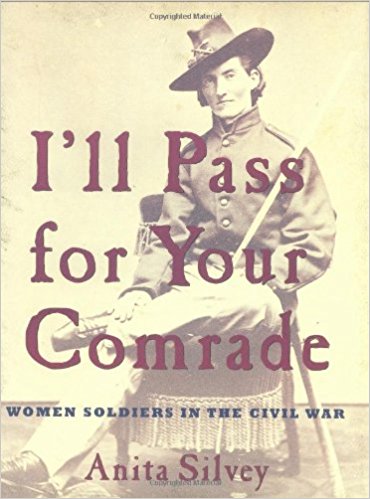
I’ll Pass for Your Comrade by Anita Silvey

Women Soldiers in the Civil War

This nonfiction resource book talks about the many women who wanted to be soldiers or became soldiers.

A group of over twenty Virginia women wanted to organize a volunteer regiment. They wrote to the Confederate Secretary of War and he rejected their offer.

Black women in Northern cities offered to be “nurses, seamstresses, and warriors if need be.” Local officials refused.

But some women did muster into the army. Fanny Wilson and Nellie Graves wanted to be near their boyfriends.

Malinda Pritchard Blalock served both the Union and the Confederacy as a soldier.

Women cut their hair short and dressed in soldier’s uniforms, often escaping detection simply because no one expected it.

Great book for Civil War research and history lovers.

-Sandra Merville Hart

Amazon

General Kirby Smith Surrenders Trans-Mississippi Department

Confederate Lt. General Edmund Kirby Smith commanded the Trans-Mississippi Department, which included Arkansas, Indian Territory, Texas, and most of Louisiana.

After the Union army took control of the Mississippi River, Smith’s army was cut off from the Confederacy. He stayed west of the Mississippi until the war ended.

By May 5, 1865, Smith’s force of 43,000 men was the last major army remaining in the Confederacy.

General Grant had turned his attention toward the Trans-Mississippi Department by May 8th.

Smith sent Lieutenant General Buckner to New Orleans for a meeting with Union Major General Peter Osterhaus on May 26th. They discussed terms of surrender similar to those agreed-upon at Appomattox.

Aboard the U.S.S. Fort Jackson just outside Galveston Harbor, Smith signed the surrender on June 2nd.

Some troops, refusing the surrender, fled to Mexico or to the Far West.

-Sandra Merville Hart

Sources

“Conclusion of the American Civil War,” Wikipedia.com, 2018/03/21 https://en.wikipedia.org/wiki/Conclusion_of_the_American_Civil_War.

“Conclusion of the American Civil War,” Wikiwand.com, 2018/03/22 http://www.wikiwand.com/en/Conclusion_of_the_American_Civil_War.

Long, E.B. and Long, Barbara. The Civil War Day by Day: An Almanac 1861-1865, A Da Capo Paperback, 1971.

Plante, Trevor K. “Ending the Bloodshed,” National Archives, 2018/03/21

https://www.archives.gov/publications/prologue/2015/spring/cw-surrenders.html.


Battle at Palmito Ranch, Texas

General Robert E. Lee had surrendered at Appomattox over a month before the Civil War Battle at Palmito Ranch.

Colonel Theodore H. Barrett commanded the Union troops at Brazos Santiago Island. On May 11, 1865, Barrett ordered Lieutenant Colonel David Branson to attack Rebel outposts and camps on the mainland.

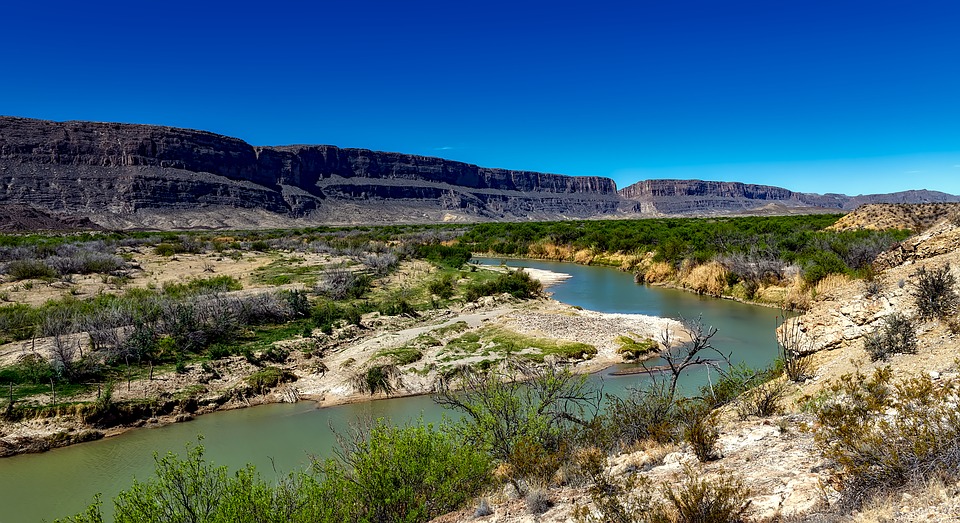
Taking the 250 men of 62nd U.S. Colored Infantry and 50 men of 2nd Texas Cavalry, Branson reached White’s Ranch at 2 AM on May 12th. Upon finding no one at the ranch, he withdrew and marched to Palmito Ranch, a Confederate camp located along the Rio Grande River.

Folks from nearby Mexico had spotted the Union army and reported their location to the Confederates in the morning hours.

Branson’s approach scattered the Confederates. Rather than leaving the ranch, Branson and his men decided to eat and feed their horses.

When Confederate reinforcements arrived at 3 PM, Branson returned to White’s Ranch. Barrett brought the 34th Indiana’s 200 men to his aid and then took over the command.

Union troops skirmished most of the way to Palmito Ranch. Then sharp fighting started about 12 miles outside Brownsville.

Around 4 PM, Confederate Colonel John S. “Rip” Ford rode in with a large cavalry force.

Federal troops formed a battle line, which the Confederates hammered with artillery.

Barrett’s retreat ended the last battle of the Civil War—which was a Confederate victory.

-Sandra Merville Hart

Sources

“Conclusion of the American Civil War,” Wikipedia.com, 2018/03/21 https://en.wikipedia.org/wiki/Conclusion_of_the_American_Civil_War.

“Conclusion of the American Civil War,” Wikiwand.com, 2018/03/22 http://www.wikiwand.com/en/Conclusion_of_the_American_Civil_War.

Long, E.B. and Long, Barbara. The Civil War Day by Day: An Almanac 1861-1865, A Da Capo Paperback, 1971.

“Palmito Ranch,” Civil War Trust, 2018/03/26 https://www.civilwar.org/learn/civil-war/battles/palmito-ranch.

Plante, Trevor K. “Ending the Bloodshed,” National Archives, 2018/03/21

https://www.archives.gov/publications/prologue/2015/spring/cw-surrenders.html.
 

General Maury Surrenders District of the Gulf

Confederate Major General Dabney Maury, the Commander of the Confederate District of the Gulf, was running out of options on April 11, 1865. Two of his major forts, Spanish Fort and Fort Blakely, had fallen and were now under Union control.

Maury had retreated to Mobile with his depleted forces of 4,500, hoping to eventually join with General Joseph Johnston’s Army of Tennessee.

The general began evacuating Mobile on April 11th. Troops removed their supplies, burned cotton, and dismantled works. Maury led his soldiers to Meridian, Mississippi.

On April 12th, the mayor of Mobile, Robert H. Slough, surrendered his city.

When Maury learned that Johnston surrendered to Sherman, his plans of joining the Army of Tennessee collapsed.

Maury surrendered to Union General Canby at Citronelle, Alabama, on May 4th.

He and his troops were paroled on May 14th.

-Sandra Merville Hart

Sources

“Conclusion of the American Civil War,” Wikipedia.com, 2018/03/21 https://en.wikipedia.org/wiki/Conclusion_of_the_American_Civil_War.

“Conclusion of the American Civil War,” Wikiwand.com, 2018/03/22 http://www.wikiwand.com/en/Conclusion_of_the_American_Civil_War.

“Dabney Herndon Maury,” Wikisource, 2018/03/22 https://en.wikisource.org/wiki/Southern_Historical_Society_Papers/Volume_27/Dabney_Herndon_Maury.

Kane, Robert. “Battle of Spanish Fort,” Encyclopedia of Alabama, 2018/03/25 http://www.encyclopediaofalabama.org/article/h-3730.

Long, E.B. and Long, Barbara. The Civil War Day by Day: An Almanac 1861-1865, A Da Capo Paperback, 1971.

Plante, Trevor K. “Ending the Bloodshed,” National Archives, 2018/03/21

https://www.archives.gov/publications/prologue/2015/spring/cw-surrenders.html.
 

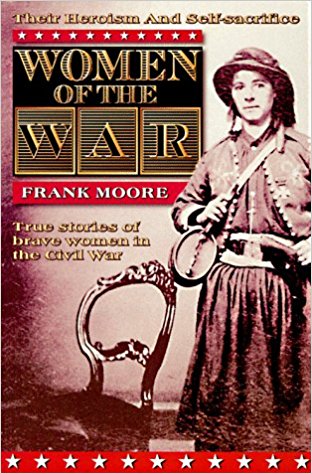
Women of the War by Frank Moore

Their Heroism and Self-sacrifice

True Stories of brave women in the Civil War

This nonfiction resource book shows the many different ways that women served in the Civil War effort.

There are examples of women as soldiers, such Anna Etheridge and Kady Brownell.

Women worked in the Sanitary and Christian Commissions, serving the soldiers.

The women of Philadelphia volunteered at The Cooper’s Shop Saloon, preparing food for Union soldiers passing through the city. There was also a hospital where they received medical care.

Women also traveled to Gettysburg to help with thousands of wounded.

Originally published in 1866, the book includes many examples of women going above and beyond to help soldiers.

Great book for Civil War research and history lovers.

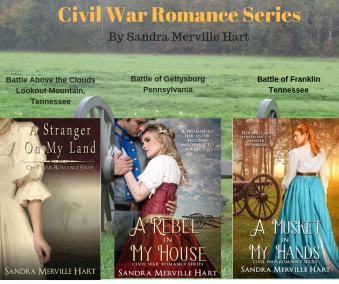
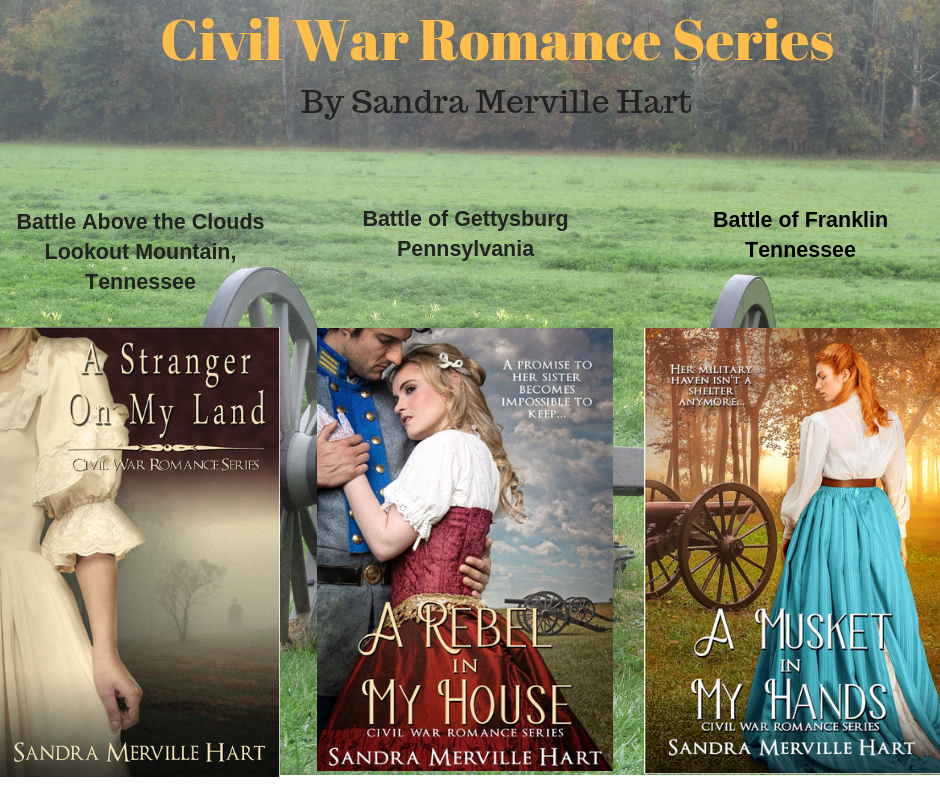
I read this book to learn more about women who served in the Civil War as soldiers as part of my research for my upcoming November release, A Musket in My Hands.

-Sandra Merville Hart

Amazon

Son of Former President Surrenders Confederate Command

Confederate Lieutenant General Richard Taylor, son of President Zachary Taylor and brother-in-law of Confederate President Jefferson Davis, began the war as Colonel of the 9th Louisiana Infantry. He fought in the Battle of Bull Run and slowly rose through the ranks.

By April of 1865, he commanded the Confederate Department of Alabama, Mississippi, and East Louisiana. Taylor, leading about 10,000 troops, knew the Confederacy was collapsing when news of Lee’s surrender at Appomattox reached him.

Taylor was honest with his 10,000 troops. He felt that while General Joseph Johnston was still in the fight, they must support him. He also worried for the safety of President Davis and other Government authorities who might need their protection.

His men, including General Nathan Bedford Forrest, joined him in remaining vigilant.

Then Taylor learned that Johnston surrendered to Union General Sherman.

Taylor agreed to meet with Union Major General Edward Canby. The meeting took place north of Mobile, Alabama. They agreed to a 48-hour truce during their May 2nd conversation. The two generals then ate lunch together and enjoyed lively music.

Taylor agreed to the same terms as Lee and Grant. On May 4th, he surrendered at Citronelle, Alabama. Located along the railroad, Citronelle was between Canby’s Mobile headquarters and Taylor’s headquarters in Meridian, Mississippi.

A few days later, Forrest surrendered his cavalry corps.

There is a small park with markers and picnic tables at the location of Taylor’s surrender. More information can be found at the Citronelle Historical Museum.

-Sandra Merville Hart

Sources

“Conclusion of the American Civil War,” Wikipedia.com, 2018/03/21 https://en.wikipedia.org/wiki/Conclusion_of_the_American_Civil_War.

“Richard Taylor,” Civil War Trust, 2018/03/22 https://www.civilwar.org/learn/biographies/richard-taylor.

Plante, Trevor K. “Ending the Bloodshed,” National Archives, 2018/03/21

https://www.archives.gov/publications/prologue/2015/spring/cw-surrenders.html.
“Surrender at Citronelle,” ExploreSouthernHistory.com, 2018/03/22 http://www.exploresouthernhistory.com/citronelle.html.