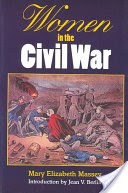
Women in the Civil War by Mary Elizabeth Massey

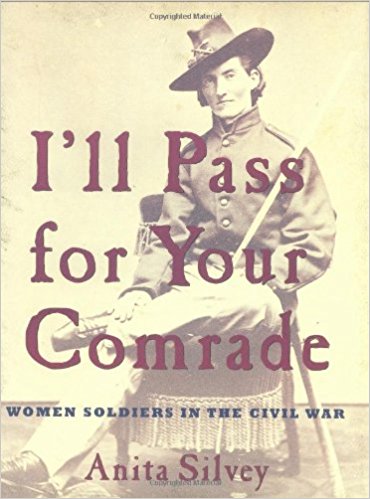
This nonfiction resource book is about the effects of the Civil War on women of the North and South.

Massey studied diaries and letters from over a hundred people who lived during the war. She begins by exploring education and employment opportunities available to women thirty years before the war.

During the war, some women stayed in or near army camps. Officers’ wives and families sometimes stayed in camps. Laundresses, cooks, and prostitutes were also there, as well as soldiers, nurses, and spies.

Massey gives examples of a few of the women who disguised themselves as soldiers on both sides.

Great book for Civil War research and history lovers.

-Sandra Merville Hart

Amazon

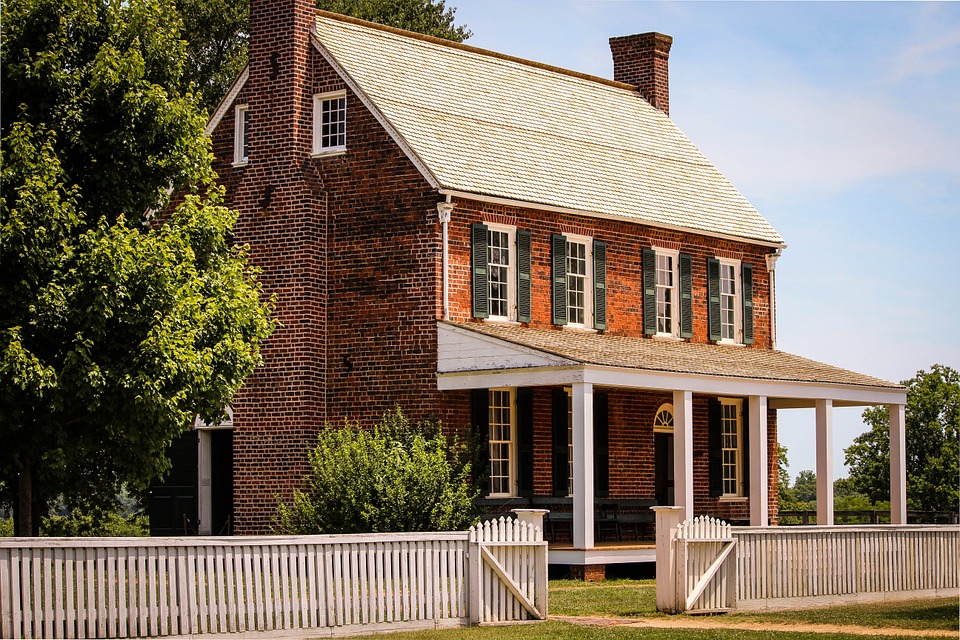
Confederate Surrender at Appomattox Court House

Food supplies awaited Confederate General Robert E. Lee’s Army of Northern Virginia at Appomattox Station. He needed them—his men were hungry.

On April 8, 1865, Lee arrived in Appomattox County. Union cavalry reached the supplies first and then burned 3 supply trains. Union General Ulysses Grant wrote to Lee, requesting his surrender. Lee refused, hoping for supplies in Lynchburg.

The next morning, the Confederates, under Major General John Gordon attacked Union cavalry troops. He stopped the attack when he realized that two Union army corps supported the cavalry.

They were cut off from provisions. Lee is famously quoted as saying that he’d “rather die a thousand deaths” than go talk to General Grant about surrendering.

Grant arrived for the meeting in a muddy uniform. Lee came in full dress attire. They met in Wilmer McLean’s parlor at 1 pm on April 9th.

The generals awkwardly greeted one another, then Lee asked for surrender terms.

All officers and men would be pardoned—they’d go home with their personal property. The officers were to keep their side homes. Lee’s hungry soldiers were to receive food rations.

Lee signed the surrender.

Lee’s Army of Northern Virginia disbanded after being paroled. The war in Virginia had ended. Lee’s surrender was the first of several Confederate surrenders over the coming weeks.

-Sandra Merville Hart

Sources

“Appomattox Court House: Lee’s Surrender,” Civil War Trust, 2018/03/19 https://www.civilwar.org/learn/civil-war/battles/appomattox-court-house.

History.com Staff. “Appomattox Court House,” History.com, 2018/03/19 https://www.history.com/topics/american-civil-war/appomattox-court-house.

The Troy Flood of 1913

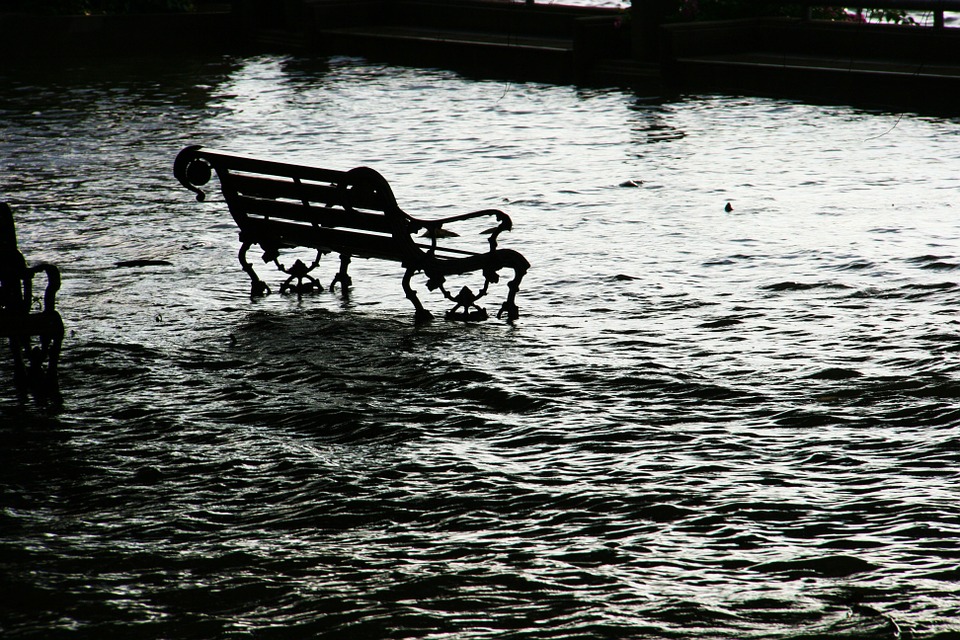
Troy citizens couldn’t foresee the terrible flood coming their way as they traveled to church on the stormy Easter morning of March 23, 1913.

The day before had a been an unseasonably beautiful day. The small Ohio city, set on the banks of the Great Miami River with the Miami and Erie Canal running through it, manufactured transportation equipment, food machines, and distilled beverages.

While the river rose, the canal overflowed on Sunday night. Men, carrying lanterns, walked between the two waterways to monitor water levels.

Water often seeped into cellars during hard rains and citizens weren’t too concerned at first. When ankle-deep water became waist high in twenty minutes, folks became alarmed.

Relentless rain flooded houses, driving people from their homes. Some were trapped. Sheriff Louis Paul directed rescues made by boats. Men with boats rowed to their neighbors’ aid. Folks outside of Troy came to help.

Some men were released from prison in order to help. “Sailor Jack” and Otto “Slim” Sedan became heroes during the flood.

Houses came loose from their foundations. One man rode down the river on his roof.

Animals weren’t safe either. Three chickens perched on a chicken house as it floated down Race Street.

Temporary hospitals and public shelters were set up for those displaced by the flood.

The Flood of 1913 is Ohio’s greatest natural disaster. The worst flooding occurred along the Great Miami River. Statewide, at least 428 people lost their lives.

Troy and nearby Dayton received 9.7 inches of rain in five days.

-Sandra Merville Hart


Sources

“1913 Ohio Statewide Flood,” Ohio History Central, 2018/02/22 http://www.ohiohistorycentral.org/w/1913_Ohio_Statewide_Flood.

Troy Historical Society. Images of America: Troy and the Great Flood of 1913, Arcadia Publishing, 2012.

Civil War Tin Cups

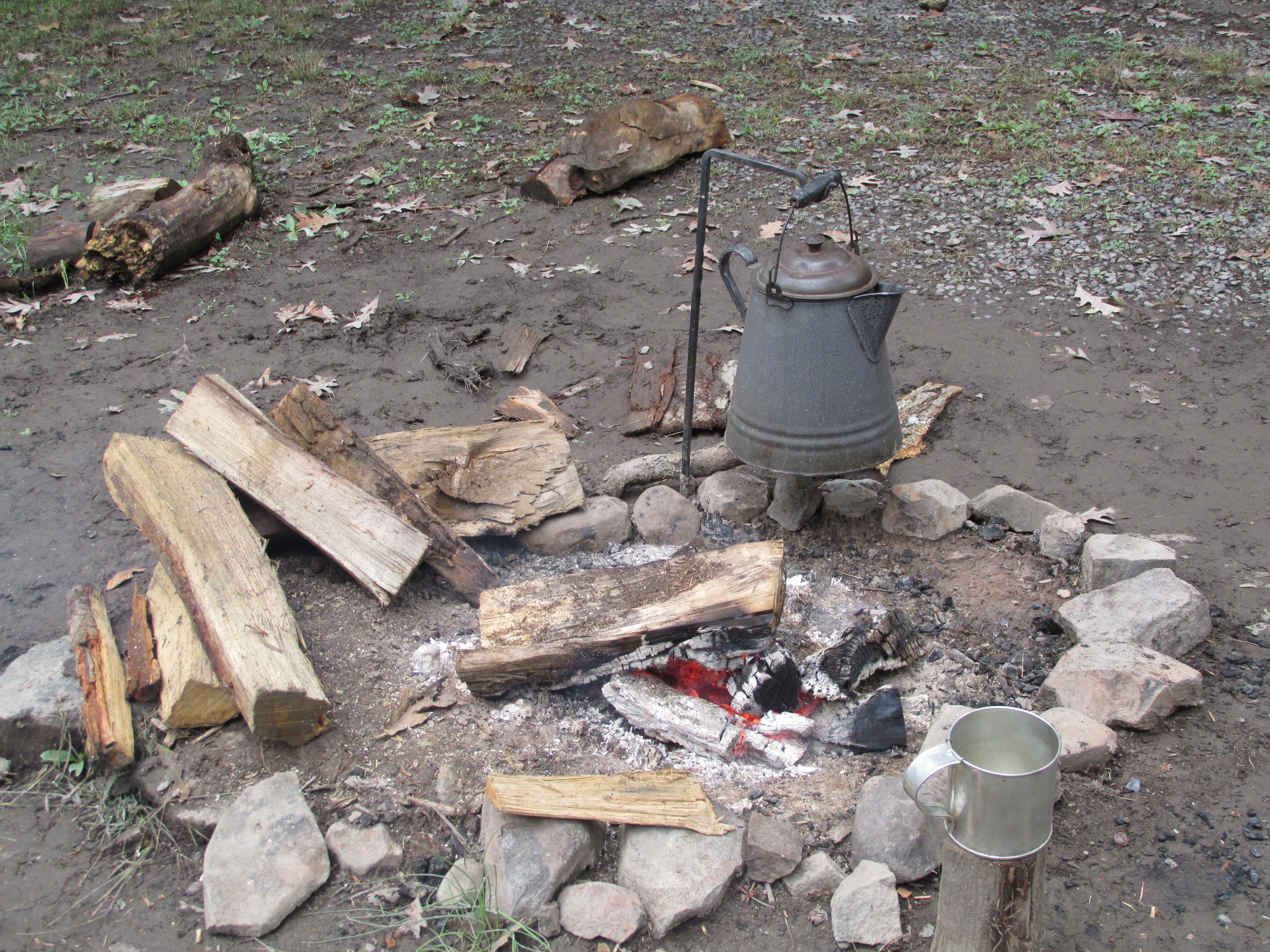
Sharpshooter demonstration camp

I’ve been interested in history since my high school history teacher taught me that history was more about people than dates and events.

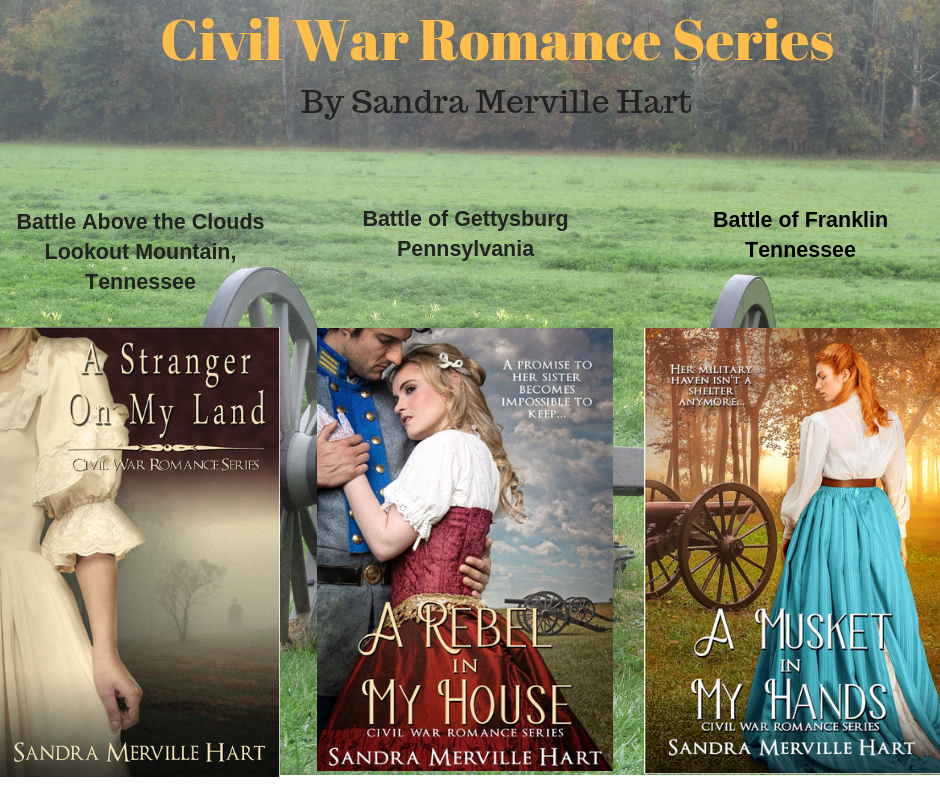
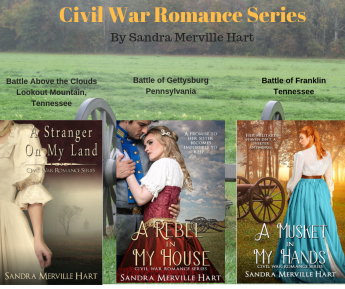
A love of history, particularly American History, stayed with me throughout my life. I’ve learned surprising tidbits while researching for my Civil War romance novels. A Stranger On My Land is set on Lookout Mountain in Tennessee following the Battle Above the Clouds. A Rebel in My House is set during the famous Battle of Gettysburg.

While researching my last Civil War novel, I found that tin cups used by Civil War soldiers varied in size.

Soldiers tied cups to their knapsacks (held clothing and personal items) or haversacks (held food rations) or belts.

They cooked soups and stews in cups. They steeped coffee in them. So how big were they?

The 1860s regulation issue Union Army tin cup held a quart or 32 ounces. That’s larger than I’d guessed.

A small civilian cup was 3 ½ inches high and held 12 ounces.

Early Army cups used until 1851 held one pint or 16 ounces.

Regulation Army cups of 1851 held 24 ounces.

In looking at old photos of Civil War soldiers dining, a variety of cups might be used. Soldiers lost personal items while on march or in battle. Sutlers sold food and other provisions to army personnel. One source stated that two different cups were available from one sutler at a cost of 10 cents or 15 cents.

-Sandra Merville Hart

Sources

“A Note About Tin Cups,” Campsite Artifacts, 2018/01/17 http://www.campsiteartifacts.com/tincupinformation.html.

Billings, John D. Hardtack and Coffee, University of Nebraska Press, 1993.

“Civil War Antiques Catalog,” Dave Taylor’s Civil War Antiques, 2018/01/17 http://www.angelfire.com/oh3/civilwarantiques/1312webcat.html.

“The Tin Shop,” C & D Jarnagin Company, 2018/01/17 http://www.jarnaginco.com/CWCupscookwareplates.html.


Civil War General Lee Sends a Frightening Message


Confederate President Jefferson Davis and his family lived in the executive mansion in Richmond, Virginia. Citizens grew accustomed to hearing artillery fire in nearby Petersburg after months of fighting. With General Robert E. Lee in command, they felt safe.

Confederate President Jefferson Davis didn’t feel quite as secure. By the morning of April 2, 1865, he had already sent his family away from the city.

Still, when Davis received a message during church services on Sunday morning, April 2, color drained from his face. He immediately exited the church, leaving the congregation to wonder what momentous event had occurred to warrant his haste.

The telegram was from General Lee. He advised Davis to leave Richmond that night.

Davis issued orders to evacuate the Confederate government, though citizens were not given notice for hours. However, the sight of official documents burning in front of government buildings warned of terrible events.

Citizens learned that the government was evacuating at 4 pm. Officials and other prominent citizens abandoned the city rapidly. They exited by train. They rode out on horseback, carts, and carriages. They boarded canal barges and boats to avoid the Union soldiers.

Davis arranged to leave by train at 8:30 pm yet continued to hope it wouldn’t be necessary. He and three cabinet members delayed leaving until 11 pm. Confederate soldiers crossed the river on pontoon boats.

Chaos reigned in Richmond. City officials ordered men to destroy kegs and bottles of liquor from saloons and warehouses. They poured them into street drains, attracting crowds. Folks scooped up whiskey in boots and hats to gulp it down.

Richmond’s military commander, Lieutenant General Richard Ewell, stayed behind with a few soldiers to burn the city’s supplies of cotton, tobacco, and food. These were set afire inside buildings with the fire department nearby to keep it under control.

The stocks of meat, coffee, and other staples enraged starving citizens. They grabbed the food and then began looting stores. Fires blazed out of control. Arsenals on ships exploded.

Fires still burned the next morning when Union cavalry arrived.

-Sandra Merville Hart

Source

“Reaction to the Fall of Richmond,” Civil War Trust, 2017/10/29 https://www.civilwar.org/learn/articles/reaction-fall-richmond.


Civil War Home of Confederate President Jefferson Davis

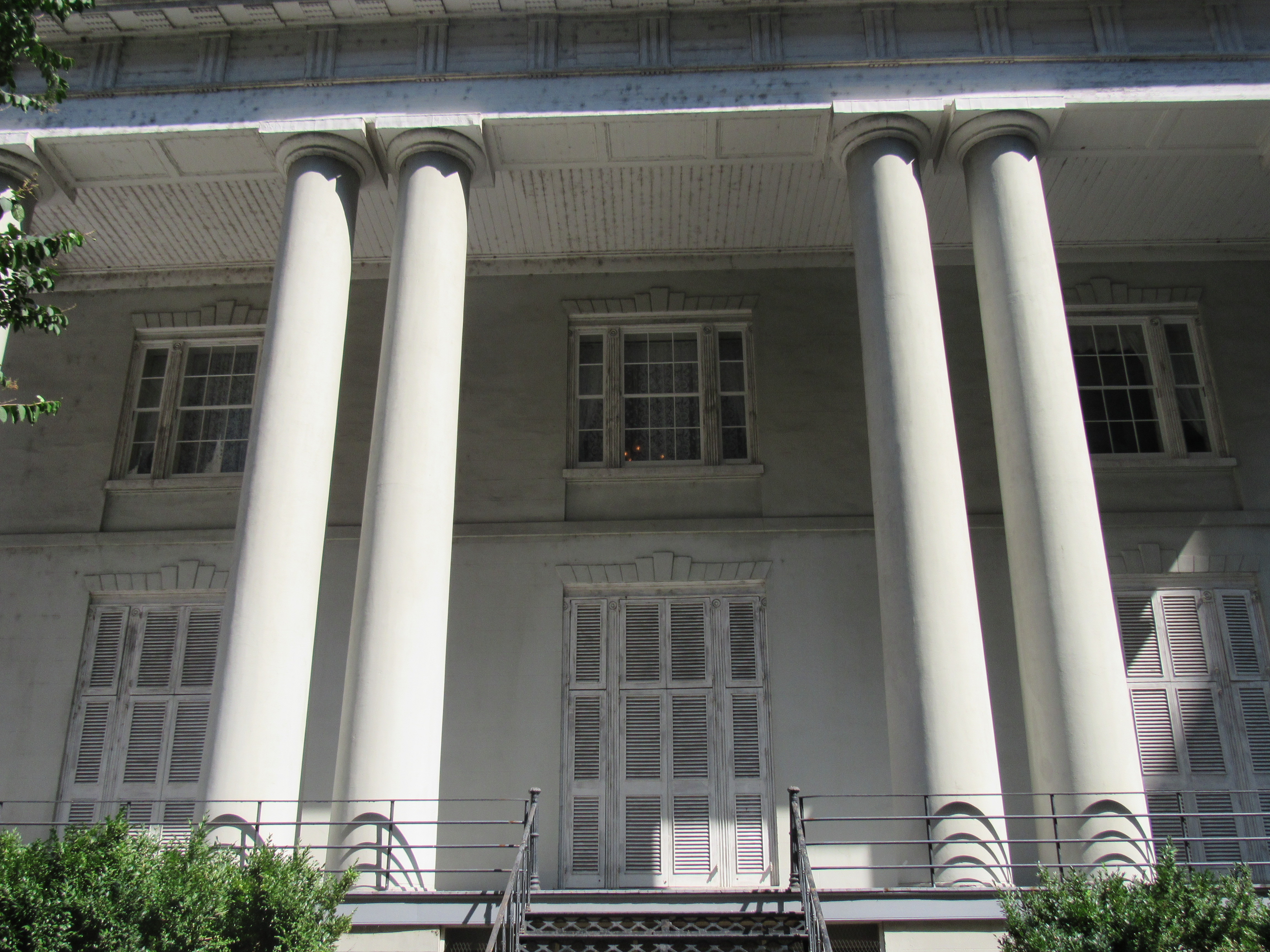
Confederate President Jefferson Davis moved his family to the former  home of Dr. John Brockenbrough in Richmond, Virginia. This home served as the executive mansion from August, 1861, until April 2, 1865.

The capital of Virginia became the Confederate capital. The once quiet city changed into a transportation hub. Military headquarters, hospitals center for wounded soldiers, and a prison for captured Union soldiers increased the city’s population. Richmond also boasted of industries such as the Tredegar Iron Works.

Citizens grew accustomed to changes the war brought to their city though they didn’t enjoy knowing the Union army saw Richmond as a target.

Davis held important meetings with his generals at the executive mansion. Richmond citizens and military leaders often gathered in Davis’s parlor, where Varina, his wife, participated in war discussions.

Meticulous with details, Davis had a difficult time delegating. His family lay tucked in bed long after he still worked. His dignified demeanor coupled with his military and political career made him popular in the beginning. His impatience with folks who didn’t see eye-to-eye with him soon chipped away at his popularity.

His family also suffered personal tragedy while living at the White House of the Confederacy. His five-year-old son, Joseph, fell and died in 1864.

-Sandra Merville Hart

Sources

“Biography: Jefferson Davis,” Civil War Trust, 2017/10/29

https://www.civilwar.org/learn/biographies/jefferson-davis.

“Jefferson Davis,” Wikipedia, 2017/10/29 https://en.wikipedia.org/wiki/Jefferson_Davis.

“The White House and Museum of the Confederacy,” American Civil War Museum, 2017/10/29 https://acwm.org/about-us/our-story/museum-white-house-confederacy.

Civil War Confederate President Jefferson Davis

Confederate President Jefferson Davis and his family lived in the home of Dr. John Brockenbrough in Richmond, Virginia. This home served as the executive mansion from August, 1861, to April 2, 1865.

Davis had suffered from many personal losses before he stepped into the foyer of the impressive Federal style mansion in Richmond.

He fell in love with Zachary Taylor’s daughter, Sarah, while the future President Taylor was still a Colonel. Recognizing the difficulties of frontier army life, Taylor refused to allow Sarah to become a military wife.

His reasons swayed Davis to resign from his post. The couple married on June 17, 1835. Two months later, the newlyweds traveled to his sister’s home in Louisiana. Sadly, they both fell ill with malaria. Sarah died. Davis’s family feared that malaria would also take Jefferson’s life, but he slowly recovered.

He lived on his Mississippi cotton plantation for about eight years before meeting Varina Howell, a guest at his brother’s home. He proposed and married the eighteen-year-old in 1845.

Samuel Emory, their oldest son, was born in 1852 and died a month shy of his second birthday. Margaret Howell was born in 1855—Davis’s only child who married. Jefferson Davis, Jr., was born in 1857. A third son, Joseph,  was two when the Davis family moved to Richmond.

Varina was pregnant with William Howell in August of 1861.

When Davis crossed the threshold into his new home, he didn’t know that his son, Joseph, would fall to his death at age five in 1864. Or that Varina Anne “Winnie” would be born two months after Joseph’s death. Winnie, born during the war, became known as the Daughter of the Confederacy.

In addition to his personal sorrows, Davis suffered from old battle wounds, recurring bouts of malaria, a chronic eye infection, and trigeminal neuralgia, a painful nerve disorder.

Davis was selected as President for a six-year term, a job he didn’t want. With his training at West Point and his army experience, he preferred a military command. As President, he had little patience for folks who disagreed with him.

No, Davis could not know all the difficulties that awaited him as he stepped into the mansion in Richmond. His courage might have failed had he been able to see into the future.

-Sandra Merville Hart
Sources

“Biography: Jefferson Davis,” Civil War Trust, 2017/10/29

https://www.civilwar.org/learn/biographies/jefferson-davis.

“Jefferson Davis,” Wikipedia, 2017/10/29 https://en.wikipedia.org/wiki/Jefferson_Davis.

“The White House and Museum of the Confederacy,” American Civil War Museum, 2017/10/29 https://acwm.org/about-us/our-story/museum-white-house-confederacy.

“White House of the Confederacy,” NPS.gov, 2017/10/29 https://www.nps.gov/nr/travel/richmond/WhiteHouse_of_theConfederacy.html.
 

Civil War Kansas Soldiers’ Home

Both individuals and organizations became concerned over the needs of disabled and elderly Civil War veterans in the years following the war. One in Connecticut, Fitch’s Home for Soldiers and Their Orphans, opened in 1864—before the war ended.

A soldiers’ home in Georgetown, Kentucky, was the first Confederate home that opened. A few states operated separate homes for Union and Confederate soldiers. No federal funds were given to Confederate veterans.

At least one facility, Kansas Soldiers’ Home in Fort Dodge, welcomed both Union and Confederate soldiers.

Fort Dodge, built in 1865, was about 5 miles from Dodge City. It was a fort before becoming the Kansas State Soldiers’ Home that opened in 1890. The home used many of the old buildings.

Times were rocky in those early years for veterans. Quarreling and drunkenness got some folks dismissed. The home had to collect and remove croquet sets when some residents used mallets during quarrels.

July 4, 1890 proved to be a special celebration at the home. Dodge City citizens visited the event recognizing both Union and Confederate veterans.

Soldiers who had fought in the Mexican War and Indian battles lived in the home and, later, black veterans were also welcomed.

Visitors are invited to tour several buildings at Fort Dodge Soldiers Home.

-Sandra Merville Hart

Sources

“Fort Dodge,” Kansastravel.org, 2017/07/07 http://www.kansastravel.org/fortdodge.htm.

“Kansas Soldiers’ Home,” Wikipedia, 2017/07/04 https://en.wikipedia.org/wiki/Kansas_Soldiers%27_Home.

“Old Soldiers’ Home,” Wikipedia, 2017/07/04 https://en.wikipedia.org/wiki/Old_soldiers%27_home.


Civil War Federal Soldiers’ Homes

The first U.S. home for disabled veterans and orphans of soldiers was founded by Benjamin Fitch of Darien, Connecticut. He paid for almost all the expenses of the home built while the Civil War still raged in 1864. The facility was renamed “Fitch’s Home for Soldiers” when control was handed over the state in 1887.

The U.S. government bought the Togus Springs Hotel in 1866. The Maine hotel became the Eastern Branch of the National Asylum For Disabled Volunteer Veterans. Read more about this home here.

A building was erected in Minneapolis to provide a soldiers’ home in 1888. One cottage for women and five cottages for men were on the Minnesota Soldiers’ Home property near Minnehaha Falls by 1911.

The beautiful Minnesota land was meant to be a peaceful place. Soldiers didn’t receive medical care at the facility. World War I changed that policy, but didn’t make it a priority.

Colonel George Washington Steele introduced legislation in 1888. He hoped to establish a national home in Grant County, Indiana. Despite Steele’s worry that it wouldn’t pass, Congress approved it that year. Indiana citizens in Marion celebrated the passing of the bill on July 30, 1888, the city’s largest crowd ever.

The National Home for Disabled Volunteer Soldiers, Marion Branch, opened in 1890. The facility, also known as Marion National Home, enrolled 586 veterans that year. They built a hospital to treat patients there, hiring Cincinnati female nurses as part of the staff.

The facility grew beyond capacity with veterans sleeping on the floor in 1892. New buildings were erected. The need heightened with World War I veterans and about 60 new structures had been added by 1919. Among these were additional living quarters, warehouses, supply buildings, greenhouses, a fire station, and memorials.

White veterans and United States Colored Troops were welcomed into the homes.

Federal soldiers’ homes did not allow Confederate veterans.

-Sandra Merville Hart

Sources

“A Home for Volunteers: Togus and the National Soldiers’ Homes,” The Gettysburg Compiler, 2017/07/04 https://gettysburgcompiler.org/2017/05/29/a-home-for-volunteers-togus-and-the-national-soldiers-homes/.

“History of Darien, Connecticut,” Wikipedia, 2017/07/04 https://en.wikipedia.org/wiki/History_of_Darien,_Connecticut.

“Minnesota Veterans Home,” Wikipedia, 2017/07/04  https://en.wikipedia.org/wiki/Minnesota_Veterans_Home.

“National Home for Disabled Volunteer Soldiers, Marion Branch,” Wikipedia, 2017/07/04  https://en.wikipedia.org/wiki/National_Home_for_Disabled_Volunteer_Soldiers,_Marion_Branch.

“Togus, Maine,” Wikipedia, 2017/07/04  https://en.wikipedia.org/wiki/Togus,_Maine.


Civil War Federal Soldiers’ Home at Togus, Maine

The U.S. government bought the Togus Springs Hotel in 1866. The Maine hotel became the Eastern Branch of the National Asylum For Disabled Volunteer Veterans.

The hotel already had a bathing house, large pool, bowling alley, race track, and a stable. New barracks, a chapel, and a hospital were being erected for the 200 veterans living there by the middle of 1867 with three dormitories and recreation building following in 1868.

When the asylum opened, only Union soldiers able to prove that their injury was connected with their service were allowed to stay. Then War of 1812 and Mexican War veterans were accepted if they didn’t fight for the Confederacy. The facility never opened its doors to Confederate soldiers.

Togus residents wore blue army uniforms available from a surplus. It operated much like the military with military discipline and guardhouse confinements. The veteran’s entire pension was signed over to the home in payment for their care.

The National Home for Disabled Volunteer Soldiers constructed a bakery, brickyard, fire station, carpentry shop, sawmill, butcher shop, boot and shoe factory, blacksmith shop, soap works, store, library, harness shop, and an opera house theater. Residents earned money by working at the farm or shops if physically able.

The highest number of veterans living there was about 2,800 in 1904.

Civilians enjoyed the recreations at Togus. Large crowds flocked for military band concerts, baseball games, performances at the opera house, and even a zoo.

-Sandra Merville Hart

Sources

“A Home for Volunteers: Togus and the National Soldiers’ Homes,” The Gettysburg Compiler, 2017/07/04 https://gettysburgcompiler.org/2017/05/29/a-home-for-volunteers-togus-and-the-national-soldiers-homes/.

“Togus, Maine,” Wikipedia, 2017/07/04  https://en.wikipedia.org/wiki/Togus,_Maine.