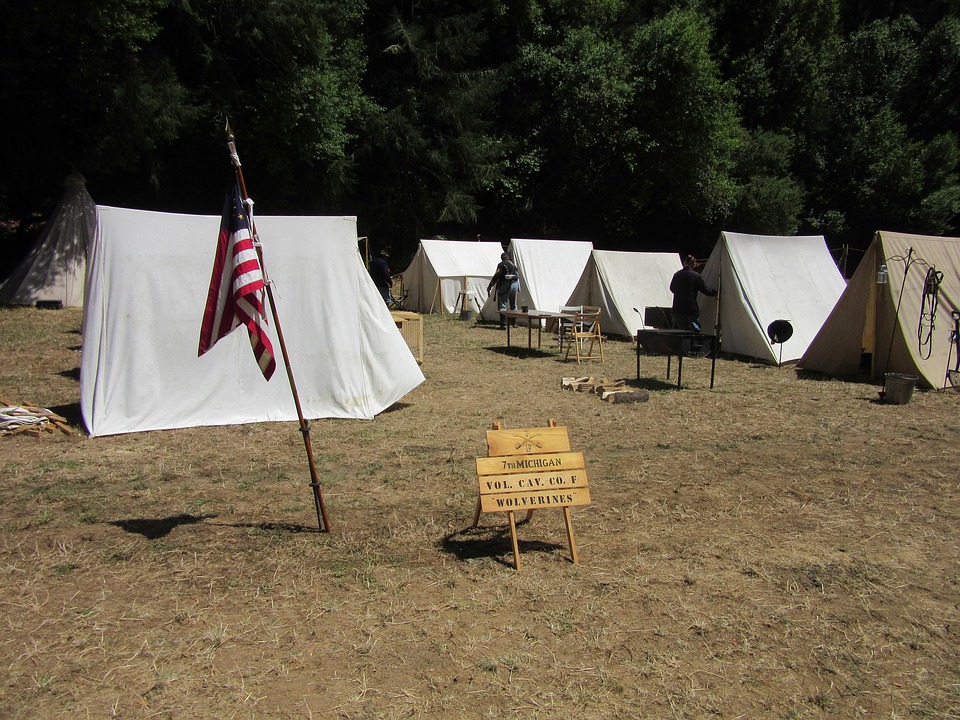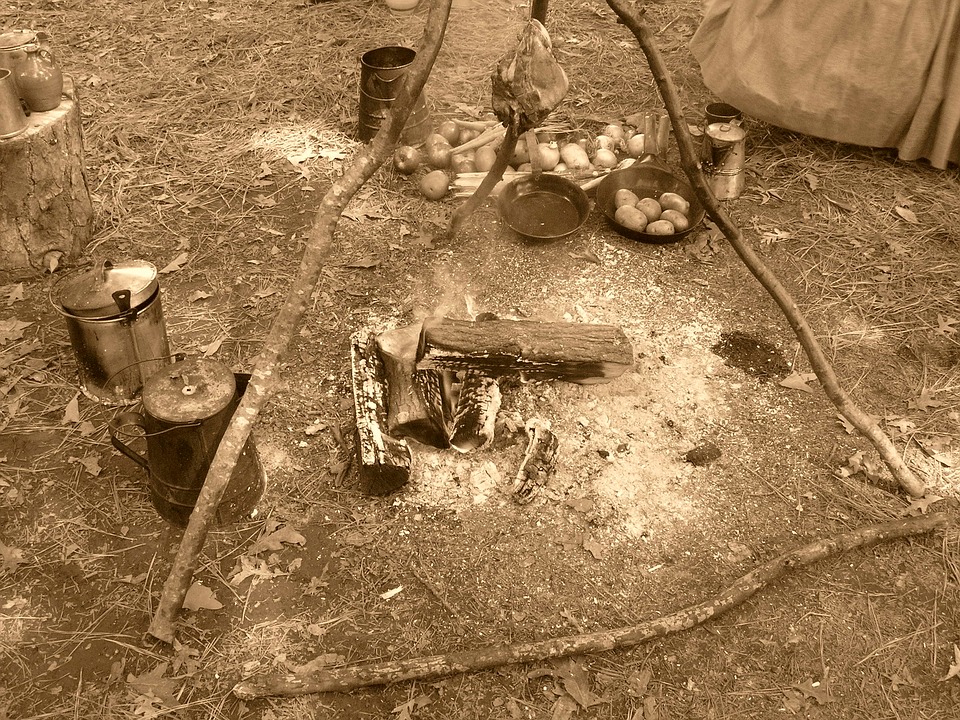
Civil War Union Captain’s Thoughts While Marching to Pennsylvania

From Observation Tower at Oak Ridge, Gettysburg Battlefield

Confederate General Robert E. Lee began moving his Army of Northern Virginia toward Pennsylvania in June of 1863.

President Abraham Lincoln appointed Major General George Gordon Meade as commander of the Army of the Potomac. Meade issued his first orders on June 28, 1863.

Meade’s army marched north the following rainy morning on muddy roads. Captain Samuel W. Fiske, 14th Connecticut Infantry, wrote of the march across Maryland into Pennsylvania, his account a bit nostalgic.

Fiske didn’t know where his army was heading when he heard the bugle call to strike tents and begin the journey. He and his comrades didn’t know how long it would take to arrive—they had to blindly trust.

Fiske tried to enjoy each hour, always ready for either a skirmish or a picnic. He never knew when he’d be called to picket, bivouac, or retreat.

He reasoned that no other occupation required more faith than soldiering: faith in his own strength; faith in his army’s joint strength; faith in his commanders’ experience and watchfulness; faith in their country’s cause; and faith in God’s care and protection.

Captain Fiske enjoyed Maryland’s beauty after the war-ravaged sights in Virginia. He hated to see war roll over the peaceful countryside yet felt a battle on Northern soil might end the war.

Fiske hoped that Pennsylvania citizens weren’t so afraid that it prevented them from defending their homes. A newspaper article that he read that day told of the “chief burgess” of York looking for someone to surrender to eight to ten miles outside his city. Fiske didn’t believe that leader represented his city well.

When the captain considered his army’s recent losses, he felt he was part of “the unfortunate ‘grand army’” that couldn’t reasonably make big promises. Yet since that army would once again stand in front of Confederates, they deserved their country’s respect and support.

At the time his writing, Fiske and his comrades dealt with fatigue from marching for sixteen days. Though their numbers were depleted by the expiration of service terms, these experienced veterans had become a formidable army.

-Sandra Merville Hart

Sources

Gragg, Rod. The Illustrated Gettysburg Reader: An Eyewitness History of The Civil War’s Greatest Battle, Regnery History, 2013.


This Week in History: Greencastle, Pennsylvania and the Gettysburg Campaign

Monday, June 15, 1863

The fall of Martinsburg, Virginia, (now West Virginia) on June 14th encouraged Confederate Lieutenant Hermann Schuricht, Fourteenth Virginia Cavalry. He was happy that the glorious battle ended with the Southerners in possession of the city and several thousand bushels of grain. It was the first Battle of Martinsburg.

Buglers sounded orders to mount their horses around 2 am. By breakfast time Schuricht and his comrades were in Williamsport, Maryland, where the residents kindly set up tables in the streets stocked with meat, bread, and milk. Schuricht and other hungry troops ate quickly before remounting.

They received an enthusiastic welcome from the ladies in Hagerstown, Maryland, at noon. The women gave flowers to the soldiers. The children shouted, “Hurrah for Jeff Davis!”

They rode to Greencastle, Pennsylvania. General Albert G. Jenkins divided his brigade. Schuricht, along with others in the right wing who intimidated locals by waving muskets and pistols, rode his horse over ditches and fences to take the town. Federal cavalry there all escaped except one lieutenant.

The Confederates cut telegraph wires and destroyed the railroad depot in Greencastle.

Their day wasn’t over.

By 11 pm, an exhausted Schuricht entered Chambersburg, Pennsylvania, with his companions. They camped on the eastern outskirts of town.

Confederates occupied Greencastle from mid-June until early July. Federal cavalry led by Captain Ulric Dahlgren rode into the town square on July 2nd. The Union troops captured several Confederate cavalry troops in the square while a bigger battle took place in another part of Pennsylvania.

Gettysburg.  

-Sandra Merville Hart

Sources

Gragg, Rod. The Illustrated Gettysburg Reader, Regnery History, 2013.

“Greencastle, Pennsylvania,” Wikipedia, 2017/05/01 https://en.wikipedia.org/wiki/Greencastle,_Pennsylvania.

Long, E.B with Long, Barbara. The Civil War Day by Day: An Almanac 1861-1865, A Da Capo Paperback, 1971.

Noyalas, J. A. “Martinsburg during the Civil War.” Encyclopedia Virginia. Virginia Foundation for the Humanities, 27 Oct. 2015. Web. 1 May. 2017.

Searight’s Tollhouse on the National Road

The National Road, a federal road, stretched from Cumberland, Maryland, into Ohio by 1831. The heavily trafficked road required maintenance that the federal government wanted to turn over to the states.

Pennsylvania adopted an act to build six toll gates along the National Road—also known as the Cumberland Road—in the Commonwealth.

Built in 1835, Searight’s Tollhouse is one of Pennsylvania’s two remaining toll houses on the National Road. It is five miles northwest of Uniontown.

William Searight was one of the wealthiest men in the area at the time. Searight’s Tavern stood at the junction of Searight’s Crossroads. He owned a general store, wagon shop, blacksmith shop, and a livery stable in addition to running the post office.

Political connections helped Searight to become the Commonwealth’s Commissioner of the Cumberland Road in 1842. Searight bore the responsibility for all operations and received $730 per year.

Pennsylvania’s other toll house still standing is the Petersburg Toll House. Located in Addison, it was the first toll gate after crossing into the Commonwealth. The toll keeper’s annual salary was $200 with free housing.

Toll rates in Pennsylvania were collected for all types of vehicles—chariots, stages, phaetons, chaises, coaches, coachees, carts, wagons, and carriages. Drovers of sheep paid a rate of 6 cents for every score (20).

Anyone who refused or neglected to pay their toll received a fine of $3.

Pennsylvania collected tolls to maintain the road from 1835 to 1905.

-Sandra Merville Hart

Sources

Day, Reed B. The Cumberland Road: A History of the National Road, Closson Press, 1996.

Edited by Raitz, Karl. A Guide to The National Road, The Johns Hopkins University Press, 1996.

“National Road Sculpture Tour,” National Road PA, 2017/04/22 http://nationalroadpa.org/touch-of-history/.

Schneider, Norris F. The National Road: Main Street of America, The Ohio Historical Society, 1975.

“Searight’s Tollhouse Historical Marker,” Exporepahistory.com, 2017/04/22 http://explorepahistory.com/hmarker.php?markerId=1-A-F2.

“Searights Tollhouse, National Road,” Wikipedia, 2017/04/24  https://en.wikipedia.org/wiki/Searights_Tollhouse,_National_Road.


Colonial Travel with Pack Horses

Magnificent forests lined the hillsides and valleys in Colonial America. Their beauty didn’t make them easier to navigate. Pioneers blazed trails to the west by foot and then by horseback.

Settlers heading westward during this time traveled before roads had been cut. Skinny paths left no room for wagons. They hauled their worldly possessions on pack horses.

By tying each horse to the tail of the one immediately in front, one driver led a line of pack horses. Drivers controlled up to a dozen horses in one line.
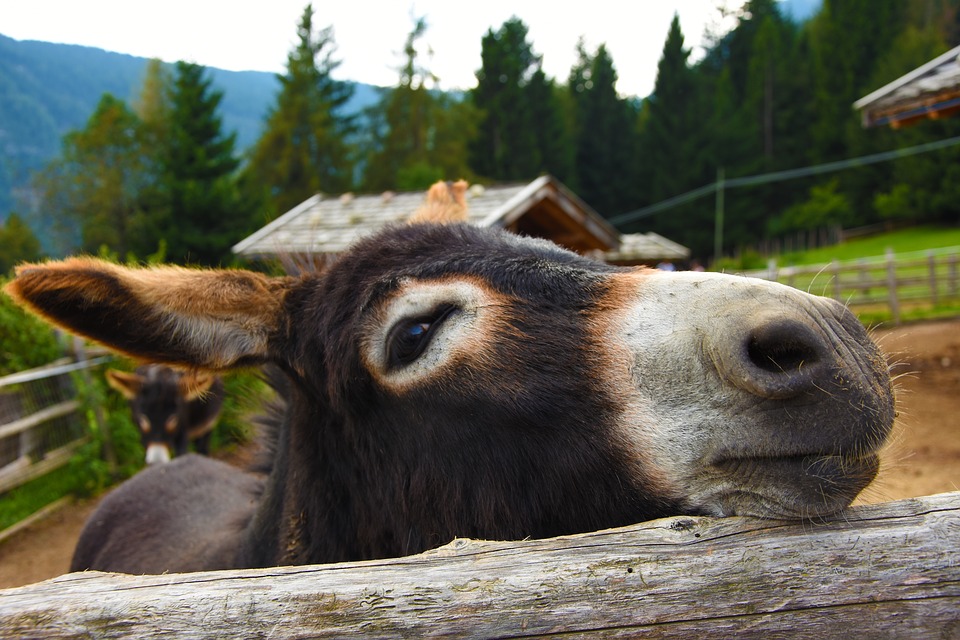
Each animal could carry up to two hundred pounds on primitive pack saddles. Pioneers created their own saddles using sturdy, forked limbs, trimmed to fit a particular load. Some frontiersmen made a living by selling their pack saddles in the back woods.

Once these courageous souls settled in Western Pennsylvania or the Ohio country, they made yearly trips back east to sell their produce and replenish supplies. Traveling in caravans, they took ginseng, rye, bear’s grease, snakeroot, and hides back east. They returned with such goods as gunpowder, salt, nails, and iron.

Early U.S. military operations utilized pack horse trains in traveling to confront Native Americans. Captain Robert Benham served as Conductor General of pack horses in the late 1700s, taking part in expeditions with Wayne, Harmar, St. Clair, and Wilkinson.

While at Fort Harmar (near present-day Marietta, Ohio) in June of 1787, Colonel Harmar wrote that the cheapest cost of hiring pack horses was fifty cents a day.

-Sandra Merville Hart

Sources

“Fort Harmar,” Ohio History Central, 2017/04/22  http://www.ohiohistorycentral.org/w/Fort_Harmar.

Schneider, Norris F. The National Road: Main Street of America, The Ohio Historical Society, 1975.

Venable, W.H., LL. D. Westward by Hoof, Wheel, and Keel. Extracted from Footprints of the Pioneers in the Ohio Valley, originally published in 1888.
 

George Washington’s Vision for a National Road

George Washington’s vision for a major road westward likely built over time.

The Ohio Company of Virginia owned a trading post on the Monongahela River, which is now Brownsville, Pennsylvania, in the 1750s. George and his half-brother Lawrence were members of this organization that hired Colonel Thomas Cresap to oversee the blazing of a trail from Cumberland, Maryland, to its trading post in 1752. Cresap hired Delaware Indian Nemacolin who performed the task. The new trail was called Nemacolin’s Path.

The following year, the French occupied Fort Le Boeuf (currently Waterford, Pennyslvania), an area in British territory. Major George Washington, sent by Virginia Governor Robert Dinwiddie to order them to leave, rode his horse over the future National Road. The French ignored the warning.

In 1754, Washington commanded a small army with orders to remove the French from Fort Duquesne (Pittsburgh.) Washington’s small army traveled over ground that would become the National Road. He was ambushed and eventually surrendered.

As aide to British General Edward Braddock, Washington again found himself traveling toward the French at Fort Duquesne in 1755. Braddock ordered 500 axmen to clear a road for his supply wagons and infantry. The army was ambushed again and Braddock was killed.

The road his army blazed, marked by stumps and brush, was called Braddock’s Road. It ends near Pittsburgh. Early pioneers preferred packhorse trails over the rough road.

After the Revolutionary War in 1784, Washington focused on his western holdings. He took the same difficult route westward as he’d taken in 1754. Then he called a meeting at a land agent’s cabin on the Cheat River (currently Morgantown, West Virginia) in September of 1784. He asked for opinions on the best route between the upper Potomac to an Ohio River tributary.

A young surveyor, Albert Gallatin, was present at that meeting. He surprised Washington by agreeing that a passage through the mountains of northwestern Virginia (now West Virginia) was the best route. Washington agreed.

Our first President died in 1799 without seeing his vision for a national road realized, but Gallatin didn’t forget. President Thomas Jefferson selected him to become Secretary of the Treasury. One of Gallatin’s duties was the disposition of western public lands.

Gallatin lived in southwestern Pennsylvania. He approved of a road there and assured Jefferson that this type of road was “of primary importance.”

Congress voted on March 29, 1806, to lay a road from Cumberland, Maryland, to Ohio.

Perhaps Gallatin thought of a long-ago meeting in the Virginia wilderness with a famous Revolutionary War general and future President as the National Road was voted into law.

-Sandra Merville Hart

Sources

Day, Reed B. The Cumberland Road: A History of the National Road, Closson Press, 1996.

Schneider, Norris F. The National Road: Main Street of America, The Ohio Historical Society, 1975.


Macadamized Roads

John Loudoun McAdam, a Scottish inventor, traveled almost 19,000 miles from 1798—1814 to form a method of making roads less susceptible to water.

Stagecoaches and wagons got stuck on muddy roads, adding to the difficulty of traveling. As surveyor general, McAdam devised a way to greatly improve roads and wrote of it in his Remarks on the Present System of Road-Making (1816).

To aid in water drainage, McAdam first recommended that roads be higher than the ground beside it. A layer of large broken stones then covered the road. Smaller stones were then laid over them. A fine layer of gravel was the last component.

This design reduced wear and tear on the road. Water drained to ditches on the side.

His recommendation was a great improvement over traveling on muddy roads. His idea spread to the United States.

Construction started in 1811 on the National Road, which began in Cumberland, Maryland, and wound through Pennsylvania and Virginia into Ohio. McAdam’s principles weren’t yet known.

His methods grew in popularity so that road makers used it on a new section of the National Road between Canton and Zanesville, Ohio, in 1825-1830. They broke stones small enough “to pass through a two-inch ring.”

At a width of twenty feet, the road contained the three layers of stone suggested by McAdam. Each layer was compacted with a cast-iron roller. This created the Macadamized road, making travel easier and safer for the pioneers settling in Ohio and farther west.

-Sandra Merville Hart

Sources

Bellis, Mary. “John Loudon McAdam – The History of Roads and Asphalt,” About.com, 2017/04/20 http://theinventors.org/library/inventors/blJohnMcAdam.htm.

Edited by Raitz, Karl. A Guide to The National Road, The Johns Hopkins University Press, 1996.

“John Loudon McAdam”. Encyclopædia Britannica. Encyclopædia Britannica Online. Encyclopædia Britannica Inc., 2017. Web. 20 Apr. 2017.

McAdam, John Loudoun.” The Oxford Companion to British History. . Encyclopedia.com. 19 Apr. 2017<http://www.encyclopedia.com>.

“Macadam”. Encyclopædia Britannica. Encyclopædia Britannica Online. Encyclopædia Britannica Inc., 2017. Web. 20 Apr. 2017.


Conestoga Wagons

The first major highway built by the United States federal government was the National Road. Construction began in 1811 on the road also known as the Cumberland Road because it began in Cumberland, Maryland. By August 1, 1818, the road reached to Wheeling at the Ohio River. (Wheeling was then in Virginia but is now part of West Virginia.)

Settlers moving westward quickly utilized the road through Pennsylvania and Virginia to the new state of Ohio. Their wagons toted all their worldly goods to a new land.

Conestoga wagons were first built by Mennonite Germans near the Conestoga River area of Lancaster County, Pennsylvania, in the early to mid-eighteenth century. Skilled craftsman created a unique curved bed, designed to prevent freight from shifting while climbing steep hills. Chains held the back gate in place while traveling.

Early wagon covers were hempen homespun. Canvas was used later. They soaked the canvas in linseed oil to waterproof the fabric. This covering was stretched over several wooden hoops.

The builders took great pride in their work. They painted the wagons blue, trimmed with red.

Built with broad wheels, four to six horses pulled five-ton loads over dangerous Pennsylvania roads. Conestoga wagons hauled products from the eastern states to settlers in Western Pennsylvania and the Ohio Valley and returned with frontier goods like flour, tobacco, coal, and whiskey.

Strong Conestoga horses bred in the Conestoga area of Pennsylvania could pull these loads about twelve miles per day.

Wagoners made their living by hauling freight from the east to the western frontier and back again. These colorful characters made a journey of 250 miles in about three weeks.

Drivers of Conestoga wagons didn’t sit on a bench and hold the horses’ reins. Wagoners rode the left rear horse or walked alongside the horses. When the wagoner tired of walking, he pulled out a lazy board—a wooden board attached to the side of the wagon—and sat on it.

Railroads had slowed the heavy traffic on the National Road by the 1850s. Conestoga wagons were no longer in demand. Wagoners found new ways to make a living.

But what stories they had to tell to their children and grandchildren.

-Sandra Merville Hart

Sources

“Conestoga Wagon,” History.com, 2017/04/19 http://www.history.com/topics/conestoga-wagon.

“Conestoga Wagon,” Smithsonian National Museum of American History, 2017/04/19 http://americanhistory.si.edu/collections/search/object/nmah_842999.

“Conestoga wagon.” The Columbia Encyclopedia, 6th ed.. . Encyclopedia.com. (April 18, 2017). http://www.encyclopedia.com/reference/encyclopedias-almanacs-transcripts-and-maps/conestoga-wagon.

Edited by Raitz, Karl. A Guide to The National Road, The Johns Hopkins University Press, 1996.

“National Road,” Wikipedia, 2017/04/20 https://en.wikipedia.org/wiki/National_Road.

White, Roger B. “Covered Wagons and the American Frontier,” Smithsonian National Museum of American History, 2017/04/19 http://americanhistory.si.edu/blog/2012/10/conestoga-wagons-and-the-american-frontier.html.

President Washington Ends the Whiskey Rebellion

George Washington became the first President of the United States in 1789 to a nation in debt from the Revolutionary War. Alexander Hamilton, Secretary of Treasury, proposed the first national internal revenue tax to reduce the national debt. Congress passed a tax on distilled spirits in 1791.

Frontier citizens living in Western Pennsylvania violently opposed the tax. Dangerous roads made it difficult for farmers to haul corn and rye to eastern markets. They often distilled their grain because it was easier to preserve and store.

The excise officers only accepted cash as payment, which was out of the ordinary for the time period. Many refused to pay the tax.

Others resorted to violence. They threatened excise officers, which was enough to make some leave. Other officers were tarred and feathered before deciding to leave.

President Washington issued an admonishment in 1792, hoping to resolve the matter peacefully. Instead the situation escalated.

In July of 1794, about 400 rebels burned the home of a regional tax collection supervisor near Pittsburgh.

Washington responded by leading 12,950 men in a militia force to Western Pennsylvania. Perhaps the former general enjoyed wearing full military dress once again.

The rebels had scattered when the forces reached Pittsburgh. Out of about 150 men tried for treason, only two men were found guilty. President Washington pardoned them.

This historic event marks the only time that a United States President directly commanded ground troops.

-Sandra Merville Hart

Sources

Kotowski, Peter. “Whiskey Rebellion,” George Washington’s Mount Vernon, 2017/04/18 http://www.mountvernon.org/digital-encyclopedia/article/whiskey-rebellion/.

Logsdon, Chris. “Wills Creek,” George Washington’s Mount Vernon, 2017/04/18 http://www.mountvernon.org/digital-encyclopedia/article/wills-creek/.

“Ten Facts about Washington’s Presidency,” George Washington’s Mount Vernon, 2017/04/18  http://www.mountvernon.org/george-washington/the-first-president/ten-facts-about-washingtons-presidency/.

“Whiskey Rebellion,” Encyclopeadia Britannica, Inc., 2017/04/18 https://www.britannica.com/event/Whiskey-Rebellion.

“Whiskey Rebellion,” National Park Service, 2017/04/18 https://www.nps.gov/frhi/learn/historyculture/whiskeyrebellion.htm.


Civil War Bugle Calls

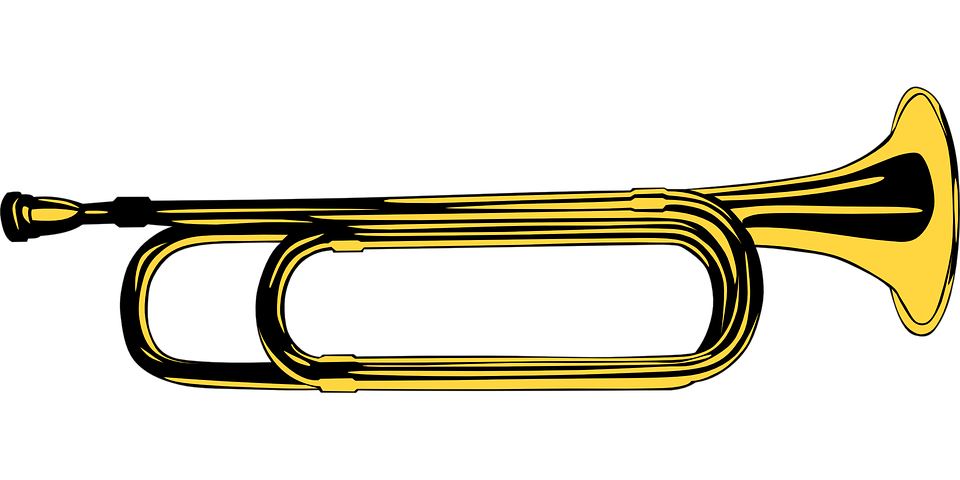
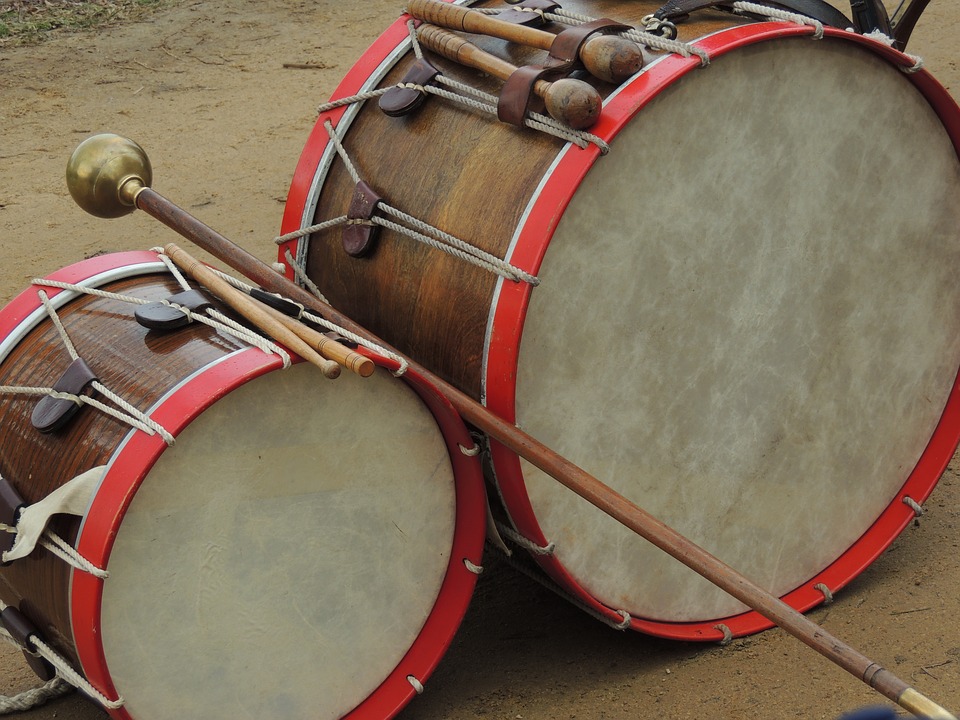
Commands were often given musically during the Civil War. That is to say, by bugle or drum. A general’s voice only carried so far—especially over the din of battle. Soldiers soon learned specific bugle tunes signified that it was time to get up in the morning, for example.

John D. Billings, Union soldier, wrote about a typical day in camp in Hardtack & Coffee.

The first bugle call of the day was “Assembly of Buglers.” It came around 5 am in the summer and 6 am in the winter. Men knew it was time to roll out of their blankets. This unwelcome song always brought grumbling.

“Assembly” came fifteen minutes later. Unless ill or on guard duty, every enlisted man had to be present for his company’s roll call.

When everyone finally stood in line, the bugler played “Reveille.” Soldiers made up words to this song:

       I can’t get ’em up, I can’t get ’em up,

       I can’t get ’em up this morning;

       I can’t get ’em up, I can’t get ’em up,

       I can’t get ’em up today.

After this, “Stable Call” was played. Company drivers went to the picket ropes where they fed and groomed their horses.

“Breakfast Call” came next. Soldiers prepared and ate their breakfast or ate rations provided at the company cookhouse.

“Sick Call” sounded at 8 am. Men who were sick and required medicine proceeded to the surgeon’s tent. Quinine was given for many ailments including headache, stomachache, toothache, coughing, lameness, fever, and ague.

Next came the “Watering Call,” where cavalry and drivers watered their horses and mules. To learn more about the difficulties of watering thousands of animals, click here.

Soldiers cleaned camp, gathered wood and water, built stables, buried horses, and washed gun carriages for “Fatigue Call.”

Next, drum or bugle brought the “Drill Call” where men practiced artillery and other skills. This was practiced much more earlier in the war.

Cannoneers and drivers responded to “Boots and Saddles” as a battery drill.

“Dinner Call” sounded at noon.

Buglers played “Water Call” around 4 pm.

“Stable Call” was blown as a reminder to return horses to the stable.

“Attention” was blown at 5:45 pm, followed by “Assembly” where the soldiers fell in for “Retreat” roll call.

“Assembly of Guard” called soldiers to guard duty. A brass band or fife-and-drum-corps usually followed.

The bugler played “Attention” at 8:30 pm and then “Assembly.” Companies formed lines for the day’s final roll call, “Tattoo.”

Men then had thirty minutes to get ready for bed at 9 pm when “Taps” was played. A drummer then played to end the day.

Follow this link if you’d like to listen to a few of these.

-Sandra Merville Hart

Sources

Billings, John D. Hardtack & Coffee, University of Nebraska Press, 1993.

Villanueva, Jari. “Civil War Bugles Calls,” www/tapsbuglar.com, 2017/03/15 https://archive.org/details/CivilWarBugleCalls/20+Dan+Butterfield.mp3.

Villanueva, Jari. “Twenty Bugles Calls,” United States Air Force Band, 2017/03/14   http://www.usafband.af.mil/shared/media/document/AFD-150220-028.pdf.


Civil War: Confederate Remedy for Chills

As a writer of historical novels, I love to run across remedies used in past centuries. A wonderful book, Confederate Receipt Book, contains a few cures from the Civil War era.

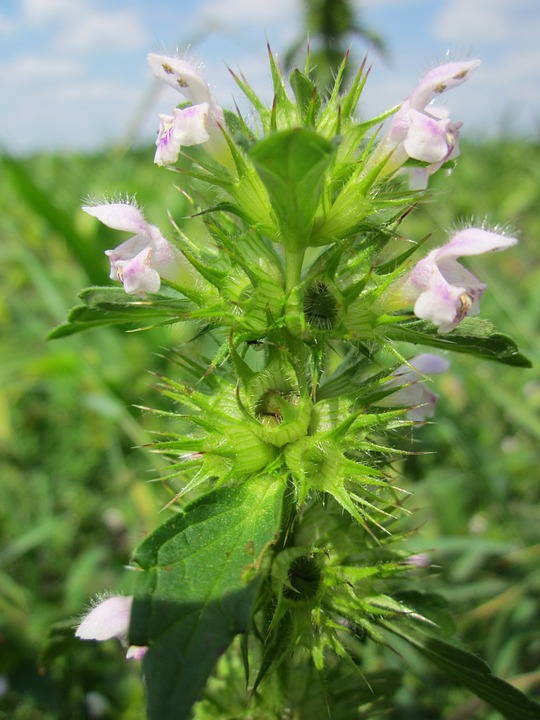
A common cure for chills was horehound, spelled hoarhound in the book. The soldiers believed that horehound, boiled in water and drunk as tea, was a “certain cure.”

People are usually running a fever when chilling. This leads me to believe that Confederate soldiers used the tea to reduce fever.

Is the herb still used medicinally today? Did the soldiers boil the leaves to make tea? The roots? The recipe does not say so I began researching.

Horehound is a bitter herb from the mint family. According to Mountain Rose Herbs, the part of the plant that is above the ground is dried and cut for use in teas and tinctures.

An article from Drugs.com supports this. Home remedies use the flower tops and leaves in bitter tonics to relieve the common cold.

The FDA ruled in 1989 that it didn’t find horehound, among others, to be useful in cough and cold medicines so products containing these ingredients had to be removed from the market.

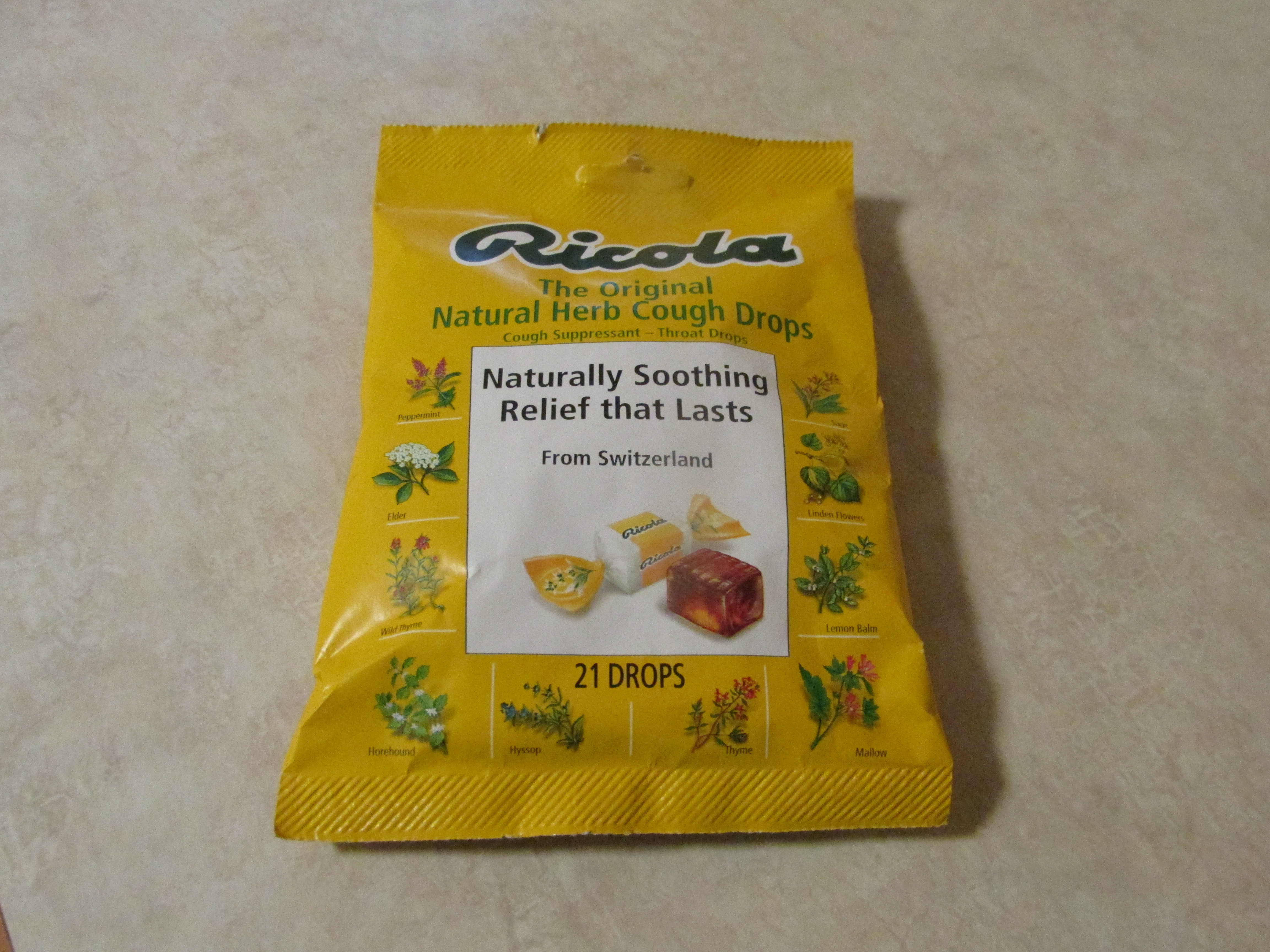
Ricola, a cough suppressant made outside the United States, contains the herb and is sold in the US.

In modern times, horehound may be found in candies, liqueurs, and cough drops.

The articles I read suggest that more research is required to evaluate the safety of horehound and is not recommended for pregnant and nursing women. Physicians should be consulted before using this medicinally.

I love to find these old cures so that I can use them in my writing. Those who volunteer as Civil War reenactors may also enjoy this information. I have not tried this tea as a cure for cold or fever and I’m not recommending it. This is merely meant to be fun and educational.

-Sandra Merville Hart


Sources

A Compilation of Over One Hundred Receipts, Adapted to the Times. Confederate Receipt Book, Applewood Books, 1863.

“Horehound,” Drugs.com, 2017/03/11 https://www.drugs.com/npc/horehound.html.

“Horehound,” Mountain Rose Herbs, 2017/03/11 https://www.mountainroseherbs.com/products/horehound/profile.

“Horehound Herb,” Naturalremedies.org, 2017/03/11 http://www.naturalremedies.org/horehound/.