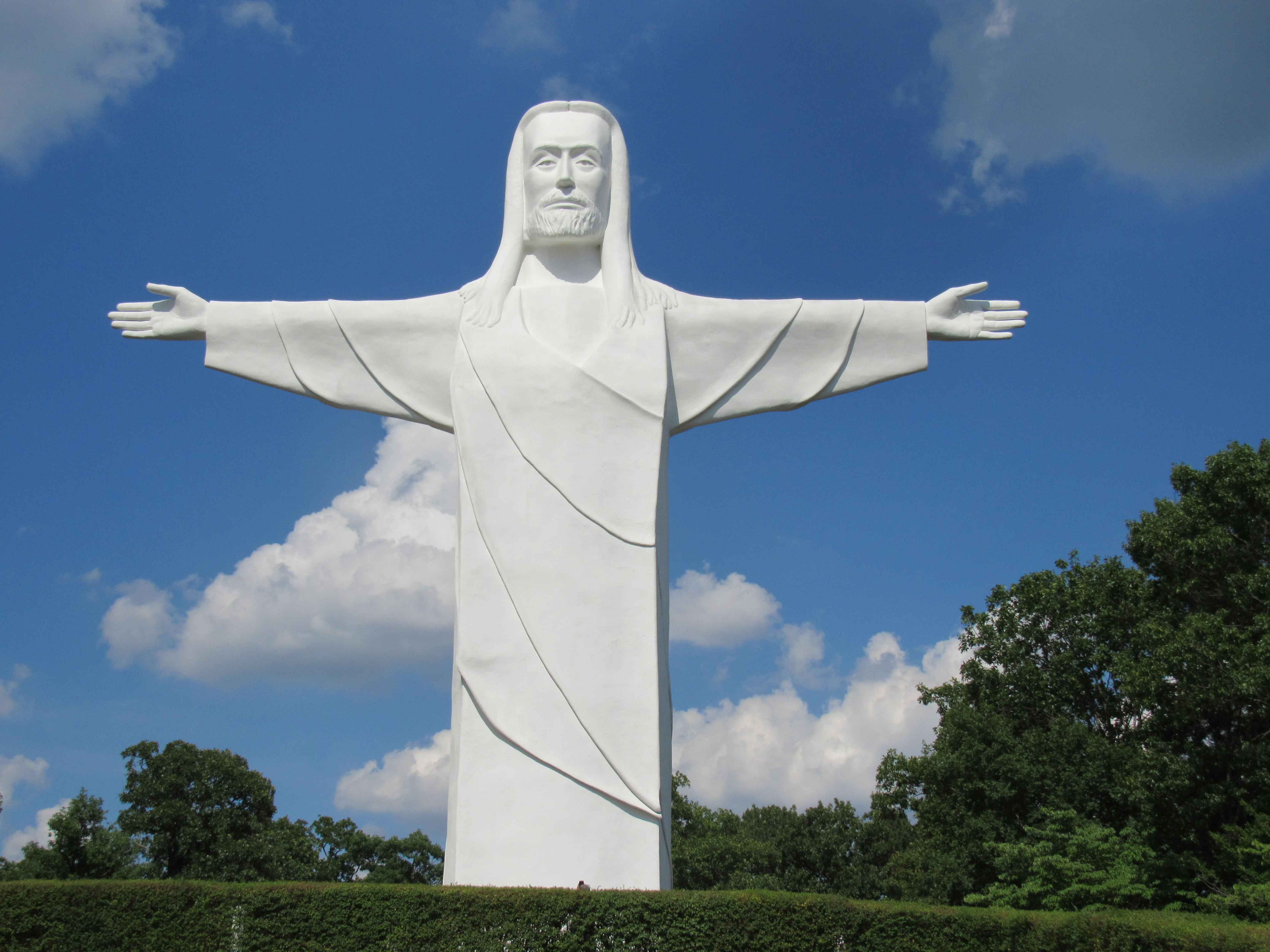
Christ of the Ozarks
A family trip to Branson, Missouri, led us to spend a day in Eureka Springs, Arkansas. The quaint, historical feel of the older part of town made me glad we’d made the hour’s drive.
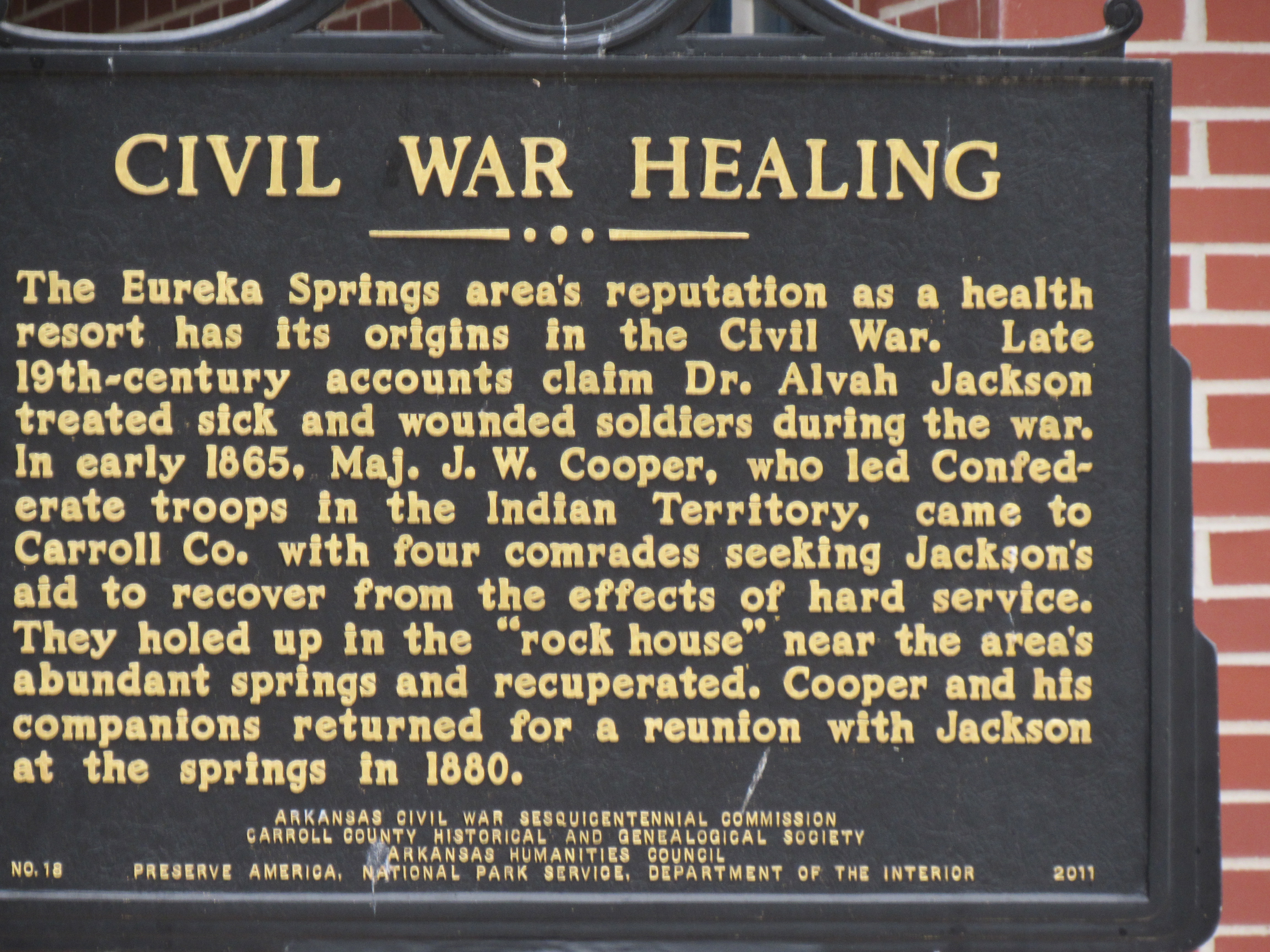 Folks had already discovered healing properties in the springs by the founding of the city on July 4, 1879. Using the spring’s waters, Dr. Alvah Jackson treated and cured his son’s eye ailment in 1856. The doctor also cared for wounded soldiers during the Civil War. After the war, a few Confederate soldiers recuperated near the springs.
Though the town started with tent dwellings and shanties, thousands visited Eureka Springs for the healing springs.
Visitors still flock to the city today. There are many specialty shops in historical downtown. We arrived around noon ready to dine at our favorite restaurant, Mud Street Café. Since it was closed that day, we enjoyed lunch at the balcony restaurant at the Basin Park Hotel. The hotel opened in 1905.
 After lunch, we shopped before heading to Thorncrown Chapel a few miles away. What a beautiful spot! Built in 1980, the chapel has 425 windows—6,000 square feet of glass. Nestled in the woods, the chapel and its surroundings filled me with a serene sense of peace.
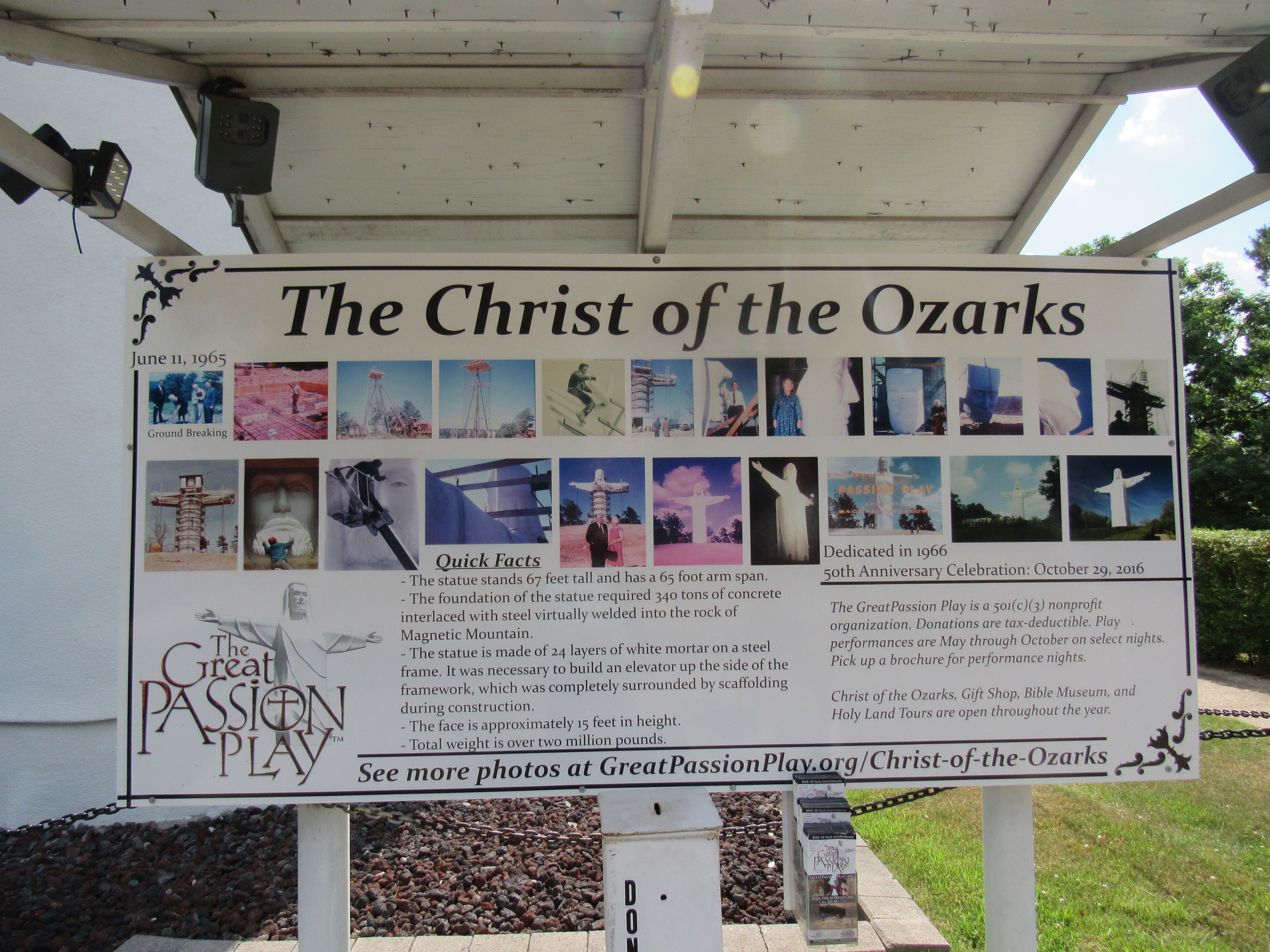 Then we drove to an area where the Passion Play is enacted from May to October. (Check the schedule for dates and times.) The Christ of the Ozarks is there, standing 67 feet high. Impressive sight!
We’ll have to return to attend The Great Passion Play. I’ve heard it’s worth the trip.
All in all, a fun place to spend a day.
-Sandra Merville Hart
Sources
“Eureka Springs History,” Eurekasprings.com, 2018/06/18 https://www.eurekasprings.com/historical/.
“Thorncrown Chapel,” Thorncrown Chapel, 2018/06/18 https://thorncrown.com/.


 Sandra Merville Hart