Civil War Women: Mollie Bean, Confederate Soldier

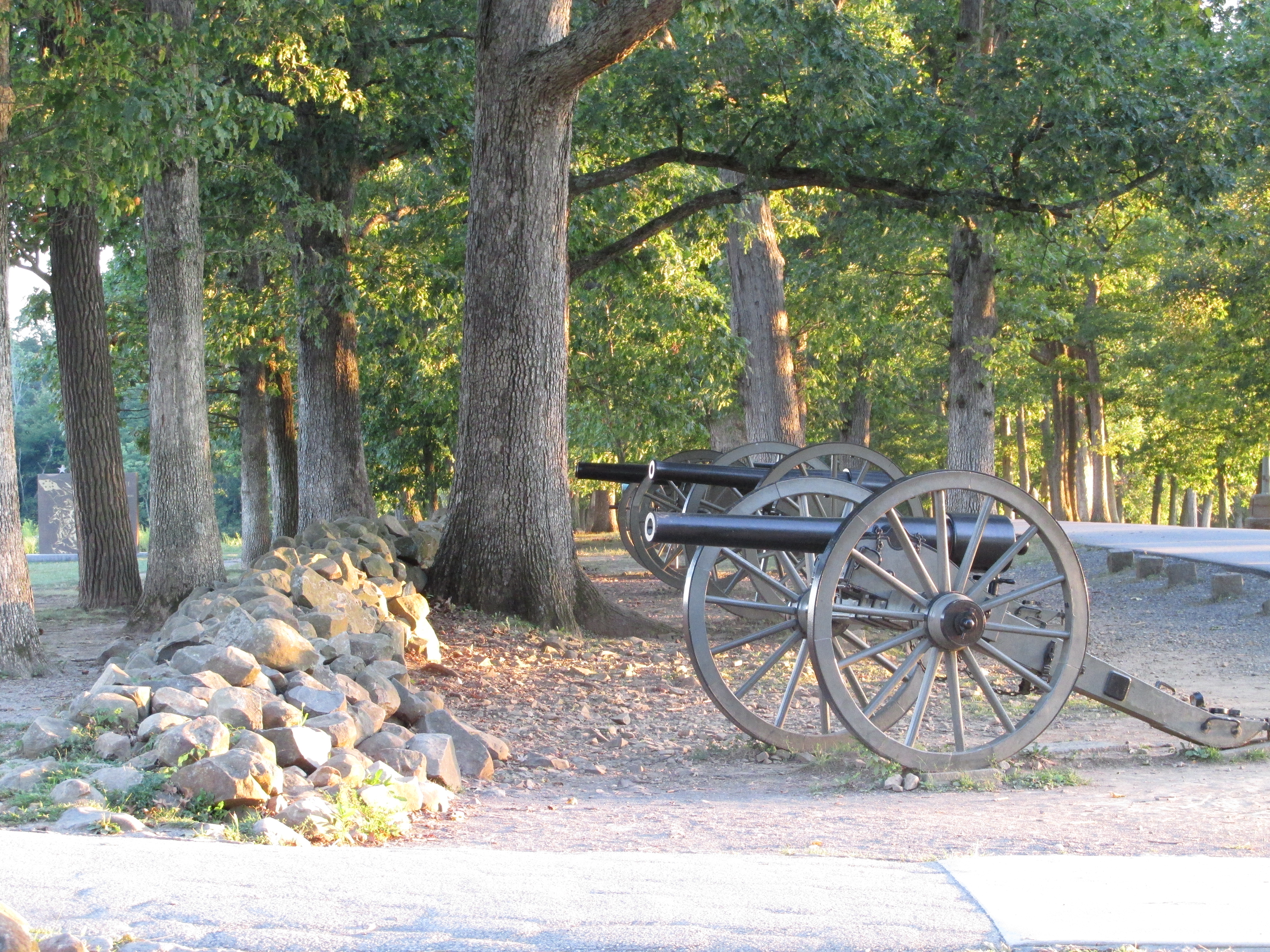
Confederate Army of Northern Virginia cannons at Gettysburg Battlefield

On February 17, 1865, the train guard on the railroad cars between Danville and Richmond demanded to see the papers of a soldier dressed in light-colored corduroy pants, Yankee great coat, and fatigue hat dipped at a jaunty angle, almost touching the wearer’s right ear. The delicate soldier didn’t have any papers signed by the Provost Marshal nor did he seem concerned about the lack of documentation allowing him to ride the cars.

The soldier was arrested and taken to the chief of police. Rigorous questioning revealed an astonishing fact—the soldier was a young woman.

Mollie Bean claimed to be a soldier with the 47th North Carolina State troops. She’d served with them for two years and been wounded twice. Her wounds didn’t give away her disguise so they probably were minor wounds to the head, arms, or legs.

Mollie was taken as prisoner to Castle Thunder.

The reporter of the Richmond Whig didn’t believe her story of being with the 47th North Carolina for two years.

The Charlotte Daily Bulletin called her Mollie Bear, but the other papers noted referred to her as Mollie Bean.

Mollie’s regiment was in winter quarters near Hatcher’s Run when she was arrested.

Her regiment was part of Pickett’s Charge under Brigadier General James Pettigrew at the Battle of Gettysburg. They were at Cold Harbor. They took part in the long Petersburg siege, so Mollie surely experienced difficulties in her two years with the Confederate army.

There’s no record of how long she was held at Castle Thunder or what happened to her when she was released. Who she was and what happened to her remains a mystery.

-Sandra Merville Hart
Sources

“47th Regiment, North Carolina Infantry,” National Park Service, 2019/03/18 https://www.nps.gov/civilwar/search-battle-units-detail.htm?battleUnitCode=CNC0047RI.

“Historical Sketch and Roster of the North Carolina 47th Infantry Regiment,” Amazon, 2019/03/18 https://www.amazon.com/Historical-Carolina-Infantry-Regiment-Regimental/dp/1517383056.

“Mollie Bean,” American Civil War Forum, 2019/03/18 https://www.americancivilwarforum.com/mollie-bean-2248424.html.

“Mollie Bean,” Soldier-Women of the America Civil War, 2019/03/18 http://civilwarsoldierwomen.blogspot.com/2011/01/mollie-bean.html.

“Mollie Bean,” Wikipedia, 2019/03/18 https://en.wikipedia.org/wiki/Mollie_Bean
Battle of Gettysburg: Lee’s Long Line of Ambulances

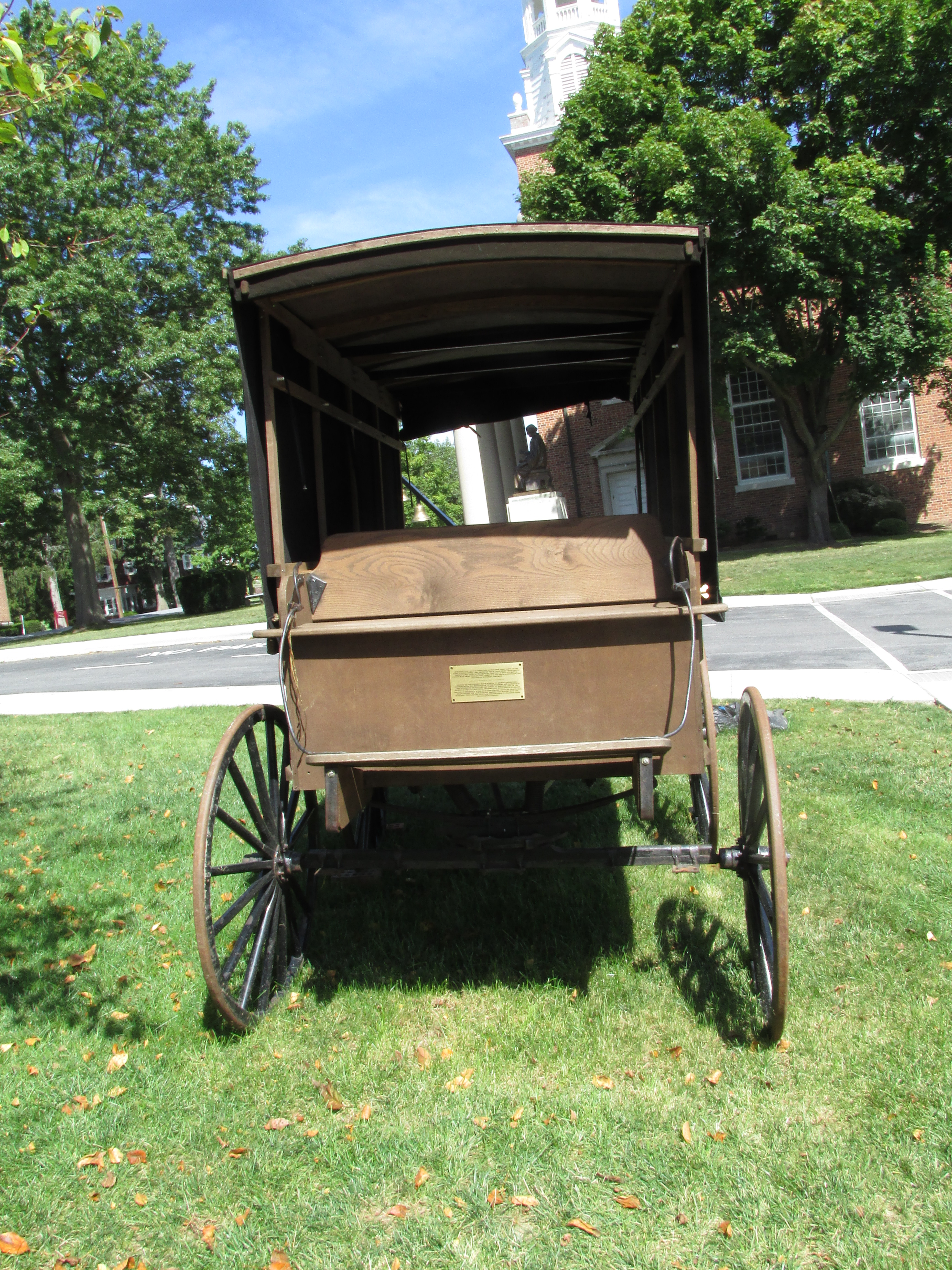
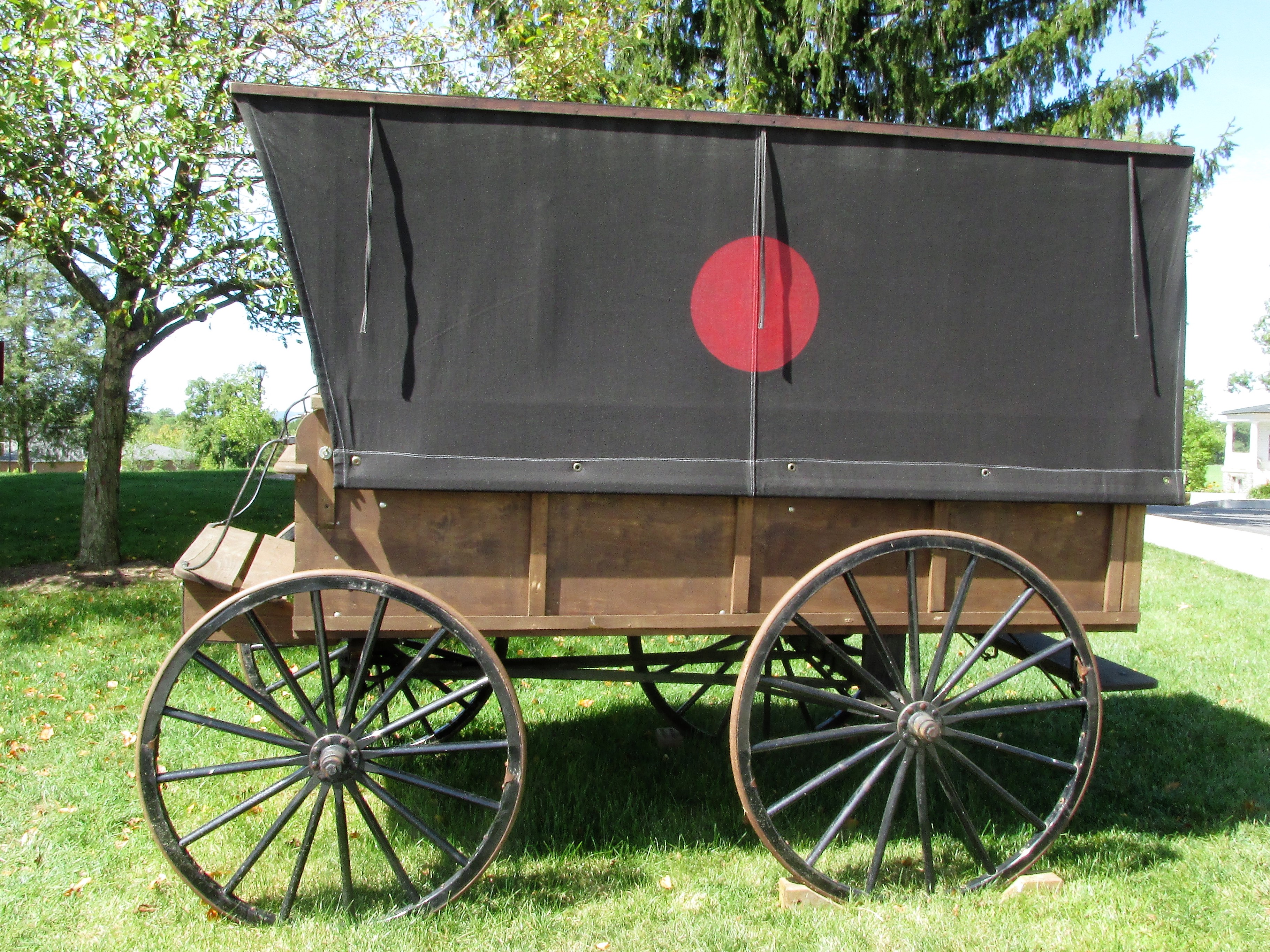
Ambulance outside Lutheran Seminary, Gettysburg.

Confederate General Robert E. Lee’s plan to transport thousands of wounded soldiers after the Battle of Gettysburg was a daunting task. He ordered General John Imboden to lead them to Cashtown before heading south to Williamsport, Maryland. When they reached Williamsport, they paused for a break. Once men and horses rested, they resumed their journey back to Virginia.

The ambulance wagon train stretched for 27 miles.

Tragic.

And 7,000 Confederate soldiers, wounded too severely to travel, were left behind in Gettysburg. Characters in my novel set during the Battle of Gettysburg, A Rebel in My House, had to deal with this issue.

Conservative estimates for Confederate wounded number around 13,000. Other sources report over 18,000. Either way, 27 miles of ambulances means a distressing number of injured soldiers traveled south, groaning in agony as rickety wheels jostled them over rutted dirt roads.

I wondered how many ambulance wagons might have been required and thought it might be fun to try to figure it out.

Ambulance outside of Lutheran Seminary, Gettysburg.

Many models in use at the time were 10 feet long or 10 feet, four inches. The heavier wagons required 4 horses to pull them while lighter ones needed only 2.

Some carried 10 patients—4 prone and 6 seated. The driver and 2 patients sat on a closed chest holding medical supplies.

A lighter model carried 5—15 wounded, depending on how many needed to lie prone for the journey.

It seems almost certain—with the number of wounded requiring transportation to Southern hospitals—that folks squeezed onto wagons meant to hold fewer men.

I confess that I got lost trying to figure the length of an average horse—it seems the larger horses are about 6 feet long. An ambulance 10 feet in length with a two-horse team might require about 20 feet. A four-horse team and wagon might need 30 feet.

Allowing 30 feet for each wagon to estimate how many ambulances might have been in this ambulance train … a staggering 4,752 wagons. The actual count was probably less because some patients with minor injuries walked.

Some ambulances held only 5 patients. If folks had to travel in a laying down, less patients could ride with them.

7,000 were left in Gettysburg. Going with the highest estimate of 18,000+, some 11,000 wounded traveled south. That means 2-3 folks traveled in each wagon.

If we allow 50 feet of space for each wagon, there are about 2,851 or 3-4 patients per wagon. If this is true, then lots of soldiers were in bad shape along the way. Possibly greater numbers of slightly injured weren’t included in the total count.

Has anyone run across this in their research?

-Sandra Merville Hart

Sources

“Battle of Gettysburg,” Encyclopeadia Britannica, 2018/06/15 https://www.britannica.com/event/Battle-of-Gettysburg.

“Battle of Gettysburg,” HistoryNet, 2018/06/15 http://www.historynet.com/battle-of-gettysburg.

“Battle of Gettysburg Facts,” Stone Sentinels, 2018/06/15 http://gettysburg.stonesentinels.com/battle-of-gettysburg-facts/.

“Civil War Ambulance Wagons,” Civil War Home, 2018/06/17 http://www.civilwarhome.com/ambulancewagons.html.

Compiled by Editors of Combined Books. The Civil War Book of Lists, Da Capo Press, 1994.

Edited by Kennedy, Frances H. The Civil War Battlefield Guide, Houghton Mifflin Company, 1990.

“Gallery: Field Medicine,” Trans-Mississippi Theater Virtual Museum, 2018/06/17, http://www.civilwarvirtualmuseum.org/medicine/field-medicine/ambulance.php.

Long, E.B and Long, Barbara. The Civil War Day by Day: An Almanac 1861-1865, A Da Capo Paperback, 1971.

Sheldon, George. When the Smoke Cleared at Gettysburg: The Tragic Aftermath of the Bloodiest Battle of the Civil War, Cumberland House, 2003.


The Story Behind the Story-A Rebel in My House

After I wrote A Rebel in My House, my Civil War romance set during the turbulent Battle of Gettysburg, other authors and readers asked me why I wrote the novel. Since the anniversary of the historic battle is almost here, I thought I’d share the “story behind the story” with you, my readers and blog family.

Something drew me yet again to Gettysburg. I knew there was a story waiting there for me. My husband and I walked the battlefields. Ideas stirred when I found Tennessee troops in Archer’s Brigade, part of Heth’s Division who began the fighting on the first day. Nothing solidified so I kept digging. I discovered fascinating history at the Gettysburg Seminary Ridge Museum in Lutheran Theological Seminary. Surely my story touched this place. Spending several hours exploring the museum and surroundings sparked no ideas so I trudged on.

I explored Gettysburg museums, spending hours at the Gettysburg Museum and Visitor Center, Gettysburg Museum of History, Gettysburg Railroad Station, General Lee’s Headquarters Museum, and The David Wills House where President Lincoln stayed. I learned captivating facts at the Jennie Wade House, Shriver House Museum, and “The Women of Gettysburg Tour,” an evening walking tour.

Ideas swirled as my husband and I walked the town’s streets around the “Diamond” or the town square. This is where the women and children suffered through a nightmare from which they didn’t awaken for many months.

Then we spent another afternoon and evening at the battlefield.

Three Tennessee regiments fought the beginning battle on July 1st. They didn’t fight again until they joined in Pickett’s Charge.  

The sun sank low on the horizon as I stood alone on Cemetery Ridge. The expansive field crossed by Pickett’s Charge on July 3, 1863, captured my imagination. Though the land is peaceful once more, it still tells a story. My imagination soared while the sun disappeared.

As an author, I had to tell what the townspeople endured. What if a Gettysburg woman fell in love with a Confederate soldier? What if they both made promises to loved ones? Some promises are impossible to keep …

I reluctantly left the ridge. I had a story to write.

-Sandra Merville Hart

Civil War Battle of Gettyburg’s Numbers

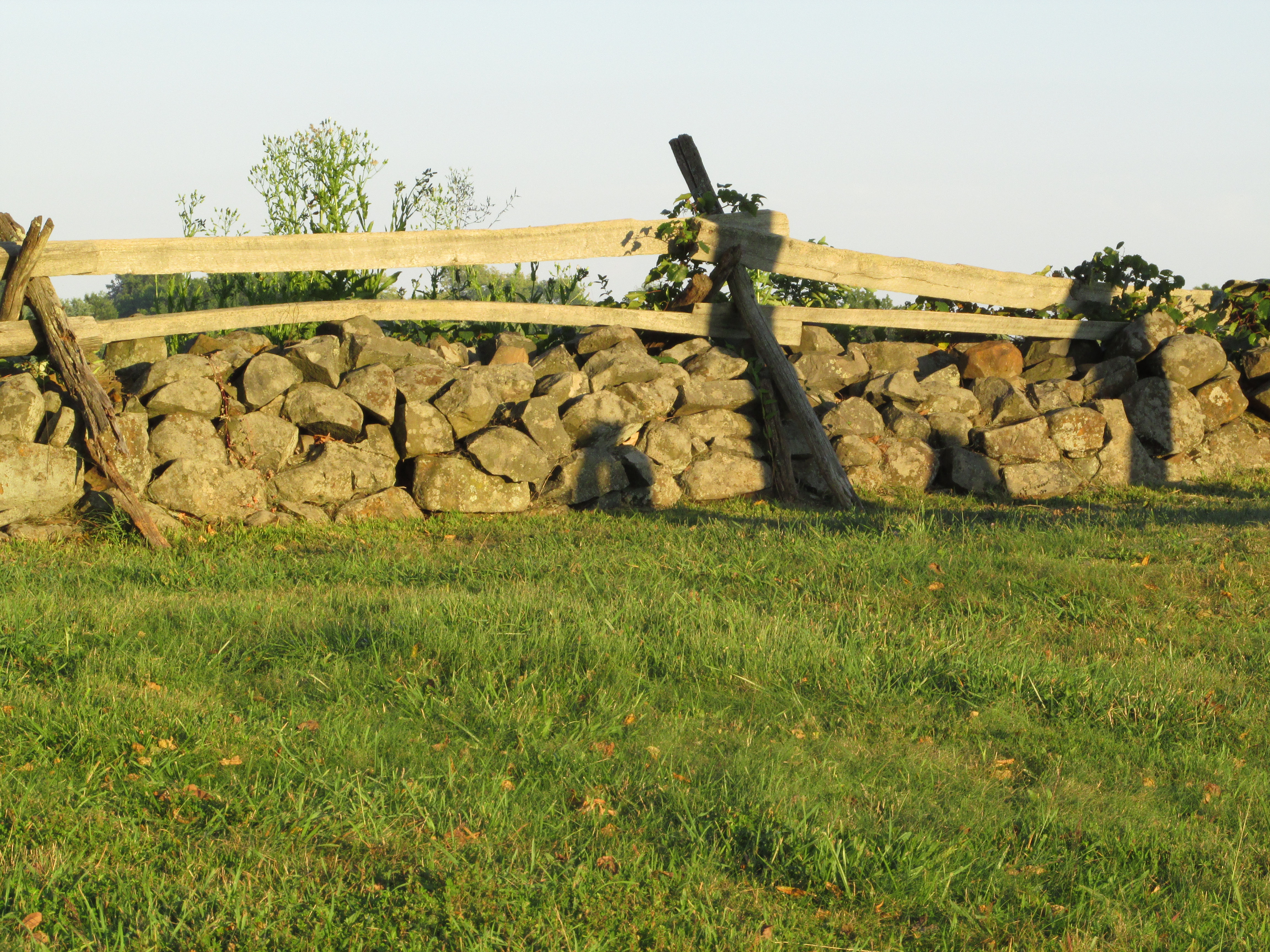
Post and rider fence common around Gettysburg in 1863 — at Gettysburg Battlefield


 With the July 1st—3rd anniversary of the Battle of Gettysburg approaching, I thought it would be fun to dig into some “number” facts pertaining to the battle.

How many soldiers fought in the famous Pennsylvania battle?

Sources disagree on this number due to inaccurate, incomplete, and missing records.

HistoryNet

 82,289 Union soldiers

75,000 Confederate soldiers

157,289 Total

Stone Sentinels

93,700 Union

 70,100 Confederate

163,800  Total

Book of Lists

93,693 Union (Corps Strength)

 70,136 Confederate (Corps Strength)

163,829 Total

Some sources reported round numbers:

Encylopaedia Britannica

94,000 Union

 71,000 Confederate

165,000 Total

The Civil War Battlefield Guide    

170,000+ soldiers fought

When the Smoke Cleared At Gettysburg

172,000+ soldiers fought

As you can see, some of these numbers are very close. The difference between the lowest and highest estimates is 14,711.

How many casualties did both sides suffer?

We first have to understand that casualties were broken down as follows: Killed, Wounded, and Missing. Sources also disagree on this number for the same reasons as above.

HistoryNet

3,155  Union killed

14,529 Union wounded

  5,365 Union missing

23,049 Total Union casualties


3,903  Confederate killed

18,735  Confederate wounded

  5,425  Confederate missing

28,063  Total Confederate casualties


23,049 Union (all casualties)

28,063 Confederate (all casualties)

51,112 Total casualties

Stone Sentinels*

3,150  Union killed

14,500 Union wounded

  5,165  Union missing

22,815  Total Union casualties


4,400  Confederate killed

12,950 Confederate wounded

  5,350  Confederate missing

22,700  Total Confederate casualties


22,815 Union (all casualties)

22,700 Confederate (all casualties)

45,515 Total casualties

*Stone Sentinel acknowledges their estimates are conservative, with actual casualties possibly as high as 51,000.

Book of Lists

22,807 Union (Corps)

22,557 Confederate (Corps)

45,364  Total casualties

When the Smoke Cleared At Gettysburg

3,155  Union killed

14,530 Union wounded

  5,365  Union missing

23,050  Total Union casualties


4,500  Confederate killed

18,750 Confederate wounded

   5,250 Confederate missing

28,500  Total Confederate casualties


23,050 Union (all casualties)

28,500 Confederate (all casualties)

51,550 Total casualties


Some sources reported round numbers:

Encylopaedia Britannica

23,000 Union casualties

28,000 Confederate casualties

51,000 Total casualties

The Civil War Battlefield Guide    

50,000+ Total casualties

Again, some numbers are close. The difference between the lowest and highest estimates is 6,186. It’s been surprising to find so many discrepancies in these numbers. As an author of a Civil War romance set during the Battle of Gettysburg, A Rebel in My HouseI’m often asked these numbers. It’s not an easy answer.

-Sandra Merville Hart

Sources

“Battle of Gettysburg,” Encyclopeadia Britannica, 2018/06/15 https://www.britannica.com/event/Battle-of-Gettysburg.

“Battle of Gettysburg,” HistoryNet, 2018/06/15 http://www.historynet.com/battle-of-gettysburg.

“Battle of Gettysburg Facts,” Stone Sentinels, 2018/06/15 http://gettysburg.stonesentinels.com/battle-of-gettysburg-facts/.

Compiled by Editors of Combined Books. The Civil War Book of Lists, Da Capo Press, 1994.

Edited by Kennedy, Frances H. The Civil War Battlefield Guide, Houghton Mifflin Company, 1990.

Long, E.B and Long, Barbara. The Civil War Day by Day: An Almanac 1861-1865, A Da Capo Paperback, 1971.

Sheldon, George. When the Smoke Cleared at Gettysburg: The Tragic Aftermath of the Bloodiest Battle of the Civil War, Cumberland House, 2003.

Civil War U.S. Christian Commission

The War Between the States began in 1861. To meet the spiritual needs of Federal soldiers facing death, the Young Men’s Christian Association (YMCA) established the United States Christian Commission on November 14, 1861.

The Commission distributed thousands of New Testaments and prayer books to Union soldiers. They gave tracts and pamphlets. They operated portable libraries for the men. The organization also furnished free envelopes with their stamp and “Soldier’s letter” in one corner.

Commission workers were not paid. More than 5,000 gave freely of their time to serve as field volunteers to aid the chaplains ministering to soldiers. Citizens stitched clothes, raised money, and put kits together for Northern and Southern soldiers.

The Commission raised $3,000,000. Commission delegates requested donations of supplies.

Christian Commission workers provided medical supplies to field hospitals and were at Gettysburg after the battle.

The Ladies Christian Commission started in 1864. Louisa May Alcott, author of Little Women, was one of these workers. Georgia McClellan also served on this commission. Georgia’s sister, Jenny Wade, had been killed during the Battle of Gettysburg.

-Sandra Merville Hart

Sources

Billings, John D. Hard Tack and Coffee, George M. Smith & Co., 1887.

“Civil War Christian Commission Was Formed,” Christianity.com, 2017/07/04  http://www.christianity.com/church/church-history/timeline/1801-1900/civil-war-christian-commission-was-formed-11630528.html.

Davis, William C. The Illustrated Encyclopedia of the Civil War: The Soldiers, Generals, Weapons, and Battles, The Lyons Press, 2001.

“United States Christian Commission,” Wikipedia, 2017/07/04 https://en.wikipedia.org/wiki/United_States_Christian_Commission.


Civil War Camp Letterman: Caring for Gettyburg’s Wounded

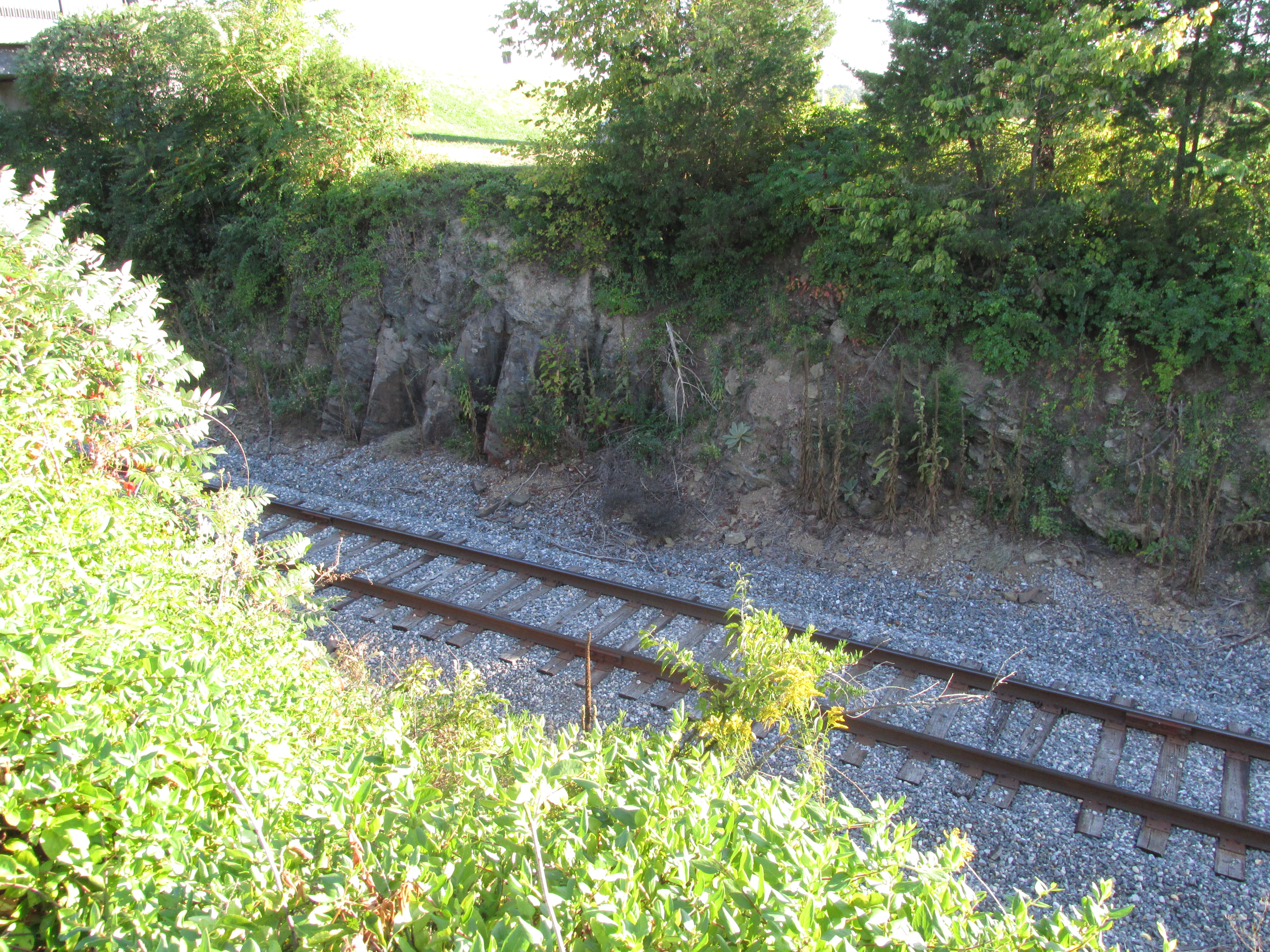
Railroad cut, Gettysburg battle, July 1, 1863

Medical Director Jonathan Letterman shipped tents, supplies, and provisions to Adams County—where Gettysburg resides—on the evening of July 1, 1863, the first day of the Battle of Gettysburg. He ordered that a general hospital be established there on July 5th. Confederate and Union wounded would be provided transportation to the hospital for treatment.

The army erected tents on George Wolf’s farm on York pike approximately one and a half miles east of Gettysburg. Railroad tracks adjacent to the property made it easy to deliver supplies and transport patients to Washington, Philadelphia, and Baltimore.

Surgeons, nurses, supply clerks, quartermasters, and cooks staffed the general hospital, known as Camp Letterman, when it was ready in mid-July. Infantry guarded Confederate patients and supplies.

Almost forty folding cots each with mattresses and linens fit in rows of tents. Camp Letterman held five hundred white tents with only ground as the floor. Trains brought supplies to warehouse tents set up near the railroad. A large cookhouse in the middle of camp gave cooks a place to prepare nutritious meals such as soup and bread.

Wounded from both sides arrived at camp in ambulances where they were assigned beds. The hospital camp was filled by late July. It housed over 1,600 wounded soldiers. Hundreds more continued to receive medical care in temporary hospitals in Gettysburg.

A morgue and cemetery near camp were established by the army. An army chaplain gave them a Christian burial.

Yet most of Camp Letterman’s patients survived. Surgeons worked around the clock while treating the seriously wounded. When patients recovered enough to travel to city hospitals, Sanitary Commission workers assisted the army in transporting them to the railroad depot. They waited a long time for the single Gettysburg railroad line.

-Sandra Merville Hart

Sources

Sheldon, George. When the Smoke Cleared at Gettysburg: The Tragic Aftermath of the Bloodiest Battle of the Civil War, Cumberland House, 2003.


Blog Tour continues with Lasagna Recipe and an Interview

Today I am privileged to be a guest on two blogs.

Fellow author, Linda Matchett, interviews me on the first one. Find out what led me to write my newest Civil War romance and why it is set during one of our nation’s best-known battles, the Battle of Gettysburg. Read about it here!

I share a recipe for lasagna that I tweaked from several recipes on Alice Wisler’s blog. It’s a make-ahead recipe that I think your family will like. My family loves it! Find it here!

Citizens of Gettysburg in the Aftermath

Confederate cannons at North Carolina Memorial, Gettysburg Battlefield

“We do not know until tried what we are capable of.” Sarah Broadhead, Gettysburg citizen, wrote this on July 7, 1863—just four days after the battle ended.

An undated article in Adams County Sentinel reported that the town was one vast hospital. Wounded soldiers filled churches, colleges, the seminary, the courthouse, and many homes. Houses and barns outside of town were filled with thousands of Rebels, left behind when their army retreated. Citizens were doing everything in their power for them.

The Sanitary Commission took over the Fahnestock store, a one-hundred-foot long building in the center of town. They filled it with provisions and clothing, which were distributed to soldiers in the hospitals. Sarah Broadhead praised the work of both the Sanitary Commission and the Christian Commission. Private contributions enabled both organizations to provide generously for the injured men.

Nellie Auginbaugh remembered the Union and Confederate sympathizers who came to town. They couldn’t visit hospitals until taking the oath of allegiance. Some resented the requirement and refused, but others took the oath.

According to Mary Cunningham Bigham, someone at her father’s farm on Emmitsburg Road baked bread to feed the soldiers every day for six weeks. Every soldier able to walk stood in line for the bread hot from a brick oven. The family used all of their 25 barrels of flour stored in the barn.

Visitors came to town to search for loved ones, help the wounded, or to satisfy their curiosity. Sarah Broadhead’s home stayed full and she had to turn people away. One man felt grateful to have a chair to sit on in front of a hotel.

There were no church services while the wounded soldiers occupied the churches. On July 12th, Sarah Broadhead didn’t even feel like she had a Sunday. Not only were there no services, but trains also continued to run and confusion reigned.

The battle had affected the whole town.

-Sandra Merville Hart

Sources

Slade, Jim & Alexander, John. Firestorm at Gettysburg, Schiffer Military/Aviation History, 1998.

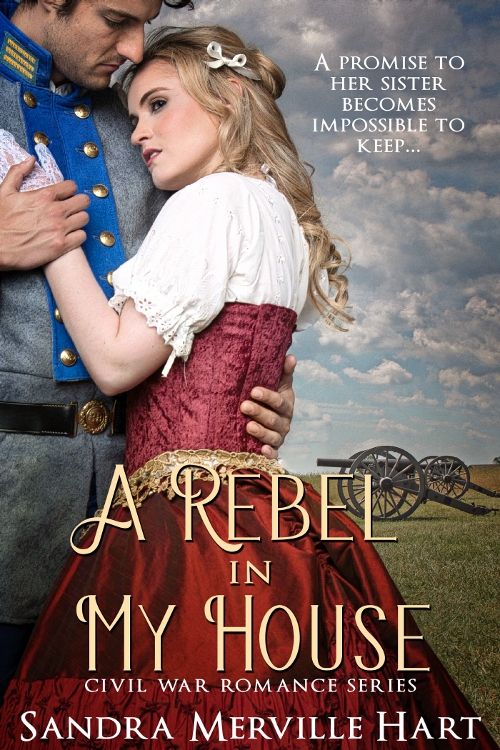
Sandra’s newest Civil War romance novel, A Rebel in My House, is set during the Battle of Gettysburg. It shows what the townspeople endured through the eyes of a Gettysburg seamstress and a Tennessee soldier (Heth’s Division, Archer’s Brigade, 7th Tennessee) left behind in the retreat.