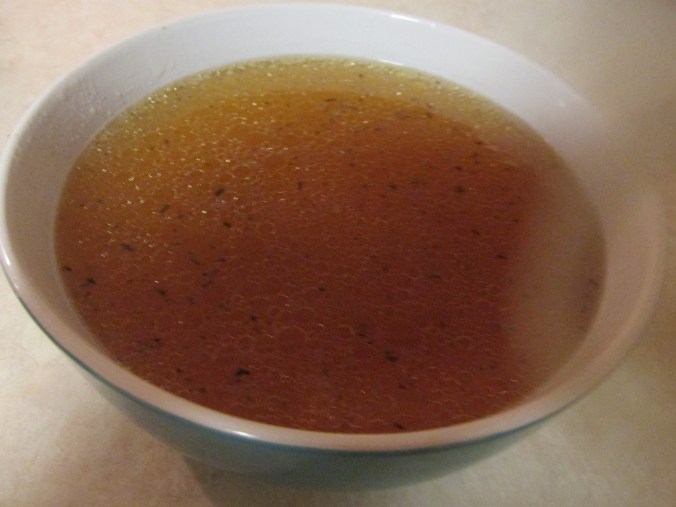
I recently ran across The Fannie Farmer Cookbook in an antique store. This book was originally published in 1896.
Fannie’s advised that making beef stock from bones without meat lacks flavor. Use marrow bones from the butcher if available. Request that these be cut into two-inch pieces.
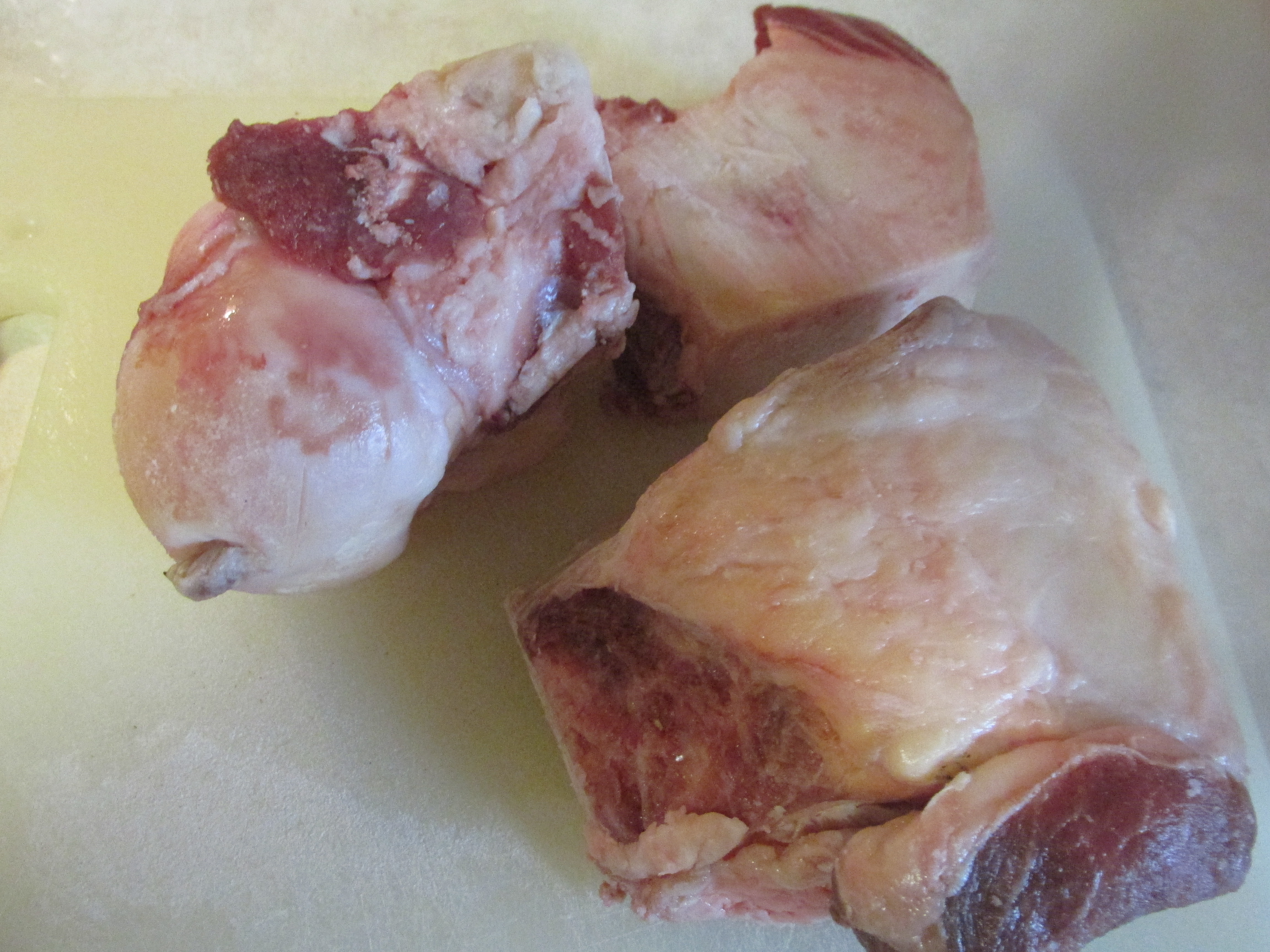
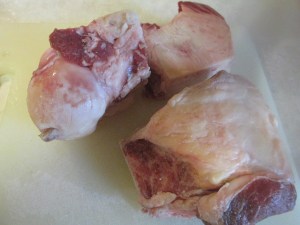 My local butcher didn’t have any marrow bones on hand, so he cut another bone into three chunks about the size of my palm. They weighed less than two pounds—the recipe called for two and half pounds with an equal amount of lean stew beef. I took what they had and purchased two and half pounds of stew beef.
Preheat oven to 450 degrees to brown meat, bones, and vegetables. According to Fannie, browning all these ingredients before cooking adds flavor and color to the stock.
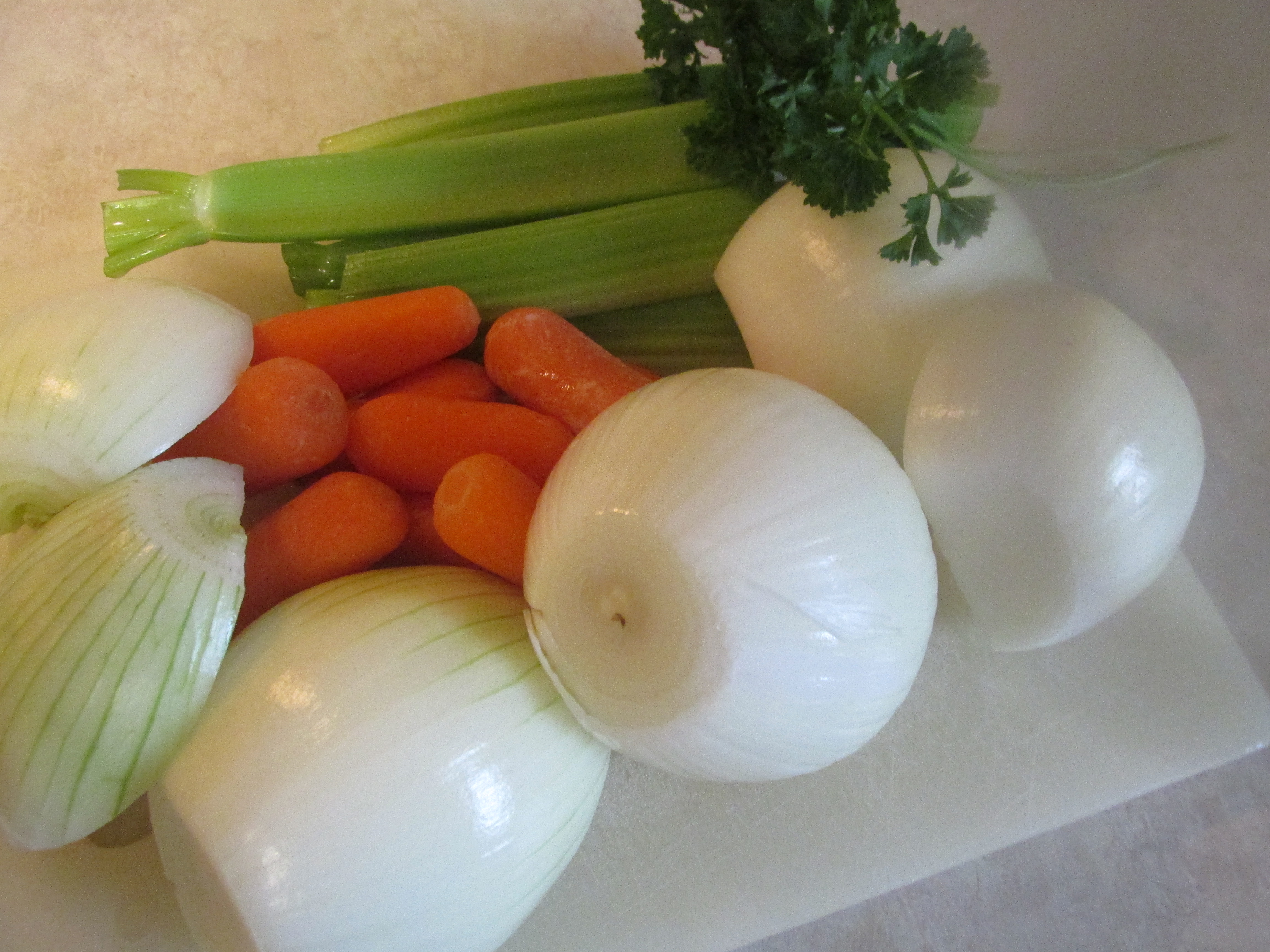
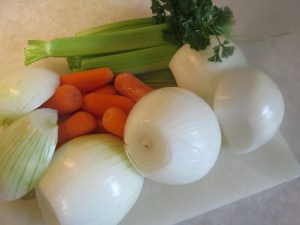 The recipe calls for 3 sliced onions. Having already made chicken stock, I knew that vegetables are discarded at the end as they are limp from the cooking process. I decided to save time and cut the onions in halves. Three celery stalks were cut in half. I set aside the onions, celery, and nine baby carrots.
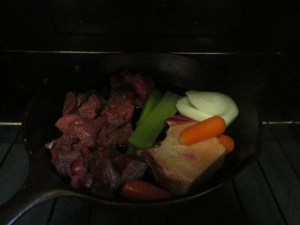
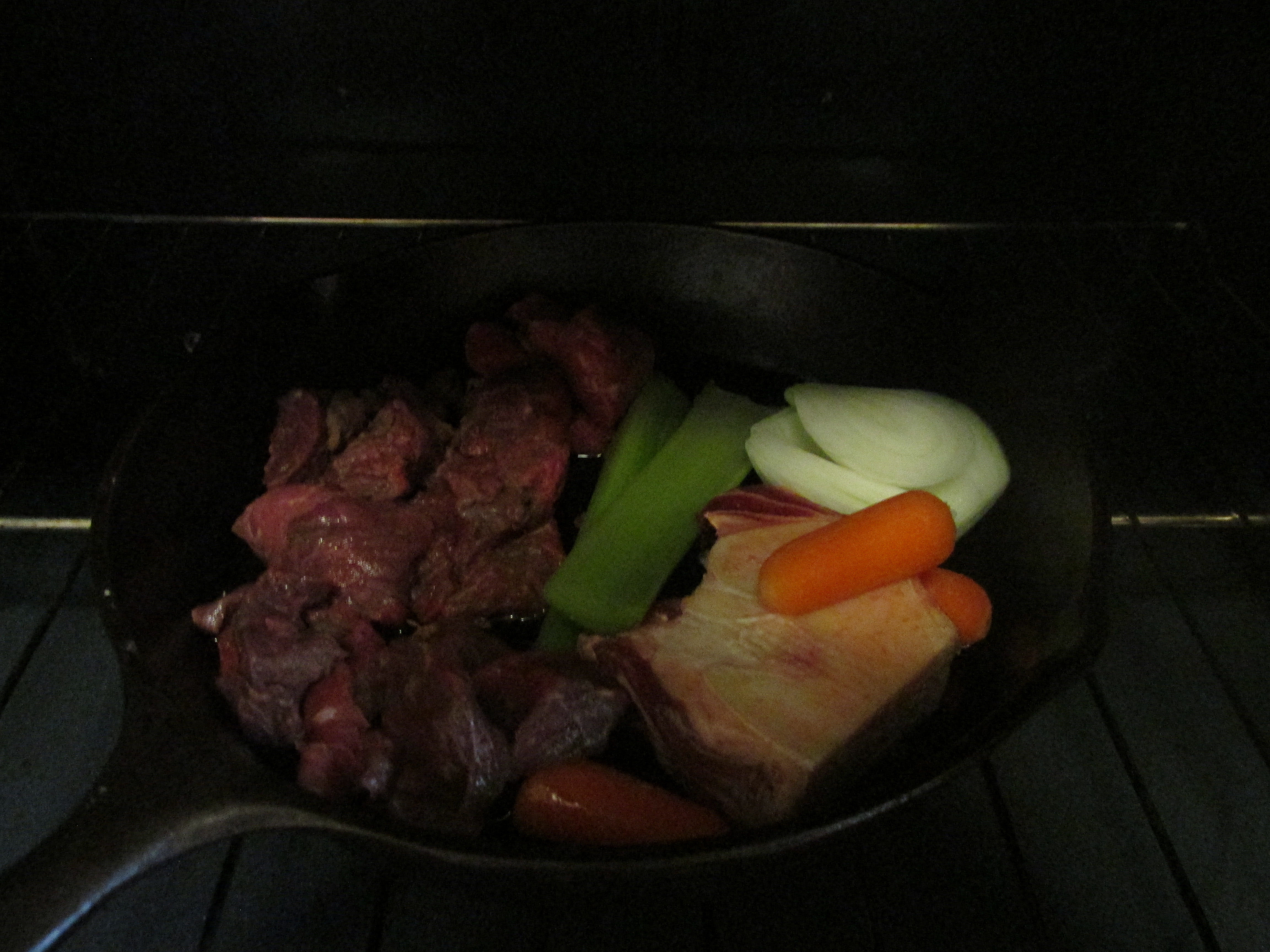
Fannie suggested using a roasting pan to brown the meat and vegetables in the preheated oven. In hindsight, that would be quicker because everything will fit at once. I used a cast iron skillet where all the ingredients didn’t fit. It took three different browning sessions to cook everything.
Heat 2 tablespoons of shortening or oil in the roasting pan or skillet. Add the bones and stew beef. Stir and turn these frequently. Add the celery, carrots, and onions after 10 minutes. Stir the vegetables and watch so that they don’t scorch. When the meat is browned, remove everything from the oven.
 Carefully transfer meat, vegetables, and bones to a stock pot or large kettle.
Add a cup of boiling water to the roasting pan and stir to get all the scrapings off the pan. Then add this to the stock pot.
Add 1 teaspoon of dried thyme, a bay leaf, 2 sprigs of parsley, and 6 crushed peppercorns to the pot. Add 4 quarts of cold water.
Cook on medium high heat until water begins to boil then reduce to simmer. Partially cover and simmer for 2 ½ hours. If you plan to use the stew beef in another recipe, remove it now and refrigerate for later use. I used a slotted spoon to take out the beef and scalded my hands a couple of times, so be careful.
Continue simmering for another 1 ½ to 2 ½ hours. The total simmering time is four to five hours.
Fannie suggests waiting to add salt until using the stock in a recipe. This allows for salty flavors of other ingredients.
Should you choose to season the stock itself, add salt to taste just before it is done.
Strain the stock and allow to cool, uncovered. Refrigerate or freeze until ready to use.
I don’t generally use a lot of onion in my recipes. I will only use one onion the next time I make beef stock, but I wanted to try Fannie’s recipe her way.
This stock is very aromatic while cooking. I will let you know how I use the stock and the beef in a future recipe and I’d love to hear from you, too!
-Sandra Merville Hart
Sources
Revised by Cunningham, Marion and Laber, Jeri. The Fannie Farmer Cookbook, Alfred A Knopf Inc., 1983.

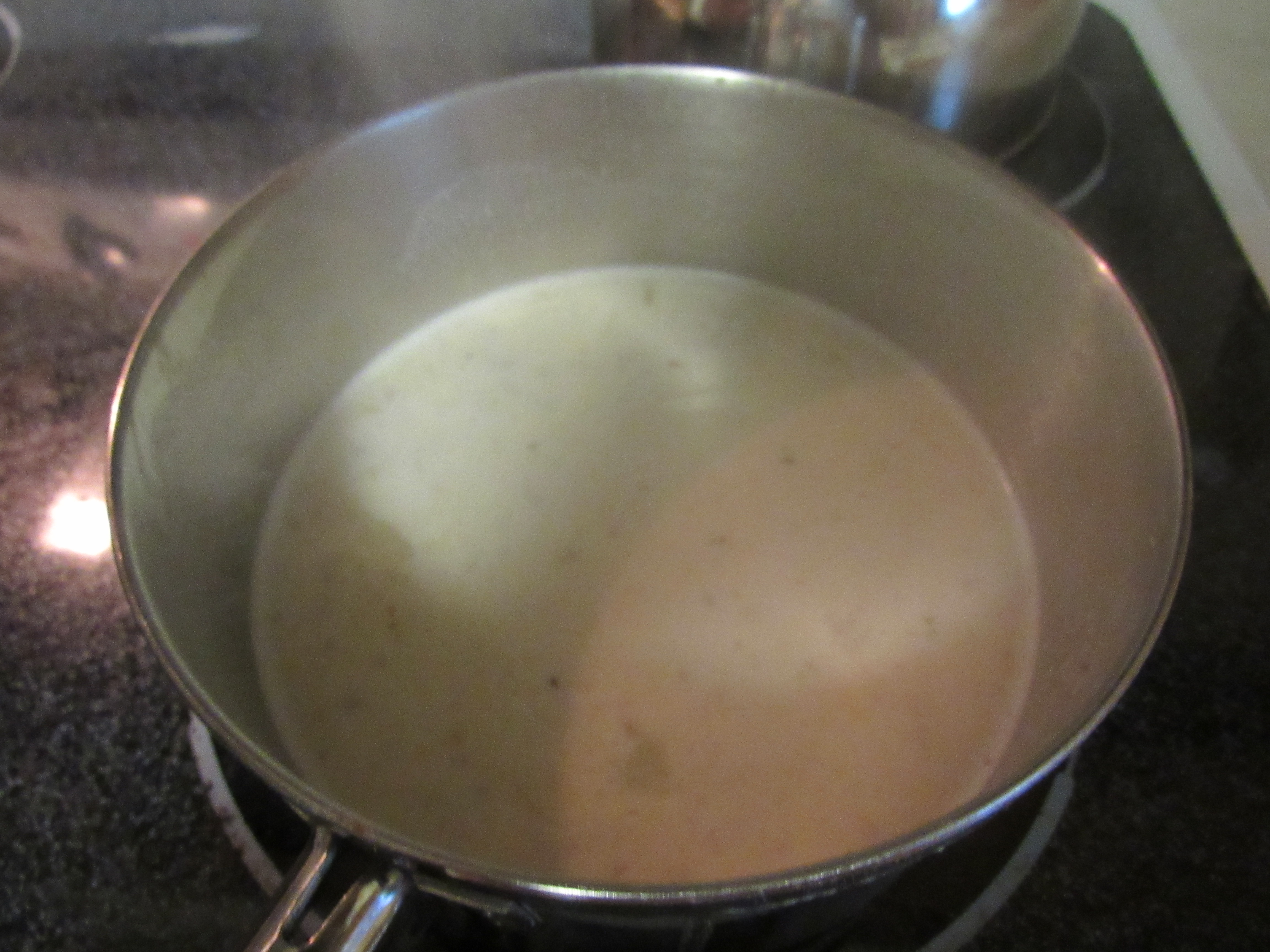 Melt 1 tablespoon of butter over medium heat. Add the onion to the melted butter, cooking until the onion is limp. Stir in 1 tablespoon of flour. The recipe said to stir and cook this for 3 minutes, but mine started to brown after about 90 seconds. I’d suggest cooking this about 1 ½ minutes.
 The recipe then calls for 2 teaspoons of paprika. I tasted the soup without it and enjoyed the flavor. Then I added paprika, which gave the soup a bit of zing that I also liked. Try it both ways to see which you prefer.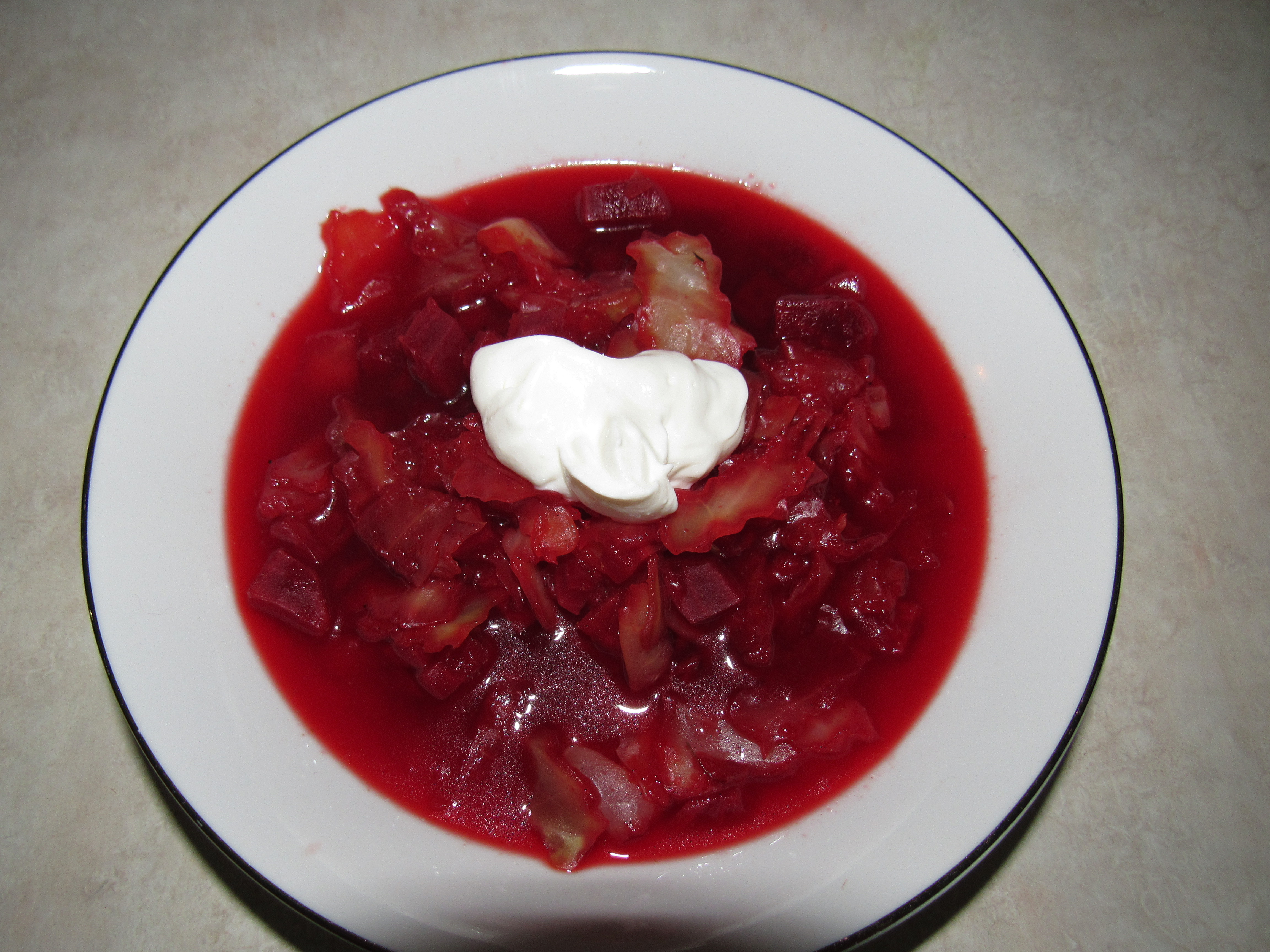
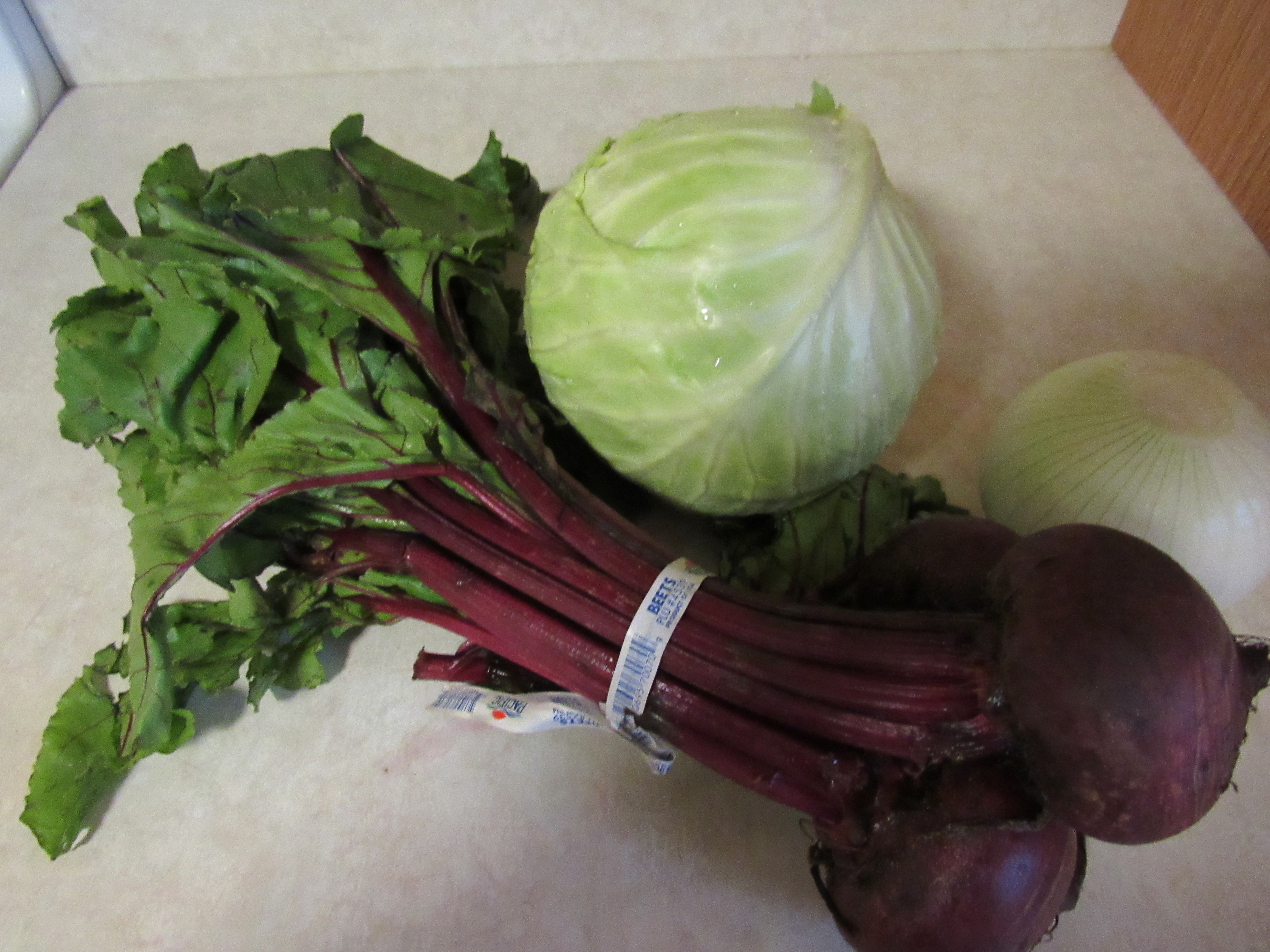


 Sandra Merville Hart