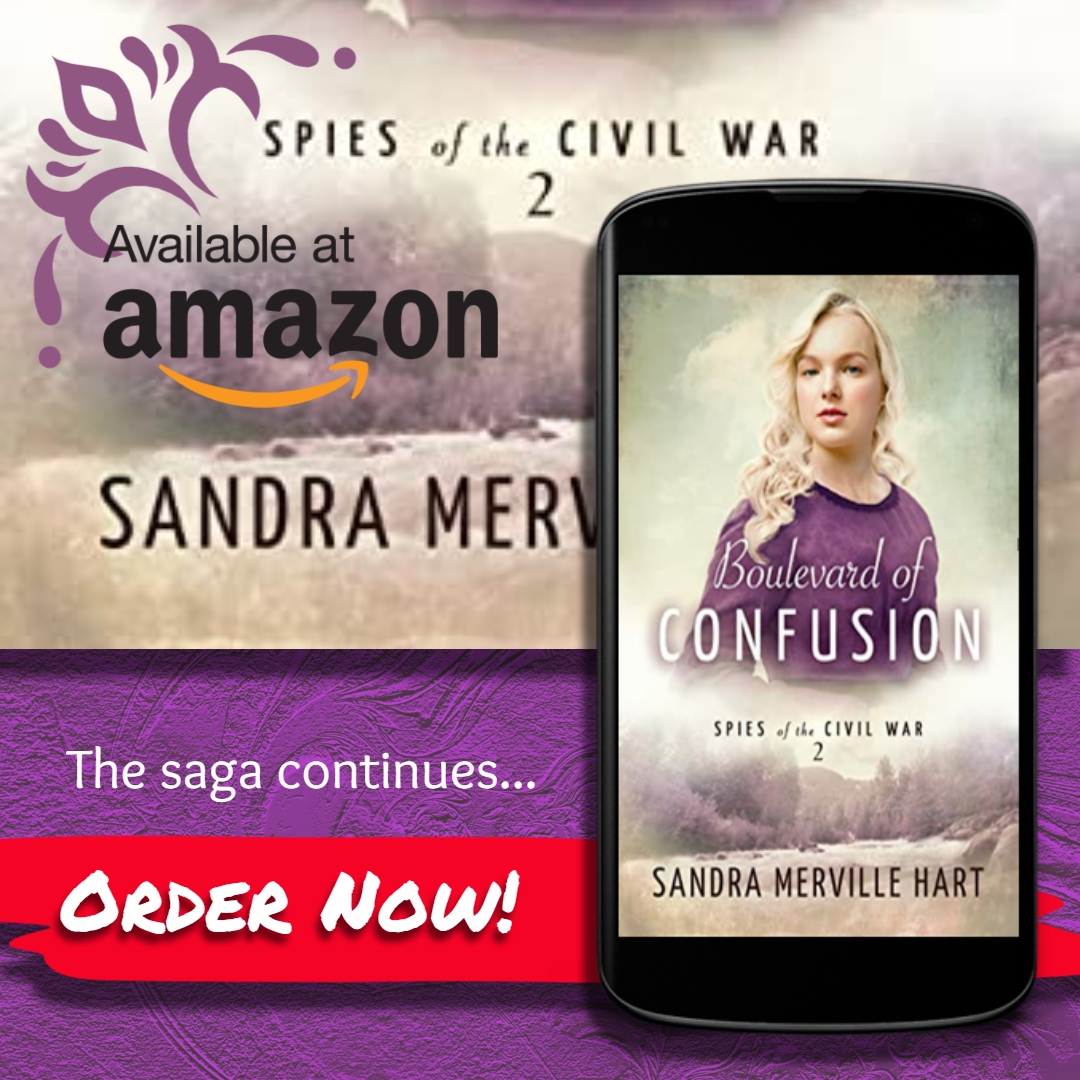
Author’s Inspiration for Boulevard of Confusion

by Sandra Merville Hart

In Boulevard of Confusion, Book 2 in my “Spies of the Civil War” series, two people in love—one supporting the North, one supporting the South—struggle to rise above their differing loyalties.

In my book, the hero is a Virginian loyal to the South. Though Jay hates slavery, he cannot turn against his state. His job at Tredegar Ironworks supplies the Confederate army with artillery. They develop new weapons and technology, such as submarines, that must be kept secret even from Richmond residents.

Our heroine is from the North. Bea has Southern ties and her brother, a Confederate officer, was recently released from a prison camp. Bea’s understanding of both sides of the conflict tosses her into confusion, especially in light of her growing feelings for Jay.

Part of my research for this novel involved a trip to Richmond museums. One display in particular at the American Civil War Museum at Historic Tredegar made me want to do a little dance. (If you followed me around on my museum visits, you’d witness my enthusiasm for historical people and events and how they impact my stories. Perhaps you share my love of history. 😊)

Anyway, this particular display was a painting of Julia Ann Mitchell, who lived in Richmond at the start of the Civil War. She was from a well-to-do family that traveled often. On one of these trips, she met and fell in love with Frederick Coggill, a New York City resident. Though they loved one another, the couple was divided in their loyalties. 

Sadly, Julia’s brother, who fought for the Confederacy, was killed in battle. This probably added to the conflict between Julia and Frederick.

I’m happy to say that the couple seemed to enjoy a happy ending, for they were married in 1863.

I didn’t yet know my characters when I read this display, for the stories ferment in my imagination as research reveals the history. I tucked it away in my mind and it later inspired me.

Boulevard of Confusion isn’t Julia’s and Frederick’s love story. Not at all. It’s simply that history’s record of them overcoming their differing loyalties to marry proves that it happened. That’s all I needed to know.

Avenue of Betrayal, Book 1,is set in the Union capital of Washington City (Washington DC) in 1861, where a surprising number of Confederate sympathizers and spies lived. Boulevard of Confusion is set in Richmond, the Confederate capital in 1862. Actual historical spies touch the lives of our fictional family.

Through both real and fictional characters, this series highlights activities spies were involved in and some of the motives behind their decisions.

I invite you to read both Avenue of Betrayal and Boulevard of Confusion. And please watch for Book 3, Byway to Danger, which will soon follow!

Back Cover Blurb for Boulevard of Confusion

In times of war, is anything as it seems?

Her aunt’s invitation to Richmond is just the change Beatrice Swanson needs after her brother’s release from a Union prison. Bea’s father agrees to the trip with a condition—one that tosses her emotions into swirling confusion.

Though Jay Nickson wants to serve his country as a Confederate soldier, his work is too important to the government. Bea’s interest in his job, which includes secrets that would benefit the Union, arouses his suspicions. Is she spying for the North? His growing feelings for her are hard to squelch.

Though she participates in activities to benefit Confederate soldiers, Bea struggles with her own loyalties and her father’s demands. Where does her cousin, Meg, go on her solitary errands? Bea’s own growing love for Jay, a Southerner, only adds to her confusion. Tensions escalate in Richmond as the Union army approaches, drawing her into more secrecy. Where does her allegiance lie? And how will she be forced to prove it?

Nothing in war is simple…especially when the heart becomes entangled.

Available on Amazon, Barnes & Noble, Apple Books, and Kobo.
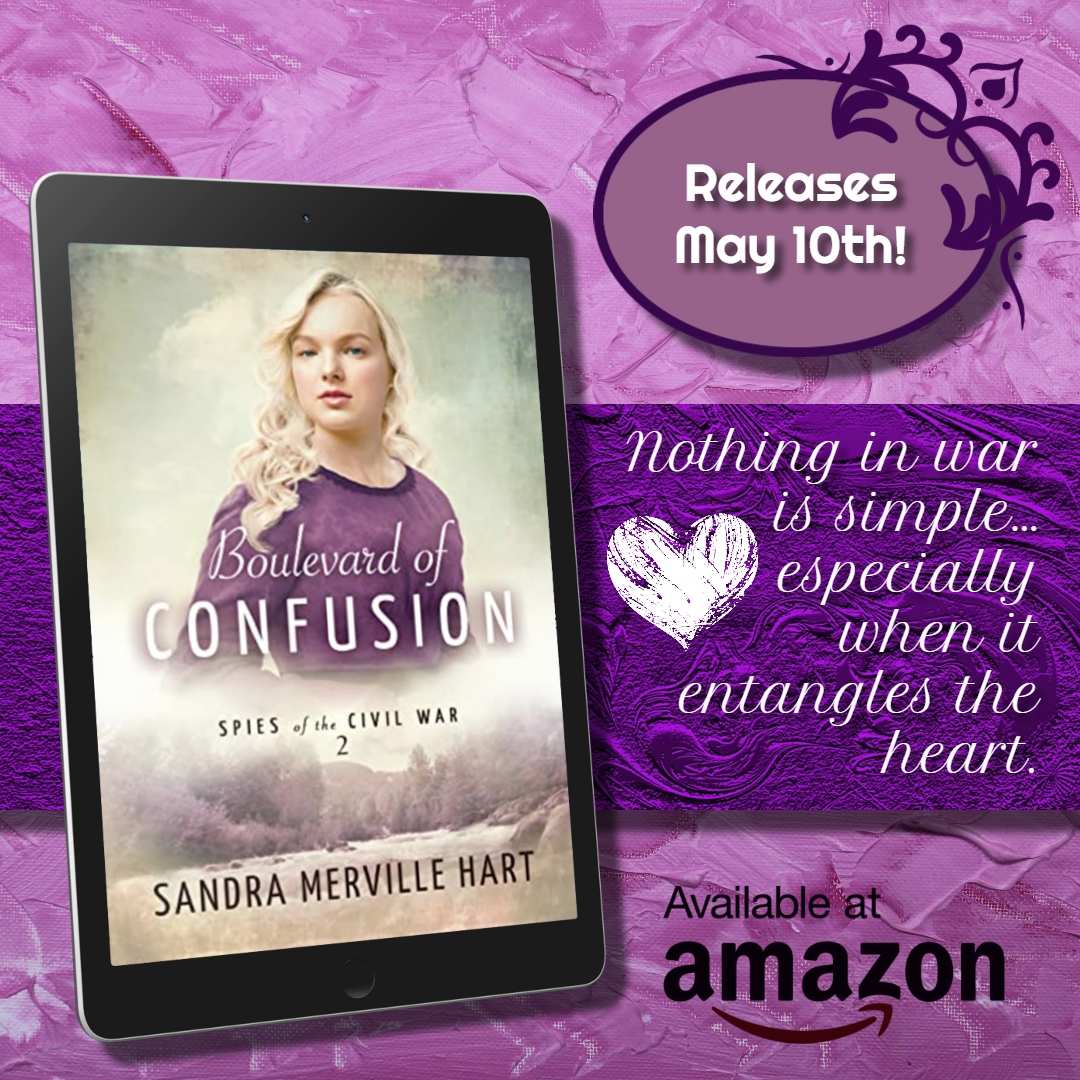
Spies of the Civil War Series Book 2 Releases Today!

by Sandra Merville Hart

I’m thrilled to announce that Boulevard of Confusion, Book 2 of my new “Spies of the Civil War” releases today, May 10, 2022!

Though the series is about a fictional family, there are actual historical spies who touch the stories.

Boulevard of Confusion is set in the Confederate capital of Richmond, Virginia, in 1862. Citizens establish new hospitals to care for wounded Confederate soldiers and new prisons to house Union prisoners. The city’s population swells and Southern citizens don’t know who to trust—and rightly so, for many Union spies now roam the streets and sleep in Richmond hotels.

Here’s a bit about the book:

In times of war, is anything as it seems?

Her aunt’s invitation to Richmond is just the change Beatrice Swanson needs after her brother’s release from a Union prison. Bea’s father agrees to the trip with a condition—one that tosses her emotions into swirling confusion.

Though Jay Nickson wants to serve his country as a Confederate soldier, his work is too important to the government. Bea’s interest in his job, which includes secrets that would benefit the Union, arouses his suspicions. Is she spying for the North? His growing feelings for her are hard to squelch.

Though she participates in activities to benefit Confederate soldiers, Bea struggles with her own loyalties and her father’s demands. Where does her cousin, Meg, go on her solitary errands? Bea’s own growing love for Jay, a Southerner, only adds to her confusion. Tensions escalate in Richmond as the Union army approaches, drawing her into more secrecy. Where does her allegiance lie? And how will she be forced to prove it?

Nothing in war is simple…especially when the heart becomes entangled.

Order your copy today on Amazon, Apple Books, Kobo, or Barnes and Noble!

Easter Traditions in the Victorian Era

by Sandra Merville Hart

Christians celebrate the resurrection of Jesus on Easter every spring. Though it’s always on Sunday, the date varies. The actual date depends upon when the full moon following the vernal equinox appears. Easter is celebrated on the first Sunday after that full moon.

The Easter Lily is a popular flower because it symbolizes life after death. Lilies grow from a bulb buried in the ground and bloom in spring. Large white blooms symbolize purity because Jesus never sinned. The trumpet-shaped flowers resound with the good news of the risen Savior.

Easter was a fun celebration for Victorians. They gathered for traditional meals. They sent Easter greeting cards containing Bible verses and decorated with crosses. Drawings of bunnies in Easter greetings first appeared in the late 1700s when a publisher added one to writing stationery.

Children loved the holiday back in the Victorian era just as they do today. They enjoyed Easter egg hunts and egg rolling contests.

Dying the eggs was part of the celebration. Young children dyed them using a variety of fruits and vegetables. Beets and cranberries were used because of their strong colors. Peels from oranges and lemons provided dyes. Though blueberries and blackberries weren’t specifically mentioned in my sources, these were probably used as well. Imagine the fruits and vegetables that leave stains on fingers for other ideas of dyes.

Along with the dyes, children drew crosses, churches, flowers, and bunnies on the Easter eggs.

It was a joy to include an Easter celebration in Boulevard of Confusion, Book 2 in my “Spies of the Civil War” series. Children and adults enjoyed dying Easter eggs after church services in my novel.

Sources

“Easter Traditions During the Victorian Era,” WorldHistory.us, 2021/08/13 https://worldhistory.us/european-history/easter-traditions-during-the-victorian-era.php.

“Victorian Era Easter Celebrations,” Victorian Era, 2021/08/13 http://victorian-era.org/victorian-era-easter-celebrations.html.

Wells, Mary Shannon. “Everything You Need to Know about the Easter Lily,” Southern Living, 2022/04/14 https://www.southernliving.com/holidays-occasions/easter/easter-lily-meaning.