Epiphany is a word that some Christians use to describe the day that the Magi from the East found Jesus. The meaning of epiphany—a sudden, striking realization.
The Twelve Days of Christmas begin on December 25th, with a celebration of Jesus’ birth, and end on January 6th, which is traditionally celebrated as the day the Magi visited.
In the Middle Ages, Epiphany was also known as Twelfth Night or King’s Day.
In the mid-nineteenth century, Prince Albert and Queen Victoria of England transformed Epiphany into a family occasion that celebrated the Magi’s wonder at finding the Christ child.
In earlier times, the holiday season was celebrated beginning Christmas Eve to the Eve of Epiphany, when families sang songs and took down decorations. They attended church services on the Eve of Epiphany. Aromas from baked or simmered herbs reminded Christians of the Magi’s gifts.
Children left food for the wise men and hay for their camels that night. The food was usually gone the next morning, replaced by gold coins. This gift-giving was gradually replaced by Santa Claus in the United States and Father Christmas in England late in the 1800s.
Children in Germany dress up as Magi on January 6th and follow a child holding a star to find baby Jesus.
Epiphany is called “King’s Day” in parts of Mexico, Puerto Rico, Venezuela, and Argentina. Wise men leave gifts on the Eve of Epiphany. “King’s cake” is often served as part of the meal on Epiphany.
Children fill shoes with barley for the Magi’s livestock in Italy and Spain.
A ship sails into many Spanish seaports on the morning of Epiphany with the Magi on board. These wise men give candy to children lining the sidewalks.
It’s fun to discover the different traditions associated with the 12 Days of Christmas.
Sources
Collins, Ace. Stories Behind the Great Traditions of Christmas, Zondervan, 2003.
Lighting Christ’s candle, the fifth white candle in the center of the Advent wreath, was a celebration of Jesus’ birth for early Christians, as it is today.
Prophets foretold of His birth centuries before the event that changed the world.
For unto us a child is born, to us a son is given,
And the government will be on his shoulders.
And he will be called Wonderful Counselor, Mighty God, Everlasting Father, Prince of Peace.
Isaiah 9:6 (NIV)
When it was time, God sent His Son.
But when the time had fully come, God sent his Son, born of a woman, born under law, to redeem those under law, that we might receive the full rights of sons.
Galatians 4:4-5
I’ve often reflected on the multitude of angels praising God for the wondrous gift of His Son, a gift for all people everywhere. The angels must have filled the night sky around the shepherds. Can you imagine the wonder mingled with fear that overcame the shepherds the night that Jesus was born?
And there were shepherds living out in the fields nearby, keeping watch over their flocks at night. An angel of the Lord appeared to them, and the glory of the Lord shone around them, and they were terrified.
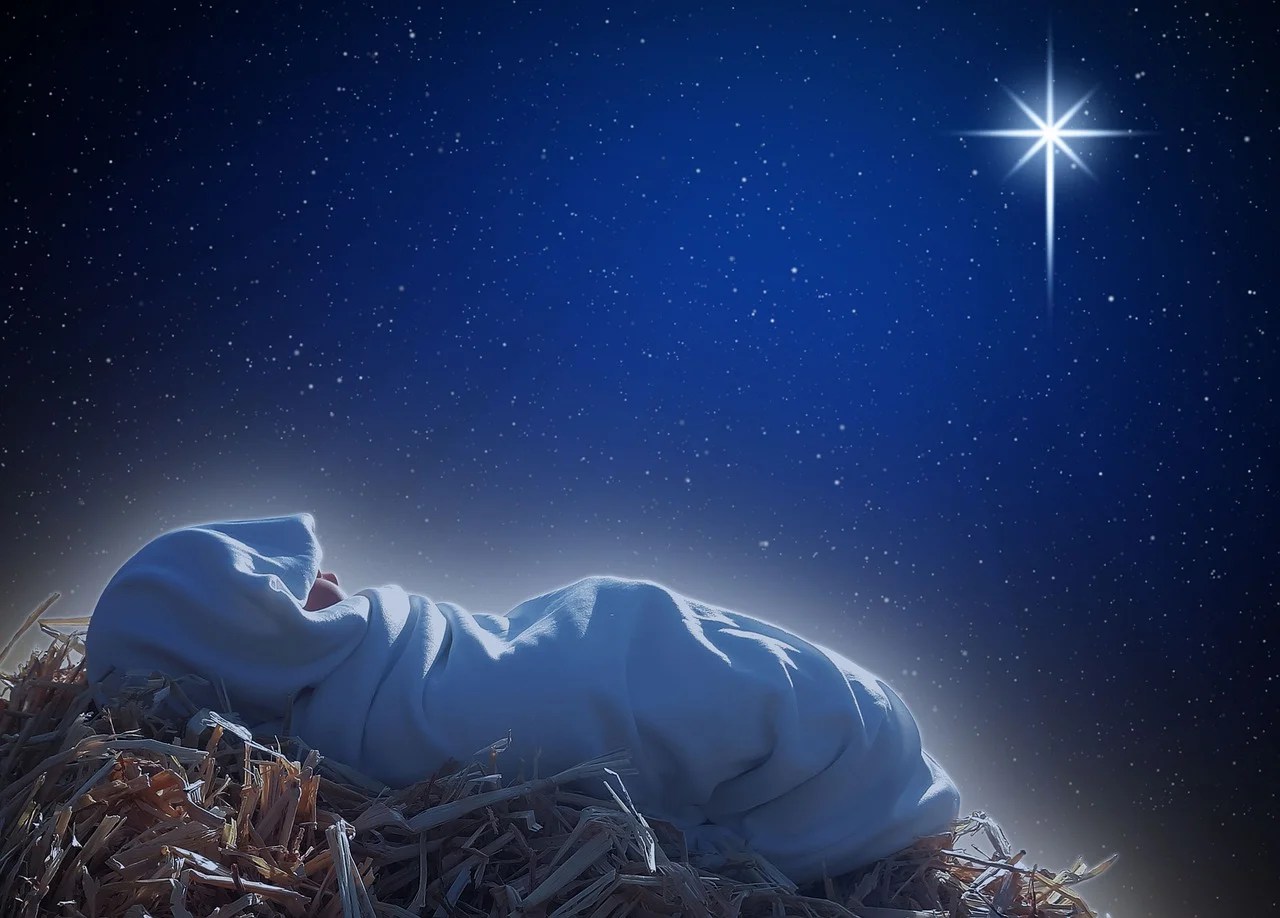
But the angel said to them, “Do not be afraid. I bring you good news of great joy that will be for all the people. Today in the town of David a Savior has been born to you; he is Christ the Lord. This will be a sign to you: You will find a baby wrapped in cloths and lying in a manger.”
Suddenly a great company of the heavenly host appeared with the angel, praising God and saying,
“Glory to God in the highest, and on earth peace to men on whom his favor rests.”
Luke 2:8-14 (NIV)
The shepherds had to see the miracle with their own eyes.
When the angels had left them and gone into heaven, the shepherds said to one another, “Let’s go to Bethlehem and see this thing that has happened, which the Lord has told us about.”
So they hurried off and found Mary and Joseph, and the baby, who was lying in a manger. When they had seen him, they spread the word concerning what had been told them about this child, and all who heard it were amazed at what the shepherds said to them.
But Mary treasured up all these things and pondered them in her heart.
The shepherds returned, glorifying and praising God for all the things they had heard and seen, which were just as they had been told.
Luke 2:15-19
Why did God send His Son for us?
“For God so loved the world that he gave his one and only Son, that whoever believes in him shall not perish but have eternal life.”
John 3:16 (NIV)
Wishing you and your loved ones a blessed Christmas.
I learned about the holiday tradition of Jesse Trees while digging into the history of Advent candles and wreaths. I had heard of the trees, yet had never seen one.
A Jesse Tree is an Advent tree. It’s another way to celebrate the birth of Christ in the days leading up to Christmas. This tradition has been celebrated at least since the Middle Ages.
The name for this tree comes from Isaiah 11:1 (NIV): A shoot will come up from the stump of Jesse; from his roots a Branch will bear fruit.
Jesse is the father of King David, who is in the lineage of Jesus found in the first chapter of Matthew.
There are only 25 ornaments on the tree, so it’s usually a small tree. It can be an evergreen or one with barren branches. The ornaments are often handmade to signify a certain person or event in the Bible before Jesus’ birth.
In fact, special ornaments are selected because they represent a Biblical event or a person from the lineage of Jesus. A Biblical character who is not in the direct line of Jesus but who played a significant role in the Old Testament—such as prophets who foretold the coming of Jesus—might have an ornament.
Because it may be hard to find ready-made ornaments to fit the day’s theme, some will be handmade. For instance, an apple symbolizes the first sin with Adam and Eve in the Garden of Eden. A rainbow symbolizes The Flood and Noah’s Ark. King David can be represented by a crown, a harp, or a shepherd’s crook. A hammer represents the carpenter Joseph, the earthly father of Jesus.
Matthew lists 42 generations, beginning with Abraham and ending with Jesus. Chapter 3 of Luke begins with Jesus and goes backward to Adam, so there are plenty of possibilities if one’s Jesse Tree highlights people from the genealogies.
Whether one highlights Biblical events, people from the lineage of Jesus, prophets or other Old Testament characters not in a direct line, or a combination of them, each Jesse Tree will be unique and personal.
Beginning December 1st, a new ornament is placed on the tree while a scripture or a brief explanation of the person’s or event’s role in God’s plan of salvation is read. Each successive day, a new ornament is added until December 25th.
A Jesse Tree may also be a banner or a poster. These typically feature a stump with a green branch made of fabric or drawn. Every day, symbols are attached to the branch. The colors of Advent are purple or blue, which are used for the background.
The Christ Lutheran Church-San Clemente has a beautiful illustration of this here.
Some churches celebrate this tradition. Children might make ornaments and hang seven for the whole week on Sundays. Scriptures or short stories related to the symbols are shared, adding meaning and anticipation to the countdown to Christmas.
Jesse Trees are one of several Advent traditions that celebrate Jesus’ birth, which was His first coming, and also look forward to His Second Coming when He will return for His followers.
When my husband was a child, his mother would light an Advent candle every evening as the family gathered for supper. She did this for four weeks, beginning on the fourth Sunday before Christmas. Only one candle burned the first week. On the second week, another candle was lit every evening. There were three burning in the third week and four in the fourth week. The candles were arranged in a wreath prominently displayed. He recalled that, by the end, the first candle was nearly gone.
As a child, my family didn’t celebrate this holiday tradition. How did this tradition begin?
Adventus is the Latin word for “coming”. Advent was a time when early Christians prepared their hearts and minds to celebrate the birth of Jesus. In the 4th century, St. Athanasius wrote of Christians preparing for a period of time leading up to Christmas.
By the time of Pope St. Gregory the Great in the 6th century, Advent started on November 12th, which was the day after the feast of St. Martin, and lasted until January 6th, the Day of Epiphany. St. Gregory shortened the Advent season to four—some historical sources suggest it was five—Sundays preceding Christmas.
Today, Advent traditionally begins on the fourth Sunday before Christmas. For each of the four weeks, a new candle is lit to focus on a different theme. Saying a prayer, sharing a devotion, or reciting scripture may accompany the candle-lighting.
The candles are arranged in a wreath fashioned from evergreens to symbolize everlasting life. The wreath’s circular shape symbolizes God’s unending love for us.
Candle colors are often three purple and one that is rose or pink. An optional fifth white candle in the middle of the wreath, known as “Christ’s Candle,” is lit on Christmas Day.
Each week, the focus is on a different theme that can vary. Below are some common themes.
Week 1, First Sunday, Purple candle, also called the “Prophet’s Candle”: Hope
Even youths grow tired and weary
and young men stumble and fall;
but those who hope in the Lord
will renew their strength.
They will soar on wings like eagles;
they will run and not grow weary,
they will walk and not be faint.
Isaiah 40:30-31 (NIV)
Week 2, Second Sunday, Purple candle, also called “Bethlehem’s Candle”: Peace
For unto us a child is born, to us a son is given,
And the government will be on his shoulders.
And he will be called Wonderful Counselor, Mighty God, Everlasting Father, Prince of Peace.
Isaiah 9:6 (NIV)
Week 3, Third Sunday, Pink or rose candle, also called the “Shepherd’s Candle”: Joy
And there were shepherds living out in the fields nearby, keeping watch over their flocks at night. An angel of the Lord appeared to them, and the glory of the Lord shone around them, and they were terrified. But the angel said to them, “Do not be afraid. I bring you good news of great joy that will be for all the people. Today in the town of David a Savior has been born to you; he is Christ the Lord. This will be a sign to you: You will find a baby wrapped in cloths and lying in a manger.”
Suddenly a great company of the heavenly host appeared with the angel, praising God and saying,
“Glory to God in the highest, and on earth peace to men on whom his favor rests.”
Luke 2:8-14 (NIV)
Week 4, Fourth Sunday, Purple candle, also called the “Angel’s Candle”: Love
“For God so loved the world that he gave his one and only Son, that whoever believes in him shall not perish but have eternal life.”
John 3:16 (NIV)
Love is patient, love is kind. It does not envy, it does not boast, it is not proud. It is not rude, it is not self-seeking, it is not easily angered, it keeps no record of wrongs. Love does not delight in evil but rejoices with the truth. It always protects, always trusts, always hopes, always perseveres.
1 Corinthians 13:4-7 (NIV)
The Advent season celebrates Jesus’s birth, which was His first coming, and also hearkens to His Second Coming when He will return for His followers.
Lighting the Advent candles brings much symbolism as well as centuries of tradition to help Christians prepare their hearts for Christmas.
This is how the birth of Jesus Christ came about: His mother Mary was pledged to be married to Joseph, but before they came together, she was found to be with child through the Holy Spirit. (Matthew 1:18)
In the sixth month, God sent the angel Gabriel to Nazareth, a town in Galilee to a virgin pledged to be married to man named Joseph, a descendant of David. The virgin’s name was Mary. The angel went to her and said, “Greetings, you who are highly favored! The Lord is with you.” (Luke 1:26-28)
Because Joseph her husband was a righteous man and did not want to expose her to public disgrace, he had in mind to divorce her quietly. But after he had considered this, an angel of the Lord appeared to him in a dream and said, “Joseph son of David, do not be afraid to take Mary home as your wife, because what is conceived in her is from the Holy Spirit. She will give birth to a son, and you are to give him the name Jesus, because he will save his people from their sins.” (Matthew 1:19-21)
In those days Caesar Augustus issued a decree that a census should be taken of the entire Roman world. (Luke 2:1)
So Joseph also went up from the town of Nazareth in Galilee to Judea, to Bethlehem the town of David, because he belonged to the house and line of David. He went there to register with Mary, who was pledged to be married to him and was expecting a child.
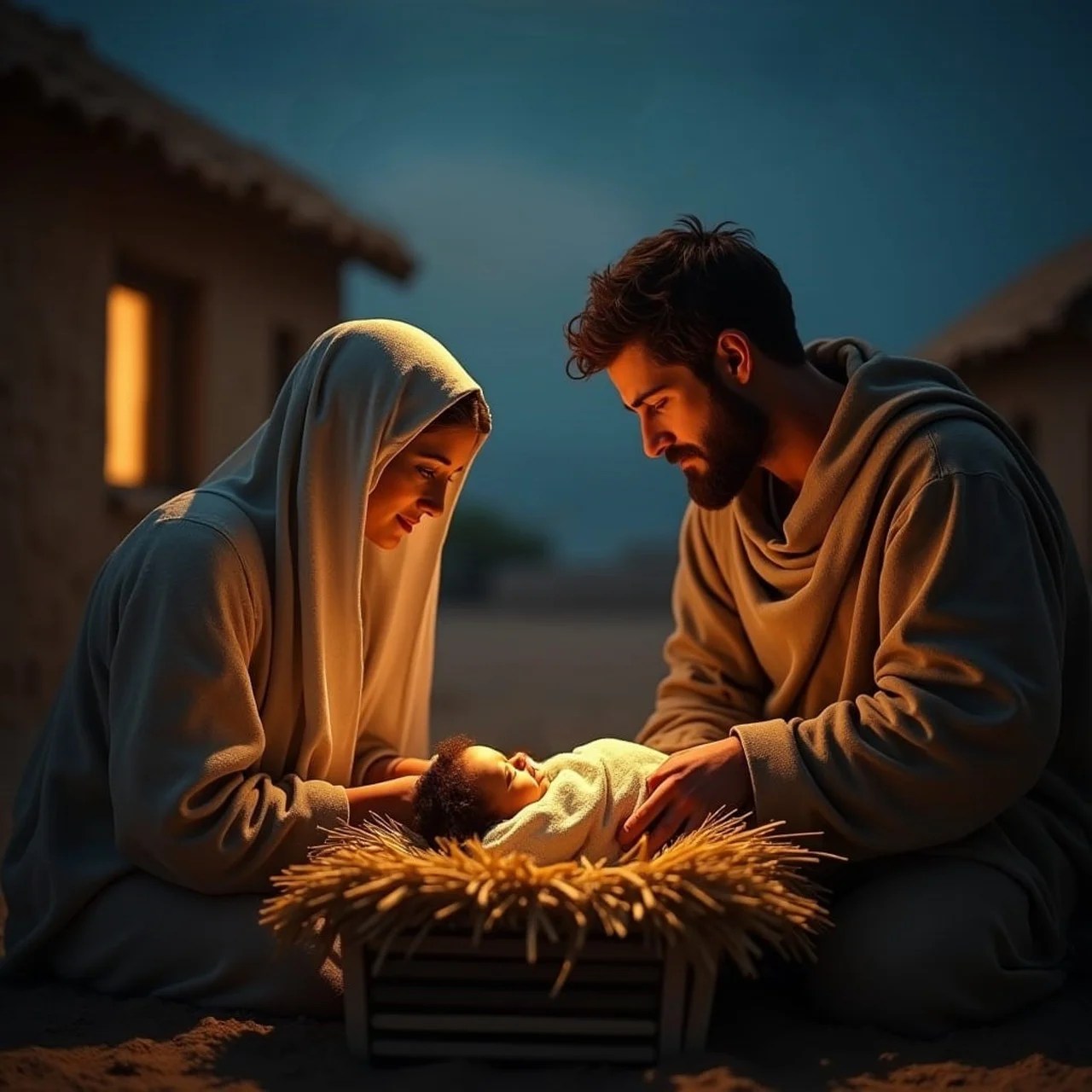
While they were there, the time came for the baby to be born, and she gave birth to her firstborn, a son. She wrapped him in cloths and placed him in a manger, because there was no room for them in the inn. (Luke 2:4-7)
And there were shepherds living out in the fields nearby, keeping watch over their flocks at night. An angel of the Lord appeared to them, and the glory of the Lord shone around them, and they were terrified.
But the angel said to them, “Do not be afraid. I bring you good news of great joy that will be for all the people. Today in the town of David a Savior has been born to you; he is Christ the Lord. This will be a sign to you: You will find a baby wrapped in cloths and lying in a manger.”
Suddenly a great company of the heavenly host appeared with the angel, praising God and saying, “Glory to God in the highest, and on earth peace to men on whom his favor rests.” (Luke 2:8-14)
When the angels had left them and gone into heaven, the shepherds said to one another: “Let’s go to Bethlehem and see this thing that has happened, which the Lord has told us about.”
So they hurried off and found Mary and Joseph, and the baby, who was lying in the manger. (Luke 2:15-16)
The shepherds returned, glorifying God for all the things they had heard and seen, which was just as they had been told. (Luke 2:20)
But Mary treasured up all these things and pondered them in her heart. (Luke 2:19)
For to us a child is born, to us a son is given, and the government will be on his shoulders. And he will be called Wonderful Counselor, Mighty God, Everlasting Father, Prince of Peace. (Isaiah 9:6)
All Bible scriptures are from the New International Version.
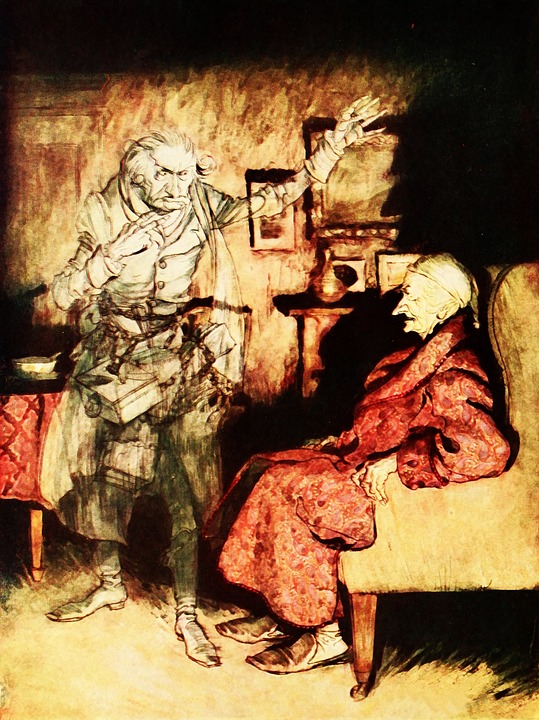
With Christmas just around the corner, I read Charles Dickens’ famous novel, A Christmas Carol, and discovered at least three reasons why his story is a beloved classic.
The first thing I noticed are the engaging descriptions that bring depth and meaning to the story. He paints vivid pictures of the settings and characters in a way that captures the reader’s imagination.
The many beautiful images made it difficult to choose an example to illustrate this point. One that made me smile was Dickens’ comments about Scrooge’s nephew:
If you should happen, by any unlikely chance, to know a man more blest in a laugh than Scrooge’s nephew, all I can say is, I should like to know him, too. Introduce him to me, and I’ll cultivate his acquaintance.
Simple yet vivid descriptions fill the classic tale.
Dickens also writes about realistic characters. At first glance, Scrooge comes across as a stingy boss who refuses an invitation to a family Christmas dinner and a request to give to the poor. He only grudgingly grants his clerk Christmas Day off.
The writer then tells Scrooge’s back story in a creative way. Ghostly journeys into Christmas Past reveal a boy alone in a boarding school when all his classmates go home for Christmas. The sight touches our hearts.
Dickens also includes timeless truths in his tale of a lonely, unhappy old man. Scrooge’s clerk, Bob Cratchit, maintains an optimistic outlook despite his anxiety over his son’s health. Tiny Tim’s faith and courage touches everyone around him. Scrooge’s nephew forgives his uncle for rejecting his family.
The Ghost of Christmas Future shows Scrooge two imminent deaths if nothing changes—one deeply mourned and one barely noticed.
Dickens’ novel lives on in our hearts. Some reasons for this are his engaging descriptions, realistic characters, and timeless truths. The story vividly reminds us how one life affects another.
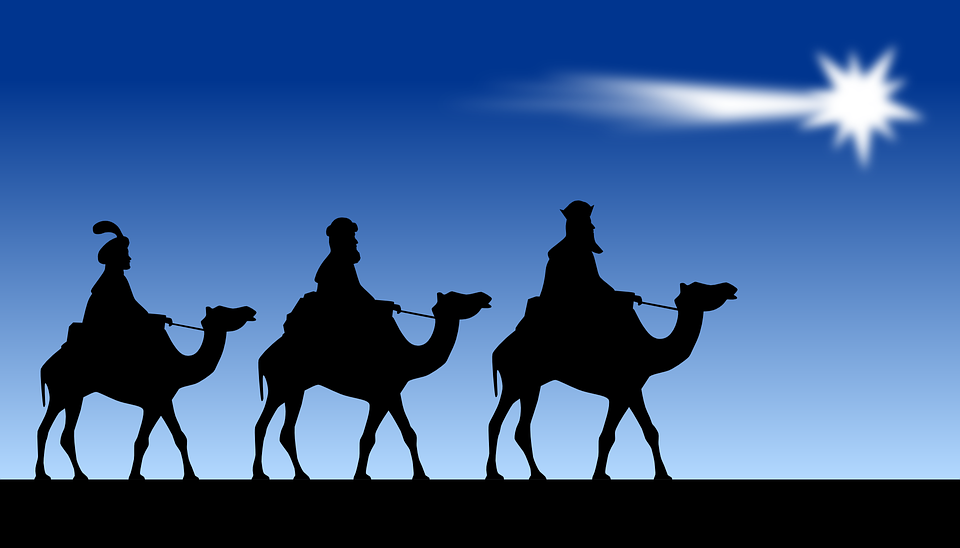
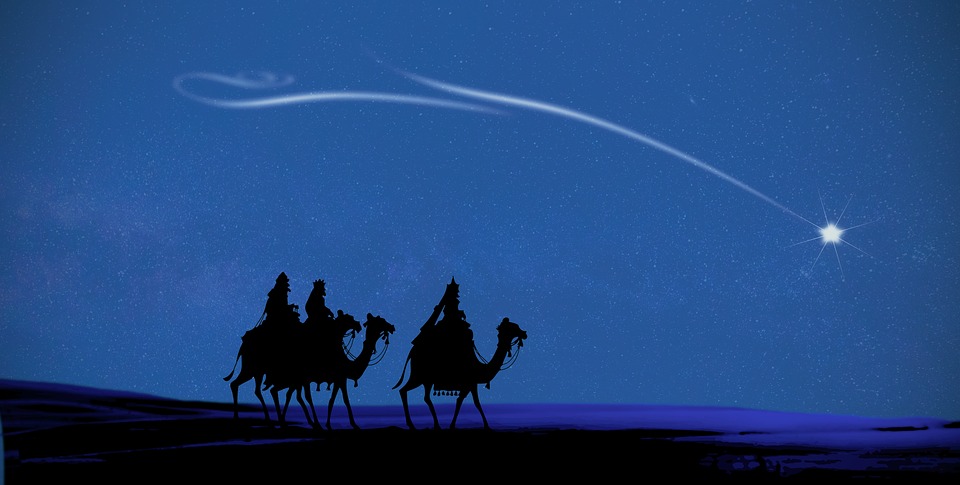
The Bible tells us in Matthew 2:1 that Magi from the east came to Jerusalem after Jesus was born in Bethlehem. It doesn’t give an exact location. Yet northern Arabia, Syria, and Mesopotamia were considered the “east” by the Jews.
If, as some have suggested, the wise men traveled from the same area as Balaam, that area between Aleppo and Carchemish was a journey of about 400 miles. This might have taken 2 to 3 weeks on camels—longer if walking. Nighttime travel to follow the star would have required more time.
Some experts believe the wise men’s journey was much longer than 400 miles and took from 6 months to 2 years to complete. This makes sense because the Magi talked with King Herod when they were still searching for the child. Herod asked them when they first saw the star and asked them to return to him once they found the young king. The wise men were warned in a dream not to return to Herod, who then ordered all the boys two and under in Bethlehem and its vicinity to be killed. (Matthew 2:1-18) The 6-month to 2-year range makes more sense in light of the boys’ ages in Herod’s terrible ruling.
What might they have eaten along the way? Nuts, dates, and figs would have kept well on the journey and were easy to pack on camels. They also needed to bring food and grain for their camels. Some people believe the Magi traveled on sand dunes and desert for many miles.
They’d also follow the rivers and streams as much as possible so they and their camels could find plenty to drink. Folks living in the region undoubtedly gave them with water from their wells.
When going through towns, they’d take advantage of opportunities to buy fresh bread, meat, fruits, and vegetables for the journey ahead. Stews and soups would have provided hot meals and stretched their supplies.
These Wise Men brought three gifts for Jesus.
They gave him gold. This gift affiliated with kings was given to Jesus, the New-Born King.
They gave him frankincense, an aromatic oil sometimes used in worship. Christians worship Jesus as God’s Son.
They gave him myrrh, a fragrance used in preparation of dead bodies, symbolizing Jesus’ persecution and death.
Sources
Bible Study Tools Staff. “Three Wise Men – Bible Story,” Bible Study Tools, 18/11/02
Hurrah for pumpkin pie is a line from a song often sung at Christmas— “Over the River and Through the Woods.” Originally published in 1844, this song shows the long-standing tradition of eating pumpkin pie during the holidays.
December 25th is National Pumpkin Pie Day!
The Church’s observation of meatless days led to eating more pie at the Christmas season—often fish pies. Fruit pie became popular in the 1500s with the lowering of sugar prices. The nobility enjoyed them on holidays and special occasions.
Others soon began to eat pies but kept the custom of baking them on holidays and other special occasions.
Pumpkin pie recipes are found in English cookbooks from the seventeenth century though American cookbooks generally didn’t have them until the early 1800s. Pumpkin pie soon became a staple at Thanksgiving.
Pumpkins are harvested in the fall, making them a natural addition to holiday dinners. Our family has pumpkin pie at both Thanksgiving and Christmas.
The world’s largest pumpkin pie was baked on September 25, 2010 at the New Bremen Pumpkinfest in Ohio. The pie had a diameter of 20 feet!
I am including a link to the recipe for my mom’s delicious pumpkin pie.
The tradition of birthday cakes for Jesus began over 500 years ago when desserts were a rare treat.
Children looked forward to baking a cake to celebrate Jesus’s birthday. Moms often hid little gifts inside the batter. Children found tiny toys like marbles or even a coin in their servings.
The cake itself contains special meaning. White cake symbolizes the sinless life of Jesus. I followed a yummy vanilla cake recipe from the Food Network for my white cake recipe.
The cake rises while in the oven to represent His resurrection.
Red icing reminds folks that Jesus died to save us from our sins. I made a basic buttercream frosting and tried to dye it red using red food coloring. The icing became bright pink.
My sister, who sometimes decorates cakes, suggested using red paste, which is available at cake and candy decorating specialty shops. Next time I will purchase this paste to create red icing.
The light of a single candle reminds us of the star the Wise Men followed to Bethlehem. Candlelight also means that Jesus is the light of the world.
I wrote “Happy Birthday, Jesus” on my bright pink frosted cake. I gave the children red and green M&M’s to decorate their own piece. It was a hit.
I love the Christmas season! Each year I look forward to watching my favorite movies and shows. Here’s a list of my top twelve shows I make time to watch each year.
I had a hard time ranking these shows so I went in the order that I really want to snuggle up in a blanket and watch.
If you don’t see your favorites here, leave a comment with the movie title so I can watch for them.
12) How the Grinch Stole Christmas – the original animated version










 Sandra Merville Hart