
by Sandra Merville Hart
About a thousand years ago, people living in what is now Scandinavia were captivated by the way evergreen trees survived their harsh winters. They chopped down the trees and took them into their homes in the hopes they’d bring strength to survive the winter season.
The French and Germans hung evergreen trees upside down from the ceiling in the twelfth century, a practice that continued for about 200 years.
In December, fir trees, called “paradise trees,” were placed outside Catholic churches during medieval times in Europe’s Baltic region. Apples were hung on its branches for a play about Adam and Eve.
Fir trees were displayed on the ground in homes instead of hung from the ceiling by late in the 16th century.
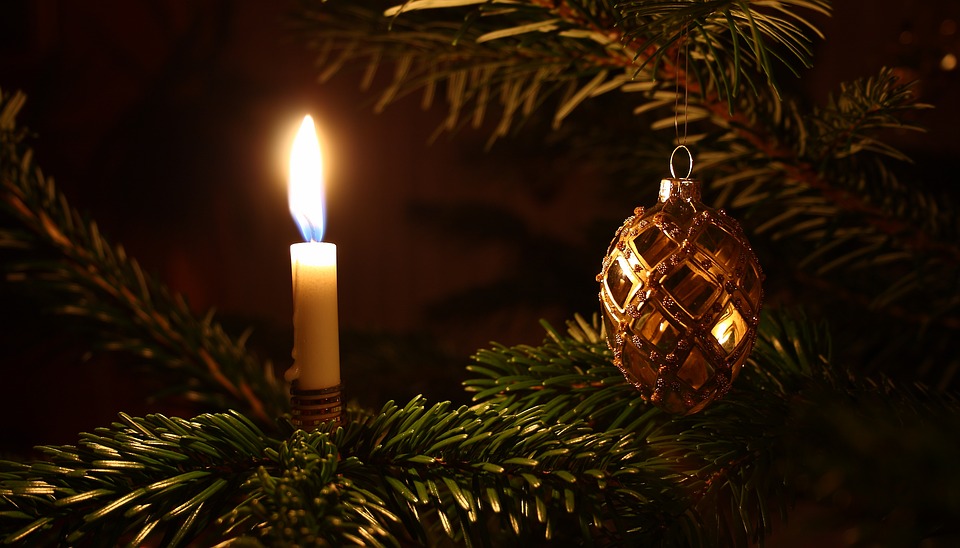 Martin Luther, after a walk in the forest on a moonlit night, is generally credited with placing the first lit candles on a Christmas tree. To him the evergreen tree represented God’s everlasting love for us. The hope that the birth of Jesus brought into the world was symbolized by the candles or lights on the tree.
Americans of German descent living in Pennsylvania in the 1820s are said to have brought the tradition of Christmas trees to the United States to stay. It took the marriage of Prince Albert of Germany to Queen Victoria of England for the tradition to really take hold in the United States.
Toys, candy, popcorn, and candles decorated those Victorian trees.
It was easy for those living in rural areas to chop down an evergreen tree for their home. Those in cities had a tougher challenge. In 1851, Mark Carr recognized the need. He filled a large horse-drawn carriage with evergreens and sold them in a vacant lot in New York City.
Lots like that one can be found in cities and towns today. An estimated 81% of homes display an artificial tree, but there’s something about the traditional sight and smell of a real tree that keeps others buying them year after year.
 Sources
“Christmas Trees,” Encyclopaedia Britannica, 2020/11/12 https://www.britannica.com/print/article/115737.
Collins, Ace. Stories Behind the Great Traditions of Christmas, Zondervan, 2003.
Kennedy, Lesley. “How 25 Christmas Traditions Got Their Start,” History, 2020/11/12


 Sandra Merville Hart