This book gives a wonderful history of Fort Monroe during the Civil War and beyond. This important fort was under Union control throughout the war.
I love the photos that really enhance readers’ understanding of information given.
The authors provide details about Camp Hamilton. It was basically a tent city with temporary structures near Fort Monroe.
Runaway slaves escaped to Fort Monroe in May of 1861. General Butler sheltered them as “contraband of war,” an important decision that ultimately affected thousands.
I visited Fort Monroe on a research trip. What a wonderful place, steeped in history. That visit inspired me to use Fort Monroe as a setting in Byway to Danger, Book 2 in my “Spies of the Civil War” series.
Recommended for history lovers and for those who desire to learn more about the Civil War.
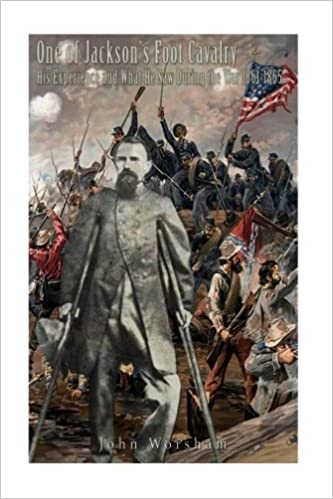
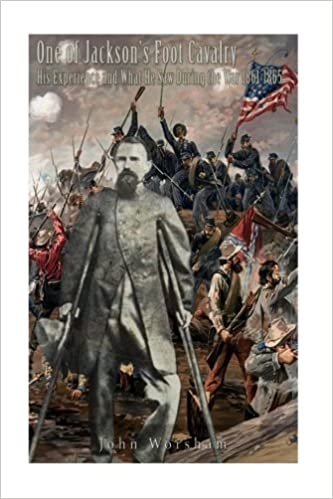
His Experience and What he saw during the War 1861 – 1865
This is a well-written history of the “F” Company, 21st Regiment Virginia Infantry, a company from Richmond. They were part of the Second Brigade, General “Stonewall” Jackson’s Division, Second Corps of the Army of Northern Virginia.
The author, John Worsham, enlisted on April 21, 1861, as a private. He was promoted to adjutant on September 12, 1864. His wounds at the Battle of Winchester a week later left him permanently disabled.
Worsham wrote an account of the battles and marches of his regiment. Many sections are very detailed—perfect for my research! I was researching this regiment for Boulevard of Confusion, Book 2 of my “Spies of the Civil Series” and was able to include some important details in my story from a soldier who lived it.
Worsham was in Richmond when it fell and described his despair.
Included in this book are details of each soldier in Company “F”, wonderful information for folks researching their family history.
Recommended for readers of Civil War history and for lovers of American history.
I discovered this book while researching to write my “Spies of the Civil War” series. The second and third book in the series are set in Richmond, Virginia, in 1862. I was searching for a Virginia regiment with a large number of Confederate soldiers from Richmond that stayed in that state for battles fought in the first half of 1862.
I was thrilled to find this book written by a Confederate soldier in Company F of the Twenty-first Virginia Infantry. Worsham gives detailed accounts of battles and where they camped. He provides names of the men who were elected as officers.
The author was proud to be a soldier in General “Stonewall” Jackson’s division of the Second Corps.
This is a well-written, detailed account of what the Confederate soldiers endured during the war. It was published in 1912. I’m grateful for soldier accounts such as these and used some of the details provided–such as camp locations and how the soldiers felt–in Boulevard of Confusion, Book 2.
A great book for readers who enjoy American history, soldier autobiographies, and the Civil War.
City Hotel, located at 1401 Pennsylvania NW in Washington DC, was expanded after Henry Willard leased it in 1847. He soon brought his brother, Joseph, into to the business and changed the name to Willard Hotel. They built a six-floor hotel on the southwest corner of 14th and F Streets. The brothers purchased a Presbyterian Church on F Street and converted it to a meeting hall with an auditorium called Willard Hall.
Henry went the extra mile to make his hotel successful. He greeted hotel guests as they stepped out of the stage. He was at the Central Market before dawn to select the highest quality of products available to serve for in his hotel’s dining rooms. Henry donned a white apron to carve meats at the dining table.
By the Civil War, the hotel was a center of activity for the bustling capital then known as Washington City. Luxurious gentlemen’s and ladies’ dining rooms could accommodate 2,500 diners daily. Elegant parlors invited guests to linger after a meal before retiring to their rooms.
The hotel also boasted of a 150-foot ballroom, where it hosted lavish events like the Napier Ball, given as a farewell on February 17, 1859, to the British Ambassador Lord Francis Napier and Lady Anne Napier. Eighteen hundred guests paid an expensive price of $10 each to attend. The ball’s success boosted the hotel’s prestige.
Willard’s boasted another honor—both Franklin Pierce and Abraham Lincoln stayed at their hotel before their presidential inaugurations.
After the war began, Union regiments poured into the city for further training and the hotel lobby became a common meeting place for Union officers to make their reports.
One of these regiments, the 11th New York Infantry, was made up of firemen under Colonel Elmer F. Ellsworth. The entire regiment wore red shirts, gray breeches, gray jackets, and red caps, so they stood out in a crowd.
On May 9, 1861, the Willard brothers had cause to be grateful for Ellsworth’s Zouves when fire engulfed Samuel Owen’s tailor shop, which adjoined their hotel. With equipment borrowed from local firehouses, Ellsworth’s men helped the Washington Fire Department extinguish the blaze. His entire regiment was eventually called to fight the fire and Ellsworth, using the fire chief’s trumpet, took command until the crisis ended.
Henry Willard was so pleased with the results that he invited them all to breakfast. Undoubtedly, the situation would have been much worse without so many capable firefighters.
Union soldiers training for the Civil War battlefields faced a familiar battle that day.
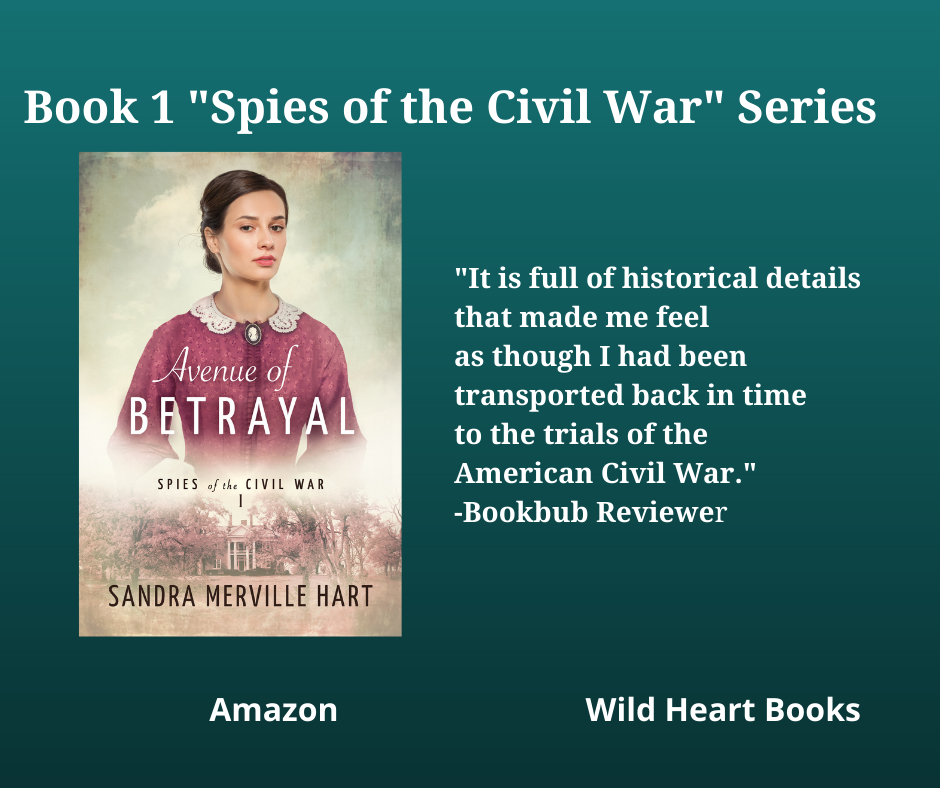
There is a scene at the Willard Hotel when characters in my novel, Avenue of Betrayal, Book 1 of my “Spies of the Civil War” series, dine there. I was thrilled to use such an important location in the story.
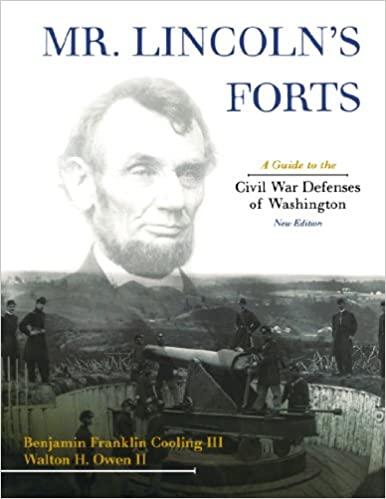
What a great resource about the Civil War forts that once protected Washington DC!
I was researching Avenue of Betrayal, Book 1 of my “Spies of the Civil Series” and having difficulty finding significant details about the forts built during the war when I found this treasure.
The book contains drawings, sketches, old photos, and maps to provide readers, history buffs, and researchers with a deeper understanding.
The authors give an overview of why the forts were needed as well as those responsible for designing and building them.
Details are included for each fort that made up the defenses around Washington DC.
Recommended for Civil War research and for lovers of American history.
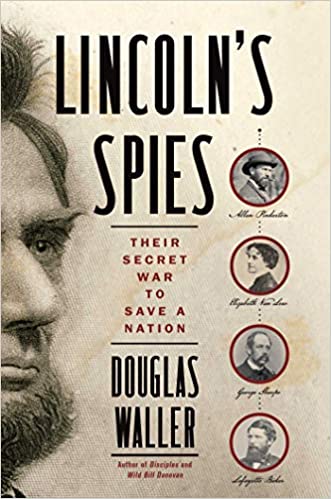
This book is a great resource about the spying that took place during the Civil War.
I read this book while researching for my novel, Avenue of Betrayal, Book 1 of my “Spies of the Civil War” series. This book gave a nice overview and many specific examples of the spying during the war. Sometimes the information spies provided was credited with helping to win specific battles.
The author divided the book into yearly sections and includes the spies that were active in those specific war years.
Civil War enthusiasts will likely recognize some of the agents discussed in this book: Allan Pinkerton, Belle Boyd, Rose O’Neal Greenhow, Elizabeth Van Lew, and Lafayette Baker. Several of Allan Pinkerton’s detectives, called scouts, are also highlighted.
I also liked how the history of the events, meetings, and battles was interspersed throughout the book, making it an interesting read.
My copy has lots of highlighted sections as a testament to how helpful I found the book.
Recommended for Civil War research and for lovers of American history.
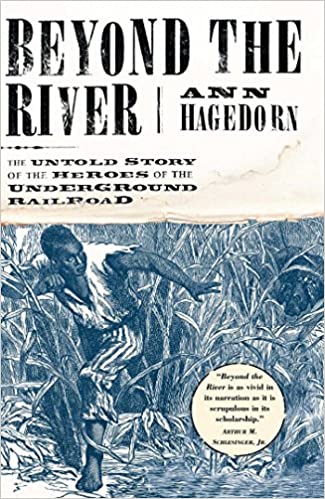
The Untold Story of the Heroes of the Underground Railroad
This book is a great resource about the Underground Railroad leading up to the Civil War.
I read this book while researching for my novel, Byway to Danger, Book 3 of my “Spies of the Civil War” series. Though my novel is set in Richmond and Hagedorn’s book focuses on the history of the Underground Railroad centered in Ripley, Ohio, I learned a great deal about the courage it took to aid fugitive slaves.
Abolitionist John Rankin, his family, and many of his Ripley neighbors sacrificed repeatedly to lend their aid.
Hagedorn’s vivid scenes transport readers back in time in this nonfiction work, showing the everyday heroes that made in difference in many lives.
Well-written book.
Recommended for Civil War research and for lovers of American history.
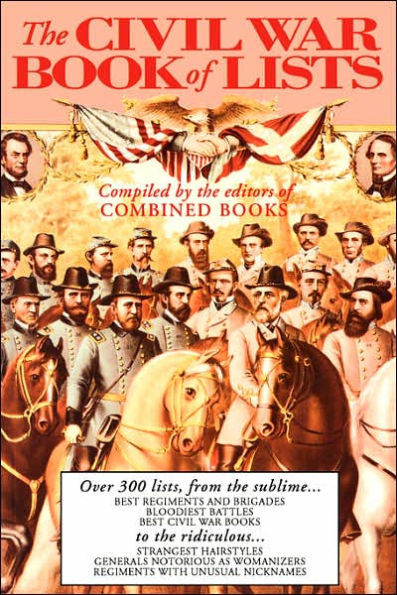
I was happy to find this book of lists in a Civil War battleground museum store while on a research trip.
This book contains many fascinating lists. Here are just a few: Union Regiments of Foreign Born; Six Weapons Used for the First Time in the Civil War; The Ten Best Commanded Battles of the War; The Generals Listed by West Point Class and Rank; and The States in Order of Men Furnished for Confederate Service.
There are a few unusual lists as well: Occupations of Union Soldiers; Four Battles with Four Names; Eight Generals Who Had Served in the War of 1812; and Top 10 Strangest Hairstyles.
As an of Civil War romances, these lists often pique my interest, leading me to more research.
Even Civil War historians will discover new facts from this book, sparking discussions.
The full title of this book is Gettysburg Remembers President Lincoln: Eyewitness Accounts of November 1863.
This nonfiction book shows what the citizens of Gettysburg did to bring about a national cemetery in the town in the aftermath of the horrific battle. David Wills, a Gettysburg attorney, was instrumental in planning the cemetery.
The ceremony to dedicate the cemetery took place in November of 1863. President Lincoln delivered his famous “Gettysburg Address” but was not the event’s main speaker. This book shows the fascinating details of the whole day and Lincoln’s hours in the town.
Great book for anyone interested in learning the background of the Gettysburg Address and history lovers.
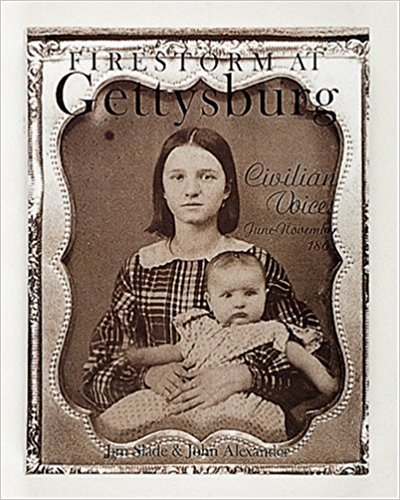
The full title of this book is Firestorm at Gettysburg: Civilian Voices June—November 1863. This nonfiction book contains quotes throughout. The story of the Battle of Gettysburg is told in quotes by the townspeople, giving the account a compelling authenticity.
The townspeople who are quoted most often are briefly introduced at the beginning of the book. The town of Gettysburg and how the war affected the borough are also shown. Then the story quickly starts with all that happens in the month preceding the battle. Then we see what the citizens experienced during the battle and in the aftermath.
I enjoyed learning about Gettysburg, the townspeople, and the battle this way. It brought bring history to life.
Great book for anyone interested in the Battle of Gettysburg, Civil War research, and history lovers.

 Sandra Merville Hart