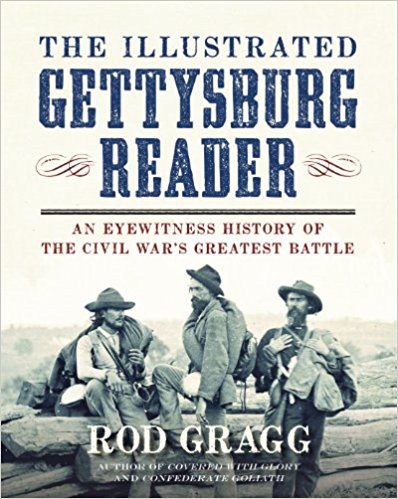
The Illustrated Gettysburg Reader by Rod Gragg

This nonfiction book tells the story of the Battle of Gettysburg in a way that resonated with me. The author tells the history and then shows a diary entry or account or general’s report that digs deeper into what happened.

Gragg begins with details from May of 1863 and goes on from that time.

I especially enjoyed reading the accounts from folks who experienced the events. These really bring history to life.

Great book for anyone interested in the Battle of Gettysburg, Civil War research, and history lovers.

-Sandra Merville Hart

Civil War Union Captain’s Thoughts While Marching to Pennsylvania

From Observation Tower at Oak Ridge, Gettysburg Battlefield

Confederate General Robert E. Lee began moving his Army of Northern Virginia toward Pennsylvania in June of 1863.

President Abraham Lincoln appointed Major General George Gordon Meade as commander of the Army of the Potomac. Meade issued his first orders on June 28, 1863.

Meade’s army marched north the following rainy morning on muddy roads. Captain Samuel W. Fiske, 14th Connecticut Infantry, wrote of the march across Maryland into Pennsylvania, his account a bit nostalgic.

Fiske didn’t know where his army was heading when he heard the bugle call to strike tents and begin the journey. He and his comrades didn’t know how long it would take to arrive—they had to blindly trust.

Fiske tried to enjoy each hour, always ready for either a skirmish or a picnic. He never knew when he’d be called to picket, bivouac, or retreat.

He reasoned that no other occupation required more faith than soldiering: faith in his own strength; faith in his army’s joint strength; faith in his commanders’ experience and watchfulness; faith in their country’s cause; and faith in God’s care and protection.

Captain Fiske enjoyed Maryland’s beauty after the war-ravaged sights in Virginia. He hated to see war roll over the peaceful countryside yet felt a battle on Northern soil might end the war.

Fiske hoped that Pennsylvania citizens weren’t so afraid that it prevented them from defending their homes. A newspaper article that he read that day told of the “chief burgess” of York looking for someone to surrender to eight to ten miles outside his city. Fiske didn’t believe that leader represented his city well.

When the captain considered his army’s recent losses, he felt he was part of “the unfortunate ‘grand army’” that couldn’t reasonably make big promises. Yet since that army would once again stand in front of Confederates, they deserved their country’s respect and support.

At the time his writing, Fiske and his comrades dealt with fatigue from marching for sixteen days. Though their numbers were depleted by the expiration of service terms, these experienced veterans had become a formidable army.

-Sandra Merville Hart

Sources

Gragg, Rod. The Illustrated Gettysburg Reader: An Eyewitness History of The Civil War’s Greatest Battle, Regnery History, 2013.


When the Smoke Cleared at Gettysburg by George Sheldon

51abhd0rdlSo many of us are fascinated by the Battle of Gettysburg. The author shows the history from the average citizen’s viewpoint. Townspeople experienced the battle in a unique way. Unless they chose to leave when Confederate soldiers were first sighted—as many men did—those living in Gettysburg could not escape many harsh realities of war.

Sheldon includes details of when Confederate troops came to Gettysburg on June 26th—a few days before the battle.

The author quotes newspapers from Gettysburg and other local cities. Reactions from townspeople add depth and understanding for lovers of history. Three days of battle terrorized the townspeople; the aftermath continued the nightmare.

Great book for anyone interested in the Battle of Gettysburg, Civil War research, and history lovers.

-Sandra Merville Hart

Amazon

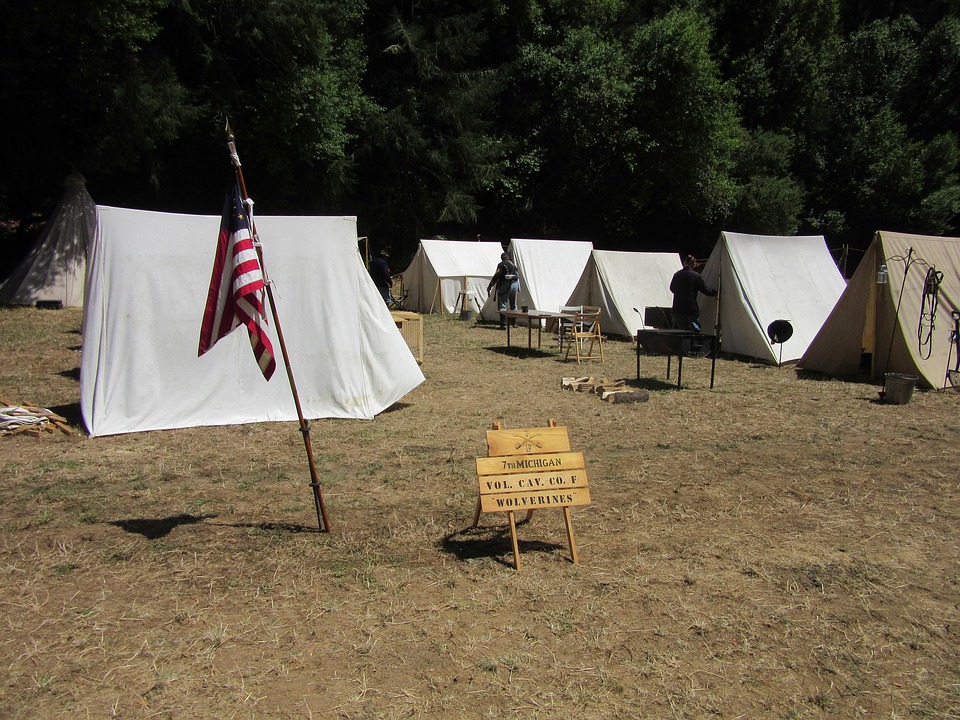
Civil War: Union Army Rations

camp-1786750_960_720

John D. Billings was a Union Army soldier. Billings served as a private in the Tenth Massachusetts Battery for three years. He wrote Hardtack & Coffee, a wonderful book originally published in 1887.

These are the normal rations he received as a private:

Salt pork, fresh beef, salt beef

Ham or bacon were rarely issued

Hard bread, soft bread, flour

Potatoes, occasionally an onion

Beans, rice, split pease (peas)

Dried apples, dried peaches

Desiccated vegetables

Sugar, molasses

Coffee, tea

Vinegar

Salt, pepper

Candles, soap

Soldiers didn’t receive all these rations at the same time. Only one meat was issued at a time and that was usually pork. Soldiers received either hard bread, soft bread, or flour. They drew beans or rice or peas.

Soldiers were entitled to the following as a single day’s rations:

12 oz. pork (or bacon) or 20 oz. salt beef or fresh beef;

22 oz. soft bread (or flour) or 16 oz. hard bread or 20 oz. corn meal

For every hundred rations (soldiers received a share of these):

One peck of pease (peas) or beans;

10 pounds of rice or hominy;

10 pounds of green coffee or 8 pounds of roasted ground coffee or 1 ½ pounds of tea

15 pounds of sugar

20 oz. of candles

4 pounds of soap

2 quarts of salt

4 quarts of vinegar

4 oz. of pepper

Half bushel of potatoes when practicable

1 quart of molasses

In addition, desicatted vegetables were also issued. These were large round cakes of compressed vegetables, about two inches thick. They had to be soaked to be edible and even then, there was some doubt about the wisdom of eating it. Soldiers dubbed them “desecrated vegetables.”

According to Abner Small, 16th Maine, none of his comrades could figure out what was in it. Charles E. Davis, 13th Massachusetts, thought it tasted, when cooked, like herb tea.

Pickled cabbage, dried fruits, vegetables, and pickles were sometimes included in rations to prevent scurvy.

According to Billings, these were the rations given to the rank and file soldiers, as privates were sometimes called.

-Sandra Merville Hart

Sources

Billings, John D. Hardtack & Coffee, University of Nebraska Press, 1993.

“Hungry? How about worm castles and desecrated vegetables?” CivilWar.org, 2017/02/08 http://www.civilwar.org/education/pdfs/civil-war-curriculum-food.pdf.