Chimborazo Hospital-Largest Civil War Hospital in the South

by Sandra Merville Hart

Wounded Civil War soldiers often went to temporary hospitals set up in tents, homes, churches, public buildings, and barns during and immediately after battles. Many ended up on trains headed to the capital cities—Washington DC in the North and Richmond, Virginia, in the South.

In Richmond, barracks originally intended to be comfortable winter quarters for up to 10,000 Southern soldiers were converted into Chimborazo Hospital in the fall of 1861. One-story wooden building covered a plateau at the eastern end of Broad Street and overlooked the scenic James River. A deep gulch called Bloody Run separated Chimborazo Hill from the affluent Church Hill neighborhood.

Samuel P. Moore, chief surgeon at Chimborazo Hospital, appointed James B. McCaw as physician. The hospital’s 150 one-story, white washed buildings became patient wards and were arranged in rows. A wide avenue separated each row to provide plenty of fresh air. Each building could care for 40 – 60 patients each. In addition to the one-story buildings, patients were also housed in 100 tents. At Chimborazo, wounded soldiers were housed with others from their state, such as Virginia, Georgia, and North Carolina.

Under McCaw’s management, the hospital was a well-organized one. It owned hundreds of goats and milk cows that grazed nearby. Canal boats brought fresh produce from the country. There was also a large garden on a nearby farm. The hospital had its own kitchens, bake houses, 5 ice houses, guard house, bathhouse, chapel, and a large stable. Blacksmith, carpenter, and apothecary shops were also located on the 40-acre plateau.  

During the Civil War, Richmond had 44 hospitals of various sizes. Winder Hospital, located at Richmond’s western border, was almost as large as Chimborazo.

Unfortunately, even all these weren’t always enough to care for the wounded that poured into the city after a battle. So many wounded came into the city in late June/early July of 1862 that Chimborazo erected tents for them. It wasn’t enough space, so the patients were laid around the tents.

Almost 78,000 Confederate soldiers were cared for at Chimborazo Hospital. Of these, between 6,500 – 8,000 died.

In Boulevard of Confusion, Book 2 in my “Spies of the Civil War” series, two cousins volunteer at Chimborazo Hospital. The soldiers they care for are from Tennessee.

Sources

“Chimborazo Hospital,” Civil War Richmond, 2021/07/05 https://www.civilwarrichmond.com/hospitals/chimborazo-hospital.

“Chimborazo Hospital,” Encyclopedia Virginia, 2021/07/05 https://encyclopediavirginia.org/entries/chimborazo-hospital/.

“Chimborazo Hospital,” U.S. National Park Service, 2021/07/05 https://www.nps.gov/rich/learn/historyculture/chimborazo.htm.

Ferguson, Ernest B. Ashes of Glory: Richmond at War, Alfred A. Knopf, 1996.

The Richmond Enquirer, 10/2/1861, p. 3, c. 3., 2021/07/05

https://www.civilwarrichmond.com/military-organizations/military-camps.

The Richmond Daily Whig, 11/01/1861, 2021/07/05 https://www.civilwarrichmond.com/military-organizations/military-camps.

Thomas, Emory M. The Confederate State of Richmond, Louisiana State University Press, 1998.
Feeding the Sick and Wounded in Civil War Richmond

by Sandra Merville Hart

The Confederate Capitol was officially transferred to Richmond, Virginia, on May 21, 1861. Confederate President Jefferson Davis moved there with his family.

The city with a prewar population of 38,000 swelled to 100,000 by 1865.

Soldiers were part of that number, including sick and wounded at over thirty hospitals. The largest of these was Chimbarazo—included in its 120 buildings was a bakery. Winder Hospital had 98 buildings with a farm.

One of the smaller hospitals was Mississippi Hospital No. 7 at Howard’s Grove. The surgeon in charge was William J. Moore in 1862. A patient’s diet could be restricted to “full,” “half,’ or “light” by the doctors. I found a copy of the Bill of Fare for this hospital in 1862.

Choices in a Full Diet included:

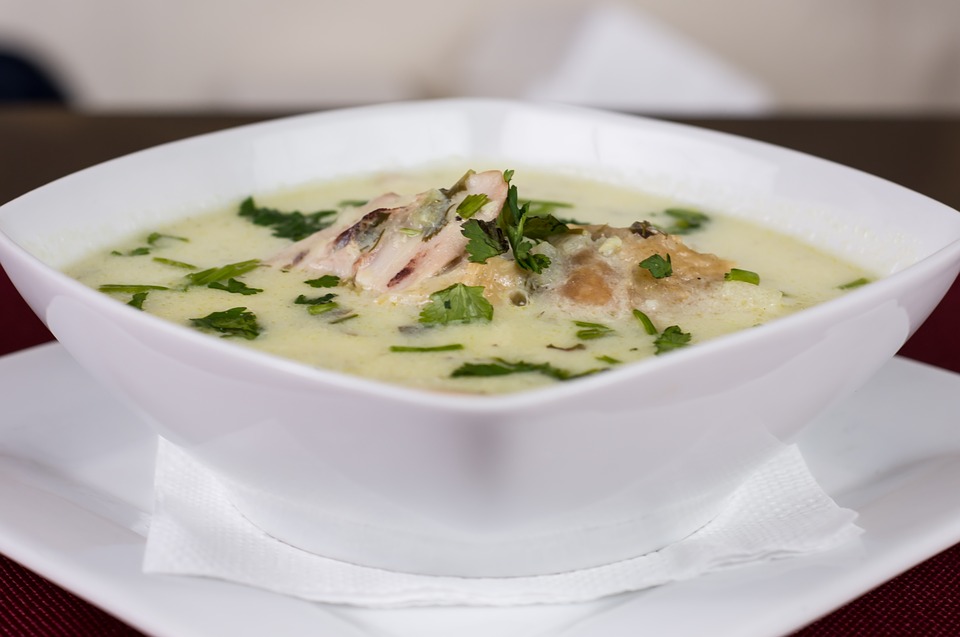
Soups: Beef, Chicken, Oyster

       Fish: Perch, Trout, Cat Fish*

       Roasts: Beef, Mutton, Pork, Chicken, Duck

       Boiled: Beef

       Fricassee (stewed or fried meat served in a thick white sauce): Mutton Chops, Beefsteak*, Chicken, Pork Chops, Sausage, Venison, Quail, Eggs

       Vegetables: Irish Potatoes, Sweet Potatoes, Cabbages, Onions, Beets, Carrots, Celery

Choices in a Half Diet included:

Soups: Beef, Chicken, Oyster

       Fish: Perch, Trout, Cat Fish*

       Boiled: Chicken, Eggs

       Vegetables: Irish Potatoes, Sweet Potatoes, Onions

Choices in a Light Diet included:

Butter Toast, Milk Toast, Dry Toast, Roast Apples, Oyster Soup, Beef Tea, Rice Pudding, Rice Boiled, Custard Pudding, Molasses, Soft Boiled Eggs

       Breads: Biscuit, Rolls, Egg Bread, Corn Bread*, Baker’s Bread, Family Bread

Beverage choices were coffee, chocolate, green & black tea, milk.

Surgeons could order extras for patients:

Blanc Mange*, Wine Whey, Calve’s* Feet, Arrow Root Pudding, Oranges, Apples

Food shortages due to the swelled population affected Richmond as the war continued. It’s likely that a later menu wouldn’t contain these same choices.   

*Spelling from 1862 menu

Sources

“10 Facts Richmond Virginia,” American Battlefield Trust, 2021/02/04 https://www.battlefields.org/learn/articles/10-facts-richmond-virginia.

“Richmond in the Midst of the Civil War,” Virginia Museum of History & Culture, 2021/02/04 https://www.virginiahistory.org/collections-and-resources/virginia-history-explorer/richmond-midst-civil-war.

Mortimer, Gavin. Double Death: The True Story of Pryce Lewis, the Civil War’s Most Daring Spy, Walker & Company, 2010.

Civil War Women: Mary E. Shelton

Iowa president of the Ladies’ Aid Society, Annie Turner Wittenmyer, had grown so busy establishing new local aid societies, providing hospital supplies, and visiting wounded soldiers in Union soldiers that she needed a secretary by the summer of 1863. Miss Mary E. Shelton quickly proved her worth as Annie’s secretary.

On August 10, 1863, Mary left Keokuk to accompany her new boss to St. Louis. Along the way Mary answered many heartbreaking letters for Annie. One father, grieving one son who died, asked Mrs. Wittenmyer to check on his other son who was ill with consumption.

The wife of a soldier had written to Mrs. Wittenmyer on behalf of her husband, who was dying from consumption. She requested he be sent home to die surrounded by his young family.

A frantic mother requested that Mrs. Wittenmyer find out news of her sick son.

These requests—and so many more—were the tip of the iceberg for what the compassionate secretary would experience.

After arranging the delivery of future supplies to the Western Sanitary Commission, the ladies traveled to Helena, Arkansas. A division had moved through Helena on the way to Little Rock and left their sick in the streets. The medical director told Annie that 13 soldiers died the first night. They needed nurses and medical supplies.

Annie left immediately and got the supplies from St. Louis. Then Annie and Mary visited the soldiers. They found dirty rooms. Unbathed men still wore their battlefield clothes. By the time they left at twilight, the hospital steward had assured them he’d clean every room. He had orders to change the patients’ clothing.

The two ladies then wrote letters until midnight. But their day’s work bore fruit—the next day, they found patients wearing clean clothes in clean rooms.

They walked to a convalescent camp about a mile outside Helena where a bedridden soldier called Mary to his side. He told her that they had only eaten bean soup for many days. He was so tired of it that he had wept when offered the soup a last time. Through his tears, he prayed. As soon as the prayer was uttered, his nurse announced, “Mrs. Wittenmyer is coming with two loads of sanitary goods!” Hearing the wagon wheels, the men cried for joy. Then Mrs. Wittenmyer brought them chicken and fruit. The soldier believed the food and other sanitary supplies had saved their lives.

Annie and Mary traveled to Vicksburg from Helena. The hospitals there were well-run. They returned to Iowa that fall. Mary, having seen so much need, wrote letters and spoke with her fellow citizens on behalf of the wounded. She urged greater generosity for the suffering solders.

Mary was constantly in the field, visiting hospitals and running hospital Diet Kitchens. Her work often took her to Nashville and Wilmington and lasted beyond the end of the war.

She wrote many of her experiences in a journal.

-Sandra Merville Hart

Sources

Moore, Frank. Women of the War, Blue Gray Books, 1997.


Civil War Camp Letterman: Caring for Gettyburg’s Wounded

Railroad cut, Gettysburg battle, July 1, 1863

Medical Director Jonathan Letterman shipped tents, supplies, and provisions to Adams County—where Gettysburg resides—on the evening of July 1, 1863, the first day of the Battle of Gettysburg. He ordered that a general hospital be established there on July 5th. Confederate and Union wounded would be provided transportation to the hospital for treatment.

The army erected tents on George Wolf’s farm on York pike approximately one and a half miles east of Gettysburg. Railroad tracks adjacent to the property made it easy to deliver supplies and transport patients to Washington, Philadelphia, and Baltimore.

Surgeons, nurses, supply clerks, quartermasters, and cooks staffed the general hospital, known as Camp Letterman, when it was ready in mid-July. Infantry guarded Confederate patients and supplies.

Almost forty folding cots each with mattresses and linens fit in rows of tents. Camp Letterman held five hundred white tents with only ground as the floor. Trains brought supplies to warehouse tents set up near the railroad. A large cookhouse in the middle of camp gave cooks a place to prepare nutritious meals such as soup and bread.

Wounded from both sides arrived at camp in ambulances where they were assigned beds. The hospital camp was filled by late July. It housed over 1,600 wounded soldiers. Hundreds more continued to receive medical care in temporary hospitals in Gettysburg.

A morgue and cemetery near camp were established by the army. An army chaplain gave them a Christian burial.

Yet most of Camp Letterman’s patients survived. Surgeons worked around the clock while treating the seriously wounded. When patients recovered enough to travel to city hospitals, Sanitary Commission workers assisted the army in transporting them to the railroad depot. They waited a long time for the single Gettysburg railroad line.

-Sandra Merville Hart

Sources

Sheldon, George. When the Smoke Cleared at Gettysburg: The Tragic Aftermath of the Bloodiest Battle of the Civil War, Cumberland House, 2003.