Civil War Women: Dorothea Dix, Superintendent of Female Nurses

Dorothea Dix traveled to Washington shortly after the Civil War began. Her federal appointment as Superintendent of Female Nurses bestowed on her the honor of being the first female in this high position.

Dorothea convinced Union military to allow women to serve as nurses. Once they agreed, she began recruiting her nurses.

She set high standards. Fearing that young, unmarried women might use the position to find a husband, she sought plain, older women and insisted on plain clothing.

The oversight of both the large nursing staff across many locations and administration of medical supplies such as bandages fell on Dorothea’s shoulders.

Many army surgeons were against having female nurses. Dorothea pushed for formal training for them.

About 3,000 females served in Union hospitals during the war. They did an admirable job and were a crucial part of caring for sick and wounded soldiers.

Louisa May Alcott, the beloved author of Little Women, was one of the Civil War nurses who served under Dorothea Dix. Though respected, it was Louisa’s opinion that the strict superintendent wasn’t well-liked. Most nurses avoided her.

Beyond Dorothea’s administrative skills, another reason people respected her is that she treated both Union and Confederate soldiers in military hospitals.

Her efforts to place female nurses in Union hospitals began paving the way for women to serve in the medical field.

-Sandra Merville Hart

Sources

“Dorothea Dix,” United States History, 2019/01/07 https://www.u-s-history.com/pages/h1092.html.

“Dorothea Lynde Dix,” History, 2019/01/07 https://www.history.com/topics/womens-history/dorothea-lynde-dix.

Norwood, Arlisha. “Dorothea Dix.” National Women’s History Museum. National Women’s History Museum, 2017. 2019/01/07.
Civil War Women: Rebecca R. Usher, Nurse

The Maine Camp and Hospital Association was established in 1862 to ensure that soldiers from Maine received the supplies donated for them from folks back home. Its members were ready to serve as nurses whenever needed.

In October of 1862, Almira Quinby invited Miss Rebecca Usher to work at U.S. General Hospital in Chester, Pennsylvania. Rebecca was to wear plain, sensible dresses. The only other qualification was “a common experience in nursing.”

The large hospital building used by surgeons and nurses had been a normal school. Nine hundred patients were cared for in barracks, which were divided into wards holding 60—70 patients each. Rebecca, in charge of one ward, felt as if she was in her element.

She wrote to her sister, Ellen Usher Bacon who worked with the Maine Camp Hospital Association, requesting tobacco and flannel shirts for the soldiers.

While working in Pennsylvania, Rebecca traveled to Washington with other nurses. Though she met Mrs. Lincoln, she wrote of her disappointment at not meeting President Lincoln.

The Chester hospital closed in April, 1863, and Rebecca returned to her home in Hollis, Maine. She didn’t return to nursing work until the winter of 1864. At City Point, Virginia, she and two other women lived in a log hut that Union soldiers built for them. The stockade, as Rebecca called the hut, contained three rooms: a reading room for soldiers; a cookhouse; and the nurses’ bedroom, which was also used for supply storage.

Twenty-eight barrels of potatoes were shipped from Baltimore the first week of February. Eight barrels of vegetables, frozen during shipping, had to be thrown away as inedible. Soldiers requested potatoes as if the vegetable was a treat. They roasted them in the reading room’s ashes.

After watching the men savor the luxury of roasted potatoes, Rebecca wrote home that it was worth sending the vegetables—even if a quarter of them were lost.

She remained at City Point until the war ended.

-Sandra Merville Hart

Sources

Moore, Frank. Women of the War, Blue Gray Books, 1997.

“Rebecca Usher, Civil War Nurse,” Maine History Online, 2018/01/06, https://www.mainememory.net/sitebuilder/site/2443/slideshow/1482/display?format=list&prev_object_id=3926&prev_object=page&slide_num=1.


Civil War Women: Mrs. A.H. Hoge

Mrs. Abraham Holmes Hoge became a well-known name for her volunteer work with wounded soldiers during the Civil War. Born Jane Currie Blaikie, Mrs. Hoge may be better known for her efforts to fund the United States Sanitary Commission.

Like so many others, Mrs. Hoge believed the war would not last long. When the conflict was still going on in January of 1862, she and her friend, Mary Livermore, began to raise money for the Chicago branch of the United States Sanitary Commission. Their goal was to keep the Commission’s supply shelves filled through these donations.

Mrs. Hoge went to battlefield hospitals, taking supplies she collected and often distributing them directly to wounded or sick soldiers. Her trips to the front lasted from days to weeks.

Mrs. Hoge and Mrs. Livermore traveled to towns throughout the Chicago area. Mrs. Hoge shared her experiences at the front at each community’s ladies’ group. Mrs. Hoge raised money for bandages, sheets, and linens. If the town didn’t have a Soldiers’ Aid Society, she helped them establish one.

Mrs. Hoge originated the first Sanitary Fair in Chicago. The Northwestern Soldiers’ Fair was held from October 27, 1863 to November 7, 1863. A six-mile parade of bands, political leaders, militia, and farmers were part of the fair. A “Curiosity Shop” of war souvenirs was another enticement to attend the fair.

Mrs. Hoge had hoped to raise $25,000 for the U.S. Sanitary Commission. The fair surpassed her hopes and raised $80,000.

After the fair ended, she continued to visit hospitals and speak at other cities.

-Sandra Merville Hart

Sources

“Hoge, Mrs. A.H.,” The Free Dictionary, 2018/12/27 https://encyclopedia2.thefreedictionary.com/Hoge%2C+Mrs.+A.+H.

Moore, Frank. Women of the War, Blue/Gray Books, 1997. (originally published 1866).

“Mrs. A.H. Hoge in Women of the War,” Accessible Archives, 2018/12/27  https://www.accessible-archives.com/2011/03/many-daughters-have-done-virtuously/.

“United States Sanitary Commission,” Wikipedia, 2018/12/27, https://en.wikipedia.org/wiki/United_States_Sanitary_Commission.

United States Christian Commission


On November 14, 1861, a meeting of the Young Men’s Christian Association (YMCA) established the United States Christian Commission (USCC.) They were concerned with soldiers’ and sailors’ spiritual welfare and wanted to bring them to Christ.

Philadelphia merchant George Hay Stuart was the chairman. John A. Cole was general field agent.

Delegates of USCC helped regimental chaplains in caring for the soldiers. They gave religious tracts, hymnals, Bibles, and pocket testaments to soldiers. They held worship services, prayer meetings, and Bible Studies.

According to Chaplain William R. Eastman, 72nd New York, USCC provided a tent canvas for log chapels in the winter of 1863-64 near Brandy Station, each seating over 100 soldiers. Two daily services were held at City Point, Virginia—a 2:00 prayer meeting and 7:00 preaching service.

USCC also provided for physical needs. They carried no weapons yet went to battlefields, army camps, and hospitals. They worked as nurses. From the winter of 1863 on, they had about 100 Diet Kitchens to provide light meals. They gave stamps and stationery to soldiers for writing those important letters to loved ones back home.

They also provided coffee, a beverage dearly loved by soldiers. Their coffee wagons became popular. These wagons, traveling 8 miles per hour down rows of soldiers, supplied coffee for 1,200 men each hour. Hot coffee must have been quite a treat on a cold winter’s day.

Over 5,000 USCC volunteers traveled with the Union army throughout the South. Dwight Lyman Moody served as a volunteer. He held revival meetings at Confederate prisoner-of-war camps in Chicago, handing out pocket-sized Bibles.

-Sandra Merville Hart

Sources

Frey, Rebecca J. “U.S. Christian Commission,” Encyclopedia.com, 2018/12/28 https://www.encyclopedia.com/history/applied-and-social-sciences-magazines/us-christian-commission.

“United States Christian Commission,” Ohio History Central, 2018/12/28 http://www.ohiohistorycentral.org/w/United_States_Christian_Commission.

“United States Christian Commission,” Wikipedia, 2018/12/28 https://en.wikipedia.org/wiki/United_States_Christian_Commission.

Williams, Rachel. “The United States Sanitary and Christian Commissions and the Union War Effort,” National Museum of Civil War Medicine, 2018/12/27 http://www.civilwarmed.org/commissions/.

Civil War Beef Tea

I’ve often read of nurses giving Beef Tea to severely wounded Civil War patients in my research so I was thrilled to find a recipe for it in an 1877 cookbook under the section “Food for the Sick.”

As a historical novelist, I’m always interested in learning tidbits from our history. It’s fun to add authentic details such as this one when a story requires it.

The recipe called for a pound of the best lean steak. I asked my butcher if stew beef was a type of steak. He explained that while it wasn’t a grilling steak, their stew beef was a type of steak taken from the shoulder so I used this.

The instructions were to put the beef in a glass jar, cover it tightly, and boil it slowly in water for 3 to 4 hours.

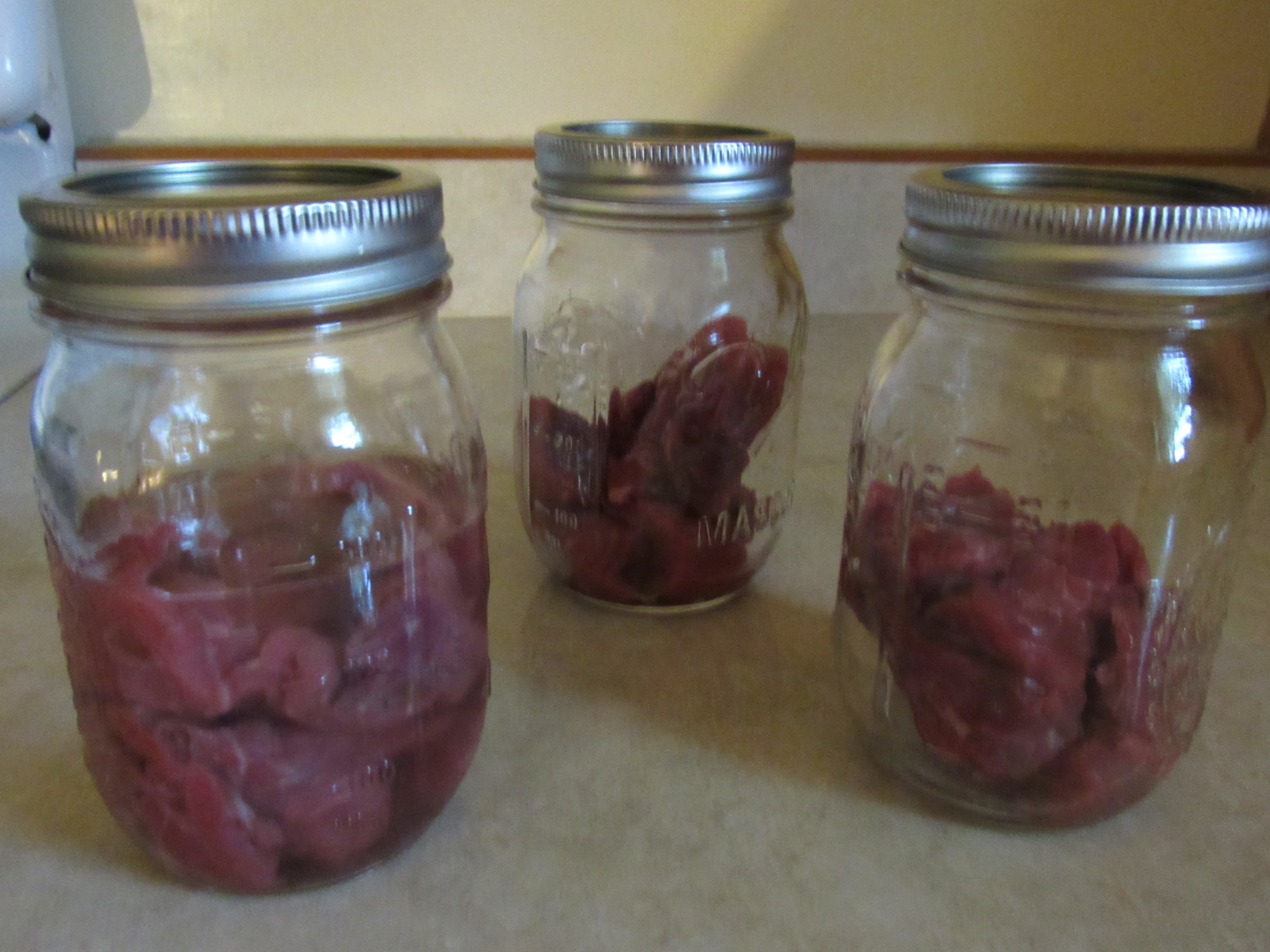
I divided the meat into 3 pint-sized Mason jars. It didn’t say anything about adding water to the meat. As an experiment, I added enough water to cover the beef in one jar only.

The lids were put on top. I half-filled a stewpot with cold water and placed the jars in the water. They toppled sideways. The 1877 cook advised tying them in place. I tied them to the handles individually.

I turned them on a medium heat, refilling with hot water occasionally as it boiled down. After 4 hours, the meat didn’t look like “white rags” as the recipe advised. It didn’t appear that way after 4 ½ hours of gently boiling in a jar.

I turned off the heat anyway and let it cool undisturbed.

When the jars had cooled, I removed them from the water. The amount of broth in the 2 jars with no added water wasn’t impressive. The third jar that started with about a ¼ cup of water held more broth but not a lot more.

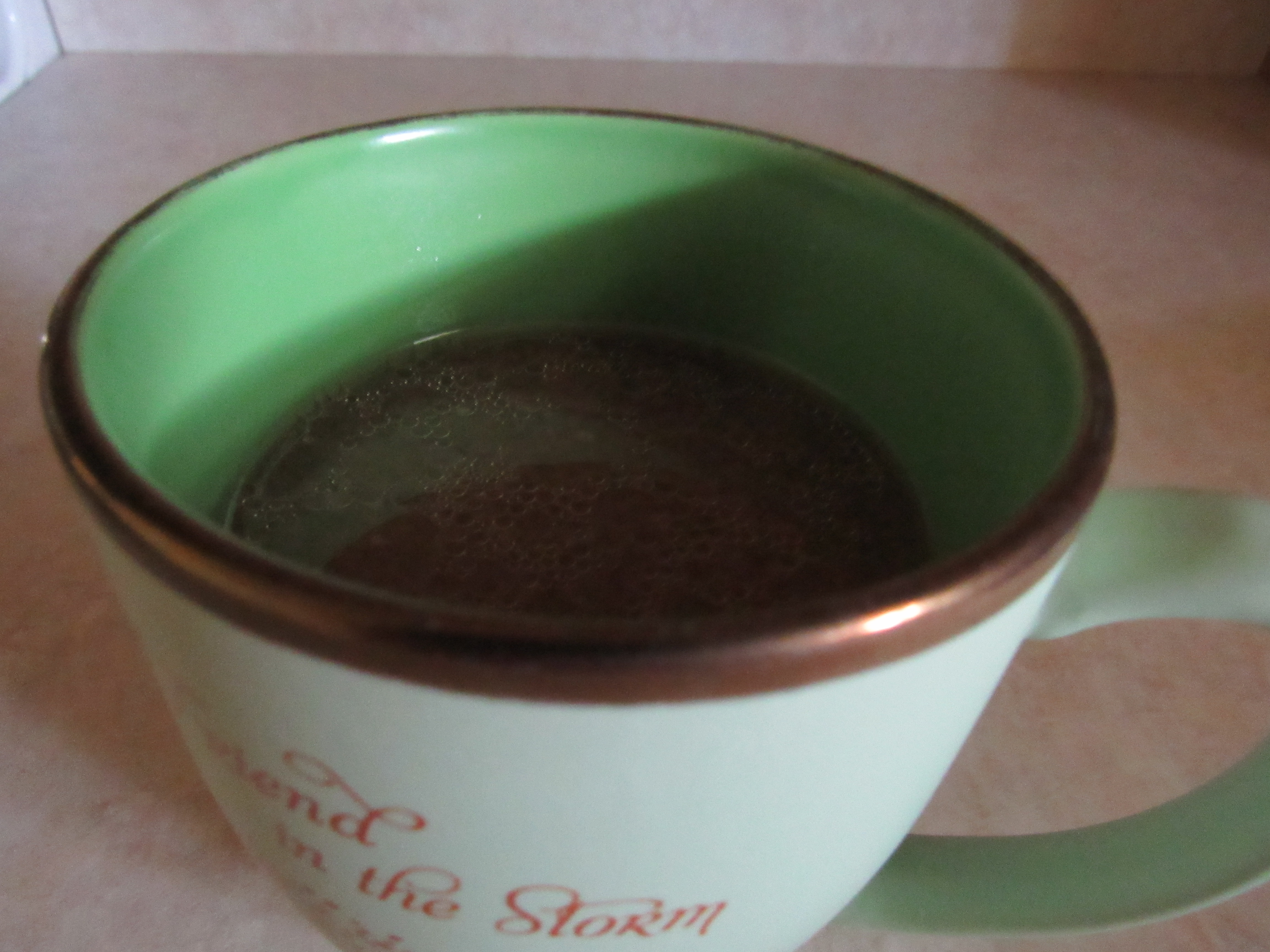
After straining the meat, I measured 1 ¼ cups of Beef Tea. I added ½ teaspoon salt. It tasted and looked like au jus. My husband, who loves his meat, liked the flavor but felt I’d added too much salt. If you try this recipe, maybe start with ¼ teaspoon of salt or season to taste.

I checked online to see if there were other beef tea recipes and found a few that are referenced in the sources. One served patients dry toast with the tea. Another suggested adding chopped raw meat to the drink when serving. Another offered the idea of placing the tea in a bowl over boiling water (double-boiler effect) to warm it before serving.

It may seem like a lot of time for little return. Civil War soldiers too weak to eat received lots of nourishment from this tea.

Good luck! I’d love to hear if you try this recipe.

-Sandra Merville Hart

Sources

“Beef Tea,” Vintage Recipes, 2017/05/10 http://www.vintagerecipes.net/books/plain_cookery_book/beef_tea_6.php.

“Beef Tea,” Vintage Recipes, 2017/05/10 http://www.vintagerecipes.net/books/fifty_soups/beef_tea_4.php.

“Beef Tea,” Vintage Recipes, 2017/05/10 http://www.vintagerecipes.net/books/bookofhouseholdmanagement/beef_tea_3.php.

Compiled from Original Recipes. Buckeye Cookery and Practical Housekeeping, Applewood Books, 1877.