Fort Monroe by Quarstein and Mroczkowski

Reviewed by Sandra Merville Hart

Fort Monroe: The Key to the South

The Civil War History Series

This book gives a wonderful history of Fort Monroe during the Civil War and beyond. This important fort was under Union control throughout the war.

I love the photos that really enhance readers’ understanding of information given.

The authors provide details about Camp Hamilton. It was basically a tent city with temporary structures near Fort Monroe.

Runaway slaves escaped to Fort Monroe in May of 1861. General Butler sheltered them as “contraband of war,” an important decision that ultimately affected thousands.

I visited Fort Monroe on a research trip. What a wonderful place, steeped in history. That visit inspired me to use Fort Monroe as a setting in Byway to Danger, Book 2 in my “Spies of the Civil War” series.

Recommended for history lovers and for those who desire to learn more about the Civil War.
Amazon

The Irish Ninth in Bivouac and Battle by Michael H. MacNamara

Review by Sandra Merville Hart

The Virginia and Maryland Campaigns

Captain Michael H. MacNamara wrote about the Ninth Massachusetts and published it after the Civil War. He (and others) affectionately refer to this regiment as the “Irish Ninth,” who were known for their bravery and courage.

I loved the rich details of everyday life for the regiment. The author took us through the initial training and then on their journey to drill in Washington DC (then more commonly called Washington City) where they joined thousands of Union soldiers.

The city was a sea of white tents covering the fields in and around the capital. The author painted vivid pictures of camp life, building a fort, and battles.

Pride in his comrades is on nearly every page. He reports on their shenanigans that made the tedium of camp life away from home more bearable.

I was thrilled to find this book. Captain MacNamara showed the fields near a wealthy banker’s mansion where the regiment camped in Washington City. In fact, the book was so helpful to me in my research that I used this regiment in my Civil War novel, Avenue of Betrayal. I even included a scene with Captain MacNamara, the historical figure, to thank him for writing this wonderful account.

I loved this well-written book. Recommended for readers who love to learn about the Civil War and American history.

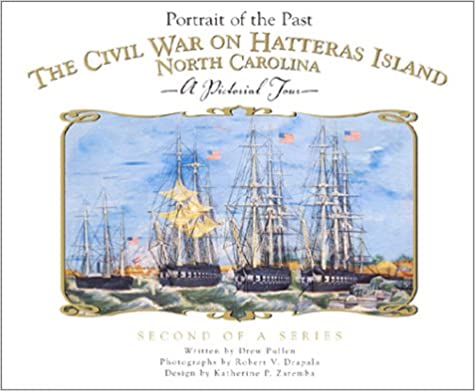
The Civil War on Hatteras Island, North Carolina by Drew Pullen

What a wonderful resource of information about the Civil War on Hatteras Island!

Many folks who visit the island on vacation have little idea about its rich history—and even less about what occurred at this strategic location during the Civil War.

I love the photos and sketches from the 1860s included by the author.

Portions of journals and letters from soldiers on both sides enrich this book’s value as a resource for historians, Civil War enthusiasts, and also for novelists like me who write during that time period.

Well-written. Recommend!

-Sandra Merville Hart

Amazon

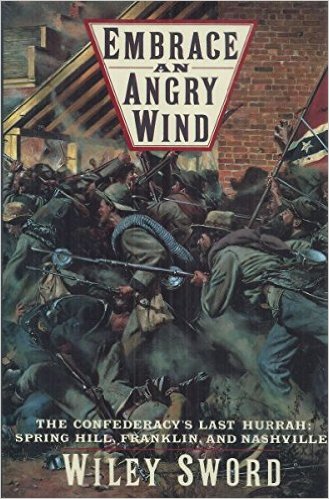
Embrace an Angry Wind by Wiley Sword

518qitw-8cl-_sx327_bo1204203200_This nonfiction resource book is about a key year in the American Civil War—1864. The subtitle “The Confederacy’s Last Hurrah: Spring Hill, Franklin, and Nashville” shows where the author concentrates but the story begins earlier in the year.

Sword weaves a true story in a way that captivates readers. Readers learn about what generals are feeling from both sides of the conflict. They also learn what privates think about what’s happening, as gleaned from private letters and diaries.

Sleet, snow, wind, and temperature all could play a part in battles—and certainly mattered to soldiers on the march. Road conditions and swollen rivers that stalled important crossings are details that transport readers back to turbulent times.

Great book for Civil War research and history lovers.

-Sandra Merville Hart

Amazon

When the Smoke Cleared at Gettysburg by George Sheldon

51abhd0rdlSo many of us are fascinated by the Battle of Gettysburg. The author shows the history from the average citizen’s viewpoint. Townspeople experienced the battle in a unique way. Unless they chose to leave when Confederate soldiers were first sighted—as many men did—those living in Gettysburg could not escape many harsh realities of war.

Sheldon includes details of when Confederate troops came to Gettysburg on June 26th—a few days before the battle.

The author quotes newspapers from Gettysburg and other local cities. Reactions from townspeople add depth and understanding for lovers of history. Three days of battle terrorized the townspeople; the aftermath continued the nightmare.

Great book for anyone interested in the Battle of Gettysburg, Civil War research, and history lovers.

-Sandra Merville Hart

Amazon