Civil War Women: Rebecca Littlepage Thwarts a General

by Sandra Merville Hart

Confederate General Henry Wise replaced Colonel Christopher Tompkins as commander of the Kanawha forces. Marching from Richmond, he arrived in Kanawha County on June 26, 1861. Wise soon stayed in Kanawha House Hotel’s best room.

Fort Sumter had been fired upon two and half months earlier.

The small Virginia town of Charleston was of strategic importance to Wise. He decided to claim a stone mansion surrounded by a thousand acres of farmland as his headquarters.

He should have run the idea by the lady of the house, Mrs. Rebecca Littlepage.

Confederate troops camped near a farm owned by the Littlepage family. Soldiers used the farm’s grain, sugar, bacon, molasses, and horses.

Wise strode to the home and told Mrs. Littlepage he intended to take her mansion as his headquarters. The spunky woman refused to release her home. The general threatened to blow the house down.

He returned with artillery. A crowd followed. Rebecca stood on the front step with her children around her. Wise told her to leave. She refused.

The general ordered his soldiers-some of them family friends—to fire upon the house. The men refused his command. Wise left that day.

Instead of taking over the home, his soldiers camped on the family’s property. Fort Fife, a one-hundred-square foot fort, was built on a hill overlooking the stone mansion. The location gave wonderful views of the Kanawha Turnpike, its junction with the road to Parkersburg, and the James River.

Adam Littlepage, Rebecca’s husband, became the quartermaster officer of the 21st Virginia. He died in a duel and never returned to the stone mansion home that his wife fought so bravely to preserve.

Sources

Egnatoff, Daniel et. al. “Littlepage Mansion-Charleston Civil War Trail.” Clio: Your Guide to History. September 19, 2019. Accessed February 1, 2021. https://theclio.com/entry/4901.

Mortimer, Gavin. Double Death: The True Story of Pryce Lewis, the Civil War’s Most Daring Spy, Walker & Company, 2010.

 

Sandra Merville Hart’s Interview about the Western Theater

Recently, I was invited to interview for The Western Theater in the Civil War website with questions about my inspiration for writing historical novels and the Civil War in the Western Theater. The Battle of Franklin, Tennessee, which was such a tragic loss of life for the Southerners, is also highlighted.

I also answered questions about women disguising themselves as men to pose as Civil War soldiers, an important aspect of  A Musket in My Hands,  which is set in Tennessee, Georgia, Alabama, and Mississippi in 1864.

You can read the interview  here!


Civil War Women: Clara Judd, Confederate Spy

Clara Judd, a Northerner, had moved to Winchester, Tennessee, in 1859 with her husband and eight children. He and one of their children was killed in an accident two years later. The widow found jobs at a government factory for her older sons.

Union armies controlled Winchester five times during the first two years of the Civil War (1861-1862) and Clara hosted them. A Union officer warned her that they’d been ordered to destroy her crops “except enough to last six weeks” and that she should leave.

Losing her possessions probably embittered her toward the Union soldiers.

She eventually ended up leaving her children with her sister in Louisville. Obtaining Union passes to travel to Atlanta to visit her son and Louisville to visit her youngest children enabled Clara to learn troop movements and other military information for the Confederacy.

Confederate Brig. Gen. John Hunt Morgan, while planning his famous raid, contacted Clara in December of 1862. He asked her to discover Union troop locations and strength of those controlling the railroad. She agreed.

While traveling north, she was stopped in Murfreesboro and had to wait three days for a pass to Nashville. Unable to find transportation, she walked.

Delos Thurman Blythe, a Northern counterespionage agent posing as Southern paroled prisoner, offered her a ride in his buggy. Blythe’s pass into Nashville was accepted but not Clara’s. He overheard a Confederate soldier giving her information about getting through Union lines and became suspicious.

Clara received a pass to visit her children and then told Blythe everything. He promised to help her.

His pretense of loyalty to the South had worked. He reported her to Union authorities yet advised them to give her the passes she requested.

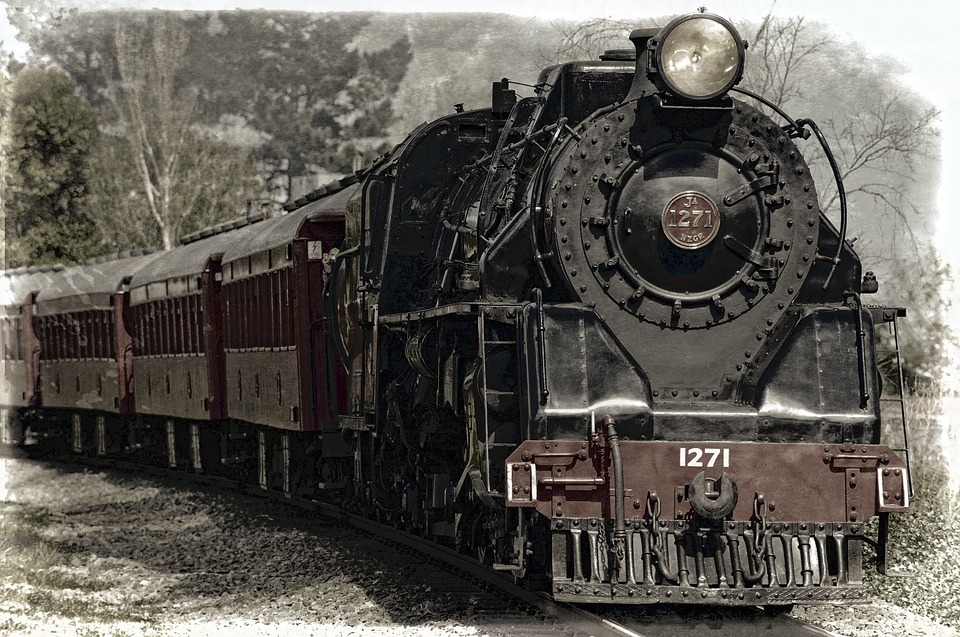
They traveled north by train. Clara, from her window, asked folks at each station about troops in the area. In Louisville, Blythe escorted her in all her errands and took her to dinner. She fell in love with him. Meanwhile, Blythe asked the authorities to arrest him and Clara in Mitchelsville, Tennessee.

On their return trip, military police arrested them in Mitchelsville. Goods and drugs for the Confederate army were found in her bags—quinine, nitrate of silver, and morphine.

Placed under guard in a Nashville hotel shortly before Christmas, Clara told her captors that Blythe was innocent. She didn’t know that he had already been released or that loving her had been an act.

Charged with espionage, she went to prison in Alton, Illinois for about eight months before being paroled due to poor health.

-Sandra Merville Hart


Sources

McCurry, Stephanie. “Clara Judd and the Laws of War,” HistoryNet, 2019/08/16 https://www.historynet.com/clara-judd-laws-war.htm.

Winkler, H. Donald. Stealing Secrets, Cumberland House, 2010.


Civil War Women: Mollie Bean, Confederate Soldier

Confederate Army of Northern Virginia cannons at Gettysburg Battlefield

On February 17, 1865, the train guard on the railroad cars between Danville and Richmond demanded to see the papers of a soldier dressed in light-colored corduroy pants, Yankee great coat, and fatigue hat dipped at a jaunty angle, almost touching the wearer’s right ear. The delicate soldier didn’t have any papers signed by the Provost Marshal nor did he seem concerned about the lack of documentation allowing him to ride the cars.

The soldier was arrested and taken to the chief of police. Rigorous questioning revealed an astonishing fact—the soldier was a young woman.

Mollie Bean claimed to be a soldier with the 47th North Carolina State troops. She’d served with them for two years and been wounded twice. Her wounds didn’t give away her disguise so they probably were minor wounds to the head, arms, or legs.

Mollie was taken as prisoner to Castle Thunder.

The reporter of the Richmond Whig didn’t believe her story of being with the 47th North Carolina for two years.

The Charlotte Daily Bulletin called her Mollie Bear, but the other papers noted referred to her as Mollie Bean.

Mollie’s regiment was in winter quarters near Hatcher’s Run when she was arrested.

Her regiment was part of Pickett’s Charge under Brigadier General James Pettigrew at the Battle of Gettysburg. They were at Cold Harbor. They took part in the long Petersburg siege, so Mollie surely experienced difficulties in her two years with the Confederate army.

There’s no record of how long she was held at Castle Thunder or what happened to her when she was released. Who she was and what happened to her remains a mystery.

-Sandra Merville Hart

Sources

“47th Regiment, North Carolina Infantry,” National Park Service, 2019/03/18 https://www.nps.gov/civilwar/search-battle-units-detail.htm?battleUnitCode=CNC0047RI.

“Historical Sketch and Roster of the North Carolina 47th Infantry Regiment,” Amazon, 2019/03/18 https://www.amazon.com/Historical-Carolina-Infantry-Regiment-Regimental/dp/1517383056.

“Mollie Bean,” American Civil War Forum, 2019/03/18 https://www.americancivilwarforum.com/mollie-bean-2248424.html.

“Mollie Bean,” Soldier-Women of the America Civil War, 2019/03/18 http://civilwarsoldierwomen.blogspot.com/2011/01/mollie-bean.html.

“Mollie Bean,” Wikipedia, 2019/03/18 https://en.wikipedia.org/wiki/Mollie_Bean

Civil War Women: Major Pauline Cushman, Actress to Spy

Harriet Wood became an actress a few years before the Civil War began and changed her name to Pauline Cushman, touring the country for various plays.

While Civil War battles raged early in 1863, a role led her to Wood’s Theater in Union-controlled Louisville, Kentucky. There were paroled Confederate officers in the area. Pauline’s beauty captured their attention and one asked her to toast Confederate President Jefferson Davis from the stage.

Her adventurous spirit aroused, Pauline met with Union Colonel Moore, Louisville’s provost marshal. The colonel, seizing the opportunity for her to gain the Southerners’ trust, advised her to accept the challenge.

While on stage the next evening, Pauline raised her glass in a toast. “Here’s to Jeff Davis and the Southern Confederacy. May the South always maintain her honor and her rights.”

Her impromptu toast appalled Union supporters in the crowd and thrilled Southern sympathizers. Pauline was fired and sent to the South.

Pauline traveled to Nashville where she met with Union Colonel William Truesdail, the Chief of Army Police. Truesdail asked to her to learn what she could about the Confederates, though he warned that, if caught spying, she’d be hanged.

She soon gained the trust of the Southerners. While at Confederate General Braxton Bragg’s army camp, she found his battle plans. The Southerners became suspicious of her. Pauline’s quick thinking and acting skills nearly saved her—until the battle plans were discovered in her shoe.

At a trial, she was found guilty and sentenced to death. Pauline then became seriously ill—or employed her acting skills to seem so—delaying her hanging. Then, at the end of June, she heard a loud commotion outside. The Confederates abandoned the camp, leaving Pauline behind. To her great joy, the sound of Union bugles blared in the camp and she was rescued.

Both President Abraham Lincoln and General James A. Garfield (future President) praised Pauline. General Garfield gave her the rank of major as thanks for her suffering while in secret service.

Before the Civil War ended, Pauline began touring as Miss Major Cushman, speaking about her adventures and performing one-woman plays about them.

-Sandra Merville Hart

Sources

Biography.com Editors. “Pauline Cushman Biography,” Biography.com, 2019/03/17 https://www.biography.com/people/pauline-cushman.

Moore, Frank. Women of the War: True Stories of Brave Women in the Civil War, Blue Gray Books, 1997.

“Pauline Cushman,” NPS.gov, 2019/03/17 https://www.nps.gov/people/pauline-cushman.htm.


Civil War Women: Anna Maria Ross, Cooper Shop

Not long after the Civil War started, Philadelphia citizens realized Union troops passing through their city needed to be fed. Two refreshment saloons were established there in 1861—Union Volunteer Refreshment Saloon of Philadelphia and Cooper Shop Refreshment Saloon.

Wounded soldiers also arrived in Philadelphia, prompting local women to open a hospital. Anna Maria Ross worked there as Lady Principal. The 12-bed Cooper Shop Hospital received the first patients on October 29, 1861. The Cooper Shop was located at 1009 Otsego Street below Washington Street.

Day and night, Anna dressed soldiers’ wounds. She also made certain that discharged soldiers received a donation to tide them over until receiving their army pay.

Union troops passed through Philadelphia at all hours. A signal gun fired when regiments came. Women living near the Navy Yard—many responsible for their own families—responded to the signal. They walked to the refreshment saloons, day or night, to cook for the soldiers.

The Cooper Shop alternated days with the Union Volunteer Shop. The 24-hour daily period ended at 6 pm. Even if it wasn’t their day to serve, shop leaders could divide the soldiers and send them to the other shop if more than 200 men needed meals.

Wounded from Gettysburg arrived in July and August of 1863, crowding the saloon hospitals. Hospital trains passing through Philadelphia also benefited from supplies at the saloon hospitals. Shop volunteers, like Mrs. Eliza G. Plummer, gave the wounded toast and tea.

Anna was one who saw a need for a Soldiers’ Home to care for Civil War veterans. Along with others, she planned a fundraising fair in June of 1863, which provided enough money to obtain a building. Then they needed to furnish it.

Anna traveled in Pennsylvania and New Jersey to gain support, raising around $2,000. The Soldiers’ Home was dedicated December 22, 1863. Unfortunately, Anna caught a chill and died before the dedication.

She can be proud of her efforts. Throughout the war, the Cooper Shop Refreshment Saloon fed about 400,000 soldiers. Its hospital treated about 7,500 wounded. Most patients were temporary though not all. For instance, their annual statement for the year ending May 25, 1864, reported that 85 patients remained from 1 week to 1 year.

The Grand Army of the Republic gave her a posthumous honor–Post 94 in Philadelphia.

-Sandra Merville Hart

Sources

Brockett, L.P. MD and Vaughan, Mary C. Woman’s Work in the Civil War: A Record of Heroism, Patriotism and Patience, Zeigler, McCurdy & Co., 1867.

Edited by O’Brien, Kevin E. My Life in The Irish Brigade: The Civil War Memoirs of Private William McCarter, 116th Pennsylvania Infantry, Savas Publishing Company, 1996.

Moore, Frank. Women of the War, Blue/Gray Books, 1997. (originally published 1866).

Ross, Anna M.,” House Divided: The Civil War Research Engine at Dickinson College, http://hd.housedivided.dickinson.edu/node/33456.

Union Volunteer Refreshment Saloon, foot of Washington St., Philadelphia, by Union Volunteer Refreshment Saloon, 1861.