Last Confederate Surrender

by Sandra Merville Hart

Most people believe the Civil War ended when Confederate General Robert E. Lee surrendered his Army of Northern Virginia to Union General Ulysses S. Grant at Appomattox on April 9, 1865. Not exactly. There were several other Confederate armies that had to surrender.

Rather than surrender, Colonel John S. Mosby, leader of “Mosby’s Raiders,” disbanded his cavalry troops on April 21, 1865.

General Joseph E. Johnston’s Army of Tennessee surrendered at the Bennett Place to Union General Sherman with the final agreement signed on April 26, 1865.

Lieutenant General Richard Taylor surrendered his  Department of Alabama, Mississippi, and East Louisiana to Union Major General Edward Canby at Citronville, Alabama, on May 4, 1865.

Major General Dabney Maury surrendered his  Confederate District of the Gulf  to Union Major General Edward Canby at Citronville, Alabama, on May 4, 1865.

Brig. General M. Jeff Thompson surrendered his  Sub-District of Northwest Arkansas at two Arkansas locations, Wittsburg and Jacksonport, on May 11, 1865.

Brig. General William T. Wofford surrendered his Department of North Georgia    to Union Brigadier General Henry M. Judah in Kingston, Georgia, on May 12, 1865.

Lieutenant General Edmund Kirby Smith, commander of Trans-Mississippi Department, signed a surrender aboard the USS Fort Jackson just outside Galveston Harbor on June 2, 1865.

Cherokee General Stand Watie surrendered his First Indian Brigade at Doaksville on June 23, 1865.

After General Lee’s surrender, the other Confederate armies soon followed.

Yet the last surrender may surprise you, for this one didn’t even take place in the United States.

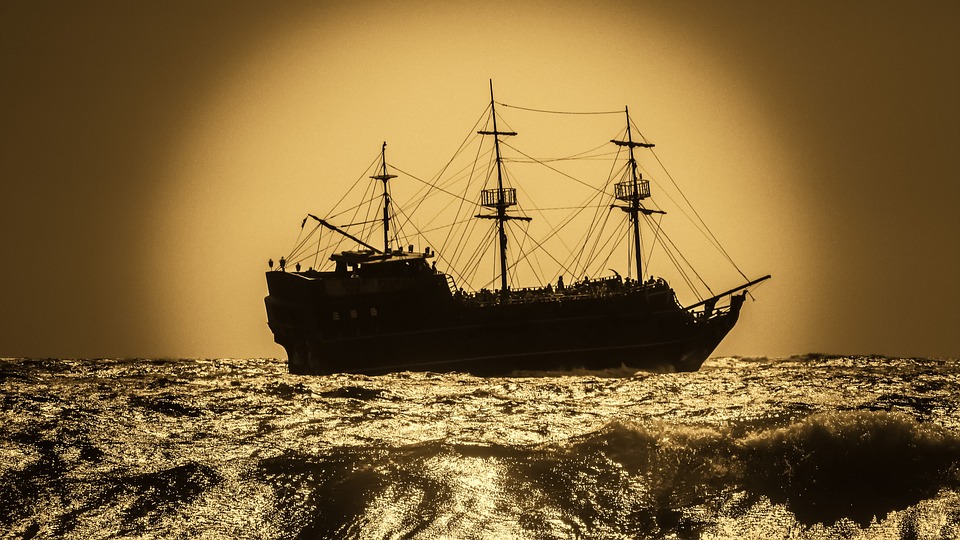
The CSS Shenandoah was purchased in England for the Confederate States Navy in 1864. Formerly the Sea King, the ship was converted to a warship in the Atlantic Ocean near the Spanish coast. Confederate Lt. James Iredell Waddell commanded the ship.

Waddell renamed the ship CSS Shenandoah. It required at least 150 men to sail and operate the warship. When he left the coast of Spain, he had only recruited 43 men for his crew. Since the ship’s task was to disrupt Union shipping, Waddell and his officers decided to increase its crew from the capture of Union ships.

They sailed toward the Cape of Good Hope and then toward Melbourne, Australia, successfully capturing Union ships, cargo, and crews. Some ships were burned or sunk and others were ransomed. The officers and crew of CSS Shenandoah had been quite successful in pursuing Union merchant ships when they had to stop for repairs on January 25, 1865, in Melbourne, Australia.

The crew grew from captured crew members just as Waddell had hoped.

After repairs were completed, Waddell sailed the Pacific Ocean in search of the American whaling fleet and captured ships near the equator in April. The CSS Shenandoah had set sail for the Bering Sea when General Robert E. Lee surrendered at Appomattox on April 9, 1865, though Waddell, being in the middle of the ocean, was unaware of this first of several surrenders. He continued his pursuit of Union merchant ships.

Upon reaching the Bering Sea on June 21st, the CSS Shenandoah captured two whalers the next day. Captain Francis Smith of the William Thompson informed Waddell that the war had ended. Waddell didn’t believe him and burned both the William Thompson and the Euphrates as Union ships.

If the war had ended as Captain Smith claimed, future capture of Union ships risked a charge of piracy. Unconvinced, Waddell continued his mission.

Thirty-eight ships had been captured or destroyed by the CSS Shenandoah when Waddell learned of the war’s end from a source he trusted. The crew of the Barracouta, a British ship, gave him the news on August 2, 1865.

Hoping to escape being charged with piracy and hung, Waddell sailed for Liverpool, England. The 9,000-mile voyage took three months. The ship’s crew, fearing capture if it replenished supplies at a port, never stopped. Union ships pursued the CSS Shenandoah the whole journey.

Waddell surrendered in Liverpool to the HMS Donegal on November 6, 1865. It was the final surrender of the Civil War.
Sources

History.com Editors. “CSS Shenandoah learns the war is over,” A&E Television Networks, 2020/12/28 https://www.history.com/this-day-in-history/css-shenandoah-learns-the-war-is-over.

Marcello, Paul J. “Shenandoah 1864-1865,” Naval History and Heritage Command, 2020/12/28 https://www.history.navy.mil/research/histories/ship-histories/confederate_ships/shenandoah.html.

Plante, Trevor K. “Ending the Bloodshed,” Prologue Magazine National Archives, 2021/01/04 https://www.archives.gov/publications/prologue/2015/spring/cw-surrenders.html.


History of Pigeon Forge

by Sandra Merville Hart

Like other tourists to the Smoky Mountains, my family has spent many happy days in Pigeon Forge, Tennessee. My parents, who used to live nearby, told me that it was a small tourist town into the 1970s. A recent vacation showed that every square foot along the main road is covered with restaurants, shops, motels, and shows. When did it change? And what is the history of the town?

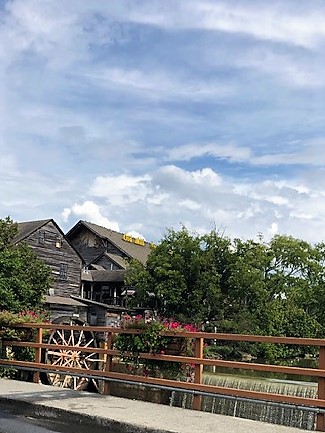
Mordecai Lewis left Virginia and received 151-acre land grant from Governor Blount. In 1790, he built the area’s first forge on it. His son-in-law, Isaac Love, who inherited his property, built an iron forge along what’s now known as the West Fork of the Little Pigeon River in 1817. Iron bars, farming tools, and building equipment produced by this forge were sold throughout the country.

William Love and his brothers, sons of Isaac, built Lewis Mill (today’s Old Mill) near the forge in 1830. Farmers brought wheat, corn, and oats to make flour at the gristmill.

Beech trees lined the river, attracting huge flocks of passenger pigeons to nest in its trees and feast on beechnuts. Sadly, the once massive flocks of birds are now extinct.

When William Love was appointed postmaster with the post office inside the mill, Pigeon Forge received its name for his father’s forge and the passenger pigeons.

The mill was sold to John Trotter before the Civil War. He used his mill to support the Union. Clothing for Union soldiers in Gatlinburg were produced by secret looms on the second floor. Trotter used the third floor as a hospital.

The town’s population remained small—154 in 1907. Tourism increased in the mountains after the Great Smoky Mountains National Park was dedicated in 1940.

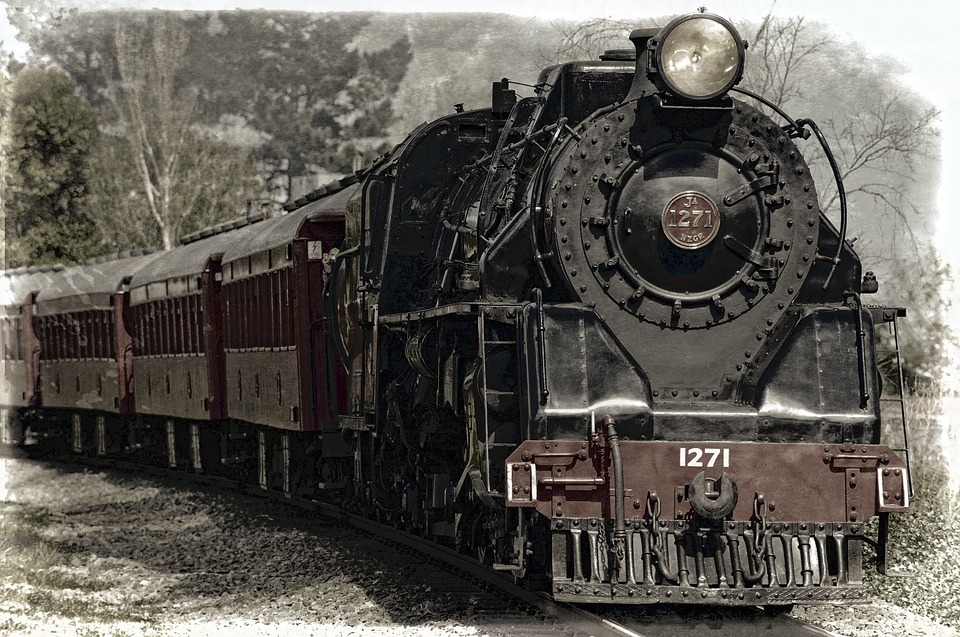
Rebel Railroad, Pigeon Forge’s first theme park opened in 1961. Klondike Katie, a coal-fired steam engine, was the main attraction. It changed ownership in 1970 and became Goldrush Junction. Another new owner in 1977 renamed it Silver Dollar City. Country singer Dolly Parton became a co-owner in 1982. Four years later, Dollywood opened.

Pigeon Forge became a city in 1961. Tourism boomed twenty-one years later. The city has grown rapidly to become a popular vacation location—a long way from a forge and a mill that was its claim to fame 190 years ago.

Sources:

“8 Huge Moments in Gatlinburg History and Pigeon Forge History,” Timber Tops Cabin Rentals, 2020/08/23 https://www.yourcabin.com/blog/moments-in-gatlinburg-and-pigeon-forge-history/.

Greve, Jeanette S. The Story of Gatlinburg, Premium Press America, 2003.

“History of Pigeon Forge, TN,” Smoky Mountain Navigator, 2020/03/23 https://www.smokymountainnavigator.com/explore-the-smokies/pigeon-forge/history-of-pigeon-forge-tn/.

“Our Old Mill: History in the Making,” The Old Mill, 2020/08/23 https://old-mill.com/our-history/.

“Smoky Mountain History: How Did Gatlinburg, Pigeon Forge and Sevierville Get Their Names?” Visit My Smokies, 2020/08/23 https://www.visitmysmokies.com/blog/gatlinburg/smoky-mountain-history-how-cities-got-their-names/.

“Step Back in Time at the Old Mill in Pigeon Forge,” Pigeon Forge.com, 2020/08/23 https://www.pigeonforge.com/old-mill/.

Lincoln Memorial

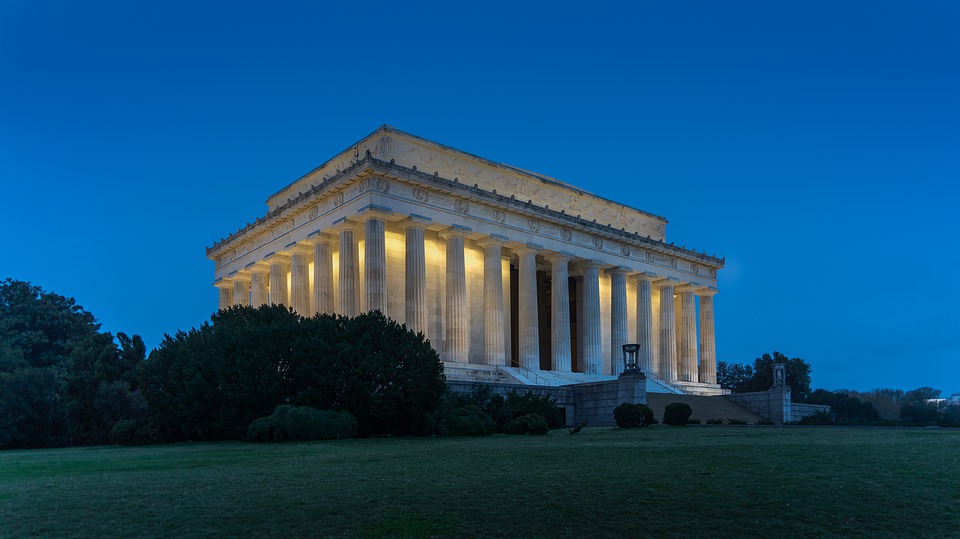
On a recent trip to Washington, DC, I visited the National Mall late on a rainy evening. The view of the Lincoln Memorial at night is spectacular.

Talk of building a memorial to President Abraham Lincoln began soon after his death. In 1867, a proposal for a commission to plan the monument didn’t get very far. The country, recovering from war, didn’t have the money to build it. The early design was for 31 pedestrian and 6 equestrian statues with a statue of Lincoln in the center.

Construction on the memorial began years later in 1914, and took about 4 years to build. Styled after a Greek Temple, the memorial was designed by Henry Bacon. It has 36 fluted Doric columns to represent the states in the Union during the Civil War.

The memorial is 188 feet long and nearly 80 feet tall. There are 58 steps on the memorial. There are 87 steps from the reflecting pool to the memorial.

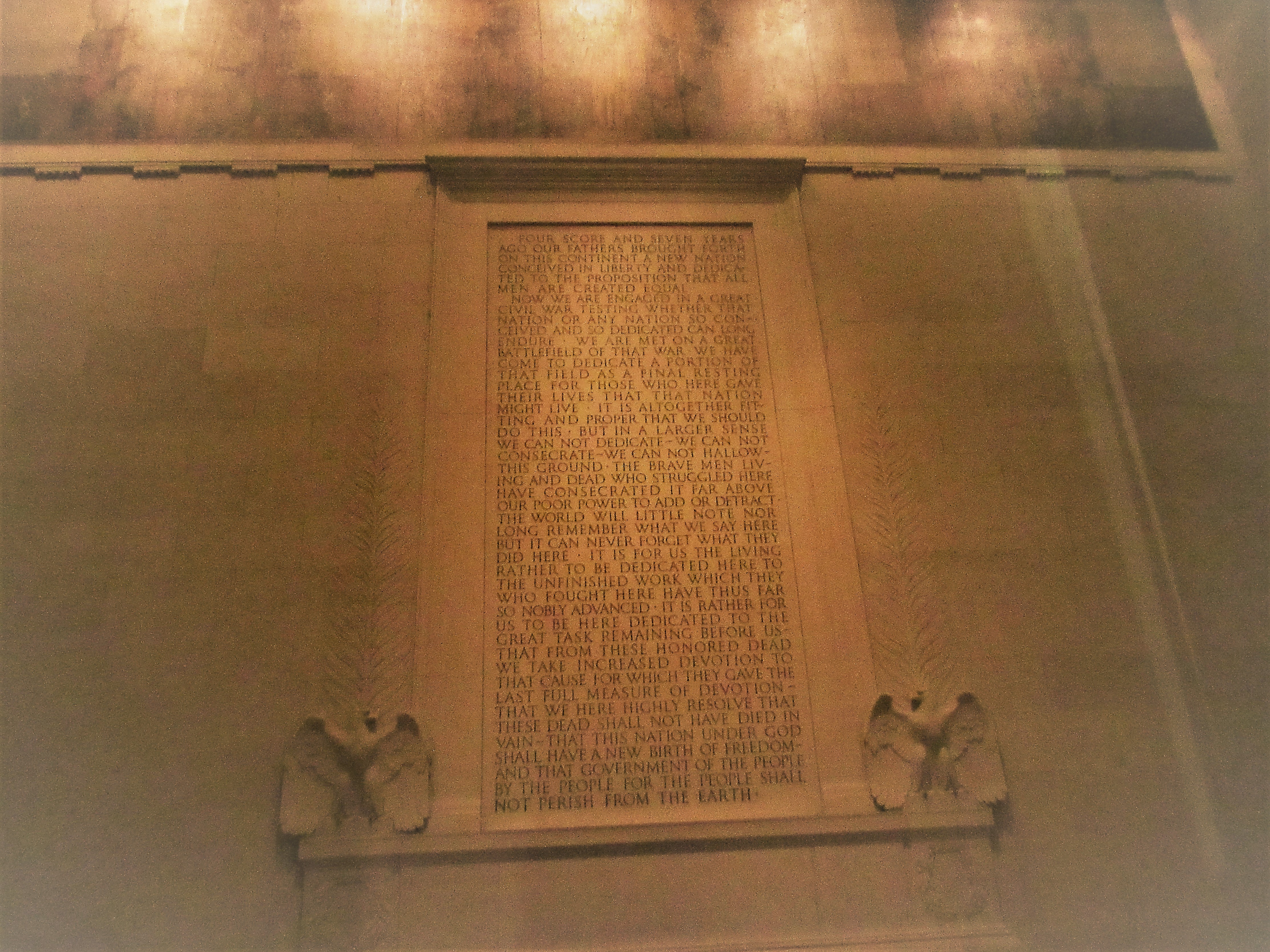
Lincoln’s second inaugural speech is on the North Wall. His famous Gettysburg Address is etched on the South Wall.

Construction was finally completed in 1922. On May 30, 1922, Civil War veterans were among the 50,000 people attending the dedication service.

Robert Todd Lincoln, our 16th president’s only surviving son, attended the dedication. He was 78.

Forty-one years later, a March on Washington, led by Martin Luther King, Jr., ended at the Lincoln Memorial. On August 28, 1963, he spoke to a large crowd from the steps of the memorial. His “I have a Dream” speech spoke of his dreams for America, resonating with his listeners and the nation.

Trolley Tours and Big Bus Tours are an easy way to visit the monument. We took the Metro and walked the National Mall. Whatever way you decide to tour the monument, it is well worth the effort.

-Sandra Merville Hart

Sources

“Lincoln Memorial,” Lincoln Memorial, 2020/01/02 http://lincoln-memorial.org/.

“Lincoln Memorial,” National Park Service, 2020/01/02 https://www.nps.gov/nr/travel/wash/dc71.htm.

“Lincoln Memorial,” Wikipedia, 2020/01/01 https://en.wikipedia.org/wiki/Lincoln_Memorial.

“The Abraham Lincoln Memorial,” American History For Kids, 2020/01/02 https://www.americanhistoryforkids.com/abraham-lincoln-memorial/.

First Union Soldiers in Washington Welcomed at the White House

Union troops poured into Washington near the end of April, 1861. Before long, twenty thousand men added to the city’s prewar population of sixty thousand. The city had 33 militia units with armories where they drilled—not nearly enough to accommodate so many additional soldiers. And where were they to sleep?

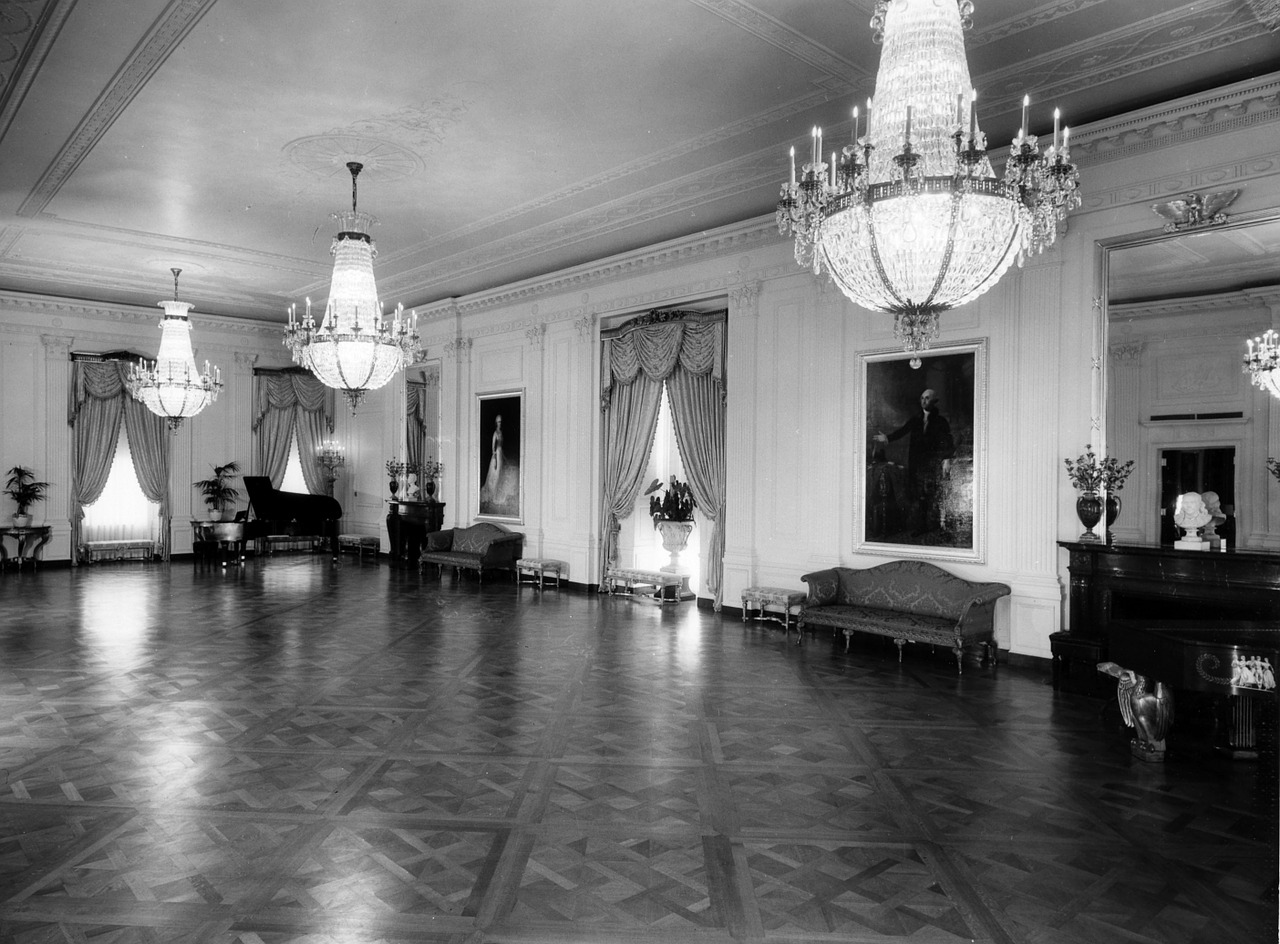
President Abraham Lincoln welcomed the first troops as honored guests. On April 18th, Major Hunter took Jim Lane’s Kansas Warriors into the East Room of the White House and allowed them to stay there.

Soon troops were camped on the White House lawn, at the Capitol, and the Washington Arsenal. Area churches as well as schools like Georgetown College and Columbian College.

The government rented other buildings for the soldiers.

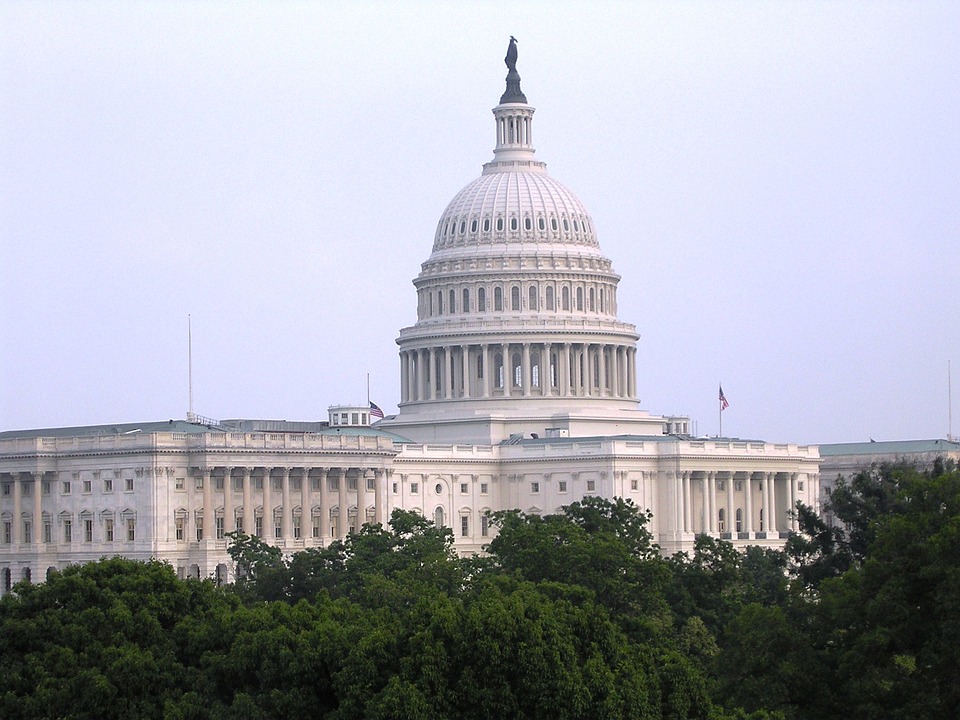
Seven thousand troops were in the Capitol, occupying Senate and House chambers, committee rooms, galleries, and halls. This brought its own problems of cleanliness. Congress was set to convene on July 4th —before this meeting, grease, tobacco, and other filth had to be scrubbed from the areas.

Soldiers’ tents surrounded the Capitol for a radius of three miles. Troops bivouacked and drilled in the inaugural ballroom, which was a temporary building near City Hall.

Many of these troops received training in the city and soon marched off to war. Others remained to defend the nation’s capital. Sixty-eight forts had been built around Washington by 1865, and these housed Union troops. The city was protected by these forts that had a combined ninety-three batteries, seven blockhouses, and twenty miles of rifle pits. There were thirty miles of military roads.

The forts were built to last for the war’s duration and many of them are gone now. Traces remain of a few of them, including Fort Chaplin, Fort Davis, Fort DeRussy, Fort Foote, and Fort Stevens.

– Sandra Merville Hart

Sources

“Civil War Defenses of Washington,” Wikipedia, 2019/12/26 ttps://en.wikipedia.org/wiki/Civil_War_Defenses_of_Washington.

Selected by Dennett, Tyler. Lincoln and the Civil War In the Diaries and Letters of John Hay, Dodd, Mead & Company, 1939.

“The capital can’t be taken!” Civil War Defenses of Washington, National Park Service, 2019/12/26 ttps://www.nps.gov/cwdw/index.htm.

Winkle, Kenneth J. Lincoln’s Citadel: The Civil War in Washington, DC, W.W. Norton & Company, 2013.


The Story Behind “I Heard the Bells on Christmas Day”


by Sandra Merville Hart

On July 9, 1861, the screams of his wife, Fanny, wakened Henry Wadsworth Longfellow from a nap to the horror of finding her dress ablaze. Instantly awake, he tried to smother the flames with a rug. When that didn’t work, he used his body. By the time the fire was out, Fanny’s burns were too severe to survive. She died the next day. Longfellow’s face was burned so badly that he was unable to attend the funeral with his five children.

That wasn’t Henry’s only turmoil as Civil War ravaged the country. In March of 1863, Henry’s oldest son, Charles (Charley) Appleton Longfellow, left his home in Cambridge, Massachusetts, bound for the Union army in Washington, DC. The eighteen-year-old didn’t ask his father’s permission to join.

Charley quickly earned the commission of 2nd Lieutenant in the 1st Massachusetts Cavalry.

Henry was dining at home when a telegram arrived on December 1, 1863. Charley had been shot in the shoulder in a skirmish in the Mine Run Campaign (Virginia) on November 27th.

Henry and his younger son, Ernest, left immediately for Washington, DC. On December 5th, Charley arrived there by train. The first surgeon alarmed Henry with news that the serious wound might bring paralysis. Later that evening, three other surgeons gave him better news—Charley’s recovery might take 6 months.

Grieving for his wife and worried for his son, Henry heard Christmas bells ringing on December 25, 1863. He picked up his pen  and wrote “Christmas Bells.”

Two stanzas from this poem written while our country was at war are rarely heard. These speak of the suffering in a nation divided:

        Then from each black, accursed mouth

       The cannon thundered in the South,

       And with the sound

      The carols drowned

      Of peace on earth, good-will to men!

      It was as if an earthquake rent

      The hearth-stones of a continent,

     And made forlorn

     The households born

     Of peace on earth, good-will to men!

Families had been separated by war—some forever. Anguish overcomes Henry:

      And in despair I bowed my head;

     “There is no peace on earth,” I said;

     “For hate is strong,

    And mocks the song

    Of peace on earth, good-will to men!”

Faith and hope reach through the anguish in his soul as he hears a deeper message in the Christmas bells:

     Then pealed the bells more loud and deep;

     “God is not dead, nor doth He sleep;

     The Wrong shall fail,

    The Right prevail,

    With peace on earth, good-will to men.”

Charley survived yet his wound ended the war for him.

In February of 1865, Our Young Folks published Henry Wadsworth Longfellow’s poem, “Christmas Bells.” John Baptiste Calkin set the poem to music in 1872, and “I Heard the Bells on Christmas Day” became a beloved Christmas carol.

Sources

Ullman, Jr., Douglas. “A Christmas Carol’s Civil War Origin,” American Battlefield Trust, 2018/11/02 https://www.battlefields.org/learn/articles/christmas-bells.

“I Heard the Bells on Christmas Day,” Wikipedia, 2018/11/02, https://en.wikipedia.org/wiki/I_Heard_the_Bells_on_Christmas_Day.

“The True Story of Pain and Hope Behind ‘I Heard the Bells on Christmas Day,’” The Gospel Coalition, 2018/11/02 https://www.thegospelcoalition.org/blogs/justin-taylor/the-story-of-pain-and-hope-behind-i-heard-the-bells-on-christmas-day/.


Dedication of National Cemetery Where Lincoln Gives Gettysburg Address

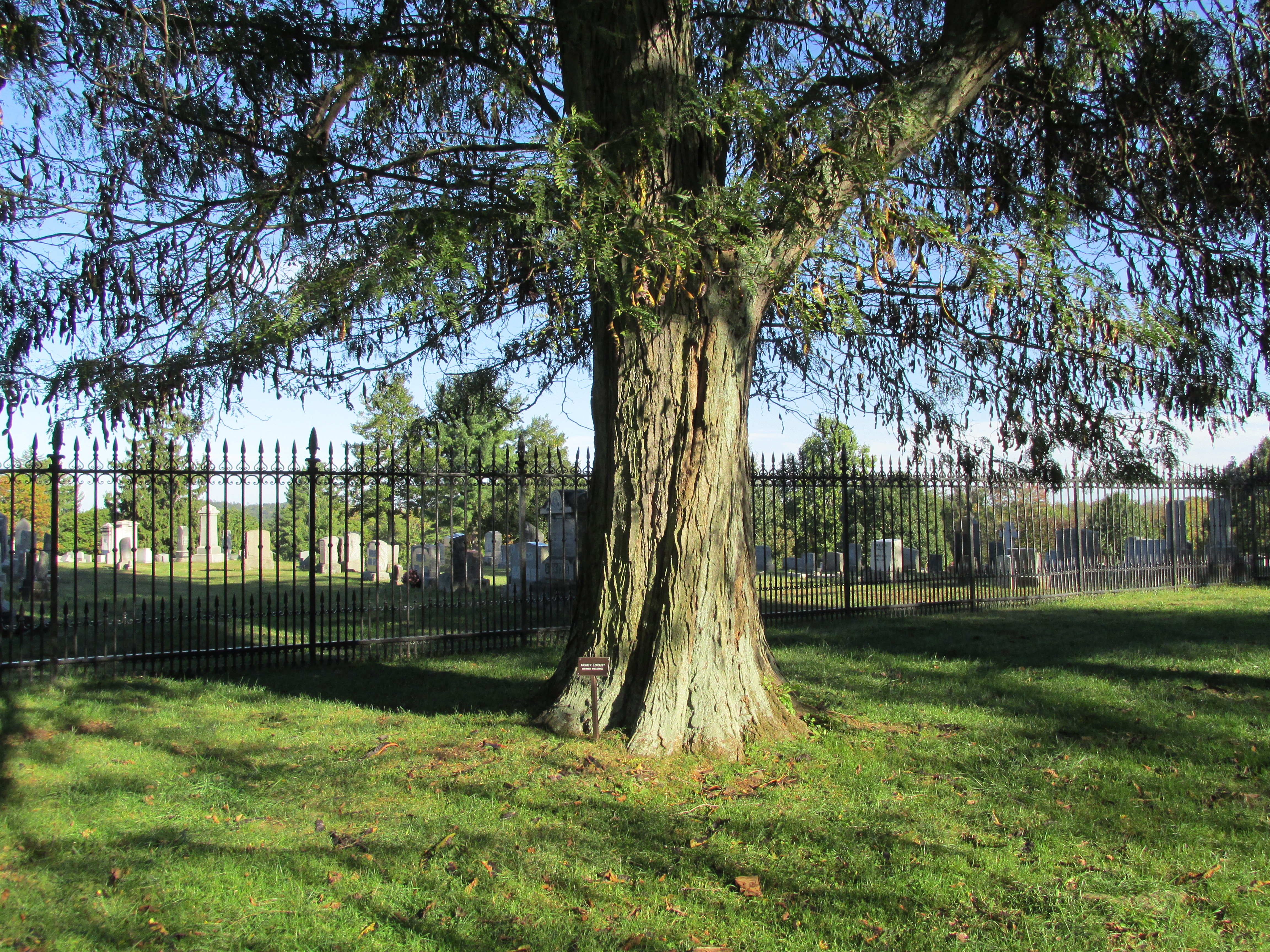
National Cemetery, Gettysburg

Rain and clouds that mark the Pennsylvania skies on the early morning of November 19, 1863, soon clear to give an exhilarating nip in the air in and around Gettysburg. After a lively evening in the crowded streets last night, folks are still entering town for the important occasion of dedicating the new national cemetery.

President Abraham Lincoln and Secretary of State William H. Seward take a carriage ride to the Lutheran Seminary grounds where fierce fighting took place on July 1, 1863, the first day of the Battle of Gettysburg.

They return in time to change for the dedication ceremony. Before 10 am, Lincoln emerges from David Wills’ home where he spent the night. He is dressed in black, wears a black frock coat, and carries white gauntlets. Sad. Serious. A wide mourning band adorns his stovepipe hat in memory of his son, Willie, who died of typhoid fever on February 20, 1862.

People press around him, shaking his hand even after he mounts his horse. They cheer for him. The marshals motion the crowd back.

The Marine Band begins the procession followed by a squadron of cavalry, two artillery batteries, and an infantry regiment. President Lincoln rides with several generals, nine governors, Cabinet members, and three foreign ministers among others.

Edward Everett, the main speaker, tours the battlefield and does not participate in the procession.

A 12’ x 20’ platform has been built for the occasion. Honored guests take their place on the three rows of ten chairs each. There are other chairs scattered on the platform and chairs at a table in back for reporters.

A tent stands at the east end of the platform—at Everett’s request and for his use. He emerges from this tent. David Wills, organizer of the event, and New York Governor Seymour escort him to his seat beside Lincoln in the middle of the front row.

Bright sun shines down on the spectators arranged in a semi-circle by the marshals. Many, like Lincoln, wear mourning.

The pleasing array of flags, banners, and costumes of those in attendance do not mask the signs of the recent battle, where the fields are still littered with broken muskets, canteens, and bits of gray or blue uniforms.

The Marshal-in-Chief Ward H. Lamon is not on the platform to begin the ceremony so his assistant, Benjamin B. French, signals the Birgfield’s Band. They play “Homage d’un Heroes,” a funeral dirge.

Lamon nods to Rev. Thomas H. Stockton to pray. The emotional prayer of the chaplain of the House of Representatives brings tears to many eyes, including Everett and Lincoln.

Next, Lamon calls on the Marine Band. They play Martin Luther’s hymn “Old Hundred.”

Lamon then introduces Edward Everett as the speaker of the day.

Everett speaks for about two hours. The President listens with kind, thoughtful attention. Lincoln rises and shakes Everett hand while some in the crowd applaud at the end.

The Maryland Musical Association sings “Consecration Hymn” that was written by Benjamin B. French for the dedication.

Lamon introduces the President of the United States.

National Cemetery, Gettysburg

Lincoln steps forward. He extracts a paper from his pocket. He puts on his spectacles.  The crowd is silent as they look up him.

The President gazes at the solemn mourners … at soldiers who will never forget the battle or their comrades. Four score and seven years ago our fathers brought forth on this continent a new nation, conceived in Liberty, and dedicated to the proposition that all men are created equal.

“Now we are engaged in a great civil war, testing whether that nation or any nation so conceived and so dedicated, can long endure. We are met on a great battlefield of that war. We have come to dedicate a portion of that field, as a final resting place for those who here gave their lives that that nation might live. It is altogether fitting and proper that we should do this.

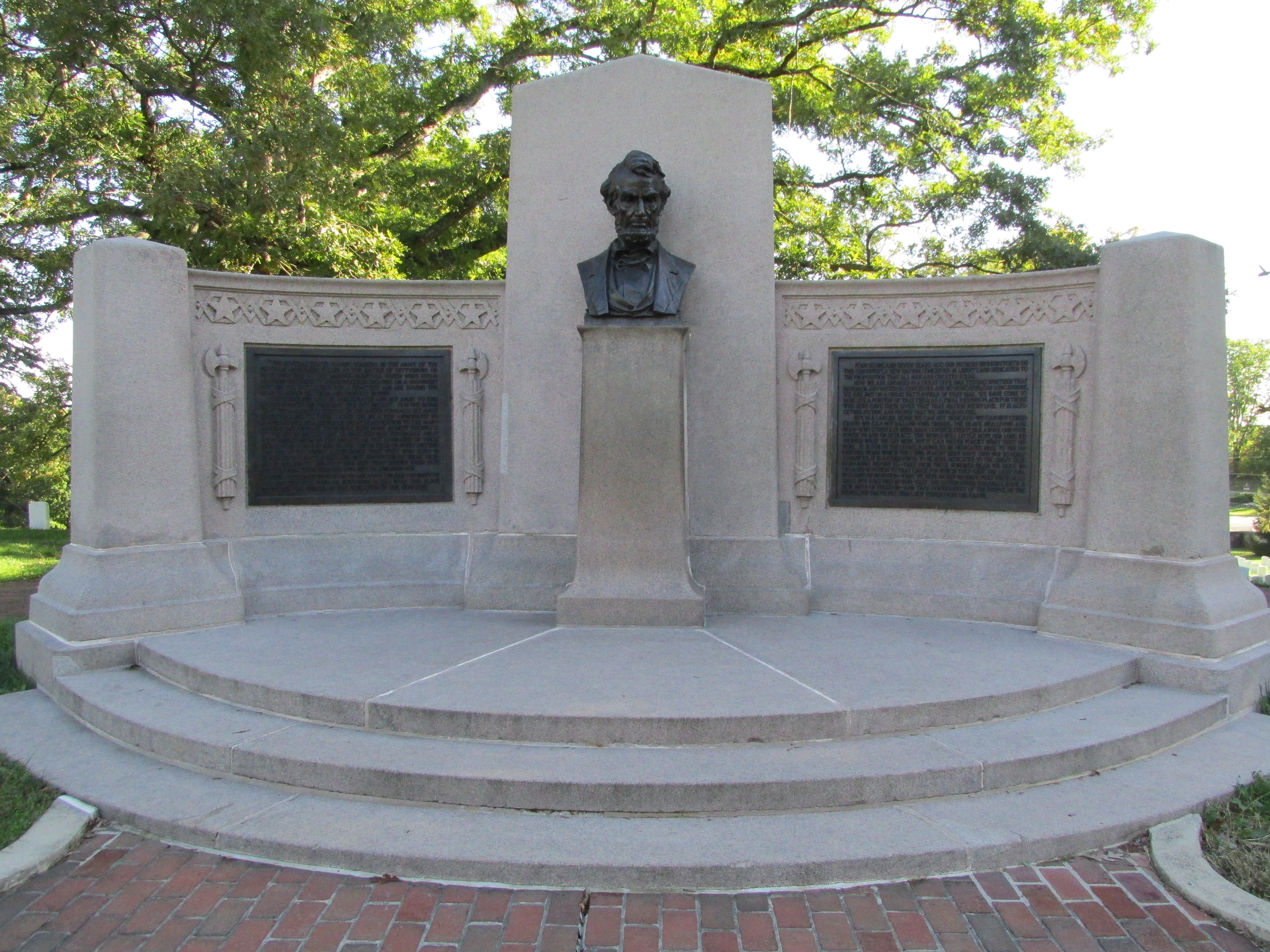
Gettysburg Address at the Soldiers National Cemetery

“But, in a larger sense, we can not dedicate—we can not consecrate—we can not hallow—this ground. The brave men, living and dead, who struggled here, have consecrated it far above our poor power to add or detract. The world will little note nor long remember what we say here, but it can never forget what they did here. It is for us the living, rather, to be dedicated here to the unfinished work which they who fought here have thus far so nobly advanced. It is rather for us to be here dedicated to the great task remaining before us—that from these honored dead we take increased devotion to that cause for which they gave the last full measure of devotion—that we here highly resolve that these dead shall not have died in vain—that this nation, under God, shall have a new birth of freedom—and that government of the people, by the people, for the people, shall not perish from the earth.”

The crowd gives President Lincoln three cheers and then another three cheers for the Governors.

Birgfield’s Band accompanies a chorus of Gettysburg men and women.

Lamon nods to Rev. Henry L. Baugher, who leads those gathered to close the ceremony with a benediction.

Lincoln participates in the procession that leads back to David Wills’ home, where he eats dinner and then receives guests. He attends a service at the Presbyterian Church and then boards a train. It is time to return to Washington D.C.

Back at the cemetery, some mourners remain until darkness falls.

-Sandra Merville Hart

Sources

Carmichael, Orton H. Lincoln’s Gettysburg Address, The Abingdon Press, 1917.

Gramm, Kent. November: Lincoln’s Elegy at Gettysburg, Indiana University Press, 2001.

Klement, Frank L. The Gettysburg Soldiers’ Cemetery and Lincoln’s Address, White Main Publishing Company, Inc., 1993.


The Day Before President Lincoln’s Gettysburg Address

Excitement fills the overcrowded streets of Gettysburg, Pennsylvania, on Wednesday, November 18, 1863. It’s been a long time since residents had something to celebrate. President Abraham Lincoln and other distinguished guests will soon arrive for tomorrow’s dedication ceremony of the national cemetery.  Preparations  have taken weeks. Thousands come by train and in carriages, buggies, farm carts, and Pennsylvania wagons. Some ride horseback into town. Others walk.

At noon, a special train leaves Washington D.C. on the Baltimore and Ohio Railroad. President Abraham Lincoln, Secretary of State William H. Seward, Secretary of the Interior John P. Usher, Postmaster General Montgomery Blair, two foreign ministers, Lincoln’s private secretary and assistant secretary, army officers, Marine Band members, and newspaper correspondents are passengers.

An unusually quiet Lincoln sits in the last car. Sadness marks his face. Perhaps he reflects on the tragic loss of so many soldiers who died at the battle, a loss that reminds him of losing his precious Willie, his third son, a year earlier.

Gettysburg attorney David Wills, Ward H. Lamon (marshal of the event,) and Edward Everett (the dedication’s main speaker) are among those who meet the President’s train at dusk. They and the First Regiment of the Invalid Corps escort him to the Wills’ home where he will spend the night.

The Fifth New York Artillery Band plays and the crowd serenades Lincoln while he eats supper. They request a speech.

Lincoln appears at the front entrance of the home. He bows for the exuberant crowd yet refuses to give a speech. “I have no speech to make.”

The crowd laughs.

“In my position it is somewhat important that I should not say any foolish thing.”

“If you can help it,” someone yells.

“It very often happens,” Lincoln smiles, “that the only way to help it is to say nothing at all.”

The crowd laughs and the President soon goes back inside.

Inns and homes are full. Many visitors remain on the streets late into the night for they have no place to go. They shout and cheer and sing while bands take turns playing patriotic songs and hymns.

Inside, President Lincoln pulls out his speech for tomorrow’s dedication. A few lines are all they’ve asked of him. He must make those “few appropriate remarks” count.

-Sandra Merville Hart

Sources

Carmichael, Orton H. Lincoln’s Gettysburg Address, The Abingdon Press, 1917.

Gramm, Kent. November: Lincoln’s Elegy at Gettysburg, Indiana University Press, 2001.

Klement, Frank L. The Gettysburg Soldiers’ Cemetery and Lincoln’s Address, White Main Publishing Company, Inc., 1993.


Gettysburg Attorney David Wills Prepares for National Cemetery

Over 7,000 soldiers died in Gettysburg at the Civil War battle that lasted from July 1st to July 3rd in 1863. While the Confederates under General Robert E. Lee retreated in the pouring rain on July 4th, some Southerners stayed to bury a small portion of their dead. The rest of the fallen were left for Union soldiers and Gettysburg citizens, who had their hands full caring for the wounded, to bury.

There was little time. Over 5,000 shallow graves were dug along fences, in the Wheatfield, beside the Peach Orchard, on Culp’s Hill, in the fields of Cemetery Ridge and other battle locations.

Gettysburg attorney David Wills wanted to purchase land for a national cemetery as a burial place for those killed in the battle. He requested approval from Pennsylvania Governor Curtin, who granted it. Curtin also requested that Wills write the other 17 Union state governors. Fifteen approved the plan.

Wills bought 17 acres next to the town’s cemetery. A monument was to be erected in the center of a semi-circle of graves. There are 22 sections: 3 sections for unidentified soldiers; 1 for regular army soldiers; and the remaining 18 sections were for the 18 individual Union states’ soldiers.

About 25% of the soldiers were from New York, so that state has the largest section.

They began transferring bodies to the new cemetery on October 27, 1863. Only 50 – 60 were reburied on a daily basis.

Wills wanted to dedicate the new national cemetery in a ceremony. Edward Everett, a well-known orator of the day, was invited as the main speaker. President Lincoln and his Cabinet received invitations. Some notable Union generals were also invited.

President Lincoln accepted. Wills then invited him to make “a few appropriate remarks” at the November 19th dedication ceremony.

History has overshadowed the gifted Everett’s two-hour speech for Lincoln’s two-minute Gettysburg Address.

No one predicted just how much Lincoln’s “few appropriate remarks” would inspire a nation—even today—and deliver a message the people attending desperately needed to hear.

-Sandra Merville Hart

Sources

Carmichael, Orton H. Lincoln’s Gettysburg Address, The Abingdon Press, 1917.

Gramm, Kent. November: Lincoln’s Elegy at Gettysburg, Indiana University Press, 2001.


Klement, Frank L. The Gettysburg Soldiers’ Cemetery and Lincoln’s Address, White Main Publishing Company, Inc., 1993.


Sheldon, George. When the Smoke Cleared at Gettysburg: The Tragic Aftermath of the Bloodiest Battle of the Civil War, Cumberland House, 2003.


Civil War Women: Clara Judd, Confederate Spy

Clara Judd, a Northerner, had moved to Winchester, Tennessee, in 1859 with her husband and eight children. He and one of their children was killed in an accident two years later. The widow found jobs at a government factory for her older sons.

Union armies controlled Winchester five times during the first two years of the Civil War (1861-1862) and Clara hosted them. A Union officer warned her that they’d been ordered to destroy her crops “except enough to last six weeks” and that she should leave.

Losing her possessions probably embittered her toward the Union soldiers.

She eventually ended up leaving her children with her sister in Louisville. Obtaining Union passes to travel to Atlanta to visit her son and Louisville to visit her youngest children enabled Clara to learn troop movements and other military information for the Confederacy.

Confederate Brig. Gen. John Hunt Morgan, while planning his famous raid, contacted Clara in December of 1862. He asked her to discover Union troop locations and strength of those controlling the railroad. She agreed.

While traveling north, she was stopped in Murfreesboro and had to wait three days for a pass to Nashville. Unable to find transportation, she walked.

Delos Thurman Blythe, a Northern counterespionage agent posing as Southern paroled prisoner, offered her a ride in his buggy. Blythe’s pass into Nashville was accepted but not Clara’s. He overheard a Confederate soldier giving her information about getting through Union lines and became suspicious.

Clara received a pass to visit her children and then told Blythe everything. He promised to help her.

His pretense of loyalty to the South had worked. He reported her to Union authorities yet advised them to give her the passes she requested.

They traveled north by train. Clara, from her window, asked folks at each station about troops in the area. In Louisville, Blythe escorted her in all her errands and took her to dinner. She fell in love with him. Meanwhile, Blythe asked the authorities to arrest him and Clara in Mitchelsville, Tennessee.

On their return trip, military police arrested them in Mitchelsville. Goods and drugs for the Confederate army were found in her bags—quinine, nitrate of silver, and morphine.

Placed under guard in a Nashville hotel shortly before Christmas, Clara told her captors that Blythe was innocent. She didn’t know that he had already been released or that loving her had been an act.

Charged with espionage, she went to prison in Alton, Illinois for about eight months before being paroled due to poor health.

-Sandra Merville Hart


Sources

McCurry, Stephanie. “Clara Judd and the Laws of War,” HistoryNet, 2019/08/16 https://www.historynet.com/clara-judd-laws-war.htm.

Winkler, H. Donald. Stealing Secrets, Cumberland House, 2010.


Civil War Women: Rose O’Neal Greenhow, Confederate Spy

Rose O’Neal Greenhow lived in Washington D.C. when the Civil War began. When many other Southerners left, the widow remained with her eight-year-old daughter, Rose. Union Colonel Thomas Jordan had decided to resign the U.S. Army and fight for the South. Before he left the city, he asked Rose to be an agent. Spying to uncover troop movements and government communications gave her a significant way to serve the South. She agreed to send messages based on a cipher he provided.

Coded messages were sent on a “Secret Line,” which involved several couriers in a chain that passed on messages in common places such as docks, taverns, and farmhouses.

Rose’s spy network from Boston to New Orleans was the largest in the war—48 women and 2 men. She learned battle plans for Bull Run and passed this vital information to Confederate General Beauregard, leading to a Confederate victory at the First Battle of Bull Run.

Several other messages about Washington’s defenses and troop information were sent from Rose to Beauregard. Thomas A. Scott, Assistant Secretary of War, asked Allan Pinkerton, head of Lincoln’s Intelligence Service, to find Confederate spies and put Greenhow under surveillance.

About a month after the Battle of Bull Run, Pinkerton discovered incriminating evidence. The home was searched. Rose and her daughter were placed under arrest at her home. Because she still managed to get other secret messages out, they were moved to Washington’s Old Capitol prison. The Federals then decided to send her South.

On June 4, 1862, she arrived in Richmond, where she was taken to the best hotel. Confederate President Jefferson Davis called her the next day, saying, “But for you there would have been no battle of Bull Run.” Rose wrote that his words made up for all she’d endured.

The following year President Davis sent her to Europe. She took letters from him to France and England. She received money from them to aid the South.

In October 1, 1864, Rose returned on the Condor, a blockade runner. Unfortunately, the USS Niphon, a Union gunboat, came close to the Condor’s position on Cape Fear River. While Confederate soldiers from nearby Fort Fisher fired on the Union gunboat, Rose asked the captain for a lifeboat for herself and two other Confederate agents. Two hundred yards of rough waters were between the boat and the shore. Despite his initial refusal, she finally convinced the captain to provide a boat.

A powerful wave overturned the lifeboat. They swam for shore. Unfortunately, Rose had a bag of gold sovereigns tied around her waist underneath a heavy silk dress. Though she was a good swimmer, she drowned due to the extra weight while her companions made it to safety.

Her body washed ashore the next day. A Confederate soldier found the bag of gold and took it. A search party later found the body. When the soldier discovered Rose’s identity, he returned the sovereigns.

She was buried in Oakdale Cemetery in Wilmington with full military honors.

-Sandra Merville Hart

Sources

Monson, Marianne. Women of the Blue & Gray, Thorndike Press, 2018.

Winkler, H. Donald. Stealing Secrets, Cumberland House, 2010.

Zeinert, Karen. Those Courageous Women of the Civil War, The Millbrook Press, 1998.